KUWAIT CITY — Kuwait invoked its right to self-defense under Article 51 of the UN Charter on May 28, the first formal legal claim filed individually by a GCC member state during ninety-one days of war with Iran — and filed it alone, without a single Gulf partner willing to act alongside it. The invocation came hours after seven Iranian ballistic missiles, two cruise missiles, and twenty-six drones struck Kuwaiti territory in the heaviest single-day barrage since the conflict began, a bombardment CENTCOM labeled an “egregious ceasefire violation.”
What makes Kuwait’s filing extraordinary is not the legal act itself — a Security Council resolution adopted in March already reaffirmed Article 51 rights for every targeted state — but the isolation in which it was filed. Saudi Arabia has maintained diplomatic silence for more than ten consecutive days through the barrage, through CENTCOM strikes launched from its own soil, and through Kuwait’s formal self-defense notification. The GCC Joint Defense Agreement, cited on March 1, has produced no joint command, no coordinated intercept, and no Peninsula Shield deployment — and Kuwait’s self-defense claim has the backing of 135 nations at the United Nations and zero operational partners inside the Gulf Cooperation Council.
Table of Contents
- What Did Kuwait Invoke on May 28?
- Resolution 2817 — 135 Co-Sponsors and No Enforcement
- Why Does Saudi Silence Cost Kuwait More Than Solidarity?
- Three Tiers of GCC Response
- The Barrage That Triggered the Invocation
- How Does the GCC Joint Defense Agreement Actually Work?
- Iran’s Legal Counter and Kuwait’s Isolation
- 1990 and 2026 — The Precedent Kuwait Cannot Escape
- What Happens When a Self-Defense Claim Goes Unanswered?
- Frequently Asked Questions
What Did Kuwait Invoke on May 28?
On May 28, Kuwait’s deputy foreign minister summoned Iran’s ambassador to the Ministry of Foreign Affairs in Kuwait City, handed him a formal protest note, and invoked Kuwait’s right under Article 51 of the UN Charter to take “any and all necessary measures” to defend its territory. This was not a diplomatic demarche of the kind Gulf states have issued routinely since the war began on February 28; it was a formal notification of self-defense rights, the legal prerequisite for military action under the UN Charter, and the most consequential diplomatic act any individual GCC member has taken since the first Iranian missiles struck the peninsula.
Article 51 permits states under armed attack to use force without waiting for Security Council authorization, and invoking it is not a gesture — it creates a legal record, establishes standing for potential military escalation, and opens a pathway that exists outside the consensus mechanisms of the GCC. Kuwait has now filed this invocation at least three times during the conflict: in a joint GCC statement on March 25, separately through its deputy foreign minister after earlier attacks, and again on May 28 following thirty-five strikes in twenty-four hours. Each successive invocation strengthens the legal foundation, but each one filed without collective backing from Gulf partners deepens the isolation in which Kuwait’s legal strategy is developing.
The May 28 statement was explicit in its framing. Kuwait’s Ministry of Foreign Affairs branded the barrage a “dangerous escalation” and a “flagrant violation of sovereignty” — language that maps directly onto the definitions in UNSC Resolution 2817, which condemned Iran’s attacks in those same terms on March 11. Kuwait is not improvising its legal position — it is constructing one, layer by layer, on the foundation the Security Council laid — and constructing it without a single GCC partner willing to add its name to the filing.
Resolution 2817 — 135 Co-Sponsors and No Enforcement
UNSC Resolution 2817 was supposed to have made Kuwait’s solo filing unnecessary. Adopted on March 11, just eleven days after Iran’s first strikes on GCC territory, the resolution condemned Iran’s “egregious attacks” on Gulf states and Jordan, passed 13-0 with only China and Russia abstaining, and was co-sponsored by 135 member states — the largest co-sponsorship of any Security Council resolution in UN history. The resolution expressly reaffirmed “the inherent right of individual or collective self-defense” under Article 51 for all targeted states, establishing the multilateral legal framework that should have given Kuwait’s invocation collective weight automatically.
The Middle East briefing 3,000+ readers start their day with.
One email. Every weekday morning. Free.
But 2817 was designed to condemn, not to compel. China and Russia’s abstentions ensured the resolution carried no Chapter VII authorization, meaning it created no mechanism for enforcement, no mandate for collective countermeasures, and no obligation on any state to do anything beyond acknowledging that Kuwait and its neighbors were under armed attack. The resolution recognized a right without building the political structure to exercise it collectively, and in doing so it transferred the burden of operationalizing self-defense from the international consensus to the Gulf states themselves — where the burden has collapsed into the structural dysfunction of the GCC.
The international consensus that Kuwait has the right to defend itself is as close to universal as the Security Council ever produces — but zero countries have offered to participate in the collective dimension of that defense. Resolution 2817 gave Kuwait standing at the Security Council; the GCC’s refusal to coordinate a collective response has ensured that the standing carries moral authority but limited deterrent value, because Iran can see — in the silence from Riyadh, in the Peninsula Shield troops sitting in garrison, in the empty chair where a joint operational command should be — that Kuwait’s filing stands alone and has calibrated its strikes accordingly.
Why Does Saudi Silence Cost Kuwait More Than Solidarity?
Saudi Arabia’s silence is not neutrality — it functions as a structural veto on GCC collective defense. By refusing to issue its own Article 51 invocation, coordinate a joint legal position, or activate the Joint Defense Agreement’s collective mechanisms, Riyadh leaves Kuwait’s self-defense claim legally isolated and strategically weakened, reducing its deterrent value against Iran at the precise moment the missiles are landing with greater frequency and force.
Saudi Arabia did invoke collective self-defense on Kuwait’s behalf once, at the UN on April 4-5, asserting that Kuwait’s status as a GCC partner under armed attack conferred legal authority for Saudi military action. That invocation has not been renewed, updated, or supplemented in fifty-four days — a period during which Kuwait has absorbed the first post-ceasefire ballistic missile strike on a GCC state, the May 28 barrage, and an IRGC ground infiltration attempt on Bubiyan Island, while Saudi Arabia’s own territory has been used by CENTCOM to strike Iranian targets without Riyadh’s knowledge or consent. The contrast with Kuwait’s legal diligence is structural: Saudi Arabia has never produced a legal instrument for the 2026 conflict at all — and with Hadi’s death on May 28, the last author of its most recent such document is gone.
The diplomatic consequences extend beyond the Security Council chamber. Kuwait’s Article 51 invocation is, among other things, a signal to every state that has ever relied on a mutual defense commitment from Riyadh — from Bahrain, which hosts the US Fifth Fleet and has absorbed its own share of Iranian strikes, to Jordan, which was targeted alongside Gulf states and named explicitly in Resolution 2817. If Saudi Arabia’s response to a formal self-defense invocation by a fellow GCC founding member is ten days of unbroken silence, then the value of every Saudi defense commitment, bilateral and multilateral alike, is repriced downward in real time.
The legal architecture of collective self-defense under Article 51 requires sustained engagement, not a single filing left to accumulate dust on the diplomatic record. An invocation without renewal for nearly two months does not constitute the kind of active collective defense posture that alters an adversary’s targeting calculus — what alters that calculus is the perception that an attack on one Gulf state will trigger a coordinated military response from the bloc. Saudi Arabia’s silence, maintained through CENTCOM strikes launched from Saudi soil and through the May 28 barrage, communicates that no such response is coming.
The cost is concrete, not theoretical. Iran’s legal counter-argument at the Security Council — that the United States is the aggressor, that Iran itself is exercising Article 51 rights, that states hosting American forces are co-belligerents rather than neutral victims — creates a competing legal framework that demands collective rebuttal. Kuwait’s solo invocation, standing against Iran’s own Article 51 claim without the weight of a coordinated GCC position, is precisely the kind of isolated filing that Iran’s legal strategy is calibrated to neutralize — and Saudi Arabia’s silence is the condition that makes the neutralization possible.
Three Tiers of GCC Response
The GCC’s response to ninety-one days of Iranian bombardment has fractured into three distinct tiers, each revealing a different calculation about what the alliance is for and whether it still functions as one. The divergence is now so wide that describing the Gulf Cooperation Council as a coherent security bloc requires a generosity the evidence no longer supports, and Kuwait’s Article 51 invocation has made the fracture legally consequential in a way that previous disagreements — over OPEC quotas, diplomatic normalization, the Qatar blockade — never were.
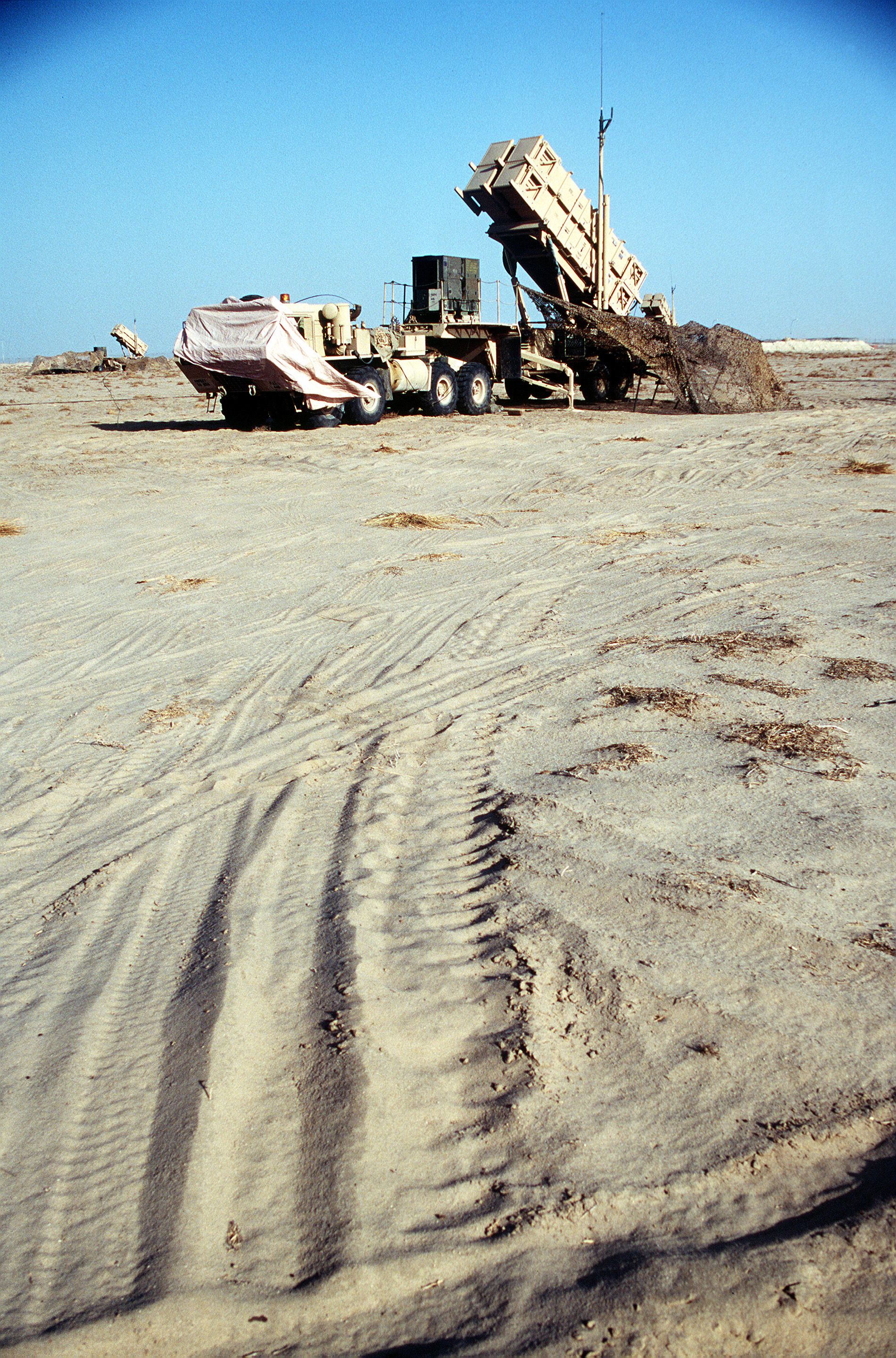
Kuwait has chosen the legal path. Its deputy foreign minister has personally delivered protest notes to Iran’s ambassador, its armed forces have intercepted 265 Iranian ballistic missiles over the course of the war — 97 of them since the April ceasefire — and four IRGC operatives were captured attempting to infiltrate Bubiyan Island, demonstrating that the threat has expanded from aerial bombardment to territorial penetration. Kuwait is fighting a defensive war, building a legal record for potential escalation, and establishing precedent at the Security Council — simultaneously, and without coordinated support from any GCC partner.
The UAE has opted for rhetorical condemnation, warmer than Saudi silence but cooler than military commitment. Foreign Minister Sheikh Abdullah bin Zayed called his Kuwaiti counterpart on May 29 and described Iran’s attacks as “terrorist attacks,” declaring Kuwait’s security “an integral part of the security of the UAE and all other Gulf states” — language that goes further than anything Riyadh has offered and that carries legal implications of its own, since the word “terrorist” opens a separate sanctions and designation pathway. But the UAE has already exited OPEC, closed its embassy in Tehran, and positioned itself as a post-GCC actor whose solidarity with Kuwait is bilateral, expressed through phone calls rather than joint operations, and backed by no deployment mechanism.
Qatar’s position is the most structurally contradictory — it condemned the May 28 attacks on Kuwait, but that condemnation arrives from a state that hosted Iran’s parliamentary speaker, foreign minister, and central bank governor for nuclear negotiations in Doha just two days earlier, a diplomatic proximity that captures the GCC’s inability to maintain a unified posture toward the state actively bombing its members. Qatar’s condemnation carried no operational commitment and no reference to collective defense, reflecting a calculation that its value as a diplomatic intermediary outweighs any obligation under the GCC’s security architecture.
| State | Diplomatic Action | Military Coordination | Article 51 Status |
|---|---|---|---|
| Kuwait | Summoned ambassador; formal protest; “any and all necessary measures” | 265 BM intercepts (war total); 97 post-ceasefire (IISS) | Invoked individually (May 28, plus earlier filings) |
| UAE | FM phone call; “terrorist attacks” language (The National) | None coordinated with Kuwait | Not invoked individually |
| Qatar | Public condemnation (Iran International) | None | Not invoked individually |
| Saudi Arabia | Silence — 10+ consecutive days (no MoFA statement) | Hosted CENTCOM strikes without consultation | Filed April 4-5 on Kuwait’s behalf; not renewed since |
| GCC (institution) | Secretary-General condemnation (Gulf News) | 40,000 PSF troops — not deployed | JDA cited March 1; no collective activation |
Saudi Arabia occupies the silence tier — more than ten days without a public statement from the Ministry of Foreign Affairs, The ministry’s last public statement on the US-Iran negotiations — a May 20 endorsement of Trump’s decision to give diplomacy a chance — is the full record of Saudi engagement with the Iran file, as tracked in Saudi Arabia Endorsed Iran Diplomacy Then Went Silent on the War. maintained through CENTCOM strikes launched from facilities on Saudi territory, through the May 28 barrage and Kuwait’s formal self-defense invocation at the United Nations. GCC Secretary-General Jasem Mohamed Albudaiwi condemned the attacks as “a flagrant violation of international law” and reaffirmed “the GCC’s full support for Kuwait in all measures it takes to safeguard its security and stability,” but the Secretary-General speaks for the institution, not for its largest member — and institutional support without Saudi Arabia’s political weight is a communiqué without a co-signatory.
Riyadh’s silence may reflect fiscal constraint as much as diplomatic calculation — with Brent trading well below its $108-111 fiscal breakeven, the cost of military engagement competes directly with the cost of a war Saudi Arabia is already struggling to finance.
The signal this three-tier divergence sends to Iran requires no cipher to decode — and Iran’s targeting behavior since the ceasefire suggests it has already drawn the obvious conclusion.
The Barrage That Triggered the Invocation
The May 28 barrage was not another routine escalation in the grim rhythm that has defined the conflict since February 28; it was the largest single-day attack on Kuwaiti territory since the war began, crossing thresholds that previous bombardments had stopped short of. Seven ballistic missiles, two cruise missiles, and twenty-six drones struck within twenty-four hours — a combined assault across multiple vectors that required Kuwait’s air defense network to engage simultaneously on ballistic, cruise, and low-altitude drone tracks. CENTCOM’s characterization of the attack as a ceasefire violation was chosen for its legal weight as much as its descriptive accuracy.
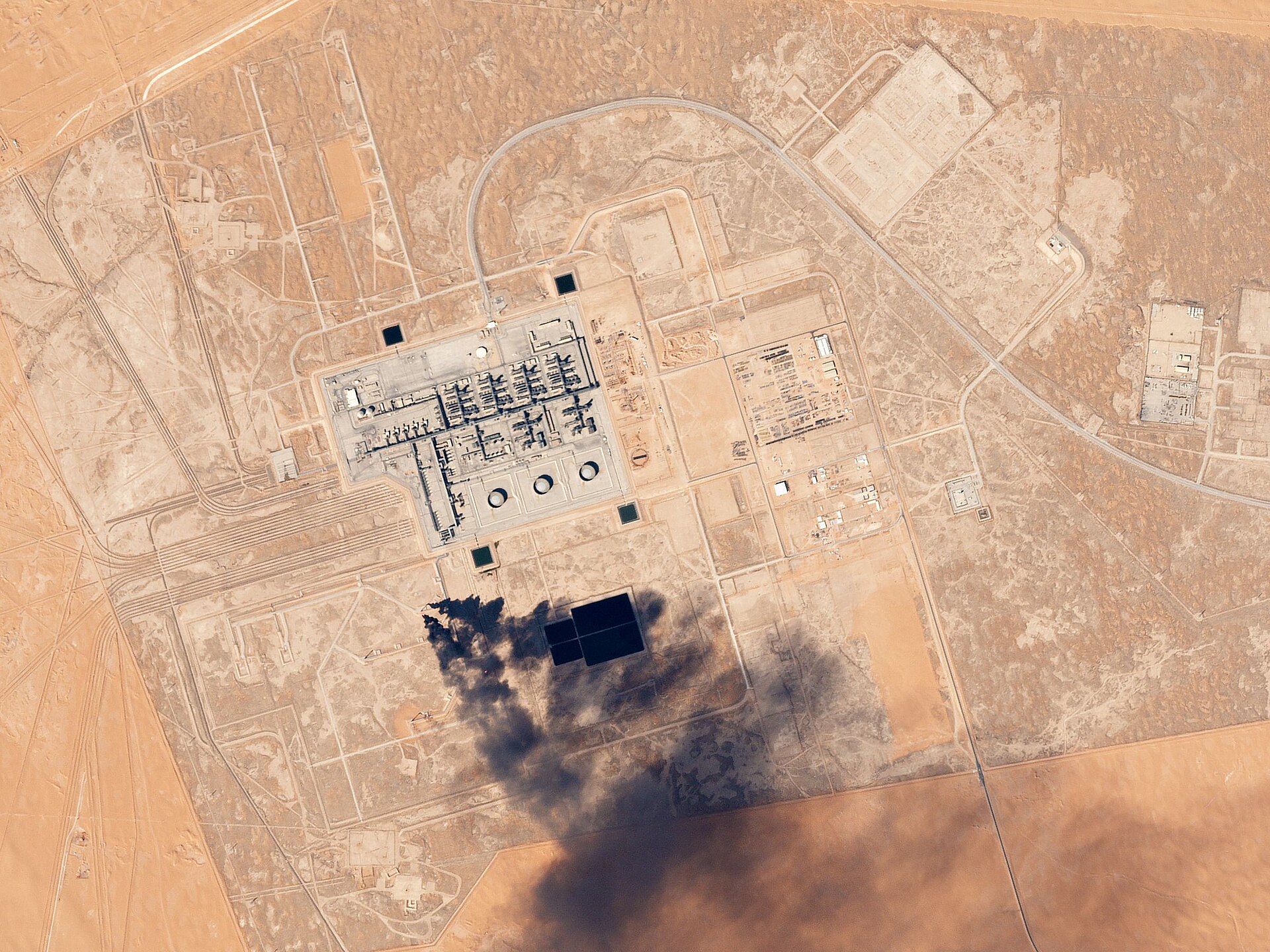
The strikes hit military and civilian infrastructure without discrimination. Mina al-Ahmadi, Kuwait’s largest refinery with a nameplate capacity of 346,000 barrels per day, was struck for the third time in two weeks — the Kuwait Petroleum Corporation confirmed fires at the facility but declined to release production data, a decision that itself suggests damage beyond the cosmetic. Six power lines were knocked out of service by drone debris, disrupting civilian electricity supply, and ten Kuwaiti soldiers were injured in strikes on military installations, bringing the total of wounded servicemembers to sixty-seven since the war began on February 28.
| Metric | Figure | Source |
|---|---|---|
| Ballistic missiles | 7 | CENTCOM / The Hill |
| Cruise missiles | 2 | CENTCOM / The Hill |
| Drones | 26 | CENTCOM / The Hill |
| Mina al-Ahmadi refinery strikes (past 2 weeks) | 3 | Argus Media |
| Refinery capacity at risk | 346,000 b/d | KPC |
| Power lines disabled | 6 | Kuwait Electricity Ministry |
| Soldiers injured (May 28) | 10 | Kuwait MoFA |
| Cumulative military wounded | 67 | Kuwait MoFA |
| Post-ceasefire intercepts (total) | 97 | IISS |
| Full-war BM intercepts (Kuwait) | 265 | IISS |
The IRGC’s justification — issued through Tasnim, the news agency affiliated with the Revolutionary Guards — framed the strikes not as an attack on Kuwait but as retaliation against “the American air base that served as the source of” a CENTCOM strike near Bandar Abbas the previous day. The warning that followed was direct: “If it is repeated, our response will be more decisive.” This framing — Kuwait as an extension of American military infrastructure rather than a sovereign state under armed attack — is the legal construction that Kuwait’s Article 51 invocation was designed to dismantle, and it explains why Kuwait chose the specific language it did: “any and all necessary measures” is not diplomatic boilerplate but a deliberate assertion of sovereign victimhood against Iran’s attempt to reclassify Kuwaiti territory as a battlefield annex.
How Does the GCC Joint Defense Agreement Actually Work?
The GCC Joint Defense Agreement, signed in 2000, commits member states to treat an armed attack on one as an attack on all — but contains no automatic enforcement mechanism. Activation requires political consensus, meaning any single state can block collective military action by withholding authorization, and the 40,000-strong Peninsula Shield Force the agreement established has not deployed at any point during the current conflict.
The structural flaw was identified long before this war exposed it under fire. Dr. Dhafer Al-Ajmi, a Kuwaiti strategic analyst, noted that “the bilateral agreements in the Gulf do not rise to the level of an automatic commitment similar to Article Five of NATO,” explaining that they “emphasize cooperation, consultation, and defensive support, but do not mandate direct military intervention.” Khaled Ibrahim Al-Sallal, a security researcher who has studied Gulf defense architecture, reached the same conclusion from a different angle: these agreements “do not include automatic enforcement mechanisms for military action” and instead “establish a flexible political commitment rather than arrangements for immediate mobilization.”
“The Joint Defense Agreement establishes a clear legal obligation, but its activation remains contingent on the political decision of each state.”
Retired Maj. Gen. Mohammed Saleh Al-Harbi, Kuwaiti military analyst, via Alhurra
That flexibility was meant as a feature — a concession to monarchies that govern through consensus and personal relationships rather than legalistic obligation. But in a war where all six member states have been hit by the same adversary, where one member has filed formal self-defense notifications at the UN, and where IRGC operatives have been captured on a member state’s sovereign territory, flexibility has functioned as a permission structure for inaction. The JDA was cited on March 1, the first day of the war, and it produced a statement — not a joint command, not a coordinated operation, not a single Peninsula Shield soldier crossing any border.
When the political authorization that Major General Al-Harbi described rests with Saudi Arabia — the GCC’s largest military power, the host of American airbases, and a state structurally excluded from the Iran negotiations it cannot influence — the JDA’s consensus mechanism does not produce deliberation. It produces paralysis, and the paralysis extends to every GCC member whose security depends on a collective framework that Saudi Arabia’s silence has effectively suspended.
Iran’s Legal Counter and Kuwait’s Isolation
Iran’s strategy at the Security Council has been to construct a mirror-image Article 51 claim — asserting that the United States is the aggressor, that American military action “satisfies none of the criteria of lawful self-defense,” and that Iran’s strikes on states hosting US forces constitute legitimate self-defense against a hostile foreign military presence. The competing framework does not need to persuade the majority of UN members to achieve its purpose; it needs only to provide sufficient legal cover for China and Russia to maintain their abstention posture and to give Iran’s allies at the UN a vocabulary for contesting Kuwait’s victimhood rather than acknowledging it.
Kuwait sits at the center of this legal contest in a way no other GCC state does. It hosts two of the largest American military installations in the Middle East — Camp Arifjan and Camp Buehring — and the IRGC’s Tasnim statement after the May 28 barrage deliberately avoided naming Kuwait, referencing only “the American air base that served as the source of the attack.” This omission is the legal maneuver Kuwait’s Article 51 invocation was built to counter: if Iran establishes the narrative that its missiles target American infrastructure occupying Kuwaiti soil rather than Kuwait itself, then Kuwait’s standing as a victim of armed aggression — the entire foundation of its self-defense claim — becomes contested at the Security Council rather than self-evident.
Kuwait’s invocation rests on grounds that would be unassailable in any other legal context — sustained aerial bombardment, strikes on civilian energy infrastructure, military casualties, and attempted ground infiltration of sovereign territory. Iran’s counter-claim rests on the far more tenuous argument that these strikes targeted American military assets operating from Kuwaiti soil, an argument that is legally fragile when confronted by a collective GCC response but substantially more viable when Kuwait’s filing stands isolated at the Security Council.
“The lack of cohesive regional strategy in managing the Iranian threat has been exposed by deep fissures in threat perception and crisis management across the GCC bloc.” The war “instead of encouraging more cooperation, appears to have caused the opposite.”
Abdullah F. Alrebh, Stimson Center, 2026
A collective Article 51 invocation from the GCC as a bloc, backed by the institutional weight of the Joint Defense Agreement and supported by coordinated military operations, would make Iran’s co-belligerency framing legally untenable — because Iran cannot credibly argue that six sovereign nations spread across the Arabian Peninsula are all merely extensions of American military infrastructure rather than independent targets of Iranian aggression. But a solo invocation from the state hosting the largest US installations in the region is precisely the kind of isolated filing that Iran’s legal strategy was designed to exploit. Saudi Arabia has been excluded from the coalition governing Hormuz, excluded from the nuclear negotiations, and is now functionally absent from the legal framework that Kuwait — its own treaty ally — is constructing at the Security Council without Riyadh’s participation.
1990 and 2026 — The Precedent Kuwait Cannot Escape
Kuwait has been here before, and the comparison illuminates exactly what has changed and what has been lost over thirty-six years. When Iraq invaded Kuwait in August 1990, the Security Council passed Resolution 661 reaffirming “the inherent right of individual or collective self-defence” under Article 51 — the same formulation that appears in Resolution 2817 — and within weeks that language was operationalized by a thirty-four-nation coalition, led by the United States and including multiple Arab states, in a military operation that remains the most effective collective defense action of the post-Cold War era. The legal architecture was identical to what exists in 2026; the political will to build on it was not.
The speed of the 1990 response sharpens the contrast with the current war. The Security Council condemned Iraq’s invasion on the same day it occurred, a military coalition began forming within the week, and within six months that coalition had liberated Kuwait in a campaign that demonstrated what collective defense looks like when the political consensus exists to back it. In 2026, Resolution 2817 took eleven days to pass — fast by modern Security Council standards — but the eighty days since have produced no collective military framework among the Gulf states it was designed to protect, and the gap between international legal consensus and regional operational paralysis has widened with every barrage that followed.
The Gulf International Forum captured the absurdity in terms that require no elaboration: “For the first time in history, all the GCC states were targeted by the same actor within 24 hours — their long-standing nightmare scenario has happened.” The nightmare arrived exactly as three decades of defense planning had anticipated, and the GCC’s collective answer has been one phone call from Abu Dhabi, one institutional statement from the Secretary-General, and a silence from Riyadh that has already outlasted the attention span of most international news desks.
What Happens When a Self-Defense Claim Goes Unanswered?
Kuwait’s Article 51 invocation creates a legal record but not, by itself, a deterrent. Self-defense claims under the UN Charter are notifications — they establish standing for military action that the invoking state may or may not choose to undertake, and their deterrent value depends entirely on the credibility of the collective threat they imply. An invocation backed by a functioning military alliance communicates that further escalation will be met with coordinated force; an invocation filed by a state whose largest treaty partner has not spoken publicly in eleven days communicates that escalation carries consequences Iran has already shown itself willing to absorb.
This is the structural damage that Saudi Arabia’s silence inflicts — not on Kuwait’s legal position, which remains sound under international law, but on its strategic position, which erodes with every barrage that goes unanswered by the alliance ostensibly committed to Kuwait’s defense. Iran reads the GCC’s three-tier response with the same clarity as any foreign ministry watching from a distance: Kuwait files legal claims, the UAE makes phone calls, Saudi Arabia says nothing, and the Peninsula Shield Force remains in garrison. Ninety-one days of war and 1,372 ballistic missiles at GCC states have produced not one coordinated Gulf military operation — and that operational record carries more weight at Iran’s Supreme National Security Council than any Article 51 filing.
Kuwait’s deputy foreign minister handed Iran’s ambassador a formal protest note on May 28 and invoked the gravest legal provision available to a state under armed attack, in a ministry building less than three hundred kilometers from the Mina al-Ahmadi refinery that was burning for the third time in fourteen days. In Riyadh, the Saudi Ministry of Foreign Affairs received the same reports of seven ballistic missiles striking a fellow GCC member’s territory, the same CENTCOM assessment — and for the eleventh consecutive day, chose to say nothing.
Frequently Asked Questions
What is UNSC Resolution 2817 and why does it matter?
Resolution 2817, adopted on March 11, 2026, was the first UN Security Council resolution to condemn state-on-state military aggression in the Gulf since the resolutions following Iraq’s invasion of Kuwait in 1990. It passed 13-0, with 135 co-sponsoring nations — the largest co-sponsorship in UNSC history. China and Russia abstained rather than vetoing; China’s representative expressed concern about regional escalation while declining to endorse enforcement provisions, and Russia cited ongoing diplomatic efforts as grounds for withholding a yes vote. The resolution was also the first UNSC text to formally name Jordan alongside GCC states as a target of Iranian military aggression, expanding the legal scope of the conflict beyond the Gulf peninsula itself.
How many US military personnel are stationed in Kuwait?
Kuwait hosts approximately 13,500 US military personnel, concentrated at Camp Arifjan — the forward headquarters of United States Army Central — and Camp Buehring, a major staging and logistics base in northwestern Kuwait that has served as the primary American ground-force hub for Middle East operations since 2003. Unlike US military presences in Japan, Germany, or South Korea, the American deployment in Kuwait operates under a series of bilateral defense cooperation agreements rather than a formal Status of Forces Agreement, which means there is no treaty-level legal framework governing the rights and liabilities of US forces on Kuwaiti soil. This SOFA gap is directly relevant to Iran’s co-belligerency argument, since the absence of a formal basing treaty weakens the legal distinction between US forces operating in Kuwait and Kuwait itself being party to American military operations.
Could Kuwait take unilateral military action based on its Article 51 invocation?
Legally, Article 51 rights are individual as well as collective, and Kuwait’s invocation creates standing for military action without requiring prior Security Council authorization or GCC consensus. Practically, Kuwait’s active-duty military numbers fewer than 20,000 personnel, operating F/A-18C/D Hornets and Eurofighter Typhoons — capable platforms but an inventory that cannot sustain independent offensive operations against a state with Iran’s strategic depth and integrated air defense network. Kuwait’s calculus is therefore defensive by structural necessity, which means the collective dimension of Article 51 is not a diplomatic preference but a strategic requirement: without allies willing to operationalize collective defense, Kuwait possesses a legal right it cannot exercise alone at the scale the threat demands.
When was the Peninsula Shield Force last deployed?
The Peninsula Shield Force was last deployed in March 2011, when approximately 1,000 Saudi troops and 500 UAE police officers entered Bahrain under the PSF framework to support the Bahraini government during the Arab Spring protests — the only operational PSF deployment in the force’s forty-five-year history. That deployment was directed at internal civil unrest rather than external military aggression, and both Qatar and Oman publicly distanced themselves from the decision, exposing the same consensus fracture that has paralyzed the GCC’s response to the current war. The 2011 episode established a precedent in which PSF activation serves the strategic preferences of the GCC’s dominant members rather than the collective security mandate the force was designed to fulfill — a pattern that helps explain why Kuwait has not pressed for a deployment that Saudi Arabia’s silence makes structurally impossible to authorize.
That structural impossibility extends to Kuwait’s defense procurement: while Saudi Arabia’s silence has blocked collective GCC responses, Kuwait has pursued its own $1.02 billion NASAMS contract through a bilateral FMS channel that the SOFA and Defense Cooperation Agreement with the United States keep open regardless of what Riyadh decides.