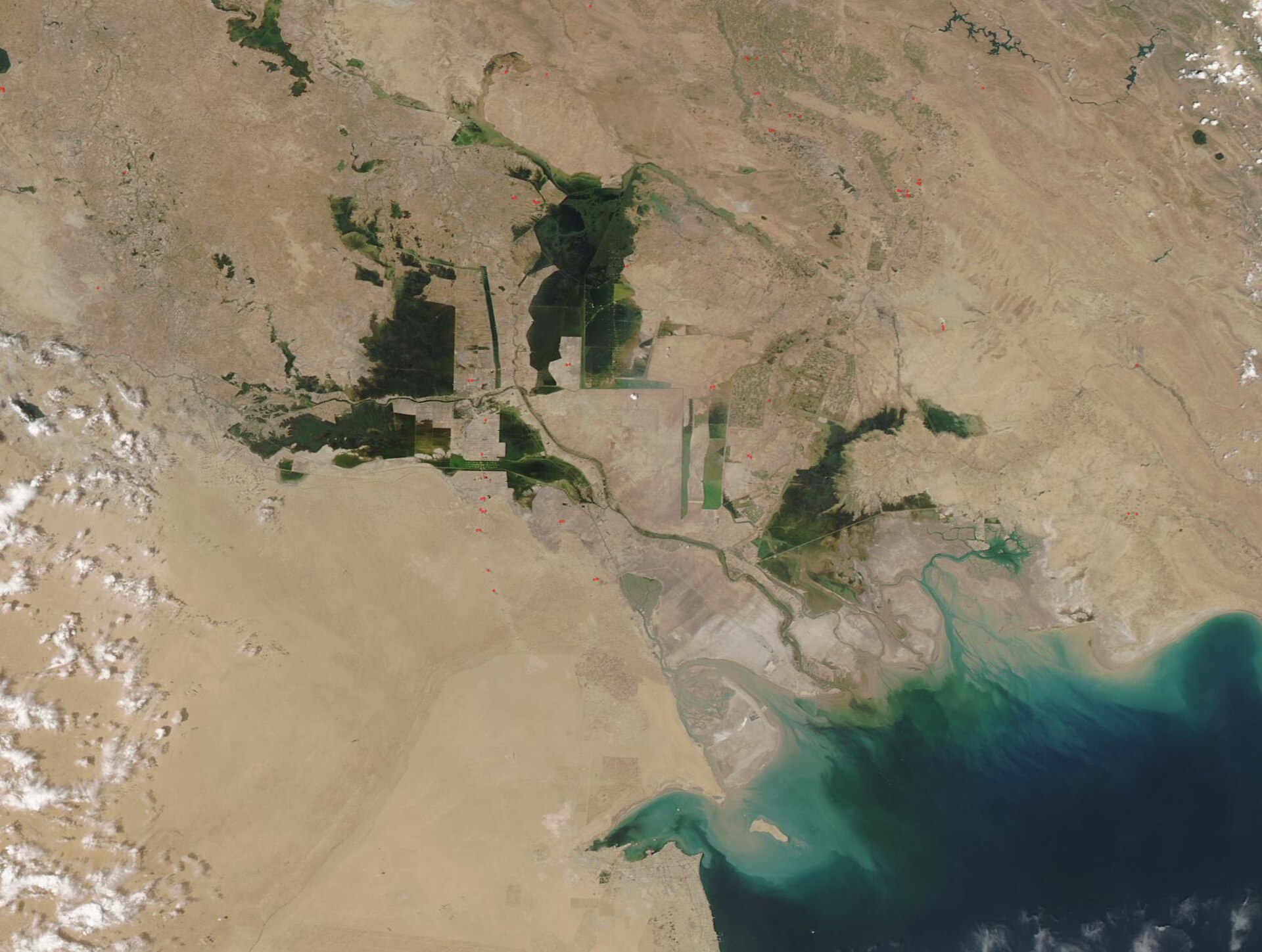

DUBAI — The IRGC Navy fired two Noor cruise missiles at the MSC Sariska V, a Panama-flagged container ship departing Iraq’s Umm Qasr port, on June 1, 2026 — the first confirmed Iranian cruise missile attack on a commercial vessel inside the upper Persian Gulf, roughly 40 nautical miles southeast of Iraq’s only deep-water terminal. The strike, which the IRGC said was retaliation for a US Hellfire hit on the Iranian-associated Lian Star three days earlier, breached the hull on the starboard side, started a fire that the crew extinguished, and left all hands uninjured — but it shattered the assumption that the Iraq bilateral exemption under Iran’s Persian Gulf Shipping Agreement made the northern Gulf a functioning commercial lane.
Hours before the missiles hit, the Chinese-flagged KSL XINYANG had completed the first Iraq-exemption inbound transit of the Strait of Hormuz under the PGSA framework — a passage HOS documented as proof that Iraq’s carve-out was operational. The Sariska strike did not invalidate the exemption in legal terms, but it demonstrated that the IRGC is willing to use cruise missiles in the same waters the exemption was supposed to protect, against a vessel the IRGC itself designated as hostile on ownership-chain grounds that MSC, the world’s largest container line, flatly rejected.
Table of Contents
What Happened to the MSC Sariska V
The MSC Sariska V — IMO 8715857, a 74,500-deadweight-ton container ship built in 1990 and commercially managed by MSC Mediterranean Shipping Company of Geneva — was departing Umm Qasr on the morning of June 1 when the first Noor missile struck while the Iraqi harbor pilot was still aboard. A second missile hit the crew area, starting a fire that the crew extinguished without outside assistance, according to MSC’s official press release. UKMTO confirmed a “significant breach” on the vessel’s starboard side, and Iraqi and local sources placed the impact near “buoy number five,” approximately 40 nautical miles southeast of Umm Qasr.
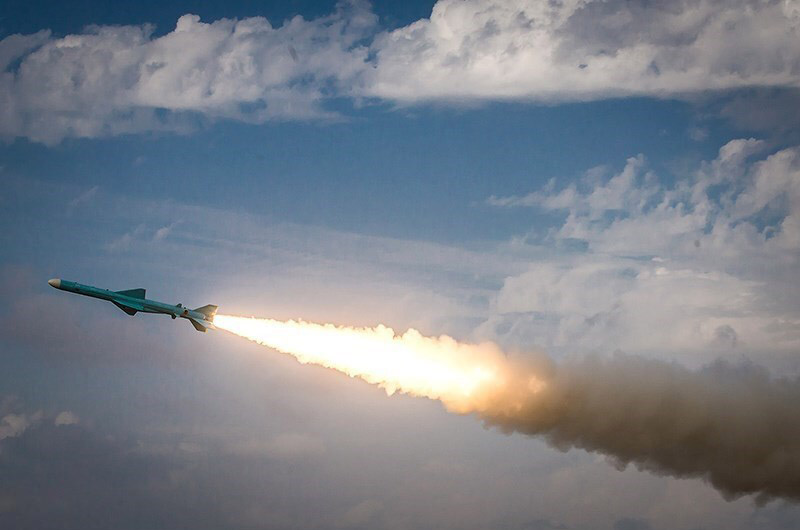
The vessel, 36 years old and registered to Sariska Naviera Co SA under a Panamanian flag, was able to proceed under its own power despite the hull breach — a detail that matters because it means the IRGC used two cruise missiles against a commercial target and failed to disable it, a result that invites comparison with the US strike on the Lian Star, which did disable the target with a single Hellfire to the engine room. Video circulated by the IRGC showed a Noor missile launch; the Noor is Iran’s reverse-engineered version of the Chinese C-802 anti-ship cruise missile, with a range of 120 to 170 kilometers, meaning IRGC fast-attack craft operating from Iranian Gulf coastline ports can reach the northern Gulf approaches to Umm Qasr without entering Iraqi waters.
“All crew members are safe, unharmed and acted with exceptional professionalism throughout the incident to secure the vessel, and its cargo,” MSC said in a statement published on its newsroom. The company confirmed the ship had “departed from port” — meaning it was outbound from Umm Qasr, not transiting toward Iran — and that the cargo manifest has not been made public.
The Middle East briefing 3,000+ readers start their day with.
One email. Every weekday morning. Free.
Why Did the IRGC Call This Retaliation?
The IRGC’s own statement, published through Sepah News and carried by PressTV on June 1, framed the attack as reciprocal and issued a supplemental warning — that “any further aggression by the US army in the region will be met with a decisive response” — carried by WANA News Agency the same day.
The pretext vessel, the Lian Star, is a Gambia-flagged bulk carrier that the US struck with an AGM-114 Hellfire missile on May 29 in the Gulf of Oman after the vessel ignored more than 20 warnings and continued heading toward an Iranian port in violation of the US naval blockade, according to Euronews and Washington Times reporting from May 31. CENTCOM acknowledged the strike, which hit the engine room and left the Lian Star disabled and adrift but not sunk. The three-day response window — May 29 to June 1 — matches the 72-hour IRGC operational pattern that has characterized retaliatory strikes since the war began on February 28.
The retaliation-equivalence logic is worth examining on its own terms: the US disabled one blockade-running vessel with a precision strike to the engine room, and the IRGC responded by firing two cruise missiles at a neutral commercial container ship inside another country’s territorial waters. The IRGC treated the interdiction of a vessel violating a declared blockade as identical, in escalatory weight, to an unprovoked attack on a commercial carrier — and used the exchange to establish a tit-for-tat template that, if sustained, means every US enforcement action against blockade runners will generate an IRGC strike on commercial shipping somewhere in the Gulf.
The Iraq Exemption Was the Last Open Lane
Iran’s PGSA, the toll-and-permission architecture the IRGC imposed on Hormuz transit beginning in March 2026, operates on a three-tier structure: India, Iraq, and Pakistan receive bilateral carve-outs and transit free; gray-fleet vessels pay approximately $2 million per transit in yuan or Bitcoin; and dark-configuration vessels face enforcement. The Iraq exemption was the narrowest and most commercially consequential of the three because Umm Qasr is Iraq’s only major deep-water Gulf port, and because Iraq’s oil exports — routed primarily through the southern terminal at Al Faw — depend on the same upper-Gulf corridor the Sariska was using when it was struck.
The KSL XINYANG’s Hormuz transit on June 1, documented by HOS as the first confirmed Iraq-exemption inbound passage under the PGSA, was supposed to demonstrate that the exemption worked — that a vessel could enter the Gulf under the Iraq bilateral framework and reach Umm Qasr without being targeted. The Sariska strike, occurring the same day, did not technically violate the exemption (the Sariska was not transiting Hormuz and was not operating under Iraq-exemption clearance; it was a Panama-flagged MSC vessel that the IRGC designated as hostile on separate grounds), but it introduced cruise missiles into the physical space the exemption was meant to keep safe.
The geographic ambiguity is the point. The PGSA was designed for Hormuz transit — its legal structure, its fee architecture, and its bilateral exemptions all reference passage through the Strait. Whether the PGSA’s Iraq bilateral exemption extends to upper-Gulf vessel movements inside Iraqi territorial waters is unresolved, and no PGSA authority has issued a clarification since the Sariska strike. The IRGC may view the exemption as applying only to Hormuz itself, leaving the upper Gulf as a separate operational theater where targeting decisions are made on a vessel-by-vessel basis using ownership-chain attribution.
Where Did the Strike Occur — and Whose Waters?
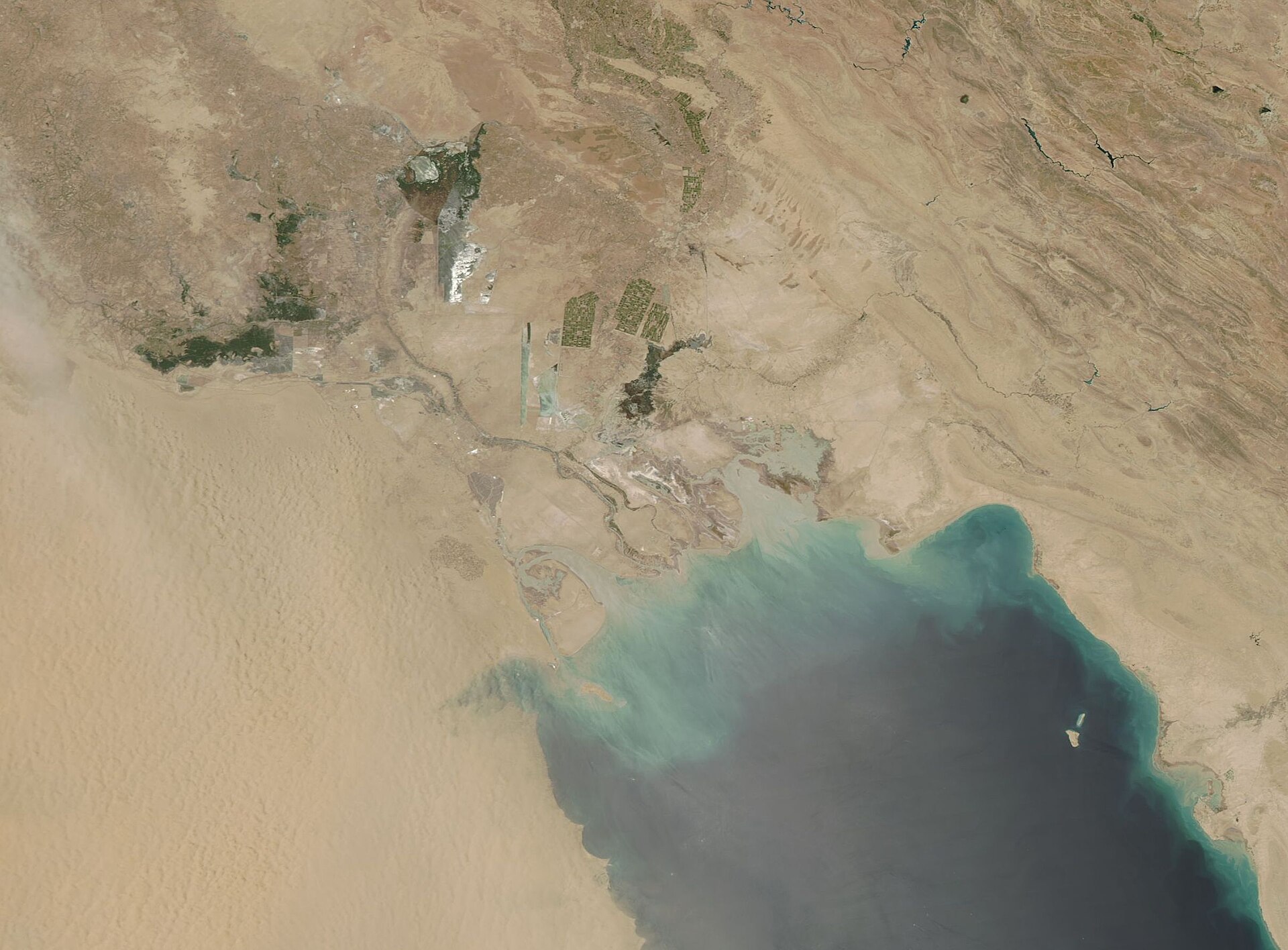
UKMTO placed the strike approximately 40 nautical miles southeast of Umm Qasr, and Iraqi sources referenced “buoy number five” — a navigation marker in the Khor Abdullah waterway approach. The 12-nautical-mile territorial baseline means the strike occurred at or inside the boundary of Iraqi territorial waters, depending on which baseline measurement is used, and the IRGC does not appear to have contested the location. If the strike occurred inside Iraqi waters, it constitutes an armed attack on a commercial vessel within the sovereign maritime territory of a state that is not a party to the conflict and that maintains a bilateral exemption with Iran.
No confirmed Iraqi government statement condemning the strike has been identified. The silence is conspicuous: Iraq hosts both US forces and maintains the Iran bilateral exemption, and an IRGC cruise missile attack inside Iraqi territorial waters on a vessel departing Iraq’s only deep-water port would ordinarily demand a sovereign response. The absence of that response suggests either that Baghdad is still formulating its position, or that Iraq’s dependence on the Iran bilateral exemption for its own commercial shipping constrains its ability to protest strikes conducted under a different targeting rationale — the IRGC did not claim it was striking an Iraqi vessel or violating the Iraq exemption; it claimed it was striking a “US-Israeli” vessel that happened to be in Iraqi waters.
MSC’s Response and the Targeting Logic
MSC’s rebuttal was unusually direct for a shipping company. “This retaliatory action is completely unjustified based on the allegations made by the IRGC since MSC is a neutral commercial carrier with no affiliation to the United States or Israel,” the company said in its press release. MSC is headquartered in Geneva, privately owned by the Aponte family, and is the world’s largest container shipping line by capacity — none of which maps onto the “US-Israeli” designation the IRGC applied. Xinhua, Chinese state media, covered the story on June 2 with the headline “Iran says it fires missile at ship linked to U.S., Israel,” adopting the IRGC’s framing without endorsement — a choice worth registering given China’s own stake in the PGSA exemption architecture.
The targeting logic the IRGC used against the Sariska is the same logic it has applied at Hormuz since the PGSA was imposed: ownership-chain attribution that traces financial connections through shell companies, flag registries, and commercial management relationships to identify Western or Israeli links, regardless of the vessel’s flag state, cargo, or destination. Panama-flagged, Swiss-owned, and departing Iraq with an unspecified cargo, the Sariska met none of the conventional criteria for a hostile vessel — but the IRGC’s criteria are not conventional. Of the 34 commercial vessels struck since Operation Epic Fury began on February 28, according to the Windward.ai Iran War Vessel Attacks tracker, the pattern of ownership-chain targeting has been consistent: the flag on the stern matters less than the financial architecture behind the registered owner.
“In response to the aggressive attack by the terrorist and child-killing US army on the Iranian vessel Lian Star in the Sea of Oman, the IRGC Navy conducted a reciprocal operation and struck the MSC Sariska with a cruise missile.”
— IRGC statement, Sepah News / PressTV, June 1, 2026
The statement came through IRGC channels — Sepah News, the IRGC’s official media outlet — not through the Iranian Foreign Ministry or the Pezeshkian government. No MFA statement on the Sariska strike has been identified. The IRGC Navy acted and announced through its own institutional chain, a pattern consistent with the broader institutional split between the IRGC and the civilian government that has defined Iranian decision-making throughout the 2026 crisis.
What This Means for Saudi Crude
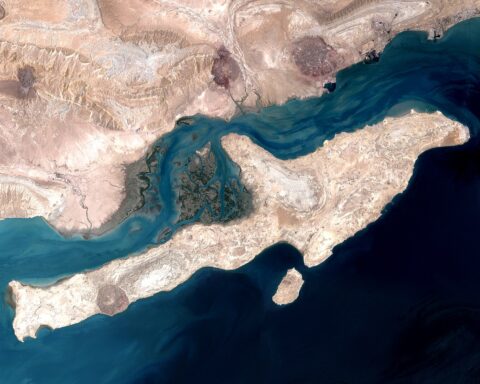
Saudi Arabia ships approximately 2.5 million barrels per day through routes that depend on Gulf security, and Brent crude traded between $91 and $96.65 on June 1-2 — still $11 to $20 per barrel below the $108-111 breakeven that Goldman Sachs estimates Saudi Arabia requires to balance its budget. The Bloomberg consolidated floor of $94 was tested intraday. The Sariska strike adds a new variable to that arithmetic: cruise missiles in the upper Gulf, not just at Hormuz, not just near Qeshm, but in the corridor that connects Iraq’s port infrastructure to the open sea.
The immediate Saudi exposure is indirect — Saudi crude does not transit through Umm Qasr, and the Yanbu redirect on the Red Sea coast has already shifted 89 percent of Saudi exports away from Hormuz-dependent routes, according to HOS analysis. But war risk surcharges do not distinguish between the Strait and the upper Gulf: Hapag-Lloyd has maintained a $1,500-per-TEU surcharge for Iraq and Umm Qasr since March 2, and CMA CGM charges $2,000 per 20-foot dry container. If the upper Gulf becomes a cruise-missile theater — and the Sariska strike establishes the precedent — those surcharges will rise, insurance premiums will follow, and the cost of operating in the Gulf broadens from a Hormuz problem to a basin-wide problem.
Aramco’s quarterly dividend of $21.89 billion, payable June 9, already exceeds the company’s Q1 free cash flow of $18.6 billion — a coverage ratio of 0.85x that leaves no margin for a sustained increase in basin-wide shipping costs or a further Brent decline. Day 93 of the Hormuz closure has reduced shipping through the Strait to approximately 5 percent of the pre-war rate of 3,000 vessels per month, according to the UK House of Commons Library, and the Sariska strike raises the question of whether the upper Gulf — the last zone where commercial traffic moved with something approaching normalcy — will now see the same attrition.
| Date | Event | Location | Weapon |
|---|---|---|---|
| Feb 28 | Operation Epic Fury begins; Hormuz closure | Strait of Hormuz | Mines, IRGC naval assets |
| Mar 2 | War risk surcharges imposed (Hapag-Lloyd, CMA CGM) | Gulf-wide | N/A |
| May 29 | US Hellfire strikes Lian Star | Gulf of Oman | AGM-114 Hellfire |
| Jun 1 (AM) | KSL XINYANG completes Iraq-exemption Hormuz transit | Strait of Hormuz | N/A |
| Jun 1 (PM) | IRGC strikes MSC Sariska V | Upper Persian Gulf, ~40nm SE of Umm Qasr | 2x Noor cruise missiles |
The Tanker War Precedent
The 1980-1988 Tanker War — the last sustained campaign of state-on-commercial-vessel strikes in the Persian Gulf — was fought throughout the basin, not only at the chokepoints. Iran attacked tankers in the upper Gulf, in the central Gulf, and at Hormuz; Iraq attacked Iranian oil infrastructure and vessels loading at Kharg Island. The geographic signature of the Tanker War was basin-wide risk, and the Sariska strike is the first indication that the 2026 conflict, which had until now concentrated its maritime violence at Hormuz, the Qeshm approaches, and the Gulf of Oman, may be reverting to the older pattern.
Seventy-one total maritime incidents have occurred since Operation Epic Fury began on February 28, with 34 commercial vessels struck, according to Windward.ai’s tracking. The overwhelming majority of those incidents occurred at or near Hormuz. The Sariska is the outlier — struck in the upper Gulf, far from the chokepoint, in a corridor that had been treated as low-risk precisely because of the Iraq bilateral exemption and the geographic distance from the IRGC’s known interdiction zones. If the IRGC now treats the entire Gulf as a retaliatory strike zone — using ownership-chain attribution to designate targets wherever they sail, not just where they transit — then the 71 incidents to date may represent the opening phase of something closer to the Tanker War’s 546 attacks on commercial shipping over eight years.
The Noor missile’s 120-to-170-kilometer range means that IRGC assets operating from the Iranian coastline can reach every point in the Persian Gulf north of Qatar without entering the territorial waters of any other state. The upper Gulf, which is roughly 200 kilometers wide at the latitude of Kuwait, is entirely within Noor range from multiple Iranian coastal positions. The diplomatic contradictions of the broader conflict — ceasefire claims on one front, cruise missiles on another — do not change the operational geometry: if the IRGC is willing to fire cruise missiles at commercial shipping inside Iraqi territorial waters, no point in the Gulf is outside the threat envelope.
Frequently Asked Questions
Was the MSC Sariska V carrying military cargo?
MSC has not released the cargo manifest, and no government source has identified the cargo. MSC confirmed only that the vessel had “departed from port” — meaning it was outbound from Umm Qasr. The IRGC’s justification did not reference cargo; it referenced an alleged ownership link to the United States and Israel, which MSC denied. The absence of any cargo-based claim from the IRGC suggests the targeting decision was made on ownership-chain grounds, not on what the vessel was carrying.
Has Iran struck a commercial vessel inside Iraqi waters before?
Not during the 2026 conflict. The Sariska strike is the first confirmed IRGC cruise missile attack on a commercial vessel inside the upper Persian Gulf. During the 1980-1988 Tanker War, Iran did strike vessels throughout the Gulf basin, including in waters near Iraq, but that conflict involved direct Iran-Iraq belligerency. The 2026 strike is distinct because Iraq is not a belligerent and maintains a bilateral exemption with Iran — making the IRGC’s willingness to fire inside or at the edge of Iraqi waters a qualitative escalation in geographic scope.
What is the current status of the MSC Sariska V?
As of MSC’s most recent statement, the vessel was proceeding under its own power despite the starboard hull breach. MSC confirmed that all crew members were safe and uninjured, and that the onboard fire caused by the second missile strike was extinguished by the crew without external assistance. The vessel’s current position and destination have not been publicly confirmed by MSC or UKMTO since the initial advisory. Seatrade Maritime reported that the vessel remained operational.
Does the PGSA Iraq exemption still function after this strike?
Formally, the PGSA Iraq bilateral exemption has not been revoked or modified. The KSL XINYANG completed its Iraq-exemption Hormuz transit on June 1, and no PGSA authority statement has addressed the Sariska strike. The practical question is whether shipping companies and insurers will treat the upper Gulf as covered by the exemption’s implied safety guarantee. War risk underwriters price on demonstrated threat, not legal frameworks, and the Sariska strike demonstrated a cruise missile threat in the exemption corridor.
How does the Noor missile compare to the US Hellfire used on the Lian Star?
The AGM-114 Hellfire is a precision-guided missile weighing approximately 49 kilograms with a warhead designed for point targets — the US used it to disable the Lian Star’s engine room with a single shot. The Noor is a sea-skimming cruise missile derived from the Chinese C-802, weighing approximately 715 kilograms with a 165-kilogram warhead, designed to sink or disable warships. The IRGC used two Noors against the Sariska and failed to disable the vessel, which proceeded under its own power — a disparity in weapon-to-effect ratio that reflects either the Sariska’s structural resilience, the age and condition of the missiles, or the targeting parameters the IRGC selected.