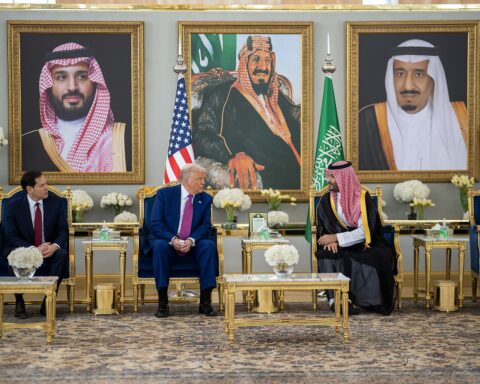
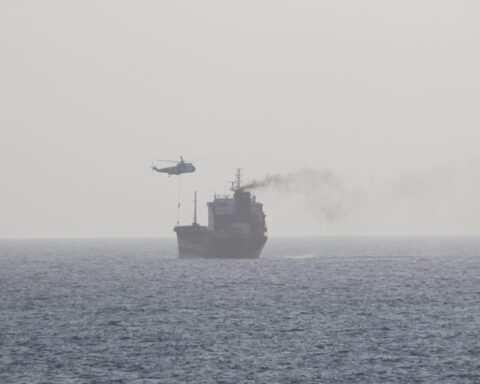
WASHINGTON — Donald Trump said in a White House podcast interview published Wednesday that Iran has “already agreed they’re not going to have a nuclear weapon” and that Supreme Leader Mojtaba Khamenei is personally approving terms through intermediaries — claims released the same morning that IRGC drones and missiles struck Kuwait International Airport’s passenger terminal, killing one person and injuring 63, while a separate barrage targeted the US Fifth Fleet headquarters in Bahrain. The interview, recorded Tuesday for the New York Post’s “Pod Force One” podcast, was published on Day 96 of the war, hours after Kuwait closed its airspace for the second time since the conflict began on February 28.
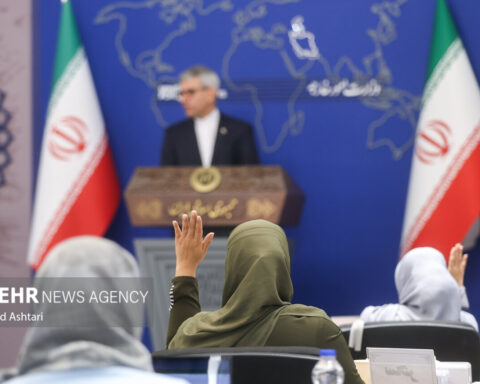
Iran’s Foreign Ministry flatly denied that nuclear-specific negotiations have occurred. Spokesman Esmaeil Baghaei stated that “no negotiations have taken place at this stage on the details of the nuclear issue,” and Tehran had already suspended all mediated exchanges two days earlier, announcing the freeze through Tasnim — the IRGC-affiliated news agency — rather than through any diplomatic channel. Trump is describing a settled nuclear commitment from a government whose Foreign Ministry says no nuclear talks happened and whose military wing was firing missiles at allied airports as the podcast aired.
Table of Contents
What Trump Claimed
Trump’s assertions in the roughly hour-long interview covered four areas, each of which Tehran has denied or contradicted through separate institutional channels. On the nuclear question, he told the New York Post: “They’ve already agreed they’re not going to have a nuclear weapon. Yeah, they’ve agreed to that. I mean, they can change their mind, but that was one of the things they had to agree. They’ve agreed to that. That was the big thing.” The quote, reported verbatim by Time and the Washington Times, describes a settled position on a subject Iran’s Foreign Ministry says has not been discussed at all.
On Khamenei’s role, Trump said: “They say he is giving approval, because that’s the way it has been for a long, long time. His father and then him, I guess it’s a succession.” He added that he and Khamenei “seem to be getting along quite well” through mediators and expressed a desire to meet in person — “I’d like to meet him” — per the Washington Times. Three months ago, on March 8, Trump said Mojtaba Khamenei “is not going to last long” without American approval, making this a reversal from regime-change rhetoric to personal diplomatic outreach with no public explanation for the shift.
Trump also offered his assessment of Khamenei’s physical condition: “I’m not hearing he’s doing great. If you believe the stories, he’s missing a lot of different parts.” Mojtaba Khamenei has not appeared publicly since assuming power after his father was killed in the February 28 strikes, and he is believed to have been severely injured in a subsequent US-Israeli operation. He communicates exclusively through written messages carried by motorcycle courier from an underground location, with a minimum 72-hour response time, according to a senior US official cited by Axios.
In the same interview, Trump said the Strait of Hormuz blockade “could last until September,” per the Azerbaijan Press Agency — the first time he has publicly named a potential duration for the closure that has constrained Saudi oil exports since Day 1 of the conflict. For Gulf states dependent on Hormuz, including Saudi Arabia, whose Brent breakeven sits at $108 to $111 per barrel against a spot price near $98.50, the remark amounts to a casual American estimate of three more months of revenue compression with no attached plan to end it.
The Middle East briefing 3,000+ readers start their day with.
One email. Every weekday morning. Free.
Has Iran Agreed to Anything?
Every Iranian institutional voice that has spoken in the past 72 hours says no. Baghaei’s denial — “no negotiations have taken place at this stage on the details of the nuclear issue” — was categorical and delivered through official Foreign Ministry channels, not a background briefing or a social media post. PressTV, Iranian state media, separately described Trump’s characterizations as “not true” and “inconsistent with reality.”
“No negotiations have taken place at this stage on the details of the nuclear issue.”
— Esmaeil Baghaei, Iranian Foreign Ministry Spokesman
The Foreign Ministry is only one of two institutional tracks operating in Tehran, and it may not be the more consequential one. On June 1, Tasnim announced the suspension of all text and verbal exchanges via mediators, citing Israeli violations of the Lebanon ceasefire: “Considering that Lebanon was one of the preconditions for the ceasefire and that this ceasefire has now been violated on all fronts, including Lebanon, the Iranian negotiating team is suspending dialogues and exchange of texts through mediators.” The suspension was routed through a military-intelligence outlet rather than a diplomatic channel, and it has not been rescinded.
Reuters reported on June 2 that Iran was “preparing to decline” the US memorandum of understanding — language harder than suspension, closer to formal rejection. Iran International reported on May 29 that the current MOU draft violates eight of ten conditions pre-approved by Mojtaba Khamenei — the same leader Trump is now publicly crediting as the deal’s approving authority. The gap between what Washington says it is negotiating and what Tehran says it has discussed has been widening since March, and Trump’s June 3 claims represent the widest divergence yet.
Mohsen Rezaei, a senior adviser to Khamenei, delivered a parallel message timed to the June 3 strikes: “The response to every shot and aggression will be a barrage of missiles and drones history will not turn back.” Whatever arrangement Trump described on the podcast, the IRGC’s operational posture and its senior leadership’s public statements are not consistent with a government that has agreed to constrain its nuclear program.
What Was Happening While the Podcast Aired?
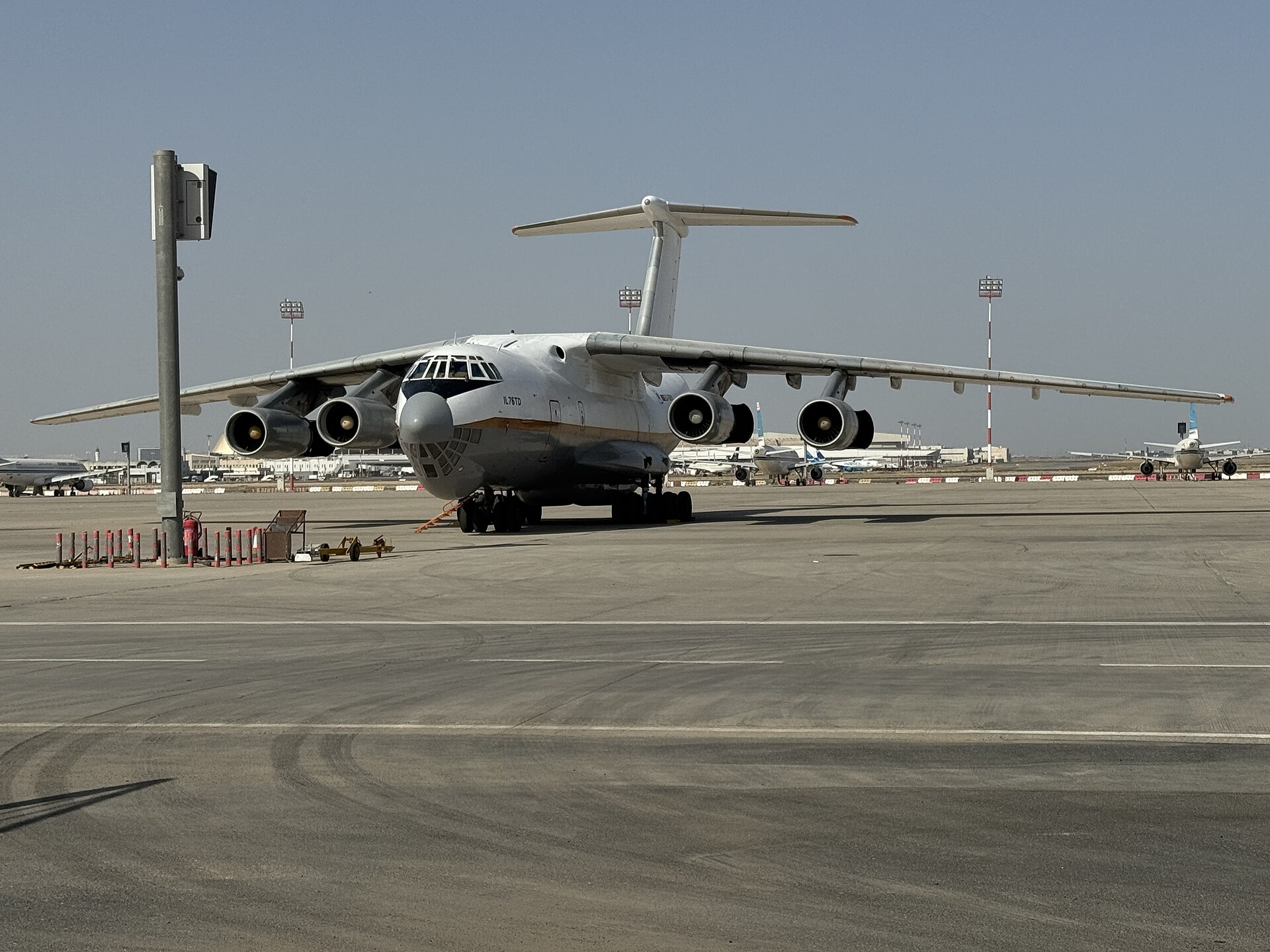
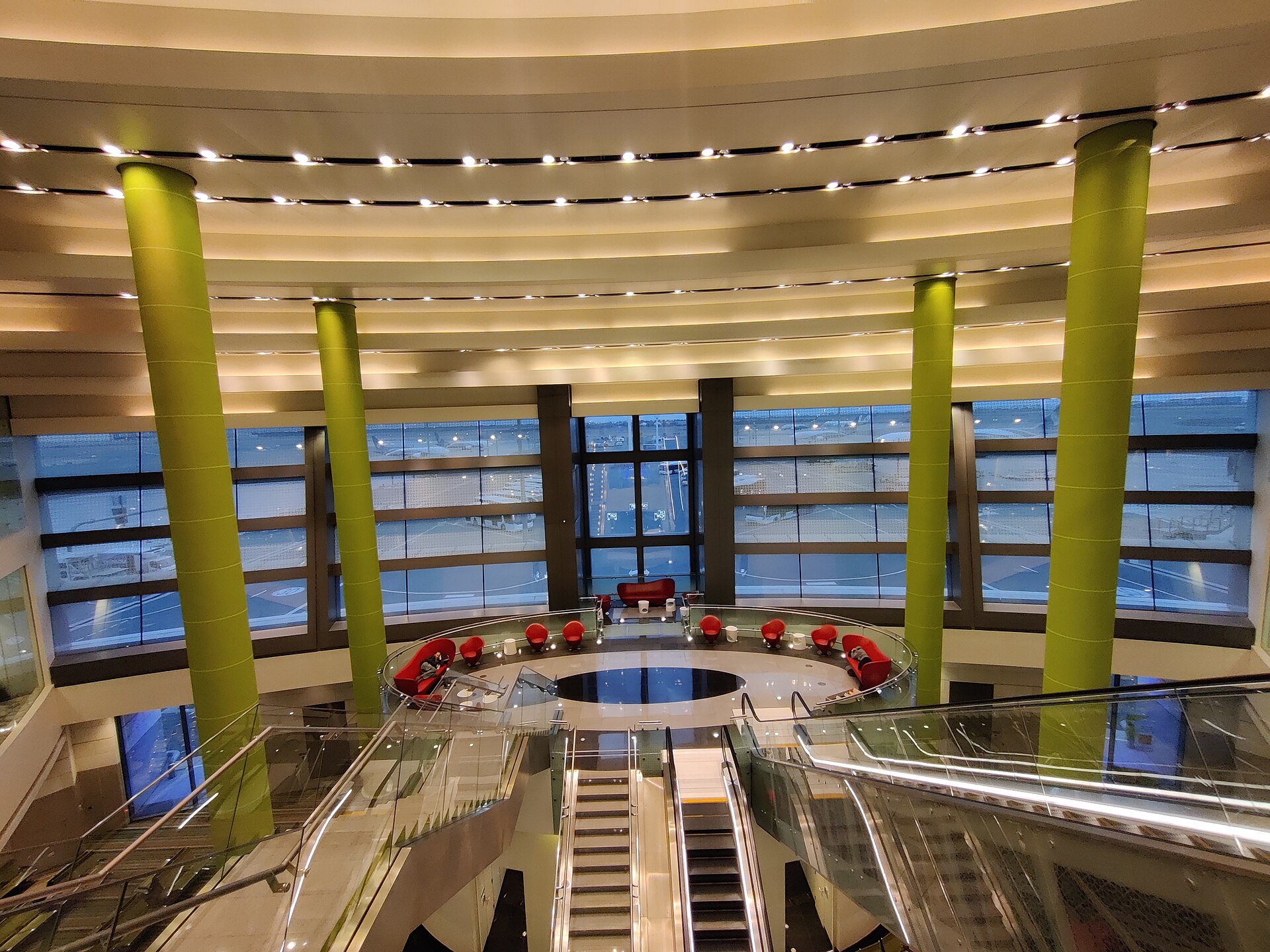
The podcast went live Wednesday morning. By the time listeners pressed play, IRGC drones had already hit Terminal 1 at Kuwait International Airport — a civilian passenger facility that had reopened just 48 hours earlier — killing an Indian national and injuring 63 others, according to Kuwait’s Ministry of Foreign Affairs. Kuwait’s air defenses intercepted multiple incoming missiles and drones, but the volume exceeded defensive coverage, and Kuwait immediately closed its airspace for the second full shutdown of the war. Within hours, Deputy Foreign Minister Al-Mashaan summoned Iran’s chargé d’affaires and expelled two Iranian diplomats with a 24-hour departure deadline — the first GCC expulsion of Iranian diplomats since the UAE closed Tehran’s embassy on March 1.
Simultaneously, the IRGC fired on NSA Bahrain for the third time since the war began, targeting the Mina Salman pier and Juffair compound that house the US Fifth Fleet headquarters and approximately 9,000 American service members. CENTCOM said three missiles were intercepted and denied damage to US assets or injuries to personnel. The IRGC claimed the attack deployed Khorramshahr-4, Kheibar Shekan, and Fattah hypersonic missiles along with drones, though the composition has not been independently verified.
Trump recorded the interview on Tuesday and could not have known about the Wednesday strikes when he spoke, but the publication was not delayed, and the juxtaposition was immediate. The American president was describing a nuclear agreement with a government whose military wing was, at the moment of broadcast, firing missiles at a civilian airport and a US naval headquarters across two countries. Gulf audiences — Kuwaiti, Bahraini, Saudi, Emirati — did not need commentary to read the distance between Washington’s diplomatic framing and the physical reality landing on their airfields.
What Did Rubio Say the Day Before?
Secretary of State Marco Rubio’s June 2 testimony before the Senate Foreign Relations Committee offered a substantially more cautious account than the podcast released the following morning. Rubio confirmed that Mojtaba Khamenei is “alive” and “increasingly engaging at some level,” but immediately qualified: “all of his communications have been in writing and through intermediaries.” He told senators that response times to US proposals run 3 to 5 days, a function of the courier-based communication system Khamenei has used since Day 1 of the conflict — a system described in detail when Trump sent a hardened MOU draft via courier on May 31.
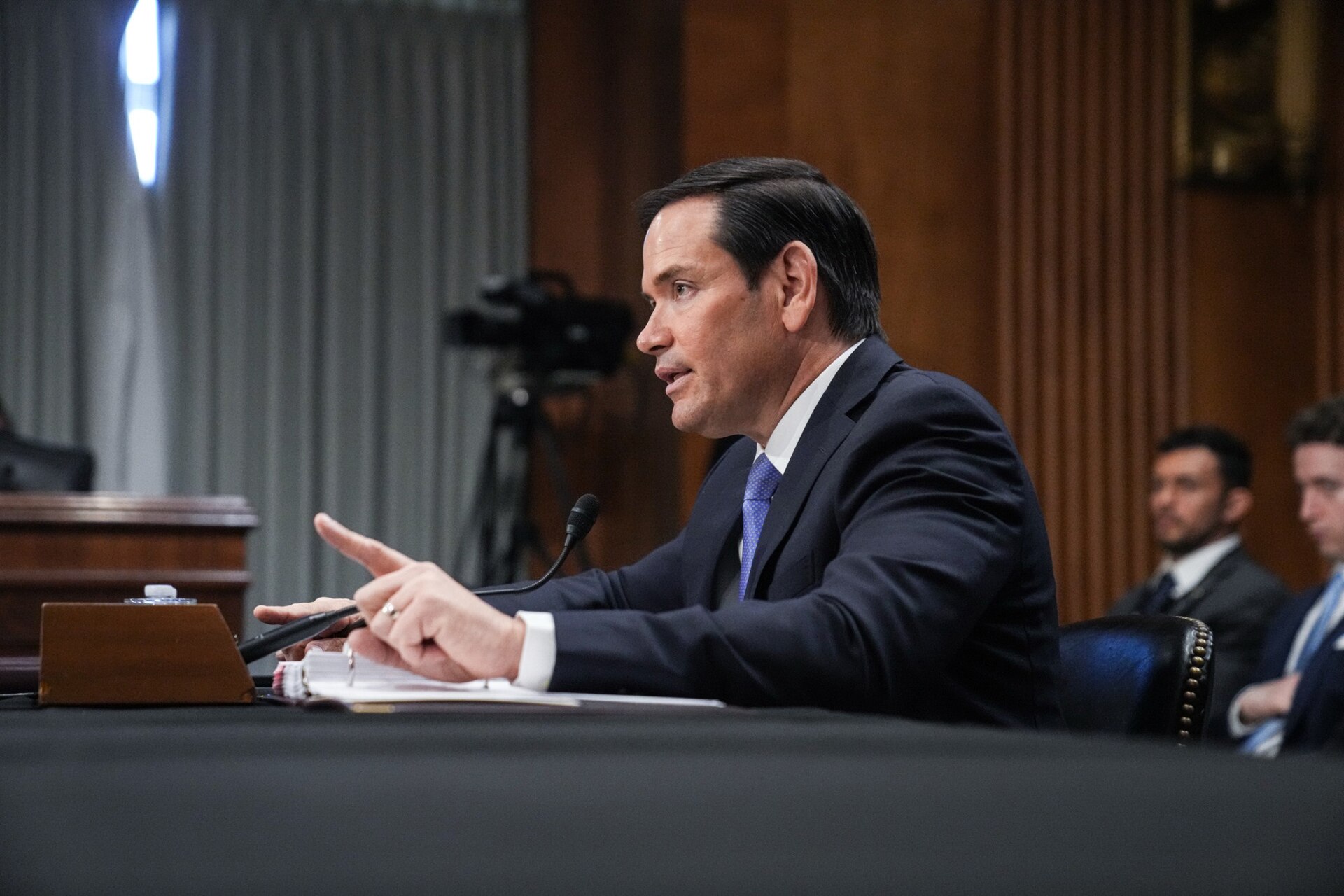
“Mojtaba Khamenei is increasingly engaging at some level, although all of his communications have been in writing and through intermediaries.”
— Marco Rubio, US Secretary of State, SFRC testimony, June 2, 2026
Rubio’s testimony was the first open-session confirmation of the courier architecture and the advisory council structure surrounding Khamenei. He described a 6-to-8-person mixed IRGC-civilian council filtering all inbound and outbound communications, with Foreign Minister Abbas Araghchi and Parliament Speaker Mohammad Bagher Ghalibaf functioning as messengers rather than decision-makers. The picture he drew — a wounded leader underground, communicating through handwritten notes carried by motorcycle, surrounded by a divided council — does not describe a process that produces the kind of settled nuclear commitment Trump announced less than 24 hours later.
Rubio did not contradict Trump directly and did not deny that progress was being made in the broader talks. But the institutional detail he provided — courier delays, written-only communication, internal IRGC-civilian fractures, multi-day response cycles — describes a negotiation operating at a pace fundamentally incompatible with Trump’s present-tense framing. A 72-hour courier window and a 3-to-5-day response cycle cannot generate a counterparty that has “already agreed” to anything while the courier is still in transit.
Where Does This Leave Saudi Arabia?
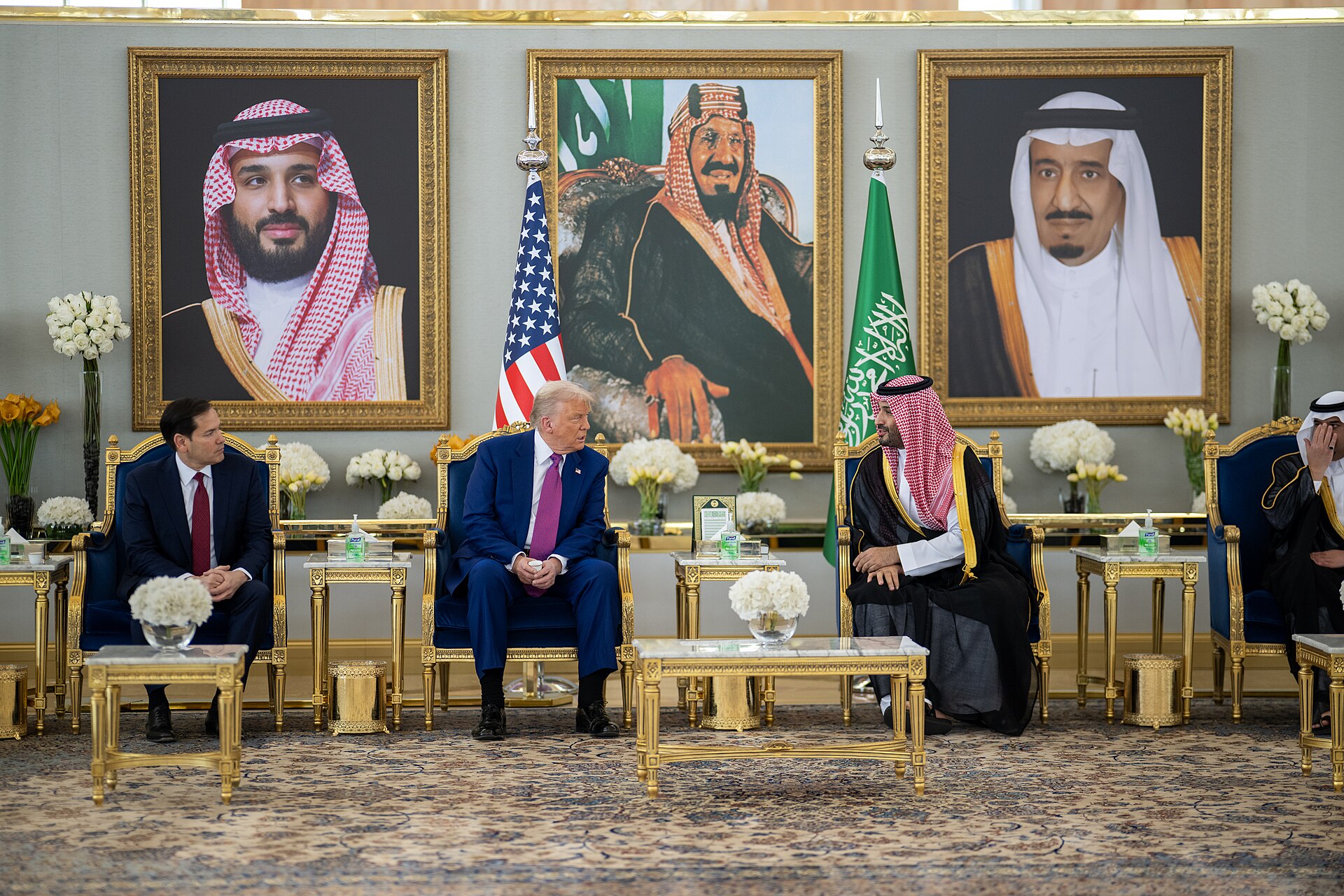
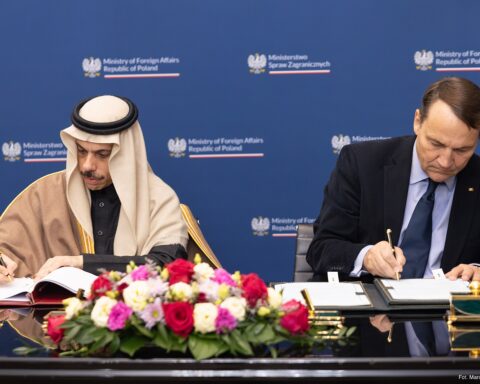
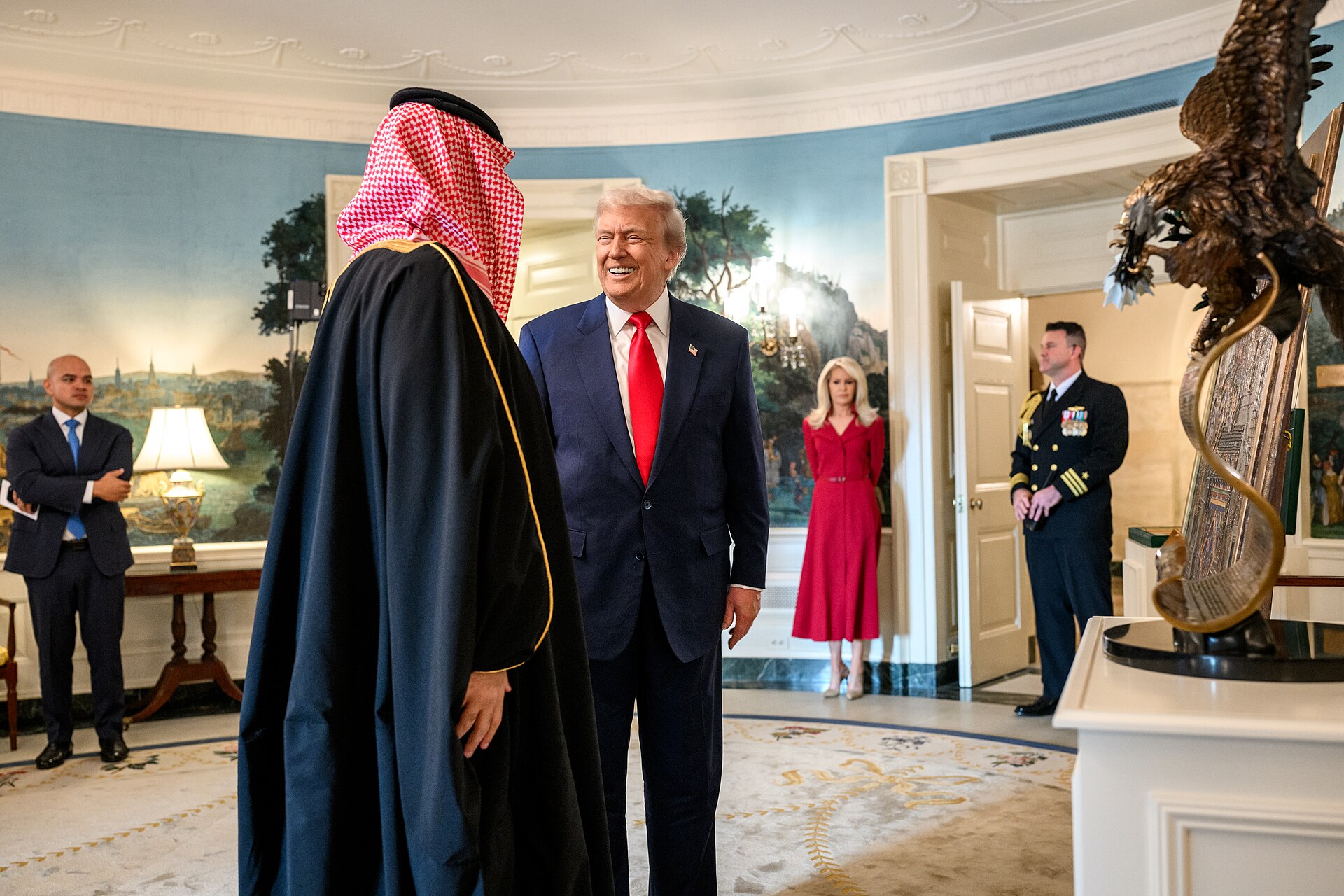
Saudi Arabia is excluded from every active channel in this negotiation and has said nothing about any of them publicly for more than ten days. The Ministry of Foreign Affairs has not commented on the MOU, the IRGC strikes, or the Hormuz blockade that has constrained the kingdom’s primary export route since February 28, and Riyadh holds no seat at any of the three de-escalation tracks — the US-Iran direct channel, the Omani mediation, or the UK-France maritime coordination based at Northwood. Trump’s framing of Khamenei as his personal counterparty deepens the exclusion, because it establishes a bilateral dynamic in which Saudi Arabia is neither participant nor interlocutor.
The fiscal exposure compounds daily. Aramco’s $21.89 billion quarterly dividend — payable June 9 — exceeds the company’s $18.6 billion free cash flow at a coverage ratio of 0.85x. Trump’s suggestion that Hormuz could remain closed until September implies three more months of constrained exports below the kingdom’s $108-to-$111 breakeven and suppressed revenue. The kingdom’s private de-escalation track with Iran — now described as the only surviving Saudi channel to Tehran — predates the war, but its terms and current status remain opaque even to close Gulf allies.
Crown Prince Mohammed bin Salman told Newsweek earlier in 2026 that he would be “working closely together on the issue” to help reach a US-Iran deal, but neither Washington nor Tehran appears to be consulting Riyadh on terms, timelines, or red lines. June 9 brings a triple convergence — Iran’s expected formal MOU rejection, an Omani counteroffer, and the Aramco dividend payment — and Saudi Arabia will arrive at that date with no visible influence over any of the three.
Background
The Iran-US war began on February 28, 2026, when coordinated US-Israeli strikes killed Supreme Leader Ali Khamenei and senior IRGC commanders. His son Mojtaba Khamenei assumed power immediately and has governed from an underground location. Iran responded with the Strait of Hormuz blockade, IRGC strikes across the Gulf, and the establishment of a Persian Gulf Security Arrangement charging commercial vessels for Hormuz transit.
Trump’s June 3 claim is the fourth time since the war began that he has publicly announced Iranian agreement or willingness to negotiate, following a pattern tracked by CNN and Axios. On April 1, he said Iran had asked for a ceasefire; on May 23, he said a deal was “largely negotiated” while Hormuz remained closed; on May 28, he said a deal had been “reached” but needed his “final approval.” Each time, Iranian state media denied or contradicted the characterization within hours. The IAEA has not verified Iran’s nuclear stockpile since February 28 — a 93-day blackout in which the last confirmed figure, 440.9 kilograms of uranium enriched to 60 percent, remains the reference point by institutional default rather than by verified reality.
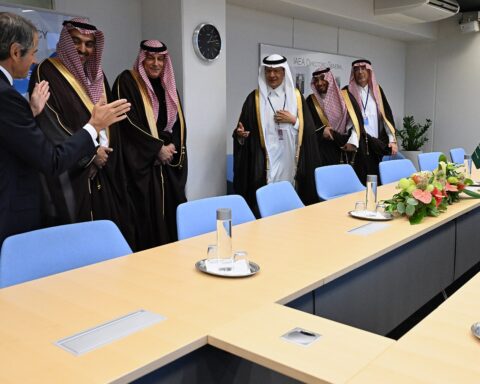
Two days after the Kuwait strikes, IAEA Director General Grossi completed a damage assessment at the UAE’s Barakah nuclear plant — the operating reactor struck by drones on May 17 — and flew directly to Riyadh for separate meetings with Saudi Foreign Minister Prince Faisal bin Farhan and Energy Minister Prince Abdulaziz bin Salman. Grossi then convened an emergency Board of Governors session in Vienna on June 5, the first called specifically over an attack on a nuclear facility during the Gulf conflict.
Frequently Asked Questions
What else did Trump say in the same podcast?
In the same “Pod Force One” episode, Trump confirmed he had called Israeli Prime Minister Benjamin Netanyahu “fucking crazy” and said Israel is “complicating peace talks with Iran,” per the Times of Israel and Military.com. He expressed frustration with Israeli military operations in Lebanon — the same operations that triggered the Iranian precondition cited in the June 1 suspension of all mediated exchanges. The Washington Examiner covered these remarks alongside the Iran nuclear claims.
Has Trump spoken directly with any Iranian official during the war?
No direct communication — by phone, video, or in person — has occurred between Trump and any Iranian official since February 28. All exchanges have been routed through intermediaries, primarily Oman and more recently Pakistan, which brokered the April ceasefire in Islamabad. Rubio’s June 2 testimony confirmed that even written exchanges take 3 to 5 days round-trip through the courier architecture, and the June 1 suspension means that channel is currently inactive.
What are Mojtaba Khamenei’s conditions for the MOU?
Iran International reported on May 29 that an insider described ten conditions pre-approved by Khamenei for any agreement, of which the current US MOU draft violates eight. The publicly reported conditions include recognition of Iranian sovereignty over the Strait of Hormuz, a verified Lebanon ceasefire, and terms allowing Iran to retain its enriched uranium stockpile on Iranian soil. The uranium retention condition contradicts both Trump’s June 3 claim and the JCPOA precedent, under which Iran shipped 11 tons of enriched material out of the country under international supervision.
How depleted is Bahrain’s air defense after three IRGC attacks?
Bahrain’s PAC-3 interceptor stockpile is approximately 87 percent depleted, with roughly eight Missile Segment Enhancement rounds remaining from an original complement of 60. The $8.6 billion emergency FMS waiver that Rubio signed on May 2 excluded Bahrain entirely, covering only Qatar. A new standard FMS authorization published June 1 (FR Doc 2026-10920) provides 50 additional MSE rounds, but on an 18-month delivery timeline that does not match the rate of expenditure Bahrain is sustaining under repeated attack.
What happens on June 9?
The Saudi section above details the triple convergence — Iran’s formal MOU rejection, an Omani counteroffer, and the Aramco dividend. What that section does not capture is the depth of Riyadh’s fiscal exposure at that moment: PIF’s cash reserves have fallen to a six-year low of $15 billion, and the National Debt Management Center has reached approximately 90 percent of its statutory borrowing capacity. The kingdom arrives at that date with narrow room to absorb whatever diplomatic outcome materializes — and no seat at the table where that outcome will be decided.