WASHINGTON — Marco Rubio told the Senate Foreign Relations Committee on Monday that Mojtaba Khamenei is “increasingly engaging” through written intermediaries and, in the same open session, publicly named Iran’s Strait of Hormuz toll as one of four US conditions for reopening the waterway that carries 2.5 million barrels of Saudi crude per day. Saudi Arabia, which has been quietly paying that toll for eighty-one days while its foreign ministry maintains a silence now stretching past ten days, had no public response to either disclosure.
The testimony — technically an FY2027 State Department budget hearing, not a war-powers briefing — amounted to the first public congressional accounting of the Iran war since it began on February 28, and it produced a problem that Riyadh cannot resolve by staying quiet. Rubio simultaneously confirmed the courier channel that routes all decisions through Mojtaba’s underground bunker and enumerated the specific price of reopening Hormuz, which means that the man Saudi Arabia cannot reach and the toll Saudi Arabia has been paying are now both on the congressional record as components of a single deal framework that Riyadh sits outside entirely.
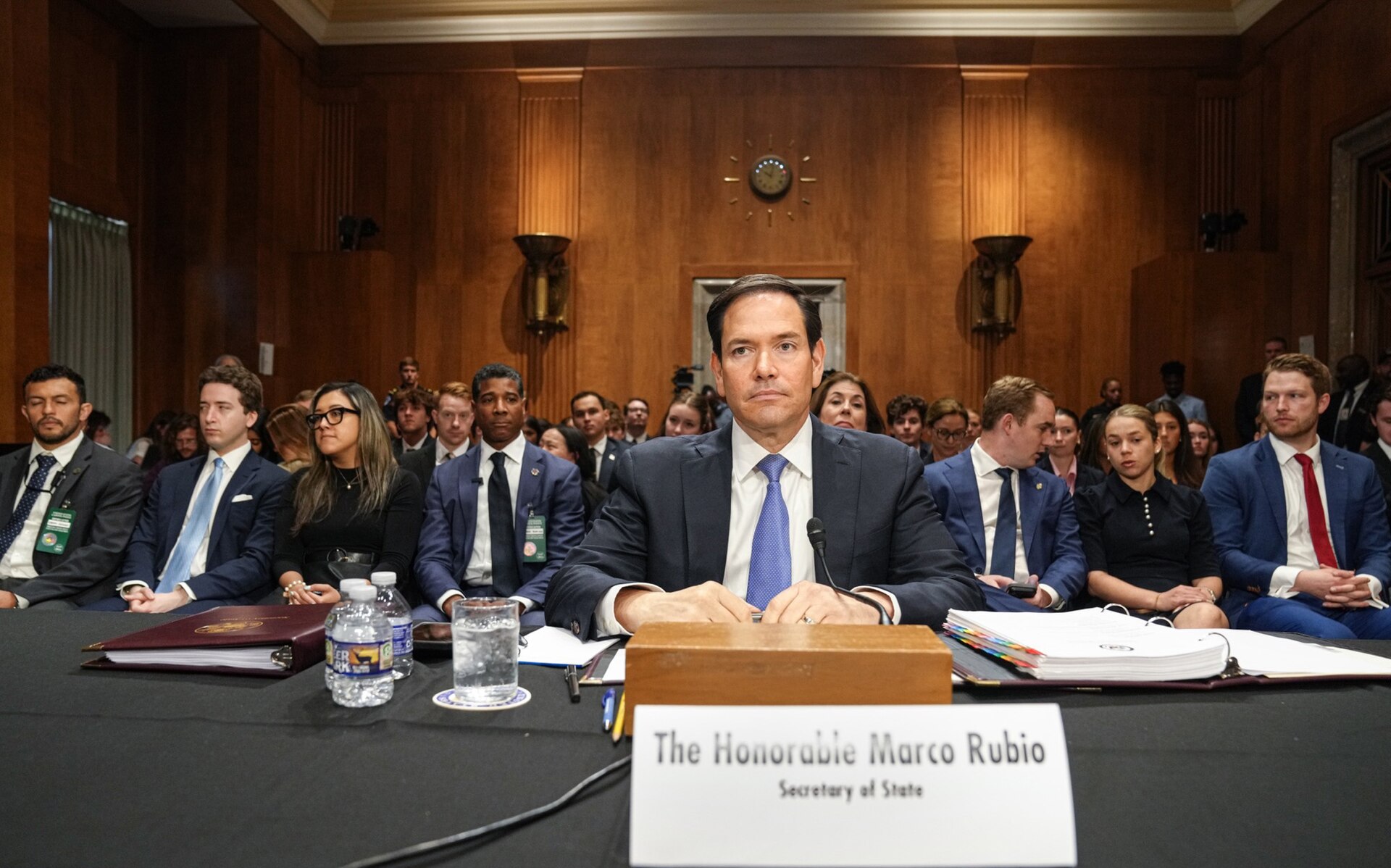
Table of Contents
- What Did Rubio Disclose in His First War Testimony?
- The Courier Architecture Is No Longer a Theory
- What Are the Four US Conditions for Reopening Hormuz?
- Eighty-One Days of Toll Before Washington Named It
- The Council Nobody Knew Existed
- Why Can’t Saudi Arabia Welcome a Deal That Reopens Hormuz?
- Is Iran Still Talking? The Tasnim-Rubio Contradiction
- The Budget Hearing That Disclosed a War
- Frequently Asked Questions
What Did Rubio Disclose in His First War Testimony?
Rubio delivered the most detailed public accounting of US-Iran negotiations since the war began — confirming the Mojtaba courier channel, describing a 6-to-8 person Iranian decision council, and enumerating four explicit conditions for Hormuz reopening — through a budget hearing that was not designed for war disclosures. The session was scheduled as a routine FY2027 appropriations review, the kind of proceeding that generates C-SPAN clips watched mostly by staffers and the occasional correspondent with nothing better to file, but what Rubio produced was a disclosure that entered the public record not through a national security address or a White House briefing but through a budget line-item hearing in which senators were nominally there to discuss State Department funding.
Three elements of the testimony carry particular weight for Saudi Arabia. Rubio confirmed that Mojtaba Khamenei, the supreme leader’s son and the man who holds effective ratification authority over any deal, is alive, operational, and communicating through written intermediaries — the first time a US official has said this in open session. He described a 6-to-8 person advisory council, comprising both IRGC and civilian elements, through which every negotiating position must pass before any decision is taken, with Foreign Minister Araghchi and parliamentary speaker Ghalibaf functioning as messengers rather than principals. And he enumerated, for the first time in congressional testimony, four explicit conditions the US requires before Hormuz can reopen: Iran must declare the strait open, end the toll system known as the PGSA, help remove mines, and pledge not to fire on commercial vessels.
Each disclosure reshapes the ground that Saudi Arabia’s diplomatic silence has been standing on. The confirmation that Mojtaba is engaging directly challenges the counterparty void thesis — the argument that Iran’s internal fracture had rendered meaningful negotiation impossible. The public naming of the PGSA toll as a deal condition transforms what had been a quiet commercial accommodation into a declared obstacle to peace. And the explicit separation of Hormuz reopening (Phase 1, no sanctions relief) from nuclear concessions (Phase 2, sanctions on the table) confirms a sequencing that leaves Saudi Arabia as a fiscal hostage to a two-phase timeline it cannot influence — and the first of those disclosures, the confirmation that Mojtaba’s courier channel is functional and growing more active, directly undermines the assumption on which Riyadh’s diplomatic patience has rested.
That Phase 1/Phase 2 separation has since been further destabilised: Iran’s Phase 1 precondition that has no agreed trigger mechanism — specifically a demand for $12 billion in frozen-assets access before any Hormuz action — inverts the sequencing Rubio described and eliminates the fixed price point Saudi Arabia was attempting to calculate. The Bessent reconstruction proposal, disclosed on the same day Iran filed its Oman counteroffer, further destabilized the asset pool by proposing to redirect Iran’s demanded funds to Kuwait and Bahrain as war reparations.
The Middle East briefing 3,000+ readers start their day with.
One email. Every weekday morning. Free.
The Courier Architecture Is No Longer a Theory
For three months, the operational question at the centre of every Iran analysis has been whether any negotiating channel actually connects to the man who decides, and whether the motorcycle couriers carrying written communications to and from Mojtaba Khamenei’s underground bunker — described by a senior US official to Axios as a system run by people “literally in caves, not using email” — represented a functional pipeline or an exercise in performative diplomacy. No US government official had confirmed in a public setting that the courier channel was producing results until Monday.
“I think there are indications out there that he is increasingly engaging at some level, although all of his communications have been in writing and through intermediaries.”
— Marco Rubio, Secretary of State, Senate Foreign Relations Committee, June 2, 2026
The word “increasingly” does considerable work in that sentence, because it implies not merely that the channel exists but that Mojtaba’s level of engagement has grown over time — a trajectory consistent with the weeks of courier exchanges documented during the MOU amendment process that began in late May. This is not a static confirmation of a channel’s existence but a directional claim about a decision-maker’s engagement deepening while his government’s public media arms simultaneously announce that talks have ended. The disclosure carries a temporal implication that extends beyond the current negotiating round: if engagement is “increasing,” then there was a period when it was lower — possibly the weeks in late April and early May when the MOU process appeared stalled and Iran’s formal rejection seemed imminent — and the trajectory Rubio described suggests the channel has moved from existence to activity to deepening participation.
This matters for Saudi Arabia in a specific and uncomfortable way. Riyadh’s diplomatic position has rested, at least implicitly, on the assumption that Iran’s internal dysfunction made a deal unlikely — that the IRGC-civilian schism and the institutional collapse of the SNSC pipeline meant no counterparty existed capable of delivering on commitments. If Mojtaba is increasingly engaging, the counterparty is not void — he is merely inaccessible to everyone except the Americans and their intermediaries, a category that does not include Saudi Arabia at any level. The channels Riyadh has maintained — four Bin Farhan–Araghchi meetings, the MBS–Pezeshkian Eid exchange described as “purely bilateral” — connect to the civilian track that Rubio just described as a messenger service, staffed by men who carry proposals to a council they do not control, proposals whose terms Rubio laid out in open session for anyone — including Riyadh — to hear.
What Are the Four US Conditions for Reopening Hormuz?
Rubio’s enumeration was the first time a senior US official has laid out, in open congressional testimony, four specific prerequisites for restoring commercial navigation through the Strait of Hormuz: Iran must declare the strait open to all commercial traffic, end the PGSA toll system, participate in mine removal, and pledge not to fire on commercial vessels. These are Phase 1 conditions — meeting all four buys Iran no sanctions relief, only the right to begin Phase 2 negotiations on nuclear concessions.
| US Condition | Rubio’s Language (SFRC, June 2) | Saudi Arabia’s Current Position |
|---|---|---|
| Declare strait open | “They need to announce [the strait] is open” | No public statement; 2.5M b/d transiting under Iranian terms |
| End PGSA toll | “Stop charging a toll” | Paying toll since ~March 13 (81 days); no public objection |
| Mine removal | “Help remove mines” | No Saudi mine-clearing operations announced |
| No fire on commercial vessels | “Announce that they will no longer fire on commercial ships” | Silent; multiple incidents affecting Saudi-bound cargo |
The conditions are notable both for what they include and what they exclude. The inclusion of the PGSA toll — “stop charging a toll,” in Rubio’s words — transforms a system that has been collecting up to $2 million per VLCC transit in yuan or BTC since mid-March from a commercial inconvenience into a named diplomatic obstacle, while the exclusion of any reference to sovereignty recognition — Iran’s stated fifth precondition for Hormuz negotiations — signals that Washington considers Tehran’s claim to regulatory authority over the strait a non-starter that will not appear in any final text.
What Rubio also made explicit is that meeting all four conditions earns Iran nothing on sanctions. Hormuz reopening is “a predicate that opens the door to Phase 2,” he told the committee, and Phase 2 involves “severe and long-term limitations and/or cancellation of enrichment” in exchange for sanctions relief. “The more they give, the more they would get,” Rubio said — a formulation that Al Jazeera’s Patty Culhane noted meant the US “isn’t even offering any carrots” for the phase that most directly affects Saudi Arabia’s commercial interests. Riyadh needs Hormuz open immediately; the US framework says Iran gets nothing for opening it immediately, which means Iran’s incentive to comply with Phase 1 depends entirely on its appetite for Phase 2 — a nuclear negotiation in which Saudi Arabia has no seat and no mechanism to shape the outcome.
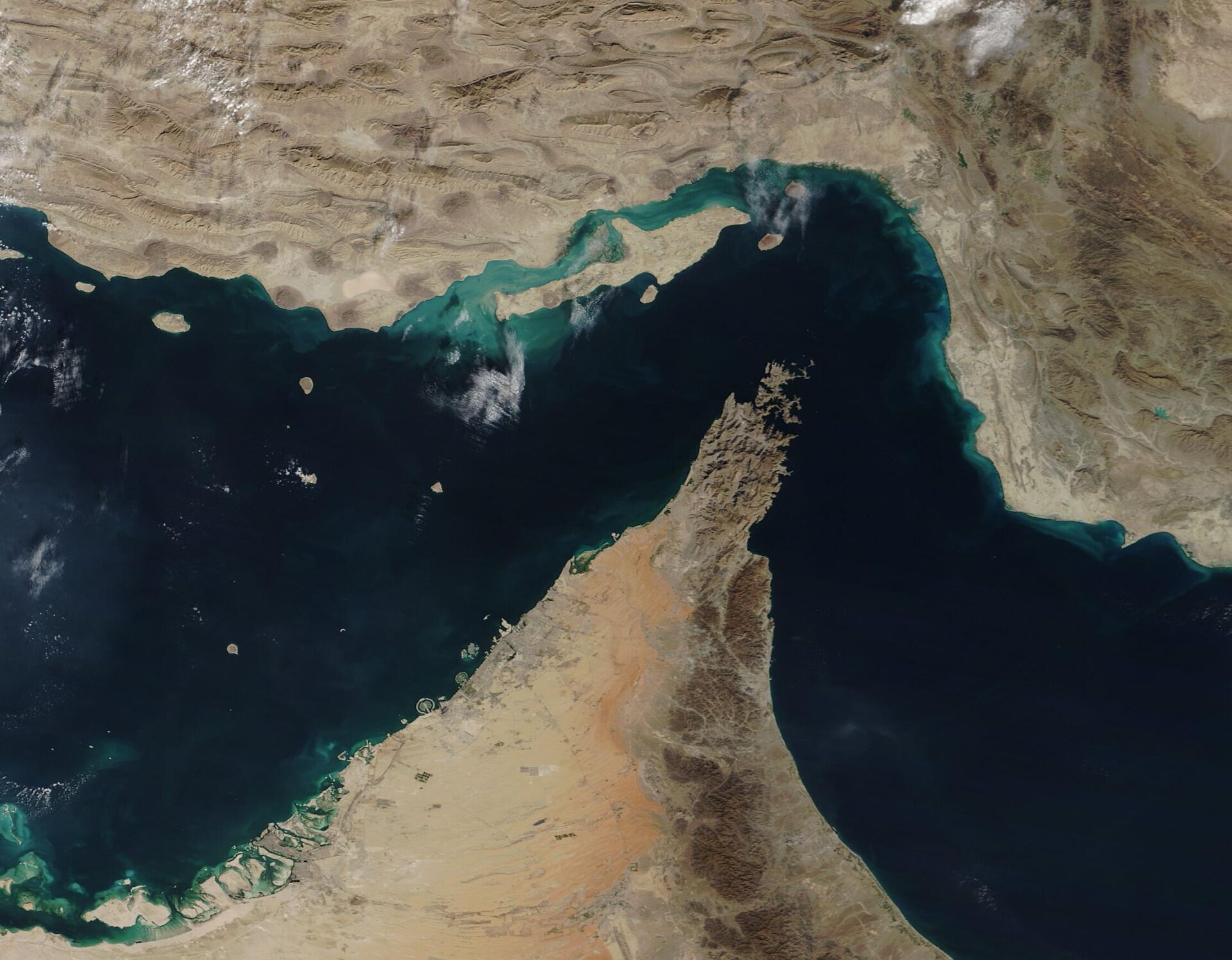
The phasing creates distinct problems on both sides. Iran must dismantle its most effective coercive instrument — the toll and the threat of closure — before receiving any economic benefit in return, which is why Tasnim’s announcement one day earlier that Iran would “move to fully close” Hormuz reads less as a negotiating position than as an IRGC rejection of the entire Phase 1 framework. Saudi Arabia, meanwhile, needs Hormuz open to arrest a fiscal haemorrhage now running at roughly $14-17 per barrel below breakeven — but the US conditions for opening Hormuz include dismantling the very mechanism that Riyadh has been quietly paying to navigate, and the toll that Rubio says must end has been collecting Saudi money since March.
Eighty-One Days of Toll Before Washington Named It
The PGSA — Iran’s toll framework for commercial transits through the Strait of Hormuz — began collecting fees around March 13, 2026, was formally established on May 18, received OFAC SDN designation on May 28, and was named by Rubio as a deal condition on June 2. Eighty-one days of toll collection elapsed between the system going operational and the first public US government statement that ending it is a prerequisite for any agreement. During those eighty-one days, Saudi Arabia’s Hormuz-dependent crude — 2.5 million barrels per day that cannot be fully redirected through Yanbu — has been transiting under terms set unilaterally by Tehran, with vessels paying fees in currencies that bypass the dollar system Washington controls.
The OFAC designation on May 28 created a compliance problem for any entity touching the PGSA, but Rubio’s testimony did something the SDN listing alone could not: it placed the toll inside the framework of a deal, which means Saudi Arabia’s quiet accommodation of the fee structure is now visible as a position on the negotiations rather than merely a commercial necessity. Before June 2, paying the toll could be explained as pragmatism — the cost of keeping crude moving through a waterway controlled by a belligerent. After June 2, paying the toll is acquiescence to a system the United States has publicly identified as one of four obstacles to peace, and Saudi Arabia’s failure to publicly demand its removal aligns Riyadh’s commercial behaviour with Iran’s negotiating posture rather than Washington’s. This is the mechanism that makes the Saudi silence functionally untenable as anything other than a temporary position — and the body that must decide whether the toll ends, the council Rubio described publicly for the first time on Monday, is one Riyadh did not know existed until it heard about it from the same hearing.
The Council Nobody Knew Existed
Rubio’s description of a 6-to-8 person advisory council represents the first public US government characterisation of the internal body that sits between Iran’s negotiating team and Mojtaba Khamenei’s ratification authority. Prior reporting had established Mojtaba as the decision-maker — Iran International’s Khanalizadeh identified eight of ten Mojtaba conditions violated by the unamended MOU draft — and had described the courier infrastructure, but no US official had publicly described a co-decisional council with mixed IRGC and civilian membership functioning as the institutional bottleneck through which every position must pass.
“What Araghchi and Ghalibaf bring or take from us, they then have to run back to this council and ultimately get guidance from them,” Rubio told the committee — a formulation that Sen. Mike Lee of Utah seized on when he asked whether the diplomatic channels were “at odds with or working with” the IRGC. Rubio’s own description had already answered the question, since the council includes both IRGC and non-IRGC members by design, which means the channels are simultaneously at odds and working together within the same body. The council architecture explains several anomalies that have defined the negotiating process: the 72-hour minimum response times that characterised the competing MOU exchanges are consistent with a system in which written positions must travel from negotiators to a mixed council, through that council’s deliberation, upward to Mojtaba via courier, and back down the same chain.
For Saudi Arabia, the council’s existence means that even if Riyadh could reach Araghchi — the Iranian official most accessible to Gulf diplomacy — that contact reaches a messenger who must defer to a body whose IRGC members have every institutional reason to reject the terms Rubio enumerated on Monday. The path from a Saudi diplomatic initiative to an Iranian decision now runs through at least four intermediary layers (Saudi diplomat to Araghchi, Araghchi to council, council to courier, courier to Mojtaba), and Riyadh has confirmed access only to the first — a problem that would be academic if the deal on the other end were unambiguously in Saudi Arabia’s interest.
Why Can’t Saudi Arabia Welcome a Deal That Reopens Hormuz?
A deal that meets Rubio’s four conditions would remove the PGSA toll, clear mines, and restore commercial navigation through the strait that carries the majority of Saudi crude exports — but it would also remove the disruption premium that is keeping Brent crude above the price at which Saudi Arabia’s budget becomes mathematically unsustainable. Saudi Arabia needs Hormuz open and it needs oil prices high, and a deal delivers the first while destroying the second.
| Saudi Fiscal Indicator | Current Value | Source |
|---|---|---|
| Brent crude (June 2) | $94.58/bbl | Trading Economics |
| Saudi consolidated breakeven | $108–111/bbl | Goldman Sachs |
| Breakeven gap (annualised) | ~$140–150B shortfall | Goldman Sachs estimates |
| Aramco Q1 FCF vs. dividend | $18.6B vs. $21.89B (0.85x coverage) | Aramco IR, May 2026 |
| Q1 budget deficit | SAR 125.7B (76% of full-year target in 90 days) | Saudi MoF |
| NDMC borrowing capacity | ~90% exhausted | NDMC disclosures |
| PIF cash position | $15B (six-year low, 1.6% of assets) | PIF reporting |
The fiscal position is already severe enough that the arithmetic does not require projection. Aramco is borrowing to pay the government its quarterly dividend — $21.89 billion payable June 9, against $18.6 billion in free cash flow — while the budget Riyadh built for 2026 assumed oil prices and production levels that no longer exist. The Q1 deficit consumed 76 percent of the full-year target in ninety days, and Goldman Sachs projects the actual full-year deficit at 6 to 6.6 percent of GDP. The timing of the Aramco dividend on June 9 adds another dimension to the trap, because the same date has been identified as the target for Iran’s formal response to the MOU and an Omani counteroffer — meaning the fiscal and diplomatic calendars converge on a single week in which Riyadh may simultaneously learn whether a deal is coming and pay out $21.89 billion it cannot cover from operating cash flow. MBS’s Project Freedom veto and the peace-trap thesis frames the same arithmetic in concrete terms: why Riyadh grounded Trump’s Hormuz escort mission rather than accept a deal that would collapse the war premium it cannot afford to lose.
So Saudi Arabia is caught between the war and the deal, and neither resolves the underlying fiscal problem. The war keeps Hormuz partially blocked, its crude paying an Iranian toll, and its interceptor stockpile depleting toward a level that leaves eighty to one hundred fifty PAC-3 rounds for one to two days of full-intensity defence. The deal, if it closes on the terms Rubio described, reopens the strait but removes the disruption premium sustaining Brent above $90 — and Riyadh has no mechanism to influence which outcome arrives or when, a point Rubio underscored when he said the deal “could happen today, it could happen tomorrow, it could happen next week.” Whether it can happen at all depends on which version of Tehran’s position is real — a question that Tasnim and Rubio answered in opposite ways on consecutive days.
Is Iran Still Talking? The Tasnim-Rubio Contradiction
Iran’s IRGC-affiliated Tasnim agency announced on June 1 that Iranian negotiators had stopped exchanging messages with the US through intermediaries and that Iran would move to fully close the Strait of Hormuz; twenty-four hours later, Rubio told the Senate that Mojtaba Khamenei was “increasingly engaging” and Iran had “agreed to negotiate aspects of their nuclear program that just a month ago, just a year ago, they were refusing to even mention.” These claims are irreconcilable on their face, and the gap between them is itself a map of the internal split that Rubio’s council description illuminated.
Tasnim speaks for the IRGC’s public messaging apparatus, and its June 1 announcement reads as either a genuine statement of IRGC intent — the Revolutionary Guards want talks to end and Hormuz to close — or a pressure play designed to extract better terms before the framework hardens. Rubio’s testimony the following day, asserting ongoing and deepening engagement, either means the IRGC’s public position does not reflect the council’s actual deliberations or that the civilian elements on the 6-to-8 member body are maintaining a channel that the IRGC’s media arm is trying to kill publicly while the council sustains it privately. In either case, the Tasnim announcement and the Rubio testimony cannot both be fully true, and the question of which is closer to reality determines whether the deal Rubio described to the Senate is weeks away or already dead.
“We are the strongest nation on the planet Earth and we’re in a stalemate with Iran. And now we’re begging to get back into a deal that you all trashed in the first place.”
— Sen. Cory Booker (D-NJ), Senate Foreign Relations Committee, June 2, 2026
The Mehr News Agency’s formulation on the same day — Iran “still studying” the latest proposal, communications paused for “several days,” a “stern” approach citing US ceasefire non-compliance — occupies a middle position that Tasnim’s language does not permit. If Iran has stopped all intermediary communications (Tasnim), then there is nothing left to study (Mehr), and the coexistence of both formulations in Iranian state media on the same day mirrors the mixed IRGC-civilian composition of the council Rubio described, suggesting the council’s internal disagreement is leaking directly into the outlets controlled by its respective factions. Booker’s frustration captured the American mood cleanly, but his framing — that the US is “begging” to restore a deal it destroyed — obscured the more uncomfortable reality that Saudi Arabia has even less clarity than Washington about whether negotiations are ongoing, because Riyadh cannot confirm which Iranian outlet is telling the truth, and the US official who could resolve that question delivered his answer through a budget hearing never designed for war disclosures.
The Budget Hearing That Disclosed a War
There is something structurally telling about the vehicle through which these disclosures arrived. The US has been at war with Iran — airstrikes, a Hormuz blockade, commercial shipping under fire, American service members wounded — since February 28, and the first public congressional hearing producing a detailed diplomatic framework for ending the conflict was an FY2027 State Department appropriations review. Not a war-powers debate, not an Armed Services Committee session, not a presidential address — a budget hearing in which senators were nominally reviewing State Department funding and used their question time to extract information the executive branch had not volunteered elsewhere.
The format shaped the information in ways that matter for anyone trying to understand Saudi Arabia’s position within the deal framework. Rubio’s testimony was not delivered under war-powers requirements, which would have forced him to address questions of authorisation, scope, and endgame — the kind of questions that the MOU process has systematically avoided. It was delivered under budget justification, which allowed him to discuss the deal’s architecture in considerable detail without addressing whether the war itself is authorised, proportional, or producing results commensurate with its costs to the coalition partners absorbing most of the physical damage. The format permitted disclosure without accountability, and what was disclosed was a negotiating framework — four conditions, a two-phase sequence, a decision council, a courier channel — that leaves Saudi Arabia outside every room where terms are being set.
Riyadh sits outside all three diplomatic tracks: the US-Iran channel, the Oman co-management track, and the UK-France coalition at Northwood. The US has now enumerated four specific conditions for Hormuz reopening without consulting, briefing, or apparently informing the country whose crude those conditions are designed to protect — and the hearing’s most consequential details are on the public record because a senator from Utah asked the right question during an appropriations markup. Saudi Arabia’s foreign ministry has not spoken publicly in more than ten days, Al Arabiya did not cover the testimony, and the last confirmed Rubio–Bin Farhan contact was in March 2026. Rubio told the committee the deal “could happen today, it could happen tomorrow, it could happen next week” — a timeline that, if taken at face value, means Saudi Arabia may have days rather than weeks to develop a public position on a framework it learned about, if it was watching, from C-SPAN.
Frequently Asked Questions
Has any Saudi government entity responded to Rubio’s testimony?
No Saudi government statement, on or off the record, has addressed Rubio’s June 2 testimony as of publication. The Ministry of Foreign Affairs has not issued a public statement on any topic for more than ten days — the longest sustained public silence since the war began on February 28. Al Arabiya, Saudi Arabia’s primary state-aligned international broadcaster, did not cover the Senate hearing, and no Saudi diplomat was quoted in any wire service account of the testimony from AP, Reuters, or AFP. The last confirmed contact between Rubio and Saudi Foreign Minister Prince Faisal bin Farhan was in March 2026, three months and multiple escalation cycles before the testimony that may have defined the terms on which the war ends.
What is the MOU structure currently under negotiation?
The memorandum of understanding being discussed through intermediaries would include a 60-day ceasefire extension, Iranian reopening of the Strait of Hormuz under Rubio’s four conditions, US facilitation of frozen Iranian asset releases, and a commitment by both sides to enter nuclear and sanctions negotiations as Phase 2. The MOU does not itself contain nuclear terms — those would be negotiated separately, with “severe and long-term limitations and/or cancellation of enrichment” on the table in exchange for graduated sanctions relief. Reuters reported in early June that Iran was “preparing to decline” the current text, while Tasnim reported counter-amendments submitted June 1, though Rubio’s testimony the following day asserted that engagement was deepening rather than collapsing.
How does the PGSA toll system affect countries other than Saudi Arabia?
The PGSA operates a three-tier architecture that treats nations differently based on bilateral relationships with Tehran. India, Iraq, and Pakistan hold bilateral carve-outs that effectively exempt their vessels from toll payments — though this exemption runs through foreign ministry channels separate from IRGC enforcement, a distinction the IRGC itself has already violated: the MT Sanmar Herald was fired upon in April despite holding Iranian clearance, with crew reporting to naval coordinators, “You gave me clearance to go.” Grey fleet vessels — those operating outside Western compliance frameworks — pay up to $2 million per transit in yuan or Bitcoin, while vessels with dark or non-compliant AIS configurations face enforcement actions rather than toll demands. The OFAC SDN designation issued May 28 creates a compliance fork for any Indian entity touching PGSA infrastructure while India simultaneously maintains its bilateral carve-out with Tehran.
What would happen to oil prices if a deal closes and Hormuz reopens?
Wood Mackenzie’s “Quick Peace” scenario projects Brent falling to $80 per barrel by end of 2026 and $65 per barrel in 2027, both figures well below Saudi Arabia’s $108–111 consolidated breakeven. Pre-war Brent fundamentals, before the Hormuz disruption premium, suggested a baseline range of $70–80 per barrel, which means the war premium is currently worth roughly $15–25 per barrel to Saudi revenue. A deal that eliminates the blockade threat, ends the toll, and restores full commercial navigation would remove that premium — meaning the crisis keeping Saudi Arabia’s fiscal position from collapsing faster is the same crisis depleting its interceptor stocks, imposing toll costs on its crude, and excluding Riyadh from the process that determines when and how it ends.
Has Iran formally responded to Rubio’s four Hormuz conditions?
No Iranian government spokesperson has directly addressed the four conditions Rubio enumerated on June 2 as of publication. Mehr News Agency’s “still studying” formulation referred to the broader MOU proposal, not to the Hormuz prerequisites specifically. The Khatam al-Anbiya “designated routes” framework announced by the IRGC on May 31 operates on a parallel military track to the PGSA and was not mentioned in Rubio’s testimony — leaving unresolved whether Iranian military navigation directives would survive a PGSA dismantlement or constitute a separate enforcement mechanism that any Phase 1 agreement would also need to address.
The following day, Trump gave the New York Post’s “Pod Force One” podcast an account that went further than anything Rubio had said in closed session: Iran had “already agreed” on nuclear terms and Mojtaba Khamenei was personally approving them through intermediaries — a claim published June 3 on the same morning IRGC missiles struck Kuwait airport, illustrating the gap between Washington’s public optimism and the kinetic reality on the ground. The following morning, the House formalized that same gap legislatively: H.Con.Res.38 passed 215–208, invoking the War Powers Resolution for the first time on Iran — the 215-vote threshold now a number Iran can cite in any future negotiation and Saudi Arabia must factor into its pricing of how long the conflict continues. Kuwait, whose airport was the target, met Rubio bilaterally in Washington the next day — a diplomatic step Saudi Arabia, despite its proximity to both Rubio and the conflict, has not taken.
The day after Rubio’s June 2 SFRC testimony, he returned to Congress and addressed Palestinian statehood directly: opposing Israeli annexation of the West Bank while stopping short of affirming a Palestinian state. That asymmetry — anti-annexation without pro-statehood — is the structural gap that leaves Saudi Arabia’s four-element normalization precondition unmet. See Rubio Opposed Annexation. Saudi Arabia Required Statehood.
The sequencing incompatibility between Rubio’s Phase 1/Phase 2 structure and Iran’s asset-first demand is traced further in Twenty-Four Billion Dollars Cannot Move in Two Directions, which shows how Bessent’s IEEPA asset-seizure plan and Tehran’s Hormuz price are claims on the same finite pool, making simultaneous satisfaction structurally impossible.