Table of Contents
- The Bilateral Architecture No One Was Supposed to See
- What Did Saudi Arabia Actually Strike — and Why Did Iran Absorb It?
- The Ambassador Who Wasn’t Expelled
- Helsinki Without Basket III
- The Veto That Proved the Architecture
- Why Has Saudi Arabia’s Foreign Ministry Gone Silent?
- What Does the MOU’s Collapse Mean for the Saudi Track?
- June 9: Three Deadlines, One Day, No Margin
- FAQ
The Bilateral Architecture No One Was Supposed to See
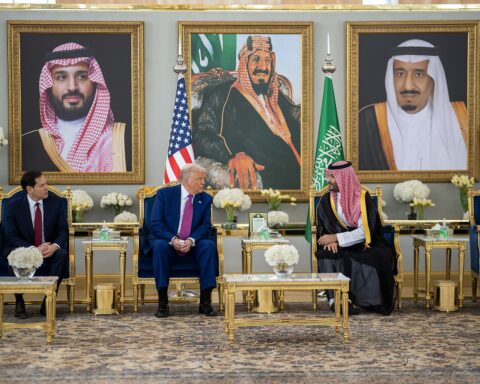
RIYADH — Saudi Arabia has been running a private war-and-peace track with Iran for ninety-six days, and the most remarkable thing about it is that we were never supposed to know. In late March, the Royal Saudi Air Force struck Iranian territory — the first direct Saudi military action on Iranian soil in the kingdom’s history — and within a week, Iranian attacks on Saudi Arabia dropped 76 percent, from over 105 strikes to roughly 25. The Helsinki-model non-aggression pact that Riyadh floated to the Financial Times on May 14 was not an opening gambit; it was the diplomatic wrapper for a deal that Saudi covert strikes had already enforced on the ground.
The timing of this disclosure matters as much as the content. Reuters published the covert-strikes exclusive on May 12. The Times of Israel corroborated it on May 13. The FT reported the Helsinki proposal on May 14. That three-day sequential arc — we hit them, attacks fell, now here’s the diplomatic framework — was not journalism discovering a secret. The sequencing is too tidy for coincidence: a rollout that demonstrated a bilateral de-escalation architecture operating entirely outside the US-Iran MOU negotiations Saudi Arabia has been excluded from. Trump claimed a deal could come this weekend while Araghchi simultaneously denied any formal negotiations exist — a contradiction the Saudi bilateral track has no channel to resolve.
On June 9, that MOU dies. Iran is “preparing to decline” the US proposal, per Reuters (June 2), and the Omani counteroffer arrives the same day. Also on June 9: Aramco’s $21.89 billion quarterly dividend falls due against just $18.6 billion in free cash flow. The fiscal trap and the diplomatic trap converge on a single date, and the only bilateral channel still functional between Riyadh and Tehran is the one MBS built from strikes, threats, and an ambassador everyone else would have expelled months ago. That bilateral track cannot offer what Tehran demands: Washington’s attempt to repurpose Iran’s Phase 1 demand as Gulf reconstruction reparations involves instruments — sanctions architecture, frozen asset access — that only Washington holds.
What Did Saudi Arabia Actually Strike — and Why Did Iran Absorb It?
Reuters’ May 12 exclusive, sourced to two Western officials and two Iranian officials, confirmed that Saudi Arabia launched “numerous, unpublicized strikes” on Iran in late March 2026. One Western official described them as “tit-for-tat strikes in retaliation for when Saudi (Arabia) was hit.” Reuters could not independently confirm specific targets, weapons systems, or strike counts — and neither Riyadh nor Tehran has officially acknowledged the operation. The absence of formal acknowledgment from either side is itself the architecture: both governments absorbed the disclosure without escalation because both had already agreed, through backchannel contacts, on its aftermath.
The operational context makes the strikes comprehensible. In the week of March 25-31, Iran struck Saudi territory more than 105 times — the highest weekly total since the war began on February 28. Saudi Arabia had opened King Fahd Air Base in Taif to US offensive operations on approximately March 21 (contradicting MOFA’s February 28 statement that “the Kingdom had confirmed it would not allow its airspace and territory to be used to target Iran”), and Iran responded by escalating its attacks on Saudi soil. The Saudi counterstrikes arrived in that same late-March window, accompanied by what Reuters calls “intensive diplomatic engagement” and explicit warnings that further attacks would trigger further retaliation.
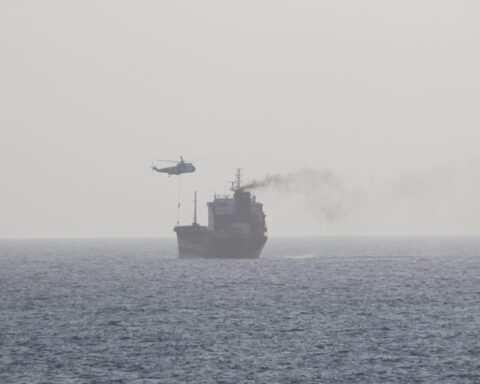
The result was immediate and measurable. Attacks on Saudi Arabia fell from over 105 in the week ending March 31 to roughly 25 in the week of April 1-6 — a 76 percent reduction in seven days. No ceasefire was announced. No statement was issued. The reduction simply happened, and held. By Day 96 of the war (June 3), IRGC operations have concentrated overwhelmingly on US and Israeli military targets: the Ali Al-Salem strike on Kuwait (wounding five Americans, destroying two MQ-9 Reapers), the MSC Sariska V cruise missile attack inside the Persian Gulf (June 2), the continued Hormuz blockade operations. Saudi Arabia is no longer the primary target — and that is not an accident.
The Middle East briefing 3,000+ readers start their day with.
One email. Every weekday morning. Free.
| Date | Event | Significance |
|---|---|---|
| Feb 28 | War begins; Saudi MOFA pledges no airspace/territory use against Iran | Official neutrality declared |
| ~Mar 21 | Taif/King Fahd base opened to US + Iran military attaché expelled | Neutrality abandoned; civilian ambassador preserved |
| Mar 25-31 | 105+ Iranian strikes on Saudi Arabia in one week | Peak Iranian escalation against kingdom |
| Late March | Saudi “numerous, unpublicized strikes” on Iranian soil | First-ever direct Saudi military action on Iran |
| Apr 1-6 | Iranian strikes drop to ~25 (76% reduction) | Backchannel de-escalation confirmed working |
| ~May 5-7 | Saudi suspends US access to Prince Sultan Air Base | Bilateral track requires distance from US operations |
| May 12-15 | Reuters disclosure → Helsinki proposal (3-day arc) | Sequential public reveal of bilateral architecture |
Iran absorbed the Saudi strikes without public retaliation, without formal protest, and without recalling its ambassador — and that silence is the most revealing data point of all. An Iran that has struck Kuwait, bombed a container ship inside the Gulf, and threatened Bab al-Mandab activation chose not to escalate against the one country that actually hit Iranian territory. The explanation is structural: Iran’s war economy is contracting 6.1 percent (IMF), its total war damage — by several independent estimates — approaches $270 billion against a wartime GDP of roughly $300 billion, and inflation exceeds 70 percent. Tehran cannot afford a second front with a neighbour that controls 4 million barrels per day of pipeline-diversified export capacity and sits across the Gulf with American-supplied interceptors.
The Ambassador Who Wasn’t Expelled
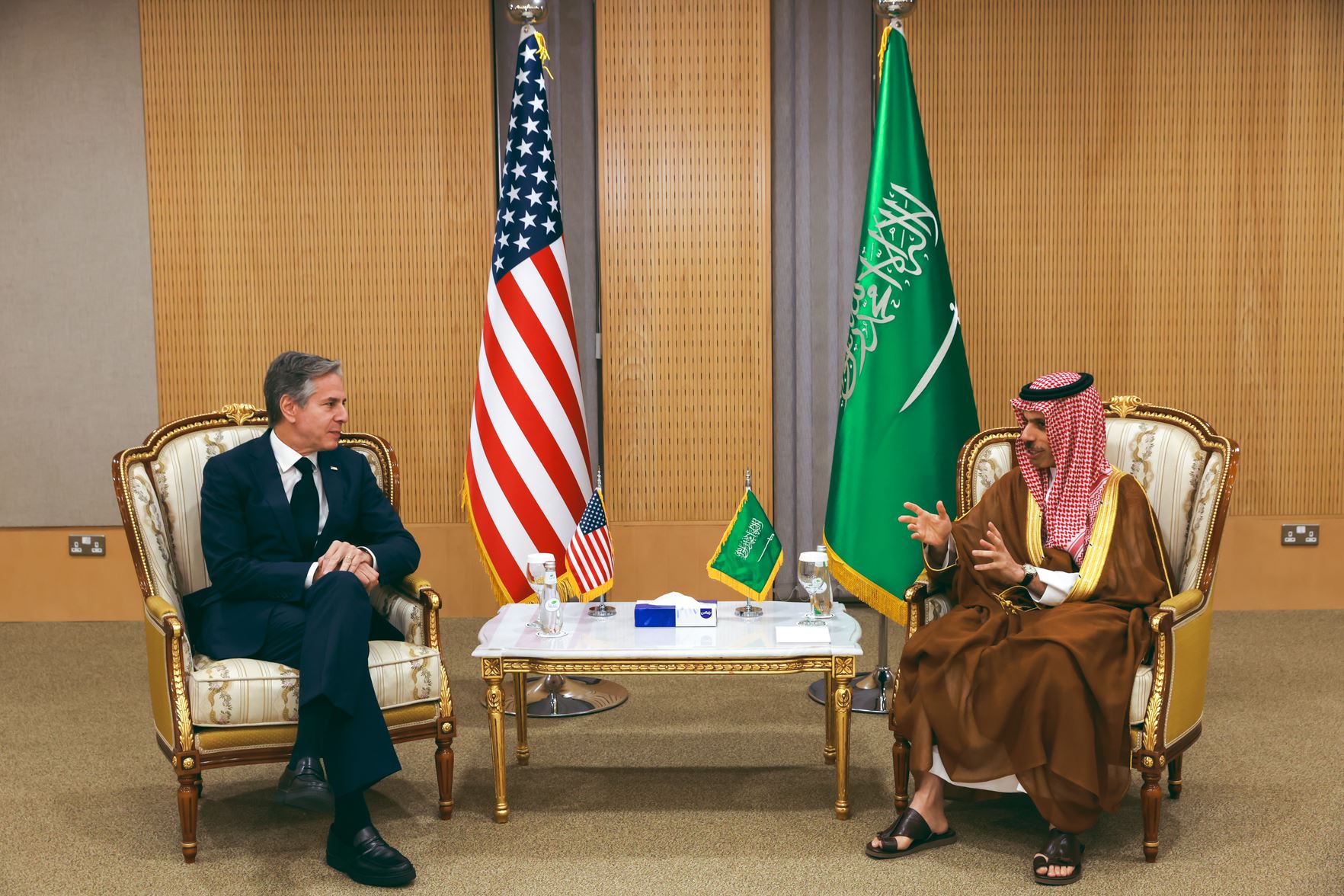
On March 21, 2026, Saudi Arabia expelled Iran’s military attaché and four embassy staff. It did not expel Ambassador Alireza Enayati. That asymmetry — punishing the military liaison while preserving the civilian diplomatic channel — was the first structural signal that Riyadh intended to maintain a private track with Tehran even as it opened its airbases to American bombers the same day. Foreign Minister Prince Faisal bin Farhan told reporters that trust was “shattered,” but the man responsible for whatever trust remained kept his residence, his credentials, and his platform. The contrast with Kuwait’s approach sharpened seventy-four days later: after Iranian drones struck Terminal 1 and killed a civilian, Kuwait declared two civilian Iranian diplomats persona non grata — targeting the diplomatic corps rather than the military attaché, and pairing the expulsions with closure of Iran’s cultural mission. Saudi Arabia, which chairs the GCC, endorsed “any measures Kuwait takes” and took none of its own.
Enayati has been remarkably visible for a wartime ambassador whose host country is being struck by his own military. On March 15-16, speaking to Al Jazeera and the Voice of Emirates, he confirmed that “communication channels between the two sides remain active in following up on shared issues and strengthening bilateral relations” — a statement the Times of Israel and Haaretz called “the most significant diplomatic signal from Tehran since the outbreak of the U.S.-Israeli war on Iran.” He simultaneously denied that Iran had struck Saudi oil infrastructure (“If Iran had carried them out, it would have announced it”), maintaining the fiction of non-attribution that allowed both sides to negotiate without public admission of combat.
“Communication channels between the two sides remain active in following up on shared issues and strengthening bilateral relations.”
— Alireza Enayati, Iranian Ambassador to Saudi Arabia, Voice of Emirates, March 16 2026
The ambassador’s continued presence serves multiple functions simultaneously. He is the backchannel itself — the only Iranian official with physical access to Saudi territory and direct contact with MOFA. He provides deniability for both sides: as long as Enayati remains, neither government has acknowledged a state of war between them. And his visibility in Saudi media (Asharq Al-Awsat interviews in February and June, Hajj pilgrim accompaniment in late May) signals to domestic audiences in both countries that the relationship has not been severed. Thirty thousand Iranian pilgrims performed Hajj 2026 under Enayati’s personal coordination — a 34 percent fill rate against the 87,550 quota, reflecting strain, but the institutional machinery of religious diplomacy grinding forward regardless.
Bin Farhan and Iranian Foreign Minister Araghchi spoke by phone at least four times during the war — April 9, April 26, May 6, and May 11, per Al Arabiya and Mehr News. No publicly confirmed call has occurred since May 11, a gap of more than three weeks heading into the MOU’s terminal phase. Either the calls stopped (unlikely, given the escalation tempo), or both sides chose to conduct them “away from the spotlight” — Enayati’s own phrase from his February Asharq Al-Awsat interview, when he said Saudi-Iranian coordination included work “some public and others conducted away from the spotlight.”
Helsinki Without Basket III
The non-aggression pact Saudi Arabia floated through the Financial Times on May 14-15 borrows the structure of the 1975 Helsinki Accords — the Cold War framework that bound 35 states to mutual non-aggression, territorial integrity, and confidence-building measures — while deliberately gutting the component that actually destabilized the Soviet bloc. The original Helsinki had three “baskets”: security and non-aggression (Basket I), economic cooperation (Basket II), and human rights and humanitarian provisions (Basket III). Saudi Arabia’s proposal takes Baskets I and II and drops Basket III entirely, because neither Riyadh nor Tehran can survive a mutual commitment to respect human rights, free press, or emigration.
The specific provisions reported include military de-confliction lines, advance notification of major exercises, observer exchanges at maneuvers, a code of conduct on cross-border interference (proxy operations), ministerial hotlines, acceptance of regional borders, and economic cooperation frameworks. Critically, it is designed as a non-binding political instrument — not a treaty — which bypasses ratification requirements in any signatory state. That legal architecture matters because a treaty would require Supreme National Security Council approval in Iran (currently routed through Mojtaba Khamenei’s underground bunker via motorcycle couriers) and because MBS cannot unilaterally ratify treaties without King Salman’s Royal Decree under Basic Law Article 70.
An Arab diplomat told the FT the framework “would be welcomed by most Arab and Muslim states, as well as by Iran.” That assessment may be optimistic on the UAE — two FT sources indicated Abu Dhabi is “doubtful” to sign, given its alignment with Israel and hawkish posture toward Tehran — but it captures something real about the proposal’s structural advantage over the MOU. The US-Iran track demands Iran surrender Hormuz sovereignty, accept HEU removal timelines, and submit to phased sanctions relief that Tehran considers insufficient — while charging $2 million per VLCC transit in the meantime. The Saudi track demands none of those things. It asks Iran to stop shooting at Saudi Arabia, accept that Saudi Arabia exists within its current borders, and agree to talk before escalating. That is a dramatically lower ask — and the 76 percent attack reduction suggests Iran has already functionally accepted it.
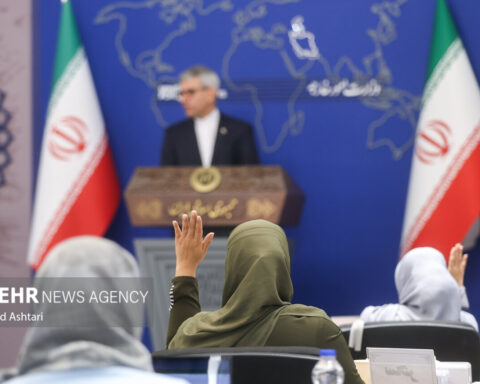
Iran’s formal response has been indirect but revealing. No official endorsement or rejection has emerged from Tehran. Instead, Foreign Ministry spokesman Esmail Baghaei restated sequencing demands: the war must end and the Hormuz blockade must lift before discussing security architecture. Simultaneously, Iran’s ambassador to China proposed an alternative structure routing through Beijing, Pakistan, Turkey, and Russia — not a rejection of the concept but an attempt to renegotiate the table at which it would be discussed. The competing frameworks (Saudi-proposed, bilaterally anchored; Iran-proposed, China-routed) may eventually converge, but the structural question is which architecture survives the MOU’s death.
The Veto That Proved the Architecture
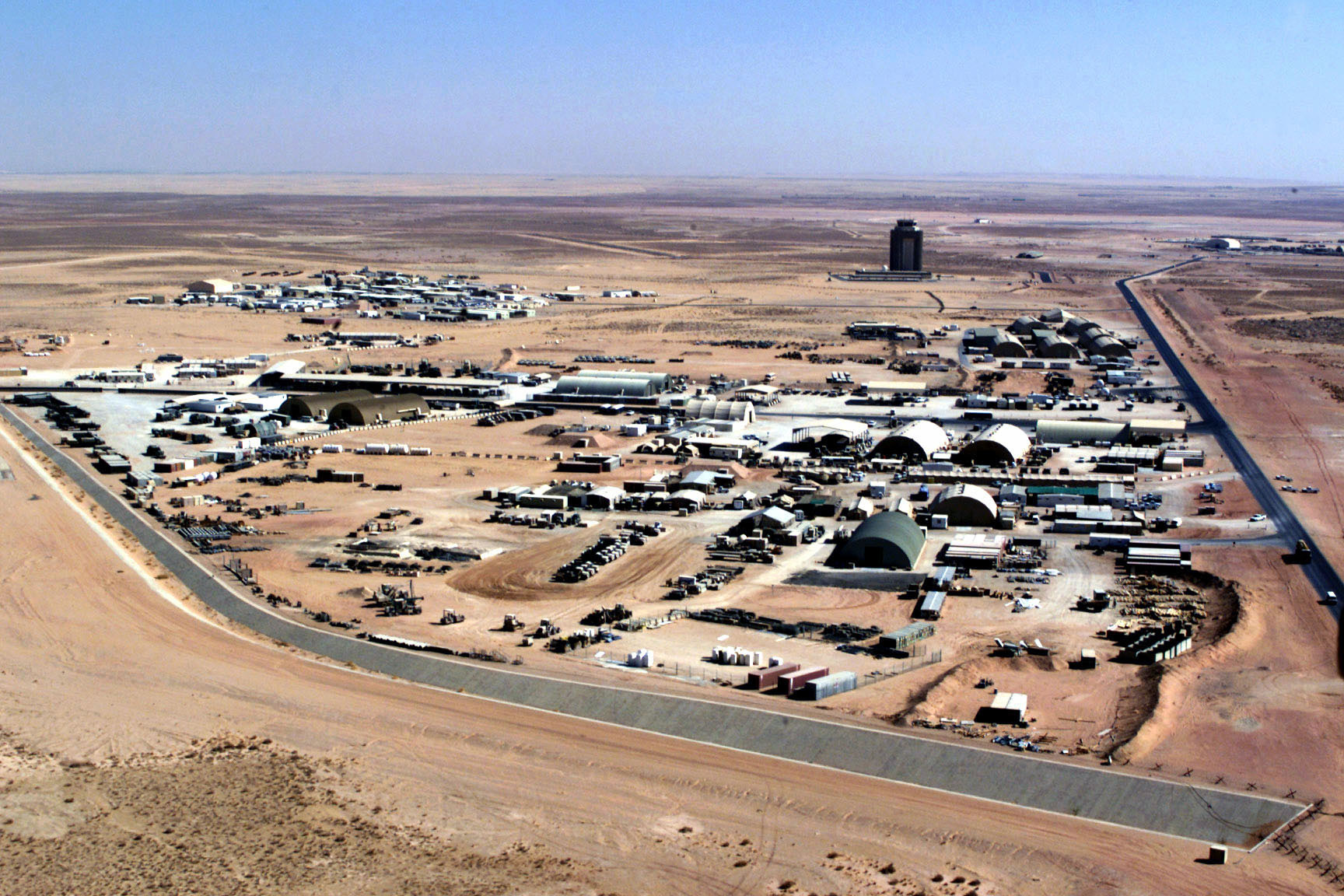
The most decisive evidence that Saudi Arabia is running an independent bilateral track came not from the Helsinki proposal but from Prince Sultan Air Base in early May. Around May 5-7, Riyadh suspended US military use of PSAB and denied Saudi airspace for Project Freedom — Trump’s plan to force-reopen the Strait of Hormuz through military action. Trump paused Project Freedom within approximately 36 hours of launching it. A Saudi source told NBC News directly: “Saudi Arabia was against the operation because it felt it would just escalate the situation and would not work.” A Middle East official added that it “was risky and could have triggered escalation” with “catastrophic” consequences for Gulf allies. The fiscal arithmetic behind the airspace denial shows why war at $101 per barrel costs Riyadh less than the Quick Peace scenario that would drop Brent to $80.
This was the same Saudi Arabia that had opened Taif to US bombers six weeks earlier and conducted its own strikes on Iranian soil. The reversal is not contradictory — it is the bilateral architecture operating as designed. Saudi Arabia’s covert strikes in late March established deterrence credibility with Iran (we can hit you and we will). The subsequent diplomatic engagement established a de-escalation equilibrium (we won’t hit you again if you stop hitting us). Project Freedom threatened to collapse that equilibrium by dragging Saudi Arabia back into an American escalation cycle — the co-belligerent trap — that Riyadh’s private deal with Tehran had already made unnecessary. The veto was not pacifism; it was protection of a bilateral arrangement that was working.
The sequencing tells the story: Saudi Arabia struck Iran (late March), Iran reduced attacks by 76 percent (early April), Saudi Arabia vetoed American escalation through its territory (early May), Saudi Arabia disclosed the bilateral framework publicly (mid-May). Each step built on the previous one, each step required the one before it to hold. By the time the Helsinki proposal appeared in the FT, the underlying de-escalation had been functioning for six weeks — the diplomatic proposal was not an aspiration but a formalization of existing practice.
Why Has Saudi Arabia’s Foreign Ministry Gone Silent?
Saudi Arabia’s last substantive MOFA statement on the Iran war came on May 20, when Bin Farhan told the EU Gymnich meeting in Cyprus that Hormuz should be restored to “the state prior to February 28th 2026.” Since then — silence. No response to the IRGC firing on four vessels near Hormuz (May 28). No response to the Zolfaghar missile at Kuwait’s Ali Al-Salem (May 28). No response to Iran’s June 1 MOU suspension. No response to Iran’s Bab al-Mandab threat. No response to CENTCOM strikes on Qeshm and Goruk islands. No response to the MSC Sariska V cruise missile attack inside the upper Persian Gulf (June 2). Fourteen days of escalation, and Riyadh’s official diplomatic apparatus has said nothing.
The analytical consensus from CSIS, the Foundation for Defense of Democracies, and Foreign Policy converges on the same conclusion: this is deliberate architecture, not bureaucratic lag. In September 2019, when Iran struck Abqaiq and Khurais — the largest single attack on oil infrastructure in history — Saudi Arabia attributed the attack within hours. The 2026 silence pattern is intentionally different. FDD’s May analysis argues that the silence “analysts read as impotence” actually functions as operational cover for Saudi shadow military participation, while simultaneously preserving the Enayati backchannel and the Bin Farhan-Araghchi phone line. Speaking publicly on Hormuz, condemning Iran, or joining the Western coalition statements would collapse the bilateral track that has delivered the 76 percent attack reduction. On June 5, Lebanese President Joseph Aoun gave Riyadh the public language it could not generate through its own silence, accusing Iran on CNN of using Lebanon as a bargaining chip in nuclear negotiations — a formulation Riyadh needed said, by a voice Tehran cannot dismiss as Sunni Arab hostility.
There is a darker structural explanation as well: Saudi Arabia has nothing to say because it has no seat at any of the three tables where Hormuz’s future is being decided. The US-Iran direct track (now collapsing). The Oman co-management track (Iran-Oman bilateral, building on the 1974 boundary treaty). The UK-France/Northwood coalition track (transit protection, not settlement). Saudi Arabia is excluded from all three. Its bilateral channel with Iran is the only architecture where Riyadh has both presence and leverage — and that channel requires silence on everything else. When FM Faisal did end the fourteen-day silence on June 2–4 — with calls to Jordan, Bahrain, and Qatar — he chose every contact to produce condemnation and solidarity, and none to produce a negotiating position. The channel architecture was preserved.
What Does the MOU’s Collapse Mean for the Saudi Track?
The US-Iran MOU is dying on a precise timeline. Trump sent amended text on May 31 (harder HEU timing, tougher Hormuz wording), transmitted via courier to Mojtaba Khamenei in an underground bunker. Iran suspended negotiations on June 1 via Tasnim. Reuters reported on June 2 that Iran was “preparing to decline” — language harder than suspension. The formal rejection arrives approximately June 9, paired with an Omani counteroffer that — per diplomatic sources — proposes temporary enrichment reduction toward the JCPOA-era 3.67 percent ceiling in exchange for phased frozen-assets access, with sanctions lifting and war reparations deferred. The gap between what Washington demands (full dismantlement, all HEU removed, Hormuz sovereignty surrendered) and what Tehran will accept — routed through a man in a bunker who communicates by motorcycle courier — is not bridgeable by editing the same document.
What Tehran will accept has since been made explicit: the Omani counteroffer Iran filed on June 6 — which demanded frozen-assets release before Hormuz reopening — reframes Phase 1 as a sequencing inversion rather than a compromise. Iran’s demand for $12 billion in frozen assets before any Hormuz action means Phase 1 no longer begins with Hormuz opening; it begins with sanctions revenue flowing to Tehran.
For Saudi Arabia, the MOU’s death is simultaneously a threat and an opportunity. The threat is obvious: without a US-Iran deal, Hormuz remains contested, Brent stays below Saudi’s $108-111 breakeven, and the fiscal hemorrhage continues at roughly $100 million per day for every dollar Brent sits below breakeven. The opportunity is less obvious but more consequential. As long as the MOU existed — even as a failing negotiation — it occupied the diplomatic space. Gulf states, European capitals, and Oman all deferred to the American track. Once that track formally dies, the Saudi bilateral architecture becomes the only functioning de-escalation framework between a Gulf state and Iran.
Chatham House captured the structural logic in its May analysis: Saudi reluctance to engage more directly reflects recognition that “a kinetic response to Iranian strikes would not only increase risks to its energy assets and critical infrastructure but could also draw the Houthis more directly into the conflict.” But the covert strikes of late March proved Riyadh is willing to use force when it calculates that force will produce de-escalation rather than escalation — a distinction the American approach to Hormuz (Project Freedom, CENTCOM strikes on Qeshm and Goruk) has consistently failed to make. Saudi Arabia hit Iran and then negotiated. America hit Iran and then demanded surrender terms. The attack reduction followed Saudi strikes. It did not follow American ones.
| Track | Status (June 3) | Saudi Role | Outcome |
|---|---|---|---|
| US-Iran MOU | Formal rejection ~June 9 | Excluded entirely | Dead |
| Oman co-management (Hormuz) | Active; legal drafting team in Muscat | Excluded; consent required | Bilateral (Iran-Oman only) |
| UK-France/Northwood coalition | Transit protection only | No participation | Doesn’t address settlement |
| Saudi bilateral (strikes + Helsinki) | Active; 76% attack reduction holding | Principal architect | Only framework with demonstrated results |
June 9: Three Deadlines, One Day, No Margin
June 9 is the date when Saudi Arabia’s fiscal architecture, Iran’s diplomatic posture, and the MOU’s formal death converge into a single 24-hour window. Aramco’s $21.89 billion quarterly dividend falls due — a payment that exceeds the company’s $18.6 billion Q1 free cash flow by $3.3 billion (coverage ratio: 0.85x). Iran’s formal rejection of the US MOU is anticipated the same day, paired with the Omani counteroffer that proposes terms Washington has already signalled it will refuse. And Saudi Arabia’s Q1 fiscal deficit of SAR 125.7 billion ($33.5 billion) — already three-quarters of the full-year SAR 165 billion target burned through in the first 90 days — receives no structural relief from any of these events.
The fiscal pressure is not abstract. PIF cash stands at $15 billion, a six-year low. NDMC borrowing capacity is approximately 90 percent consumed. Goldman Sachs projects the full-year deficit at $80-90 billion (6-6.6 percent of GDP). Brent at $94-96 sits $13-17 below the $108-111 fiscal breakeven — a gap Saudi Arabia cannot close without either a Hormuz resolution or a production increase that the same Hormuz closure prevents. The bilateral track with Iran — the strikes, the de-escalation, the Helsinki framework — is not an ideological preference. It is the only architecture that has actually reduced the threat to Saudi revenue without requiring American permission, Omani mediation, or European coalition participation.
The stress test arrives the same week. Preliminary reports on June 3 indicate fresh Iranian strikes on Saudi territory — the first meaningful escalation against the kingdom since the bilateral de-escalation took hold in early April. If these strikes represent a breakdown of the informal arrangement (perhaps triggered by CENTCOM’s Qeshm/Goruk operations on June 1, which Saudi Arabia did not authorize and could not prevent), the Helsinki framework loses its empirical foundation. If the bilateral channel absorbs the escalation as it absorbed the March covert-strikes disclosure — without formal acknowledgment, without public retaliation, through private diplomatic engagement — then the architecture survives into the post-MOU period as the only proven de-escalation mechanism in the Gulf.
“Saudi Arabia was against the operation because it felt it would just escalate the situation and would not work.”
— Saudi source to NBC News on Project Freedom, ~May 7 2026
MEMRI assessed in March that Saudi Arabia had “abandoned its declared position of neutrality and now defines Iran as an existential threat and reserves the right to respond with military force.” That framing is half-right. Riyadh has abandoned neutrality — Taif proved that, the covert strikes proved that — but the kingdom’s behaviour since April suggests something more calculated than a simple shift to belligerence. Saudi Arabia used force to establish credibility, used that credibility to negotiate a bilateral reduction, used that reduction to veto American escalation through its territory, and used the resulting diplomatic space to propose a formal non-aggression architecture. That is not a country defining Iran as an existential threat to be destroyed. That is a country defining Iran as a permanent neighbour to be managed — at a price both sides can afford, on a timeline neither Washington nor the IRGC controls.
Iran’s Hajj 2026 conduct added a third register to this architecture. Where the private bilateral track operated below diplomatic visibility, and the Helsinki proposal surfaced it into the press, Iran’s decision to fill only a third of its Hajj quota and attribute the shortfall to the “wartime situation” deployed the signal inside the one institution Saudi Arabia is structurally bound to administer without political commentary. The permanent neighbour had found a channel the managed relationship could not absorb.
FAQ
How does the Saudi Helsinki proposal differ from the 2023 Chinese-brokered normalization?
The 2023 Beijing deal restored diplomatic relations (embassies, ambassadors, flights) after a seven-year rupture and was mediated by a third party. The 2026 Helsinki proposal is structurally different in three ways: it emerged from direct Saudi-Iranian engagement without external mediation, it includes military confidence-building measures (de-confliction lines, exercise notifications, observer exchanges) that the 2023 deal lacked entirely, and it is explicitly multilateral — designed to include all Gulf states plus European signatories rather than remaining bilateral. The 2023 deal was a restoration; the 2026 proposal is an architecture.
Has Iran formally responded to the Helsinki non-aggression pact proposal?
No official endorsement or rejection has been issued through IRNA, Tasnim, or the Foreign Ministry. Iran’s response has come through two indirect channels: FM spokesman Baghaei restated preconditions (war must end, Hormuz blockade must lift before discussing security architecture), and Iran’s ambassador to China proposed a competing structure routed through Beijing, Islamabad, Ankara, and Moscow. The absence of formal rejection — particularly from Tasnim, which has been aggressive in rejecting US proposals — suggests the concept itself is not objectionable to Tehran, only the question of who convenes and chairs it.
What are Saudi Arabia’s remaining air defence reserves?
Between 80 and 150 PAC-3 interceptors remain from a pre-war stockpile of approximately 2,800 rounds — representing 1.3 to 2.4 days of full-intensity operations at the March 2026 consumption rate. Lockheed Martin’s Camden, Arkansas facility produces roughly 620 rounds per year, and Saudi Arabia’s 730-round order carries an 18-month minimum delivery timeline. No emergency waiver (Section 36(b)) has been issued for Saudi Arabia, in contrast to Qatar’s $4.01 billion PAC-3 MSE emergency authorization on May 2. The interceptor shortage creates a hard structural ceiling on Saudi escalation capacity — making the bilateral de-escalation track not merely preferable but operationally necessary.
What economic leverage does Saudi Arabia actually hold over Iran in bilateral negotiations?
More than is commonly acknowledged. Saudi Arabia controls the Gulf’s dominant Hajj infrastructure — 87,550 Iranian quota slots representing the largest single bloc of foreign pilgrim permits — giving Riyadh a non-military pressure tool Iran’s clerical establishment cannot publicly dismiss. Saudi Arabia also holds upstream influence over Gulf oil pricing that directly affects the $300 million-plus monthly Iran collects in PGSA transit tolls: a Saudi production surge that collapses Brent below $85 would make those tolls economically irrelevant. Finally, Saudi pipeline diversification (Petroline East-West, Yanbu Red Sea terminal) allows Riyadh to bypass Hormuz entirely for roughly 6 million barrels per day — meaning Saudi Arabia’s fiscal pain from a prolonged blockade is real but not existential in the way Iran’s fiscal pain from a Hormuz ceasefire would be, since Iranian production has no comparable bypass route.
Could the Helsinki framework survive UAE non-participation?
Two FT sources indicated the UAE is “doubtful” to sign, given Abu Dhabi’s alignment with Israel and its position as the most hawkish Gulf state toward Iran. The framework could technically function without the UAE — the original Helsinki Accords did not require unanimous regional participation — but UAE absence would create a geographic gap in the security architecture (the Fujairah bunkering hub and UAE territorial waters are already incorporated into Iran’s expanded PGSA map as of May 22). A Saudi-Iran bilateral pact without the UAE would resemble the 2023 normalization more than the multilateral Helsinki model it claims to emulate.
Trump publicly contradicted that picture on June 3, telling the New York Post’s podcast that Iran has “already agreed they’re not going to have a nuclear weapon” and claiming Mojtaba Khamenei was personally approving terms — a claim released the same morning IRGC missiles struck Kuwait International Airport, underscoring how far Trump’s public framing has diverged from Iran’s stated position on the MOU. The June 4 Lebanon ceasefire added a further complication to that divergence: Hezbollah did not sign it, preserving Iran’s ability to reject the ceasefire as insufficient for MOU re-entry.