
MODIFIED OK
{“content”: “
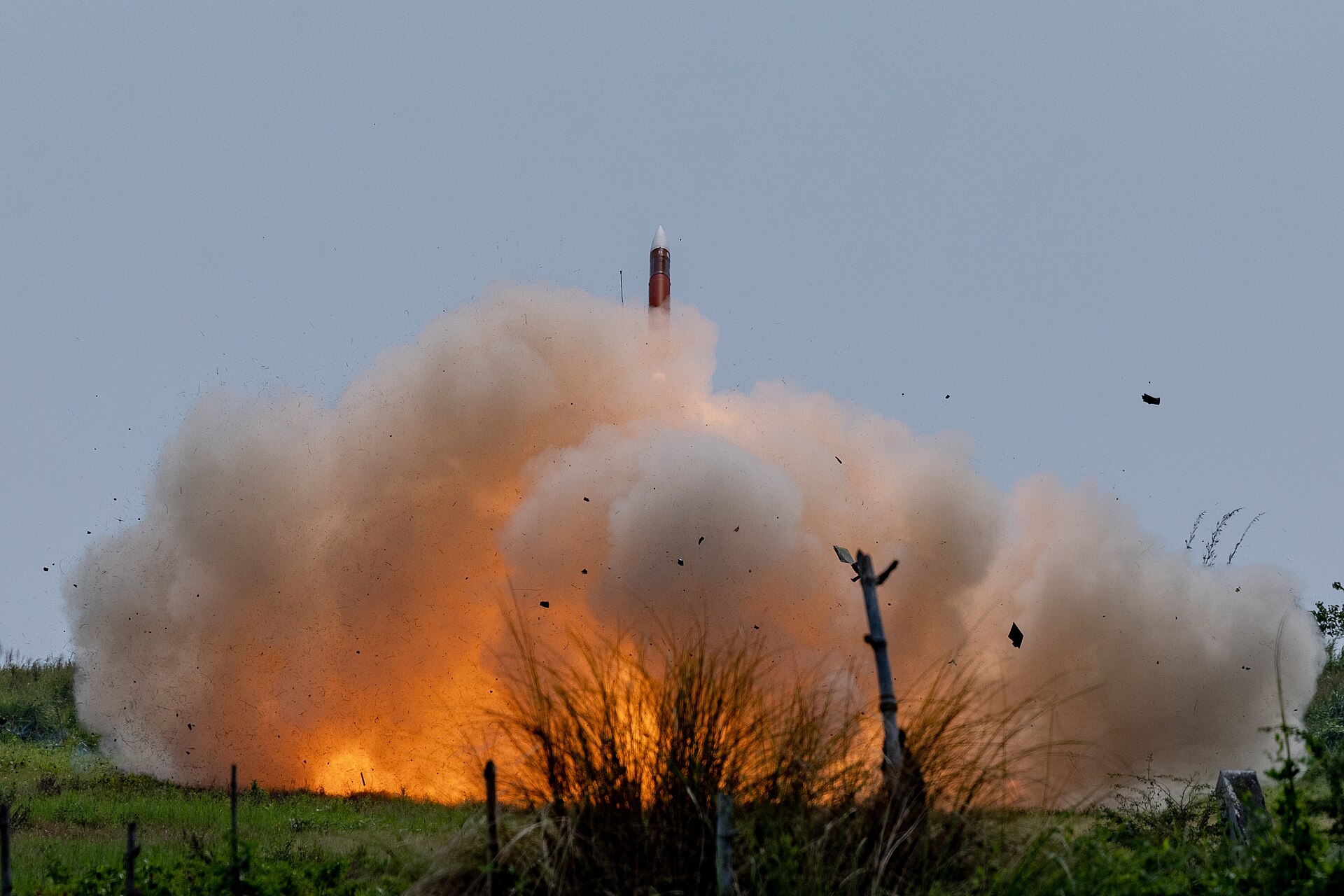
MANAMA u2014 Iran’s Islamic Revolutionary Guard Corps fired coordinated missile and drone strikes at Naval Support Activity Bahrain u2014 headquarters of the US Fifth Fleet in Manama’s Juffair district u2014 and a US air base in Kuwait on June 3, according to CENTCOM and IRGC statements. All three missiles targeting Bahrain were intercepted by US and Bahraini air defenses, CENTCOM said, while two missiles aimed at Kuwait “fell short or broke apart en route.”
n
Beyond the military targets, the same June 3 barrage included drones that struck Kuwait International Airport’s Terminal 1 — the first confirmed hit on an active passenger terminal in the ninety-six-day conflict, forty-eight hours after commercial flights had resumed. One civilian was killed and Kuwait was forced into its second full aviation shutdown of the war. By the end of the day, Kuwait had also taken the diplomatic step of declaring two Iranian mission members persona non grata and shuttering Iran’s cultural mission u2014 becoming the second GCC state after the UAE to formally reduce Iran’s diplomatic presence since the war began.
n
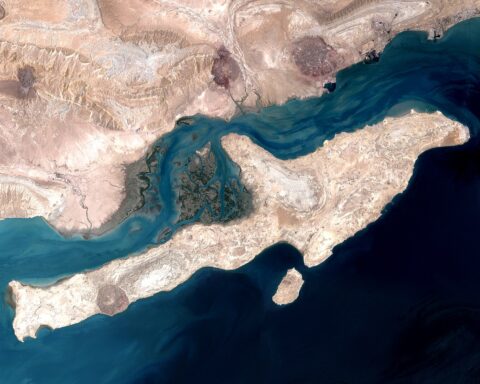
The attack was the third discrete IRGC strike package against the facility since the war began in late February, and the first in which the IRGC publicly named the Fifth Fleet headquarters by designation as its intended target. CENTCOM called IRGC claims of striking the headquarters “FALSE” and said US forces subsequently struck an Iranian military target on Qeshm Island in self-defense.
The Middle East briefing 3,000+ readers start their day with.
One email. Every weekday morning. Free.
n
Why It Matters
n
The three intercepts over Bahrain drew from a PAC-3 stockpile at an estimated 87 percent depletion. Bahrain was excluded from the $8.6 billion Section 36(b) emergency arms waiver that Secretary of State Marco Rubio signed on May 2, which covered Qatar, Kuwait, the UAE, and Israel. A Federal Register notice published two days before the attack u2014 FR Doc. 2026-10920, dated June 1 u2014 added 50 PAC-3 MSE and 150 GEM-T rounds to Bahrain’s procurement account, but under standard Foreign Military Sales procedures requiring 30-day congressional review and an 18-month minimum delivery timeline.
n
Bahrain’s intercept batteries function as a forward air defense layer for Saudi Arabia’s Eastern Province, which lies 25 kilometers across the King Fahd Causeway. The IRGC struck Jubail, in the Eastern Province, with 11 ballistic missiles on April 7. Saudi Arabia holds no Section 36(b) emergency waiver of its own, and its PAC-3 stockpile is estimated at 80 to 400 rounds remaining from an original inventory of approximately 2,800. The reason that gap cannot close quickly is structural: the Camden, Arkansas factory that produces PAC-3 MSE interceptors made 620 rounds last year for every customer on earth combined, and the Pentagon’s FY2027 budget request has already claimed five years of that output.
n
Table of Contents
n
- n
- The Strike and CENTCOM’s Response
- Who Fired the Interceptors u2014 and With What?
- Why Was Bahrain Left Out of the Emergency Waiver?
- What Does Bahrain’s Depletion Mean for the Eastern Province?
- Background: NSA Bahrain and the Fifth Fleet
- Frequently Asked Questions
- n
n
n
n
n
n
n
n
n
n
The Strike and CENTCOM’s Response
n
The IRGC said the operation involved “more than 10 heavy, destructive missiles, including Khorramshahr missiles equipped with multiple warheads, Kheibar Shekan missiles with warheads weighing up to one ton, and hypersonic Fattah missiles with warheads reaching one ton,” along with one-way attack drones, according to statements carried by Al Mayadeen and confirmed by WION.
n
The IRGC described three simultaneous target tracks: “base infrastructure and anti-drone systems” at Mina Salman u2014 the Fifth Fleet headquarters u2014 a US air and helicopter base in Kuwait, and a vessel the IRGC identified as the Panaya in the Strait of Hormuz. The three-track structure was an expansion from earlier strike packages, which had targeted one or two locations per wave.
n
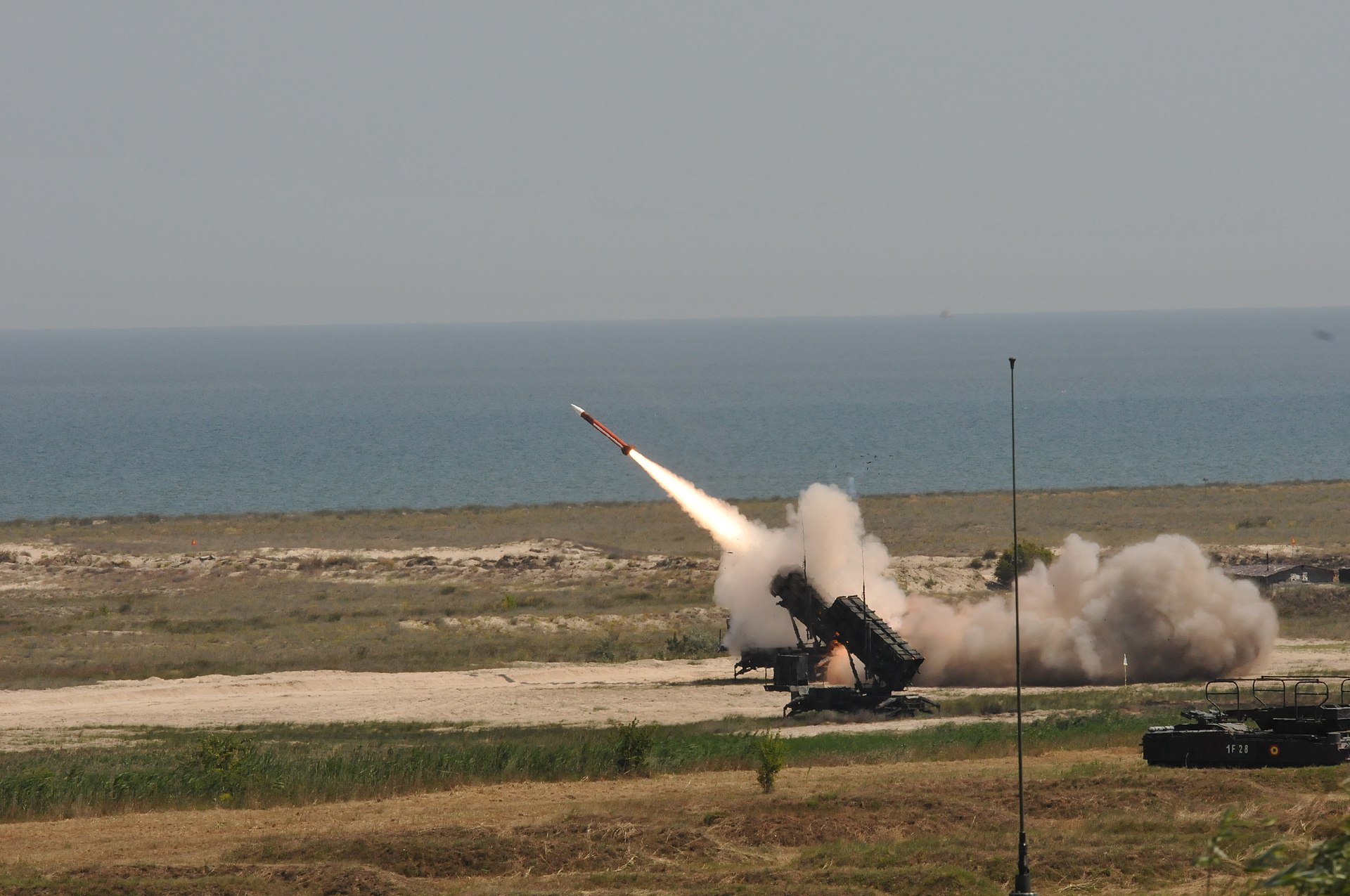
CENTCOM’s account was sharply narrower. Three missiles fired at Bahrain were “immediately intercepted by US and Bahrain air defense forces,” the command said, per CBS News and Xinhua. Two missiles aimed at Kuwait fell short or broke apart. CENTCOM explicitly labeled IRGC claims of striking the Fifth Fleet headquarters “FALSE.” The IRGC subsequently released video it said showed damage at the headquarters, according to Rudaw English, though CENTCOM did not revise its assessment.
n
The IRGC said the strikes were retaliation for a US strike on “an IRGC communications facility on Qeshm Island” and a separate strike on an Iranian tanker near the Strait of Hormuz, per WION and Pravda EN. CENTCOM reversed the framing, calling its post-intercept Qeshm strike a “self-defense” response. The competing causation claims u2014 each side describing its own operation as reactive u2014 have recurred throughout the conflict.
n
n
Who Fired the Interceptors u2014 and With What?
n
CENTCOM said “US and Bahrain air defense forces” intercepted the three Bahrain-bound missiles but did not specify which system engaged. Bahrain operates Patriot batteries from Shaikh Isa Air Base, which intercepted the IRGC’s opening-night salvo on February 28 u2014 approximately 15 to 20 Shahed-136 drones and 8 to 12 Fateh-110 short-range ballistic missiles, according to Military.com and France 24. The US maintains separate Patriot and THAAD assets in the region.
n
Whether the June 3 intercepts consumed PAC-3 MSE rounds u2014 the most capable variant, at roughly $4.1 million per round u2014 or older GEM-T rounds is not publicly confirmed. CENTCOM has not released a battle damage assessment beyond “all attacks failed.” Inventory consumption per intercept event remains classified.
n
The distinction carries weight. Bahrain’s original PAC-3 inventory, notified to Congress in 2019, consisted of 60 PAC-3 MSE and 36 GEM-T rounds. At an estimated 87 percent depletion, Bahrain may hold approximately 8 PAC-3 MSE rounds u2014 fewer than 10. GCC-wide PAC-3 MSE stocks are estimated at approximately 400 rounds total u2014 roughly 14 percent of pre-war levels, based on publicly disclosed inventories and intercept tallies. Mark Cancian and Sung Eun (Sue) Park at the Center for Strategic and International Studies found “no comparable precedent” to the pace of GCC interceptor consumption in this conflict cycle.
n
The cost-exchange ratio works against the defender. The Fateh-110 short-range ballistic missiles the IRGC used in its February and March salvos against Bahrain cost a fraction of a PAC-3 MSE round u2014 IISS has documented the asymmetry across this conflict cycle, noting that defenders consistently spend multiples of what the attacker spends per engagement. The IRGC can sustain that arithmetic longer than Bahrain’s remaining inventory can absorb it.
n
Why Was Bahrain Left Out of the Emergency Waiver?
n
Section 36(b) of the Arms Export Control Act allows the Secretary of State to bypass standard 30-day congressional review when “an emergency exists which requires the proposed sale in the national security interests of the United States.” Rubio invoked the provision on May 2 for an $8.6 billion package covering four countries: Israel ($992.4 million in APKWS guided rockets), Qatar ($4.01 billion in Patriot replenishment including 300 PAC-3 MSE and 200 GEM-T rounds), Kuwait ($2.5 billion in IBCS battle command systems), and the UAE ($147.6 million in APKWS), according to Breaking Defense and State Department records. Bahrain was not included.
n
All four emergency waiver recipients hold formal Status of Forces Agreements with the United States. Bahrain also holds a SOFA u2014 its 1992 Defense Cooperation Agreement governs NSA Bahrain u2014 yet was excluded. Saudi Arabia, which operates Prince Sultan Air Base without a SOFA, was also absent from the package.
n
The Federal Register notice published June 1 (FR Doc. 2026-10920) added 50 PAC-3 MSE and 150 GEM-T rounds to Bahrain’s procurement account, bringing total notified quantities to 110 PAC-3 MSE and 186 GEM-T at a combined value of $2.57 billion. This is a standard FMS notification. The rounds enter Lockheed Martin’s Camden, Arkansas production queue alongside every other PAC-3 customer globally, with delivery timelines of 18 months at minimum based on current production capacity.
n
Bahrain received its first PAC-3 MSE delivery from Lockheed Martin in March 2024. The stockpile was operational for approximately two years before reaching current depletion levels. Camden currently produces approximately 650 PAC-3 rounds per year. A $4.761 billion contract awarded in April 2026 targets a ramp to 2,000 rounds annually, but the target date is 2030, according to the Washington Times and Defense Post.
n
Qatar’s 300 emergency PAC-3 MSE rounds, authorized under Rubio’s May 2 waiver, take queue priority at Camden. Saudi Arabia’s 730-round standard order (DSCA notification February 2, $9 billion) competes for the same production capacity. Bahrain’s 50 standard-track rounds enter behind both. At 650 rounds per year serving all global customers u2014 including the US Army’s own recapitalization needs u2014 the production line is allocated years into the future before Bahrain’s June 1 notification reaches the queue.
n
n
What Does Bahrain’s Depletion Mean for the Eastern Province?
n
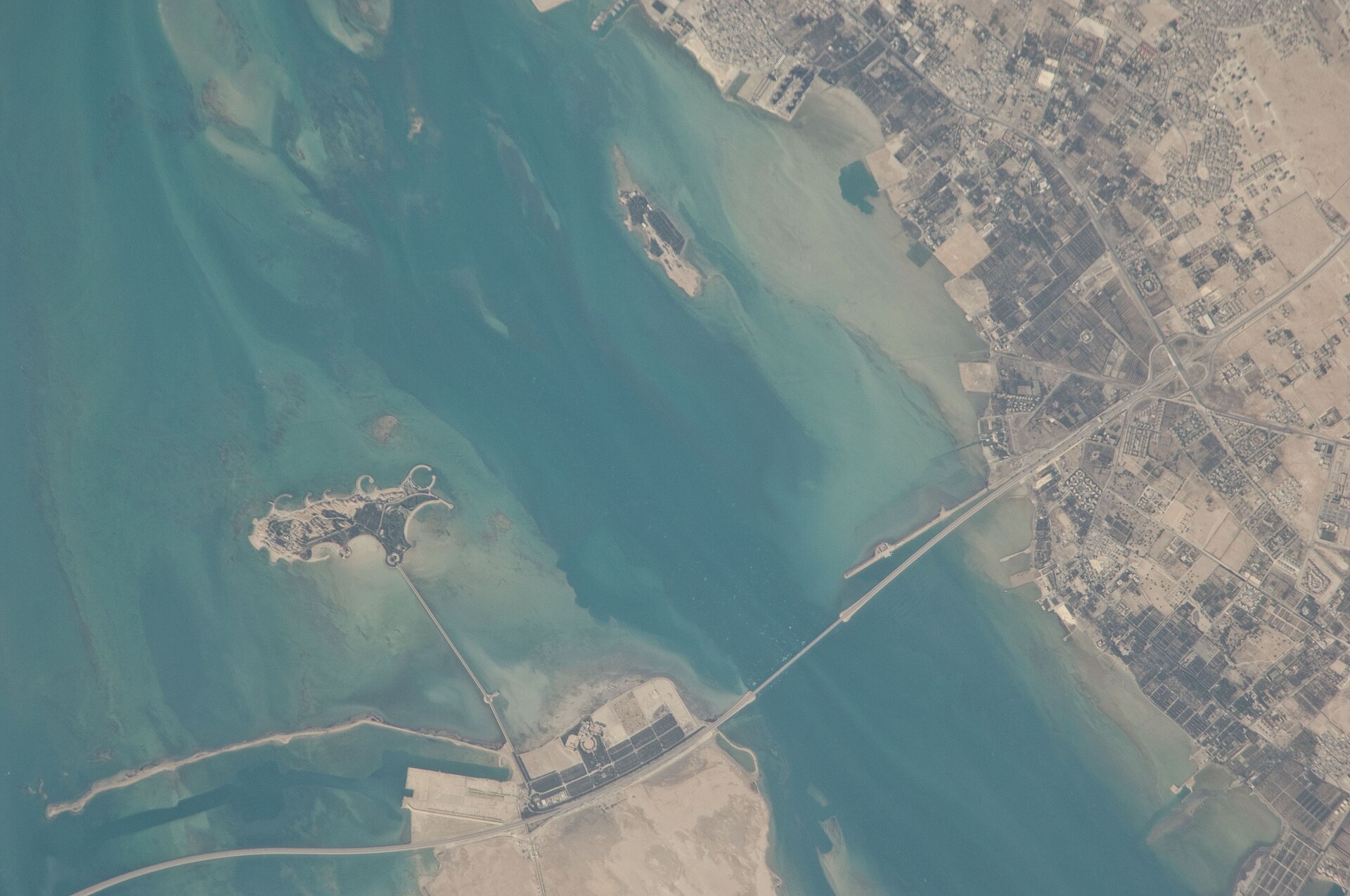
NSA Bahrain sits 25 kilometers from Saudi Arabia’s Eastern Province across the King Fahd Causeway. Dhahran, Jubail, Ras Tanura, and Al Khobar u2014 the infrastructure backbone of Saudi Aramco’s production and export operations u2014 share the same air defense threat envelope.
n
The IRGC struck Jubail directly on April 7, firing 11 ballistic missiles in two waves. Saudi Arabia’s Ministry of Defense and Al Arabiya reported all were intercepted. A $9 billion DSCA notification on February 2 covers 730 replacement rounds, but this is a standard FMS with the same 18-month delivery floor as Bahrain’s order, and Saudi Arabia holds no Section 36(b) emergency waiver.
n
Bahrain’s Patriot batteries and the Eastern Province’s own air defenses operate as overlapping intercept layers. Missiles approaching from the northeast u2014 the azimuth from Iran u2014 may transit the same engagement zones that Bahrain’s batteries cover. Each intercept event over Bahrain reduces the forward capacity available before threats reach the inner Saudi batteries. The IRGC does not need to penetrate both layers; sustained attrition of the forward one shifts the full burden onto the inner defense, which is itself depleted.
n
On February 28, the IRGC declared that “all US assets throughout the region are considered legitimate targets,” per France 24. Neither Bahrain nor Saudi Arabia holds the expedited delivery pathway that Qatar secured through the May 2 waiver. Every intercept event over NSA Bahrain draws down the same layered system that covers Ras Tanura and Jubail. Kuwait, by contrast, has used its 1991 Defense Cooperation Agreement to assemble the three-tier Anduril-NASAMS architecture that Saudi Arabia cannot replicate on emergency timelines — a $3 billion investment in eleven days that rests entirely on the legal framework Riyadh declined to sign.
n
Background: NSA Bahrain and the Fifth Fleet
n
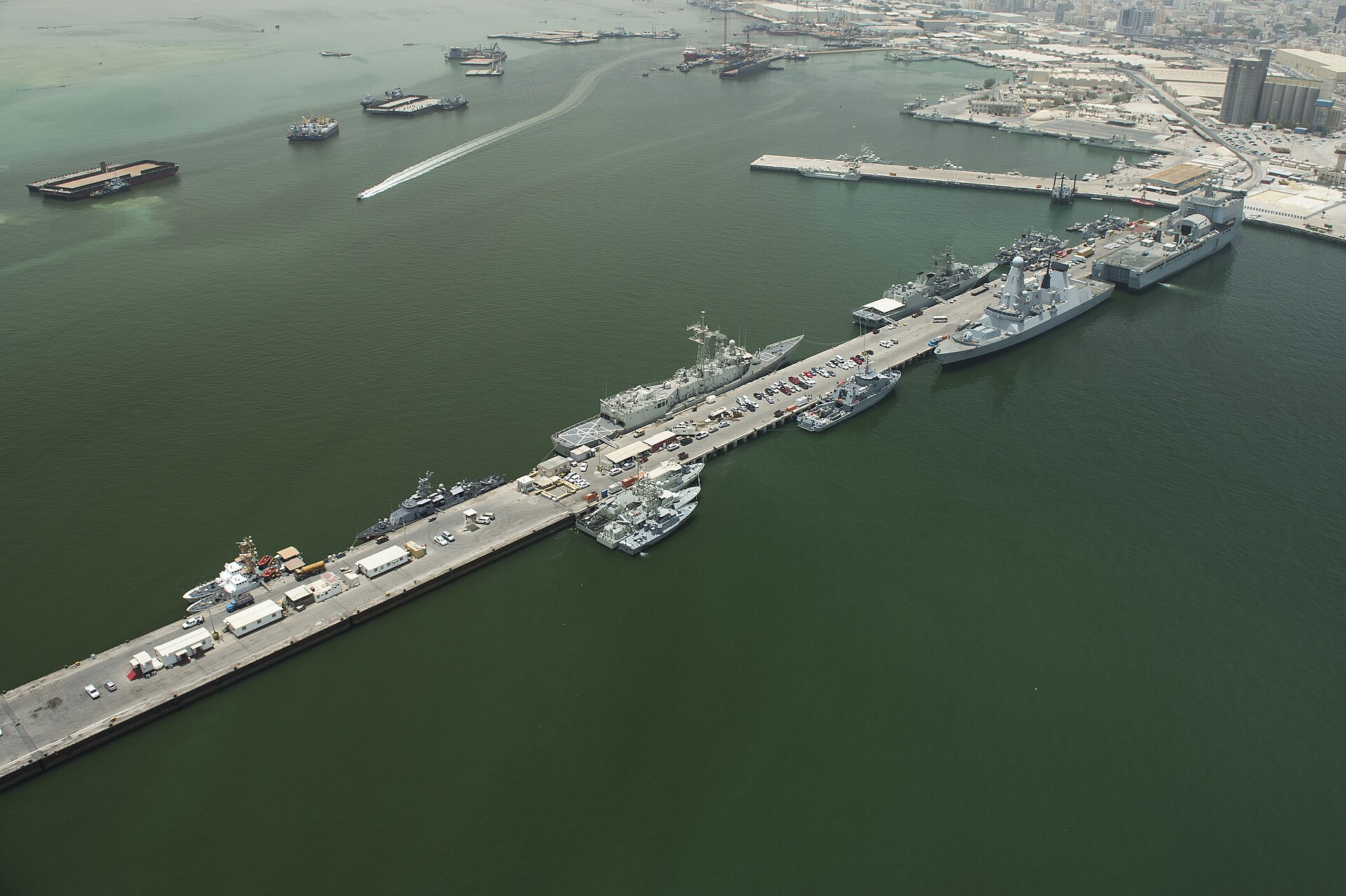
Naval Support Activity Bahrain occupies approximately 62 acres in Manama’s Juffair neighborhood. It is home to US Naval Forces Central Command and the Fifth Fleet, with approximately 9,000 US military personnel. The Defense Cooperation Agreement signed in 1992 grants the facility SOFA status u2014 a distinction shared by every US base in the Gulf region except Prince Sultan Air Base in Saudi Arabia.
n
The February 28 opening strike and the March 11 follow-on both used Shahed-136 drones and Fateh-110 short-range ballistic missiles. June 3 was the first in which the IRGC described employing heavy ballistic missiles u2014 the Khorramshahr-4 (multiple-warhead) and Fattah (hypersonic) variants u2014 against the facility, and the first time the IRGC publicly designated the Fifth Fleet headquarters by name as its target.
n
Iran’s “mosaic defence” doctrine, described by the Soufan Center on March 9, is a decentralized architecture designed to sustain operations after senior commanders and communications infrastructure are destroyed. The IRGC’s ability to mount three-track simultaneous operations u2014 Bahrain, Kuwait, and maritime u2014 while under sustained CENTCOM strikes on Qeshm, Goruk, and other IRGC positions reflects this dispersal.
n
Prior IRGC strikes on US facilities in Kuwait include the June 1 Ali Al Salem attack u2014 simultaneous with the first commercial Hormuz transit under Iraq’s PGSA exemption u2014 and the May 30 strike in which intercepted missile debris wounded five Americans and destroyed or damaged two MQ-9 Reaper drones valued at approximately $60 million. The June 3 operation is the third strike on NSA Bahrain in 95 days. Each successful intercept is also a consumed round the Federal Register notice confirmed will not arrive for 18 months.
n
On the same morning, Iran fired Fateh-110 missiles at Camp Arifjan in Kuwait u2014 the Army Central forward headquarters and DLA staging node through which every PAC-3 interceptor reaches Saudi Arabiau2019s depleted batteries u2014 completing a simultaneous three-target strike on the Gulfu2019s air defence supply chain alongside the Fifth Fleet and Terminal 1 attacks. Three days later, on June 6, the IRGC escalated to an all-ballistic dual-capital salvo — seven missiles targeting Ali Al Salem and NSA Bahrain simultaneously, reducing Bahrains estimated PAC-3 inventory to four or five rounds.
n
n
Frequently Asked Questions
n
What is the difference between a Section 36(b) emergency waiver and a standard FMS?
n
A Section 36(b) emergency waiver, invoked by the Secretary of State under the Arms Export Control Act, bypasses the standard 30-day congressional review period for arms sales when an emergency exists requiring immediate action in the national security interest. A standard FMS follows the full notification and review process. Qatar received 300 PAC-3 MSE rounds through Rubio’s May 2 emergency waiver. Bahrain’s 50 additional PAC-3 MSE rounds, notified in the June 1 Federal Register, follow the standard track.
n
How many PAC-3 interceptors does Bahrain have remaining?
n
Bahrain’s exact current inventory is classified. Its original notified inventory was 60 PAC-3 MSE and 36 GEM-T rounds, first delivered in March 2024. At an estimated 87 percent depletion before the June 3 attack, Bahrain may hold approximately 8 PAC-3 MSE rounds u2014 fewer than 10. The June 1 Federal Register notice adds 50 more PAC-3 MSE and 150 GEM-T rounds, but delivery requires 18 months or more under current production capacity at Camden, Arkansas.
n
Did the June 3 intercepts use PAC-3 MSE or other interceptor types?
n
CENTCOM has not disclosed which specific interceptor types were used. The command said “US and Bahrain air defense forces” intercepted three missiles but did not distinguish between PAC-3 MSE, GEM-T, or THAAD engagements. The US maintains its own air defense assets in the region beyond Bahrain’s Patriot batteries.
n
Why does Bahrain’s air defense capacity affect Saudi Arabia?
n
NSA Bahrain is 25 kilometers from Saudi Arabia’s Eastern Province across the King Fahd Causeway. Bahrain’s Patriot batteries provide a forward intercept layer for the same threat azimuths that cover Ras Tanura, Jubail, and Dhahran u2014 Saudi Aramco’s primary production and export infrastructure. The IRGC struck Jubail with 11 ballistic missiles on April 7. Depletion of Bahrain’s forward batteries shifts the intercept burden onto Saudi Arabia’s own diminished PAC-3 stockpile.
n
Has the IRGC named the Fifth Fleet headquarters as a target before?
n
The IRGC struck NSA Bahrain on February 28 and March 11 but did not name the Fifth Fleet headquarters by designation in its public statements for those attacks. June 3 was the first time the IRGC publicly identified “base infrastructure and anti-drone systems at Mina Salman (Fifth Fleet HQ)” as its intended target, according to Tasnim and PressTV. On the same day as the strikes, the US House passed H.Con.Res.38 by 215–208, invoking the War Powers Resolution — the first congressional challenge to the executive’s Iran war authority since hostilities began on February 28. Saudi Arabia, which holds the largest US-facing military infrastructure in the Gulf but no Status of Forces Agreement, faces the same resupply wall as Bahrain — without any of Bahrain’s treaty protections. On Day 100, Bahrain was not alone: all four GCC Patriot states hit near-zero interceptors simultaneously, a synchronized collapse that is more dangerous than any single country’s depletion.
n”}