RIYADH — The IRGC launched Operation Nasr on June 8, targeting Israel’s Nevatim and Tel Nof air bases with Emad, Qadr F, and Kheibar Shekan ballistic missiles. Saudi territory was not struck — for the second consecutive major Iranian operation in forty-eight hours, following True Promise 5 against Ramat David on June 7. The covert Saudi-IRGC de-escalation framework first disclosed by the Financial Times on May 14 just survived the most intense escalation cycle since the war began.
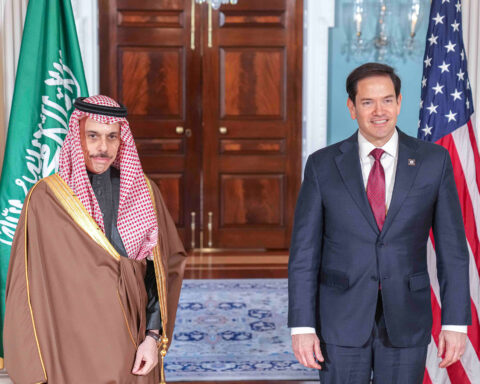
Every formal diplomatic channel between Riyadh and Tehran has gone dark — Foreign Ministers Faisal bin Farhan and Abbas Araghchi last spoke between May 6 and 11, a gap of 34 days as of June 9. The Oman track was threatened into suspension by Washington; Pakistan’s dual-letter courier route has been publicly documented. What remains functional is the one instrument Saudi Arabia cannot acknowledge: an undisclosed bilateral with no written terms, no verification mechanism, and no third-party guarantor. Operation Nasr’s target list is the strongest behavioral evidence yet that this instrument is still holding.
Table of Contents
- What Did Operation Nasr Target — and What Did It Skip?
- Two Operations in Forty-Eight Hours, Zero Saudi Strikes
- Why Did the IRGC Bypass Saudi Arabia After Declaring All Precautions Removed?
- The Helsinki Track Under Maximum Stress
- What Diplomatic Channels Remain Between Riyadh and Tehran?
- Saudi Arabia’s Template for Agreements That Do Not Exist on Paper
- How Long Can a Covert Pact Survive Without Verification?
- The Instrument Saudi Arabia Cannot Afford to Lose
- Frequently Asked Questions
What Did Operation Nasr Target — and What Did It Skip?
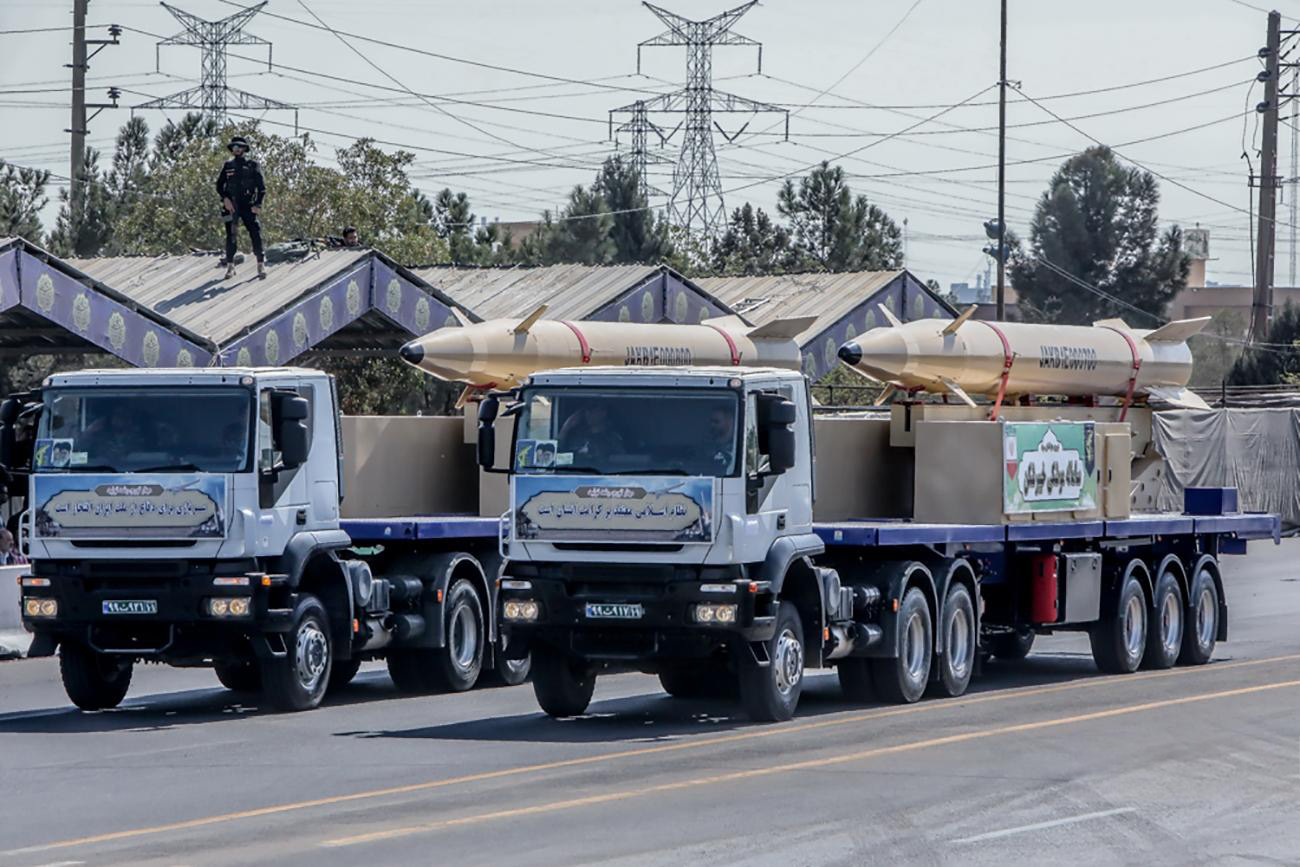
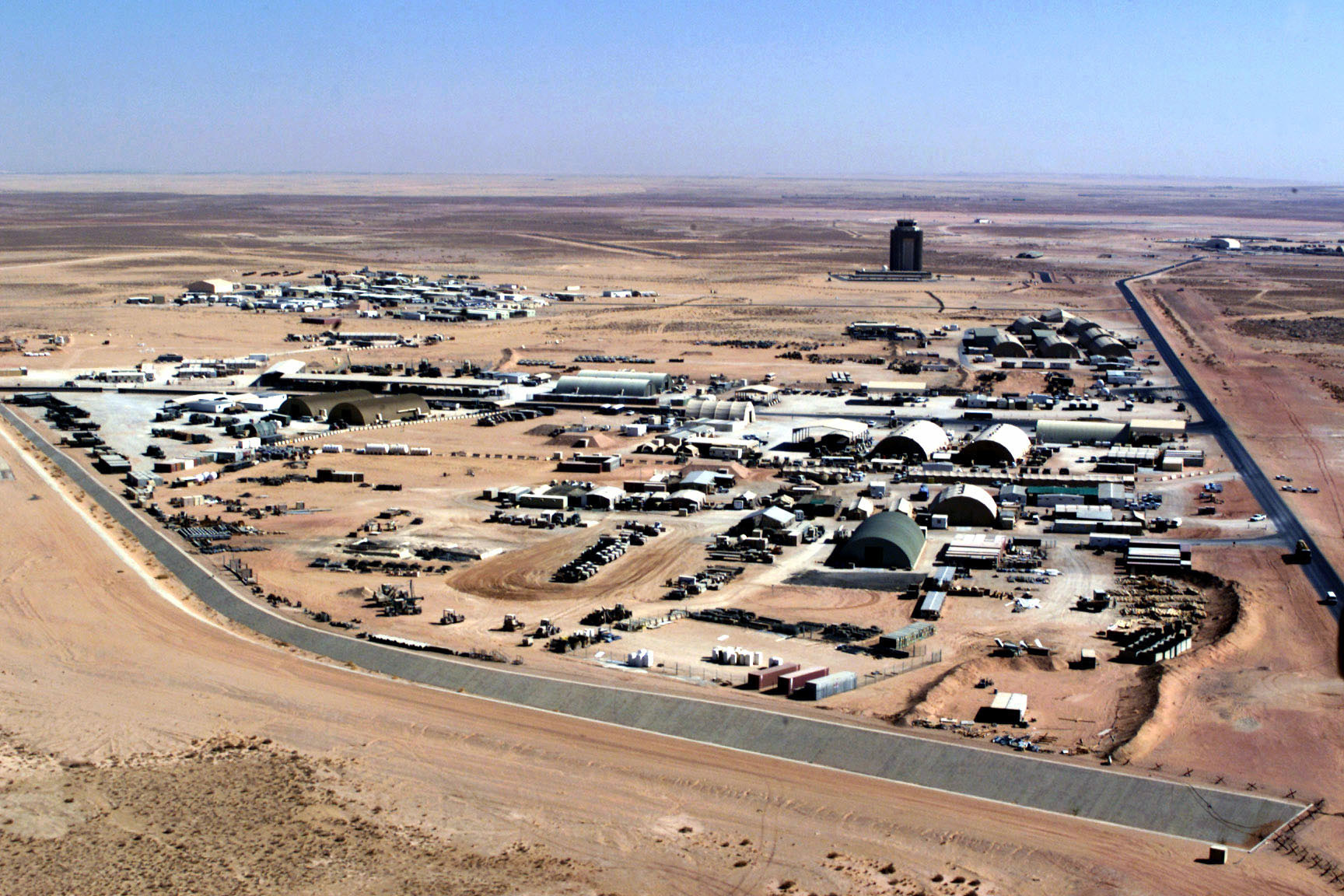
Operation Nasr, launched June 8, 2026, targeted Nevatim Air Base — home to three F-35I Adir squadrons — and Tel Nof Air Base in central Israel with Kheibar Shekan, Emad, and Qadr F ballistic missiles. The operation struck no target in Saudi Arabia, the Gulf Cooperation Council, or any US base in the region, including Prince Sultan Air Base, which the IRGC struck with devastating effect on March 27.
The IRGC named the operation “Nasr” — Arabic for “Victory” — breaking from the True Promise series that had defined its retaliatory framework since April 2024. PressTV described it as a “retaliatory operation” dedicated to “the martyrs of the 12-day war in June 2025.” Tasnim identified the targets as “Israel’s strategic air bases.” Neither outlet referenced Saudi Arabia, the Gulf, or any regional US military installation.
That omission is not incidental. Prince Sultan Air Base sits within range of every missile type the IRGC deployed in Operation Nasr — the Kheibar Shekan has a range of 1,450 kilometers and reaches terminal speeds of Mach 7 to 10 with a maneuverable warhead. The same missile that hit Nevatim can hit PSAB from western Iran.
On March 27, the IRGC struck PSAB with enough force to destroy an E-3G AWACS aircraft and damage multiple KC-135 tankers, producing over $4 billion in damage. The capability to repeat that strike exists today, unchanged by any known degradation of IRGC launch capacity. The decision not to exercise it requires an explanation.
The Middle East briefing 3,000+ readers start their day with.
One email. Every weekday morning. Free.
Nevatim hosts Israel’s primary fifth-generation strike platform — the F-35I Adir — across three operational squadrons. Tel Nof, one of Israel’s oldest air bases, supports strike fighters, transport helicopters, and UAV operations in central Israel. Together they represent the core of Israel’s offensive air capability against Iran. The IRGC selected its highest-value Israeli targets while leaving every Saudi and Gulf target untouched.
Two Operations in Forty-Eight Hours, Zero Saudi Strikes
Between June 7 and June 9, the IRGC executed two major strike operations across two separate axes. True Promise 5, launched June 7-8, hit Ramat David Air Base in northern Israel — home to three F-16 squadrons. Operation Nasr, launched June 8-9, struck Nevatim and Tel Nof in the Negev and central Israel. These were the most intensive 48 hours of Iranian long-range strike activity since the conflict began in February.
| Operation | Date | Targets | Target Profile | Saudi Territory Struck |
|---|---|---|---|---|
| True Promise 5 | June 7-8 | Ramat David AB (northern Israel) | 3 F-16 squadrons | None |
| Operation Nasr | June 8-9 | Nevatim AB (Negev), Tel Nof AB (central Israel) | 3 F-35I squadrons + strike/UAV hub | None |
The pattern across both operations is identical on one axis: zero Saudi targets. No strikes on Prince Sultan Air Base, no strikes on Aramco infrastructure, no strikes on Jubail, Yanbu, or any GCC installation hosting US forces. The IRGC had the capability, the declared doctrinal authority, and the operational tempo to include Saudi targets in either operation — and in both cases it chose not to.
PSAB was last struck on March 27, before the Helsinki framework became operative. In the immediate aftermath, IRGC attacks on Saudi Arabia fell 76 percent within one week — from more than 105 strikes during March 25-31 to roughly 25 in the first week of April, according to Reuters. The trajectory since then has moved in one direction: from reduction to consistent exclusion. By June 7-9, the IRGC ran its two most ambitious strike operations of the war with Saudi Arabia entirely absent from the target set.
This is not restraint born of incapacity. The IRGC has demonstrated its ability to reach Saudi targets with precision. The March 27 PSAB strike proved that American assets on Saudi soil are within the IRGC’s operational envelope. The decision to exclude those targets across consecutive operations, during a period of maximum escalation, is behavioral data — and it points in one direction.
Why Did the IRGC Bypass Saudi Arabia After Declaring All Precautions Removed?
In April 2026, IRGC Brigadier General Ebrahim Zolfaqari declared that Iran had “removed all precautions” in selecting retaliatory targets against regional American partners. Despite this declaration, both True Promise 5 and Operation Nasr excluded every Saudi target. The only identified variable consistent with the observed targeting behavior is the Helsinki bilateral de-escalation framework, operational since late March 2026.
Until now we have exercised significant restraint for the sake of good neighborliness and have taken precautions in selecting retaliatory targets, but from now on, all such precautions have been removed.
— IRGC Brigadier General Ebrahim Zolfaqari, April 2026, via TRENDS Research & Advisory
The language was directed at “regional American partners” — a phrase whose primary referent, given basing arrangements and geography, is Saudi Arabia. Two months later, the IRGC selected its targets for TP5 and Operation Nasr with precision that directly contradicts Zolfaqari’s public position. The precautions he said were removed appear, from the June target lists, to have been reinstated — or to have never actually been lifted where Saudi Arabia is concerned. Public rhetoric and operational behavior are running in opposite directions.
The IRGC’s own media apparatus reinforces this divergence. PressTV’s Nasr coverage was entirely Israel-facing, with no reference to Saudi Arabia or any Gulf state. IRGC spokesman Brigadier General Hossein Mohebi declared that Iran had proven “for the umpteenth time” that “the skies over the occupied territories and the region are under the will and control of the IRGC’s aerospace missile power.” The assertion of regional aerospace dominance was paired with the operational exclusion of the region’s largest state — a contradiction no Iranian official has been asked to explain.
Iranian state media’s handling of the Saudi covert strikes disclosure was equally revealing. When Reuters reported on May 13 that Saudi Arabia had conducted strikes on Iranian territory in late March — the first direct Saudi military action on Iranian soil in the kingdom’s history — PressTV acknowledged the report under the headline “Saudi Arabia carried out ‘covert’ strikes on Iran amid US-Israeli aggression in March.” The scare quotes around “covert” were the sharpest editorial gesture in the coverage. What was absent was any call for retaliatory action against Saudi territory.
The gap between Zolfaqari’s April rhetoric and the IRGC’s June targeting is not explained by Israeli escalation dynamics, which would predict expanded target sets, not contraction. It is not explained by capability constraints, which do not exist for Saudi targets within Kheibar Shekan range. The variable that fits the data is the Helsinki bilateral architecture — a covert Saudi-IRGC de-escalation framework that the Financial Times reported had been functioning for six weeks before its May 14 disclosure, and that just absorbed two consecutive strike operations without breaking.
The Helsinki Track Under Maximum Stress
The Helsinki bilateral framework, modeled on Basket I of the 1975 Helsinki Accords — non-aggression and territorial integrity — was not built for conditions like June 7-9. It was assembled in the aftermath of the IRGC’s March 27 PSAB strike and the Saudi covert strikes on Iranian territory in late March. The FT disclosed it on May 14 as a Saudi proposal for a Helsinki-model non-aggression pact, but the underlying de-escalation had already been generating observable behavioral change for weeks.
What happened between disclosure and Operation Nasr tested every assumption the framework rests on. Israel struck Iran on June 8 after President Trump explicitly asked Prime Minister Netanyahu not to retaliate — and Netanyahu struck anyway, hitting targets in Tehran, Isfahan, Tabriz, Karaj, and Kermanshah. The IRGC responded with two operations in rapid succession across separate Israeli target axes.
Through all of it, the Zolfaqari doctrine of removed precautions remained on the public record and every formal Saudi-Iranian diplomatic channel was silent. The Helsinki track, covert and unwritten, was asked to hold under conditions its architects could not have anticipated.
| Date | Event | Implication for Helsinki Track |
|---|---|---|
| Late March 2026 | Saudi covert strikes on Iranian territory (pre-notified to Tehran) | First Saudi military action on Iranian soil; reciprocal risk established |
| March 27 | IRGC strikes PSAB — $4B+ damage, E-3G destroyed | Last major IRGC strike on Saudi strategic target |
| March 25-31 | 105+ IRGC attacks on Saudi Arabia | Pre-de-escalation baseline |
| April 1-6 | ~25 IRGC attacks on Saudi Arabia | 76% reduction within one week (Reuters) |
| May 3-6 | Saudi denies PSAB and airspace for Project Freedom | Saudi territorial veto of US offensive operations |
| May 14 | FT discloses Helsinki bilateral framework | Public exposure of a mechanism already six weeks old |
| June 7-8 | TP5 strikes Ramat David | Zero Saudi targets |
| June 8-9 | Operation Nasr strikes Nevatim + Tel Nof | Zero Saudi targets |
The behavioral data across the timeline is consistent with a bilateral understanding: Saudi territory is excluded from Iran-Israel escalation, and Saudi Arabia denies its territory and airspace for US offensive operations against Iran. Riyadh’s refusal to provide Prince Sultan Air Base and Saudi airspace for Project Freedom on May 3-6 is the clearest evidence of the Saudi side of this equation. When MBS and Trump spoke about the refusal, a call that “did not resolve the issue” according to NBC News, Washington was forced to pause the operation.
The territorial veto — Saudi Arabia physically blocking US strike assets from transiting the kingdom — was the most concrete evidence of Riyadh’s commitment to the Helsinki framework before the FT published it. The IRGC’s June target selection is the corresponding evidence from Tehran’s side.
What Diplomatic Channels Remain Between Riyadh and Tehran?
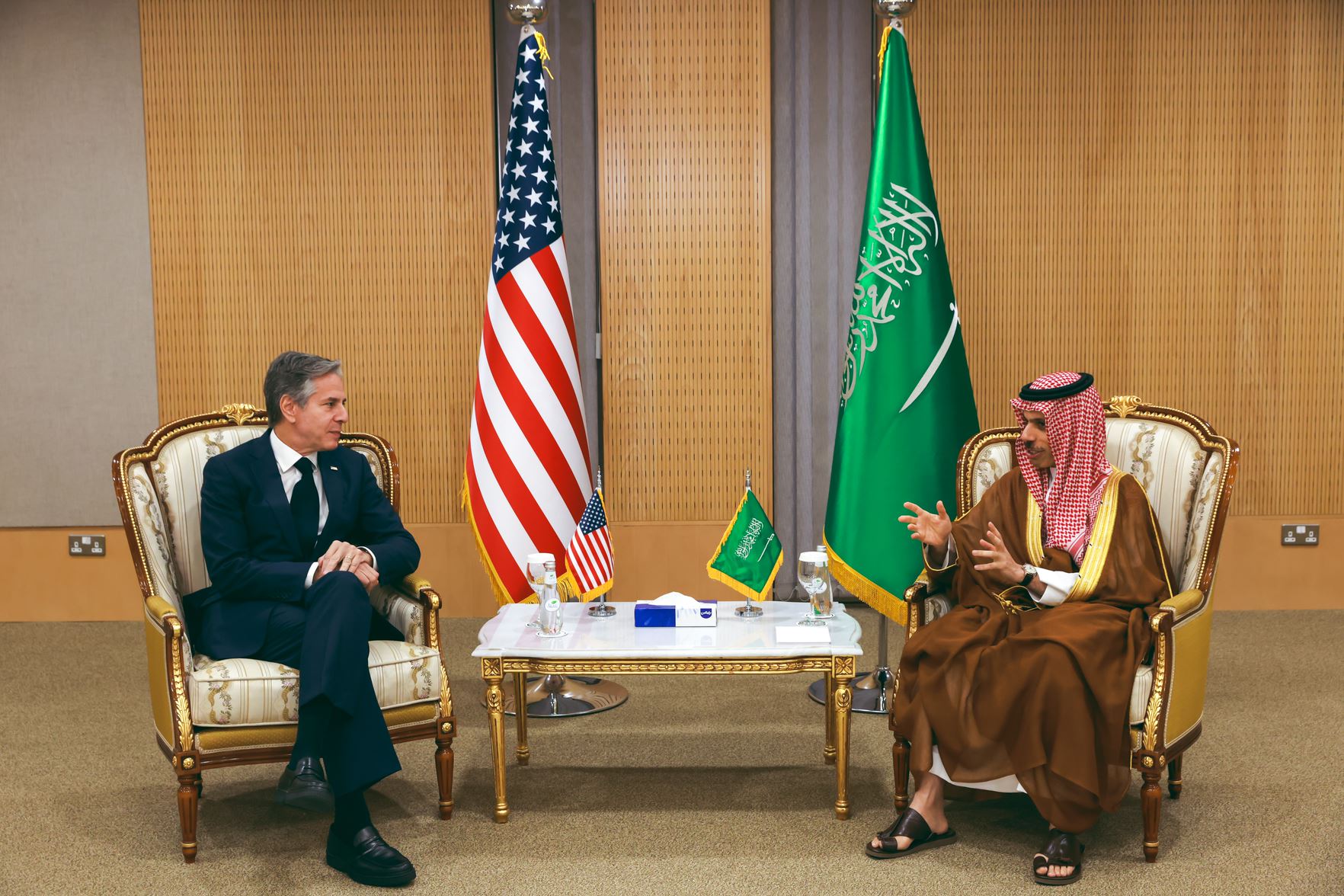
As of June 9, 2026, no formal diplomatic channel between Saudi Arabia and Iran is publicly active. Foreign Ministers Faisal bin Farhan and Abbas Araghchi last spoke between May 6 and 11. The Oman mediation route was compromised by US threats against Muscat, and Pakistan’s courier architecture has been publicly disclosed. The only channel producing observable behavioral outcomes is the undisclosed Helsinki bilateral track.
| Channel | Type | Status | Last Active | Vulnerability |
|---|---|---|---|---|
| Bin Farhan–Araghchi | Formal bilateral | Silent | May 6-11 | 34-day gap; no scheduled contact |
| Oman mediation | Third-party | Compromised | May 2026 | US threatened military action against Muscat |
| Pakistan courier | Back-channel | Documented | June 2026 | Dual-letter architecture publicly disclosed |
| Helsinki bilateral | Covert | Active (behavioral evidence) | June 8-9 (inferred) | No written terms; no verification; disclosed May 14 |
The FM-to-FM track produced a four-call sequence — April 9 (Araghchi-initiated), April 26, May 6, and May 11 — followed by five weeks of silence. During those five weeks, Israel struck Iran, Iran launched two major retaliatory operations, and the IRGC executed its most intensive period of long-range strike activity since the war’s first month. The formal bilateral channel was dark through all of it, carrying none of the diplomatic weight that the crisis demanded.
What this means in practice is that the kingdom’s most consequential active relationship with Tehran — the one that determines whether IRGC missiles land on Saudi infrastructure or not — operates through a channel Riyadh cannot publicly acknowledge, inspect, or enforce. The Helsinki track is not supplementing formal diplomacy between the two countries. It has replaced it.
Saudi Arabia’s Template for Agreements That Do Not Exist on Paper
The Helsinki bilateral is not the first Saudi understanding with an adversary that operates without written terms. The Saudi-Houthi truce of September 2023 — described by the Sanaa Center for Strategic Studies as having “zero written terms” — created a framework where behavioral compliance substituted for formal agreement. Houthi attacks on Saudi territory stopped and Saudi aerial operations in Yemen stopped, yet neither side signed or published anything.
That template offers both precedent and warning. The Houthi truce held because both parties had clear, binary interests in its continuation, and the compliance indicators were unambiguous: either missiles crossed the Saudi border or they did not. The Helsinki track operates on a similar binary — either IRGC missiles hit Saudi targets or they don’t — but under conditions of vastly greater complexity. The Houthi truce functioned in a bilateral vacuum; the Helsinki track must survive inside a multi-party conflict involving Israel, the United States, Iran, and several GCC states simultaneously.
The Houthi truce also benefited from low external disruption — no third party was actively working to collapse it. The Helsinki track faces a sharply different environment: Israel is striking Iran despite US objections, Washington is threatening regional mediators, and the formal ceasefire framework has fractured. The covert bilateral must absorb shocks from at least three external actors whose behavior neither Riyadh nor Tehran controls.
The 30,000 Iranian Hajj pilgrims present in Saudi Arabia during the Helsinki track’s operative period add an unwritten variable to this equation. Iran’s Supreme National Security Council and Khamenei personally authorized the largest Iranian Hajj delegation in years, placing 30,000 citizens under Saudi sovereign jurisdiction during a live conflict. That decision is not consistent with a government planning to escalate against its host — and it represents a form of mutual confidence that no diplomatic communiqué could match.
How Long Can a Covert Pact Survive Without Verification?
The Helsinki bilateral has no written terms, no third-party verification mechanism, and no enforcement provisions. Its continued function depends entirely on behavioral compliance from both parties — Saudi Arabia denying its territory for US offensive operations against Iran, and Iran excluding Saudi targets from its retaliatory strikes. Every new IRGC operation becomes a live test of an instrument that cannot be repaired through negotiation if it fails.
The framework’s fragility is the inverse of its demonstrated resilience. Since late March, it has survived the FT’s public disclosure, Saudi covert strikes on Iranian territory, the collapse of the Oman channel, Pakistan’s courier architecture being documented in the press, and now two consecutive IRGC strike operations targeting Israel from positions that could just as easily have included PSAB. Each of those events could have been a breaking point, and none was.
But the framework cannot absorb unlimited stress without maintenance. Formal arms control agreements degrade without verification; covert bilaterals degrade faster. The Helsinki track has no inspection regime, no hotline, and no documented terms against which either side can measure compliance. It has only pattern recognition: did the IRGC strike Saudi targets, or did it not — and did Saudi Arabia facilitate US strike operations against Iran, or did it not?
That binary assessment is reliable only when the conflict follows a predictable structure. If the war shifts — if Iran’s nuclear facilities become active strike targets, or if Houthi maritime operations force a US response launched from Gulf bases — the Helsinki framework will face scenarios its implicit terms were never designed to cover. An understanding with no written provisions cannot be renegotiated, because it was never formally negotiated to begin with. It can only be tested, repeatedly, until it either holds or it does not.
The Instrument Saudi Arabia Cannot Afford to Lose
Operation Nasr confirmed something that was previously inferential: the Helsinki bilateral track is not merely surviving — it is surviving under the worst conditions the region has produced since February. Two IRGC operations in 48 hours, both designed for maximum impact against Israeli air power, both excluding Saudi Arabia entirely. That pattern is not coincidence. Coincidence does not produce a 76 percent attack reduction followed by consistent target exclusion across months of escalating operations.
Saudi Arabia’s public posture reinforces the assessment. Riyadh has issued zero public statements on Operation Nasr, zero on True Promise 5, and zero on Israel’s June 8 strikes against Iran. The silence is consistent with a government that has placed its entire Iran exposure on a single channel and cannot afford to say anything that might destabilize it. Every public comment carries the risk of being read by one side or the other as a shift in the unspoken terms — and in a framework with no written provisions, perception is the only enforcement mechanism.
The IRGC’s Nasr framing — entirely Israel-facing, with active erasure of the Saudi dimension — is itself a form of compliance. By refusing to reference Saudi Arabia in its operational communications, Tehran preserves the fiction that the bilateral track does not exist while demonstrating through target selection that it does. Iranian state media covering the Saudi covert strikes without calling for retaliation, and IRGC spokesmen claiming regional aerospace control while operationally exempting the region’s largest military spender, amounts to a dual posture: deny the arrangement exists, comply with its terms anyway.
The track cannot be acknowledged, verified, or renegotiated — it has no institutional memory and no fallback if the individuals managing it lose access or authority. But on June 8 and 9, while the IRGC was firing its most advanced ballistic missiles at Israel’s F-35I hub, it left Prince Sultan Air Base untouched. The cost of maintaining that outcome is permanent silence about the instrument that produced it, from a kingdom that has staked its security on a channel it cannot name.
Frequently Asked Questions
What is the Helsinki bilateral track between Saudi Arabia and Iran?
The Helsinki bilateral track is a covert de-escalation framework between Saudi Arabia and the IRGC, modeled on Basket I of the 1975 Helsinki Accords — which established non-aggression and territorial integrity principles among Cold War adversaries across 35 signatory nations. The Financial Times disclosed the framework on May 14, 2026, but reported it had been operational for approximately six weeks before that date, placing its origins in the aftermath of the Saudi covert strikes on Iranian territory and the IRGC’s March 27 strike on PSAB. Unlike the original Helsinki Accords, which produced a signed Final Act, the Saudi-Iran version has no signatories, no written document, and no multilateral endorsement — its existence is inferred entirely from behavioral compliance.
What missiles did Iran use in Operation Nasr?
The IRGC deployed Emad, Qadr F, and Kheibar Shekan ballistic missiles against Nevatim and Tel Nof. The Kheibar Shekan is the most capable of the three — a solid-fuel medium-range ballistic missile with a range of 1,450 kilometers, terminal phase speed between Mach 7 and Mach 10, and a maneuverable warhead designed to complicate missile defense intercept calculations. It can be launched from standard commercial vehicles rather than fixed launch sites, making pre-launch detection difficult. Its range and mobile launch profile mean that PSAB and every major Saudi industrial and military installation are reachable from western Iranian territory.
Could Iran strike Saudi Arabia if the Helsinki track collapses?
Saudi Arabia’s air defense posture would offer limited protection in that scenario. The kingdom retains an estimated 80 to 150 PAC-3 MSE interceptors as of June 9, 2026, with portions of that inventory being redeployed from strategic sites for Hajj security around Mecca. Lockheed Martin’s Camden, Arkansas, facility produces roughly 620 PAC-3 MSE rounds per year, and the Pentagon’s FY2027 order of 2,798 rounds claims the entire production ramp through 2030. Saudi Arabia has no active emergency procurement channel and no Status of Forces Agreement with the United States that would enable Section 36 emergency transfers from American stockpiles.
Why did Iran rename its operation from True Promise to Nasr?
The shift from “True Promise” (Wa’de Sadeq) to “Nasr” — which translates to “Victory” in Arabic — represents a deliberate doctrinal break. The True Promise series from TP1 through TP5 framed each strike as the fulfillment of a retaliatory promise in response to a specific Israeli provocation. By adopting a new codename, the IRGC signaled what it frames as a transition from reactive to proactive posture. PressTV’s coverage dedicated the operation to “the martyrs of the 12-day war in June 2025,” locating Nasr within a historical continuum rather than linking it to a single provocation — a framing choice that distinguishes it from every previous True Promise operation.
What happens to Saudi oil infrastructure if the Helsinki track collapses?
Aramco’s core export terminals — Ras Tanura (the world’s largest offshore oil loading facility, handling roughly 6-7 million barrels per day) and Yanbu on the Red Sea — are within Kheibar Shekan range from western Iran, as is the East-West Pipeline that feeds Yanbu. The March 27 PSAB strike demonstrated IRGC precision against hardened targets. A Helsinki collapse would not require Iran to escalate immediately — the framework’s value to Tehran is partly coercive, a held option. But if Riyadh is judged to have facilitated US offensive operations against Iran, Aramco infrastructure becomes the most economically consequential available target in the IRGC’s retaliatory envelope. The kingdom has no replacement route for Ras Tanura throughput and no stockpile to buffer a sustained export disruption.