{“content”: “
DHAHRAN u2014 India formally condemned the United States on June 10 for striking the M/T Settebello in the Gulf of Oman, summoning a US diplomat over three missing Indian sailors u2014 and Saudi Arabia, whose crude exports to India have fallen 63% since February, said nothing about any of it. Riyadh has issued zero public statements on any of the eight US maritime enforcement actions since the blockade of Iranian ports began on April 13.
n
The silence is structural. Saudi Arabia depends on the US military presence at Prince Sultan Air Base u2014 approximately 2,300 troops stationed without a Status of Forces Agreement u2014 while simultaneously discounting crude to retain Asian buyers watching American munitions disable tankers in the same corridor Aramco’s cargoes must transit. India’s demarche to Washington landed in waters Riyadh needs open and cannot govern.
n
The Middle East briefing 3,000+ readers start their day with.
One email. Every weekday morning. Free.
Table of Contents
n
- n
- What Happened to the M/T Settebello?
- Why Did India Protest Settebello but Not Marivex?
- How Much Saudi Crude Does India Import?
- The $10 Retreat in Aramco’s Asia Pricing
- Why Has Saudi Arabia Said Nothing About the Blockade?
- PSAB Without a Treaty
- Two Corridors, Both Exposed
- The Demarche No One in Riyadh Can Acknowledge
- Frequently Asked Questions
- n
n
n
n
n
n
n
n
n
n
n
n
n
What Happened to the M/T Settebello?
n
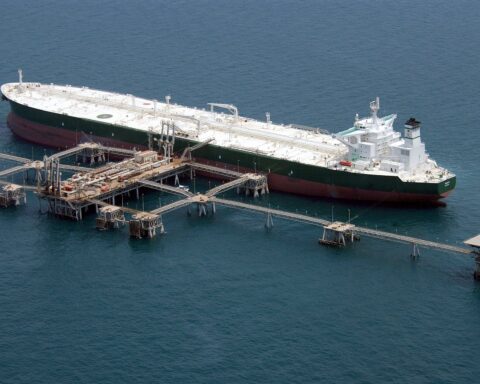
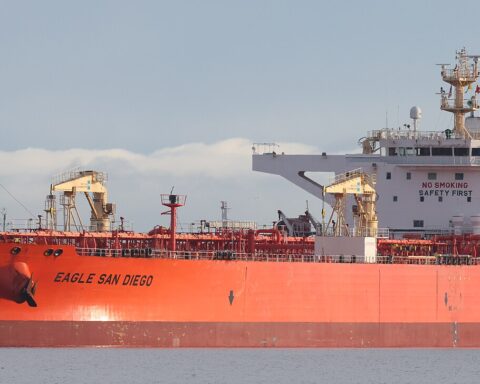
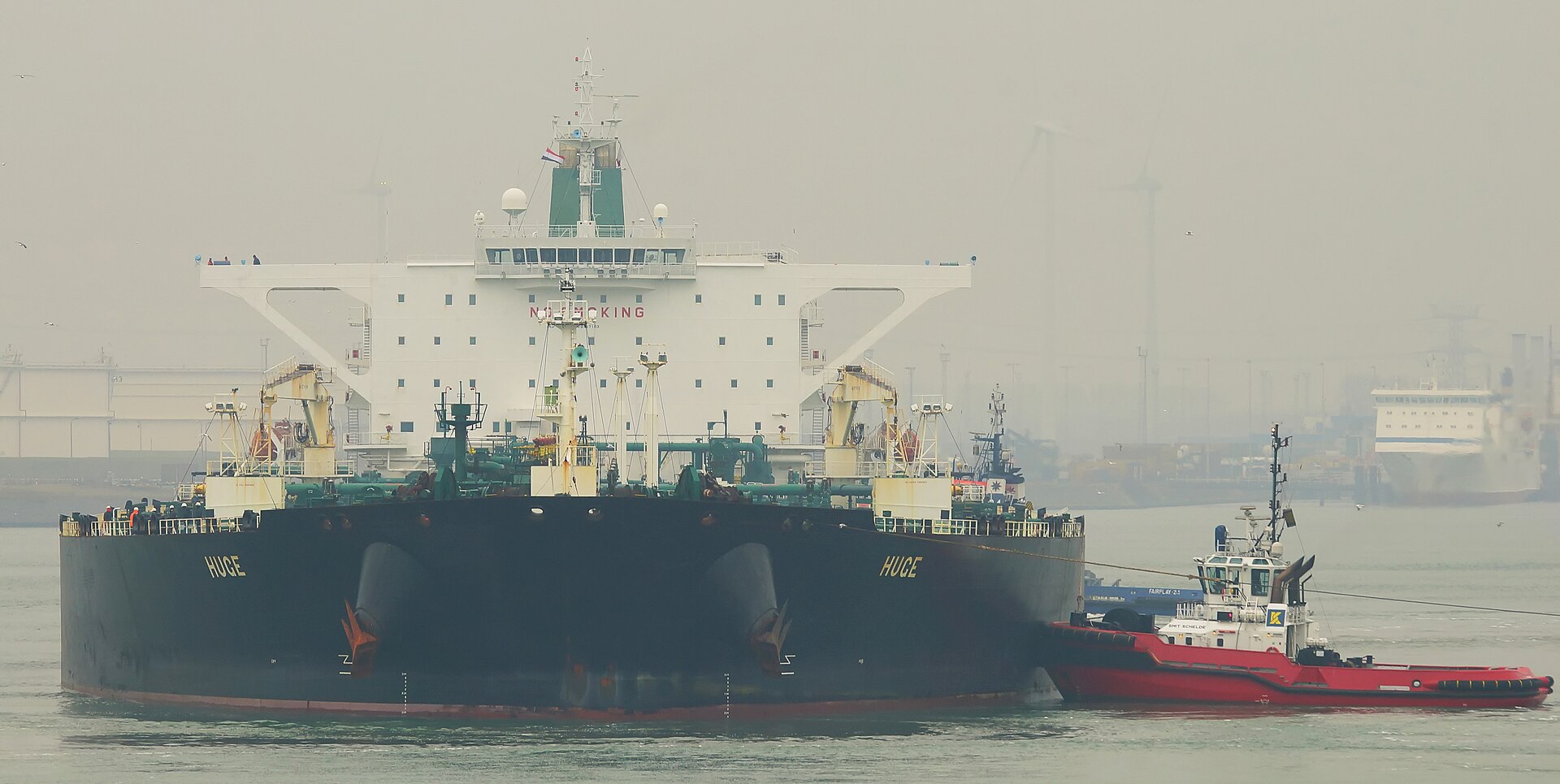
On June 9u201310, 2026, a US aircraft fired precision munitions into the engine room of the Palau-flagged M/T Settebello as it transited the Gulf of Oman toward an Iranian port. The strike occurred approximately 20 nautical miles northeast of Sohar, Oman. Of the 24 Indian crew members aboard, 21 were rescued by Omani authorities. Three remain missing as of June 10.
n
US Central Command stated the crew “repeatedly failed to comply with directions from American forces.” Maritime security firm Vanguard Tech confirmed the vessel had transmitted a distress call reporting a missile strike on its engine room and a fire aboard.
n
n
Settebello is the eighth vessel disabled by US forces since the blockade of Iranian ports began on April 13. In the same period, 134 vessels complied with directions and were redirected. Forty-two humanitarian shipments passed through. The previous seven enforcement actions produced zero reported civilian casualties. Settebello broke that record.
n
The strike came less than 48 hours after the M/T Marivex u2014 also Palau-flagged, also carrying 24 Indian crew u2014 was disabled by an F/A-18 Super Hornet from the USS Abraham Lincoln on June 8. All 24 Marivex crew were safely evacuated to Oman’s Masirah Island. CENTCOM said the Marivex had “attempted to run the blockade four times in recent days.”
n
Two Indian-crewed tankers in two days, in the same body of water, under the same enforcement regime. The difference between them u2014 three missing sailors u2014 determined whether New Delhi responded.
n
Why Did India Protest Settebello but Not Marivex?
n
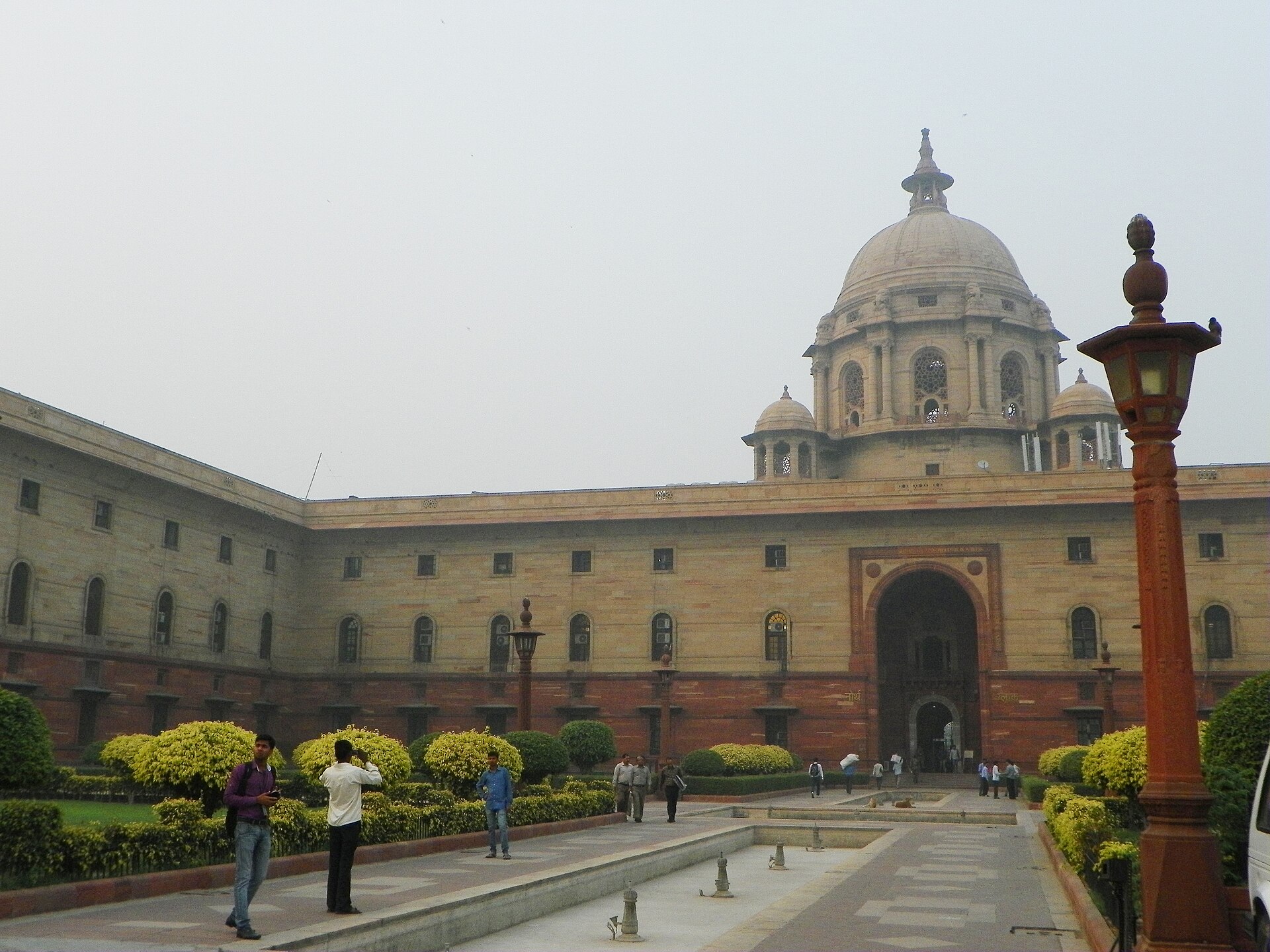
India issued zero formal protest when the Marivex was disabled on June 8 and all 24 Indian crew members evacuated safely. When the Settebello was struck less than 48 hours later and three Indians went missing, MEA Additional Secretary (Americas) Nagaraj Naidu summoned US Chargu00e9 d’Affaires Jason Meeks for a 30-minute meeting at MEA headquarters in New Delhi.
n
India’s statement was blunt: “We condemn the attack on the commercial vessel Settebello off the coast of Oman, earlier today.” The MEA added that India had conveyed the Settebello “was a commercial vessel that was not sanctioned by the US treasury department’s Office of Foreign Assets Control.” India stressed “the importance of safeguarding civilian seafarers” and called for “immediate de-escalation.”
n
The OFAC distinction is the legal pivot. The Marivex was OFAC-designated u2014 blacklisted by the US Treasury’s sanctions enforcement arm, documented as part of the Iranian oil evasion network. CENTCOM’s authority to disable an OFAC-listed vessel transiting to an Iranian port fits within Washington’s own legal framework. The Settebello was not on that list. India’s protest placed the burden back on the US: if the vessel wasn’t sanctioned, what was the legal basis for firing on it?
n
CENTCOM’s answer is categorical. The blockade, as declared April 13, applies “impartially against vessels of all nations entering or departing Iranian ports and coastal areas.” Sanction status is irrelevant to enforcement scope. After April 16, CENTCOM expanded the enforcement zone to “anywhere in the world with the exception of neutral territory,” as legal analysts at Just Security documented. The blockade’s authority rests on the law of naval warfare, not Treasury designations.
n
India is arguing commercial law. Washington is arguing wartime authority. Neither framework concedes to the other.
n
India’s response to the Marivex, as The Wire reported, “largely echoed Washington’s framing” u2014 describing the vessel as “disabled.” The Settebello response abandoned that framing entirely. The word was no longer “disabled.” It was “attack.”
n
n
One complication: Lloyd’s List described the Settebello as “sanctioned,” contradicting India’s formal position. The vessel reportedly previously sailed as the Hana and is linked to Russia’s shadow fleet. Whether Lloyd’s List used “sanctioned” loosely u2014 to mean subject to secondary sanctions risk u2014 or based on a designation India disputes, the discrepancy remains unresolved. India’s Hormuz posture is also bilateral with Iran: New Delhi negotiated case-by-case safe passage for Indian-flagged vessels rather than joining Washington’s naval coalition. Foreign Minister Jaishankar stated publicly that “every ship movement is an individual happening.” There is no blanket arrangement.
n
How Much Saudi Crude Does India Import?
n
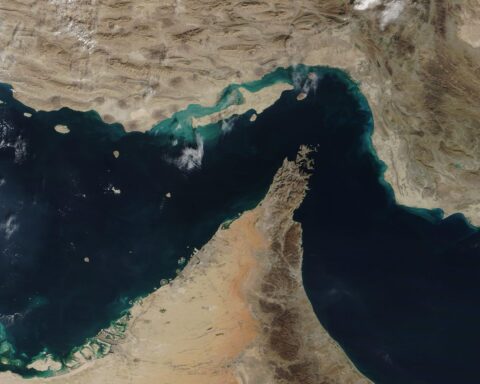
India imported approximately 381,000 barrels per day of Saudi crude in May 2026 u2014 down from a peak near 1.0u20131.1 million bpd in February, before the war disrupted Hormuz transit and redirected Aramco’s exports through the East-West Pipeline to Yanbu. Saudi Arabia fell to India’s third-largest crude supplier. Russia held first position at 1.9 million bpd. The UAE overtook Saudi Arabia in May at 540,000 bpd.
n
The February-to-May collapse u2014 roughly 63% u2014 did not happen in isolation. Hormuz closed on February 28. Aramco rerouted flows through the pipeline to Yanbu, adding voyage time for Asian buyers accustomed to loading at Ras Tanura and Ju’aymah in the Persian Gulf. But the volume decline also tracks the blockade: April 13 enforcement began, and each subsequent month has seen Indian lifts from Saudi Arabia diminish. The UAE’s overtaking of Saudi Arabia as India’s second-largest supplier was not a policy shift in Abu Dhabi u2014 it was a function of geography. Fujairah loads outside Hormuz. Ras Tanura does not.
n
| Metric | Value | Source |
|---|---|---|
| India Saudi crude imports (Feb 2026) | ~1.0u20131.1M bpd | Business Standard |
| India Saudi crude imports (May 2026) | ~381,000 bpd | Angel One / Republic World |
| India-Russia crude imports (May 2026) | 1.9M bpd | Angel One |
| India-UAE crude imports (May 2026) | 540,000 bpd | Angel One |
| India-Saudi bilateral trade (FY26) | $27.18 billion | Embassy of India |
| Saudi investment pledge to India | $100 billion | MEA (Modi-MBS, April 2025) |
| Aramco-ISPRL Padur storage MoU | 4.6 million barrels | MEA joint statement |
n
n
On paper, the partnership is layered. Modi and MBS upgraded the India-Saudi Strategic Partnership Council to four ministerial committees during the April 22, 2025 state visit, alongside the $100 billion investment pledge and the Aramco-ISPRL storage deal at Padur.
n
None of it has produced a single public Saudi statement on the safety of Indian seafarers in the Gulf of Oman.
n
The last confirmed FM-level contact between the two countries on the crisis was a March 4, 2026 call between Jaishankar and Faisal bin Farhan, discussing the “worsening security situation in West Asia.” That was 98 days ago. In the interim: the blockade began, eight vessels were disabled, India’s Saudi crude imports fell by two-thirds, and three Indian sailors went missing in waters Saudi crude must transit. No subsequent Jaishankar-Faisal bin Farhan call on tanker enforcement has been publicly reported.
n
The $10 Retreat in Aramco’s Asia Pricing
n
Aramco’s Official Selling Price for Arab Light crude to Asia peaked at $19.50 per barrel over the Dubai/Oman benchmark in May 2026 u2014 the war premium at its apex. In June, Aramco cut the premium by $4, to $15.50. On June 8, it published the July OSP: a further $6 cut, to $9.50 over Dubai/Oman. The combined $10 retreat is the sharpest two-month decline since 2022.
n
| Loading Month | Arab Light OSP ($/bbl over Dubai/Oman) | Month-on-Month Change |
|---|---|---|
| May 2026 | +$19.50 | u2014 |
| June 2026 | +$15.50 | -$4.00 |
| July 2026 | +$9.50 | -$6.00 |
| Pre-conflict baseline | +$2.00 to +$3.00 | u2014 |
n
n
The July cut exceeded the median expectation of a Bloomberg survey among refiners and traders by one dollar. Every Saudi grade headed to Asia received the same $6 reduction. An industry source told Reuters: “Spot market conditions in May made it clear that Asian buyers were unwilling to pay the war premium indefinitely.”
n
Even after the $10 retreat, July’s $9.50 premium remains roughly three to four times the pre-conflict norm of $2u20133 per barrel. The war premium has compressed, not collapsed. But the direction is legible: Aramco is discounting faster than the market expected, suggesting the sales team is seeing softer Asian demand than the published data conveys.
n
For India specifically, the pricing tells a story the Saudi foreign ministry cannot. Each dollar Aramco concedes acknowledges that its largest Asian customers have alternatives u2014 and are using them. Russia at 1.9 million bpd to India. The UAE at 540,000 bpd. Iran, from which India resumed buying oil in 2026 after a seven-year hiatus under its bilateral safe-passage arrangement. Saudi Arabia’s 381,000 bpd in May is a number Aramco can price around but not reverse with pricing alone u2014 not while American aircraft are firing into engine rooms 20 nautical miles off Sohar.
n
Why Has Saudi Arabia Said Nothing About the Blockade?
n
The Saudi foreign ministry has not commented on the Settebello strike, the three missing Indian sailors, the legal framework of the blockade, or any of the seven vessel disablings that preceded it. The silence has attracted no formal diplomatic attention outside the publication that documented Riyadh’s communication pattern during the first weeks of the war.
n
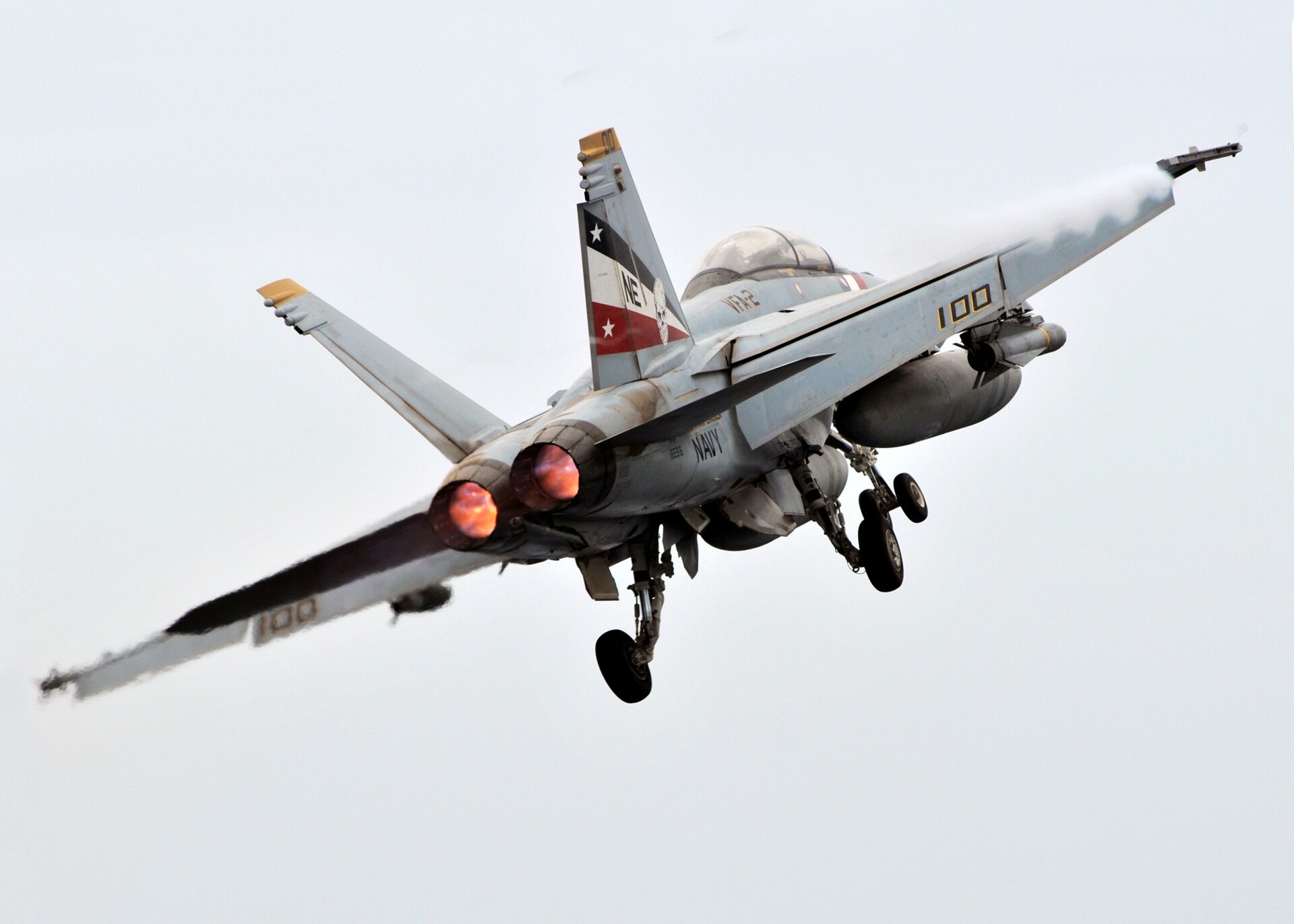
The silence operates in three directions simultaneously. Toward Washington: Saudi Arabia cannot publicly challenge enforcement actions conducted by forces that partly stage from Saudi territory, because doing so raises the unanswerable question of why those forces are present without a treaty framework. Toward New Delhi: Riyadh cannot endorse the blockade’s application to non-OFAC-designated vessels carrying Indian crew, because India is the destination for a declining but still essential share of Aramco’s exports. Toward Tehran: Faisal bin Farhan spoke with Araghchi on June 9u201310 u2014 the call’s content was not disclosed u2014 but any Saudi acknowledgment of the enforcement regime’s human costs would provide Iran rhetorical ammunition at a moment when the Hormuz closure remains Iran’s primary coercive instrument.
n
n
Faisal bin Farhan has made forceful statements about Iran. He told reporters last year that Saudi trust in Tehran had been “shattered” and that the kingdom “reserves the right to take military action against Iran.” No equivalent language has been directed at Washington’s maritime enforcement u2014 not even the mild formulations available to a government that exercises veto authority over its own airspace.
n
The last confirmed formal call between Rubio and Faisal bin Farhan was in January 2026. Five months. One month before the war. The absence of a reported FM-level US-Saudi conversation since the blockade began is not proof that none has occurred. But the absence of a public readout u2014 in a conflict where both sides routinely publish call summaries u2014 is itself a data point.
n
PSAB Without a Treaty
n
Prince Sultan Air Base, south of Riyadh, hosts approximately 2,300 US military personnel under a bilateral defense cooperation arrangement. There is no Status of Forces Agreement. The distinction is not procedural. A SOFA provides legal frameworks for jurisdiction, force protection, consultation requirements, and the conditions under which host-nation consent must be sought for specific operations. The bilateral arrangement at PSAB provides none of these as treaty-guaranteed instruments.
n
Saudi Arabia demonstrated what the arrangement’s limits look like in practice on May 4, 2026, when it denied PSAB access and national airspace for Operation Project Freedom without prior consultation from Washington. The denial worked u2014 the operation was paused. But the episode also demonstrated that Saudi Arabia’s only instrument is the veto. There is no consultative mechanism, no joint committee, no obligation for Washington to inform Riyadh before conducting operations in the Gulf of Oman.
n
The PSAB dependency creates a structural asymmetry that governs the Settebello response u2014 or the absence of one. When Chatham House noted that “like-minded third states could club together in a collective operation for their respective flag-vessels,” the analysts were describing a path available to India (which negotiated bilaterally with Iran), to China (which has its own Hormuz arrangements), and to several other Asian importers. Saudi Arabia is not among them. It cannot join a collective challenge to the blockade’s enforcement scope because the enforcing navy is garrisoned on its soil.
n
The full dimensions of PSAB’s treaty-free basing arrangement explain why that asymmetry is structural rather than circumstantial: every other US base in the Gulf operates under a SOFA or defense cooperation agreement, leaving Riyadh without the legal architecture to demand consultation, invoke force-posture protections, or contest a unilateral US drawdown.
n
When Defense Secretary Hegseth described Gulf states as “partners, not protectorates,” the formulation implied a bilateral relationship between equals. PSAB’s arrangement suggests something more specific: a host state with veto authority and a tenant with operational autonomy, bound by no shared legal text. Partners consult. Saudi Arabia was not consulted before the Settebello strike or any of the seven that preceded it.
n
The depletion of GCC Patriot missile stocks adds a second layer. With Saudi reserves estimated at 80u2013150 PAC-3 MSE interceptors and a Camden, Arkansas production line committed through 2030 to a Pentagon order, Saudi Arabia’s air defense dependency on the US is not abstract. It is a supply chain with a four-year replacement horizon and zero alternative suppliers for the specific munition Saudi Arabia needs most.
n
Two Corridors, Both Exposed
n
Saudi Arabia’s wartime export geography runs through two corridors that are both now compromised u2014 one by the US blockade, the other by Houthi enforcement.
n
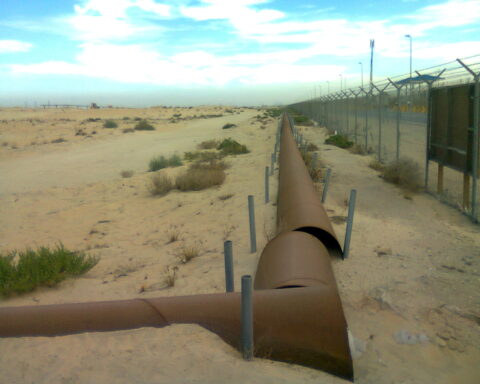
The East-West Pipeline reached full capacity of 7 million barrels per day on March 11, 2026, after the Hormuz closure forced Aramco to reroute virtually all export volumes to the Red Sea terminal at Yanbu. Of that 7 million bpd: approximately 5 million bpd is crude, 700,000u2013900,000 bpd is refined products, and roughly 2 million bpd feeds domestic Saudi refineries. The pipeline was Saudi Arabia’s solution to the Hormuz problem.
n
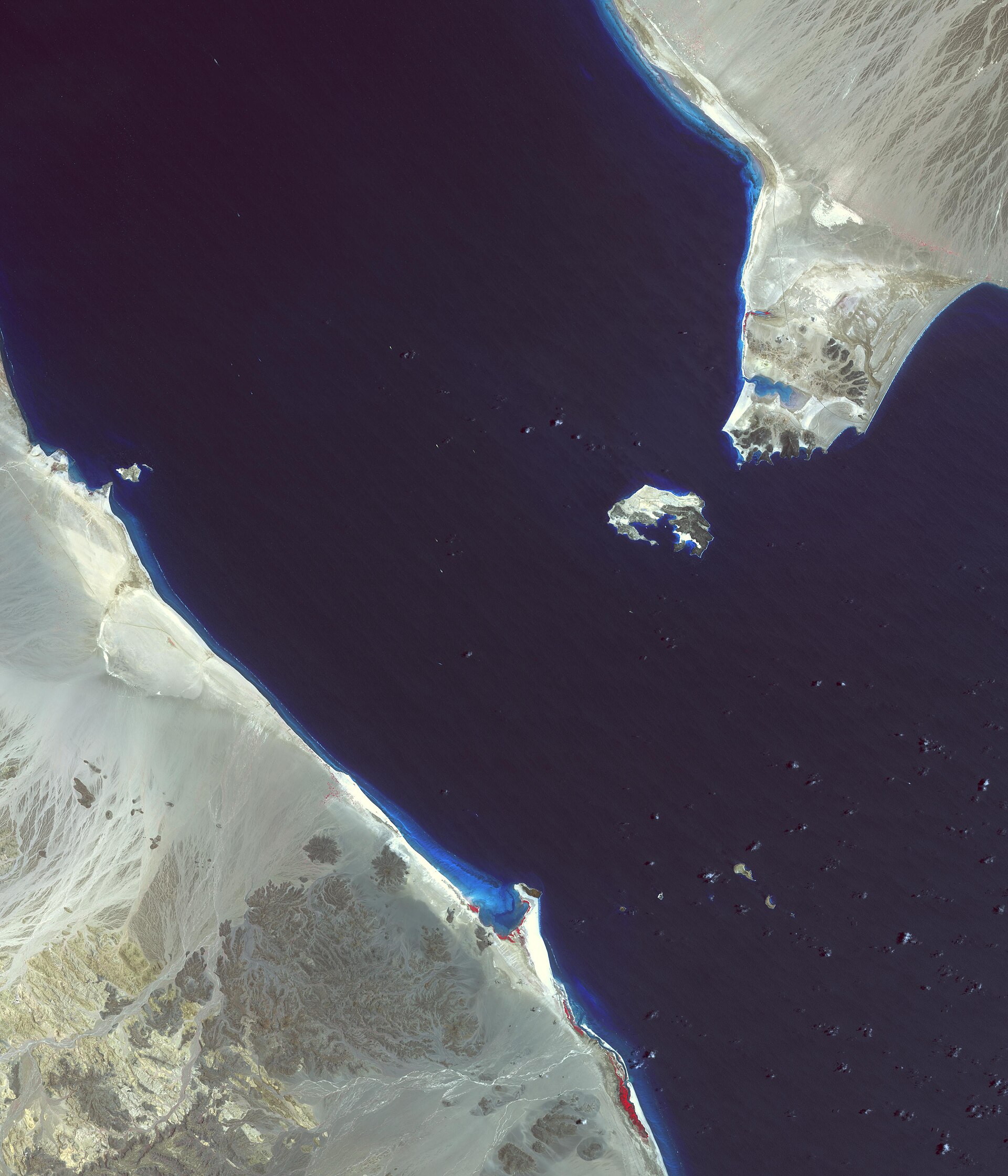
The Yanbu solution has its own problem. Seventy to 75% of Asia-bound exports from Yanbu transit Bab el-Mandeb u2014 the southern chokepoint between Yemen and Djibouti. On June 8, the Houthis declared a “complete and total ban” on Israeli maritime navigation in the Red Sea, with enforcement actions already underway against commercial vessels in the Gulf of Aden.
n
n
The corridor arithmetic is unforgiving. Hormuz, the eastern gate, has been closed since February 28 u2014 Day 103 of the longest postwar chokepoint closure. Aramco rerouted west through the pipeline to Yanbu. But Yanbu’s Asian customers must sail south through Bab el-Mandeb, where Houthi enforcement is now active and insurers at Willis Towers Watson estimated $10 billion per day in global trade at risk. The Settebello was struck in the Gulf of Oman u2014 the eastern approach. The Houthi ban covers the western exit. India, which negotiated bilateral safe passage with Iran for Hormuz, has no equivalent arrangement with the Houthis for Bab el-Mandeb.
n
For Saudi crude destined for India, the geography now looks like this: it cannot go east through Hormuz (closed by Iran), and the western route through Yanbu and Bab el-Mandeb faces both Houthi enforcement and the added voyage time that has already contributed to the collapse from 1.1 million bpd to 381,000 bpd. The Hormuz closure is Iran’s instrument. The blockade is America’s. The Houthi ban is a third party’s. Saudi Arabia controls none of them.
n
The Demarche No One in Riyadh Can Acknowledge
n
India’s formal demarche to the United States over the Settebello placed on the diplomatic record a position u2014 that the blockade’s enforcement scope has exceeded the legal protections owed to commercial shipping and civilian seafarers u2014 that Saudi Arabia holds privately but cannot state publicly. New Delhi said what Riyadh cannot.
n
India had the instruments: it summoned a US diplomat, issued a public condemnation, drew the OFAC distinction, and demanded de-escalation. Saudi Arabia has none of these options without consequences it cannot absorb. Condemn the strike, and you antagonize the military that provides your air defense supply chain. Endorse the strike, and you alienate the crude buyer whose May volumes were a third of February’s. Stay silent, and you confirm u2014 to both sides u2014 that you are a party to the outcome without being a party to the decision.
n
The Diplomat observed in April that India’s reluctance to take a clear position had “weakened India’s image as an independent global actor and diminished the strategic autonomy that New Delhi traditionally sought to maintain.” The Settebello ended that reluctance u2014 selectively, calibrated to the casualty threshold, and directed at Washington alone.
n
Saudi Arabia has no equivalent inflection point. There is no casualty count at which the MOFA’s position changes, because the constraint is not casualties u2014 it is Prince Sultan Air Base, the $100 billion investment pledge, and the Aramco OSP that edges lower each month Washington’s aircraft stay in the Gulf.
n
Since the March 4 Jaishankar-Faisal bin Farhan call u2014 the last confirmed FM contact between the two countries on the crisis u2014 the blockade began, eight vessels were disabled, India’s Saudi crude imports fell by two-thirds, and Aramco cut its Asia OSP by $10. The next OSP announcement, for August loading, is expected in the first week of July. Three Indian sailors remain missing. Omani coast guards are still searching.
nn
The structural inability extends beyond maritime enforcement. On June 11, Trump claimed on Fox News that Iranian officials had called him directly u2014 a claim Iran’s government denied within hours. Saudi Arabia, excluded from US-Iran contact by the same structural constraints that govern its Settebello silence, could neither confirm the claim through Washington nor deny it through Tehran. New Delhi files demarches. Riyadh watches television.
n
Frequently Asked Questions
n
Was the Settebello sanctioned by OFAC?
n
India’s formal position is that the vessel was not designated under OFAC sanctions. Lloyd’s List described it as “sanctioned,” and the vessel reportedly previously sailed as the Hana and is linked to Russia’s shadow fleet. The discrepancy has not been publicly reconciled. CENTCOM’s blockade enforcement applies to all vessels transiting to or from Iranian ports regardless of OFAC status u2014 the legal basis is the law of naval warfare, not Treasury designations. Whether secondary sanctions risk (which Lloyd’s List may have been referencing) constitutes “sanctioned” in the sense India is disputing is itself an unresolved question of characterization.
n
How many Indian-crewed vessels has the US blockade disabled?
n
At least two since June 8: the M/T Marivex (all 24 crew evacuated safely) and M/T Settebello (three crew missing). Both were Palau-flagged. India issued a formal protest only for Settebello. The BIMCO-IMLA Seafarer Workforce Report places Indian nationals at approximately 12% of the global merchant marine workforce, which means the statistical likelihood of Indian nationals crewing blockade-intercepted vessels is substantial regardless of vessel ownership or flag state.
n
Does Saudi Arabia have a Status of Forces Agreement with the United States?
n
No. US forces at Prince Sultan Air Base operate under a bilateral defense cooperation arrangement, not a treaty-based SOFA. The arrangement provides Saudi Arabia an operational veto u2014 demonstrated on May 4 when Riyadh denied PSAB access for Operation Project Freedom u2014 but no consultative role in broader US military decisions in the Gulf. By contrast, the US maintains formal SOFAs with Bahrain (governing the 9,000-strong Naval Support Activity) and Kuwait, both of which provide legal frameworks for jurisdiction and mutual obligations that PSAB lacks.
n
What is India’s safe-passage arrangement with Iran?
n
India negotiated bilaterally with Iran for case-by-case passage of vessels through the Strait of Hormuz rather than joining Washington’s proposed naval coalition. Iran described the arrangement as a “goodwill gesture reflecting the historical relationship.” India resumed purchasing Iranian oil in 2026 after a seven-year hiatus. Foreign Minister Jaishankar clarified that “every ship movement is an individual happening” u2014 there is no blanket guarantee, and the arrangement does not extend to vessels transiting to Iranian ports that might violate the US blockade. The Settebello’s Palau flag and reported destination complicate the safe-passage framework’s applicability.
n
What was the Aramco-ISPRL Padur storage agreement?
n
Aramco’s April 2025 MoU with India’s Strategic Petroleum Reserve Limited covers 4.6 million barrels of storage at the Padur facility in Karnataka. The facility’s current operational status and fill level during the war have not been publicly confirmed. At May’s import rate of 381,000 bpd, the full Padur reserve represents approximately 12 days of Indian Saudi crude consumption.
n”}