VIENNA — The IAEA Board of Governors voted 19–3 on June 10 to censure Iran for failing to account for 440.9 kilograms of uranium enriched to 60 percent. Within hours, Iranian Foreign Minister Abbas Araghchi declared the Cairo inspection accord — the last functioning mechanism to verify that stockpile — “void” and “killed,” sending a formal termination letter to IAEA Director General Rafael Grossi.
Saudi Arabia voted yes. It was the first censure vote Riyadh has cast during active hostilities with Iran, and it produced the precise result that maximizes the nuclear threat Saudi Arabia faces: a permanent verification black hole over material that, according to the Bulletin of Atomic Scientists, is sufficient for nuclear weapons without further enrichment.
This was not an unpredictable reaction. Araghchi executed the identical sequence in November 2025: censure triggers termination letter, Cairo accord dies, inspectors lose access. The June 2026 vote was the second time the same mechanism produced the same outcome. Iran pre-announced it. Riyadh voted for it anyway.
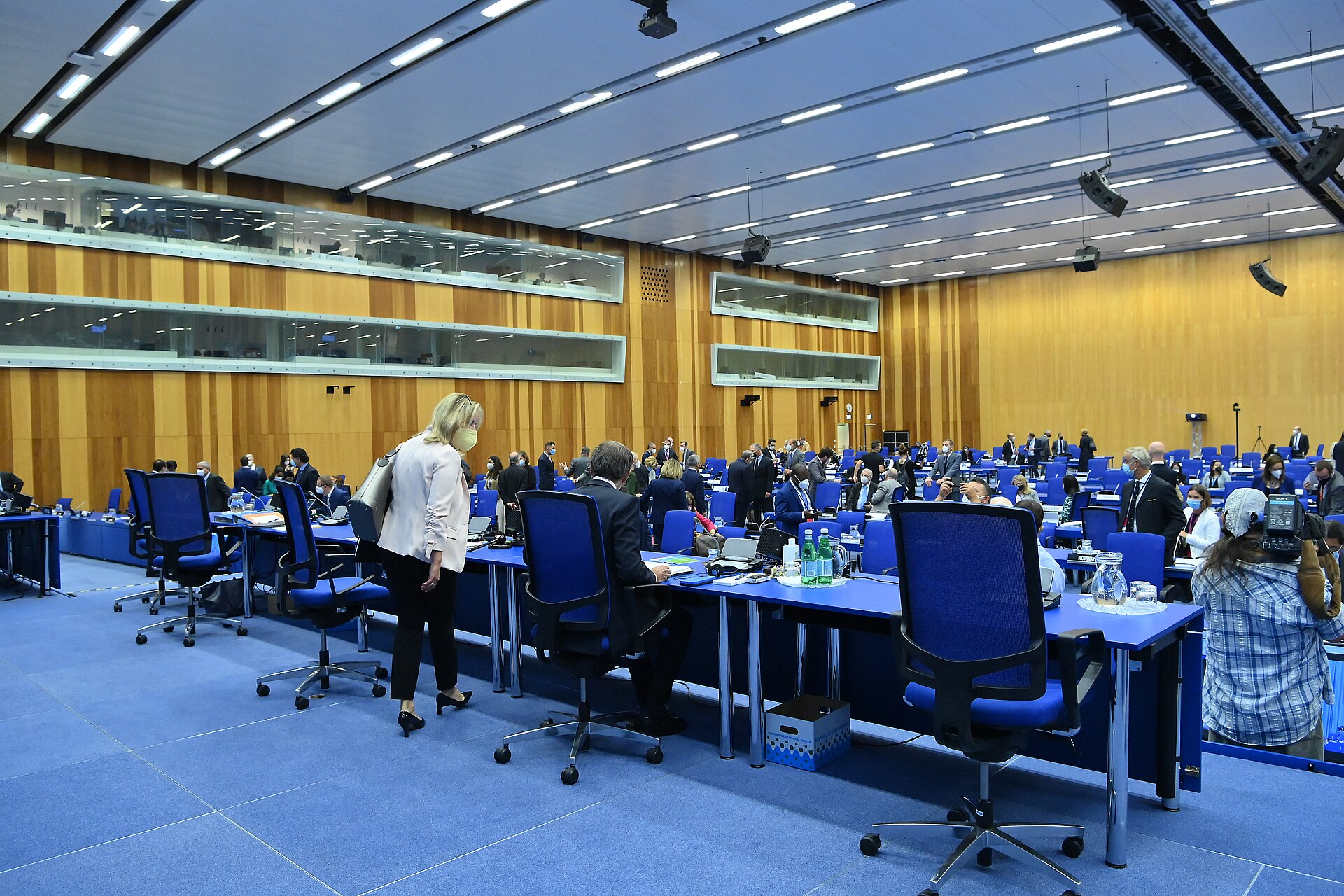
Table of Contents
- The Vote and Its Immediate Consequence
- Why Did Iran Announce This Sequence in Advance?
- The Cairo Accord: Built, Destroyed, Rebuilt, Destroyed
- What Can the IAEA Board Actually Compel?
- The North Korea Precedent
- Where Is the 440.9 Kilograms Now?
- Saudi Arabia Voted for Transparency It Has Not Accepted
- What Instruments Does Riyadh Have Left?
- Frequently Asked Questions
The Vote and Its Immediate Consequence
The resolution, drafted by the United States, United Kingdom, France, and Germany, passed 19–3 with 12 abstentions. Russia, China, and Burkina Faso voted against. It demanded that Iran provide “precise information on nuclear material accountancy” and grant inspectors “without delay” full access to verify its enriched uranium stockpile and damaged nuclear facilities.
Araghchi’s response was immediate and categorical. In a letter to Board members released through Tasnim News Agency, he wrote that “the United States is responsible for the current crisis and should not be permitted to exploit the Board of Governors to justify and legitimize its illegal measures.” He noted that “less than 24 hours after the approval of last year’s June 2025 Board of Governors resolution, the Israeli regime and the US launched unlawful attacks against Iran’s safeguarded nuclear facilities.”
Like the diplomacy which was assaulted by Israel and the US in June, the Cairo Agreement has been killed by the US and the E3.
The HOS Daily BriefThe Middle East briefing 3,000+ readers start their day with.
One email. Every weekday morning. Free.
Abbas Araghchi, Iranian Foreign Minister, June 10, 2026 (Tehran Times)
Iran’s Deputy Foreign Minister Kazem Gharibabadi reinforced the framing in comments to Al Mayadeen, arguing that the “ambiguity” and “lack of access” cited in the resolution were themselves the product of US-Israeli military strikes on safeguarded nuclear facilities. The resolution, in Tehran’s construction, punished Iran for the consequences of being attacked.
Iranian state media unified around a single narrative within hours. PressTV described the resolution as a “dangerous attempt at whitewashing aggression.” Tehran Times ran the headline “E3, US bear responsibility for consequences of censure resolution.” Mehr News inverted the subject entirely: “Tehran censures IAEA’s Board over anti-Iran draft resolution.” IRNA deployed a murder metaphor: “Araghchi: US, Israeli kill Cairo Agreement.”
The vote’s coalition was narrower than its predecessors. In June 2022, an IAEA censure resolution passed 30–2 with three abstentions. Four years later, the margin contracted by nearly half — a shift Tehran has already cited as evidence of the mechanism’s eroding legitimacy.
Why Did Iran Announce This Sequence in Advance?
Iran’s post-censure response was not improvised. Araghchi publicly stated before the November 2025 vote that a censure resolution would void the Cairo accord and end inspection cooperation. The Board voted. Araghchi sent the termination letter. The sequence played out as described, on the timeline he announced.
Seven months later, the same mechanism activated again. The Cairo accord had been painstakingly restored through Egyptian mediation in early 2026, and the June 10 censure resolution triggered an identical termination letter to Grossi — the second time the same institutional input produced the same institutional output. Iran treated the censure not as an act of coercion to be resisted but as a procedural trigger to be exploited.
The Washington Institute for Near East Policy assessed that Iran’s post-censure escalations follow a predetermined institutional sequence: the Supreme National Security Council frames the response, the Supreme Leader authorizes it, and the Atomic Energy Organization of Iran executes it. “Censure resolutions serve as that trigger because they provide political cover for steps the program was already prepared to take,” the Institute concluded.
Responsible Statecraft, citing US intelligence community assessments published before the vote, warned that “Iran’s response to past IAEA censures — reducing cooperation with the agency and advancing its nuclear capabilities — suggests a similar or even stronger escalation might follow.” The intelligence community specifically identified installing more advanced centrifuges, increasing the enriched uranium stockpile, or enriching to 90 percent uranium-235 as probable responses to a new censure.
Iran’s stated justification for voiding Cairo — that IAEA-sourced site information was leaked to Israel, enabling the June 2025 strikes on nuclear facilities — was made publicly before the termination. The allegation has not been investigated by the Board. Whether it is accurate is separate from the procedural fact that the Board voted to censure without addressing it, giving Tehran a grievance layered on top of a pre-planned institutional response.
The distinction matters for Saudi Arabia. If the censure were a coercive tool — if Board pressure had historically produced compliance — the vote would carry strategic logic even at the cost of short-term Iranian escalation. But the censure’s track record is the opposite: it produces the escalation without the compliance. Riyadh cast its vote inside a mechanism whose institutional output Iran had publicly documented and twice demonstrated.
The Cairo Accord: Built, Destroyed, Rebuilt, Destroyed
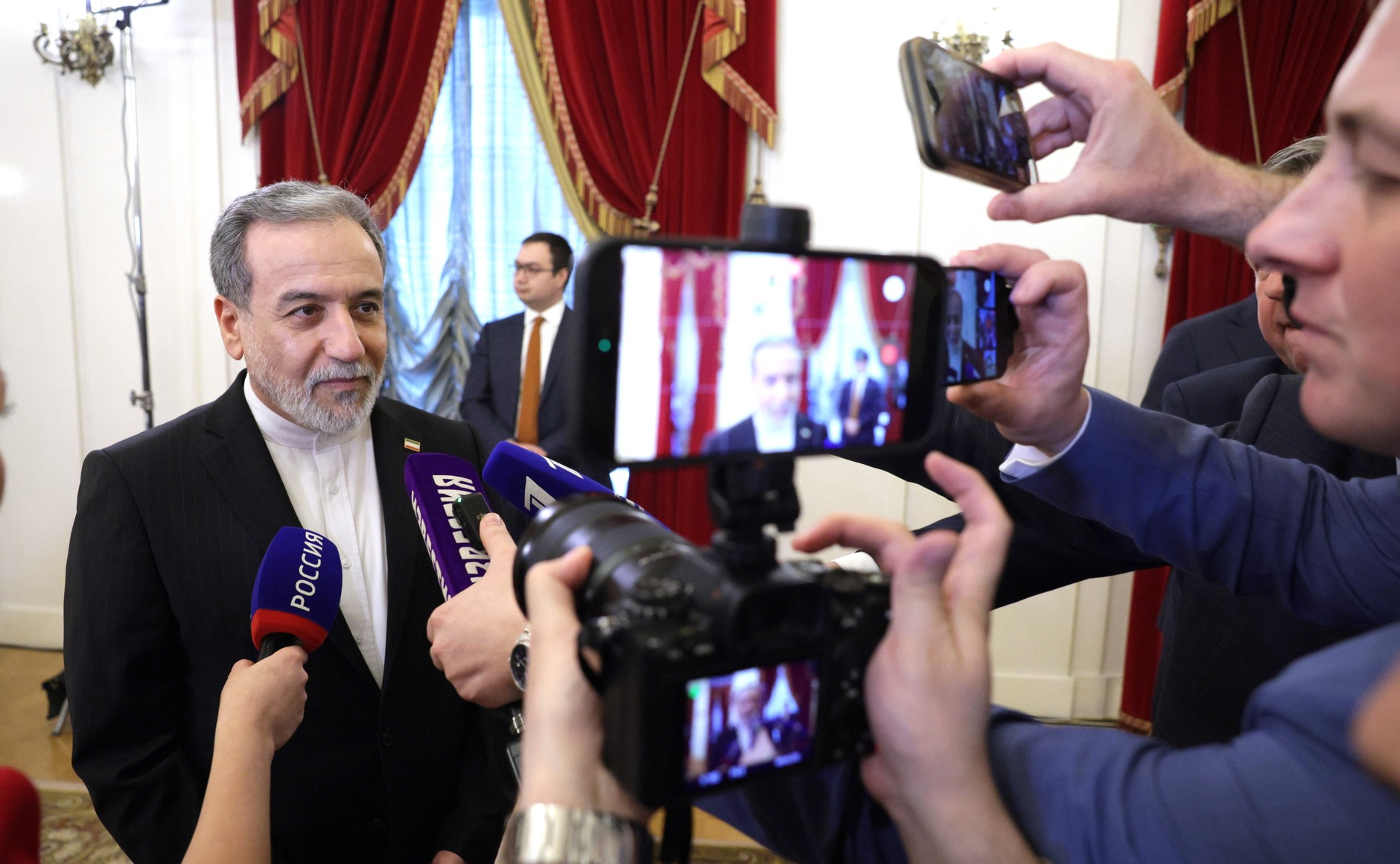
The Cairo accord was signed on September 9, 2025, by Araghchi and Grossi in Cairo, mediated by Egyptian Foreign Minister Badr Abdelatty. It established technical procedures for resuming IAEA inspections after Iran suspended cooperation in the aftermath of US-Israeli strikes on its nuclear facilities in June 2025. The accord covered all declared nuclear facilities, including attacked sites, and required Iran to report on nuclear material at damaged installations.
The agreement represented a rare instance of multilateral diplomacy producing an operational verification instrument during wartime. Egypt’s mediation role — hosting, drafting, providing political cover for both sides — was a function that no other state in the region was positioned to perform. Saudi Arabia had no role in the accord’s creation and no mechanism to influence its terms.
On November 20, 2025, Araghchi sent a letter to Grossi terminating the accord. The trigger: a US-E3 censure resolution passed by the IAEA Board days earlier. Egypt’s mediation, months of negotiation, and the inspection framework they produced were nullified in a single communication.
Diplomatic efforts to restore Cairo consumed the early months of 2026. Grossi traveled extensively. Backchannels operated through Oman, Egypt, and intermediaries. By spring, a restored version of the accord was operational — the basis on which the IAEA’s June 4 report, GOV/2026/8, was compiled, even though that report disclosed 97 days of zero inspector access and 440.9 kilograms of unverified HEU.
On June 10, 2026, the second termination letter arrived. Same author. Same recipient. Same trigger.
| Event | Date | Trigger | Result |
|---|---|---|---|
| Cairo accord signed | September 9, 2025 | Egyptian mediation (FM Abdelatty) | Inspection framework established |
| First termination | November 20, 2025 | IAEA Board censure resolution | Zero inspection access |
| Accord restored | Early 2026 | IAEA/Egyptian mediation | Partial access resumed |
| Second termination | June 10, 2026 | IAEA Board censure resolution | Zero inspection access |
The pattern is binary and repeatable. Censure resolution in, termination letter out. The Cairo accord has now been killed twice by the same weapon. Restoring it a third time would require Iran to voluntarily re-engage with a mechanism it has publicly declared dead, mediated by an Egypt whose credibility as a neutral host diminishes each time its product is destroyed.
What Can the IAEA Board Actually Compel?
The IAEA Board of Governors cannot compel inspection access. Under Article XII.C of the IAEA Statute, the Board can call upon a non-compliant state to take corrective action and can refer the matter to the UN Security Council. It cannot dispatch inspectors over a sovereign state’s objection. The gap between what the Board can demand and what it can enforce is the structural feature Iran exploits each time a censure resolution passes.
The referral pathway has been tested. The Board referred Iran to the Security Council in September 2005. Between 2006 and 2010, the Council passed six resolutions — UNSC Resolutions 1737 through 1929 — imposing escalating sanctions. None of them restored inspection access. Iran continued enrichment throughout the sanctions period and expanded its centrifuge infrastructure at Natanz and Fordow.
The June 2026 vote makes the referral path even less plausible. Russia and China voted against the censure resolution itself — a less consequential action than a Security Council referral. Any Council resolution requires the concurrence of all five permanent members. Moscow and Beijing have pre-declared their opposition on the lower-stakes vote, making UNSC action on a nuclear referral functionally impossible absent a reversal that neither government has signaled.
The resolution’s operative language — demanding “precise information” and access “without delay” — is addressed to a state that has now terminated the inspection accord for the second time and explicitly declared the Board’s action “illegal and unjustified.” The Board demanded compliance from a state that defines the demand itself as illegitimate. The resolution exists as a diplomatic statement. It does not exist as an enforcement mechanism.
The North Korea Precedent
The institutional trajectory that began on June 10 has been completed once before. In 1993, the IAEA Board referred North Korea to the UN Security Council after Pyongyang refused special inspections at two suspected nuclear waste sites. The Council passed Resolution 825, which “invited” North Korea to comply with its safeguards agreement.
North Korea responded by announcing its withdrawal from the Non-Proliferation Treaty the following day. A decade of negotiation followed — the Agreed Framework in 1994, the Six-Party Talks beginning in 2003. North Korea conducted its first nuclear test in October 2006, having withdrawn from the NPT permanently in January 2003. IAEA inspectors have not returned to the country.
Iran has explicitly threatened NPT withdrawal in response to censure resolutions. The threat has not been executed, but the institutional dynamic follows the same structure: a Board action that cannot compel compliance, a Security Council that cannot act unanimously, and a state that treats the verification framework as a voluntary concession revocable at will rather than a binding international obligation.
The Carnegie Endowment for International Peace assessed in May 2026 that Tehran “may conclude that its ability to disrupt the global economy via the Strait of Hormuz provides enough deterrence to begin quietly rebuilding its nuclear program.” The Endowment added that “despite the significant military damage to Iran’s nuclear infrastructure across both wars, the fundamental question of Iran’s nuclear intentions remains unresolved.”
The North Korea trajectory took ten years from Board referral to first nuclear test. Iran’s timeline is compressed by the fact that it already possesses 440.9 kilograms of 60 percent–enriched uranium at a level the Bulletin assessed as weapons-sufficient — and by the fact that the verification mechanism that could detect a weaponization decision has now been terminated twice.
Where Is the 440.9 Kilograms Now?
The IAEA’s June 4 quarterly report, GOV/2026/8, disclosed that Iran’s stockpile of uranium enriched to 60 percent stood at 440.9 kilograms as of the last verified measurement on February 27, 2026. An additional 8,599.6 kilograms of lower-enriched material also remained unverified. As of the report’s publication, inspectors had been denied access for 97 consecutive days.
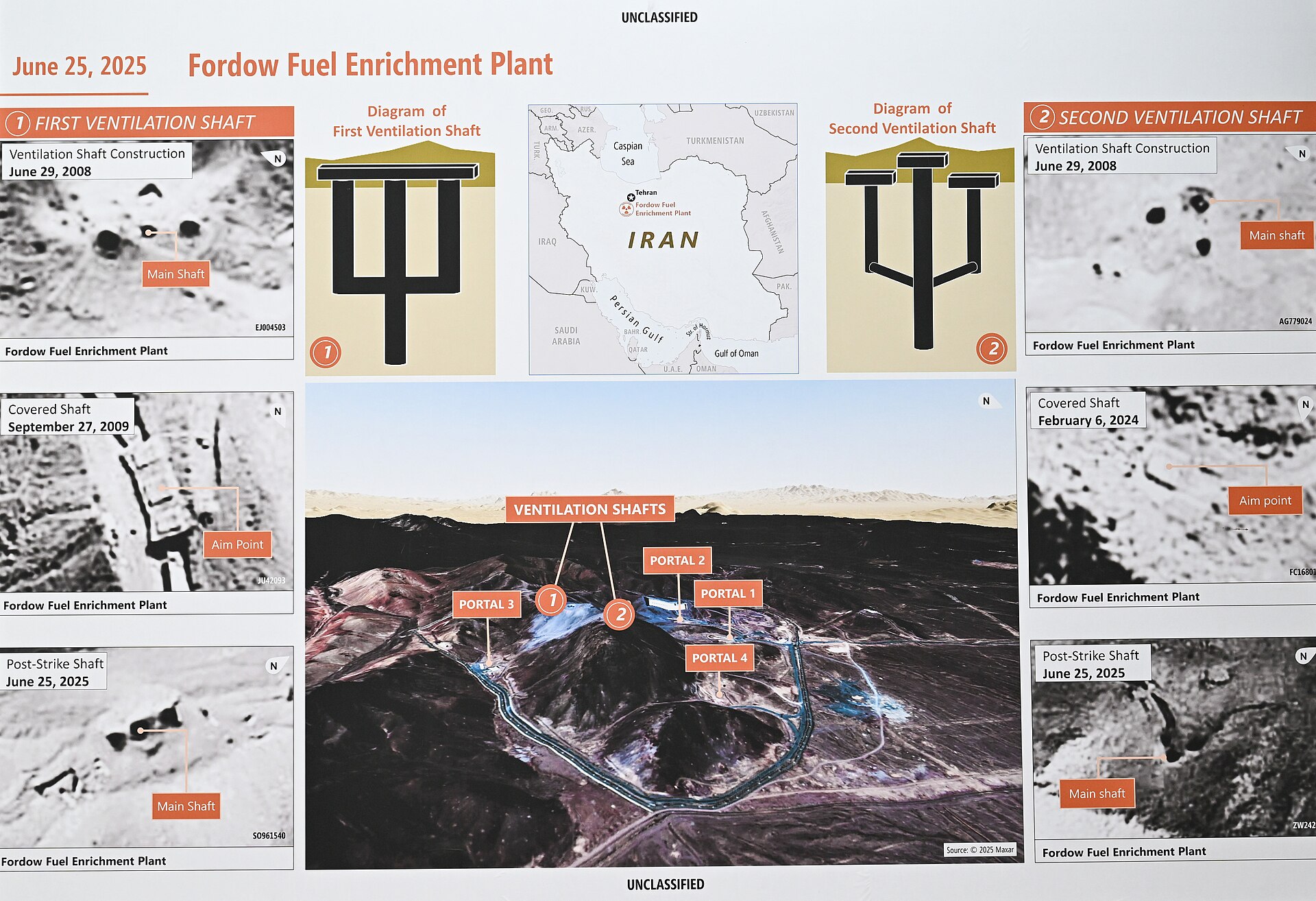
The physical location of the 60 percent stockpile is a matter of informed assessment, not verified fact. The Bulletin of Atomic Scientists reported in March 2026 that Iran likely transferred a large portion of its 60 percent–enriched material to the Isfahan underground tunnel complex before the June 2025 strikes. The IAEA confirmed regular vehicular activity consistent with the transport of 60 percent UF6 cylinders at Isfahan in February 2026.
Grossi told Foreign Policy in April 2026 that “much of Iran’s enriched uranium is likely still at Isfahan.” Fordow, the other primary enrichment site, was assessed at approximately 70 percent physically intact after the 2025 strikes.
The IAEA’s report presents a picture of near-total, ongoing loss of monitoring of Iranian nuclear sites due to Iran’s suspension of access nearly one year ago, an unaccounted-for enriched uranium stockpile, key activities that cannot be verified, and the persistence of long-standing compliance failures.
David Albright, Sarah Burkhard, Spencer Faragasso, Andrea Stricker — Institute for Science and International Security, June 9, 2026
The June 10 censure resolution was drafted in response to this verification gap. Its passage has now widened that gap permanently — or at least for as long as Iran chooses to maintain the Cairo termination. The 440.9 kilograms remains where Iran placed it, verified by no one, monitored by no instrument, and now formally outside the reach of the only inspection accord that could have tracked it.
On the same day Iran voided the last inspection mechanism, Brent crude fell 1.93 percent on comments from Special Envoy Steve Witkoff and President Trump describing Iran nuclear talks as in their “final throes.” Markets were pricing a deal. The diplomatic reality was moving in the opposite direction. The verification gap that would need to narrow for any deal to be implemented was instead widening to its maximum extent.
Saudi Arabia Voted for Transparency It Has Not Accepted
On May 13, 2026, the United States and Saudi Arabia signed a civilian nuclear cooperation agreement under Section 123 of the US Atomic Energy Act. The agreement omitted all three Gold Standard requirements that the US has applied to other nuclear cooperation partners: it contains no enrichment ban, no reprocessing ban, and no Additional Protocol pre-condition. The Arms Control Association characterized the deal as a “gilded sweetheart” pact.
President Trump substituted unspecified “additional safeguards and verification measures” for the Gold Standard provisions. The specifics of those measures have not been publicly disclosed. Saudi Arabia’s IAEA vote exposed the asymmetry at the core of its nuclear posture: Riyadh cast a vote demanding transparency from Iran while operating under a cooperation framework that exempts Saudi Arabia from the transparency requirements the resolution was designed to enforce.
The resolution demanded that Iran grant inspectors full access and provide “precise information on nuclear material accountancy.” The 123 Agreement does not require Saudi Arabia to adopt the Additional Protocol — the instrument that provides the IAEA with expanded inspection authority beyond declared facilities. The UAE’s 123 Agreement with the US, signed in 2009, required Additional Protocol ratification as a precondition. The Saudi agreement does not.
Saudi Arabia holds its Board of Governors seat through 2027. It will participate in future votes on Iran’s compliance under this asymmetric framework. The question is not whether Tehran will raise the inconsistency — it already has. The question is whether the 12 abstaining states on June 10 factored it into their decision, and whether that number grows as the Saudi civilian nuclear program moves toward implementation.
The 123 Agreement was signed 28 days before the censure vote. The proximity is coincidental in scheduling but structural in logic: Saudi Arabia secured a nuclear cooperation pathway with reduced verification requirements, then voted to censure Iran for failing to meet the verification requirements Saudi Arabia declined to accept for itself. The Arms Control Association’s June 12 analysis details the specific verification architecture that converts this diplomatic contradiction into a structural nonproliferation gap — including why the first-ever Section 1264 waiver removed the last procedural barrier between Saudi Arabia and a domestic enrichment program.
What Instruments Does Riyadh Have Left?
Seven days before the vote, Grossi visited Saudi Arabia on June 3, meeting both Energy Minister Prince Abdulaziz bin Salman and Foreign Minister Prince Faisal bin Farhan. Saudi Arabia had direct bilateral access to the IAEA Director General — the man who had brokered and then lost the Cairo accord twice — and still voted for the resolution that triggered its second termination.
The Grossi visit was not a courtesy call. It occurred on the same day the IAEA’s quarterly report was being finalized, the same week Iran’s counteroffer through Oman had collapsed, and during the period in which Trump administration officials were publicly characterizing nuclear talks as nearly complete. Grossi would have briefed Riyadh on the verification gap’s severity, the Cairo accord’s fragility, and the probable Iranian response to censure. The vote seven days later proceeded regardless.
| Instrument | Status After June 10 | Constraint |
|---|---|---|
| IAEA Board vote | Exercised | Cannot compel inspection; triggered Cairo void |
| UNSC referral (Art. XII.C) | Available but blocked | Russia and China voted against censure resolution |
| Cairo Accord | Terminated (second time) | Requires Iran’s voluntary re-engagement |
| Bilateral with Grossi | Intact | IAEA DG cannot override state non-cooperation |
| US-Saudi 123 Agreement | Signed, no Additional Protocol | Undermines credibility on verification demands |
| Quadrilateral (Egypt/Pakistan/Turkey) | No joint nuclear position | Zero communiqués in three ministerial sessions |
The censure vote consumed the one institutional action available through the IAEA without producing compliance, access, or deterrence. The resolution’s demands remain on paper. The Cairo accord — the mechanism through which those demands could have been operationalized — is void for the second time. Grossi, who has now lost his negotiated framework twice to the same trigger, has no mandate to compel a replacement.
Iran’s broader diplomatic posture — talks declared dead, the Strait of Hormuz still restricted, the Trump administration’s MOU rejected — means that nuclear verification is no longer a separable track. Iran has bundled it with the war’s other unresolved files. Saudi Arabia cannot resolve the verification gap in isolation because Tehran has made it inseparable from Hormuz, from the frozen assets, and from the ceasefire terms it has already rejected.
The quadrilateral consultation mechanism with Egypt, Pakistan, and Turkey — three ministerial sessions, zero communiqués — has produced no joint position on nuclear verification. Pakistan carries letters between Islamabad and Tehran but has no nuclear verification mandate. Turkey maintains its Fidan-Araghchi channel but has not applied it to the IAEA file. Egypt’s mediation credibility, the foundation on which Cairo was built, erodes each time its product is destroyed by the mechanism it cannot control.
Riyadh’s IAEA Board seat runs through 2027. It provides one more year of voting rights on resolutions that cannot compel compliance, inside a body whose enforcement mechanism leads to a Security Council where two permanent members have already voted no. It is a seat that casts votes. On June 10, Riyadh cast one.
That vote has also accelerated Tehran’s internal fracture on a more fundamental question: whether Iran remains inside the NPT at all. Hardline parliamentarians have publicly tied the censure to withdrawal legislation, citing the same vote Riyadh cast as confirmation that the treaty framework no longer serves Iranian interests.
The June 12 non-compliance ruling landed on the same day the MOU’s nuclear deferral became public — a framework that asks Saudi Arabia to co-approve a document containing no enrichment caps and no IAEA access schedule, as examined in Sixty Days for Nuclear Terms Nobody Has Written. The same ruling coincided with Araghchi’s CBS rejection of US demands to remove Iran’s HEU — while the Saudi 123 Agreement Washington signed in Riyadh one month earlier permits the enrichment it simultaneously demands Tehran surrender: Washington Demands From Tehran What It Waived for Riyadh.
Frequently Asked Questions
Can Iran be expelled from the IAEA for non-compliance?
The IAEA Statute does not contain an expulsion mechanism. Article XIX provides for voluntary withdrawal with one year’s notice. The Board’s maximum enforcement action under Article XII.C is to curtail assistance, call for the return of materials and equipment provided under Agency agreements, and report the matter to the Security Council. Iran remains a member in good standing of the Agency regardless of its cooperation level, which is why Board votes function as political statements rather than enforcement instruments. No state has ever been expelled or suspended from the IAEA.
How close is 60 percent enrichment to weapons-grade uranium?
Weapons-grade uranium is defined as 90 percent U-235 or higher. The enrichment effort required to move from 60 percent to 90 percent is approximately 15–20 percent of the total effort needed to enrich from natural uranium (0.7 percent) to 90 percent — meaning Iran has completed roughly 80–85 percent of the technical work. Iran’s IR-6 advanced centrifuges at Fordow, which survived the 2025 strikes at approximately 70 percent physical capacity, could theoretically produce enough 90 percent HEU for a single weapon within weeks of a political decision to do so, according to Institute for Science and International Security estimates from early 2026. The 440.9 kilograms at 60 percent, if further enriched, contains sufficient fissile material for multiple weapons.
Has any country restored IAEA cooperation after terminating an inspection accord?
South Africa is the only state to have voluntarily dismantled a nuclear weapons program and subsequently restored full IAEA cooperation, completing the process between 1989 and 1994. Libya abandoned its program in 2003 after bilateral negotiations with the US and UK, granting IAEA access that confirmed dismantlement. Iraq’s inspection regime was imposed through UNSC Resolution 687 after the 1991 Gulf War, not voluntarily restored. In each historical case, the restoration followed a fundamental change in the state’s strategic posture — regime transition, negotiated surrender, or military defeat. No state has restored IAEA cooperation in response to a Board censure resolution.
What would a Saudi Additional Protocol commitment change?
The IAEA Additional Protocol (INFCIRC/540) grants inspectors expanded access beyond declared facilities, including the ability to conduct complementary access visits on short notice and to use environmental sampling at locations the Agency selects — rather than only those the state has declared. Saudi Arabia signed a Comprehensive Safeguards Agreement with the IAEA in 2009 but has not signed or ratified an Additional Protocol. Adopting one would subject Saudi Arabia’s planned civilian nuclear facilities under the 123 Agreement to the same expanded verification regime that the June 10 resolution demanded Iran accept. The UAE’s 123 Agreement required Additional Protocol ratification as a precondition; the Saudi agreement does not, a disparity the Arms Control Association identified as the defining omission of the deal.