
WASHINGTON — President Donald Trump said on June 13 that he believes Iran’s Supreme Leader Mojtaba Khamenei has personally approved a memorandum of understanding to end the conflict between Washington and Tehran, and that a signing ceremony could take place “Saturday or Monday” in Geneva with Vice President JD Vance as the US signatory. A diplomat from one of the mediating countries told Axios fewer than 24 hours earlier that the agreement had been approved “at high levels” on the Iranian side but “likely not” by Khamenei himself — an assessment that remained unresolved as US forces shot down multiple Iranian attack drones near the Strait of Hormuz on the morning of June 13, according to Al Jazeera and RFE/RL.
Iranian Foreign Minister Abbas Araghchi, speaking the same day as Trump, described an MOU that covers Hormuz, Lebanon, and “all other fronts,” but defended Iran’s right to collect “service fees” in the strait — a revenue structure the Persian Gulf Strait Authority has been enforcing since May 5 at roughly $1 per barrel. Iran’s IRGC-affiliated Tasnim News Agency counted Trump’s statement as his 38th identical deal-imminence claim in two months and advised that “any news from Trump on this subject should be regarded the same as his previous messaging” until Iran confirms. Saudi Arabia, named by Trump on June 11 as one of twelve “approvers,” has not issued a public foreign ministry statement in 24 days.
Table of Contents
Thirty-Eight Claims and Counting
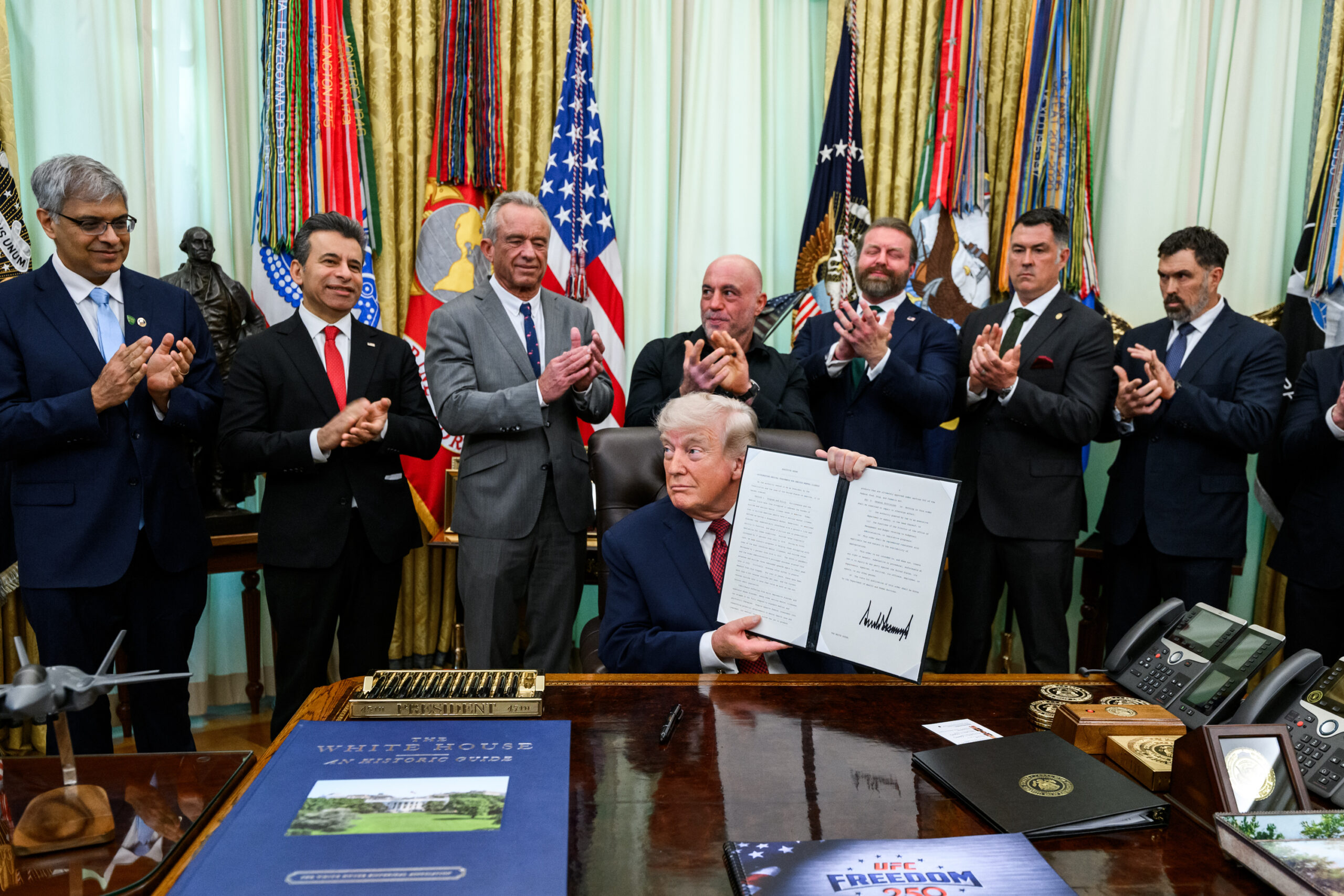
Trump made the Khamenei-approval claim in response to a direct question on June 13. “I understand the answer is yes,” he said when asked whether Iran’s supreme leader had approved the deal, and narrowed the signing window to “Saturday or Monday,” describing the MOU as “a very strong memorandum of understanding” that “conceptually deals” with Iran’s nuclear material, according to the Times of Israel liveblog. In a separate statement carried by the Jerusalem Post the same day, Trump said that “discussions and final points have been, in both concept and great detail, approved by all parties involved, including the United States, Israel, Saudi Arabia, UAE, Qatar, Turkey, Pakistan, Bahrain, Kuwait, Jordan, Egypt, and others.”
The phrase “I understand the answer is yes” attributes the claim to an intermediary — Trump did not say he received direct confirmation from Tehran or from Khamenei’s office. A senior Trump administration official told CNBC on June 12 that a signing was likely in the “coming days” but “not 100% certain.” Four USAF C-17 Globemaster III transports were pre-positioned in Europe on Thursday, June 11, and Bloomberg confirmed Geneva as the likely venue for a ceremony.
Against that, three layers of Iranian denial — official, state-media, and IRGC-affiliated — remained active on June 13. Iranian Foreign Ministry spokesman Esmail Baghaei told IRNA on June 12 that Iran had “not yet reached a final decision” and described reports of a Geneva signing as “merely speculation.” Fars News Agency, which maintains close ties to the Islamic Revolutionary Guard Corps, reported the same day that Tehran “has not approved any text” but left open a “possibility” of signing. Tasnim was more direct: Trump had made 38 identical claims in two months, and “until Iran announces the matter of a potential understanding, any news from Trump on this subject should be regarded the same as his previous messaging.”
The Axios report, published June 12, cited a diplomat from one of the mediating countries — likely the Qatar or Pakistan track — who said the deal had been “approved on the Iranian side at high levels” but added that Khamenei’s own sign-off had “likely” not been secured as of Thursday evening. The diplomat said the parties had “agreed on the text” but still needed a “final sign-off.” Reuters, in its June 13 wire, carried Trump’s claim straight but offered no independent sourcing on Khamenei’s approval.
The Middle East briefing 3,000+ readers start their day with.
One email. Every weekday morning. Free.
“Until Iran announces the matter of a potential understanding, any news from Trump on this subject should be regarded the same as his previous messaging.”
— Tasnim News Agency, June 12, 2026
What Does Araghchi’s Version of the Deal Look Like?
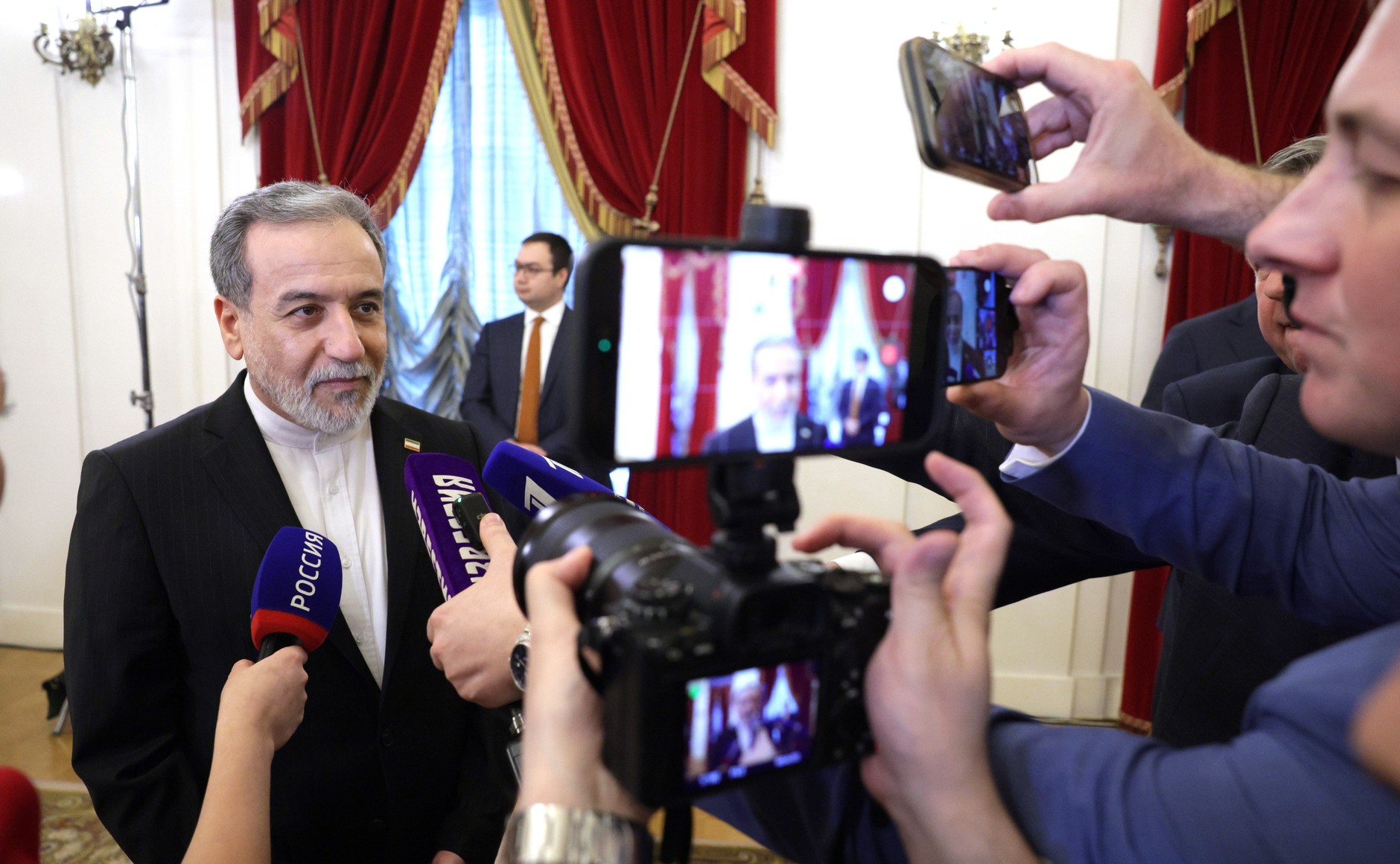
Araghchi’s June 13 statements, carried by the Tribune India via ANI, Iran International’s liveblog, and NBC News, describe an agreement that differs from Trump’s characterization in at least three respects. Araghchi confirmed that the MOU draft covers Hormuz and Lebanon “and all other fronts” — a scope broader than the nuclear-centric framing Trump has used in public. He said that if “the final stage of negotiations is completed,” the agreement would be “signed remotely by both sides and then formally announced,” according to NBC News — a format that would bypass the Geneva ceremony Vance has been positioned to attend.
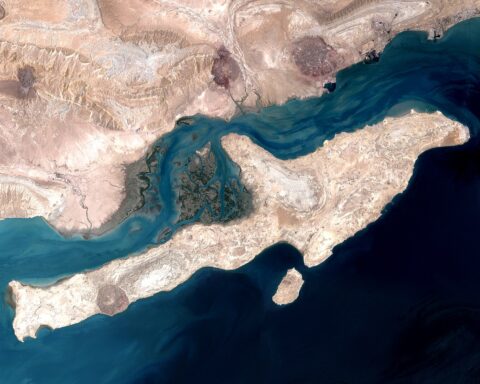
On the Strait of Hormuz, Araghchi was specific. “According to international law, it is not possible to collect tolls from the Strait of Hormuz, but service fees will be collected,” he told Tribune India on June 13. The distinction between “tolls” and “service fees” maps directly onto the MOU draft’s reported language: the text prohibits tolling but does not address the PGSA’s fee structure, which has been collecting approximately $1 per barrel from tankers transiting the 5-nautical-mile Qeshm-Larak corridor since May 5. OFAC sanctioned the PGSA on May 27, but the authority continued operating.
“According to international law, it is not possible to collect tolls from the Strait of Hormuz, but service fees will be collected.”
— Abbas Araghchi, Iranian Foreign Minister, June 13, 2026
Araghchi also said Hormuz would “not return to how it operated before the war” and that compensation to Iran was “in plan,” according to Tribune India. Trump’s public statements on the MOU have not addressed PGSA fees, Hormuz governance, or the service-fee distinction Araghchi cited on June 13.
Can Mojtaba Khamenei Approve by Saturday?
Under Article 176 of Iran’s constitution, Supreme National Security Council decisions on international security agreements take effect only after the supreme leader’s confirmation. Mojtaba Khamenei, who assumed the position after his father Ali Khamenei was assassinated on February 28, 2026, has been in hiding since that date and communicates with government officials via courier, with multi-day delays between exchanges, according to multiple reports. The courier system imposes a structural lag on every step of the decision loop — review, deliberation, and ratification.
The timeline Trump has proposed — signing on Saturday, June 13, or Monday, June 15 — requires that a man communicating through intermediaries at multi-day intervals has reviewed, considered, and constitutionally ratified a document that his own foreign ministry spokesman described as unfinalized 24 hours earlier. An unnamed Iranian state-TV insider told Iran International on May 29 that the draft MOU “breaches eight of ten conditions” previously approved by the supreme leader’s office. No Iranian official has publicly updated that count or addressed the reported breaches since.
Fars News Agency’s June 12 formulation — that Tehran had not approved any text but left open a “possibility” — was the closest any IRGC-affiliated outlet came to acknowledging forward movement. Under Article 176, the gap between government-level review and the supreme leader’s ratification is a constitutional step, not an administrative one.
Araghchi’s own June 13 CBS appearance — rejecting the US demand to remove Iran’s HEU stockpile outright — exposed the broader double standard: the Saudi 123 Agreement signed in May already permits the enrichment Washington is demanding Tehran surrender, as documented in Washington Demands From Tehran What It Waived for Riyadh.
The Agreement That Defers Its Own Nuclear Terms
The MOU is structured in two phases. Phase 1 — the document Trump says Khamenei has approved — covers a ceasefire extension, Hormuz status, a sanctions framework, and Lebanon, according to Axios’s June 12 reporting on the deal’s contents. It contains no nuclear terms. Phase 2, triggered by the MOU’s signing and lasting 60 days, is where enrichment caps, stockpile disposal, and IAEA access are to be negotiated.
Trump described the MOU as one that “conceptually deals” with Iran’s nuclear material. A senior US official told the Times of Israel that the deal “‘leads to’ US getting Iran’s enriched nuclear material” and that the material would be “taken out of the country.” IRNA has consistently reported the opposite: that Iran retains the “right” to enrichment and that nuclear material stays inside Iran. The two positions have not been reconciled in any public document.
The IAEA’s Board of Governors voted 19-3 on June 12 to declare Iran in non-compliance — the first such ruling in 20 years. The agency has been unable to verify 440.9 kilograms of highly enriched uranium for more than 97 days, and Iran’s Fordow enrichment facility remains 70 percent intact, according to IAEA reporting. The MOU’s Phase 1 was drafted without reference to any of these conditions.
Israeli Prime Minister Benjamin Netanyahu told Trump on June 11 that he was “not a party” to the MOU, according to NBC News. He separately sought and received Trump’s assurance that the final deal — Phase 2, not Phase 1 — would mandate uranium removal and enrichment dismantlement. Phase 2 has not been drafted.
Riyadh Named, Riyadh Silent
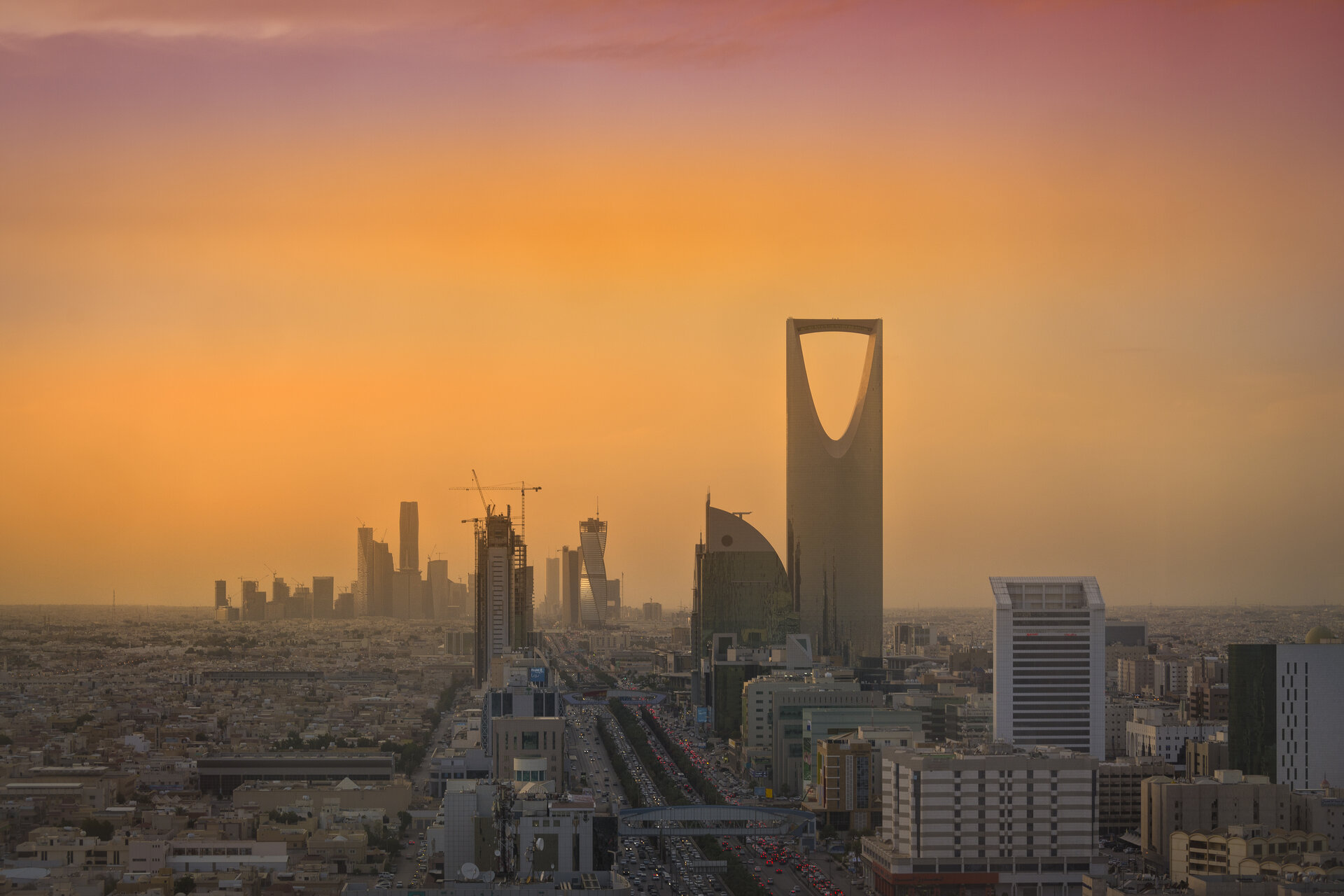
Trump’s June 11 Truth Social post named Saudi Arabia among twelve countries whose leaders had “approved” the deal. The Saudi Ministry of Foreign Affairs has not issued a public statement since May 20, when Foreign Minister Prince Faisal bin Farhan attended the EU’s Gymnich meeting — a silence of 24 days as of June 13. Al Arabiya, the PIF-owned broadcaster, carried a “Tehran approved” narrative via an unnamed “senior source” on June 11-12, but no Saudi government body has confirmed or denied Trump’s characterization of Riyadh as an approver.
Saudi Arabia holds no seat at any of the three mediation tracks producing the MOU. The Pakistan dual-letter architecture — Prime Minister Sharif on the civilian channel, Army Chief Munir on the IRGC back-channel — is publicly documented and does not include Saudi representation. The Qatar track routed through Tehran without consulting Riyadh, and the Oman channel was suspended after Trump threatened to “blow them up” on May 28, according to the Wall Street Journal.
The PGSA’s fee structure exposes Saudi Arabia more than any other single country. Approximately 5.5 million barrels per day of Saudi crude transit the Strait of Hormuz, producing roughly $5.5 million in daily liability at the PGSA’s $1-per-barrel rate. Brent crude fell more than 4 percent on June 13 to below $86.50 per barrel — its lowest level since early March 2026, according to TradingKey — widening the gap between market price and Saudi Arabia’s fiscal breakeven of $108-111 per barrel to a $21-25 per barrel deficit. Sadara Chemical Company’s $3.7 billion debt grace period expires on Monday, June 15, the day after the proposed Geneva ceremony.
Background
The MOU under discussion is the product of a multi-track mediation effort that accelerated after Trump declared a ceasefire on April 8, 2026, which subsequently collapsed. Iran’s IRGC maintained a universal shoot-on-sight posture in the Strait of Hormuz throughout the negotiation period, and the PGSA — established by Iran on May 5 — continued charging transit fees in the Qeshm-Larak corridor after OFAC sanctions on May 27.
Mojtaba Khamenei became supreme leader following the assassination of his father, Ali Khamenei, on February 28, 2026. He has not appeared publicly since that date. Under Iran’s constitutional framework, the Supreme National Security Council can negotiate and draft security agreements, but Article 176 requires the supreme leader’s explicit confirmation before any such agreement takes legal effect.
The 2015 JCPOA — the last formal US-Iran agreement — was negotiated over 20 months with direct participation from Iran’s foreign ministry and required Ali Khamenei’s personal endorsement, which he gave publicly. Trump withdrew the United States from the JCPOA in 2018. The current MOU framework differs from the JCPOA in scope, covering military operations, Hormuz governance, and Lebanon alongside nuclear issues, and in the speed of its proposed conclusion.
Frequently Asked Questions
Has Iran officially confirmed that Khamenei approved the MOU?
No. As of June 13, no Iranian government body, state media outlet, or IRGC-affiliated publication has confirmed Khamenei’s approval. The closest official statement came from Fars News Agency, which acknowledged a “possibility” of signing without confirming any approval. Araghchi’s June 13 statements addressed Hormuz governance, service fees, and remote signing but did not reference Khamenei by name or title — an omission consistent with the constitutional distinction between government-level negotiations and supreme-leader ratification under Article 176.
What is the difference between “tolls” and “service fees” at Hormuz?
The MOU draft reportedly prohibits “tolls” on strait transit but does not address “service fees.” Iran’s PGSA charges approximately $1 per barrel — roughly $2 million per very large crude carrier — for transiting the 5-nautical-mile corridor between Qeshm and Larak islands. Araghchi explicitly defended this distinction on June 13, citing international law. Iran’s legal argument rests on UNCLOS Article 42, which permits coastal states to adopt regulations for environmental protection and navigational safety in straits — a provision no international tribunal has tested against the PGSA’s fee structure.
Who is the Iranian signatory for the Geneva ceremony?
Iran has not publicly named a signatory as of June 13. Vance has been confirmed as the US signatory, with special envoy Steve Witkoff also part of the US delegation. Araghchi suggested on June 13 that signing could happen “remotely” — an alternative format that would bypass the Geneva venue entirely. No Iranian delegation has been publicly reported en route to Switzerland.
Why has Saudi Arabia not responded to being named an “approver”?
Saudi Arabia’s foreign ministry has been publicly silent since May 20. The kingdom holds no seat at any of the three mediation tracks (Pakistan, Qatar, Oman) and was not involved in drafting the MOU text. Trump’s June 11 Truth Social post was the first public assertion that Saudi Arabia had approved anything, and Riyadh has neither confirmed nor denied it. The kingdom’s 123 Agreement with the United States, signed May 13, permits Saudi enrichment without an IAEA Additional Protocol — a structural position that diverges from the MOU’s deferred enrichment framework. The problem extends further: with two mutually contradictory MOU texts in circulation and no Saudi seat at any negotiating track, Riyadh cannot authenticate which version of the deal its 123 Agreement depends on.
What happens if the MOU is signed without Khamenei’s constitutional ratification?
Under Article 176 of Iran’s constitution, SNSC decisions are not legally binding until confirmed by the supreme leader. An MOU signed by a lower-ranking official without that confirmation would carry no constitutional standing in Iran’s legal framework. The JCPOA precedent required Ali Khamenei’s personal endorsement, which he gave publicly before the 2015 signing. No equivalent endorsement exists from Mojtaba Khamenei for the current MOU.