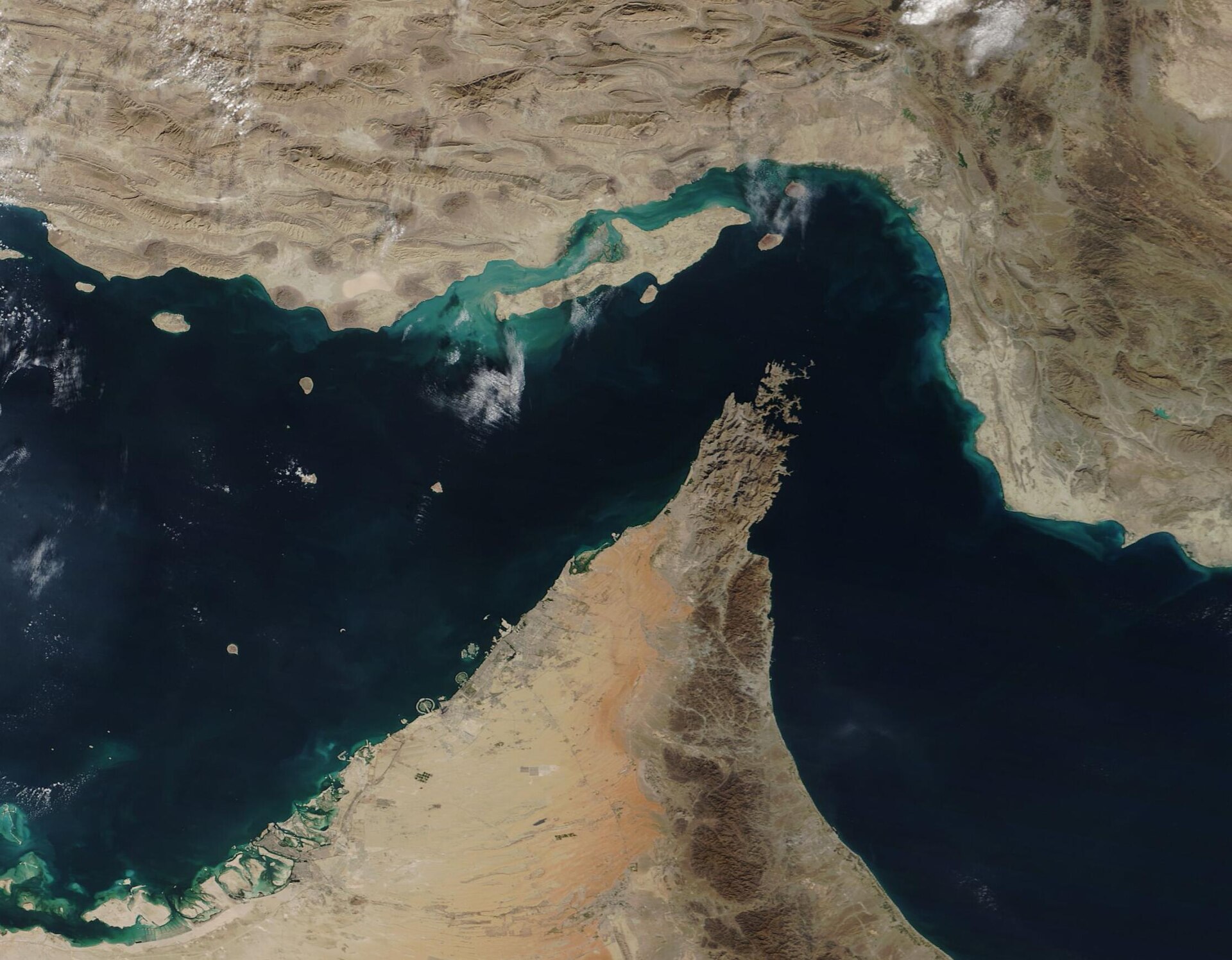
MANAMA — U.S. Central Command began a new phase of mine clearance operations in the Strait of Hormuz on June 16, 2026, the day after the U.S.-Iran framework memorandum of understanding was virtually signed. Five Western maritime security sources told Claims Journal the same day that minesweepers and underwater drones could operate for 40 to 50 days before insurance companies and shipping firms gain enough confidence to resume transits. The Pentagon told the House Armed Services Committee in a classified briefing in April that full clearance could take six months. The gap between those two figures is 140 days, and at Saudi Arabia’s current fiscal exposure of $194–216 million per day, that gap is worth approximately $27–30 billion.
The two numbers are not in dispute with each other. They are answering different questions. The industry figure is a confidence threshold — how long before underwriters write war-risk policies at rates low enough for commercial transits to resume through a declared swept lane. The Pentagon figure is a clearance standard — how long before the strait is genuinely mine-free across its full width. Saudi Arabia’s 5.5 million barrels per day of export throughput requires the latter, not the former. Full Traffic Separation Scheme clearance, not a single improvised corridor. Riyadh has offered no public position on which estimate governs its fiscal and export planning, and no Saudi official has spoken publicly about mine clearance timelines since the strait was mined in February.
- Two Numbers for One Strait
- What Is CENTCOM Actually Clearing on June 16?
- Why Do the Two Estimates Diverge by a Factor of Four?
- Does Saudi Arabia Need a Swept Lane or a Cleared Strait?
- The Minesweepers Washington Retired Five Months Too Soon
- Trump Told Macron He Does Not Need Help
- Has the Clock Aramco’s Own CEO Set Already Expired?
- The Silence That Costs $200 Million a Day
- Frequently Asked Questions
Two Numbers for One Strait
The origin of the shorter estimate is specific. Claims Journal reported on June 16 that five unnamed Western maritime security sources assessed mine clearance using conventional minesweepers and underwater drones could continue for 40 to 50 days before “insurance, shipping or oil companies are confident enough to sail through.” The framing is explicit: this is not a declaration that mines will be removed in 40 days. It is a prediction about when commercial risk appetite will cross a threshold sufficient to resume transits through a corridor that minesweepers have declared safe enough — a judgment by markets, not militaries.
The origin of the longer estimate is equally specific. The Washington Post reported on April 22 that the Pentagon briefed the House Armed Services Committee in a classified session on a six-month clearance timeline, citing “at least 20 high-tech mines” using GPS-guided technology and “remote-floating” capabilities. Pentagon spokesperson Sean Parnell called the report “dishonest journalism” based on “cherry-picked” and “false” information, and stated that “a six-month closure of the Strait of Hormuz is an impossibility and completely unacceptable to the Secretary.” The Pentagon did not release an alternative estimate. It denied the six-month figure without offering a replacement.
What the administration did next undercut the denial. On April 23, one day after the Washington Post report, Trump ordered minesweeping operations tripled and threatened to “shoot and kill any boat” laying mines — a response that confirmed there was a problem severe enough to require a threefold escalation in effort. A strait where minesweeping can be tripled without explanation is not a strait where the six-month estimate can be dismissed as fabrication. Both CNBC and The National (UAE) reported the tripling order the same day.
The Middle East briefing 3,000+ readers start their day with.
One email. Every weekday morning. Free.
Kpler’s head of Middle East energy, Amena Bakr, offered a third timeline on June 15 that overlaps with the Pentagon’s figure: six months for mine clearance alone, followed by two to three months for vessels to cycle out and return to reload, and another three months for production to restart to pre-war levels — placing full market normalization potentially in 2027. Three estimates from three institutional perspectives, and two of the three converge at roughly six months for clearance. The outlier is the confidence threshold, which does not claim the strait will be clear. It claims that shippers will start moving through it before it is.
What Is CENTCOM Actually Clearing on June 16?
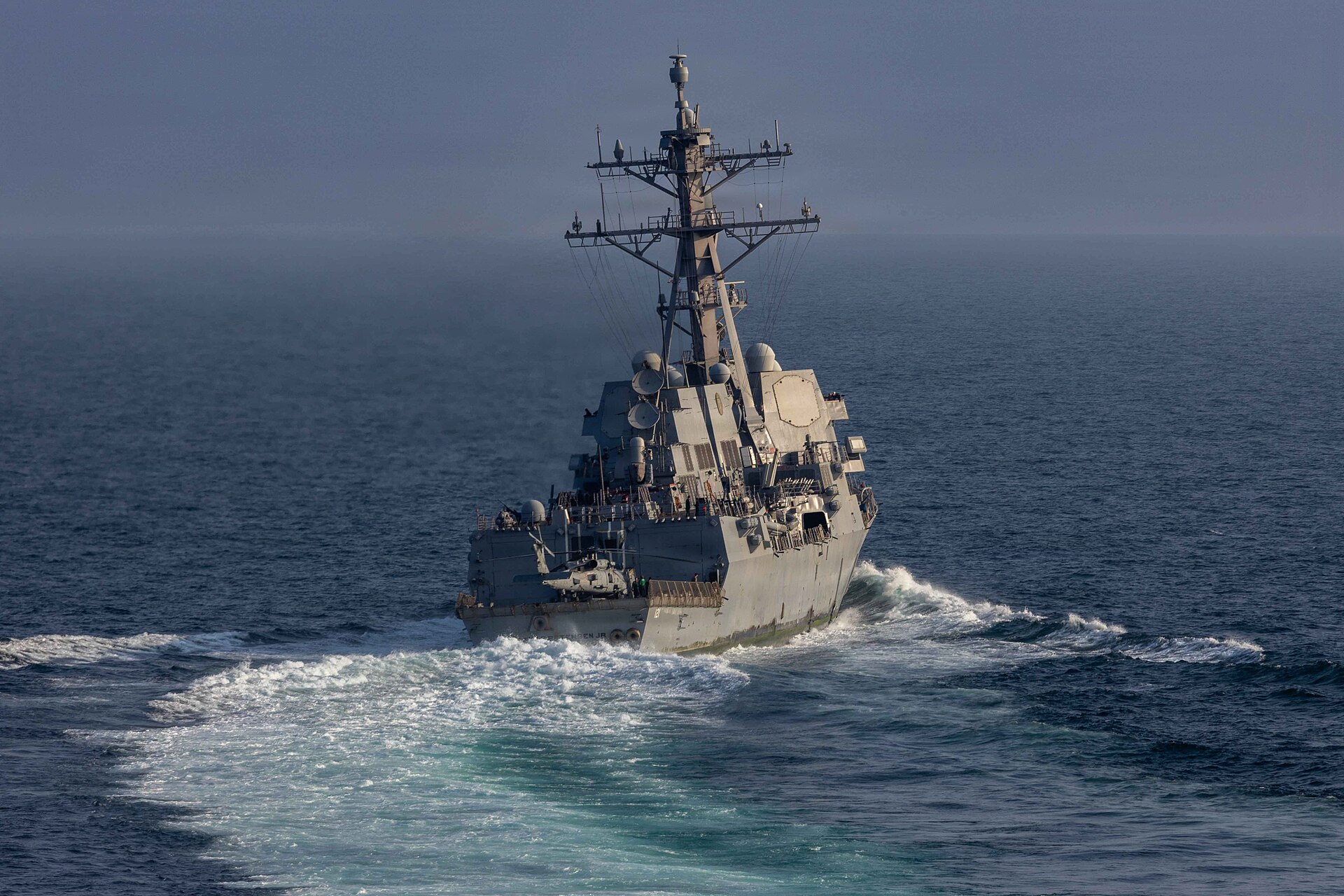
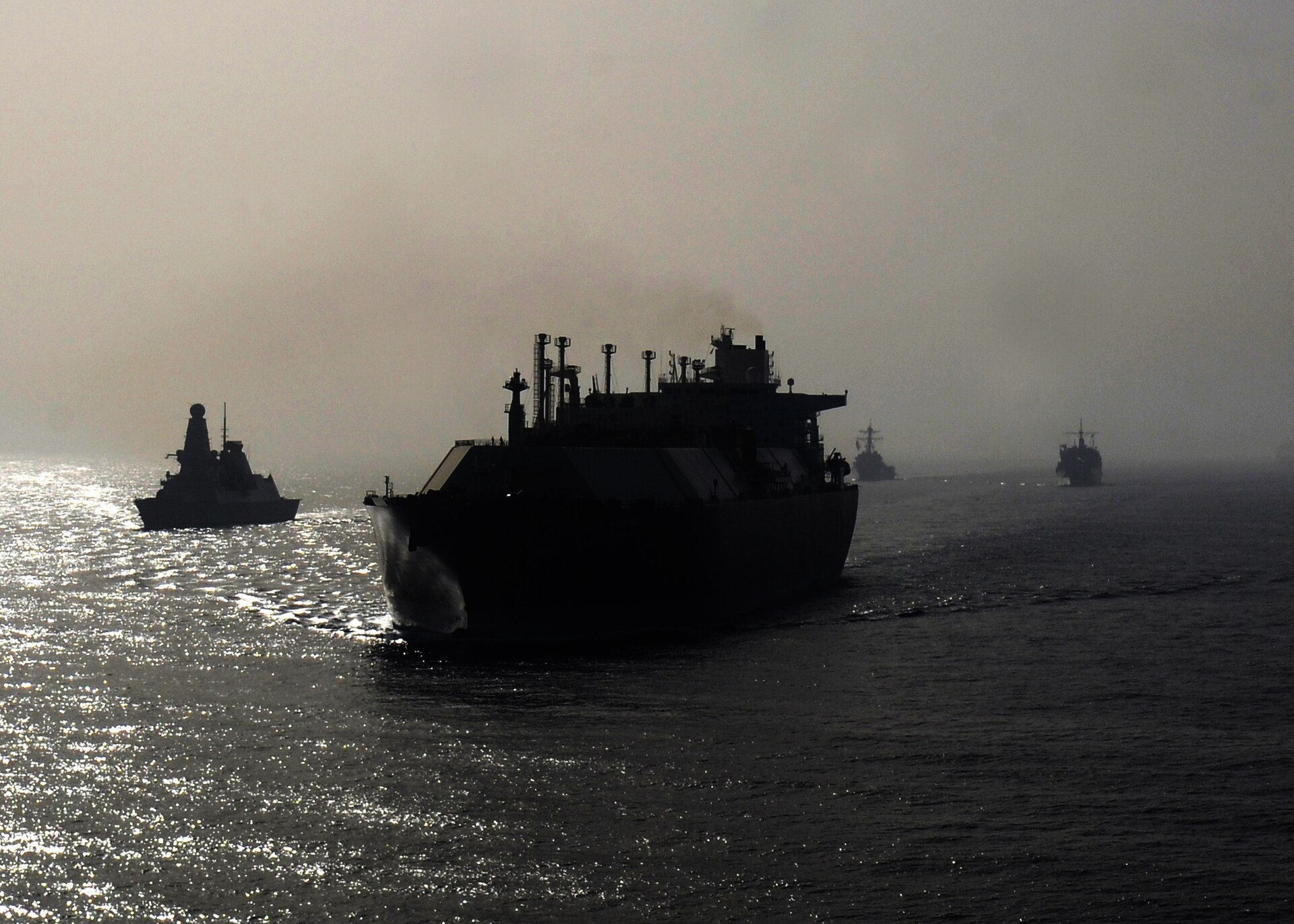
CENTCOM’s mine clearance operations in the Strait of Hormuz formally began on April 11, 2026, with the deployment of USS Frank E. Petersen Jr. (DDG-121) and USS Michael Murphy (DDG-112). The new phase that started on June 16 operates under the framework of a signed MOU, but the MOU itself grants no mine clearance authority to any party. The IRGC issued a “last warning” to USS Frank E. Petersen Jr. on June 15, the day the MOU was announced as complete, while the destroyer was conducting demining operations. Iran’s Khatam al-Anbiya Central Headquarters had “strongly denied” on April 11 that any American vessels had entered the strait at all, while the IRGC Navy simultaneously stated it had “full authority to manage the Strait of Hormuz intelligently.”
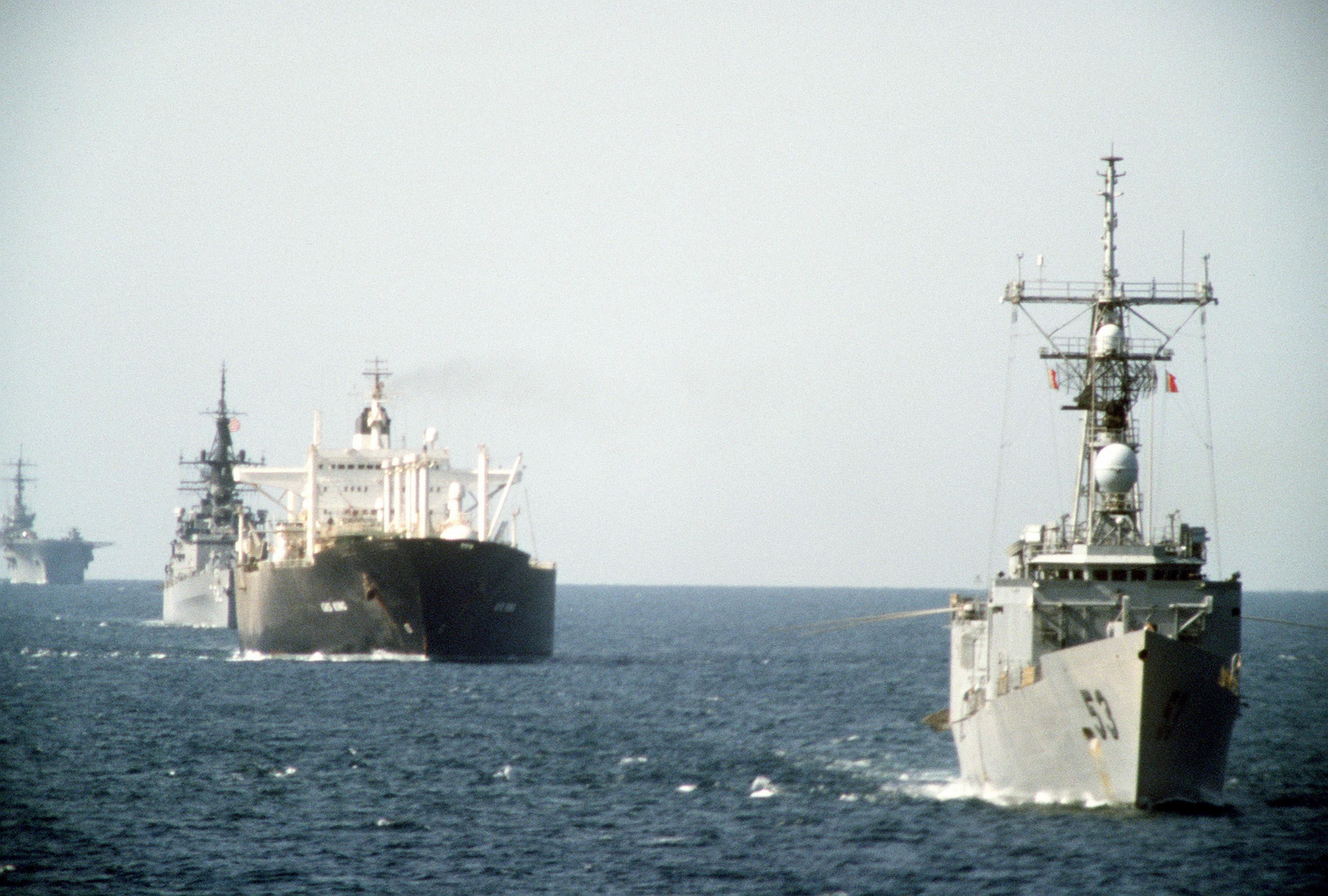
The operational picture on June 16 is constrained by hardware. The U.S. Navy’s mine countermeasures capability rests on three Independence-class littoral combat ships — USS Canberra, USS Tulsa, and USS Santa Barbara — equipped with MCM mission packages, plus Knifefish unmanned underwater vehicles designed to hunt sonar-evading bottom influence mines. DefenseScoop reported on April 11 that the Knifefish is experiencing “significant growing pains,” with MCM systems on LCS ships required to be deployed individually, each system limited by endurance and range. These are the tools being asked to find mines specifically designed to evade them.
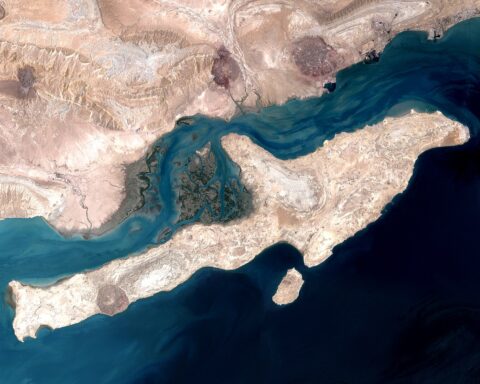
Two improvised transit routes currently exist, and neither is the internationally recognized Traffic Separation Scheme. PBS NewsHour reported on June 15 that one route runs through a northern Iranian-administered vetting lane — embedding an Iranian sovereignty claim in every transit — while the second is a southern passage along the Omani coast used by ships running without AIS transponders under U.S. guidance. Iran notified the United Nations on June 15 that non-hostile ships may transit “in coordination with Iranian authorities,” framing the clearance question as one of permission rather than physical safety. Commercial confidence, however, begins when the internationally recognized TSS is verified mine-free across its full width, and no authority has made that declaration for any portion of the strait.
Why Do the Two Estimates Diverge by a Factor of Four?
The divergence reflects three distinct variables: the scope of what is being cleared, the threat assumptions governing the operation, and the institutional incentives shaping each estimate. No authoritative source has publicly reconciled them, and the distinction between a swept lane and full clearance of the entire Traffic Separation Scheme has not appeared in competing coverage of the Hormuz mine threat.
The scope difference is the most consequential. A swept lane is a corridor — perhaps one to two nautical miles wide — through which a single column of vessels can transit after minesweepers have surveyed and neutralized identified threats within that corridor. It leaves the rest of the strait uncleared. Full clearance means every mine threat area has been surveyed to a standard sufficient for unrestricted commercial navigation: approaches, anchorages, the entire TSS, and adjacent waters where mines could drift or be repositioned. The industry’s confidence threshold corresponds to the first standard — a declared corridor, verified by minesweepers, with residual risk low enough for underwriters to write policies. The Pentagon’s six-month timeline corresponds to the second — a genuinely mine-free strait, which is the standard Congress would hold the military accountable against if a vessel struck a mine in month three.
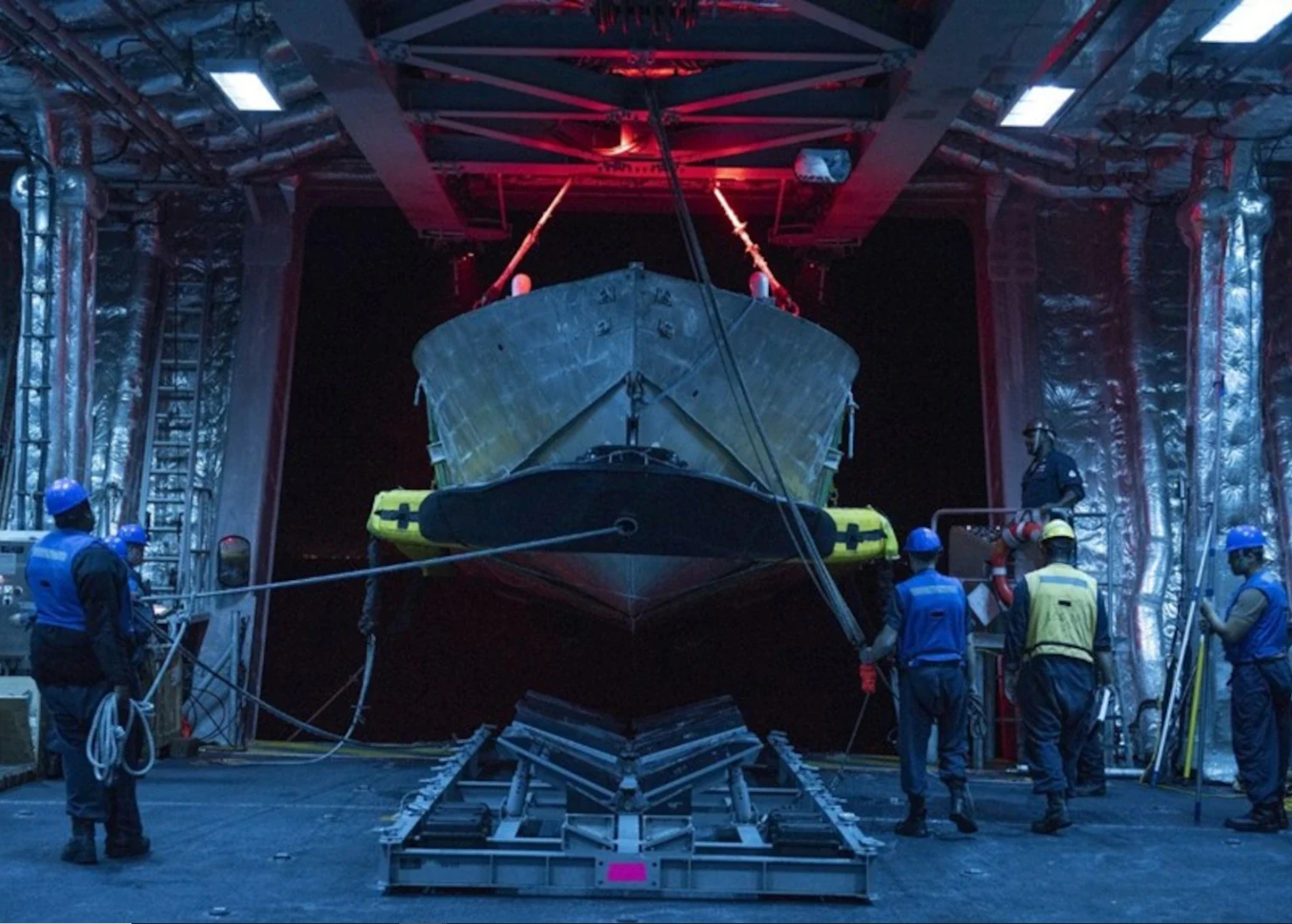
The threat assumptions compound the divergence. Iran’s Maham-7 mine uses a glass-reinforced plastic composite casing that scatters sonar returns rather than reflecting them cleanly, degrading both the highlight and shadow patterns analysts rely on for classification. A swept lane certified against conventional contact and moored mines is not necessarily certified against bottom-influence mines that sonar cannot reliably detect. The Pentagon’s briefing to Congress cited mines with GPS-guided and remote-floating capabilities — descriptions consistent with the Maham-7 specification. Iran’s total naval mine inventory is estimated at up to 1,000 units; the deployed count in Hormuz remains unverified, with assessments ranging from “at least a dozen” (CBS News, March 2026) to “at least 20 or more high-tech mines” (Pentagon to Congress, April 2026). The range between a dozen and a thousand is not a rounding error — it is a gap that determines whether the clearance operation is measured in weeks or years.
The institutional incentives run in opposite directions. Maritime security firms and insurers earn premiums on transits, not on closures, and their confidence threshold implicitly assumes that a declared swept lane will be sufficient to trigger commercial traffic even with residual risk elsewhere in the strait. The Pentagon’s classified estimate, delivered to a congressional committee that would demand accountability if it proved wrong, carries the opposite incentive — understating the timeline invites political exposure. Neither incentive structure matches Saudi Arabia’s. Riyadh needs full clearance, not a single corridor and not a worst-case political hedge. A confidence threshold that restores a few dozen tanker transits per day through a narrow lane does not restore the full TSS throughput on which the Kingdom’s export infrastructure depends.
Does Saudi Arabia Need a Swept Lane or a Cleared Strait?
Saudi Arabia’s crude export infrastructure transits the Strait of Hormuz at a volume that no single swept corridor can accommodate. Before Iran mined the strait on February 28, between 100 and 140 vessels transited daily through two separated traffic lanes, each several miles wide. Current traffic runs between 5 and 17 ships per day through the improvised routes bypassing the mined TSS entirely, according to tracking data. Restoring the first barrel of export volume at pre-war throughput rates requires the full TSS, not an improvised lane designed for a fraction of pre-conflict traffic.
War-risk insurance premiums quantify the market’s assessment. BIMCO, the global shipping association, stated in June 2026 that transiting the strait “remains very risky” and called for verified mine-free routes before commercial traffic resumes in volume. Premiums are running at 1 to 4 percent of vessel value per single transit, compared to below 0.1 percent before the war — meaning a $200 million tanker pays up to $8 million per crossing. Polymarket priced the probability that Hormuz traffic does not normalize by June 30 at 78.5 percent, a market-consensus signal that the 40-day confidence window is not being treated as operational by the people with money on the line.
The PGSA complicates the picture further. Even after every mine is removed, vessels transiting the 5-nautical-mile Qeshm-Larak corridor face per-barrel charges under Iran’s Persian Gulf Services Authority that amount to approximately $5.5 million per day for Saudi crude alone. The MOU prohibits “tolls” but not “service fees,” and Iran rebranded its charges accordingly. A mine-free strait under PGSA jurisdiction is not the same as a free strait, and Saudi Arabia’s fiscal exposure to the clearance timeline and the fee regime runs simultaneously, not sequentially — each day of closure compounds both costs.
The Minesweepers Washington Retired Five Months Too Soon
The U.S. Navy decommissioned its last four Avenger-class mine countermeasures vessels — USS Devastator, USS Sentry, USS Dextrous, and USS Gladiator — in a ceremony at Naval Support Activity Bahrain on September 25, 2025. These were purpose-built wood-hulled dedicated minehunters, designed specifically for the mission now required in Hormuz. Their wooden hulls minimized magnetic signature, a critical advantage when hunting influence mines equipped with magnetic sensors. Iran closed the strait 156 days later. The replacement force — three Independence-class LCS ships with bolt-on MCM mission packages — represents a structural downgrade in capability that was already generating institutional alarm before the first mine was laid.
Captain Eyer (ret.) detailed the gap in USNI Proceedings in April 2026, the same month CENTCOM began operations, in an article titled “The Crisis in Mine Countermeasures.” Eyer warned that the Navy’s options were “limited to three Independence-variant littoral combat ships” and called for all Independence-variant LCS ships to be equipped with operational MCM modules immediately. The Independence-class is a steel-hulled multi-mission combatant — its MCM capability depends on modular packages that must be deployed one system at a time, each constrained by endurance and range. The Knifefish UUV is the specific tool designed to find bottom-influence mines of the type Iran deployed, but a system still working through its operational development program is being asked to hunt mines specifically engineered to evade it.
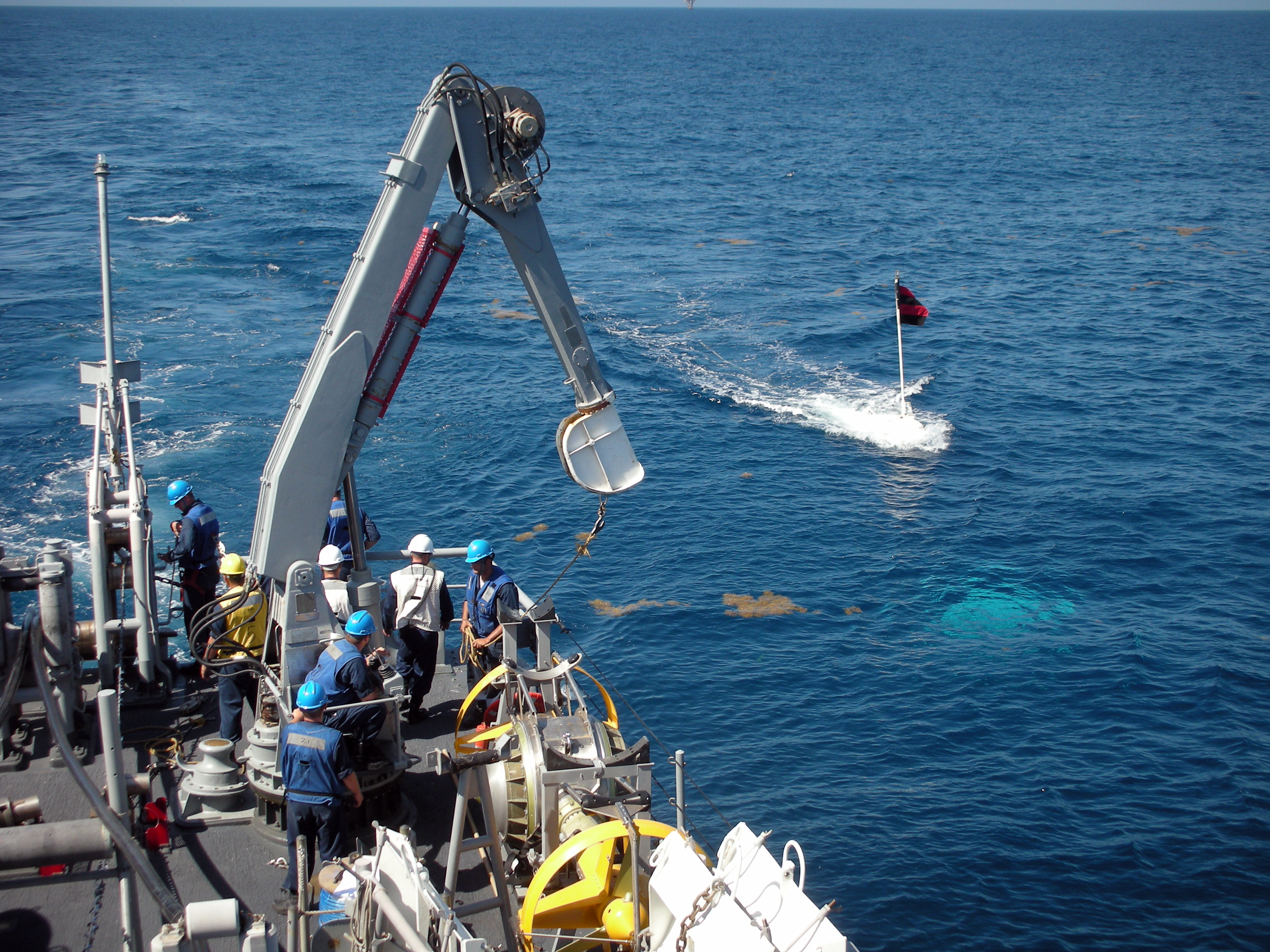
Historical precedent makes the compressed timeline harder to sustain. Operation Earnest Will, the U.S. Navy’s last major mine-threat escort campaign in the Persian Gulf, ran for 14 months from July 1987 to September 1988 and completed 127 escort missions for 270 vessels. The concurrent classified mission, Operation Prime Chance, ran from August 1987 through June 1989 — nearly two full years. Both campaigns confronted conventional moored and bottom-contact mines, not GRP composite sonar-evading influence mines. If conventional mines in a less contested strait required 14 to 22 months of continuous naval operations, the Pentagon’s six-month estimate for mines designed to evade the tools being used to find them looks like an optimistic lower bound, not a conservative worst case.
Trump Told Macron He Does Not Need Help
At G7 Évian on June 16 — the same day CENTCOM’s new phase began — Donald Trump appeared hesitant to accept the European coalition’s mine clearance plan. Euronews reported that Trump told Emmanuel Macron the strait would be open “thanks to my deal” and that he does not see a need for “much help,” while remaining “open to the idea of some naval presence.” France, the United Kingdom, Germany, Japan, Italy, and Canada had issued a joint statement at the summit calling for “a strictly defensive and independent mission to reassure commercial shipping and conduct mine clearance operations.” The word “independent” was aimed at precisely the gap Trump’s response now creates.
The same June 16 G7 session produced a second friction point: Trump publicly described the removal of enriched uranium from Iran as commercially trivial — “half a million dollars worth” — while Ratcliffe’s nuclear warning remained unresolved. The uranium red-line shift at Évian and the Ratcliffe intelligence gap mean the June 19 Geneva ceremony proceeds with the American nuclear position already softened and the clearance timeline unresolved — two open variables whose interaction Saudi Arabia cannot influence from outside both rooms.
The European MCM track is further advanced in operational preparation than its political authorization suggests. RFA Lyme Bay loaded British MCM equipment in Gibraltar on May 26 and French MCM equipment in Toulon on May 30, according to Naval News, and continues preparations as of June 16. HMS Dragon, a Royal Navy air defense destroyer, is already accompanying the French carrier Charles de Gaulle in the Arabian Sea. Macron stated the Charles de Gaulle could be within operational range of Hormuz “within 2–3 days.” The hardware is staged. What does not exist is a unified command framework integrating the U.S. track — CENTCOM, three LCS ships with MCM packages, Arleigh Burke DDGs for surface detection — with the European track that emphasizes combined naval logistics and autonomous drone-based MCM systems.
This introduces a coordination problem that bears directly on the clearance timeline. Two separate commands operating under different rules of engagement and different clearance standards risk duplicating effort in some sectors and leaving gaps in others. Two parallel swept lanes governed by two separate authorities is operationally worse than one lane governed by one authority. Saudi Arabia — which skipped the Évian session where this coordination was being negotiated — has no seat in either command structure, no role in setting the clearance standard that determines when its tankers can transit, and no visible mechanism for receiving verified mine-free status reports before routing export volumes back through the strait.
Has the Clock Aramco’s Own CEO Set Already Expired?
Saudi Aramco CEO Amin Nasser told CNBC on May 11 that “if trade flows resume immediately or today through the Strait of Hormuz, it will take a few months for the oil market to rebalance.” He warned that without a mid-June reopening, normalization slips into 2027, and stated that “the oil market loses 100 million barrels of supply every week Hormuz is closed.” The condition Nasser described — trade resuming immediately in mid-May — was not met. CENTCOM operations are beginning their post-deal phase on June 16 with no portion of the TSS declared commercially navigable. The mid-June window Nasser identified has arrived, and no trade has resumed through cleared routes.
Kpler’s Amena Bakr assessed the full normalization sequence on June 15: mine clearance taking six months places physical clearance in mid-December 2026, after which two to three months are needed for the global tanker fleet to cycle out of alternative routes and return to reload at Gulf terminals, followed by another three months for production to restart to pre-war levels. Both trajectories — Aramco’s CEO speaking in May and Kpler’s chief Middle East analyst speaking in June — converge on the same year for full market normalization: 2027 at the earliest.
The fiscal compression is arriving from multiple directions simultaneously. Brent crude sits at approximately $80–83 per barrel against Saudi Arabia’s fiscal breakeven of $108–111, according to IMF estimates. The Saudi Q1 2026 deficit was SAR 125.7 billion ($33.5 billion) — the largest on record, with subsidies up 170 percent and military expenditure up 26 percent year over year. Sadara’s $3.7 billion guaranteed senior debt grace period expired on June 15, the day before CENTCOM’s new phase began, with all 26 Jubail units offline for 11 weeks and no filing from either guarantor. The Saudi Ministry of Foreign Affairs has not issued a statement on mine clearance since February. The institution responsible for communicating the Kingdom’s position to markets, allies, and adversaries has said nothing about the timeline that governs whether Saudi Arabia’s fiscal year ends in managed austerity or structural crisis.
The Silence That Costs $200 Million a Day
If the industry’s confidence threshold proves correct, some commercial traffic resumes through a declared swept lane by late July. If the Pentagon’s full-clearance estimate proves correct, the strait is genuinely mine-free by mid-December. The operational difference between those outcomes is approximately 140 days, and the fiscal difference is the $27–30 billion that Saudi Arabia’s silence has left unaddressed. A government that plans for a 40-day disruption and encounters a six-month disruption faces a shortfall on that scale. A government that plans for six months and watches traffic resume in 40 days has over-provisioned and under-exported at the worst possible time in a fiscal year already running the Kingdom’s largest-ever quarterly deficit.
The rational response is to commit publicly to a planning assumption, build contingency around the margin, and negotiate clearance standards with the commands doing the work. The Saudi response has been silence — not ambiguity, not strategic restraint, but the absence of any declared position. No Saudi official has stated which estimate the Kingdom is using. No Saudi entity has a seat in either the U.S. or European command structures governing the clearance. No Saudi statement has addressed the gap between the confidence threshold and full clearance that determines when 5.5 million barrels per day can move through the TSS rather than through improvised lanes at single-digit-percentage throughput.
The IRGC’s April broadcast to commercial vessels declaring Hormuz “completely closed” has not been formally rescinded. Iran’s June 15 UN notification reframed the question of when the strait is open as a question of Iranian permission, not of physical mine removal. The MOU grants no clearance authority. The Pentagon’s estimate and the industry’s estimate are both answering operational questions. Iran is answering a sovereignty question. And the country with the most crude transiting the strait, the largest fiscal exposure to the timeline, and the most to lose from the gap between 40 days and six months has offered no answer at all.
That silence carried a new dimension on June 16, when five G7 nations at Évian issued a joint endorsement of the MOU before the document had been made public. The G7’s endorsement cited no mine-clearance mandate, no timeline for Hormuz reopening, and no mechanism for resolving the PGSA fee structure — the same operational questions the clearance timeline leaves open.
Frequently Asked Questions
What role do European nations play in Hormuz mine clearance independently of the United States?
France and the United Kingdom are leading a parallel MCM effort under a proposed coalition of more than 40 nations endorsed by six G7 members at Évian on June 16. The European approach differs methodologically from the U.S. track — it emphasizes autonomous drone-based MCM systems and combined multinational naval logistics rather than the LCS-mounted mission packages CENTCOM is using. RFA Lyme Bay loaded both British and French MCM equipment in late May. The two tracks have no formal integration mechanism, meaning coverage depends on two separate commands operating under different rules of engagement and potentially different clearance standards for what constitutes “mine-free.”
How do Iran’s current mine capabilities compare to those encountered in the 1987–88 Tanker War?
The 1980s-era mines in the Persian Gulf were primarily conventional moored contact mines and bottom-contact mines detectable by standard visual and sonar survey. Iran’s Maham-7, by contrast, uses a glass-reinforced plastic composite casing engineered to scatter incoming sonar waves rather than reflect them. It is deployable between 10 and 300 feet — reaching deep-water shipping channels that conventional bottom-contact mines could not — and carries three-axis magnetic sensors plus three acoustic sensors including subsonic detection capability. The 220 kg device with its 150 kg TORPEX/TNT charge represents a generational shift in mine technology that makes direct comparison with 1987–88 clearance timelines misleading.
Can Saudi Arabia reroute crude exports to avoid the Strait of Hormuz entirely?
Saudi Arabia operates the East-West Pipeline (Petroline) to Yanbu on the Red Sea coast, but Yanbu infrastructure was designed for supplementary capacity, not full diversion of 5.5 million barrels per day. Current Petroline throughput is already approaching operational limits. Even if volumes could be rerouted, Red Sea shipping faces separate disruption from Houthi attacks on commercial vessels, creating a second chokepoint rather than an alternative. The Yanbu option trades one constrained strait for another, and neither currently offers unimpeded commercial transit at pre-war volumes.
What does “confidence threshold” mean in maritime insurance terms?
A confidence threshold is the point at which war-risk underwriters judge residual mine risk low enough to offer transit policies at commercially viable rates — typically below 0.5 percent of vessel value per transit, compared to the current 1 to 4 percent. Reaching this threshold does not require all mines to be removed; it requires a declared lane to be surveyed to a standard the insurance market accepts and a sustained period of uneventful transits. The confidence threshold is a market judgment about acceptable residual risk, not a military declaration that the strait is safe — which is why it arrives months before full clearance.
Has any military authority formally declared a portion of Hormuz mine-free as of June 16, 2026?
No. As of June 16, no U.S. or allied military authority has declared any portion of the internationally recognized Traffic Separation Scheme to be verified mine-free and open for unrestricted commercial navigation. The two improvised routes that exist bypass the mined TSS rather than certifying it cleared. What CENTCOM’s new post-deal phase initiates is systematic clearance under a signed MOU framework — an important political distinction from the pre-deal operations, but not a declaration that any waters are safe for unrestricted commercial transit. The operational question of “mine-free” and the diplomatic question of “open” are being resolved on different tracks, on different timetables, by different authorities.
The clock question also intersects with IRGC conduct during the clearance period itself. The IRGC’s warning to USS Frank E. Petersen Jr. on June 15 — issued during active minesweeping, on the same day the MOU was signed — illustrated the gap between diplomatic timelines and operational ones: CENTCOM began its post-deal clearance phase on June 16 while the IRGC continued issuing “last warnings” to the vessels conducting it.