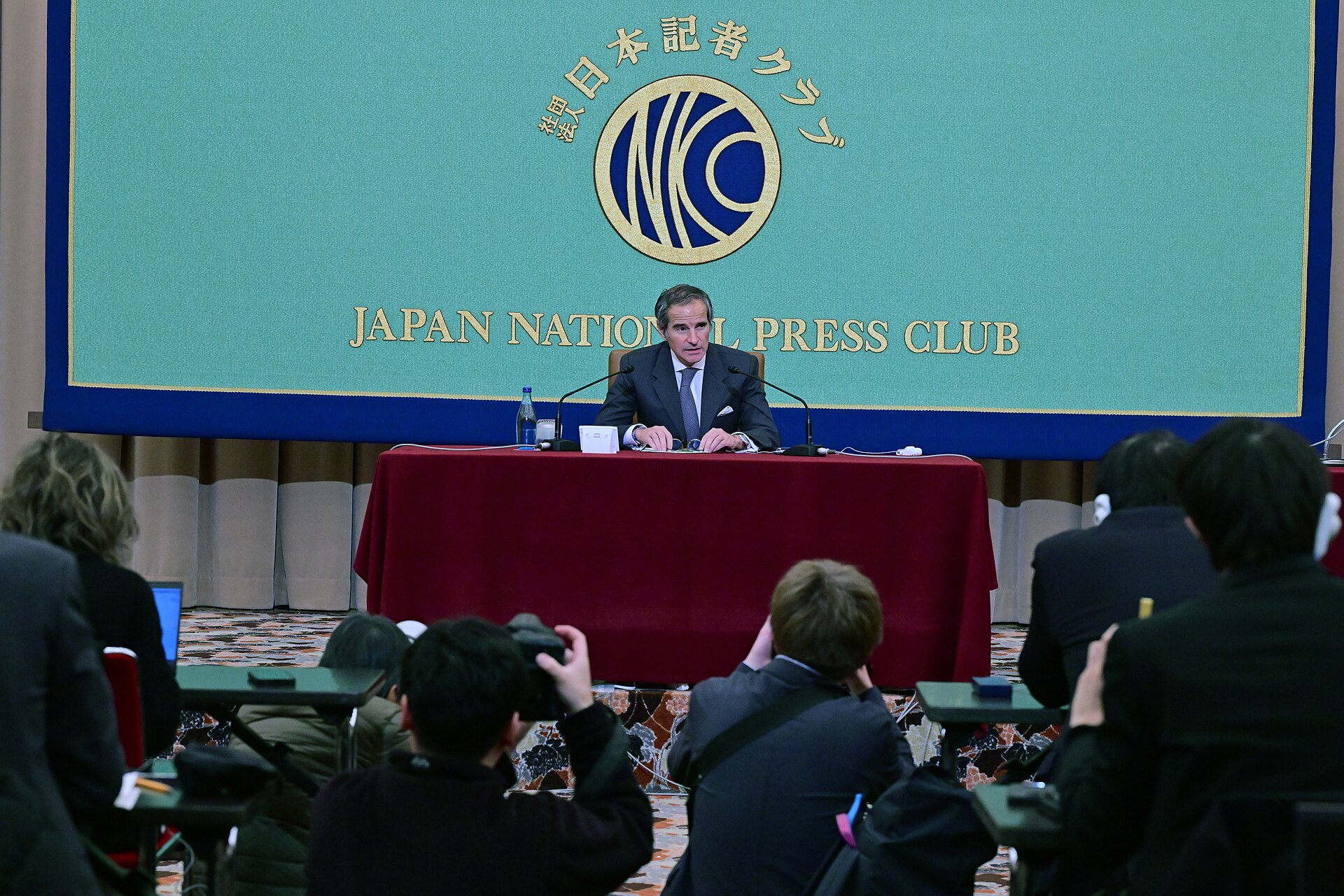

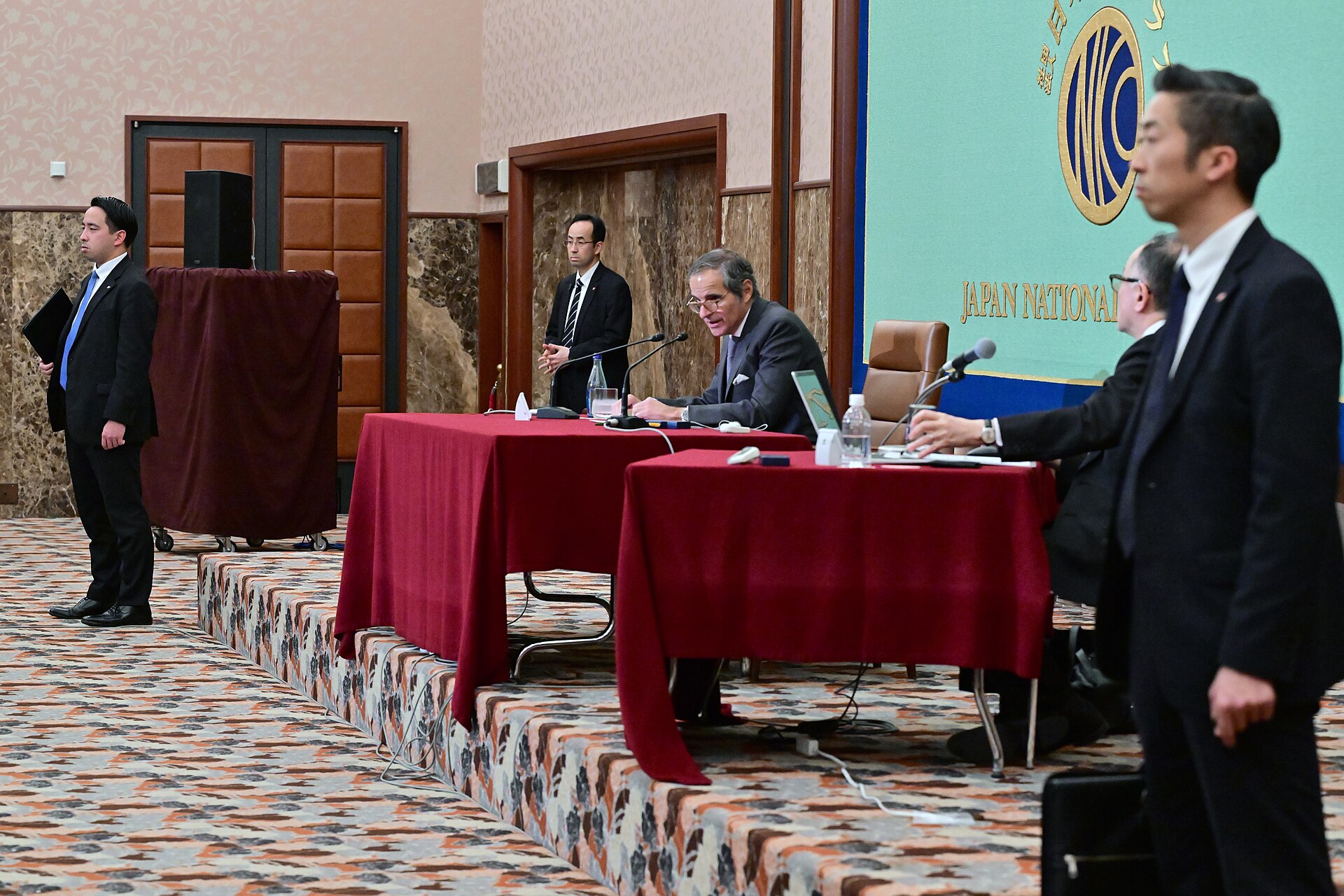
TOKYO — Rafael Grossi, director general of the International Atomic Energy Agency, told reporters at the Japan National Press Club on June 26 that a “war of statements” between the United States and Iran had overtaken the question of whether IAEA inspectors would gain access to Iranian nuclear sites during Phase 2 of the Iran-US memorandum of understanding. Grossi spoke nine days after the MOU was signed at Versailles, with approximately 51 days remaining on the 60-day Phase 2 negotiating window.
The statement came not from either party to the agreement but from the institution that would actually conduct inspections. Iran’s deputy foreign minister publicly rejected inspection access two days earlier, and the IRGC-affiliated Tasnim News Agency denied that any Iranian official had confirmed IAEA entry. The agency’s inspectors have not visited an Iranian enrichment site since before the twelve-day war in June 2025. A near-weapons-grade uranium stockpile sits unverified in a country whose deputy foreign minister says inspection access is conditional on Washington first terminating all sanctions.
Table of Contents
What Did Grossi Say in Tokyo?
Grossi used the phrase “war of statements” to describe the public dispute between Washington and Tehran over the scope and timing of IAEA access to Iranian nuclear facilities, according to Al Jazeera’s June 26 reporting from the press club event. He framed the agency’s mandate in terms that left no room for ambiguity.
“This MoU specifically indicates that the nuclear part of the memorandum will be supervised; this work will be supervised by the IAEA,” Grossi said, according to Nikkei Asia. “In order to supervise, we need to inspect.”
He confirmed that preliminary contact with Tehran had taken place but stopped well short of describing a working arrangement. “Initial conversations have taken place,” he told reporters in Tokyo. “We expect this work to pick up soon.” He added separately that “the technical work has started, and we hope to be there soon,” according to Bloomberg. Grossi called for a “very strong system of verification” to be in place “as soon as practicable,” Al Jazeera reported.
The Tokyo appearance was Grossi’s second public intervention on the inspection question in three days. On June 24, he had been more definitive about the outcome if not the timeline. “Whether this happens the day after tomorrow or in one week or in 10 days, it’s important, but not essential,” he told NPR. “This is going to happen.” Iran’s deputy foreign minister responded within hours of that statement, and by the time Grossi spoke in Tokyo on June 26, his language had shifted from asserting certainty to naming the dispute itself.
The Middle East briefing 3,000+ readers start their day with.
One email. Every weekday morning. Free.
Iran Rejects Inspections Before Sanctions End
Kazem Gharibabadi, Iran’s deputy foreign minister for legal and international affairs, stated on X on June 24-25 that IAEA inspection access “will be reviewed and resolved solely within the framework of the final agreement and as a result of the other party’s practical action to terminate all sanctions and other measures,” according to Xinhua. The position was not a request for delay but a statement of precondition.
“Media noise cannot be used to impose facts on the ground,” Gharibabadi wrote, according to Reuters. He also denied that any meeting had taken place between Iran’s negotiating team and Grossi at the Switzerland session on June 21-22, Xinhua reported on June 25.
The IRGC-affiliated Tasnim News Agency published a separate denial on June 24, stating that “the issue of issuing a permit for the agency’s inspectors to enter Iran has not been confirmed by the Iranian negotiating team or other responsible officials.” The denial addressed not timing but whether any commitment existed at all.
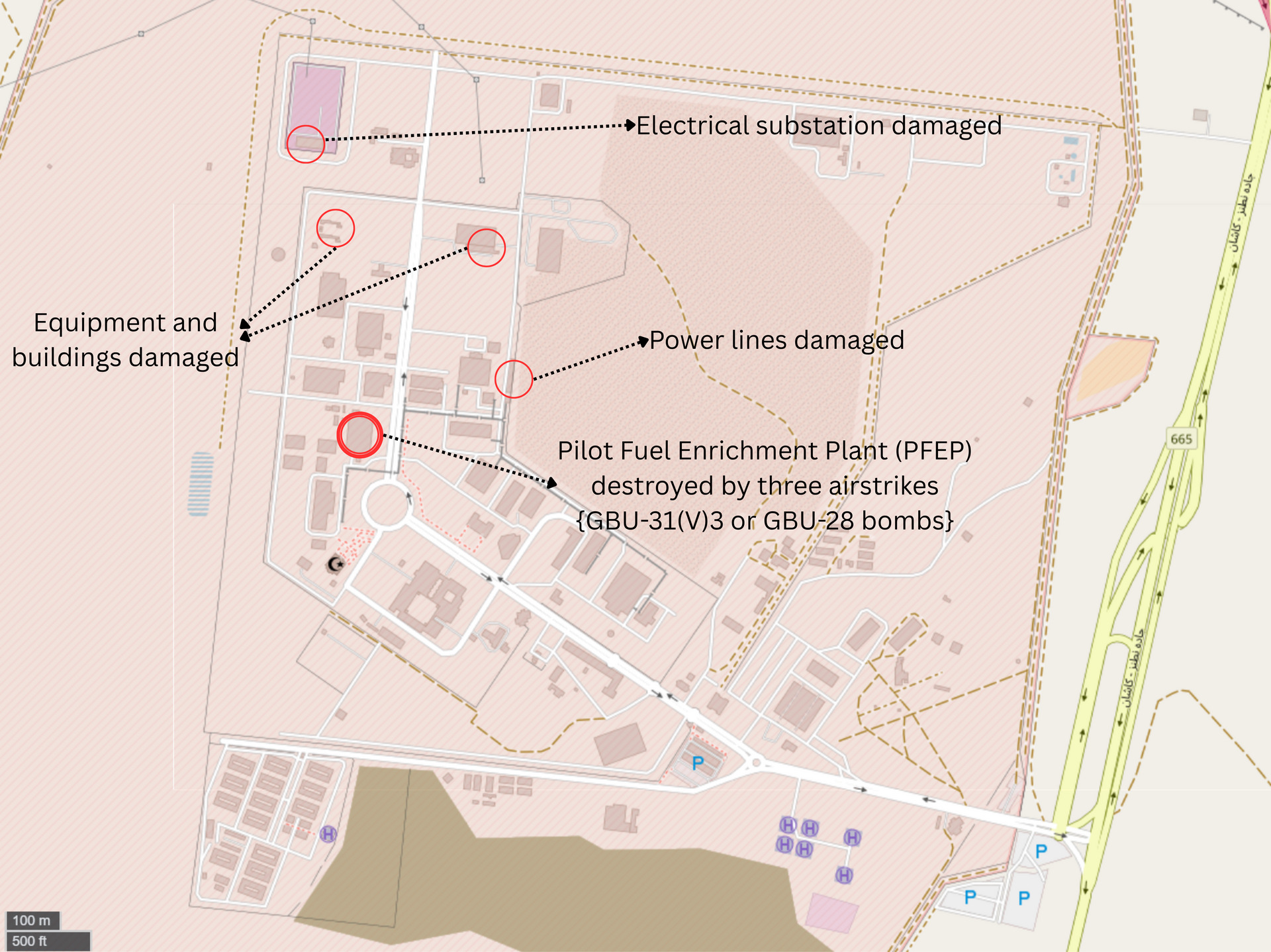
Tehran’s structural argument extends beyond the question of when inspectors arrive. Iran contends that the MOU covers only nuclear activities “to be carried out” under a future agreement, according to an Arms Control Association analysis published in June 2026. The enrichment sites damaged during the June 2025 war, the pre-existing HEU stockpile, and legacy facilities fall outside the MOU’s scope in Tehran’s reading of the text.
President Donald Trump dismissed Iran’s position on June 24, calling Tehran’s objections “protestations and false statements” and asserting that Iran had agreed to “highest level nuclear inspections,” according to Bloomberg and PBS. The contradicting claims from Washington and Tehran were published on the same day, directed at the same agreement, describing two incompatible versions of what it requires. Gharibabadi’s position hardened further on June 30, when he formally barred IAEA inspectors from all 20 nuclear sites until a final deal is concluded and all sanctions terminated — a statement that arrived as Doha talks opened.
How Long Has Iran’s Uranium Gone Unverified?
The IAEA last verified Iran’s stockpile of 440.9 kilograms of uranium enriched to up to 60 percent U-235 on approximately June 10, 2025, according to the Institute for Science and International Security. Iran is the only NPT non-nuclear-weapon state to have produced and accumulated uranium at that enrichment level, according to the IAEA. The stockpile, if further enriched to weapons-grade (90 percent), would yield material sufficient for approximately ten nuclear weapons, according to IAEA estimates cited in wire reporting.
Under the NPT’s Comprehensive Safeguards Agreement, highly enriched uranium must be verified every 30 days. Iran’s stockpile has exceeded that interval by approximately eleven consecutive cycles as of June 26, according to ISIS analysis. The current quantity, location, and physical form of the material cannot be independently confirmed.
Satellite imagery analyzed by ISIS showed regular vehicle activity at Isfahan’s underground tunnel complex, a site the IAEA has identified as a key unresolved location. No inspector has been present to confirm what the vehicles carried or what the facility holds. The IAEA Board of Governors documented the verification gap in report GOV/2026/8, published on February 27, 2026 — more than three months before the MOU was signed. The chain-of-custody implications of that gap — and what MOU Point 8’s language does and does not require — are examined in detail in The IAEA Verified Iran’s Uranium — Then Lost Track of It.
The agency’s last physical visits to any JCPOA-related sites in Iran occurred on November 3 and December 22-23, 2025, at the Jabr Ibn Hayan Multipurpose Laboratories, the Tehran Research Reactor, and the MIX facility, according to ISIS and IAEA records. None of those were enrichment sites.
What Does the MOU Require on Inspections?
Point No. 8 of the MOU states that Iran’s stocks of highly enriched uranium will be “downblended on site under the supervision of the IAEA,” according to the Arms Control Association’s analysis of the agreement’s text. That clause is the only explicit reference to the IAEA’s operational role in the document.
The MOU leaves to “later negotiation” the issues of enrichment and other nuclear matters “based on a satisfactory framework being agreed upon in the final deal,” the Arms Control Association noted. The phrase “satisfactory framework” is undefined in the public text, and so is the sequence — whether inspections precede, accompany, or follow the final agreement.
Under the JCPOA, as described by the Arms Control Association, the IAEA maintained continuous access to declared facilities through the Additional Protocol and provisional application of Modified Code 3.1, which required Iran to report new nuclear construction as soon as a decision to build was made. The MOU contains no equivalent transparency provision for the Phase 2 interim period.
Kelsey Davenport, director of nonproliferation policy at the Arms Control Association, told RFE/RL that “any suspension on uranium enrichment is relatively meaningless if it cannot be verified and if the IAEA does not have the access to ensure that there are no covert nuclear activities related to enrichment going on elsewhere in the country.” The Arms Control Association’s broader assessment described the MOU as “fundamentally a non-nuclear deal that leaves key nuclear issues unresolved.”
Laura Rockwood, a former IAEA negotiator on Iran, called verification of Iran’s nuclear compliance “a heavy slog” in a separate RFE/RL report. Matthew Sharp, a former National Security Council director for Iran nuclear issues now at MIT, told the same outlet that “the scale, scope, and degree of access” would determine whether inspections succeed or fail.
The JCPOA took approximately 18 months to negotiate from the Joint Plan of Action, its interim predecessor. Wendy Sherman, the former US under secretary of state who led those talks, has said of the 60-day Phase 2 window: “I can assure you they will not get all of this done in 60 days.”
The GCC-US Statement and Saudi Arabia’s Absence
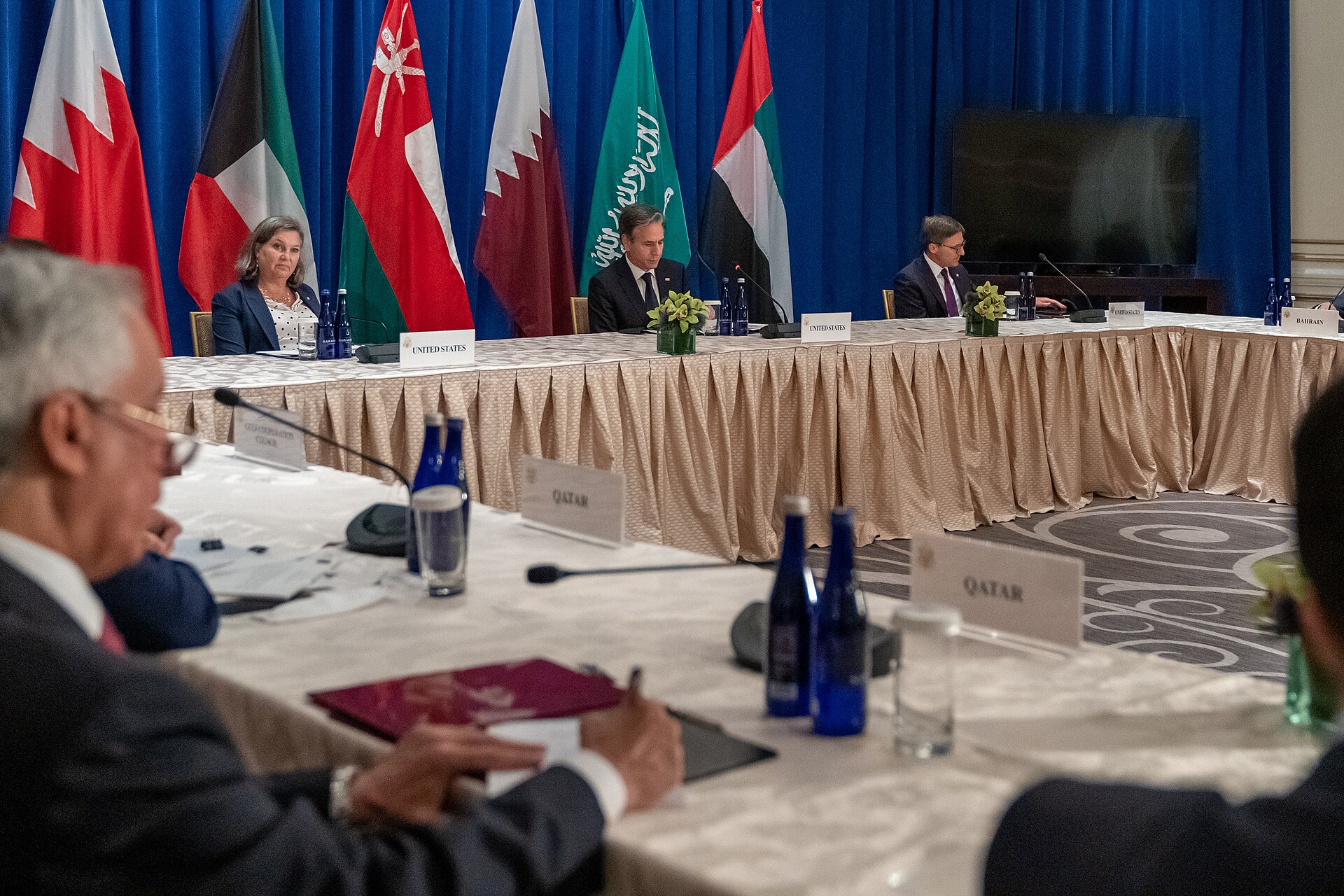
The GCC-US Ministerial Joint Statement, issued in Manama on June 25, called for the prevention of Iran from “ever developing or otherwise acquiring a nuclear weapon,” according to the US State Department’s published text. The statement was released one day before Grossi’s Tokyo press conference and on the same day that the IRGC struck a container ship in the Hormuz corridor.
Iran’s Foreign Ministry responded on June 26 by calling the Manama statement “interventionist, irresponsible, and provocative,” according to Al Jazeera. Tehran accused Washington and Israel of fabricating accusations about Iran’s “peaceful nuclear programme” and called on GCC states to pursue a nuclear-weapons-free zone in the Middle East instead.
Saudi Arabia — the GCC state with the largest strategic exposure to both the PGSA’s Hormuz transit fee and an unverified Iranian nuclear programme — holds no seat in any of the three Phase 2 working groups on nuclear issues, sanctions, or monitoring and dispute resolution. The kingdom’s PGSA exposure alone runs to approximately $5.5 million per day on 5.5 million barrels of daily export capacity that must transit the Strait, according to the fee structure Iran established through the Persian Gulf Shipping Authority.
Saudi Foreign Minister Prince Faisal bin Farhan’s only public input on the nuclear track has been a two-word statement at an ECFR event in Vienna: “verification is key.”
Background
The Iran-US MOU was signed at Versailles on June 17, 2026, establishing a 60-day Phase 2 window for resolving nuclear, sanctions, and monitoring issues. Phase 1 of the agreement contained no nuclear terms. Three working groups — covering the nuclear track, sanctions sequencing, and compliance architecture — convened in Switzerland on June 21-22.
IAEA access to Iranian enrichment sites ended after Israel’s twelve-day military operation against Iran in June 2025. Iran had progressively limited inspector access in the years following its February 2021 suspension of the Additional Protocol. The IAEA Board of Governors voted 21-10-3 on June 12, 2026, on a resolution related to Iranian compliance, three days before the MOU signing.
The 60-percent enrichment threshold carries direct proliferation consequences. The separative work required to go from 60 to 90 percent (weapons-grade) is substantially less than the work required to enrich from natural uranium to 60 percent, meaning the gap between Iran’s current stockpile and weapons-usable material is measured in weeks rather than months, according to ISIS estimates. No IAEA inspector has been in a position to observe whether that final step has begun.
Frequently Asked Questions
What is the IAEA’s Additional Protocol?
The Additional Protocol grants IAEA inspectors expanded, short-notice access to both declared and undeclared nuclear sites. Iran signed it in 2003, applied it during the JCPOA period from 2016 to 2019, and suspended implementation in February 2021 after the Trump administration withdrew from the deal. The MOU does not explicitly require its reactivation during Phase 2.
Has the IAEA ever faced a verification gap with Iran this long?
The post-war absence exceeds any gap during the JCPOA, when inspectors maintained continuous monthly access to enrichment facilities. Between 2006 and 2013, Iran restricted access but permitted regular visits to Natanz and Isfahan. The current gap is the longest since the IAEA’s Iran safeguards mandate began in 1970.
What happens if Phase 2 expires without an inspection agreement?
The 60-day window closes around August 16, 2026, with no automatic extension clause in the public text. The PGSA’s $1-per-barrel Hormuz transit fee, currently waived during negotiations, reverts to active status on Day 61. The MOU does not address the IAEA supervision mandate if access terms remain unresolved.
How many centrifuges was Iran operating before the June 2025 war?
Iran operated approximately 14,000 centrifuges, including advanced IR-6 and IR-8 models, at the Natanz and Fordow enrichment facilities before the strikes, according to IAEA reports. Tehran has not disclosed their post-war operational status, and the IAEA has been unable to independently verify it.
On the same day Grossi described the war of statements over IAEA access — June 25 — the GCC-US Ministerial in Manama produced a collective demand that Iran’s ballistic missiles be included in Phase 2. The demand arrived after Trump had already told the G7 at ‘Evian that Iranian missiles were proportionate, and after Iran’s president declared them permanently off the negotiating table. The structural gap between what Gulf ministers demanded and what Phase 2 is designed to deliver is examined at The Gulf Asked for What Washington Already Conceded. Two days later, Iran struck Bahrain, Kuwait, and Jordan directly — and Saudi Arabia responded with a statement rather than a shield, as detailed in Saudi Arabia Condemns Iran’s Strike on Bahrain but Makes No Defense Pledge. Iran’s legal framing for those attacks — citing MOU Articles 1 and 5 as justification — is examined in Iran Struck Four Bases and Called It Compliance.
The unresolved IAEA access contradiction that now defines the Geneva nuclear track is reported in full in Geneva Opens Without the Inspectors — 440.9 kg of HEU unverified as technical talks opened June 29 with Iran blocking inspector entry to struck sites.