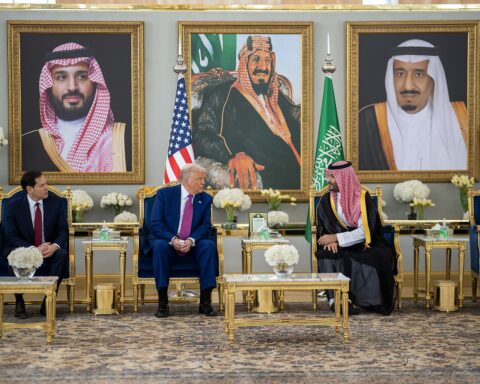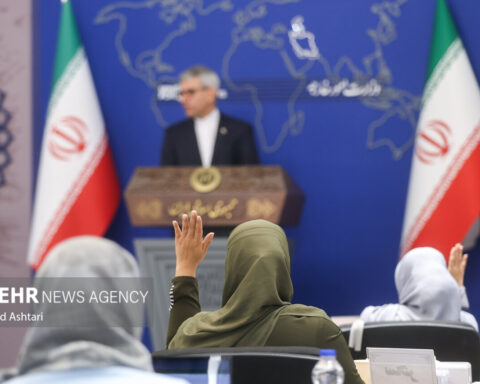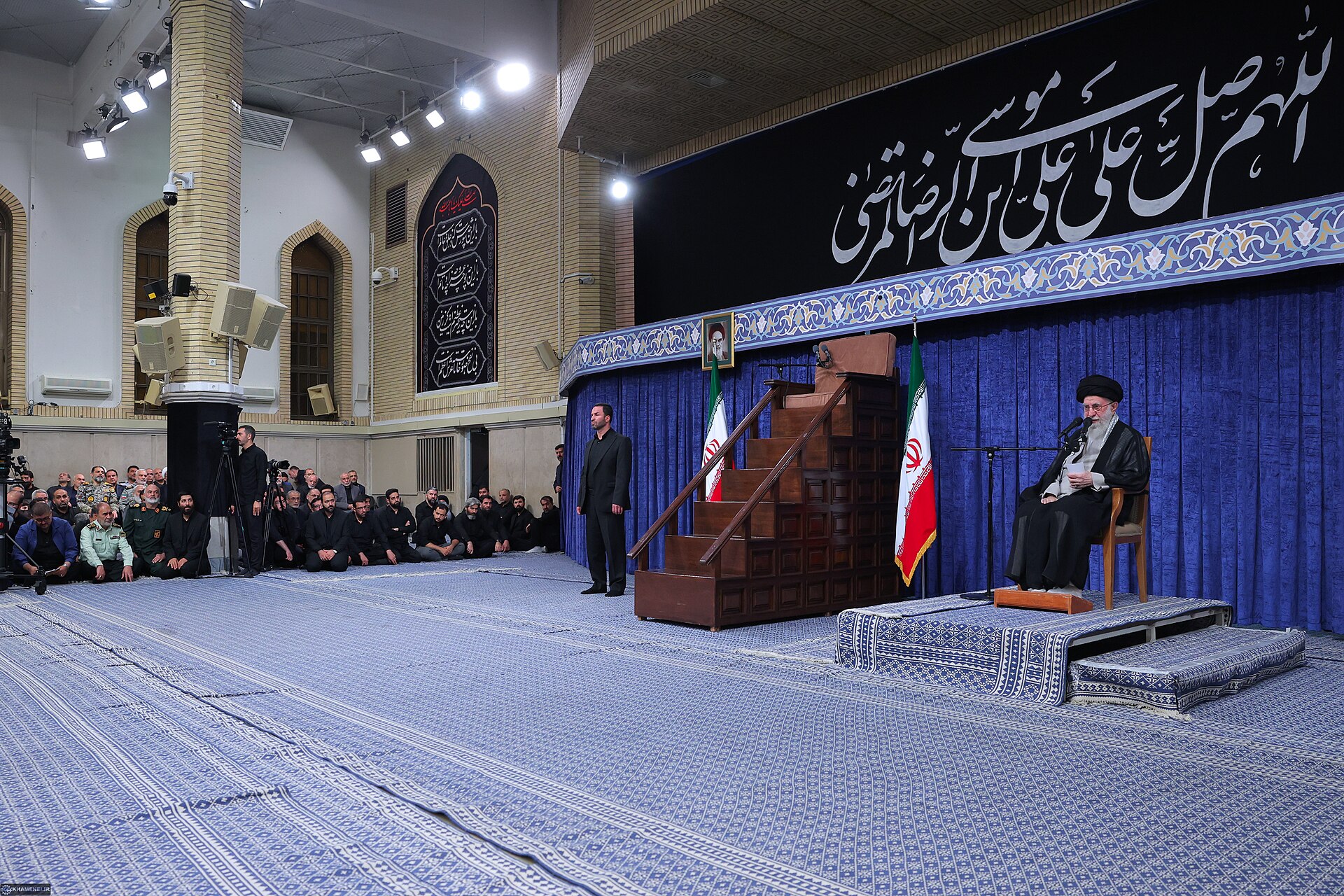

RIYADH — Saudi Arabia has not confirmed any representative for the foreign dignitary ceremony honouring the late Supreme Leader Ali Khamenei in Tehran on July 3, placing Riyadh among the most conspicuous absences from a gathering Iran says has drawn requests from more than 30 governments. The silence breaks a pattern set just 14 months ago, when Foreign Minister Prince Faisal bin Farhan flew to Tehran in person for the funeral of President Ebrahim Raisi — a trip that marked the high point of the Beijing-brokered rapprochement and that no comparable gesture has matched since.
The non-confirmation arrives at a moment when every other track of the Saudi-Iran relationship carries live exposure. Riyadh’s cumulative liability under the Post-Gulf Security Arrangement stands at approximately $319 million as of July 1, the Doha indirect talks have been paused for the duration of the funeral processions, and FM Faisal concluded a Beijing visit on July 2 that produced a joint China-Saudi statement on Hormuz freedom of navigation — a schedule that would have permitted a Tehran detour on July 3 but appears unlikely to produce one.
Table of Contents
Who Has Confirmed for July 3
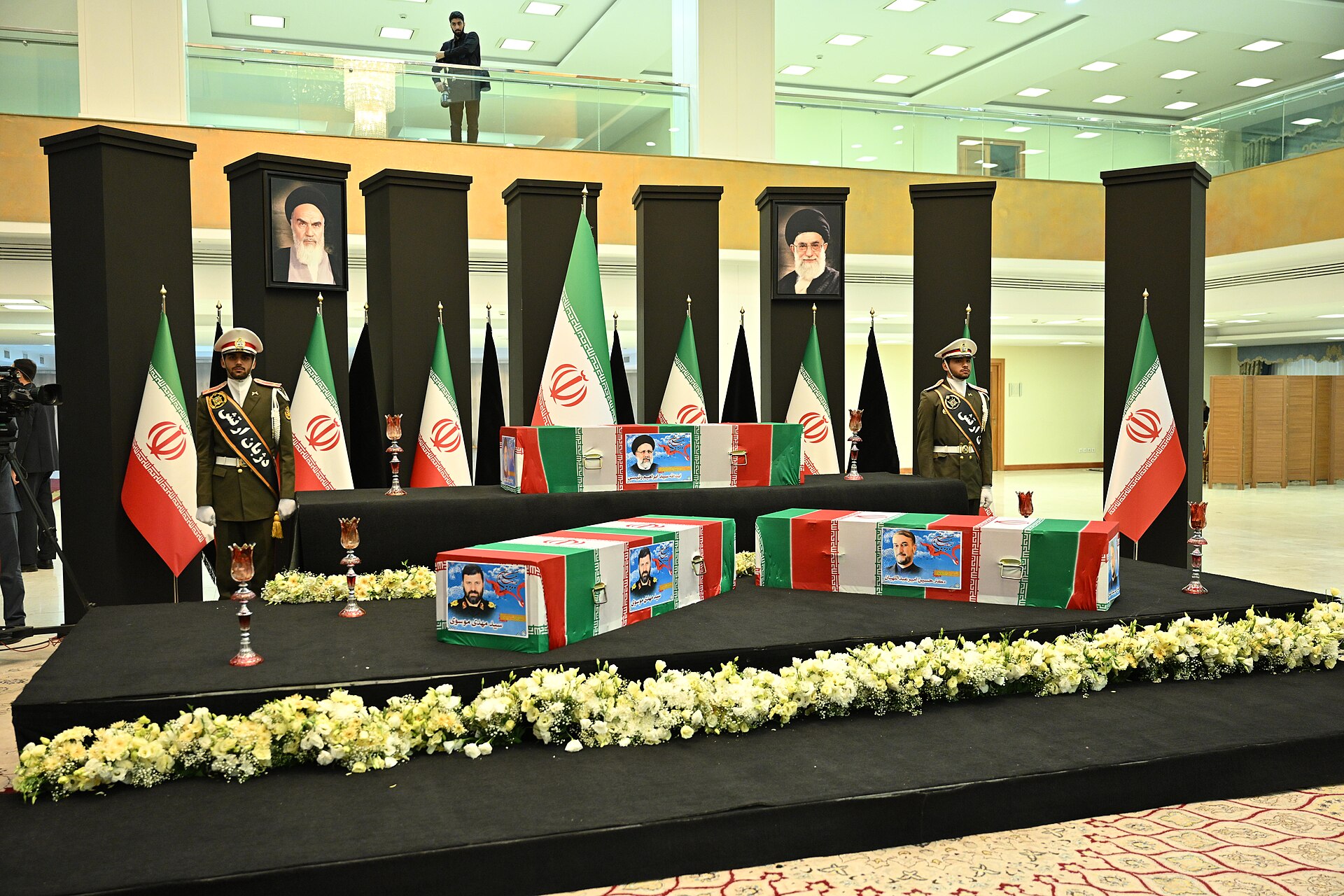
The July 3 ceremony is a dedicated event for foreign dignitaries, separate from the mass public funeral processions that will move through Tehran, Qom, Mashhad, Najaf, and Karbala from July 4 through July 9. Ali Akbar Pourjamshidian, secretary of Iran’s National Funeral and Farewell Ceremony Committee, told Taghribnews that officials from more than 30 countries had requested to attend the dignitary event, while religious leaders and scholars from more than 90 countries expressed intention to participate in the broader funeral period.
The confirmed roster, drawn from Reuters, Bloomberg, Al Jazeera, and the Wikipedia compilation of the state funeral, includes Pakistan’s Prime Minister Shehbaz Sharif, Tajikistan’s President Emomali Rahmon, Georgia’s President Salome Zourabichvili-Kavelashvili, and China’s He Wei, vice chairman of the National People’s Congress Standing Committee. Bloomberg framed He Wei’s attendance as China’s “first senior official to Iran since the war” — a formulation that treats the visit as a diplomatic event in its own right, not merely a condolence call. India sent Bihar Governor Rajesh Bhatia and Minister of State for External Affairs — a visible downgrade from Vice President Jagdeep Dhankhar’s attendance at Raisi’s funeral in May 2024, a calibration that strategic affairs analyst Brahma Chellaney flagged on X as a deliberate signal.
Russia’s representation remains unresolved: Former President Dmitry Medvedev’s name has circulated in Iranian and Western media, but Moscow had not confirmed a delegation head as of July 2. Even Russia, which has maintained closer ties with Tehran than any other major power throughout the conflict, appears to be hedging at the senior level — a pattern that gives Riyadh’s own silence additional diplomatic cover.
Why Has Saudi Arabia Said Nothing?
Saudi Arabia does not appear in any confirmed-attendee list published by Reuters, Al Jazeera, Bloomberg, Arab News, or Al Arabiya as of July 2. Neither the Ministry of Foreign Affairs nor the Royal Court has issued a statement on the funeral, and no condolence message was released following Khamenei’s death on February 28. The kingdom’s official posture since the war began has been to address Iranian actions — specifically the retaliatory missile and drone strikes on Saudi territory — without addressing the US-Israeli operation that killed Khamenei. The Saudi Cabinet’s only relevant public statement, issued March 1, “condemns and denounces in the strongest terms the treacherous Iranian aggression and the blatant violation of sovereignty,” language directed at Iran’s retaliation, not at the assassination.
The Middle East briefing 3,000+ readers start their day with.
One email. Every weekday morning. Free.
The private dimension complicates any public gesture. Ynet News reported that Crown Prince Mohammed bin Salman privately urged President Trump to launch the strikes that killed Khamenei, while publicly telling Iranian President Masoud Pezeshkian that Saudi Arabia would not allow its airspace or territory to be used for the operation. Attending a state funeral for the man MBS quietly lobbied to have killed would create a visible political cost that no diplomatic upside easily offsets — particularly when Iranian state media is framing the ceremony in language that goes well beyond mourning.
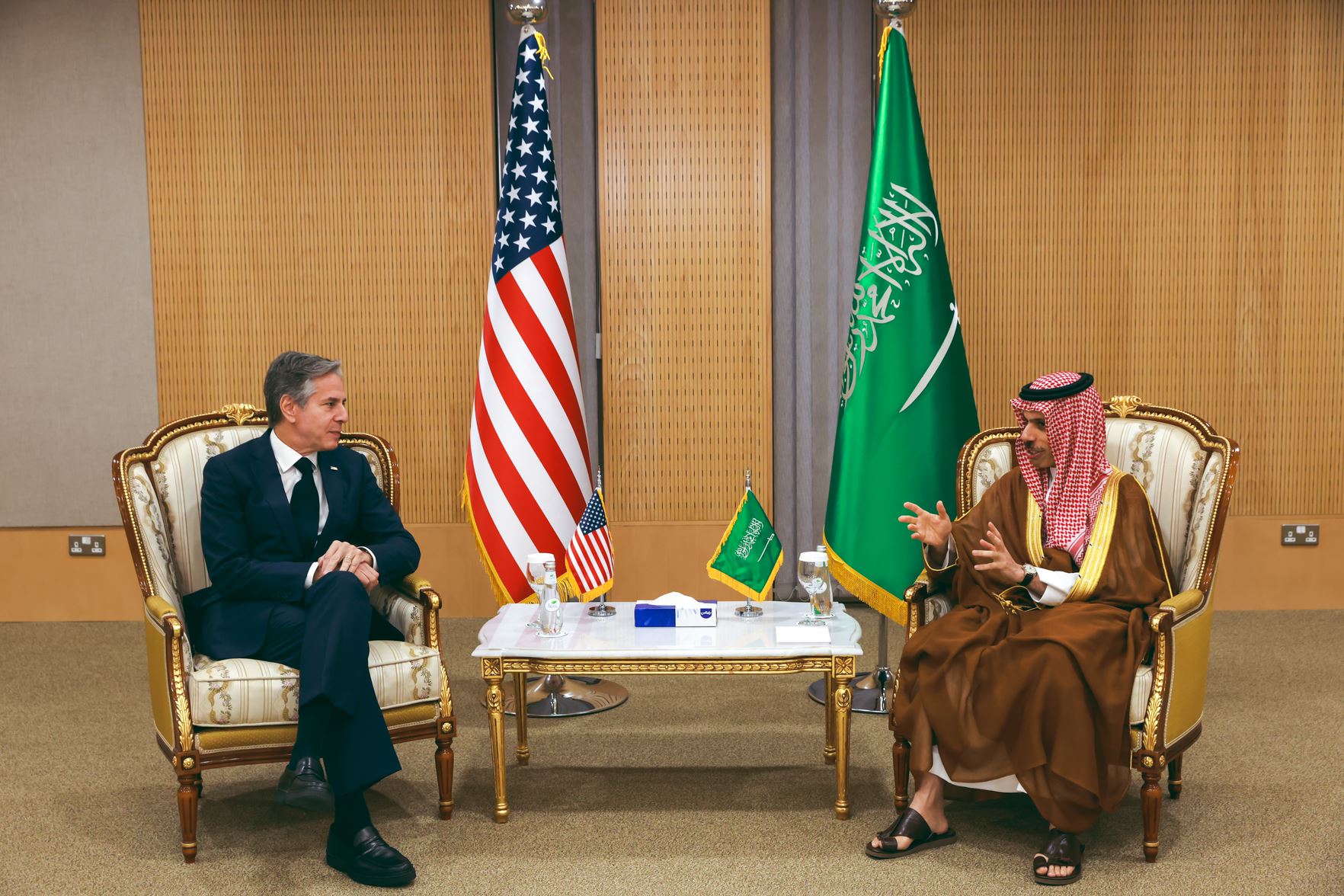
The timing compounds matters further. FM Faisal concluded his Beijing visit on July 2 with a joint China-Saudi statement committing to Hormuz freedom of navigation — language that China gave Riyadh but denied Tehran in bilateral statements. The physical calendar would have permitted Faisal to route through Tehran for the July 3 ceremony. That the Beijing trip appears to have been scheduled to its conclusion without a Tehran leg suggests the decision was made in advance, not deferred.
The Raisi Precedent: What Changed in 14 Months
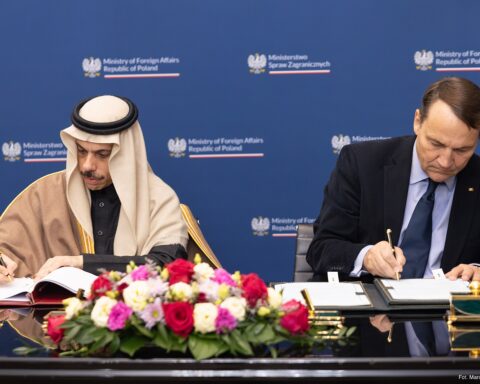
When Raisi died in a helicopter crash on May 19, 2024, Faisal flew to Tehran within three days. He was not alone: Qatar’s Emir Sheikh Tamim bin Hamad Al Thani, UAE Foreign Minister Sheikh Abdullah bin Zayed, and Kuwait’s Foreign Minister attended as well, according to Al Arabiya and Bloomberg. The visit occurred at the apex of the post-Beijing rapprochement — embassies reopened, ambassadors exchanged in September 2023, and no active conflict existed between the two states. The gesture cost Riyadh nothing and bought goodwill at a moment when the bilateral relationship was accumulating diplomatic capital.
None of those conditions hold for July 3, 2026. Iranian missiles and drones have struck Saudi oil infrastructure, energy facilities, and bases hosting US forces on Saudi soil. Riyadh expelled Iran’s military attaché, his assistant, and three other embassy staff on March 9, declaring them persona non grata with 24 hours to leave, citing “repeated Iranian attacks on Saudi sovereignty,” according to Al Jazeera and Saudi Gazette.
The PAC-3 interceptor stockpile is 86 percent depleted, Yanbu operates at roughly half its pre-war throughput, and the kingdom’s Q1 fiscal deficit hit $33.5 billion against a $44 billion full-year target. The rapprochement that made the Raisi visit possible has been replaced by a relationship in which civilian diplomatic channels survive but military and security ties have been severed.
The Raisi funeral also preceded any Saudi exposure under the MOU framework. The Post-Gulf Security Arrangement, which auto-activates at $5.5 million per day on any lapse, did not exist in May 2024. Saudi Arabia’s economic stake in the current ceasefire’s survival — $319 million cumulative as of July 1 — creates a structural tension: Riyadh needs the MOU to hold but cannot appear to endorse the government enforcing it, particularly when that government is headed by a Supreme Leader whom Saudi Arabia has not recognised.
Is There Still a Saudi Embassy in Tehran?
Technically, yes — though the operational picture is incomplete. Saudi Ambassador Abdullah bin Saudi Al-Enzi arrived in Tehran in September 2023 as part of the full ambassadorial exchange following the Beijing Agreement, according to Globalsecurity reporting from September 5, 2023. His current status in Tehran has not been confirmed or denied in available reporting since the war began. Iran’s civilian ambassador to Saudi Arabia, Alireza Enayati, was not included in the March 2026 expulsion of military staff and remained in Riyadh, telling Al Jazeera on March 15 that bilateral relations were “progressing naturally in many areas” and that he maintained ongoing contact with Saudi officials.
The gap between Enayati’s language and the military expulsions captures the split-screen quality of the relationship. Saudi Arabia burned the military track — five staff expelled within 24 hours — while leaving the civilian diplomatic channel nominally intact. The embassy in Tehran that Iranian protesters stormed and set ablaze in January 2016 over the execution of Shia cleric Nimr al-Nimr was dark for seven years and seven months before reopening in August 2023. Whether it is fully operational as a functioning mission in July 2026, or whether it exists as a legal placeholder while its staff operate at reduced capacity, is a question that the funeral attendance decision would, in either direction, partially answer.
Tehran’s Framing: Solidarity or Vengeance
Iran’s state media apparatus has positioned the funeral as proof that the US-Israeli campaign failed to isolate Tehran diplomatically. PressTV and Taghribnews have amplified the “more than 90 countries” figure, used the term “martyred Leader” as standard nomenclature, and framed international attendance as a referendum on solidarity with the Islamic Republic. The diplomatic ceremony on July 3 is being treated not as a mourning event but as a demonstration of Iran’s continued international standing despite five months of war.
Majlis Speaker Mohammad Bagher Ghalibaf — who is serving as acting head of state — sharpened the framing further, calling for a “massive Khamenei funeral turnout to sound the nation’s call for vengeance,” according to the Times of Israel. That language creates a specific problem for any Gulf state considering attendance. A Saudi representative at the July 3 ceremony would be present in a room where the official register is not grief but retribution — retribution for an operation that MBS privately supported and that killed a leader whose forces subsequently struck Saudi territory. The same Ghalibaf told IRIB on July 2 that IAEA access to bombed nuclear sites was barred “under any circumstances” by two domestic laws, a statement that undercuts the diplomatic flexibility the MOU was supposed to create.
Iranian state media has not, in available reporting, explicitly addressed Saudi Arabia’s attendance or non-attendance — a silence that may reflect calculation rather than oversight. If Riyadh sends no representative, Tehran can avoid the embarrassment of a public refusal by never having publicly invited. If Riyadh does send someone, the attendance can be folded into the “international solidarity” narrative without requiring a specific acknowledgment of Saudi-Iranian tensions. The asymmetry favours Iran either way, which may be precisely why Riyadh has chosen to let the silence speak.
The GCC Calculus
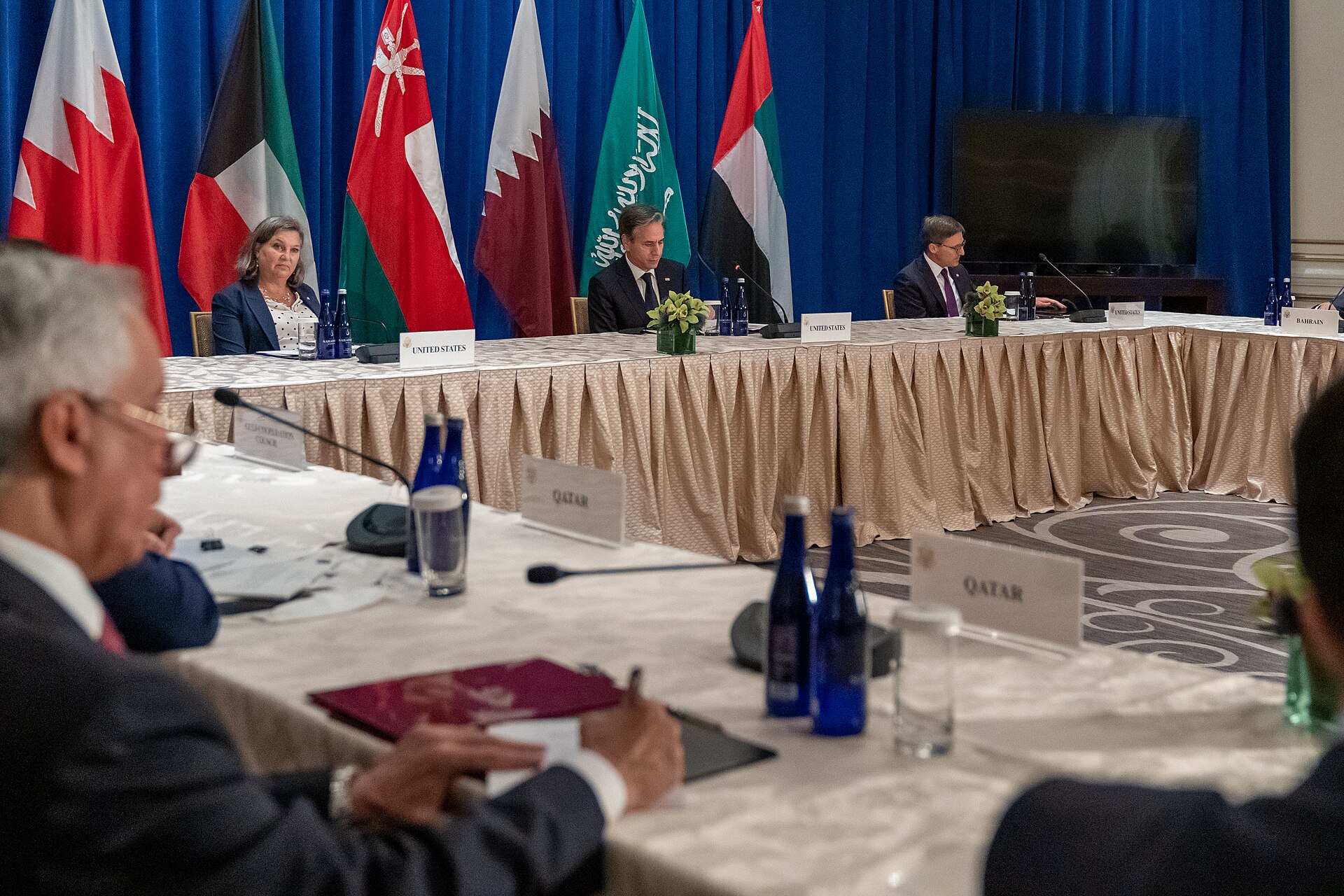
No Gulf Cooperation Council state — UAE, Kuwait, Qatar, Bahrain, or Oman — has publicly confirmed attendance at the July 3 ceremony in available reporting as of July 2. The contrast with Raisi’s funeral is stark: in May 2024, Qatar’s Emir attended personally and three other Gulf foreign ministers were present. For Khamenei, the collective GCC posture appears to be coordinated absence, or at minimum coordinated silence, though no joint statement or GCC-level discussion of the funeral has been reported.
The Indian calibration offers a useful external reference point. The Week, an Indian news magazine, published an analysis on June 29 noting that “Saudi Arabia and Crown Prince Salman would be unhappy to see Modi in Iran” at a high level — language that suggests Riyadh’s discomfort with funeral attendance is being factored into third-party decisions. India’s downgrade from vice-presidential representation at Raisi’s funeral to a state governor and junior minister for Khamenei’s ceremony aligns with that reading. If India is calibrating its delegation level partly in deference to Saudi preferences, and if no GCC state has confirmed attendance, the regional signal is one of collective restraint — whether or not it was formally coordinated.
The funeral pause also freezes the only active diplomatic channel, with mediators confirming the next indirect US-Iran talks in Doha will resume no earlier than July 10. Saudi Arabia holds zero formal seats in those talks; its role is economic, not diplomatic, operating through the PGSA’s $5.5 million daily exposure rather than through negotiating positions. The July 3 attendance roster will be the only observable diplomatic signal of the week — a week in which the Doha channel is dark and the MOU clock continues to run. Pakistan FM Ishaq Dar confirmed this dynamic directly, calling FM Faisal on July 3 to brief him on the Doha round — making Islamabad the sole channel through which Riyadh received situational awareness on a process carrying $242 million in direct Saudi financial exposure. How Pakistan became Saudi Arabia’s informational window into the Doha talks is examined in full here.
Attendance also carries a recognition question that Riyadh has not resolved through any other channel. Mojtaba Khamenei, the late leader’s son, was elected Supreme Leader by the Assembly of Experts on March 8, 2026, under conditions that multiple analysts described as IRGC-directed — and has not appeared in public since. Saudi Arabia has issued no recognition of Mojtaba’s leadership, and presence at his father’s state funeral would implicitly acknowledge the legitimacy of the government he nominally heads. Separately, Mojtaba Khamenei himself will not attend the funeral, after Iranian security services said they cannot guarantee his protection.
FAQ
Has Saudi Arabia formally declined an invitation to the July 3 ceremony?
No formal invitation or formal decline has been made public. Iran’s National Funeral Committee said more than 30 countries “requested to attend,” language that implies countries approached Iran rather than receiving formal invitations. The absence of a public Saudi statement — neither accepting nor declining — is consistent with a diplomatic posture that avoids forcing either side into an on-the-record position. Saudi state-linked outlets Arab News and Al Arabiya have covered funeral logistics without mentioning the attendance question, suggesting an editorial directive to avoid the topic.
Could Saudi Arabia send a lower-level representative instead of a minister?
India’s approach — sending a state governor and junior minister rather than the vice president who attended Raisi’s funeral — demonstrates that calibrated downgrade is an available option. Saudi Arabia could theoretically send its ambassador Al-Enzi (if he remains operational in Tehran) or a deputy foreign minister, maintaining presence without the political weight of a ministerial visit. However, even a low-level Saudi presence at a ceremony that Ghalibaf has framed as “the nation’s call for vengeance” would carry domestic political risks in the kingdom, where Iranian strikes on Saudi soil remain a live grievance. No reporting as of July 2 suggests this option is under active consideration. In the event, Saudi Deputy FM Waleed El-Khereiji did appear at the funeral hours later — a development that upended that assessment.
What happens to the Doha talks during the funeral period?
Al Arabiya reported on July 2 that mediators confirmed the next indirect US-Iran talks would resume “at the earliest possible time following the funeral processions,” which run through July 9. The MOU’s 60-day clock — currently at approximately Day 15 — continues to run during the pause. Saudi Arabia has no formal seat in those talks but carries a direct economic stake through the PGSA mechanism, which accrues at $5.5 million per day. The funeral pause means the July 3 attendance roster becomes the only diplomatic signal available during an otherwise silent week.
Did any GCC state attend Khamenei’s funeral ceremonies in February-March 2026?
No GCC state issued condolences on Khamenei’s death in February 2026, and no GCC state has publicly confirmed attendance at the July 3 foreign dignitary ceremony. This represents a collective shift from May 2024, when Qatar’s Emir and UAE, Kuwait, and Saudi foreign ministers all attended Raisi’s funeral in Tehran. The difference in posture reflects the intervening war: Iranian missiles struck targets in multiple GCC states, and the GCC’s 167th Ministerial Council issued its first collective defence invocation in 45 years — a statement that Saudi FM Faisal signed but that produced no military response.
How does the new Supreme Leader Mojtaba Khamenei factor into the attendance decision?
Elected by the Assembly of Experts on March 8, 2026, Mojtaba lacks Grand Ayatollah status and took office under what multiple analysts described as IRGC direction after just 16 weeks. Attending his father’s state funeral would carry an implicit acknowledgment of the government he heads — a diplomatic step Saudi Arabia has not taken through any other channel. The recognition question is separate from, but layered on top of, the bilateral grievances over Iranian strikes on Saudi territory.