BEIJING — Chinese Foreign Minister Wang Yi co-signed language on July 1 endorsing “freedom of navigation in the Strait of Hormuz” in a joint readout with Saudi Foreign Minister Prince Faisal bin Farhan — the first time Beijing has adopted that formulation in a bilateral statement with Riyadh. The phrase, describing Hormuz freedom of navigation as contributing “to supporting energy security and the stability of the global economy,” dropped a clause Beijing had maintained in every prior exchange with Tehran: recognition of Iran’s “sovereignty, security and legitimate rights and interests as a coastal state on the strait.”
The removal is operationally significant. For 122 days, Iran has enforced a per-vessel toll on Hormuz transit — payable in yuan via Kunlun Bank — while rejecting Saudi Arabia’s claim to any role in Strait governance. China, which purchased 90% of Iranian oil exports before the crisis according to the US-China Economic and Security Review Commission, is the single largest payer of that toll. The July 1 readout uses Saudi Arabia as a co-signatory to challenge an Iranian prerogative that Beijing has been financing since March.
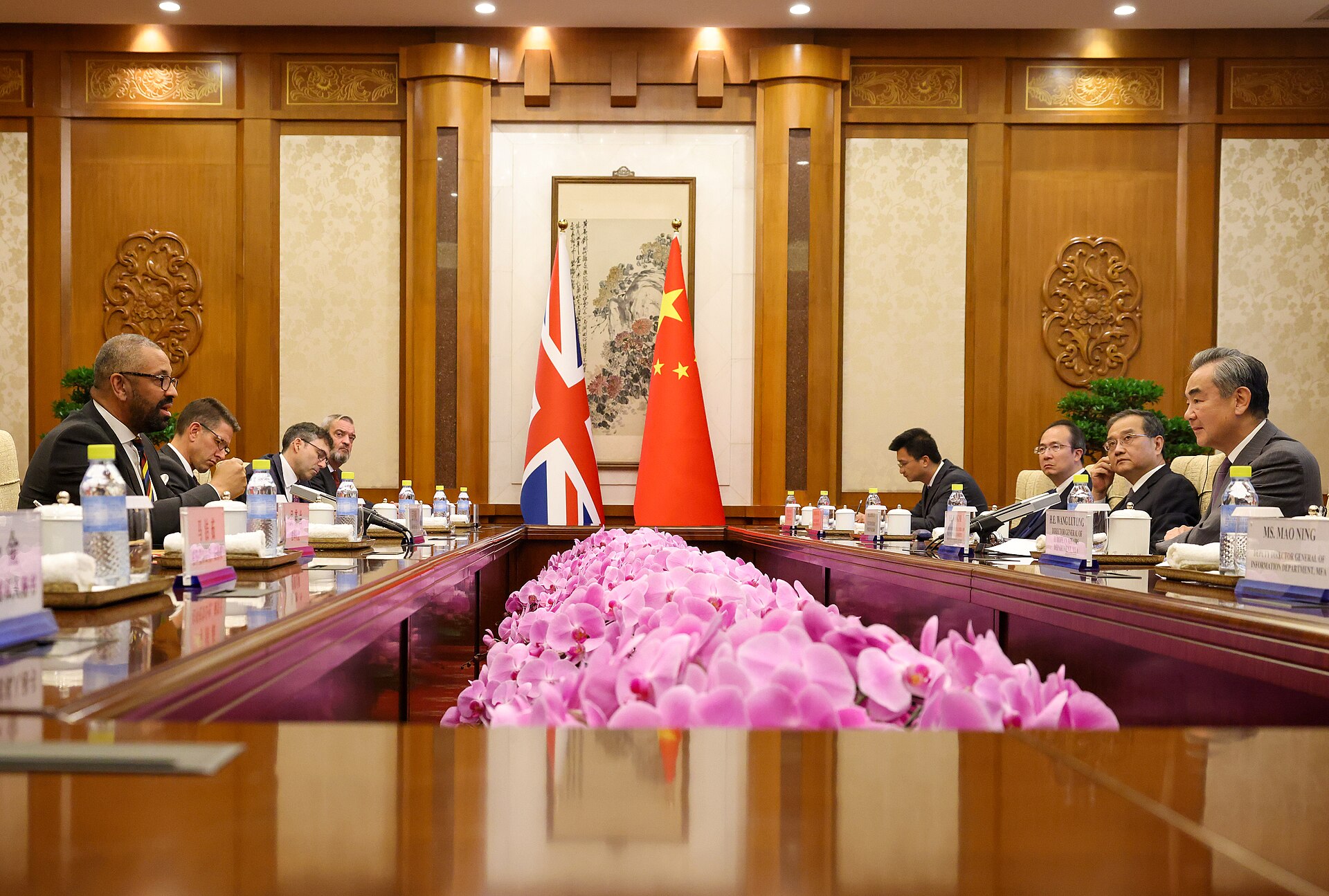
Table of Contents
- What Changed in Beijing’s Hormuz Language?
- Four Months of Linguistic Drift
- Why Did China Veto at the UN What It Now Co-Signs With Saudi Arabia?
- The Toll Beijing Was Already Paying
- How Does Tehran Respond When Its Patron Breaks Ranks?
- Faisal’s Beijing Detour
- What Comes After the Readout?
- Frequently Asked Questions
What Changed in Beijing’s Hormuz Language?
Beijing dropped the clause recognizing Iran’s coastal-state sovereignty that it had maintained in every prior Hormuz readout during the crisis. The July 1 joint statement with Prince Faisal endorses “freedom of navigation in the Strait of Hormuz” without any reference to coastal-state rights, Iranian sovereignty over adjacent waters, or the balancing qualifier that appeared in the April 15 Wang Yi-Araghchi readout.
When Wang Yi spoke with Iranian Foreign Minister Abbas Araghchi by phone on April 15, the Chinese readout carried the balanced formulation. It stated that “the freedom and security of international shipping must also be guaranteed” — but paired this with an explicit qualifier: Iran’s “sovereignty, security and legitimate rights and interests as a coastal state on the strait must be respected and protected.” The qualifier appeared in the Chinese Ministry of Foreign Affairs readout posted to fmprc.gov.cn on April 16, and was widely reported by the South China Morning Post.
The July 1 joint readout with Prince Faisal contains none of this. The language endorses “freedom of navigation in the Strait of Hormuz” as contributing “to supporting energy security and the stability of the global economy.” The construction is affirmative without qualification — the diplomatic equivalent of dropping a proviso from a contract.
The shift matters because Iran’s entire legal and operational framework for the Hormuz toll rests on coastal-state prerogatives under the UN Convention on the Law of the Sea. UNCLOS Article 38 guarantees transit passage through international straits, but Iran has long argued that Hormuz falls under a separate regime because Iranian territorial waters extend across portions of the navigable channel. By dropping the coastal-state clause, Beijing implicitly rejected the legal framework Tehran uses to justify the toll — the same charge that Bloomberg reported on April 1 is routed through Kunlun Bank and the Cross-Border Interbank Payment System in yuan.
The Middle East briefing 3,000+ readers start their day with.
One email. Every weekday morning. Free.
Chinese diplomatic readouts are drafted by the Ministry of Foreign Affairs’ Department of West Asian and North African Affairs and reviewed at the vice-ministerial level before publication. Language shifts between bilateral readouts are deliberate. The April 15 and July 1 readouts were separated by 77 days and one fundamental change: on April 15, Beijing acknowledged Iran’s coastal-state rights. On July 1, it did not.
Four Months of Linguistic Drift
The July 1 formulation sits at the end of a four-month progression in which Beijing’s Hormuz language moved consistently in one direction — toward the Saudi and Gulf-state position and away from Iran’s. The shift spans four documented bilateral readouts between March 31 and July 1.
On March 31, a China-Pakistan five-point joint proposal called for a generic “ceasefire and resumption of normal navigation” in the Gulf. The language was broad enough to be acceptable to all parties and committed China to nothing specific on Hormuz governance or coastal-state rights.
On April 15, the Wang Yi-Araghchi call produced the balanced formulation: shipping freedom paired with coastal-state sovereignty. This was China’s most Iran-friendly Hormuz language during the crisis, and it was the last time Beijing included the carveout in any bilateral readout.
Five days later, on April 20, President Xi Jinping spoke with Crown Prince Mohammed bin Salman by phone. The Chinese readout of that call stated that maintaining Hormuz “serves the common interests of regional countries and the international community.” The phrase “regional countries” implicitly extended Hormuz stakeholder status to Saudi Arabia — a designation Tehran has explicitly refused. Iran’s position, articulated through Foreign Ministry spokesman Esmail Baghaei and IRGC commanders throughout the crisis, holds that Hormuz governance is a matter for coastal states only: Iran and Oman. Saudi Arabia, which does not border the Strait, has no standing in this framework. The Xi-MBS readout, reported by both FMPRC and Al Arabiya on April 20, quietly challenged that position without naming Saudi Arabia directly.
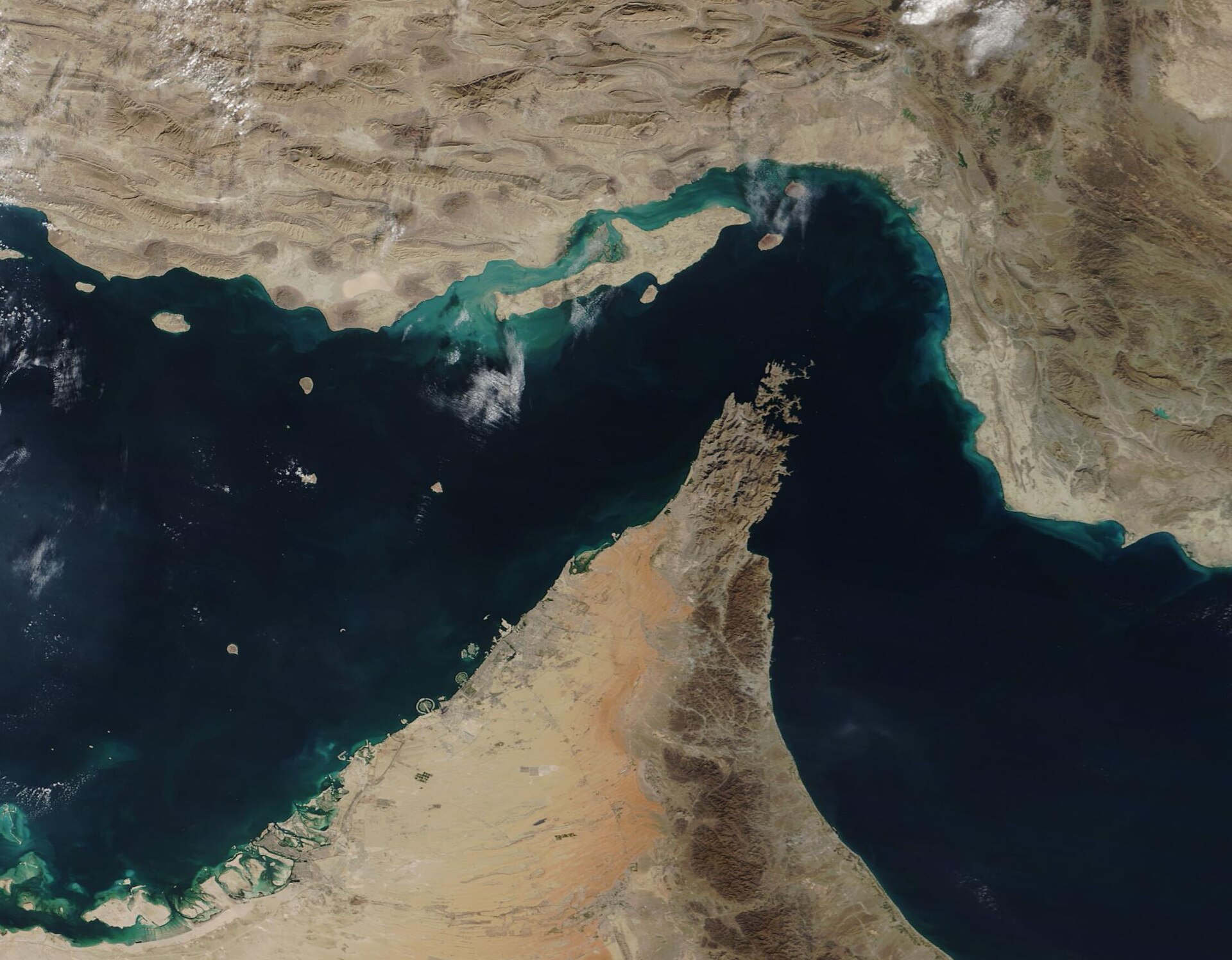
Then came the May 6-7 Beijing meetings between Wang Yi and Araghchi. The Chinese side called for “prompt resumption of shipping traffic through the Strait of Hormuz,” as reported by CNBC and Bloomberg. Iran’s Foreign Ministry Telegram readout of the same meeting omitted this language entirely. Araghchi’s public summary focused on bilateral cooperation and what the Iranian Students’ News Agency reported as his statement that China “is a close friend of Iran and bilateral cooperation will even become stronger.” The gap between the two readouts — one demanding Hormuz resumption, the other silent on it — was the first documented instance of a public split between Beijing and Tehran on Hormuz policy during the crisis.
The July 1 readout with Faisal completes the progression. In four months, Beijing moved from generic navigation language, through balanced coastal-state acknowledgment, to implicit Saudi stakeholder status, to direct Hormuz resumption demands, and finally to a joint freedom-of-navigation endorsement with Saudi Arabia that contains no Iranian carveout. Each step was incremental. The cumulative direction was not.
Why Did China Veto at the UN What It Now Co-Signs With Saudi Arabia?
On April 7, China and Russia vetoed a UN Security Council resolution on Hormuz freedom of navigation. Three months later, China co-signed bilaterally with Saudi Arabia a statement endorsing the same principle it blocked at the Security Council. The distinction is structural: a UNSC resolution under Chapter VII would carry legal force binding on all member states, while a bilateral readout carries no enforcement mechanism and commits Beijing to no specific action.
The April 7 draft had been submitted by six Arab states — Bahrain, Jordan, Kuwait, Qatar, Saudi Arabia, and the UAE. The vote was 11 in favor, 2 against, and 2 abstentions. Chinese UN Ambassador Fu Cong justified the veto by arguing that the draft “failed to capture the root causes and the full picture of the conflict in a comprehensive and balanced manner,” according to UN Press release SC16330.
By vetoing at the UN and endorsing bilaterally, Beijing achieved a specific outcome: it aligned publicly with the Saudi position while preserving its ability to reverse course without violating international law. A UNSC resolution would have created a binding obligation. A bilateral readout creates a diplomatic signal that can be diluted, modified, or contradicted by the next bilateral readout with a different partner.
The April 7 veto also protected China’s relationship with Iran at a moment when Beijing was still operating as a mediator. In the weeks following the veto, Wang Yi hosted Araghchi in Beijing and called for Hormuz resumption — the same demand that the vetoed resolution would have codified. The veto bought time for Chinese diplomacy — time that produced the May 6-7 Beijing meetings and, eventually, the July 1 bilateral statement with Faisal.
Fu Cong’s April 7 justification reveals the limits of the July 1 shift. The bilateral readout with Faisal addresses navigation but does not address what Beijing called “root causes” at the Security Council. It says nothing about the US military operations that preceded Iran’s Hormuz actions, nothing about the IRGC strikes on Gulf bases, and nothing about the MOU framework that is now on Day 15 of its 60-day Phase 2 timeline. The readout is narrower than the resolution China blocked.
For Saudi Arabia, the bilateral endorsement is more useful than the vetoed resolution in one respect: Riyadh has the signature of the country that buys more Gulf crude than any other backing its claim that Hormuz transit is an international right. For Iran, the endorsement is less threatening than the resolution in another: it has no enforcement power and no legal standing at the International Court of Justice or the International Tribunal for the Law of the Sea.
The Toll Beijing Was Already Paying
China’s interest in Hormuz freedom of navigation is not abstract. It is denominated in dollars per vessel.
The IRGC toll, established in the first weeks of the crisis, charges approximately $2 million per transit — equivalent to roughly $0.50 to $1 per barrel on a VLCC carrying approximately 2 million barrels. Payment is routed through Kunlun Bank and the Cross-Border Interbank Payment System in yuan, or alternatively in Bitcoin or USDT. Bloomberg reported the toll structure on April 1, 2026; USNI News confirmed the mechanism on March 27.
At estimated toll revenue of $20 million per day from oil tankers alone — and $600 million to $800 million per month including LNG carriers, according to Al Jazeera on May 21, citing shipping and sanctions analysts — the IRGC has built a revenue stream partially funded by Chinese importers. China was the primary buyer of IRGC-tolled passage. Its importers were paying the toll that Wang Yi’s readout now implicitly condemns.
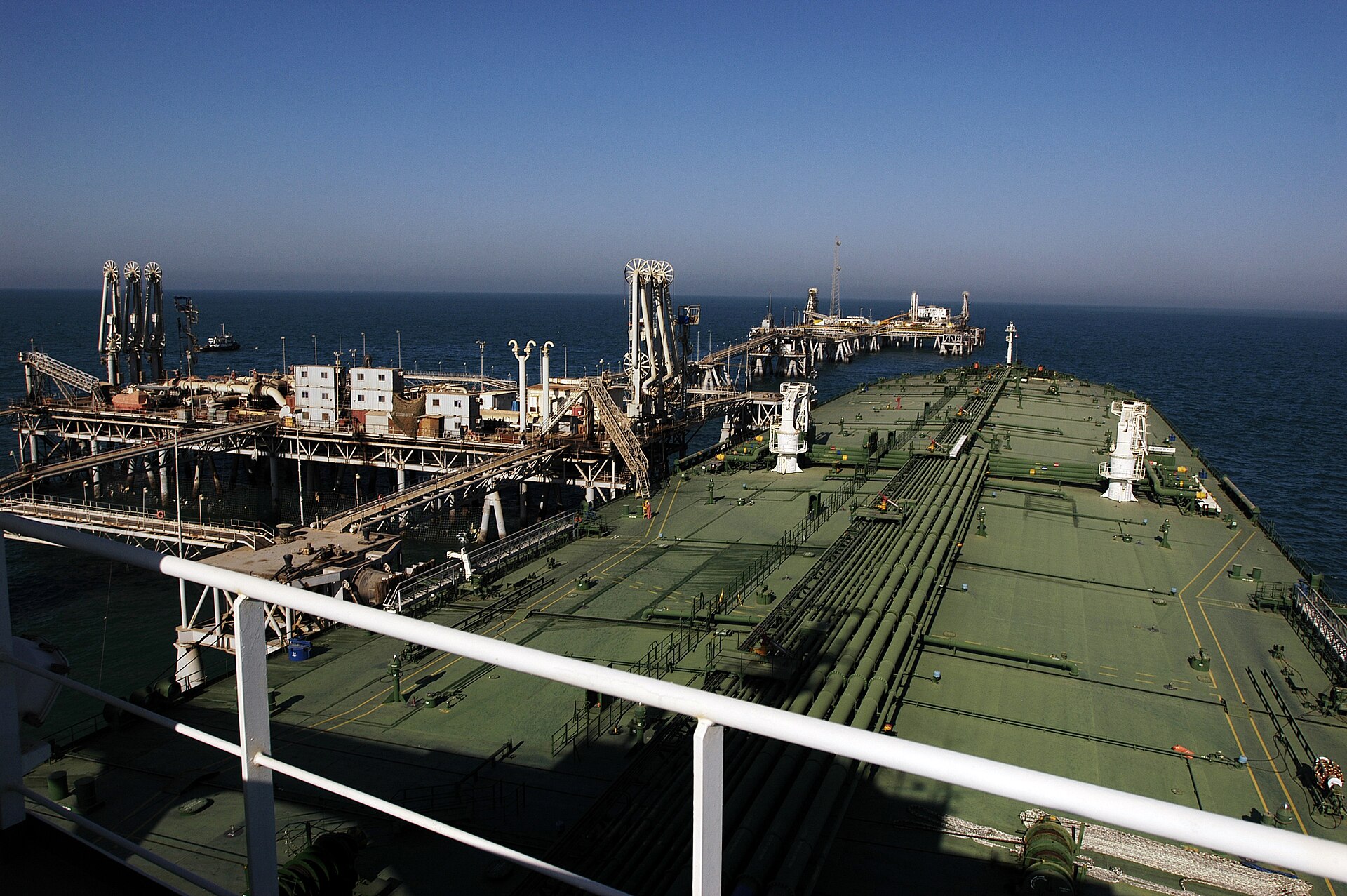
The toll’s financial significance for China scales with the volume of crude that Chinese refiners still import through the Strait. Before the crisis, 45% of China’s total oil imports transited Hormuz, according to Natasha Lindstaedt, a professor at the University of Essex, writing in Forbes on April 22, 2026. Approximately 53% of China’s imported oil came from the Middle East. Those figures have since collapsed: China’s crude imports fell from approximately 11 million barrels per day before the crisis to 6.6 million bpd in May 2026, according to the Maritime Executive — a reduction that reflects both redirected sourcing and the freight and insurance costs imposed by the Hormuz disruption.
The disruption’s scale is visible in traffic data. Lloyd’s List Intelligence recorded 142 vessel transits through Hormuz between March 1 and March 25, 2026, compared with 2,652 in the same window of 2025 — a 94.6% collapse. As of early July 2026, daily Hormuz transits average approximately five vessels against a pre-crisis norm of 93 per day.
Sinopec, China’s largest refiner, recorded zero Saudi crude purchases in July 2026 — the second consecutive month without a single Saudi barrel. The trade relationship that underpinned over $107 billion in annual China-Saudi bilateral commerce, according to The National, has partially seized. Aramco’s July Arab Light official selling price had been cut to a $9.50 premium over Oman/Dubai — $10 per barrel below the $19.50 all-time high reached in May, with the July cut alone accounting for $6 of that collapse. The cut reflected not a demand problem but a Hormuz credibility problem priced into every barrel that still moved through the Strait.
The “freedom of navigation” language does not call for the toll’s abolition. But it rejects the legal framework — coastal-state sovereignty — on which the toll rests.
How Does Tehran Respond When Its Patron Breaks Ranks?
As of July 2, Tehran had not publicly responded to the July 1 readout. No official Iranian government statement addressing the Wang Yi-Faisal Hormuz language had been published by Iran’s Foreign Ministry, the IRGC’s media apparatus, or state outlets including IRNA, ISNA, and Press TV. The silence is itself a form of response — Iran cannot attack Beijing over the language without jeopardizing its most critical remaining economic relationship.
The pattern is consistent. The May 6-7 Beijing meetings produced the same divergence: Wang Yi’s call for “prompt resumption of shipping traffic” through the Strait went entirely unacknowledged in Iran’s Telegram readout, with Araghchi instead emphasizing bilateral friendship. Tehran has managed the divergence by publicly ignoring it. No Iranian government spokesperson has addressed Wang Yi’s Hormuz language at any of the three documented instances — April 20, May 6-7, and July 1 — where Beijing moved toward the Saudi position.
The economic basis for this restraint is substantial. The yuan-denominated payment system through Kunlun Bank is the primary mechanism by which Iran receives revenue for tolled Hormuz passage, and the buyers on the other end of that rail are overwhelmingly Chinese. Iran’s Deputy Speaker Ali Bagheri Ghalibaf told CNBC in late June that Iran had exported “more than 40 million barrels” since the blockade began, at a 20% premium — revenue that would vanish if Beijing restricted Kunlun Bank processing.
The China-Iran 25-year Comprehensive Strategic Partnership, signed in March 2021, covers economic, security, and technological cooperation. But the partnership carries no enforcement mechanism and no mutual defense obligation. The July 1 readout does not violate the partnership — it clarifies that Beijing’s commitment to Iran’s economic development does not extend to endorsing Iran’s Hormuz claims against China’s largest Arab trading partner.
Iran’s 2023 experience with the China-brokered Saudi-Iran rapprochement offers a precedent. In March 2023, Wang Yi hosted Saudi and Iranian officials for the normalization agreement that restored diplomatic relations. Wang described the outcome as driving “a wave of reconciliation,” according to Al Jazeera. In that arrangement, China positioned itself as an impartial broker between Riyadh and Tehran. The July 1 readout abandons that posture. Beijing is not mediating between Saudi Arabia and Iran on Hormuz — it is co-signing Saudi Arabia’s position.
The asymmetry between Beijing’s public diplomacy and its material relationship with Iran extends beyond readout language. The Foundation for Defense of Democracies reported on April 30 that Chinese firms — including MizarVision and Empostate — provided the IRGC with high-definition satellite imagery of US assets in the Gulf. A Financial Times investigation drawing on leaked intelligence documents reported that the IRGC acquired a Chinese-built reconnaissance satellite from Earth Eye Co. in late 2024. China’s public endorsement of Hormuz freedom of navigation co-exists with a covert support track that directly enables the force imposing the toll.
Faisal’s Beijing Detour
Prince Faisal’s July 1 visit to Beijing was not his first trip to the Chinese capital during the crisis. On June 30, Faisal visited Beijing while Doha negotiations between the US and Iran proceeded without Saudi participation. The back-to-back visits — first a bilateral meeting, then the July 1 joint readout — reflect what Al-Monitor described as Riyadh “widening its circle by leaning more on Beijing as a diplomatic counterweight to Washington” amid “visible strains” in the Trump-MBS relationship.
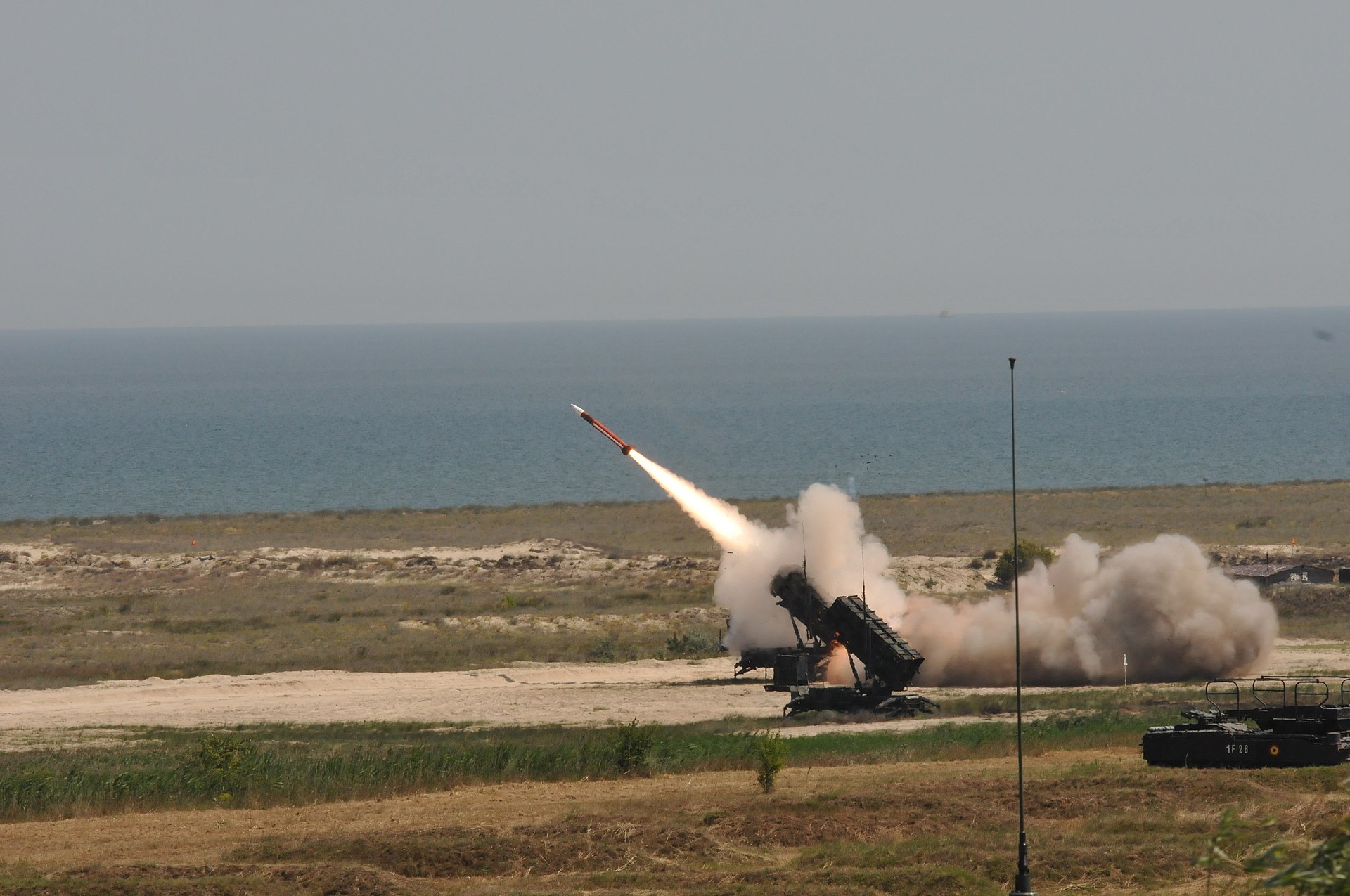
Saudi Arabia’s structural problem in the Hormuz crisis has been one of exclusion. Riyadh holds zero formal seats in the US-Iran Doha talks. It has no role in the MOU framework. The Persian Gulf Security Agreement, which costs Saudi Arabia an estimated $5.5 million per day, has accumulated $319 million in costs between May 5 and July 1 — a bill Riyadh pays for a security framework in which it has no negotiating role. The US military drawdown from the region, with PAC-3 batteries departing alongside troops, has further diminished Washington’s value as a security guarantor. Riyadh’s response to that exclusion — building a new Saudi-led five-state axis with Qatar, Turkey, Pakistan, and Egypt — is the structural context for why the Wang Yi meeting matters: Faisal arrived in Beijing not as a US ally seeking endorsement, but as the architect of an alternative coalition seeking recognition. That pattern extends to the financial dimension: Riyadh’s $1 billion Board of Peace pledge to Washington remains unpaid as Faisal collected Hormuz concessions in Beijing — a deliberate sequencing in which diplomatic capital is extracted before financial commitments are honored.
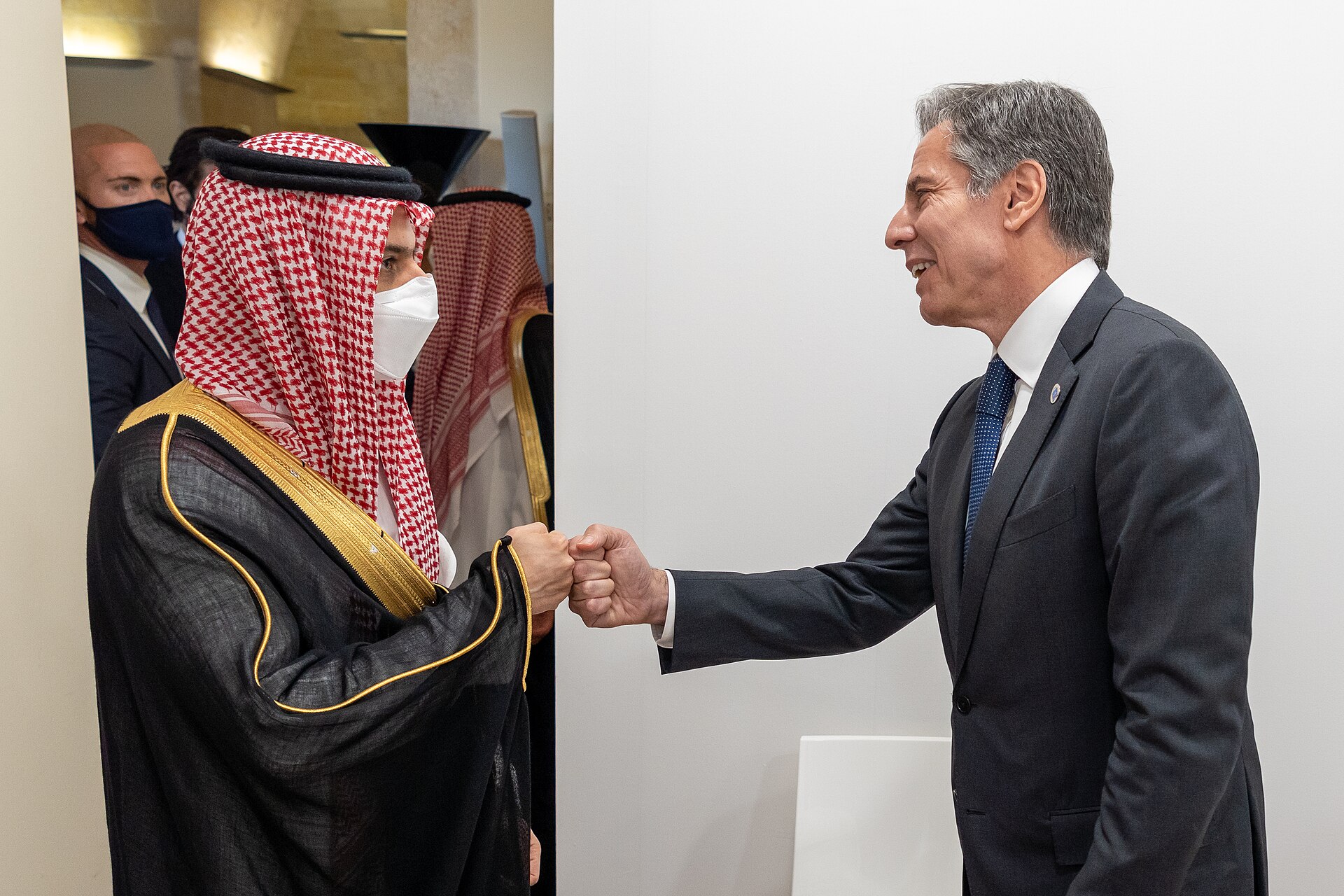
Beijing offered Faisal something Washington and Doha did not: a co-signed endorsement of Saudi Arabia’s claim that Hormuz is an international waterway subject to freedom of navigation, not a coastal-state resource subject to Iranian and Omani governance. The framing — Hormuz freedom as an energy security and global economic stability issue — matches Riyadh’s longstanding position. It does not match Tehran’s.
Faisal’s public remarks in Beijing included a statement that “Saudi Arabia values its relationship with China and remains firmly committed to the one-China principle,” as reported by SCMP. The one-China affirmation is standard in Saudi-Chinese bilateral meetings. Its repetition in the same session that produced the Hormuz language, however, indicates the transactional geometry of the exchange: Riyadh reaffirmed Beijing’s core territorial claim on Taiwan in the same readout where Beijing reaffirmed Riyadh’s core maritime claim on Hormuz.
The 2016 China-Saudi comprehensive strategic partnership reaches its 10th anniversary in 2026. The partnership has encompassed arms sales, refinery investments, and crude supply contracts. But the July 1 readout adds a dimension that previous iterations of the partnership did not contain: diplomatic alignment on a question that directly implicates China’s relationship with Saudi Arabia’s primary regional adversary. Previous iterations of the partnership were compatible with China’s parallel relationship with Iran. The Hormuz language is not.
Iran has explicitly refused to accept Saudi Arabia as a Hormuz stakeholder. The IRGC’s position, articulated through commanders and state media since March, is that Hormuz governance belongs to the coastal states — Iran and Oman — and that Saudi Arabia’s claim to a role is legally baseless. By co-signing the freedom-of-navigation endorsement, Wang Yi overrode that Iranian objection without addressing it. He did not argue that Saudi Arabia is a coastal state. He endorsed a framework in which coastal-state status is irrelevant to navigation rights — a framework Tehran has spent 122 days of toll enforcement trying to destroy.
What Comes After the Readout?
The July 1 readout is a diplomatic signal, not an operational change. On July 2, approximately five vessels transited the Strait — unchanged from the day before the readout was published. The Joint War Committee designation covering the entire Arabian Gulf Listed Area remains in force. All 12 International Group P&I clubs maintain their 72-hour cancellation notices for war-risk extensions, the structural constraint that collapsed traffic before Iran fired a shot.
The readout’s significance is directional. It tells Tehran that Beijing’s willingness to balance Iranian and Gulf-state interests has a threshold, and that threshold has been crossed. It tells Riyadh that Beijing will co-sign Saudi positions the United States has not delivered through multilateral institutions. And it tells Washington — which has been conducting bilateral talks with Iran in Doha without Saudi participation — that Riyadh has found an alternative diplomatic channel for Hormuz recognition.
What the readout does not answer is whether Beijing will apply material pressure to change Iranian behavior. China’s tools are substantial. It could restrict Kunlun Bank’s processing of toll payments. It could reduce crude purchases from Iran. It could condition future technology transfers on Hormuz concessions. None of these steps were signaled in the July 1 readout, and none have precedent in the China-Iran relationship.
Wang Yi’s own framing suggested restraint rather than escalation. “Talking is better than fighting, and dialogue is better than confrontation,” he said on July 1, according to SCMP. The formulation is standard Chinese diplomatic hedging — a statement no party can disagree with that commits Beijing to nothing specific beyond continued engagement.
The MOU between the US and Iran is on Day 15 of a 60-day Phase 2 timeline. Day 61 remains the structural deadline. Doha working groups have formed but have not produced substantive outcomes. Saudi Arabia’s fiscal position continues to deteriorate under the combined pressure of depressed oil prices, PGSA costs, and reduced export volumes. Iran’s Assembly of Experts — 62 of 88 members — has called the Hormuz reopening a “strategic mistake.”
The question the readout leaves open is whether Beijing’s linguistic shift anticipates a policy shift. In March 2023, when China brokered the Saudi-Iran normalization, the diplomatic intervention was followed by material action: restored embassies, resumed flights, and intelligence-sharing commitments. In July 2026, the Hormuz readout has been followed by nothing beyond Faisal’s departure from Beijing. The rank question answered itself on July 3: Riyadh sent Deputy FM El-Khereiji to Tehran rather than FM Faisal — the rank signal Riyadh sent to Tehran is analysed here.
China’s trade with Saudi Arabia exceeds $107 billion per year. Its strategic partnership with Iran extends through 2046. Wang Yi will eventually have to choose which relationship absorbs the cost of the Hormuz crisis. On July 1, the language tilted toward Riyadh. Whether the policy follows depends on what happens between Day 15 and Day 60 — and on whether Beijing decides that $2 million per vessel is a cost it is willing to keep paying to a toll regime it just publicly undermined.
Frequently Asked Questions
Does the July 1 readout legally obligate China to support Hormuz freedom of navigation?
No. A bilateral joint readout sits below a joint communiqué and well below a treaty in the hierarchy of diplomatic instruments. It carries no legal force under international law. Unlike a UN Security Council resolution — which China vetoed on April 7 in an 11-2 vote — a readout creates no binding obligation, triggers no enforcement mechanism, and cannot be cited at the International Court of Justice as evidence of state commitment. Its value to Saudi Arabia is political rather than legal. China also faces a consistency problem: Beijing routinely opposes US freedom-of-navigation operations in the South China Sea, where it claims sovereignty over disputed features. Endorsing FON in Hormuz while rejecting it in the South China Sea is sustainable only as long as neither counterpart forces the contradiction into the open.
Has China ever used financial leverage over Iran on maritime issues?
Not publicly. During the 2019 Gulf tanker seizures — including Iran’s detention of the British-flagged Stena Impero — Beijing limited its response to generic calls for “restraint” and did not join the US-led International Maritime Security Construct. China’s PLA Navy operates escort task forces from its Djibouti base (the 44th task force as of early 2026), but these have not deployed into the Strait of Hormuz or conducted freedom-of-navigation patrols. China’s leverage over Iran is primarily commercial — as the buyer of approximately 90% of Iranian oil exports and the operator of the yuan-denominated payment rail — but Beijing has no precedent for converting that commercial leverage into maritime coercion. The July 1 readout marks the furthest Beijing has moved linguistically toward challenging Iran’s Hormuz position. It does not mark the first use of material pressure.
What did Saudi Arabia offer China in return for the Hormuz language?
The readout’s transactional structure is implicit. Prince Faisal’s reaffirmation of the one-China principle appeared in the same session, but the one-China statement is standard protocol and not a new concession. More significant is the broader pattern of Saudi diplomatic support for Beijing on sensitive issues: Saudi Arabia voted against a motion to investigate Uyghur human rights at the UN Human Rights Council in both 2020 and 2022, and Riyadh has consistently avoided public comment on Xinjiang. The commercial dimension is also relevant — Saudi Aramco’s downstream joint ventures with Chinese refining partners, including the YASREF refinery in Yanbu (a Sinopec-Aramco joint venture processing 400,000 bpd), tie the two economies at the infrastructure level. The Hormuz language may reflect accumulated Saudi diplomatic capital rather than a single-session quid pro quo.
How does the July 1 readout affect the Doha talks between the US and Iran?
The readout has no direct impact on the Doha framework, in which Saudi Arabia holds zero formal seats. But it introduces a parallel diplomatic track that could complicate the MOU’s Phase 2 timeline. If China begins conditioning its Hormuz language on progress toward toll abolition — or links future readouts to Iranian concessions on navigation — it would add a second pressure channel outside the US-Iran bilateral that the MOU was not designed to accommodate. The MOU’s 14-point text contains no reference to China, no provision for third-party interventions, and no mechanism for incorporating bilateral statements into its negotiating framework. Beijing is operating outside the Doha architecture, which gives it both freedom and irrelevance: freedom to make statements without constraint, and irrelevance to the actual mechanism through which Hormuz reopening would be negotiated. The 45 days remaining in Phase 2 will test whether linguistic pressure from Beijing translates into negotiating leverage at Doha.
The bilateral friction over Hormuz language is compounded by a parallel diplomatic signal: Saudi Arabia has not confirmed any representative for the Khamenei state funeral in Tehran on July 3, marking a stark contrast to Faisal’s personal attendance at Raisi’s funeral just 14 months earlier.
The contradiction deepened on July 4, when Iran’s ambassador to China declared Hormuz fees “definite” at the World Peace Forum and named China as eligible for “special treatment” — without extending the same designation to Saudi Arabia. Iran’s decision to name China as a “friendly nation” eligible for Hormuz fee exemptions converts the FON language Wang Yi gave Riyadh into a direct liability: Beijing is now on record supporting Saudi’s freedom-of-navigation position while simultaneously accepting a toll designation that implies the opposite.