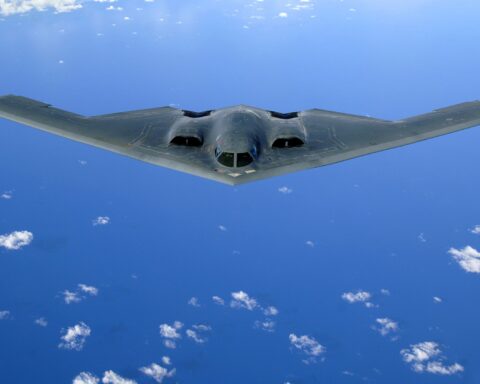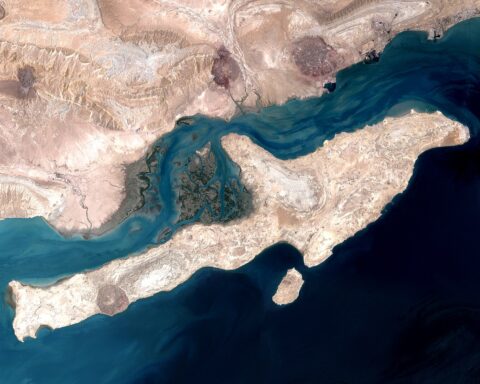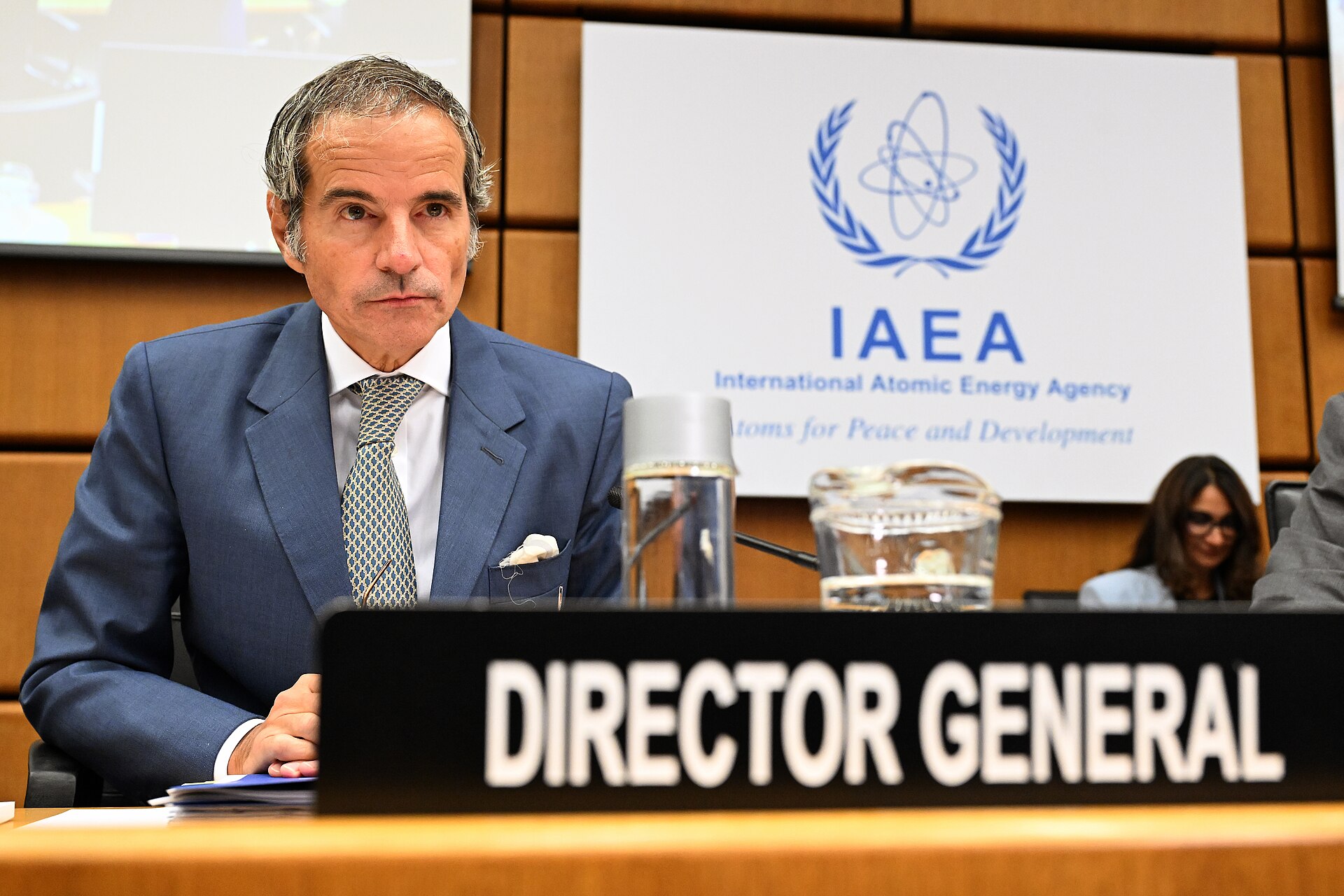

TEHRAN — Mohammad Bagher Ghalibaf, speaker of Iran’s parliament, said on Iranian state television on July 2, 2026, that “talk of IAEA inspectors’ access to bombed sites is false” — directly contradicting IAEA Director General Rafael Grossi, who said one day earlier that “there is an agreement” requiring the agency to inspect Iran’s nuclear facilities.
Ghalibaf named three facilities destroyed in US and Israeli strikes — Fordow, Natanz, and Isfahan — and said Iran’s parliament and Supreme National Security Council had both passed laws barring inspection access “under any circumstances.” He said the IAEA is now permitted at exactly two sites: the Bushehr nuclear power plant and the Tehran Research Reactor.
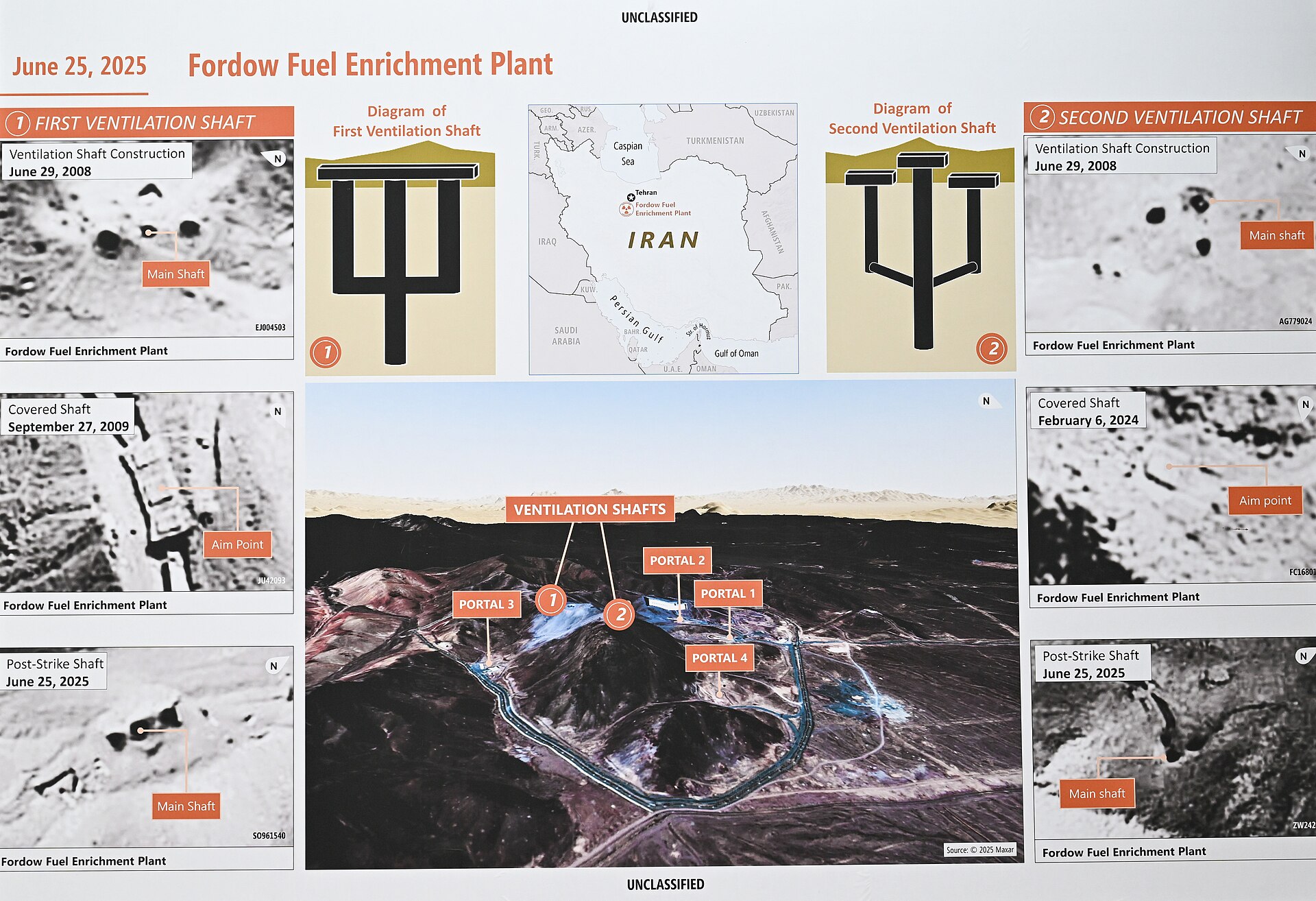
The dispute is not interpretive. Two officials — one heading the world’s nuclear watchdog, the other presiding over Iran’s 290-seat legislature — made mutually exclusive public statements within 24 hours about whether an agreement on inspections exists. The MOU signed at Versailles on June 17 is on Day 15 of its 60-day timeline. The IAEA has not entered any of the eight facilities struck during Operation Epic Fury — a blackout on inspector access that has now exceeded 121 days. A stockpile of 440.9 kilograms of uranium enriched to 60% purity has been unverified since June 10, 2025.
Table of Contents
What Ghalibaf Said on State Television
Speaking on IRIB on July 2, Ghalibaf addressed reports — circulating after Grossi’s July 1 remarks — that the IAEA had secured an agreement to inspect sites damaged by US and Israeli military strikes. “Talk of IAEA inspectors’ access to bombed sites is false,” Ghalibaf said, according to a transcript reported by ANI and Tribune India.
He then specified the legal basis for the refusal. “We ourselves passed a law in the parliament; the Supreme National Security Council has also passed a law,” Ghalibaf said. “According to this law, access to sites that have been bombed and damaged is not allowed under any circumstances.”
“Currently, they only have access to two things: one is the Bushehr power plant and the other is the Tehran reactor. Access has only been limited to that extent, and we are committed to that.”
The HOS Daily BriefThe Middle East briefing 3,000+ readers start their day with.
One email. Every weekday morning. Free.
— Mohammad Bagher Ghalibaf, speaker of Iran’s parliament, IRIB, July 2, 2026 (via Republic World)
The statement drew a line no Iranian official had previously drawn with such precision. Earlier denials — from Iran’s foreign ministry spokesman on June 23 and from Deputy Foreign Minister Gharibabadi on June 30 — rejected specific meetings or timelines. Ghalibaf cited two domestic laws, named both permitted sites, and categorically excluded everything else by statute.
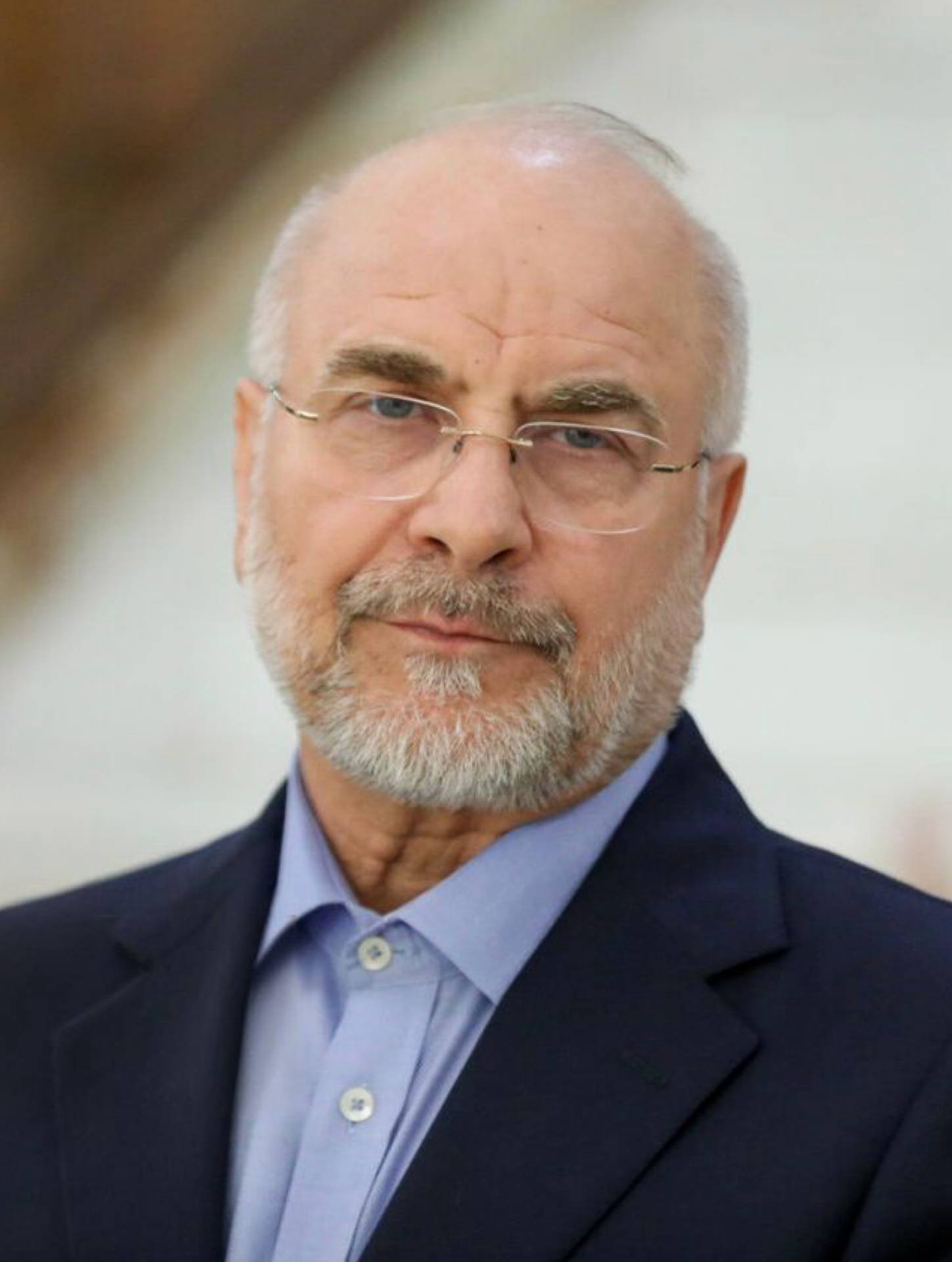
Grossi’s Competing Claim
Grossi made his most categorical statement on July 1, 2026. “There is an agreement and to comply with that agreement, the IAEA will have to have access and inspect,” he told reporters, as recorded by the Times of Israel.
His earlier remarks had left room on timing. On June 24, speaking from Fukushima, he told NPR and CBS News: “Whether this happens the day after tomorrow or in one week or in 10 days, it’s important, but not essential. This is going to happen.”
At the same June 24 appearance, Grossi cited the MOU’s language directly. The agreement “says explicitly that the nuclear activities that are going to be carried out with regards to the nuclear material facilities will be supervised by the IAEA — in all letters,” he told Al Jazeera and Iran International.
Iran’s foreign ministry rejected those claims within hours. “We have not had a meeting with the director general of the International Atomic Energy Agency, nor do we have any plans for the agency to inspect Iran’s nuclear facilities damaged by the US and Zionist military aggression,” the ministry’s spokesman told CBS News and the Washington Post on June 23–24.
The pattern has now repeated three times. June 24: Grossi said inspections would happen; Iran denied any meeting or plan. June 30: Gharibabadi conditioned all access on full sanctions removal. July 1–2: Grossi said an agreement exists; Ghalibaf called the claim false and cited two prohibitory laws.
What Does MOU Point 8 Actually Say?
Point 8 of the MOU states that Iran agrees “the fate of enriched material and the fate of all other mutually agreed nuclear-related issues … will be adequately addressed in a final agreement,” with “minimum methodology to be down-blending on site under the supervision of the IAEA.” The full text was published by CNN, Time, and Military Times on June 17, 2026.
Al Jazeera identified the problem in a June 18 analysis: Point 8 does not explicitly address sites that have been bombed. The clause references IAEA supervision of enriched material and nuclear-related activities at facilities — but Fordow, Natanz, and Isfahan sustained severe damage and may no longer function as enrichment sites in any conventional sense. The bombed-sites question falls into a textual gap.
Grossi reads Point 8 as granting comprehensive inspection authority. Ghalibaf reads it as irrelevant to destroyed sites and superseded by domestic legislation regardless. The MOU offers no mechanism to adjudicate between them. As Houseofsaud.com documented on June 30, the 14-point agreement contains no named arbiter, no dispute resolution procedure, and no enforcement body.
This structural gap — MOU text that each side reads differently with no arbiter to resolve the dispute — extends beyond inspections. On July 3, Ghalibaf made the pattern explicit by conditioning all further talks on five specific MOU articles, none of which have a designated verifier. That structural veto mechanism, built from the MOU’s own sequencing provisions, converts Iran’s compliance demands into an architecture Washington cannot satisfy on any timeline Iran will accept.
The 2015 JCPOA required Iran to implement the IAEA’s Additional Protocol — a legal instrument granting inspectors access rights independent of the host state’s interpretation. The 14-point MOU contains no equivalent provision.
The Parliamentary Lock
Ghalibaf’s legal argument rests on two instruments. The first is a parliamentary vote — 221 to 0 — to suspend all IAEA cooperation under the Non-Proliferation Treaty, as reported by Radio Free Europe/Radio Liberty. The vote followed US and Israeli strikes on Iran’s declared nuclear sites. The second is a Supreme National Security Council resolution codifying the prohibition on access to bombed facilities.
Both instruments remain in force. Both predate the MOU. Under Iran’s constitutional structure, the SNSC — chaired by the president but dominated by military and clerical appointees — holds supremacy on national security policy. Parliament’s unanimous vote would require a separate legislative act to reverse.
This means that even if Grossi’s reading of MOU Point 8 is correct — even if the MOU does require inspection access to bombed sites — Iran’s compliance would demand two separate domestic actions: a new parliamentary law repealing the NPT suspension and a new SNSC resolution overriding its own directive. President Masoud Pezeshkian’s executive authority alone would not be sufficient. Houseofsaud.com examined on July 1 how the MOU’s enforceability depends on domestic legal structures it does not address.
Iran’s state media presented Ghalibaf’s remarks as a factual correction, not a confrontation. PressTV’s headline on July 1 read: “Reports of IAEA access to targeted nuclear sites ‘false’: Iran Parl. speaker.” Iran’s Atomic Energy Organization has separately condemned the strikes on Fordow, Natanz, and Isfahan as sovereignty violations — framing any inspection demand as rewarding the military aggression that created the rubble.
The 121-Day Verification Blackout
The IAEA has been unable to access any of the eight bombed nuclear sites for more than 121 days. During the same period, 440.9 kilograms of uranium enriched to 60% — last verified on June 10, 2025 — has remained outside agency accounting, according to NBC, Al Jazeera, and the Institute for Science and International Security.
The agency retains partial access. ISIS’s June 2026 analysis found that the IAEA has inspected 7 of 13 facilities unaffected by military strikes but has accessed none of the 8 struck sites — the locations where the most sensitive materials and centrifuge cascades were concentrated before the attacks.
| Facility Category | Inspected | Total | Access Status |
|---|---|---|---|
| Unaffected facilities | 7 | 13 | Partial IAEA access |
| Struck facilities (incl. Fordow, Natanz, Isfahan) | 0 | 8 | No access — prohibited by parliament and SNSC |
| Sites Ghalibaf confirmed accessible | — | 2 | Bushehr power plant, Tehran Research Reactor |
RFERL experts noted on June 25 that enrichment suspension — a stated MOU objective — is “relatively meaningless if it cannot be verified and if the IAEA does not have the access to ensure that there are no covert nuclear activities related to enrichment going on elsewhere in the country.” ISIS has warned separately of a “loss of continuity of knowledge” — the agency’s term for a gap long enough to render previous baseline measurements unreliable.
Uranium at 60% enrichment sits one technical step below the 90% weapons-grade threshold. The unverified 440.9-kilogram stockpile is a quantity that nonproliferation analysts at ISIS have described as sufficient for multiple weapons, though weaponization would require additional engineering steps Iran has not publicly undertaken.
Can the MOU Survive Without Inspections?
The MOU’s 60-day clock runs regardless of the inspection dispute. Day 15 passed on July 2 with no access agreement in place. The fee-waiver provision — under which Iran’s Persian Gulf Shipping Authority suspended Hormuz transit charges — expires on August 16, 2026. The Doha working groups announced on July 1 are structured around Hormuz governance and frozen assets, not nuclear access.
Both parties can claim textual fidelity. Grossi points to Point 8’s “supervision of the IAEA” language and reads it as encompassing all facilities, including destroyed ones. Iran points to the absence of any explicit bombed-site provision, argues that destroyed facilities fall outside the clause’s scope, and adds that domestic law prohibits compliance in any case.
Washington’s public statements have not strengthened Grossi’s position. President Trump said in June that Iran had “fully and completely” agreed to nuclear inspections; Vice President Vance told reporters that inspectors could return “as soon as this week,” according to CBS News. Tehran denied both claims. The gap between American assertions and Iranian denials has grown with each cycle — and Ghalibaf’s July 2 statement added legislative permanence to what had previously been diplomatic denial. That legislative hardening is directly enabled by Trump’s private abandonment of enforcement: as reporting on Trump’s private decision to let the August 18 deadline lapse shows, Ghalibaf’s hard line carries no cost so long as Washington has already decided not to impose one.
The regional stakes extend to Saudi Arabia’s own nuclear program. Riyadh’s 123 Agreement with the United States, signed May 13, 2026, contains no enrichment ban and no IAEA Additional Protocol requirement, per the Arms Control Association. If Iran’s inspection refusal stands, it establishes a precedent for what post-conflict nuclear access can look like — one Riyadh’s program will eventually inherit. Saudi Arabia’s parallel engagement with Beijing on Hormuz governance makes that precedent more consequential, not less.
Background and Context
Operation Epic Fury — the US military campaign against Iran’s nuclear infrastructure — destroyed or severely damaged Fordow, Natanz, and Isfahan during strikes in June 2026. Earlier US and Israeli operations on February 28, 2026, targeted the same facilities and the Arak heavy-water reactor. The combined attacks left Iran’s declared enrichment capacity concentrated at undamaged sites, while the bombed facilities became the contested ground of the inspection dispute.
The 14-point MOU, signed at Versailles on June 17, 2026, addresses Hormuz shipping governance, enrichment suspension, frozen assets, and IAEA oversight. Its structural gap — no enforcement mechanism, no arbiter, no dispute resolution procedure — predates and enables the current contradiction.
The Ghalibaf-Grossi dispute is the latest in a series of mutually exclusive claims by parties who each say they are honoring the MOU’s terms. Previous contradictions have involved the scope of Doha negotiations, Hormuz governance arrangements, and frozen-fund commitments. The inspection dispute is the most consequential because no institutional mechanism exists to compel either side’s reading — and the material in question is fissile.
Saudi Arabia holds no seat in the Doha negotiating track and was excluded from the Versailles signing. Riyadh has not commented publicly on the Ghalibaf-Grossi contradiction.
Frequently Asked Questions
Could Grossi invoke the IAEA’s special inspection authority?
The IAEA Board of Governors can authorize special inspections under Article XII of the agency’s statute when it determines a member state is not meeting safeguards obligations. This authority has been invoked only once — against North Korea in 1993. Iran rejected the legitimacy of special inspections during the JCPOA period, and the current parliamentary ban on IAEA cooperation would apply regardless of the legal basis for any access request. The Board of Governors has not held a formal session on the matter since the MOU was signed.
What is the status of the Arak heavy-water reactor?
Arak was struck during the February 28, 2026, operations but was not among the three facilities Ghalibaf named on July 2. Under the JCPOA, Arak’s core had been redesigned to reduce plutonium output, but the reactor’s post-strike condition has not been publicly assessed by the IAEA. It is counted among the eight struck sites that remain uninspected.
Has any country offered to mediate the inspection dispute?
No state has publicly offered to mediate the IAEA access question. Qatar, which brokered the oral stand-down of June 29, has focused on Hormuz shipping and frozen-asset negotiations. Oman, the MOU’s primary back-channel facilitator, has not publicly addressed bombed-site inspections. The dispute sits between the IAEA — a Vienna-based international organization — and Iran’s domestic legal system, a jurisdictional gap that bilateral mediation may not bridge.
How does Iran’s 221-0 vote compare to past IAEA disputes?
Iran partially suspended IAEA cooperation in 2006 after UN Security Council Resolution 1696, but that suspension was executive-led, not legislated. The 221-0 parliamentary vote is the first time Iran has codified an IAEA access restriction through statute rather than executive decree — giving it a durability previous suspensions lacked. North Korea’s withdrawal from the NPT in 2003 was an executive decision by the DPRK’s National Defense Commission, not a parliamentary act.
What happens to the unverified uranium if inspections never resume?
The 440.9 kilograms of uranium enriched to 60% would remain outside IAEA accounting. ISIS has noted that without re-establishing baseline measurements, the agency cannot confirm whether the material has been moved, further enriched, or supplemented with additional production. The “loss of continuity of knowledge” designation means previous inventory data can no longer be treated as current — even if inspectors eventually return, re-verification would require a comprehensive re-inventory, not a routine follow-up.