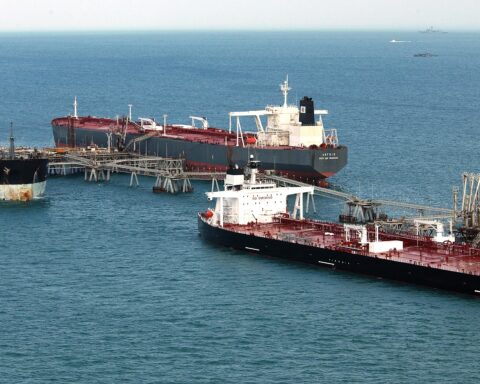
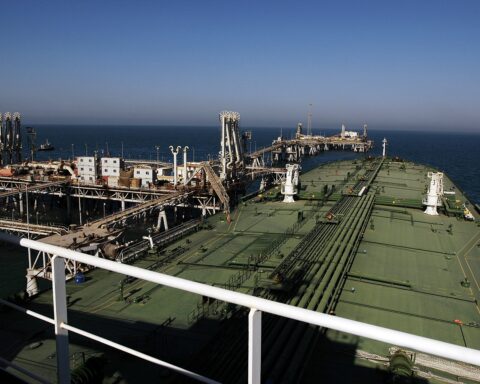
DHAHRAN — Saudi Aramco cut its July Arab Light official selling price to Asia by six dollars per barrel while OPEC+ prepares to ratify a fifth consecutive monthly output increase at its virtual meeting on July 5, making the Kingdom simultaneously cheaper and more abundant in a market where China’s largest refiner has not bought a single Saudi cargo in two months. Three Reuters delegate sources confirmed on July 1 that the seven-member OPEC+ subgroup will approve approximately 188,000 barrels per day of additional August production — matching the increases agreed for June and July — at Saturday’s session.
The twin moves are not contradictory — they are the same strategy deployed through two instruments: volume on one hand, price on the other, both aimed at preventing Asian refiners from locking in permanent supply contracts with Russian ESPO Blend and Iranian post-blockade crude. The fiscal cost of running this defense lands on a treasury that burned through most of its full-year deficit allowance before spring ended.
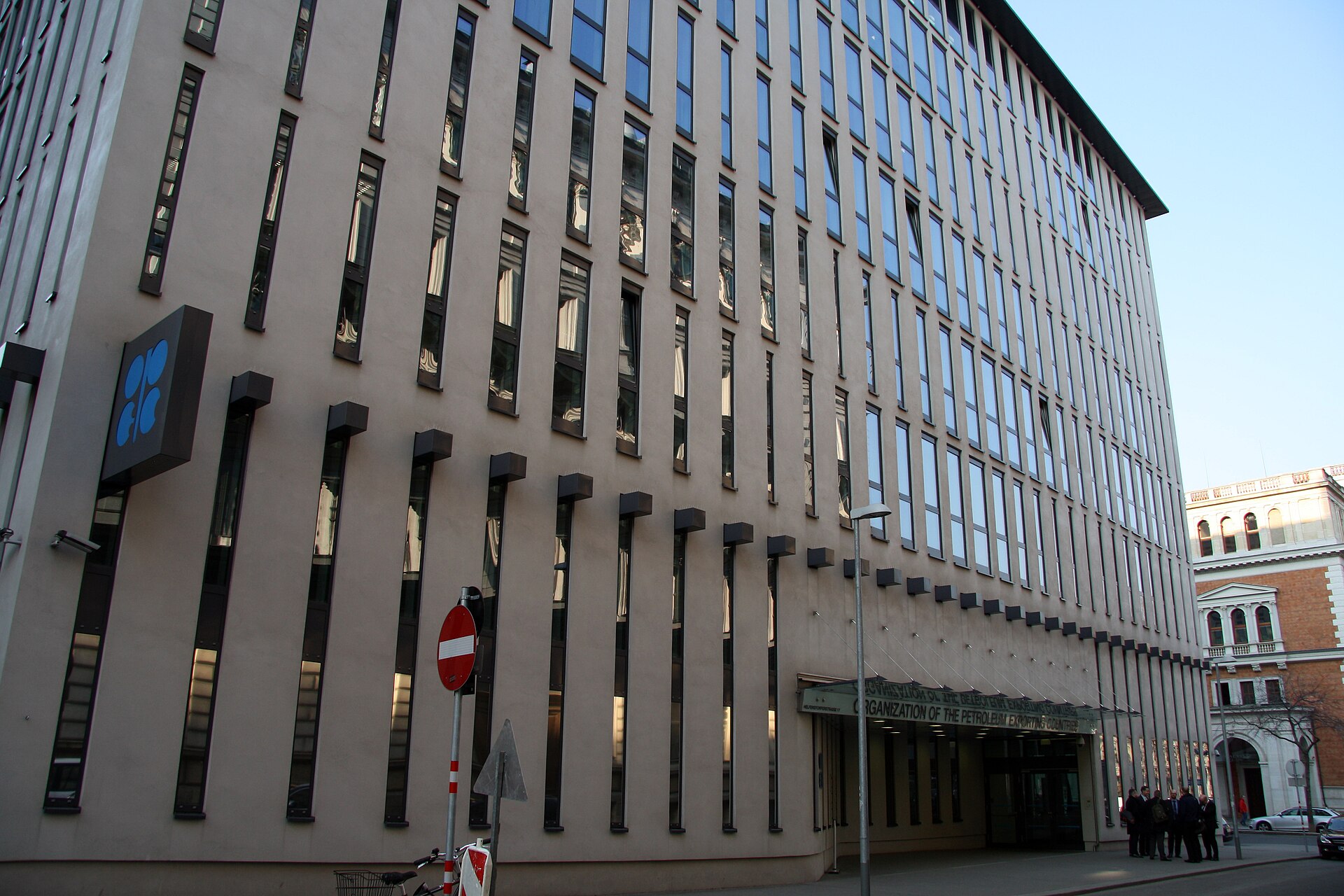
Table of Contents
What Will OPEC+ Decide on July 5?
The seven core OPEC+ members — Saudi Arabia, Russia, Iraq, Kuwait, Kazakhstan, Algeria, and Oman — will meet virtually on Saturday to approve another 188,000 barrels per day of production for August, according to three anonymous delegates cited by Reuters on July 1 (Kitco News/Business Recorder). The decision would mark the fifth consecutive monthly unwinding of voluntary cuts first agreed in April 2023, bringing cumulative additions since April 2026 to approximately 940,000 barrels per day.
The House of Saud Daily Briefing
Saudi Arabia's news in 3 minutes, every morning. Free. See today's issue
The group has been systematically dismantling a 1.65 million bpd package of voluntary reductions. At the current pace of 188,000 bpd per month, the full package would be unwound by end-September 2026, according to calculations based on Interfax and Vanguard News reporting. Saturday’s meeting was set by the OPEC Secretariat at its June 7 session, which also raised Saudi Arabia’s July quota to 10.35 million bpd and Russia’s to 9.82 million bpd — each gaining 62,000 bpd from the prior month.
The full OPEC+ group quota for July stands at 35.83 million barrels per day, per CNBC and Interfax reporting from June 7. AGBI reported in early July that the group was “poised to raise output as supply fears ease,” framing the decision as a routine continuation rather than a strategic escalation. That framing obscures the simultaneity of the output increase with Aramco’s aggressive pricing moves in Asia, which together constitute a coordinated market-share defense.
How Much Is Aramco Sacrificing to Hold Asia?
Aramco’s July Arab Light official selling price to Asia landed at a premium of $9.50 per barrel over the Dubai/Oman benchmark — down from $15.50 in June and $19.50 in May, according to Argaam. The $10 per barrel collapse across two months represents the steepest OSP compression since the early pandemic in 2020. Bloomberg’s pre-announcement survey of Asian traders had expected a $5 reduction; Aramco overshot by an additional dollar, signaling that the company is leading prices lower rather than following the market down.
The revenue mathematics are direct. At approximately 5 million barrels per day of Saudi exports, each dollar of OSP reduction costs roughly $150 million per month in forgone revenue, per Argaam’s calculation framework. The six-dollar single-month cut from June to July translates to approximately $900 million in monthly revenue that Aramco has chosen not to collect — revenue that will not return unless the company reverses its pricing posture.
The revenue mathematics worsened further as Hormuz reopened: the war premium collapsed entirely by July 2, with Brent at $70.82 — below the pre-war level — meaning the price recovery that would have partially offset the OSP cut did not materialize. The August pricing extended the collapse further: Aramco moved to a $1.50 discount by the following cycle, crossing into negative territory for the first time in six years.
Aramco simultaneously slashed its July LPG prices: propane fell $180 to $580 per ton (a 24 percent reduction), while butane dropped $220 to $600 per ton (a 27 percent decline), according to Arab News and Zawya. Algeria’s Sonatrach made parallel cuts for July. Both sets of reductions were attributed to increased global LPG supply and China’s shift away from American LPG due to tariffs, which redirected cargoes into the Asian spot market (energynews.pro, July 2026). The LPG cuts are not incidental — they are part of the same defensive architecture, offering Asian buyers discounted feedstock at every point in the barrel.
For Western buyers, the calculus differs. Aramco set its July Arab Light price to North America at $12.60 per barrel over ASCI, and to Western Europe at $15.85 over ICE Brent (Argaam). The spread between Asian and Western premiums has widened, confirming that Aramco’s discount strategy is geographically targeted at the refineries it is losing — not a blanket price reduction driven by weakness in global demand.
Why Has Sinopec Stopped Buying Saudi Crude?
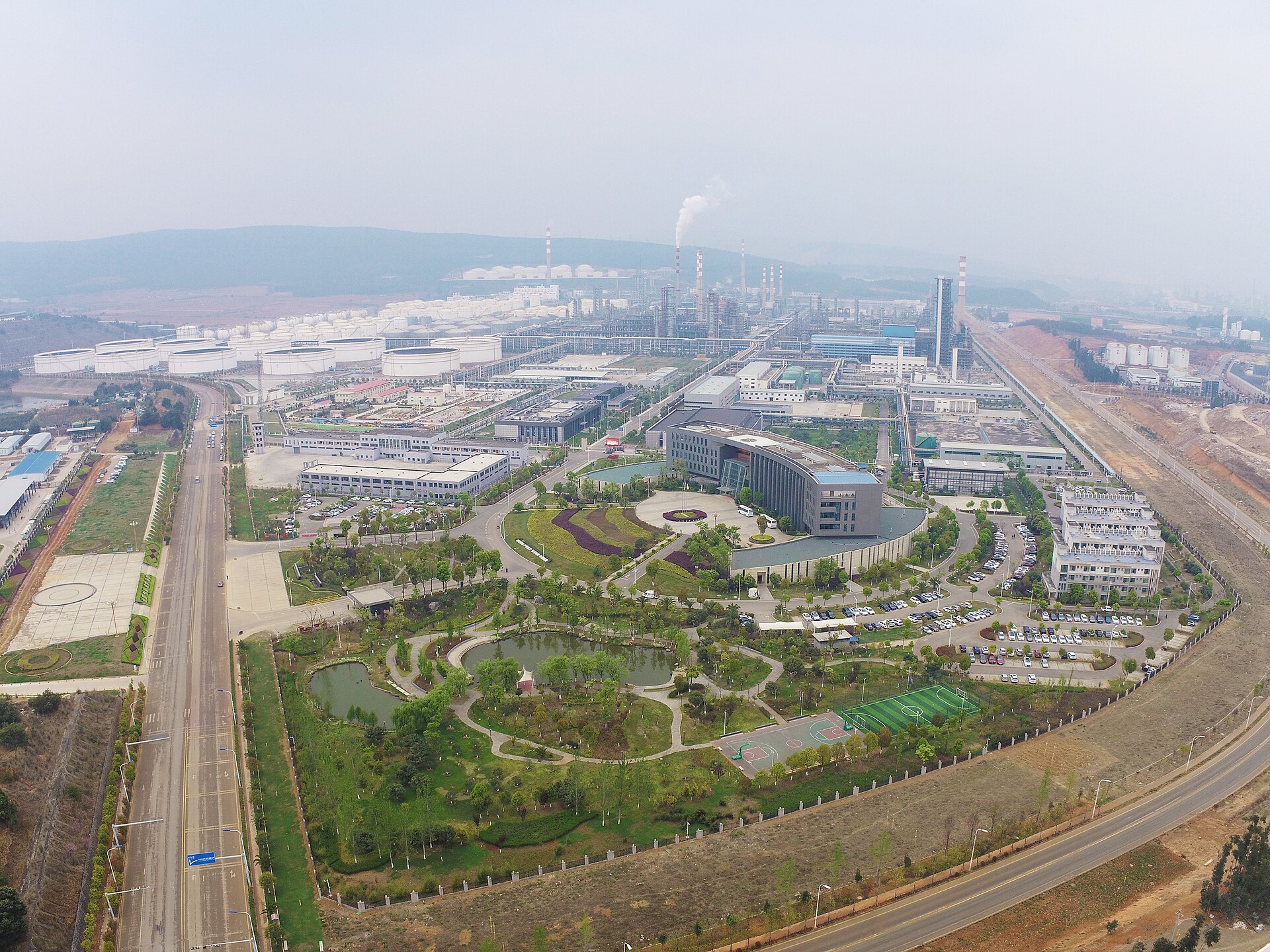
China Petrochemical Corporation — Sinopec — purchased zero Saudi crude cargoes for July 2026, marking the second consecutive month at zero, according to Zawya, Baird Maritime, and pgjonline.com. The company is China’s largest refiner and historically one of Aramco’s anchor customers. Saudi crude “remains relatively expensive compared with barrels from other regions,” the reports noted, pointing to Russian ESPO Blend and West African grades as preferred alternatives.
The ESPO switching threshold identified by S&P Global sits at a $5–7 per barrel spread between Saudi Arab Light and Russia’s Eastern Siberia-Pacific Ocean pipeline blend. That threshold was breached in April 2026, when the ESPO spread reached $5.50 per barrel in Russia’s favor (S&P Global). Chinese refineries that have retooled their distillation columns for ESPO’s lighter sulfur profile do not easily reverse course — the economics of re-blending for Arab Light’s heavier, more sour characteristics require investment that refiners will not make for a single month of competitive pricing.
Iran compounds the challenge. Parliament Speaker Mohammad Bagher Ghalibaf told CNBC on July 1 that Iran has exported over 40 million barrels since the United States lifted its naval blockade, claiming a 20 percent premium over pre-war prices. TankerTrackers.com estimated 50 million barrels exported in approximately two weeks post-MOU (CNBC Africa, July 1, 2026). Even if the premium claim applies only to select cargoes — OilPrice.com reported “unsold barrels pile up at sea” in the same period — Iran’s re-entry into Asian markets on any terms displaces Saudi volumes that previously faced no regional competition in that quality band.
The IEA projects a 2026 oil market surplus of 3.84 million barrels per day, driven by weak demand growth of approximately 700,000 bpd against surging OPEC+ supply additions. Aramco’s price war is being fought inside a market that is already oversupplied — every barrel discounted to win back Sinopec competes with barrels from members of the same OPEC+ alliance that agreed to raise output together.
Iraq’s Pivot From Exit to Quota Demand
Iraq’s Oil Ministry confirmed in late June that the country “currently has no intention of withdrawing” from OPEC, according to Argus Media and Arab News — a reversal from weeks of public signaling that Baghdad was prepared to leave the organization over its production ceiling. The ministry simultaneously warned that “a decision will have to be made regarding whether to remain in or withdraw” if Iraq’s quota is not raised, maintaining the implicit threat while walking back the explicit one.
Oil Minister Basim Muhammad Khudhair sought a production level of 5 million barrels per day for Iraq — a target that represents a 622,000 bpd premium over Iraq’s current OPEC quota of 4.378 million bpd (World Oil, June 25, 2026). The IEA assesses Iraq’s production capacity at 4.9 million bpd within ninety days, meaning the minister’s stated target exceeds even the agency’s generous capacity estimate. The gap between aspiration and mechanism is the space in which Iraq’s threat operates: Baghdad cannot produce 5 million bpd but can produce above its quota, and the UAE’s recent exit from the OPEC+ subgroup provides a template for departure that Iraq’s officials can reference without committing to it.
The pivot from exit to demand is structurally important for Saudi Arabia. An Iraq exit would have removed a country producing nearly 4.4 million bpd from the quota framework entirely, allowing it to pump at capacity without restraint. Keeping Iraq inside the system — even an Iraq that chronically overproduces — preserves the fiction of coordinated supply management that supports Aramco’s pricing authority. Riyadh needs the cartel intact more than it needs Iraq to comply with its ceiling, because the alternative is a market where each producer sets its own volume without reference to collective output targets.
The Fiscal Arithmetic of Market-Share Defense
Saudi Arabia’s Q1 2026 budget deficit reached SAR 125.7 billion ($33.5 billion) — 76 percent of the full-year SAR 165 billion target consumed in the first ninety days, according to Middle East Insider and the Saudi Arabia Budget Statement for FY2026. The Kingdom’s fiscal breakeven oil price sits between $80 and $85 per barrel according to the IMF and Oxford Economics, or as high as $96 per barrel according to Bloomberg Economics. Brent crude closed July 2 at approximately $70.57 per barrel (AGBI/Forbes Advisor) — at least $10 below the low-end breakeven and $25 below Bloomberg’s estimate.
Aramco’s own balance sheet reflects the strain. Q1 2026 free cash flow came in at $18.6 billion against a $21.89 billion quarterly dividend obligation — a coverage ratio of 0.85x, meaning the company is paying out more than it generates (Aramco Q1 2026 results, May 2026). The $15.8 billion working capital build that depressed free cash flow was driven by Hormuz closure disrupting tanker scheduling, a problem that persists even as traffic gradually recovers. Every month that Aramco maintains the $900 million revenue sacrifice through discounted Asian pricing widens the gap between cash generation and distribution commitments. A detailed analysis of what the fifth hike means for Saudi Arabia’s fiscal position is in The Hike Saudi Arabia Cannot Afford.
The fiscal pressure extends beyond Aramco’s dividend. NEOM carries approximately SAR 60 billion ($16 billion) in anticipated contract termination payments projected for 2026–2030, according to Semafor’s June 7 reporting. The Public Investment Fund cut its domestic construction budget from approximately $71 billion to $30 billion for 2026 (Finance Middle East). These cuts reflect a treasury that cannot simultaneously fund megaprojects, maintain defense procurement queues for PAC-3 interceptors that Camden cannot deliver before mid-2027, and absorb the revenue loss from a price war against Russia and Iran in Asia.
The Q1 deficit trajectory implies a full-year outcome well above the SAR 165 billion target unless oil prices recover or spending is cut further. Neither condition is plausible in the near term: the OPEC+ output additions themselves exert downward pressure on prices, while this termination liability cannot be deferred without legal consequence.
The 1986 Precedent
The last time Saudi Arabia deployed simultaneous volume increases and price cuts to defend market share was 1986, when the Kingdom abandoned production restrictions and introduced netback pricing — selling crude on a formula tied to refined product spot prices rather than fixed official levels. Oil prices collapsed 50 percent between 1985 and 1986, according to Carnegie Endowment and EBSCO research. The strategy succeeded in its stated objective: high-cost non-OPEC producers whose economics depended on $28 crude became unviable at $14, and Saudi market share recovered over the subsequent three years.
The 2026 strategy is structurally analogous but operates against different competitors. In 1986, Saudi Arabia was fighting North Sea producers and Soviet-era Russian output. In 2026, the targets are Iranian post-blockade supply and Russian ESPO volumes — both selling into Asia at discounts that predate and now undercut Aramco’s own reductions. The 1986 strategy cost King Fahd approximately 55 percent of government revenue for two consecutive fiscal years before market share gains began offsetting the per-barrel loss. Crown Prince Mohammed bin Salman is attempting the same trade at a moment when PAC-3 depletion has left Saudi air defense at 14 percent capacity and NEOM’s contractual obligations cannot be paused without penalty.
OPEC production collapsed during the Hormuz blockade from 28.7 million to 20.8 million barrels per day — a 7.9 million bpd drop (CNBC, 2026). The unwinding of voluntary cuts is partly a recovery operation, restoring output lost during the crisis. But restoration at a $10 per barrel lower OSP than existed before the blockade transforms what could have been a revenue recovery into a revenue sacrifice, one whose duration depends on how long Chinese refiners take to notice that Saudi crude is competitively priced again — or whether they notice at all, having already retooled for ESPO.
Frequently Asked Questions
How does the 188,000 bpd monthly increase compare to pre-war OPEC+ adjustments?
The 188,000 bpd monthly pace is aggressive by OPEC+ standards — prior unwinding phases in 2021–2022 used 400,000 bpd increments spread over quarterly intervals, giving markets months to absorb each addition. The current pace adds nearly one million barrels per day across five months, reflecting the group’s urgency to recapture market share lost during the Hormuz blockade rather than manage an orderly price recovery.
What is the ESPO Blend switching threshold and why does it matter?
S&P Global identifies a $5–7 per barrel price differential between Saudi Arab Light and Russian ESPO Blend as the level at which Chinese refineries begin altering their crude slate. Once refiners invest in desulfurization adjustments and crude-blending configurations optimized for ESPO’s lighter profile, the switching cost to revert to Arab Light becomes an engineering decision rather than a purely economic one — creating structural rather than cyclical demand loss for Saudi barrels.
Could Saudi Arabia reverse its OSP cuts quickly if market conditions change?
Mechanically, Aramco can raise its OSP with thirty days’ notice for the following month’s pricing cycle. Practically, sudden reversals after multi-month discounting campaigns erode buyer confidence and accelerate the contract diversification that the discounts were designed to prevent. Japanese and South Korean refiners signed twelve-month term contracts in Q1 2026 based on pricing signals that would be violated by a sudden reversal, creating reputational risk that constrains Aramco’s ability to snap prices back.
What happens to the OPEC+ unwinding schedule if the surplus exceeds 3.84 million bpd?
The OPEC+ joint ministerial monitoring committee retains authority to recommend pausing or reversing unwinding decisions at any monthly meeting. Kazakhstan and Iraq — both chronic over-producers — have historically resisted re-cuts, and the UAE’s departure from the subgroup removes a swing producer that previously absorbed compensatory reductions. A surplus above four million bpd would test whether the remaining seven members can agree to re-cut without the two defectors they previously relied upon to share the burden.
How does Iran’s claimed 20 percent export premium coexist with reports of unsold cargoes at sea?
Ghalibaf’s CNBC claim likely reflects the premium over Iran’s pre-war sanctioned pricing — when cargoes traded at $10–15 per barrel below Brent to compensate buyers for sanctions-evasion risk — rather than a premium over current Brent. Post-MOU, Iran no longer requires the sanctions discount, meaning the “premium” is the absence of a discount rather than a true above-market price. OilPrice.com’s floating storage reports suggest Iran is pricing some cargoes above where Asian buyers will clear, creating a two-tier market between committed term buyers and unsold spot volumes.
The House of Saud Daily Briefing
Saudi Arabia's news in 3 minutes, every morning. Free. See today's issue