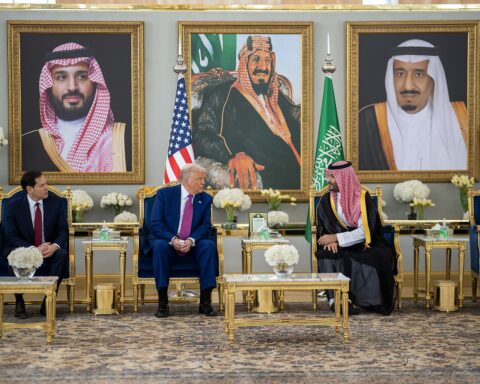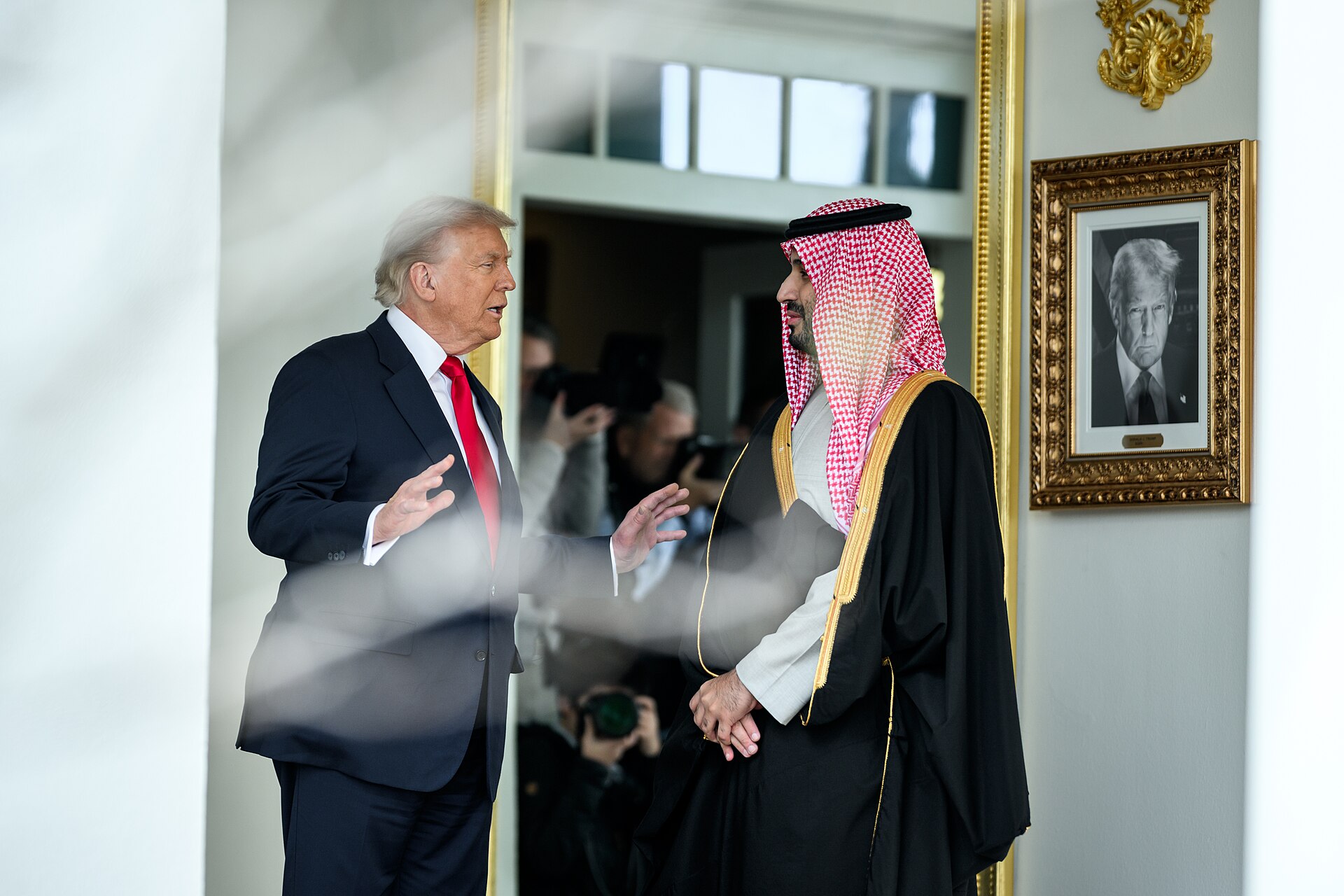

JEDDAH — When Mohammed bin Salman picked up the phone to Donald Trump on the morning of July 11, 2026 — the first leader-to-leader contact between Riyadh and Washington since the war re-escalated — he did not ask for warships, did not offer bases, and did not name Iran; he affirmed, in language the Saudi Press Agency published within the hour, “the importance of security of navigation and maritime passage, and support all that contribute to the stability of the region,” a phrase so carefully engineered that it can be read three different ways by three different capitals and mean something incompatible in each.
In Washington the sentence sounds like a Saudi ask for US escort protection through Hormuz; in Tehran it reads as a Saudi endorsement of Article 5 of the Islamabad Memorandum of Understanding, under which Iran claims administrative authority over the strait; in Riyadh it functions as the diplomatic form of the veto that MBS delivered in May, when Saudi Arabia grounded 43 US warplanes at Prince Sultan Air Base and shut Operation Project Freedom down inside forty-eight hours.
Table of Contents
- The One Sentence That Reads Three Ways
- What Changed Between the Muscat Statement and the Trump Call
- Is This a Saudi Ask for US Naval Escort?
- The Article 5 Trap
- Why Did Neither Trump Nor MBS Name Earnest Will on the Call?
- Why Saudi Arabia Cannot Host the Escort Even If It Wanted To
- How Close Is Ras Tanura to the IRGC Missile Envelope?
- What Happens on August 18
- Frequently Asked Questions
The One Sentence That Reads Three Ways
The Saudi Press Agency readout of the July 11 call ran to a handful of paragraphs and contained one operational line — the maritime navigation formula — surrounded by the boilerplate that Riyadh has been publishing since the funeral of Ali Khamenei senior forced the royal court into semi-public condolence diplomacy on July 3. Every capital that reads the SPA readout is now trying to decode which of three incompatible frameworks the Kingdom is endorsing, because the formula was chosen precisely so that no one can prove which of them was meant.
Read as a Saudi ask, the sentence is a request for US Navy destroyers to sit at the mouth of the strait and shepherd Aramco tankers through, the way the Reagan administration shepherded reflagged Kuwaiti hulls through the same waters between July 1987 and September 1988. Read as a Saudi veto, the sentence is a warning against the unilateral action the Trump White House attempted in early May, when Operation Project Freedom collapsed inside two days because Riyadh grounded the warplanes and closed the airspace. Read as Iranian-compatible, the sentence overlaps almost word-for-word with the language Kazem Gharibabadi has been using in Tehran since late June to describe Article 5 of the Islamabad Memorandum of Understanding.
None of the three readings is wrong. All three fit inside the grammar the SPA drafters chose. The formula’s power is that it forces every reader to project their own preferred meaning onto it, and it commits Riyadh to none of them — a diplomatic instrument that resembles the one Princess Reema deployed at ambassador level with Marco Rubio the day before, when the meeting produced a photograph and a handshake and no readout of substance.
What makes the formula more than routine diplomatic ambiguity is the frequency with which the Saudi foreign ministry has now used it. Three times in thirteen days, in three separate high-level exchanges, the identical construction has appeared: MBS to Emmanuel Macron on June 28 (“the importance of ensuring freedom of navigation”); Faisal bin Farhan and Omani foreign minister Badr Al Busaidi in Muscat on July 8 (“the importance of maintaining the security of waterways and ensuring freedom of navigation”); MBS to Trump on July 11 (“the importance of security of navigation and maritime passage”). Three deployments in under a fortnight is not a phrase — it is a doctrine being rehearsed in public.
The Middle East briefing 3,000+ readers start their day with.
One email. Every weekday morning. Free.
What Changed Between the Muscat Statement and the Trump Call
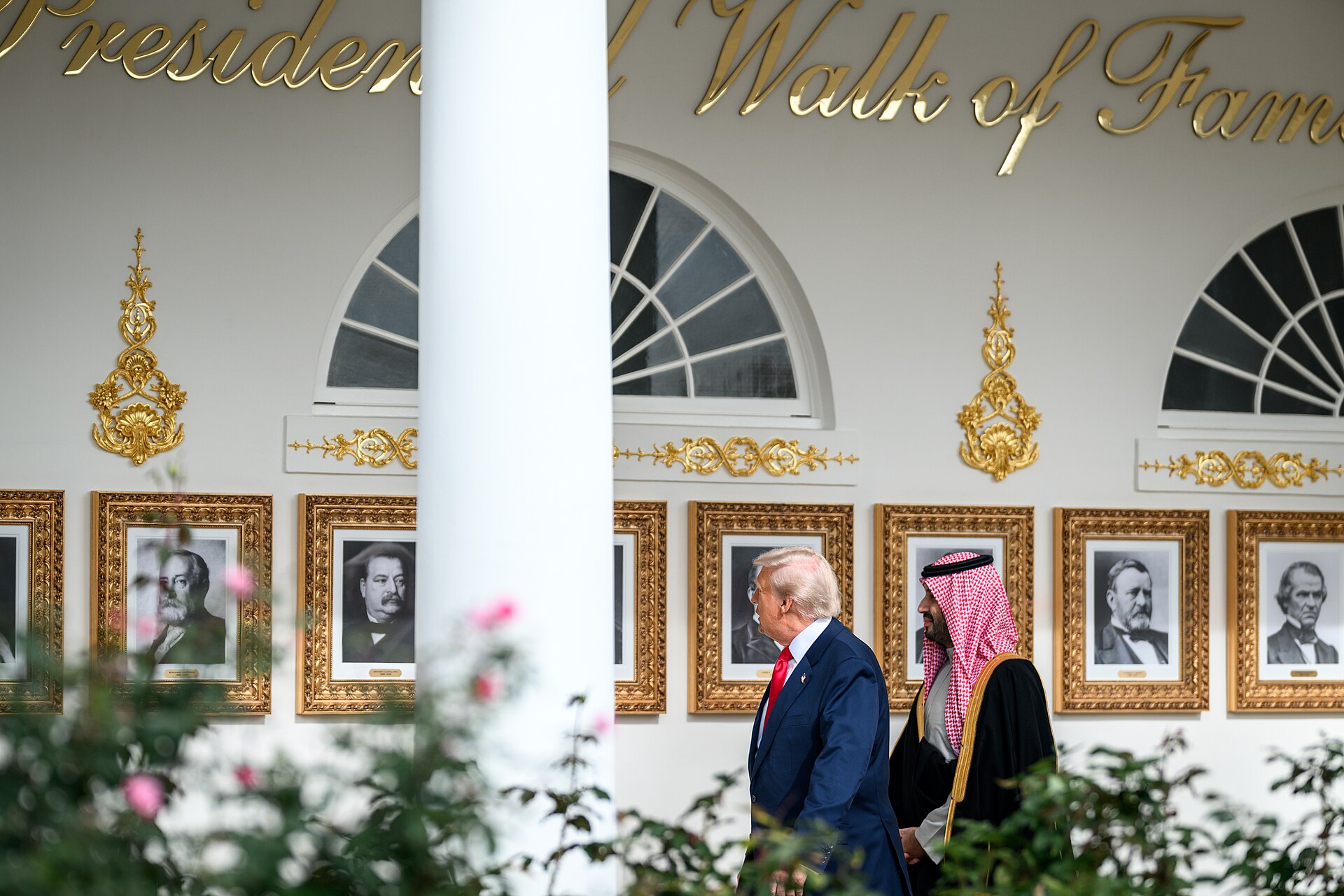
Between the Muscat joint statement on July 8 and the Trump call on July 11, three separate developments detonated inside the same seventy-two hours, and any one of them would have been sufficient to force a Saudi leader-level response.
US Central Command struck a target inside Iranian Khuzestan on the morning of July 11, killing at least three Islamic Revolutionary Guard Corps members according to the tracking maps that Iranian-language OSINT accounts filed inside the hour. The Islamabad diplomatic session that was scheduled to convene on July 11 with Munir chairing was postponed to July 14–15 the same morning, according to Geo TV in Karachi. Rubio placed a call to Faisal bin Farhan on July 11 as well — the second US-Saudi ministerial contact in three days, following the Reema meeting on July 10, at a rank order that Riyadh has been carefully modulating downward since the WSJ “rupture” report broke in late June.
All three developments arrived simultaneously with the news, quoted by Bloomberg and Al Jazeera on July 10, that Hormuz transit had collapsed to 34 vessels against the 88-vessel daily IMF PortWatch baseline — a 61% shortfall in a single week, and a strait carrying almost no visible traffic other than two Greek supertankers, Nissos Kea and Nissos Heraclea, which had made the passage with their AIS transponders switched off. “Hormuz Recorded Zero Transits and Brent Barely Moved” captured the strangest feature of the collapse — the oil market had priced it, absorbed it, and moved on inside 24 hours.
Trump’s public posture in the same window was that the Islamabad Memorandum was “over” — a July 8 declaration that Iran has treated as predicate breach, alongside the July 7 reimposition of General License X1 sanctions, and used ever since as the legal basis for its position that the MOU’s free-passage window is now null. The Kingdom’s leader-level call to Washington on July 11 was the first Saudi response at the presidential tier to the reintroduction of active US kinetic action against Iranian territory, and every word of the readout was drafted with the knowledge that it would be parsed in Tehran, Islamabad, Muscat, Doha, and Beijing before the day was over.
Is This a Saudi Ask for US Naval Escort?
Not in the operational sense a US Navy planner would understand the term. Riyadh has neither offered basing rights nor requested a specific mission set nor named any Iranian threat that would justify a convoy operation, and the Kingdom demonstrated in early May — with Operation Project Freedom — that it will actively shut down any US escort mission that requires Saudi airspace, which every plausible escort mission does.
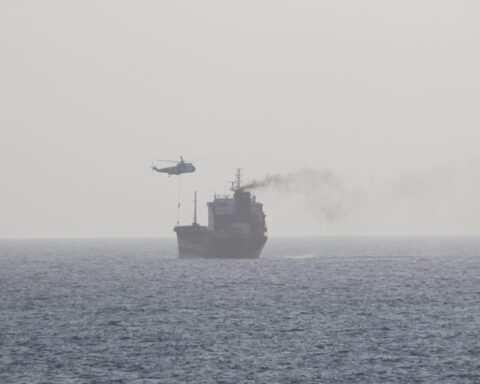
The reason the Trump administration keeps testing whether the maritime navigation language is a coded escort request is that Washington needs it to be one. A US Navy escort operation through Hormuz cannot be executed from carrier decks alone. The 1987 template — Operation Earnest Will, the largest US naval convoy operation since the Second World War — required floating command barges (Hercules and Wimbrown VII), Special Operations elements, and reachable airbases, and even then the first convoy ended with the reflagged tanker Bridgeton striking a mine on July 24, 1987, on its opening transit. A 2026 version, against Iranian anti-ship ballistic capabilities that did not exist in 1987, would require air cover Washington cannot fly from carrier assets alone. An unnamed US official conceded the point to NBC News in the May reporting: “due to the geography of the region, utilizing an ally’s airspace is sometimes the only option” for a defensive umbrella over escorted ships.
Riyadh has already told Washington in operational terms what it will and will not permit. In January 2026, MBS reportedly told Iranian President Masoud Pezeshkian, in a formulation that IranWire and NBC News both quoted from readouts circulating in Tehran, that “the Kingdom will not allow the use of its airspace or territory in any military actions against the Islamic Republic of Iran or any attacks by any party, regardless of their destination.” In May, when Trump attempted Operation Project Freedom without a fresh Saudi consent — an operation that Riyadh shut down inside forty-eight hours by grounding 43 US warplanes at Prince Sultan Air Base — the crown prince translated the January warning into an act of policy.
The maritime navigation formula on July 11 is what that translation looks like when it is put back into diplomatic language. It is not a Saudi escort request. It is a Saudi statement of the conditions under which any US operation in the Gulf would need to seek permission first — and it is drafted so that Washington cannot cite it as consent.
Americans had not consulted the Saudis before announcing the mission, and Saudi Arabia feared being a target and pulling the Gulf back into a broader confrontation with Iran.Saudi officials to US counterparts on Operation Project Freedom, quoted by NBC News, May 2026
The Article 5 Trap
The reason the same sentence can be read as pro-Iranian is that Article 5 of the Islamabad Memorandum of Understanding, signed on June 18, 2026, uses almost identical grammar to the Saudi formula. Article 5 states that “Iran will make arrangements using its best efforts for the safe passage of commercial vessels” through the Strait of Hormuz — a construction that Tehran reads as granting Iran administrative authority over routing, scheduling, and the fees the newly-established Persian Gulf Strait Authority began collecting in early May, and that Washington reads as a non-obstruction clause and nothing more.
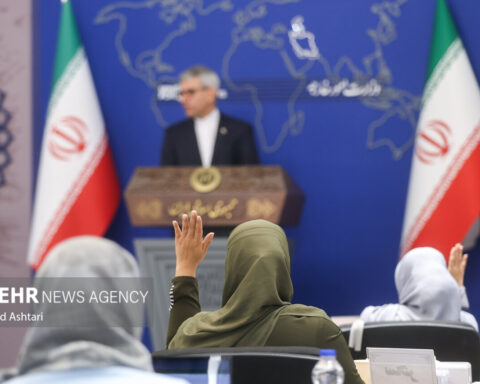
The gap between those two readings is what Al Jazeera has been calling the Article 5 confrontation, and it is the same gap the Saudi language now sits inside. When MBS affirmed “the importance of security of navigation and maritime passage,” Iranian foreign ministry spokesman Kazem Gharibabadi had already been on the record for two weeks with the position that “any credible framework for maritime transit must be based on coordination with Iranian authorities and in line with Article 5 of the Islamabad Memorandum of Understanding.” Mohammad Marandi, the Tehran-based academic who has been operating as one of the informal negotiating channels, told the Washington Times on July 10 that any resumption of peace talks “would continue only after Washington fulfills its responsibilities under the Islamabad Memorandum of Understanding.”
The Saudi formula on July 11 did not endorse Article 5, and it did not reject it either. It repeated the phrase Iran uses to describe Article 5 in a call with the president who declared Article 5 dead three days earlier, and left both governments to fight over what the phrase means. Tehran will point to it in the next round of Islamabad talks as evidence that the second-largest Gulf exporter shares the Iranian reading of maritime governance; Washington will insist the phrase means non-obstruction only. Neither reading can be proved from the SPA text, and that is the point.
The tactical utility for Riyadh is that a phrase that overlaps with Iranian language reduces the probability that Saudi export infrastructure — Ras Tanura, the eastern pipelines, the Aramco loading fleet — becomes the target of Iranian retaliatory strikes if the Trump administration escalates further. It is a form of standoff coverage purchased in words rather than warheads, at a moment when the Kingdom has neither the missile defence stockpile nor the US alliance depth to purchase it any other way — the same structural trap documented when Iran split the talks and locked Riyadh out of both.
Why Did Neither Trump Nor MBS Name Earnest Will on the Call?
Because the 1987 precedent flatters neither government. For Trump, invoking Earnest Will would remind the region that Reagan did not need Saudi permission. For MBS, naming it would surface the fact that in 1987 the Kingdom was a passive beneficiary that accepted US naval protection without ever having to answer for it — a role that no longer exists in 2026.
Trump has been trying to force the comparison into the conversation since May, when he first floated the idea of an Operation Earnest Will replay to protect Gulf shipping. The 2026 case is structurally the inverse of 1987, in every position of the diplomatic geometry — and the inversion is what the maritime navigation formula is engineered to hide.
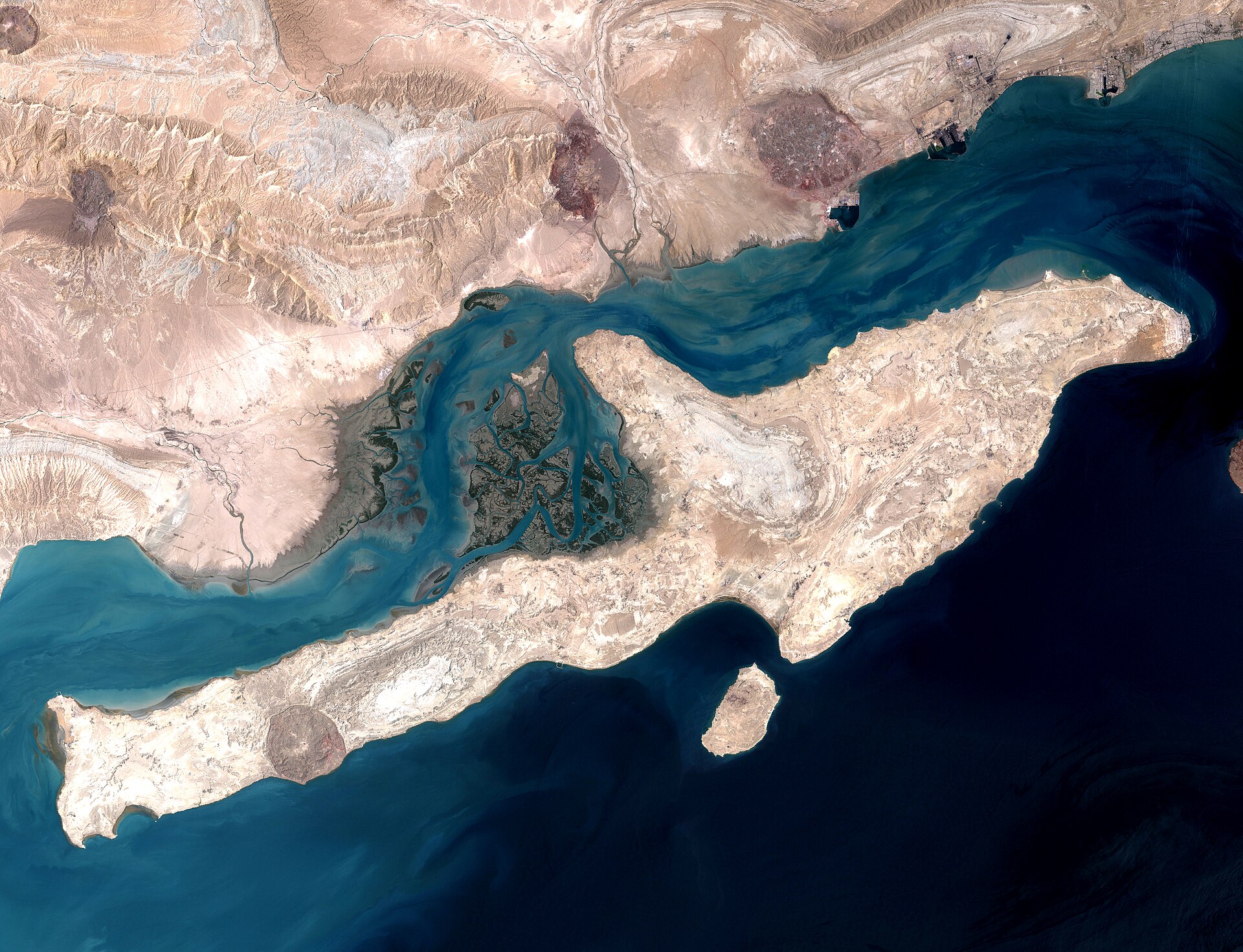
Operation Earnest Will ran from July 24, 1987 to September 26, 1988, escorted 56 vessels by the end of 1987, deployed more than 30 US warships at peak, and was the largest US naval convoy operation since the Second World War. Kuwait initiated the reflagging request on March 7, 1987 — Kuwait was the party that asked, that offered, that agreed to accept US flags on Kuwaiti hulls. Saudi Arabia in 1987 was a passive, non-requesting beneficiary: the Kingdom did not host US forces (the Pentagon could not station mine-sweeping units ashore in Saudi Arabia or Kuwait “for political reasons” and had to use the floating barges Hercules and Wimbrown VII instead), did not set terms, and did not seek to influence the operational tempo. The protection existed. Riyadh accepted it in silence.
In 2026 the geometry has inverted at every position. The Kingdom is the party doing the asking — or the vetoing, depending on which reading of the July 11 formula prevails. Kuwait is not initiating anything; the leader-to-leader channel runs through Riyadh now, not through Kuwait City. The floating-barge workaround from 1987 has no 2026 equivalent, because Iranian anti-ship ballistic missiles have made the northern Gulf too hot for stationary US platforms. And the Saudi position — which in 1987 was to accept US naval power without ever having to answer for it — has become, in 2026, the position that gets to say whether US naval power exists in the Gulf at all.
The reason neither government named the precedent is that doing so would require each to acknowledge what the inversion costs them. Trump invoking Earnest Will would remind the region that Reagan did not ask Riyadh’s permission and did not receive it. MBS invoking Earnest Will would require him to acknowledge that the Kingdom’s 2026 posture — insisting on paying every diplomatic cost before any protection can even be discussed — is structurally an admission that the passive beneficiary role of 1987 is gone and will not return.
Why Saudi Arabia Cannot Host the Escort Even If It Wanted To
Set aside the political question — set aside the January warning to Pezeshkian, the May grounding of 43 US warplanes, the diplomatic language calibrated to say nothing that could be quoted as consent. Saudi Arabia in July 2026 cannot host a US escort operation for material reasons that would still be true even if the crown prince tomorrow reversed every policy line he has drawn since January.
The Patriot PAC-3 interceptor inventory that would have to protect any US airbase hosting an escort mission has been depleted from 2,800 rounds at the start of the crisis to approximately 400 rounds as of the July 5 DSCA position — an 86% draw-down against a Camden, Arkansas production ceiling of roughly 620 rounds per year, which means the resupply timeline extends into 2030 at the earliest. Prince Sultan Air Base lost its E-3G Sentry AWACS on March 27; the base’s remaining warplanes have not resumed operations at any point since the May grounding was formally lifted, because the aircraft that would fly them have been quietly withheld. The analysis of the punitive US drawdown from PSAB captured the extent to which the airbase has functionally ceased to project power since Project Freedom.
The Status of Forces Agreement that would provide the legal framework for a hosted US escort operation is not in force. The 1976 and 1977 US-Saudi SOFA arrangements were void by 2025. No successor instrument has been signed, no interim exchange of notes has been published, and the Trump administration’s late-2025 attempt to secure a fresh SOFA collapsed inside the same weeks that the WSJ “rupture” reporting appeared. Any US aircrew flying an escort mission from Saudi soil in July 2026 would be doing so without treaty coverage — and the Pentagon knows it.
The pattern the crown prince established at PSAB in May — the airbase whose deterrent effect had already collapsed before Iran fired its first missile — is now the operational floor from which every subsequent US planning cell must build. Riyadh has demonstrated that it can and will shut down US air operations on Saudi territory with less than forty-eight hours’ notice. Once demonstrated, the capability does not have to be re-exercised to remain credible. It is priced in.
How Close Is Ras Tanura to the IRGC Missile Envelope?
Approximately 250 kilometres — roughly one-third of the Zolfaghar ballistic missile’s 700-kilometre range. The terminal sits on the Gulf coast of the Eastern Province directly across from Iranian Khuzestan. IRGC commanders named it explicitly after the July 9 Bushehr strike perimeter operation, and Aramco’s force-majeure declarations from June confirmed that the terminal’s insurers had already concluded the same arithmetic.
The material reality that overshadows every diplomatic calibration is the geography of the Saudi export system. Ras Tanura is the loading terminal through which the Kingdom routes the great majority of its hydrocarbon exports — and it sits well within reach of the Zolfaghar at a moment when the IRGC has demonstrated both the will and the capability to strike export infrastructure. The July 9 statement that “other bases will not be spared” was not interpreted by Aramco planners as a rhetorical warning.
Ras Tanura handles roughly 6.5 million barrels per day of exports at capacity, holds 50 million barrels in storage, operates 28 loading berths, and accounts for approximately 90% of Saudi hydrocarbon exports. The terminal resumed loading only on June 26–27 after a four-month suspension driven by force majeure declarations from insurance underwriters who had reclassified the Gulf as an active war zone. The Petroline pipeline west to Yanbu, which set an all-time throughput record at 7 million barrels per day earlier this year, can export a maximum of 5 million barrels per day through the Red Sea terminal — and the differential, roughly 1.5 million barrels per day, still routes through Ras Tanura on the Gulf side. There is no engineering redundancy that removes Ras Tanura from the target set.
“Saudi Arabia Cannot Afford the Windfall Kharg Created” worked through the mathematics of the Petroline ceiling: Iran’s Kharg Island terminal (90–96% of Iranian exports, 1.5 million barrels per day) had been struck earlier in the week, Brent had risen 5% on the Trump seizure threat to $76.24 per barrel against the IMF fiscal breakeven of $86.60, and the Petroline ceiling capped the extent to which any Saudi windfall from Iranian outages could be captured. The maritime navigation formula on July 11 has to be read against the same geography. The Kingdom cannot invite the US to escort tankers through Hormuz without exposing Ras Tanura to the retaliatory strikes that would follow, and the crown prince knows the exposure runs both ways.
What that means in practice is that the July 11 formula was drafted by officials who understand that any language which Tehran reads as endorsement of a unilateral US Gulf operation converts Ras Tanura into a legitimate target inside the IRGC’s internal deconfliction calculus. The phrase had to be Iranian-compatible not because Riyadh has become pro-Iranian, but because the alternative is losing the terminal that carries 90% of the Kingdom’s hydrocarbon revenue at a moment when Brent is trading a full ten dollars below fiscal breakeven, Aramco’s August OSP has gone negative for the first time since 2020, the Q1 2026 deficit has already reached SAR 125.7 billion, and Aramco’s free cash flow covers only 0.85 times the announced dividend.
What Happens on August 18
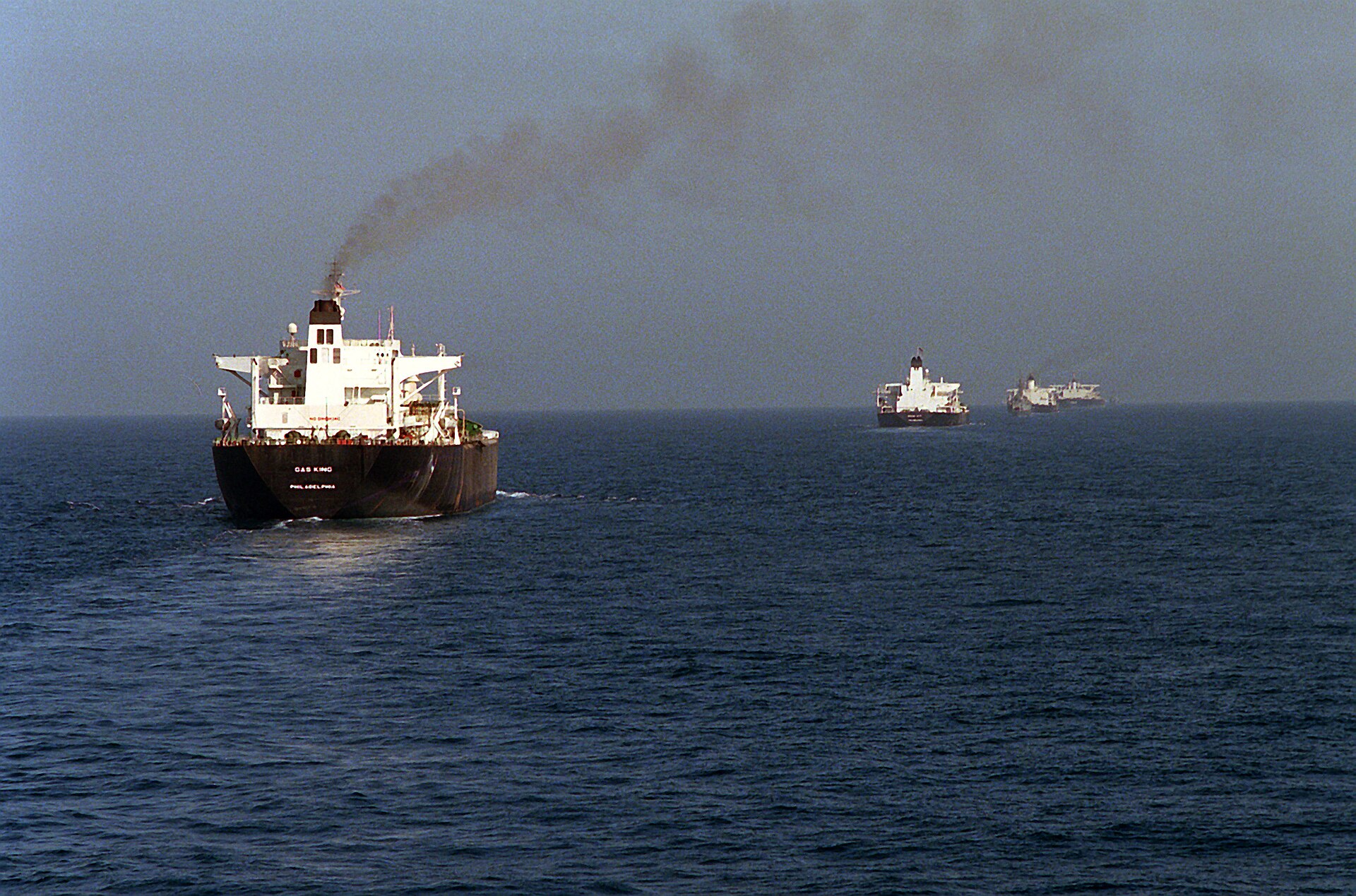
The maritime navigation formula is a device for buying time, and the amount of time it buys can be measured precisely: thirty-eight days from July 11 to the August 18 expiry of the Islamabad Memorandum’s free-passage window, after which the Persian Gulf Strait Authority — the Iranian body founded on May 5, 2026 to administer transit fees — has published its intention to begin charging its full toll schedule. At the implied $1 per barrel fee applied to Saudi Arabia’s 5.5 million barrels per day of Gulf exports, the annualised cost to Riyadh is roughly $2 billion — a figure the Kingdom cannot pay without endorsing the PGSA’s legitimacy, and cannot refuse to pay without inviting whatever the Authority defines as enforcement.
The Islamabad session that was to convene on July 11 with Munir chairing has been postponed to July 14–15. Saudi Arabia does not have a seat at the session, is not a co-signatory of the MOU, does not have observer status, and has no legal instrument through which to secure a carve-out from the PGSA fees when the free-passage window closes. Iran’s formal position, articulated by Rahmani Fazli in the friendly-nation classification framework the Beijing carve-out analysis and the earlier MBS profile both reference, is that only nations Iran classifies as friendly will receive fee exemptions — and Saudi Arabia is not on that list.
The maritime navigation formula creates diplomatic space in which Saudi Arabia can be present at the transit conversation without being present at the MOU table. If the phrase is read in Tehran as Article 5-compatible, it may function as a de facto Saudi accession to the PGSA regime without any Saudi signature on any document — a form of tacit compliance the Kingdom can walk back if the political weather changes. If the phrase is read in Washington as an escort request, it may function as a Saudi hedge against total US disengagement from Gulf security. The formula’s value is that it defers the choice between the two readings until after August 18, when the fee regime becomes operational and the choice will have been made by events rather than by any leader having to admit which reading they endorsed. The parallel question — whether Iran has an authorized interlocutor who can respond to the Saudi back-channel before August 18 — is examined in who signs for Iran in the Saudi back-channel.
The crown prince’s central diplomatic project since he asked Trump for regime change and received a war he cannot end has been to postpone every binary choice for as long as possible. The July 11 phone call is the latest instrument in that project. It commits Riyadh to nothing except the appearance of engagement, and it commits Washington to the fiction that it was consulted about a maritime regime it has already rejected.
Frequently Asked Questions
Q: Did the July 11 SPA readout name Iran anywhere?
The SPA readout on the MBS-Trump call did not name Iran at any point. It also did not name the IRGC, the Islamabad Memorandum of Understanding, Article 5, the Persian Gulf Strait Authority, or the strait of Hormuz specifically. The maritime navigation formula was constructed to describe a threat environment without identifying either the threat or the actor generating it — a construction the Saudi foreign ministry has used in five separate high-level readouts since the funeral of Ali Khamenei on July 3, and one that Riyadh’s Iran desk has been rehearsing since late 2025.
Q: How does the July 11 call relate to the Reema-Rubio meeting on July 10?
The Reema meeting was the ambassador-level pre-brief that set the terms of the leader-level exchange. Princess Reema is the Saudi ambassador to Washington, not the foreign minister — the choice to have her meet Rubio rather than Faisal reflect at ministerial level was itself a Saudi rank-inversion signal, indicating that Riyadh wanted the meeting to be framed as containment rather than coordination. The July 11 leader call escalated the rank on the Saudi side to the crown prince, but the substantive content — the maritime navigation formula — was carried by the readout published in Riyadh, not by anything Trump said publicly.
Q: What does the phrase “support all that contribute to the stability of the region” add to the standard navigation language?
The clause is a fallback register that allows Riyadh to endorse actions taken by any regional actor — Oman, Qatar, Iraq, even Iran — as contributions to stability without naming which actions or which actors it has in mind. In the specific context of the July 8 Muscat statement, in which Faisal and Al Busaidi coordinated the identical navigation language with Oman, the “contribute to stability” clause reads as tacit endorsement of the Omani back-channel role in Islamabad — a role Saudi Arabia has not yet publicly acknowledged but has ceased to publicly reject.
Q: Why was the Islamabad session postponed from July 11 to July 14–15?
Geo TV in Karachi reported the postponement citing “logistical adjustments” without elaboration. The most likely reason, given the timing of the CENTCOM strike on Khuzestan the same morning, is that the Iranian delegation could not travel while the strike sequence was still active, and the Pakistani hosts required an interval long enough for Tehran to complete an internal review before any negotiating position could be tabled. The postponement was not framed as a suspension or cancellation, and the July 14–15 window remained provisional as of the July 11 SPA readout.
The separate question of what MBS communicated to Trump in the call itself — and why he placed it on the day the Islamabad session was originally scheduled — is examined in MBS Called Trump as Islamabad Talks Started Without Riyadh.
Q: Has any Gulf state publicly requested a US escort operation in the 2026 crisis?
Kuwait, which initiated the 1987 Earnest Will reflagging request, has made no equivalent public approach in 2026. The UAE, Bahrain, Qatar, and Oman have similarly issued no public escort request. Saudi Arabia’s maritime navigation formula on July 11 is the closest any Gulf capital has come to a public engagement on the escort question, and it is drafted specifically to avoid crossing into a formal request — which is why the Trump administration’s continued testing of the phrase, through the Rubio-Faisal call and the Reema meeting, has produced no Saudi movement toward the operational discussion Washington keeps trying to open.