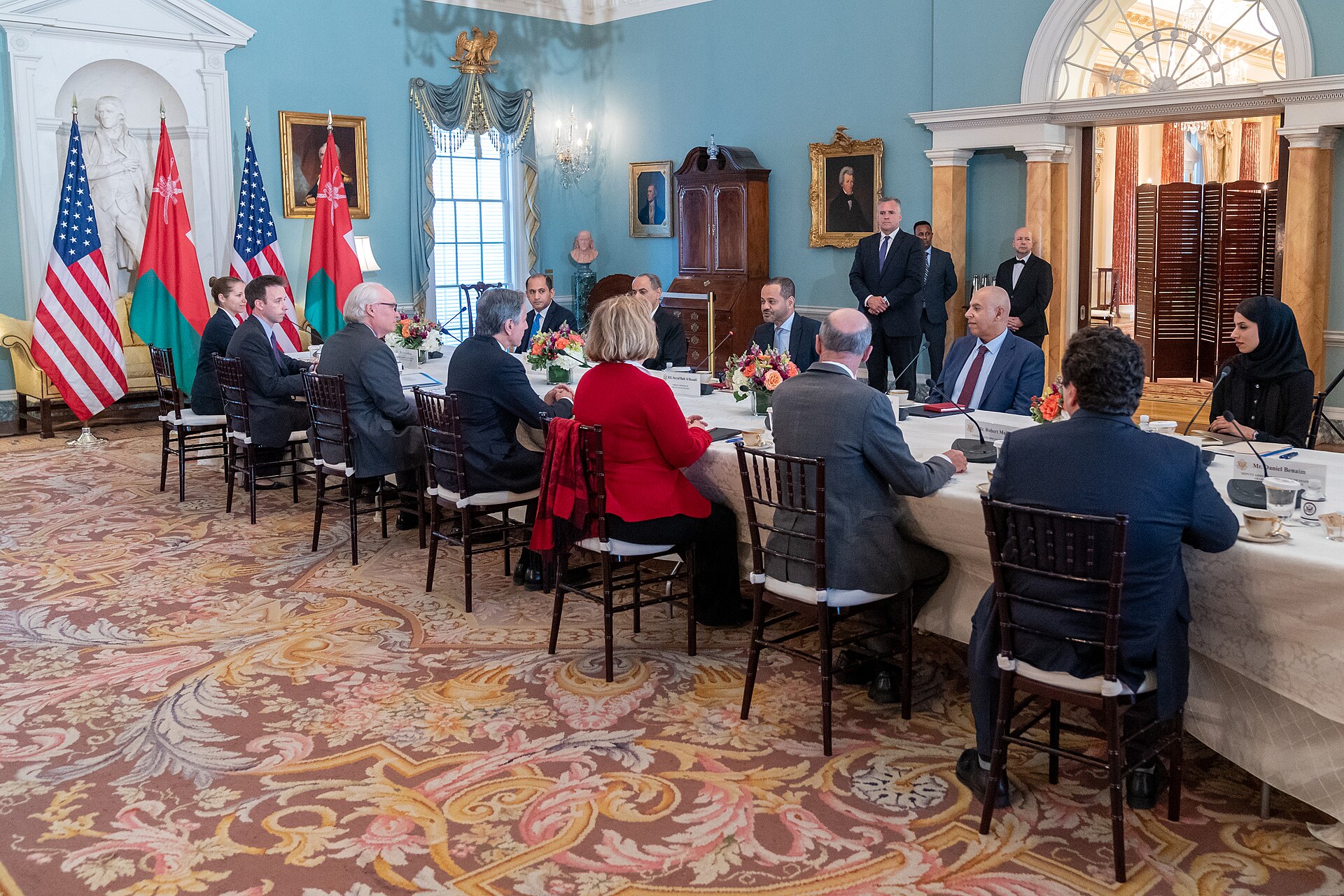

MUSCAT — Iran’s Islamic Revolutionary Guard Corps struck the Port of Duqm and Musandam Governorate in Oman on July 12, less than twenty-four hours after Iranian Foreign Minister Abbas Araghchi sat across from his Omani counterpart Badr al-Busaidi in Muscat to negotiate safe passage through the Strait of Hormuz. The IRGC described the targets as “logistical support centres for naval vessels and refuelling facilities for US aircraft carriers,” according to Tasnim — framing the operation as a strike on American military infrastructure while making no reference to the fact that it had hit the sovereign territory of the only country still willing to mediate on Iran’s behalf.
The Sultanate of Oman responded within hours. “The Sultanate of Oman affirms its condemnation and denunciation of this attack,” the Oman News Agency said, adding that it came “just hours after the country hosted Iran’s foreign minister to address security issues in the Strait of Hormuz.” Oman is the fifth country Iran has struck in five days — after Bahrain and Kuwait on July 8, Qatar and Jordan on July 9 — and the only one that was simultaneously hosting Iranian diplomats when the weapons arrived.
Table of Contents
The Targets at Duqm and Musandam
The IRGC hit two locations in Oman on July 12, separated by roughly 1,000 kilometres of coastline and serving entirely different strategic functions. Duqm, a deep-water port in Al Wusta Governorate approximately 550 kilometres south of Muscat, hosts US Navy logistics access under a 2019 bilateral agreement — purpose-built as a naval fallback outside the Strait of Hormuz, with roll-on/roll-off capacity and carrier refuelling infrastructure that make it CENTCOM’s primary non-Strait logistics hub, according to the Carnegie Endowment. The IRGC claimed it “destroyed” the facilities; Iran International reported that no photographic or satellite evidence was provided to support the destruction claim, and Al Jazeera described the damage as limited to minor material losses.
Musandam, the Omani exclave that physically juts into the Strait of Hormuz on its southern shore, was struck separately by Iranian drones. The geography is not incidental: the southern Hormuz corridor, the NCAGS-coordinated US Navy shipping route that hugs Omani territorial waters, passes through the waterway adjacent to Musandam. By striking Musandam, the IRGC targeted the physical chokepoint of the only remaining transit route that bypassed Iranian-controlled waters — a route that was already functionally dead, since no large vessel had crossed via the US-coordinated corridor with active AIS transponders since July 7, according to World Oil.
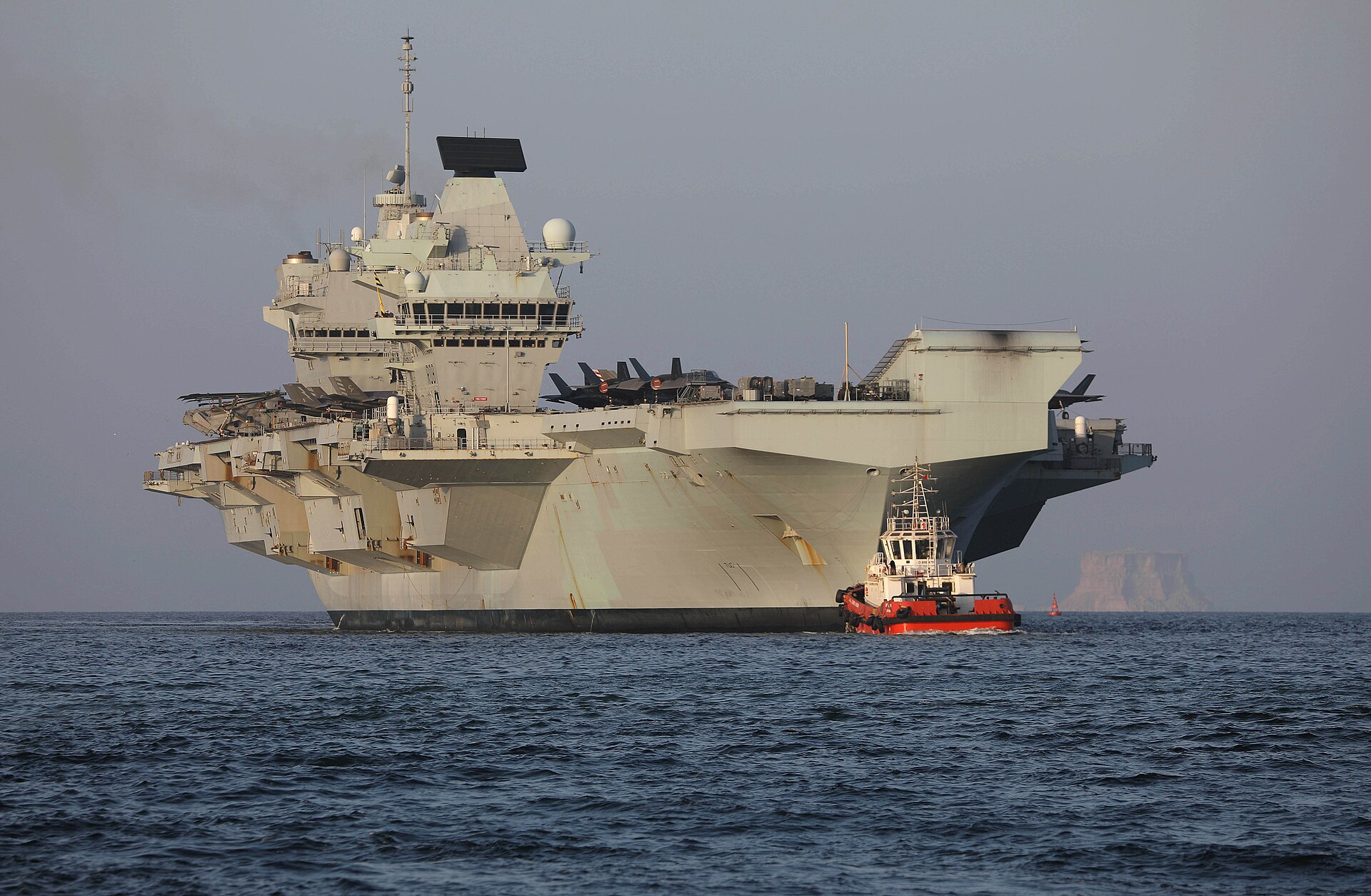
The strike on Duqm was not a first. Iranian drones hit the port on March 1 and March 3, in the early weeks of the conflict — one striking workers’ housing and injuring a foreign worker. Cumulative Iranian strikes on Oman through 2026 have killed eighteen people and injured twenty-three, and no casualties were reported on July 12.
Who Authorised the Strike on Iran’s Own Host?
The question the Oman strike forces is not whether the IRGC is willing to undermine Iranian diplomacy — that pattern was established in March — but which part of Iran’s fractured command structure signed off on an attack that, by its timing alone, functions as an operational veto on the foreign ministry’s negotiating track. Araghchi arrived in Muscat on July 11 and met Busaidi to discuss Article 5 of the Islamabad MOU — the safe passage mechanisms that were supposed to form the basis of a Hormuz transit framework, according to PressTV. Oman’s state news agency reported that negotiators would continue talks “at the technical and political levels,” and the IRGC struck the following morning.
The Middle East briefing 3,000+ readers start their day with.
One email. Every weekday morning. Free.
“The divide between civilian doves and hard-liners in the Islamic Revolutionary Guard Corps has been complicated by the war, with the meaningful fault line running through Iran’s institutions rather than neatly between them,” Foreign Policy wrote on June 30. “The IRGC itself is no longer an ideological bloc.” That analysis, published thirteen days before the Oman strike, described the structural condition that makes an attack like this operationally possible — a command chain disconnected from the political leadership that nominally directs it, in which, as Araghchi himself admitted in March, units operate “only on pre-issued general instructions.”
Senior US officials told CBS News in July that Iranian negotiators had privately blamed “an errant part of Iran’s system” for earlier attacks on ships — a formulation that, CBS reported, “allows the regime to sustain talks and attempt to reap potential economic benefits while the IRGC continues to enforce Iran’s control over the strait.” The Oman strike extends that template, but with a difference of scale: the target this time was not a tanker in contested waters but the sovereign territory of the country hosting Araghchi’s own talks.
The Pattern Araghchi Cannot Break
Araghchi has been here before. After the March 2026 Duqm strikes — the first time Iran hit Oman during the current conflict — Araghchi told Al Jazeera that “the attack on Oman was not our choice,” and that “some military units have become independent and somewhat isolated, and are operating only on pre-issued ‘general instructions.’” Patrick Wintour, the Guardian’s diplomatic editor, summarised it at the time: “The IRGC is now acting independently of any political leadership. Araghchi admits he suggests the attack on mediators Oman was not something of which he approved.”
In the four months since March, Araghchi’s diplomatic track produced the Islamabad MOU (signed June 17), the Iran-Oman Joint Hormuz Committee (formed in late June, with Iran’s Deputy FM Kazem Gharibabadi and Omani Minister of State Abdulaziz al-Hinai attending the inaugural session, according to PressTV), and a framework for Hormuz governance that was, by July 11, at the stage of technical follow-up talks. The July 12 strike did not just damage Omani port infrastructure — it damaged the specific diplomatic architecture that Araghchi had spent months constructing, at the exact moment Muscat held the only active Hormuz channel.
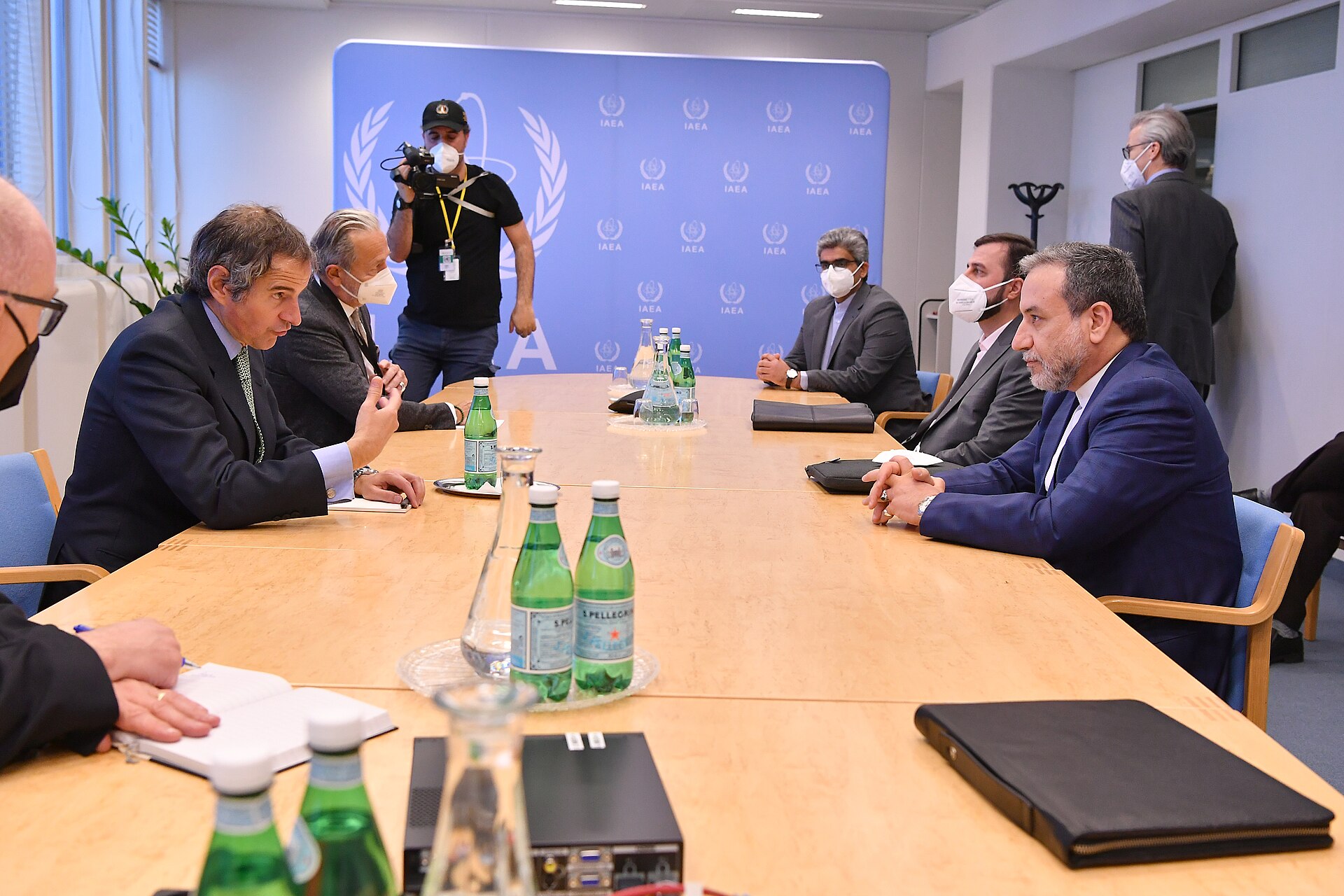
The structural problem is that Araghchi’s “not our choice” formulation has become a feature of Iran’s negotiating posture, not a failure of its command structure. Each time the IRGC strikes a target that undermines the diplomatic track, the foreign ministry disavows, negotiations pause, and the cycle resumes with Iran’s coercive leverage over the Strait intact and the diplomatic counterparty weakened. Whether this represents genuine factional dysfunction or a coordinated good-cop-bad-cop strategy, the cumulative toll on Oman — eighteen dead, twenty-three wounded across 2026 — is identical either way.
Can Oman’s Mediation Survive a Second Strike?
Oman’s tolerance for Iranian strikes on its territory while simultaneously hosting Iranian diplomats has limits, and the July 12 attack may have reached them. Busaidi, who served as a back-channel during prior US-Iran nuclear negotiations and expressed himself “dismayed” when earlier attacks began with a deal “in reach” (according to Middle East Eye), has now been publicly humiliated: the country he represents condemned an Iranian military operation less than a day after he received the Iranian foreign minister. The Arab Center DC think tank framed Oman’s position before the strike as “Neutrality Under Strain” — and the July 12 attack landed less than twenty-four hours after the last diplomatic handshake.
No formal announcement suspending or terminating the Joint Hormuz Committee has been issued as of July 12. But the committee’s viability depends on two conditions — Omani willingness to continue hosting negotiations while Iranian weapons land on Omani soil, and Iran’s ability to offer credible assurances that the foreign ministry conducting talks has authority over the military operations disrupting them. Neither condition is met, and Oman had already begun diversifying its security relationships: on July 4, Muscat agreed with Britain and France on separate Hormuz shipping safeguards, according to RFE/RL.
The committee’s substantive agenda — whether to model Hormuz transit fees on the voluntary Malacca Strait framework (Oman’s position, per the Maritime Executive) or Iran’s mandatory-fee proposal — was already gridlocked before the strike. The IRGC rendered the venue for that debate inoperable in a single morning, and Muscat has made no public indication that it intends to convene another session.
Five Countries, Five Days, Zero Diplomacy
Oman completes the IRGC’s five-country, five-day escalation arc. Bahrain and Kuwait were struck on July 8; Qatar and Jordan were hit on July 9, including an attack on Muwaffaq Salti Air Base in Azraq, Jordan, and the destruction of a $15 million satellite communications dish at Al Udeid Air Base in Qatar, as previously reported. Oman on July 12. The only Gulf state not struck remains Saudi Arabia, whose exclusion from every diplomatic track now coincides with its exclusion from every target list.
The IRGC Navy formally declared the Strait of Hormuz closed on July 12, after claiming it fired warning shots at a vessel attempting to cross an unauthorised route, according to CNN. The closure consolidates what was already a de facto blockade into a declared one — no large vessel had transited the US-coordinated NCAGS route with active AIS since July 7, according to World Oil. Brent crude closed at approximately $75.50 per barrel on Friday, up 4.7 percent on the week, a price that does not yet reflect Saturday’s Oman strikes or the formal closure announcement.
Trump responded by declaring the Islamabad MOU “over.” “I don’t want to deal with them anymore. They’re scum,” he said, according to CBS News, simultaneously reversing Iran’s oil sales licence. The MOU, signed June 17, was on Day 25 of its 60-day timeline. Mohammad Bagher Ghalibaf, the Iranian Parliament Speaker, countered: “We told you: keep your word or pay the price” — though it is unclear whether Ghalibaf was consulted before the IRGC struck Oman or learned about the operation afterward.
Thirty-Seven Days to August 18
The Persian Gulf Security Arrangement — $253 million outstanding, accruing at $5.5 million per day toward an August 18 deadline — now has no diplomatic vehicle capable of delivering a resolution. The Islamabad track is frozen: Trump has declared the MOU void, and the next round of talks, previously scheduled for July 14-15, was delayed before the Oman strike and faces obvious viability questions after it. The Oman mediation channel, which was the only active bilateral track as of July 11, was destroyed by the country that helped create it.
Mojtaba Khamenei’s reemergence after 127 days of absence — calling for revenge rather than restraint — removes the last institutional actor who might have overridden the IRGC’s operational tempo. The PGSA deadline, which was already straining under unresolved signing authority gaps when the countdown stood at forty-three days, now faces a simpler obstacle: there is no table at which to negotiate, no mediator willing to host one, and the question of who signs for Iran has no forum in which to be answered.
Araghchi built the Joint Hormuz Committee over six weeks and flew to Muscat on July 11 to advance it. The IRGC struck Muscat the next morning. The $5.5 million daily clock keeps running, and August 18 is thirty-seven days away.
The pattern did not end with July 12. On July 17 — forty-eight hours before the ceasefire talks Muscat was scheduled to host — the IRGC struck radar installations at Ghanam in Musandam and on Salama Island, and Oman responded with its first formal “condemnation and denunciation” ever directed at Iran. The implications for Oman’s mediator role and the July 19 talks are examined here.
Frequently Asked Questions
What is the Port of Duqm and why does the US military use it?
Duqm is a deep-water port in Oman’s Al Wusta Governorate, roughly 550 kilometres south of Muscat and well outside the Strait of Hormuz. Under a 2019 US-Oman bilateral agreement, the US Navy has logistics access to both Duqm and the port of Salalah, further south near the Yemeni border. The Carnegie Endowment described Duqm as specifically designed for naval operations that do not depend on Hormuz transit — its roll-on/roll-off capability and carrier refuelling infrastructure make it CENTCOM’s primary fallback if the Strait is denied.
Has Iran struck Oman before during the current conflict?
Yes. Iranian drones struck Duqm on March 1 and March 3, 2026, in the conflict’s early weeks — one hitting workers’ housing and injuring a foreign worker. Those strikes prompted Araghchi’s “not our choice” admission on Al Jazeera, establishing the pattern of IRGC operations undermining active diplomatic tracks that the foreign ministry is simultaneously pursuing. Cumulative 2026 Iranian strikes on Oman have killed eighteen people and injured twenty-three, making Oman the neutral mediator country with the highest casualty toll from Iranian operations in the current conflict.
What is the Iran-Oman Joint Hormuz Committee?
Formed in late June 2026, the committee is co-chaired by Iran’s Deputy FM Kazem Gharibabadi and Omani Minister of State Abdulaziz al-Hinai, with the first session held on June 23 and a follow-up on June 29, according to PressTV and GlobalSecurity.org. Its mandate covers governance of the Strait of Hormuz — shipping management, associated services, and transit fees. Oman favours voluntary fees modelled on the Malacca Strait; Iran insists on mandatory charges. No sessions have been scheduled since the July 12 strikes, though Oman has not issued a formal withdrawal.
What did Trump say about the Islamabad MOU?
Trump declared the MOU “over” on July 12, stating “I don’t want to deal with them anymore. They’re scum,” according to CBS News, and reversed Iran’s oil sales licence. The MOU, signed June 17, was on Day 25 of its 60-day timeline; the next round of talks had been scheduled for July 14-15 in Islamabad. The US had set public preconditions for continued engagement — a public Iranian statement and a halt to attacks, according to Bloomberg — neither of which had been met before the Oman strike accelerated the collapse.
What does the IRGC’s formal Hormuz closure mean for oil markets?
The IRGC Navy declared the Strait “closed until further notice” on July 12, after claiming warning shots at a vessel on an unauthorised route, according to CNN. In practice, the strait was already non-functional for commercial shipping: no large vessel had transited the US-coordinated NCAGS route with active AIS since July 7. War-risk insurance premiums for Hormuz transit had risen to approximately 2 percent of hull value — roughly eight times pre-crisis levels — making passage commercially unviable for most carriers even before the formal closure. Brent crude closed Friday at $75.50 per barrel, up 4.7 percent on the week, but that price does not yet reflect Saturday’s strikes, the formal closure, or Trump’s reversal of Iran’s oil sales licence.