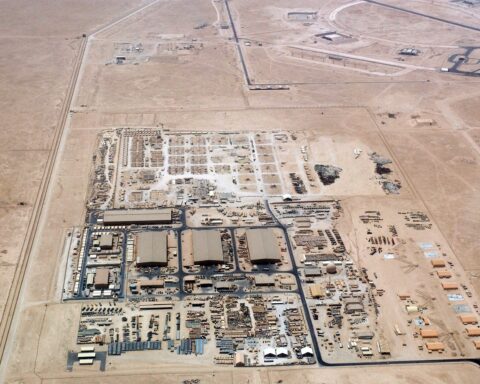

RIYADH — Iranian ballistic missiles struck Prince Sultan Air Base on July 18, wounding at least twelve American service members — two critically — and damaging multiple KC-135 refuelling aircraft on the flight line. The strike made PSAB the last major US installation in the Gulf region to absorb a direct hit. But the damage to aircraft and personnel was secondary to the structural question the attack forced into the open: whose base is it, who defends it, and under whose authority?
The answer, visible in Riyadh’s post-strike silence, is that every available mechanism collapses on inspection. The only air defence battery at PSAB with the range to engage Iranian ballistic missiles — a Chinese-made HQ-9 — operates exclusively under Pakistani command. The American framework — the Sakhir Declaration, MNNA status, the Strategic Defence Agreement — cannot be invoked without publicly admitting what Saudi Arabia has spent months avoiding: that the PAC-3 architecture is functionally exhausted, that Operation Project Freedom severed the operational relationship with Washington, and that the base itself sits outside the legal structure governing every other US installation in the region. The kingdom’s statement held Iran “responsible for the consequences.” It did not invoke sovereignty. It did not name the base.
Table of Contents
- What Struck Prince Sultan Air Base on July 18?
- The Battery Saudi Arabia Financed but Cannot Command
- Why Has Saudi Arabia Not Invoked the Sakhir Declaration?
- What Legal Framework Governs the US Presence at PSAB?
- Has the HQ-9 Ever Intercepted a Ballistic Missile in Combat?
- Iran Called It a US Base — and Riyadh Had No Legal Rebuttal
- What Did the Al-Ruwaili-Frank Meeting Produce?
- What Remains of Saudi Arabia’s Defence Architecture?
- Frequently Asked Questions
What Struck Prince Sultan Air Base on July 18?
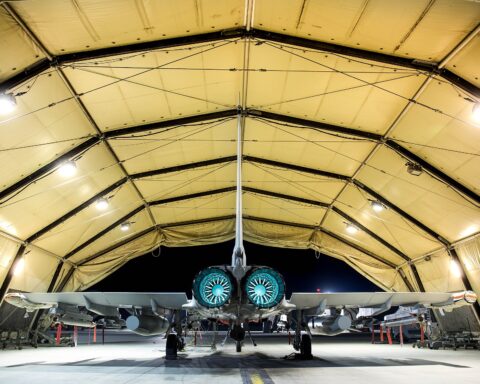
Iranian ballistic missiles and drones struck PSAB on July 18, 2026, in a combined attack confirmed by American and Saudi officials and corroborated through open-source satellite imagery. Multiple KC-135 Stratotanker refuelling aircraft sustained damage on the tarmac — a pattern consistent with previous strikes that have systematically degraded the base’s enabling infrastructure.
On March 14, five KC-135s were damaged or destroyed in a similar attack. On March 27, an E-3G Sentry AWACS — the US Air Force’s airborne command and control platform — was destroyed on the ground at PSAB, the first combat loss of that airframe in history. The replacement value exceeded four billion dollars.
What made the July 18 strike structurally different was sequencing. Iran had struck US installations in Bahrain and Kuwait on July 8, then Jordan and Qatar on July 9. All four host nations maintain formal Status of Forces Agreements with the United States — legal frameworks that establish the sovereign authority under which US forces operate. PSAB, the installation without a SOFA, the base whose legal status Saudi Arabia has never formally defined as a combat facility, was the last to be hit.
The Battery Saudi Arabia Financed but Cannot Command
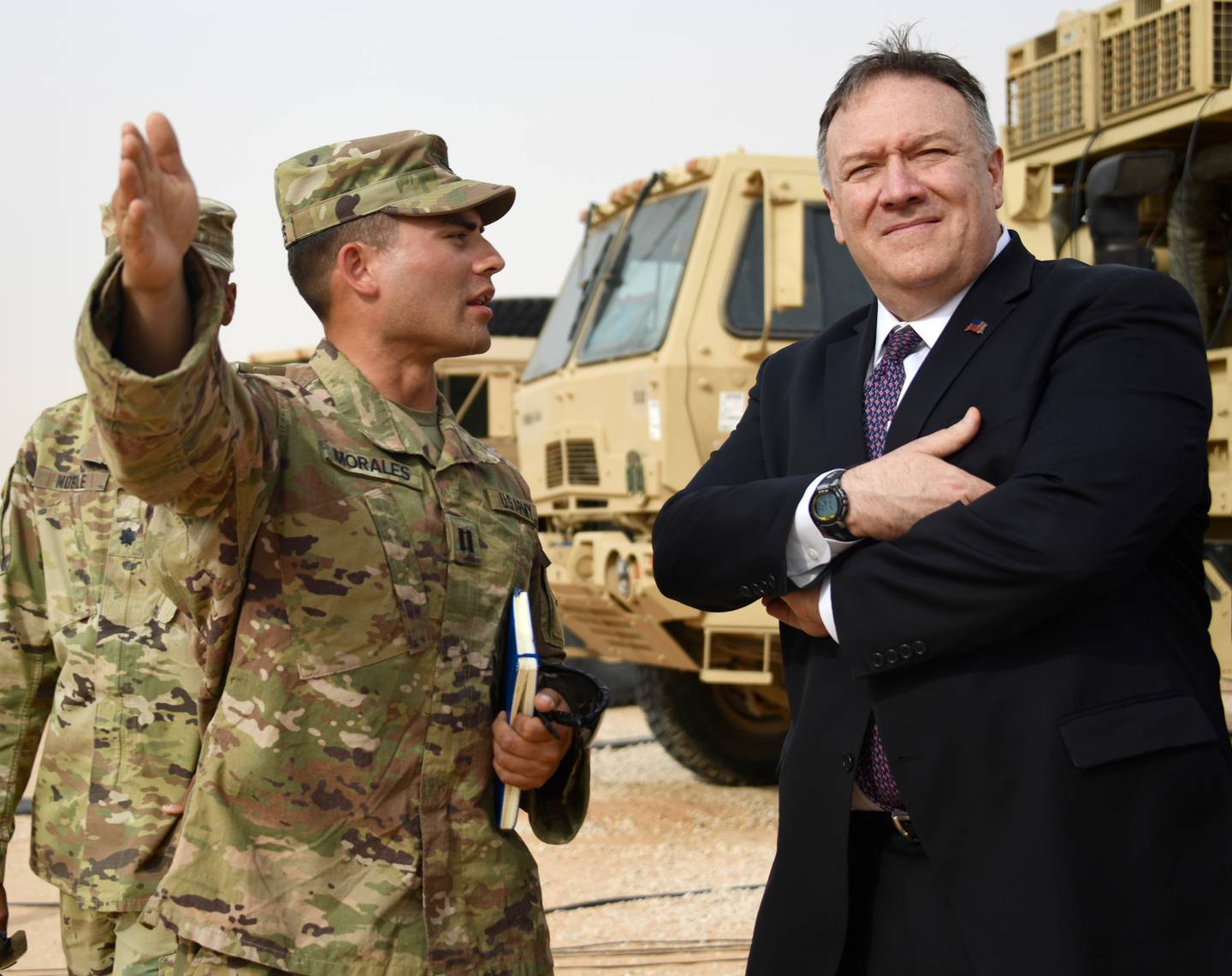
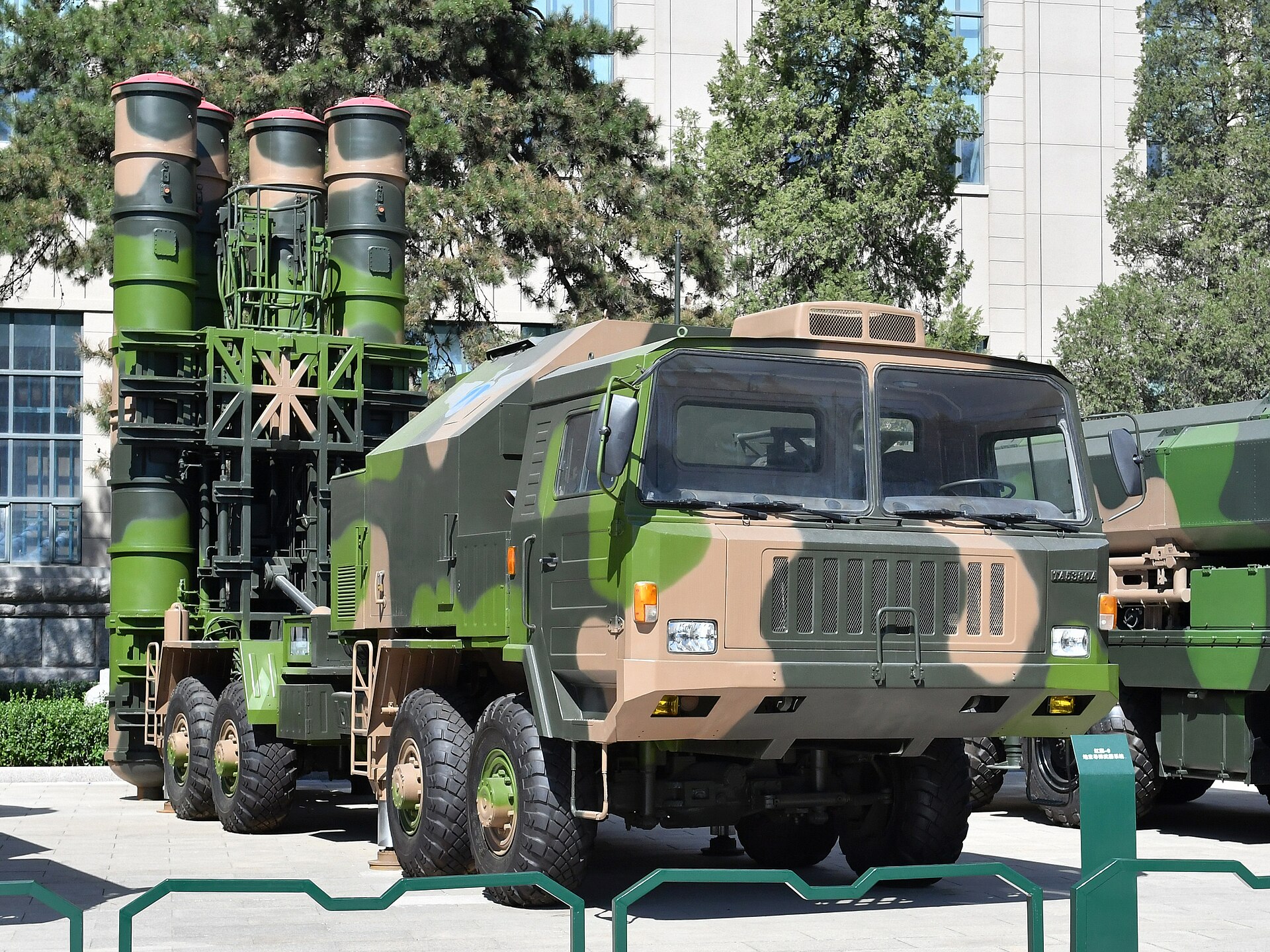
The HQ-9 battery at Prince Sultan Air Base was deployed under the September 2025 Strategic Mutual Defence Agreement between Pakistan and Saudi Arabia. The arrangement brought 8,000 Pakistani troops, approximately sixteen JF-17 Block III fighters, and one HQ-9 air defence battery to Saudi soil. Riyadh financed the entire deployment. Pakistan retained exclusive operational control.
The Middle East briefing 3,000+ readers start their day with.
One email. Every weekday morning. Free.
This is not a subtle distinction. All fire-control decisions, engagement protocols, and tactical operations are conducted by Pakistani personnel under Pakistani command authority. Saudi Arabia cannot order the system to fire. Pakistan can.
On July 18, as Iranian missiles reached PSAB, a senior Pakistani official told Reuters what the arrangement looked like from Islamabad: “Our top civil and military leaders have conveyed to Iran at the highest level that the attacks on Saudi Arabia are attacks on Pakistan. It is our red line.”
The language was Pakistan’s sharpest public framing of Iranian strikes on Saudi territory as an attack on Pakistan itself — the first time a senior official explicitly used the phrase “red line.” The battery did not fire. The gap between Pakistan’s diplomatic declaration and its operational posture at PSAB is the space in which Saudi sovereignty disappears. Pakistan frames its presence as bilateral solidarity. But solidarity is a political statement. Fire-control authority is a military fact. On July 18, the missiles arrived, the HQ-9 did not engage, and Pakistan’s red line remained a line drawn in a communiqué rather than drawn by a radar lock.
Pakistan is simultaneously running back-channel diplomacy with Tehran and has positioned itself as a potential mediator in the broader conflict. As one analyst described to Al Monitor, Pakistan’s top leaders are “engaged in appeasing all stakeholders” — a posture that reconciles only if the HQ-9 at PSAB is understood not as an integrated air defence asset but as a political deployment whose operational activation requires a political decision Islamabad has not made.
Why Has Saudi Arabia Not Invoked the Sakhir Declaration?
The Sakhir Declaration, adopted at the 46th GCC Summit in Bahrain on December 3, 2025, states that “any infringement upon the sovereignty of a member state constitutes a direct threat to their collective security.” The language is broad. The mechanism is not. The declaration contains no automatic trigger — each member state’s political decision is required before the collective security framework activates.
Iran has struck military installations in Kuwait, Bahrain, Qatar, Jordan, and now Saudi Arabia itself. The IRGC fired ten missiles at Muwaffaq Salti Air Base in Azraq, Jordan, on July 9. Iran’s regular army destroyed an AN/GSC-52B satellite communications dish at Al Udeid, Qatar — a fifteen-million-dollar system, the first of its kind lost outside the continental United States. Iranian missiles have hit Saudi soil repeatedly throughout June and July. Riyadh has not invoked the Sakhir Declaration once.
The reason is structural. Invoking collective defence requires Saudi Arabia to characterise the PSAB strike as an infringement on Saudi sovereignty — which requires acknowledging the base as a Saudi military installation operating under Saudi authority. But PSAB runs on a 1977 USMTM memorandum designed for a training advisory mission. It has no SOFA. The US forces there have no formal legal status under Saudi sovereignty. The HQ-9 battery answers to Islamabad. The PAC-3 system — the American layer — has 400 of its original 2,800 rounds remaining, an 86 per cent depletion rate that invocation would force into public view. On July 19, the stockpile absorbed at least two more intercepts when Iran fired ballistic missiles at Prince Sultan Air Base and Yanbu port — part of three simultaneous attack vectors on July 19, the most geographically distributed single-day strike package Iran has directed at Saudi Arabia.
And then there is the rupture invocation would require explaining. In May 2026, Saudi Arabia grounded all 43 US warplanes at PSAB for four days. President Trump called Crown Prince Mohammed bin Salman directly and could not reverse the order. The runways reopened only after Washington threatened to withhold PAC-3 interceptor resupply — turning Saudi Arabia’s air defence dependency into a coercive lever. No joint statement followed. No restoration of the pre-crisis operational relationship was announced.
Invoking the Sakhir Declaration now would require Riyadh to present itself as a state whose sovereignty was violated — while simultaneously refusing to explain why the American partner it grounded three months earlier is deliberating whether to withdraw entirely.
What Legal Framework Governs the US Presence at PSAB?
None designed for what the base has become. The US military presence at Prince Sultan Air Base operates under a 1977 United States Military Training Mission memorandum — an agreement drafted for advisory personnel, not for a combat installation hosting fighter squadrons, refuelling tankers, airborne early warning aircraft, and 2,300 troops. Kuwait has a SOFA. Bahrain has a SOFA. Jordan has a SOFA. Saudi Arabia does not.
The absence is not an oversight. Riyadh has historically avoided formalising the US presence because a SOFA would require parliamentary-adjacent review, base access transparency, and an acknowledgment that foreign combat forces operate on Saudi territory under a defined legal regime. The ambiguity served both sides for three decades. The July 18 strike was the third confirmed hit on the base this year.
The legal void creates a specific problem for sovereignty claims. When Iran strikes Al Udeid in Qatar, Qatar’s SOFA framework establishes that US forces are present under Qatari sovereign authority — an unbroken legal chain from host-nation sovereignty to the individual service member’s status. Qatar can invoke collective defence, demand reparation, or escalate through the GCC on that basis. When Iran strikes PSAB, the chain breaks. There is no SOFA to establish that US forces operate under Saudi authority. There is no combat basing agreement to define what the installation is. Saudi Arabia cannot formally claim sovereignty over a base whose legal existence as a combat facility it has never acknowledged.
Iran’s targeting appears to have tracked this architecture. The IRGC struck installations in countries with SOFAs first — Bahrain and Kuwait on July 8, Jordan and Qatar on July 9. PSAB, the SOFA-less installation, came last on July 18. Whether the sequencing was deliberate or incidental, the effect was identical: each prior strike tested the collective defence mechanisms in countries whose legal frameworks could support invocation. None invoked. By the time the missiles reached PSAB, the precedent of non-response was established across four sovereign states with formal basing agreements — making the absence of response from the state without one functionally invisible.
Has the HQ-9 Ever Intercepted a Ballistic Missile in Combat?
The HQ-9 has been deployed in three combat environments before its placement at PSAB. In each, it failed to perform its primary mission. In each, the failure mode was electronic warfare vulnerability.
During Pakistan’s Operation Sindoor in May 2025, the HQ-9 failed to intercept Indian BrahMos cruise missiles travelling near Mach 3. The French defence publication Meta-Defense attributed the failure to “software instabilities in fire control computers, high exposure to electronic warfare, and failures to integrate with the existing air defence network.” The system could not achieve target lock in a contested electromagnetic environment.
In Venezuela in January 2026, HQ-9 batteries were neutralised in the opening phase of US operations. American radar jamming disabled the fire-control systems before they could engage. The batteries were operationally dead before the first shot was fired.
In Iran in March 2026, HQ-9B batteries — an upgraded variant — were destroyed or disabled within the first hour of combined US-Israeli strikes. Electronic warfare aircraft suppressed the fire-control radar, and the systems were hit on the ground before they could transition to active engagement.
| Deployment | Date | Threat | Outcome | Failure Mode |
|---|---|---|---|---|
| Pakistan (Op. Sindoor) | May 2025 | BrahMos (~Mach 3) | Failed to intercept | Software instability, EW vulnerability |
| Venezuela | Jan 2026 | US air operations | Neutralised before engagement | Radar jamming pre-lock |
| Iran | Mar 2026 | US-Israeli strikes | Destroyed/disabled in first hour | EW suppression of fire-control radar |
| PSAB (Saudi Arabia) | Jul 18, 2026 | Iranian ballistic missiles | Did not engage | Unknown — Pakistani command decision |
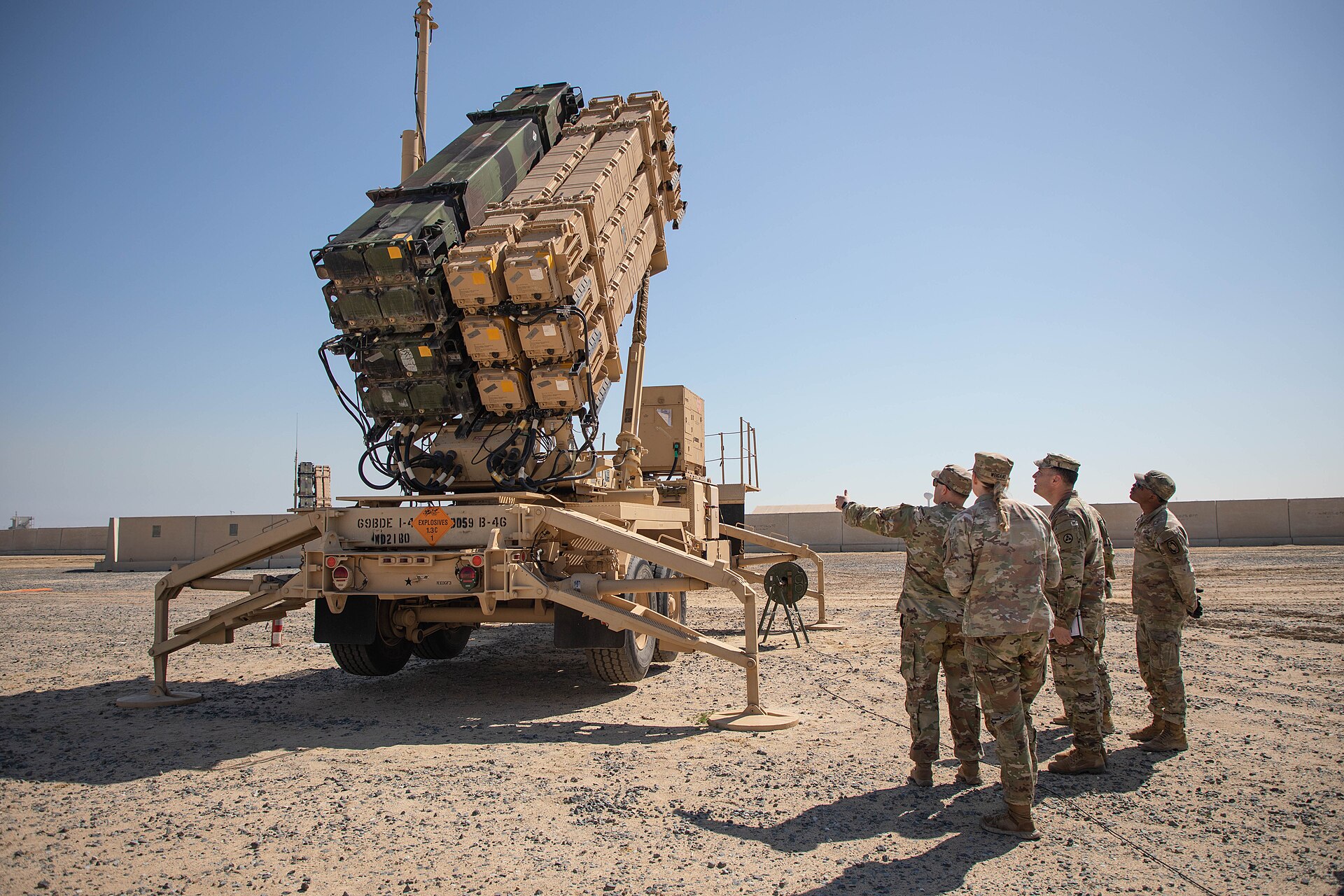
The pattern is consistent across three countries, three adversaries, and three variants of the system: the HQ-9 has never demonstrated the ability to operate when opposed. Iran’s ballistic missiles do not rely on electronic warfare for penetration — they use speed, trajectory shaping, and volume. But the HQ-9’s demonstrated inability to perform under any form of operational stress raises a narrower question about the PSAB deployment. The system did not fail on July 18. It did not fire. Whether the Pakistani command chose not to engage, or whether the battery was not in a state to engage, has not been disclosed by either Islamabad or Riyadh.
Iran Called It a US Base — and Riyadh Had No Legal Rebuttal
Iranian state media characterised the PSAB strike as an attack on a “US-run” facility. The framing was deliberate, and Saudi Arabia’s treaty architecture provided no mechanism to formally dispute it.
A SOFA would establish that US forces at PSAB operate under Saudi sovereign authority — making any strike on the base an attack on Saudi territory regardless of who occupies it. Without a SOFA, the legal characterisation remains genuinely ambiguous. Is PSAB a Saudi installation hosting American forces, or an American facility on Saudi soil? The answer determines who is obligated to respond. If the base is Saudi, the Sakhir Declaration is relevant and collective defence is at least theoretically available. If the base is American, it is Washington’s problem — and the twelve wounded, the destroyed KC-135s, and the four-billion-dollar E-3G lost in March are American losses on an American installation.
Iran chose the second interpretation. Riyadh’s silence accepted it.
The strategic logic was precise. By calling PSAB a US base, Iran reduced pressure on Saudi Arabia to invoke collective defence — because invocation would require Riyadh to publicly contradict the characterisation, assert sovereignty over the installation, and then explain the SOFA void, the PAC-3 depletion, and the Pakistani command authority that make the assertion impossible to sustain. Simultaneously, the framing maximised the rupture between Washington and Riyadh. If PSAB is American, then the US is responsible for its own defence — and the question becomes why Washington has not defended it, not why Riyadh has not invoked.
The IRGC had signalled this trajectory explicitly. After striking the perimeter of the Bushehr nuclear power plant on July 9, the IRGC warned that “other bases will not be spared.” The statement used the word “bases” — not “territories,” not “sovereign installations.” The linguistic choice mapped onto the legal reality precisely: PSAB exists as a base without a defined sovereign status, an installation that no party — Saudi, American, or Pakistani — has claimed in a form that creates an obligation to defend.
What Did the Al-Ruwaili-Frank Meeting Produce?
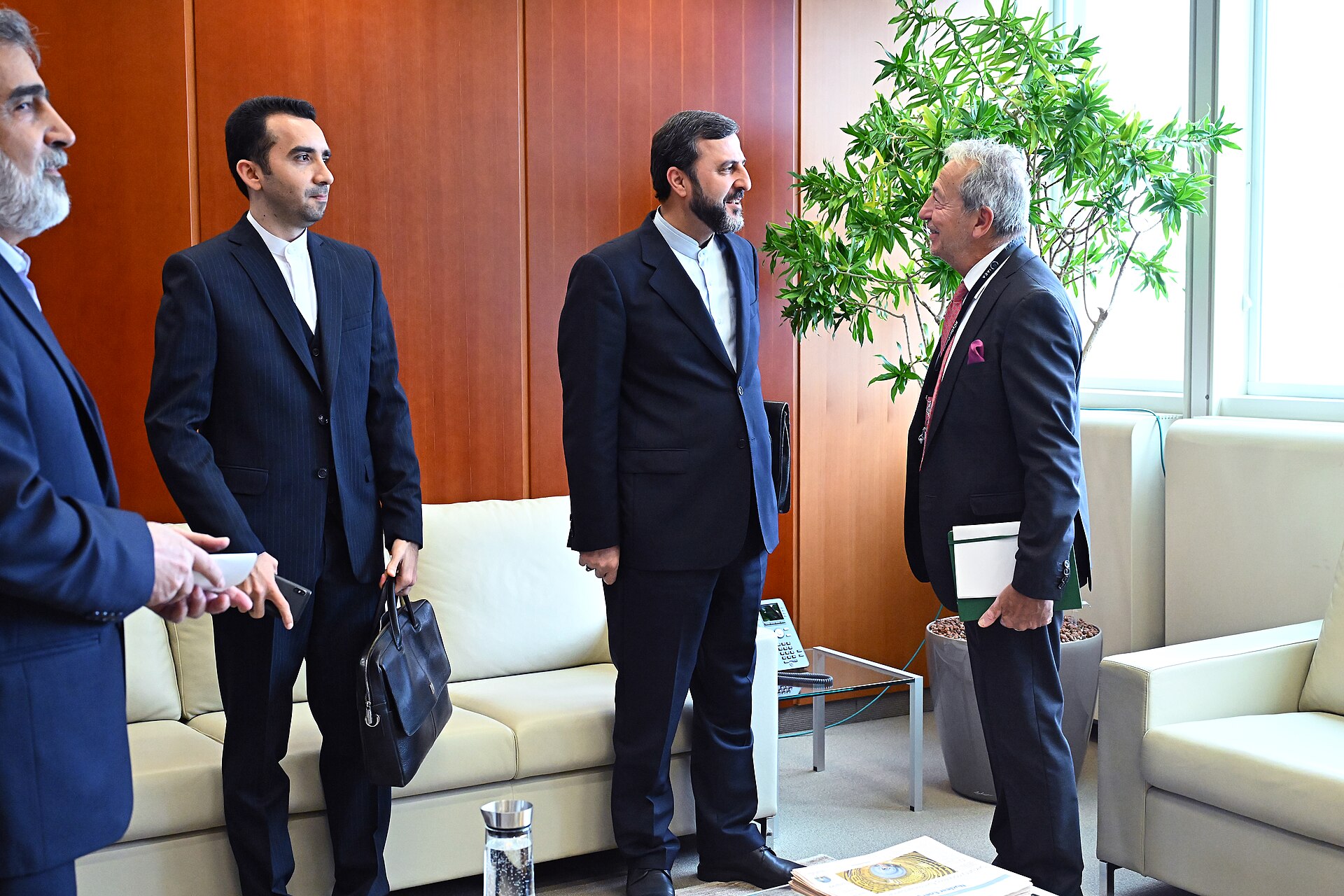
Three days before the confirmed PSAB strike, Gen. Fayyadh Al-Ruwaili — Saudi Arabia’s Chief of General Staff — met Lt. Gen. Patrick Frank, CENTCOM’s Deputy Commander, on July 15. The Saudi Gazette reported that the two reviewed “ways to enhance cooperation across a range of military and defence fields in a manner that serves the shared interests of Saudi Arabia and the United States.”
No specific initiatives were announced. No joint statement was issued. The phrasing — “enhance cooperation” — is diplomatic language that acknowledges deterioration without specifying a remedy. The meeting occurred against a backdrop that made enhancement implausible without first addressing the structural fractures.
The $9 billion DSCA Foreign Military Sales package approved on January 30, 2026, allocated 730 PAC-3 MSE rounds, additional fire units, radar systems, and training. No delivery is expected before mid-2027 — and that timeline assumes Saudi Arabia receives priority allocation from a production line that serves every major US security partner simultaneously.
Meanwhile, Washington was deliberating a punitive drawdown of the approximately 2,300 US personnel at PSAB — a direct consequence of Operation Project Freedom. The drawdown discussion was not hypothetical. It was described in US defence reporting as an active policy consideration that the PSAB strike has complicated without resolving. Withdrawing from a base under Iranian fire reads as retreat. Maintaining personnel at a base where Riyadh grounded their aircraft reads as submission. Al-Ruwaili and Frank met in the space between those two readings. Three days later, the missiles arrived.
What Remains of Saudi Arabia’s Defence Architecture?
Saudi Arabia entered the war with four overlapping defence instruments, each designed to provide a different layer of protection. As of July 18, none is functioning as designed.
| Instrument | Established | Designed Purpose | Current Status |
|---|---|---|---|
| PAC-3 MSE (US) | Ongoing FMS | Terminal ballistic missile defence | 86% depleted; resupply mid-2027 earliest |
| HQ-9 (Pakistan) | Sep 2025 | Medium-to-long-range air defence | Pakistani command; zero combat intercepts; three prior deployment failures |
| Sakhir Declaration (GCC) | Dec 3, 2025 | Collective defence trigger | Never invoked despite strikes on five countries |
| MNNA + Strategic Defence Agreement (US) | Nov 18, 2025 | Alliance signal; preferential defence trade | No mutual defence obligation; no invocation mechanism |
The MNNA designation — signed on November 18, 2025, alongside the Strategic Defence Agreement — creates no mutual defence obligation. It provides preferential access to defence trade, surplus equipment loans, cooperative research, and joint training. It is a procurement status, not a security guarantee. Nothing in the framework requires the United States to defend Saudi Arabia or respond to an attack on Saudi territory.
The Sakhir Declaration requires a political decision by each member state before it activates. Five countries hosting US installations have been struck since July 8. Zero have triggered the mechanism. The declaration exists as a statement of principle that no signatory has been willing to convert into a commitment of action.
The PAC-3 system is depleted to a level where sustained defence becomes arithmetic. Four hundred rounds against an adversary that can produce and fire ballistic missiles faster than the sole Western manufacturer can build interceptors is a countdown with a known endpoint. The arithmetic became concrete on October 8, when a Houthi ballistic missile struck King Khalid Airport while the coalition reported a simultaneous intercept — the two-weapon salvo documented the terminal-phase gap that depleted PAC-3 stocks cannot close.
The HQ-9 is commanded by Pakistan, financed by Saudi Arabia, and has never intercepted anything in combat anywhere. Pakistan’s “red line” statement on July 18 was a diplomatic escalation — its first explicit framing of Iranian strikes on Saudi territory as attacks on Pakistan. But diplomatic escalations do not intercept ballistic missiles. Fire-control computers do. On July 18, the computers were silent.
What Saudi Arabia faces is not a gap in its defence architecture. It is the discovery that the architecture was assembled from instruments that were never designed to do what the war now requires. The PAC-3 was a peacetime procurement hedge, not a wartime consumable stockpile. The HQ-9 was a flag — Pakistan’s presence on Saudi soil — not an integrated air defence asset under Saudi operational control. The Sakhir Declaration was a summit communiqué. The MNNA was a trade designation. Each instrument performed its designed function. None was designed for the function Saudi Arabia now needs.
As of July 18, no Saudi government statement has named Prince Sultan Air Base, invoked the Sakhir Declaration, or identified the command authority responsible for the installation’s air defence.
On July 19, Iran extended the logic to the Red Sea: a drone simultaneously struck the SAMREF refinery at Yanbu while a ballistic missile targeted PSAB, hitting both Saudi export corridors on the same morning for the first time in the war and collapsing the bypass architecture Saudi Arabia had built to survive Hormuz.
Frequently Asked Questions
Does Major Non-NATO Ally status create a US obligation to defend Saudi Arabia?
No. MNNA designation, granted to Saudi Arabia on November 18, 2025, provides preferential access to US defence trade, eligibility for surplus equipment transfers, cooperative research and development, and joint training programmes. It does not create a mutual defence obligation, does not require Senate ratification as a treaty, and contains no invocation mechanism. Approximately twenty countries hold MNNA status globally, including Pakistan — which has held the designation since 2004 and deployed forces to Saudi Arabia under a separate bilateral agreement, not under any MNNA framework. No country has ever used MNNA designation as a basis for invoking US military intervention.
How many PAC-3 MSE rounds can Lockheed Martin produce annually?
Lockheed Martin’s sole PAC-3 MSE production facility, located in Camden, Arkansas, manufactures approximately 620 rounds per year for all global customers combined. Saudi Arabia’s DSCA package of 730 rounds competes with outstanding orders from the US Army, Japan, the United Arab Emirates, Germany, and Poland. At current production rates, fulfilling Saudi Arabia’s order alone would consume more than a full year of dedicated output assuming no other customer received allocation. Even with priority status — which the current state of US-Saudi relations makes unlikely — delivery before mid-2027 requires diverting rounds from buyers whose own inventories are depleted.
Has any GCC member state invoked the Sakhir Declaration since December 2025?
No. Despite Iranian military strikes on US installations in five countries between July 8 and July 18, 2026, no GCC member state has invoked the collective security mechanism established by the Sakhir Declaration. The declaration’s operative language — “any infringement upon the sovereignty of a member state constitutes a direct threat to their collective security” — identifies a threat classification without prescribing or suggesting a response. Unlike NATO’s Article 5, which obligates each member to take “such action as it deems necessary” in response to an armed attack, the Sakhir Declaration contains no response obligation of any kind. Activation requires a sovereign political decision that no member state has been willing to make.
What is Pakistan’s stated position on Iranian strikes against Saudi territory?
Pakistan maintains a dual-track posture. The September 2025 Strategic Mutual Defence Agreement placed Pakistani troops, fighters, and the HQ-9 battery at PSAB under Pakistani operational control, financed entirely by Riyadh. Diplomatically, Islamabad has been conducting back-channel negotiations with Tehran throughout the crisis and remains a participant in the Islamabad MOU track — the same framework Saudi Arabia has been excluded from. The July 18 Reuters statement marked Pakistan’s first public framing of Iranian strikes on Saudi territory as attacks on Pakistan itself. The statement did not address the HQ-9’s non-engagement or specify the conditions under which Islamabad would authorise the battery to fire.
Why did Iran strike SOFA-equipped US bases before PSAB?
Whether the sequencing was deliberate IRGC targeting doctrine or coincidence has not been confirmed by either American or Iranian sources. What is confirmed: Bahrain and Kuwait were struck July 8, Jordan and Qatar on July 9, PSAB on July 18 — a ten-day gap between the fourth strike and the fifth. The IRGC’s post-Bushehr warning that “other bases will not be spared” used the word “bases” rather than “territories” — language that maps onto PSAB’s ambiguous status precisely. If the sequencing was deliberate, it served a specific intelligence purpose: each prior strike demonstrated that SOFA-equipped states would absorb hits without triggering collective defence, giving Iran ten days of observable precedent before reaching the one installation whose host nation lacked even the legal framework to invoke it.
Iran’s Wave Nineteen dual-track strikes on Kuwait’s grid and US military infrastructure illustrate how the same targeting template that is being rehearsed on Kuwait’s coast maps onto Saudi Arabia’s Eastern Province. Iran Hit Kuwait’s Grid and Abqaiq Sits on the Same Coast traces how the desalination and cogeneration corridor from Ras al-Khair to Jubail faces the identical missile envelope behind an air-defence inventory that has lost eighty-six per cent of its interceptors.
Wave 19 of Operation Nasr-2 extended the same logic on July 18–19, striking the US Navy fuel pier at Al-Ahmadi and the AR-327 radar at Sheikh Isa — the first Nasr-2 wave to target logistics and sensor infrastructure rather than weapons depots or personnel. Wave Nineteen Hit the Fuel Pier and the Radar Keeping the Fleet Alive.
The economic architecture underpinning that escalation ladder — Iran’s PGSA transit-fee regime charging $1–2 million per Hormuz passage while commercial traffic sits 89 percent below baseline — is mapped in Iran Kept Hormuz Open — at Two Million a Ship. On July 18, the HQ-9 silence that this article describes became a confirmed pattern: Iran struck PSAB, the Pakistani-commanded battery did not engage, and Saudi Arabia issued no statement. Iran Struck Prince Sultan and No One Was Required to Say So analyses why the HQ-9 nonengagement is structural — and what the six-minute all-clear conceals about the PAC-3 rounds that did fire.
On July 20, Waves 21 and 22 of Nasr-2 struck the maritime surveillance architecture that would provide advance warning for those remaining rounds — the P-8A Poseidon at Aqaba and the early-warning radar at Ali al-Salem. What Watches the Gulf for Saudi Arabia Now? details what the sensor ledger now shows. With 400 rounds remaining from 2,800, the interceptor ledger now intersects a nuclear dimension: Saudi Arabia Bought the Nuclear Ceiling It Cannot Set examines what a Pickaxe Mountain strike means for a kingdom whose air defence is already at 14 percent capacity.