DHAHRAN — Houthi military spokesman Yahya Saree declared on 14 October that operations against Saudi territory would continue “in the coming days,” naming oil facilities and airports as primary targets in what he called an open-ended campaign following the group’s ballistic-missile strike on the Aramco headquarters complex in Dhahran. The declaration, broadcast on Houthi-controlled media and reported by Anadolu Agency and Dawn, renewed an evacuation warning to international airlines, civilians, and employees near any Aramco facility — the broadest such warning the group has issued since the current escalation cycle began.
The threat arrives as the pace of Houthi operations against Saudi Arabia has reached a level without precedent in the nine-year conflict: twenty-three recorded attacks between 1 and 14 October, almost double the average monthly number since the start of the war, according to Arab Gulf Business Insight. Three facilities were explicitly named in Houthi targeting declarations — the Aramco headquarters in Dhahran, an Aramco refinery in Riyadh, and King Khalid International Airport — but the operational scope of the campaign has already extended to Shedgum, Tanajib, King Fahd International in Dammam, and Abha, stretching Saudi air defences across a vast arc of territory that no interceptor stockpile was designed to cover at this tempo.
Table of Contents
What Did Saree Declare After the Dhahran Strike?
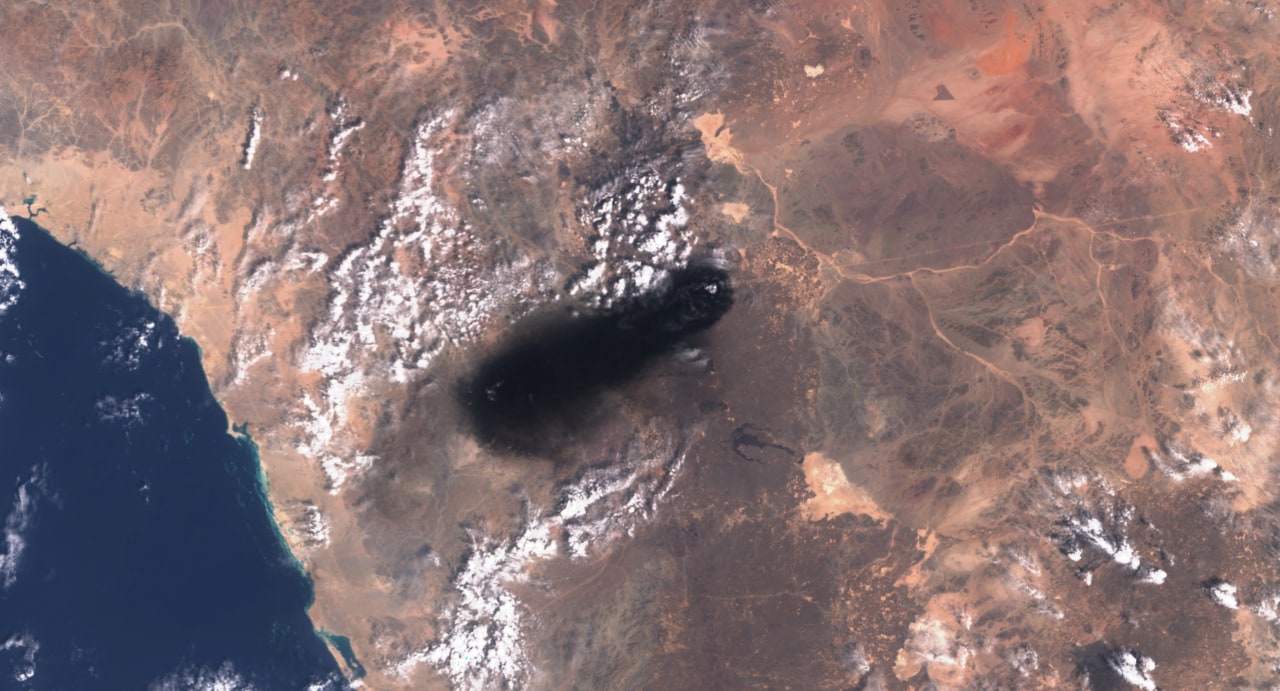
Saree described the 13–14 October operation as “a high-quality military operation targeting Aramco in Dhahran,” telling reporters the group had deployed ballistic missiles, cruise missiles, and drones in a combined assault on the company’s headquarters complex and an Aramco refinery in Riyadh, according to France24 and ANI. A ballistic missile struck an administrative office tower at the Dhahran complex on the evening of 13 October, damaging the upper three floors and triggering what the Saudi Press Agency described as a “limited fire,” with no casualties reported. A separate missile hit King Khalid International Airport in Riyadh, and Saree claimed “the hit was accurate,” according to France24.
The forward-looking element of the declaration carried the greater weight. “Operations toward Saudi depths will continue in the coming days, targeting Saudi enemy airports and oil facilities,” Saree said, in a formulation reported by both Anadolu Agency on 14 October and Dawn on 15 October. He renewed a standing evacuation warning — first issued on 13 October via Bernama and Al Jazeera — directing civilians and employees to stay away from “any Aramco oil facility” and extending the same caution to international shipping companies, according to gCaptain and Reuters.
The Houthis framed the campaign as retaliation for the Saudi-led coalition’s strike on the Yemen Petroleum Company’s central al-Sabah station in Sanaa on 13 October, which the coalition said was justified because the Houthis had been “using the facility and its underground fuel depots for their arsenal,” according to Al Jazeera. The group also cited a broader count of 2,281 Saudi air and missile attacks as its stated justification — a figure reported by CBS News and the Washington Times as the Houthis’ own claim, without independent verification. The coalition also struck Ras Isa port oil storage tanks and an oil station in Hodeidah province on 13 October, and the Houthis framed the exchange as a symmetric infrastructure war, according to Al Jazeera.
Which Facilities Has the Campaign Named?
The explicit target list published by the Houthis on 13 October through Al Jazeera and expanded by Saree on 14 October names three sites: the Aramco headquarters complex in Dhahran, an Aramco refinery in Riyadh, and King Khalid International Airport. The Dhahran complex spans fifty-eight square kilometres with approximately eleven thousand residents, encompassing Aramco’s research infrastructure and the historic centre of Saudi oil operations since the 1938 discovery at Dammam No. 7, according to The National News. The administrative office tower that was struck sits within this complex but is not a production facility — a distinction the Saudi Press Agency emphasised in its initial statement.
The Middle East briefing 3,000+ readers start their day with.
One email. Every weekday morning. Free.
The operational scope of attacks in October extends well beyond these three named targets. On 11 October, fires were reported at the Shedgum gas processing facility and the Tanajib oil facility after Houthi strikes, and King Fahd International Airport in Dammam was attacked on the same day, according to Whalesbook. Between 6 and 11 October, Houthi strikes on Saudi airports — including King Khalid International and Abha — killed twenty people and wounded hundreds, according to the BBC. The pace of operations has dispersed Saudi defence assets across a geographic arc stretching from the Yemeni border to the Eastern Province, and Saree’s evacuation warning suggests the Houthis intend to widen the target envelope rather than narrow it.
How Strained Are Saudi Air Defences?
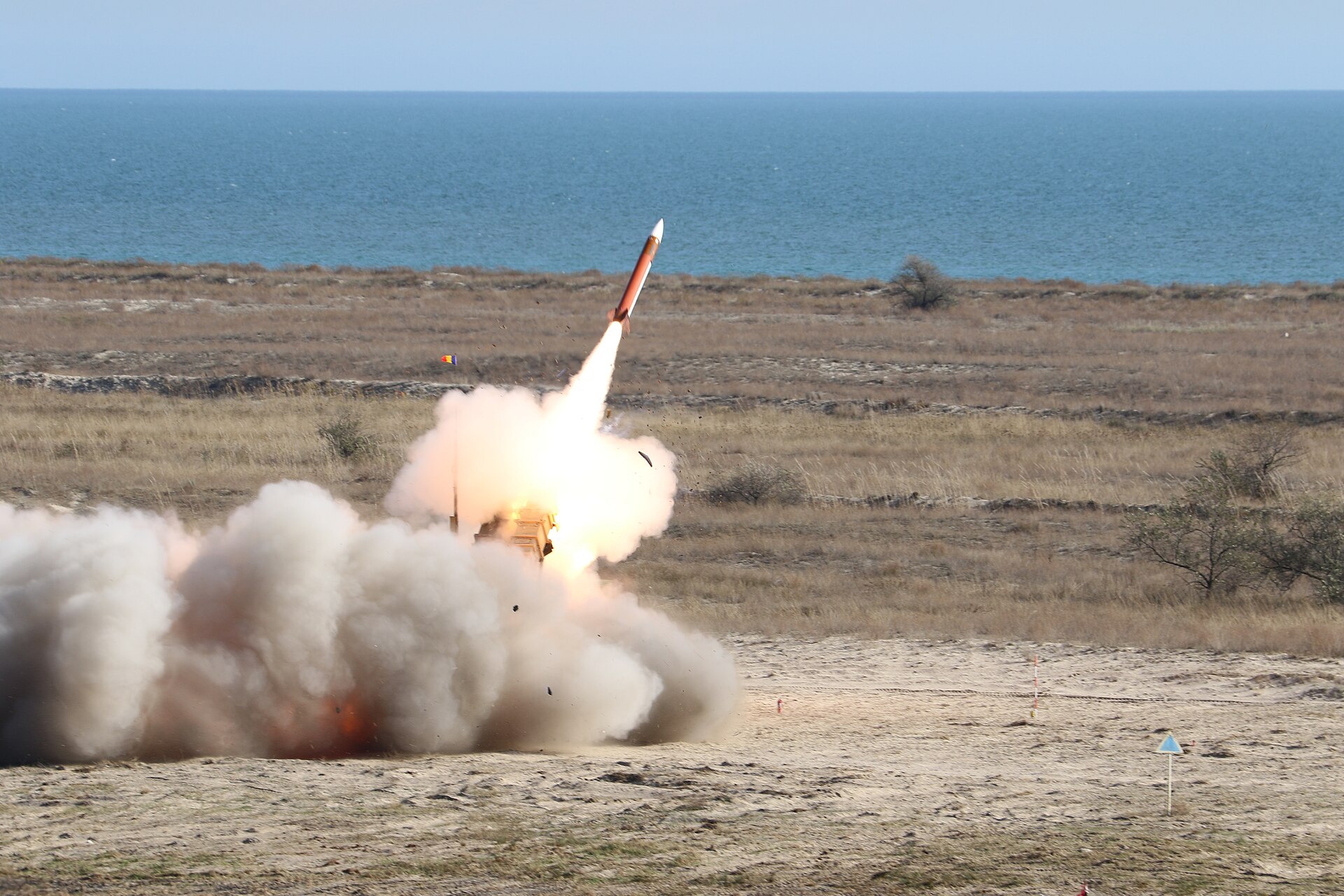
The Wall Street Journal reported on 12 October, via ANI, that Saudi Patriot interceptor stocks had fallen to fewer than one thousand units — a figure Riyadh does not publicly confirm or deny. Nawaf Obaid of King’s College London told The National News on 13 October that “no existing system, including those protecting the [United States], can guarantee interception of repeated, simultaneous attacks,” a formulation that placed the Saudi air-defence challenge in a category shared by every military power facing saturation assaults. Francis Tusa, editor of Defence Eye, told the same publication that “during one Jordan airbase attack, up to 80 Patriots were fired in a single night, rapidly depleting reserves” — a rate of expenditure that, applied to the current operational tempo, would exhaust the Journal’s reported stock in under two weeks.
Dr. Lynette Nusbacher, a former military intelligence officer, described to The National News what she called “leakage” in THAAD and Patriot availability, forcing Saudi commanders into difficult choices about where to deploy interceptors across territory stretching from the Yemeni border to the capital. The practical consequences of this strain were visible in Riyadh on successive days: on 13 October, debris from intercepted missiles fell on fifteen residential homes, injuring four people, according to Arab Times Online, and on 14 October, debris from an intercepted ballistic missile struck a residential home and vehicle, injuring one Arab national, according to Arab Times Online. Analysts cited by The National News estimated a replenishment timeline of up to thirty months for depleted Patriot stocks — a window that would carry Saudi Arabia well into 2029 if resupply began immediately, which no public statement from Washington or Riyadh has confirmed.
Airlines Suspend Routes as King Khalid Stays Closed
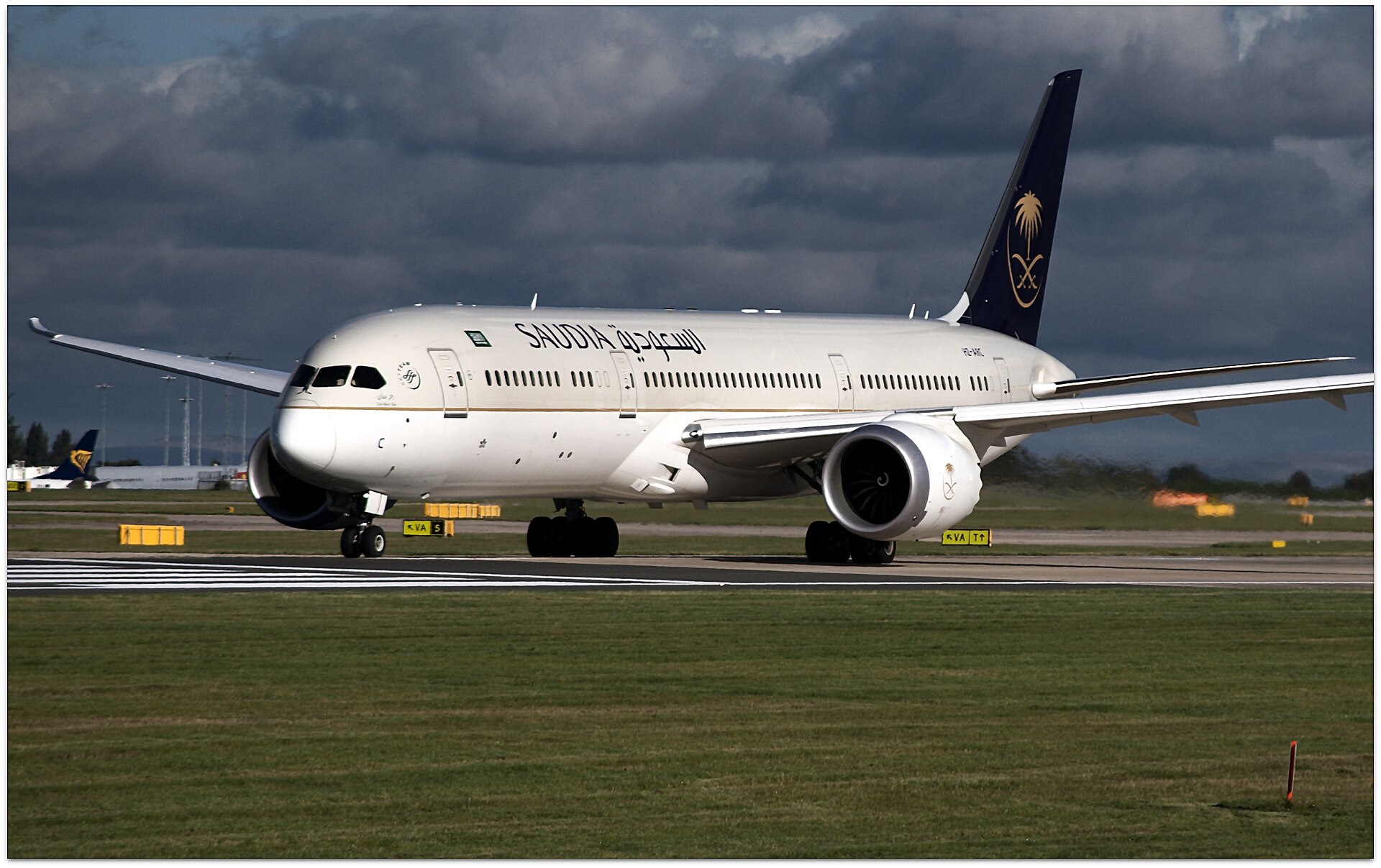
King Khalid International Airport’s closure, governed by a NOTAM extending until 21:00 GMT on 17 October according to Travel and Tour World and the General Authority of Civil Aviation, has cascaded through international aviation schedules at a scale the Saudi capital has not experienced before. Nearly three hundred flights were cancelled or did not operate on a single day, according to The National News. The airline-by-airline withdrawal has deepened through the week: Air France suspended service through the end of October, KLM cancelled all Riyadh and Dammam flights until 24 October, British Airways suspended to at least 3 November, and Cathay Pacific withdrew through 31 January 2027, according to The National News and Air Data News. Delta Air Lines postponed the launch of its Atlanta–Riyadh route to March 2027, and Philippine Airlines suspended until 29 November, according to nomadlawyer.org.
The aviation disruption has forced the postponement of events designed to project Saudi Arabia’s post-oil brand: the Six Kings Slam tennis tournament moved from 21–24 October to 27–30 December, and an Al Nassr football fixture shifted to 6 March 2027, according to TennisNow and the Eastern Herald. The EU-GCC summit remains confirmed for Riyadh on 24 October, and the Future Investment Initiative for 26–29 October, with no source reporting a cancellation or relocation of either event. Whether King Khalid reopens after the current NOTAM expires on 17 October will determine the viability of the broader Riyadh Season calendar that was due to open on 21 October — and whether the diplomatic and investment conferences proceed under an open or closed sky.
Aramco Operations Hold as Markets React
Aramco’s chief executive stated on 14 October that “our system is intact,” telling The National News that the company could reach its twelve-million-barrel-per-day maximum sustainable capacity within days, with no production disruption reported from the Dhahran strike. The company’s share price fell 0.5 percent, the Saudi National Bank declined 1.3 percent, and the Tadawul index dropped 0.7 percent in the session following the attack, according to Daily Pakistan — a muted reaction relative to the market chaos that followed the 2019 Abqaiq and Khurais strike, which temporarily halved Saudi processing capacity.
Brent crude rose sixty-three cents to $106.32 per barrel by 03:45 GMT on 14 October before settling at $106.06, up 0.35 percent on the day, according to FinanceFeeds and the Nation Thailand. Phil Flynn of the Price Futures Group told Invezz and Yahoo Finance that “we’re seeing a lot of fear trade today,” a characterisation that captured the market’s assessment of the gap between the physical damage and the trajectory of the threat. The distinction between what was hit at Dhahran — an administrative office tower, not a production facility — and what could be hit in subsequent operations is now the central question for energy markets, with Saree’s declaration explicitly placing every Aramco facility on the target list and the operational tempo continuing to accelerate.
A Pattern of Escalation Since 2019
The Houthi campaign against Saudi oil infrastructure has its most consequential precedent in the 14 September 2019 attack on the Abqaiq and Khurais processing centres, which knocked out 5.7 million barrels per day of capacity and demonstrated the vulnerability of concentrated production infrastructure to drone and cruise-missile assault, according to The National News. The 25 March 2022 strike on the North Jeddah Bulk Plant, which caused a large fire, extended the target set to distribution infrastructure. In 2026, the campaign broadened further with earlier attacks on refineries at Ras Tanura, Jubail, and Yanbu, and a strike on Abqaiq on 27 July, according to AGBI.
The October 2026 acceleration represents a qualitative shift in operational tempo. Those attacks have hit targets across a geographic arc stretching from Abha in the southwest to Dammam in the east and Riyadh in the centre, with the Dhahran headquarters strike adding a symbolic and administrative target to what had previously been a campaign directed at production, processing, and export infrastructure. The United States has responded with the deployment of more than one hundred military advisers for intelligence support, according to CNN, and President Trump said on 10 October that the Saudis were “good fighters” who were “able to defend,” according to CNN — but Saree’s declaration on 14 October made clear the Houthis view the current pace as a baseline, not a peak.
Frequently Asked Questions
How many people have been killed in Houthi airport attacks in Saudi Arabia in October 2026?
At least twenty people died in Houthi strikes on Saudi airports between 6 and 11 October, according to the BBC. The 10 October King Khalid Airport strike was the deadliest single incident: Al Jazeera reported twelve killed and 309 wounded, while the BBC put the injured at 308. An Indian victim’s death raised the KKIA toll to thirteen, the BBC reported on 11 October. A Terminal 4 strike on 11 October killed one Pakistani resident and injured eleven, according to CNN, and earlier attacks on KKIA and Abha between 6 and 7 October killed three and wounded thirty-six, the BBC reported.
Has Saudi Arabia requested emergency interceptor resupply from the United States?
Neither Riyadh nor Washington has publicly confirmed an emergency resupply request for Patriot interceptors as of 15 October. The Wall Street Journal reported Saudi stocks at fewer than one thousand units, and analysts cited by The National News estimated a standard replenishment timeline of up to thirty months. The United States has deployed more than one hundred military advisers for intelligence support, CNN reported on 11 October, without specifying whether munition transfers are included in the deployment mandate.
What has happened to shipping through the Strait of Hormuz?
CENTCOM reported on 10 October that 135 ships had turned around since the Hormuz blockade began on 14 July, according to CBS News. Saree’s 14 October evacuation warning explicitly named international shipping companies alongside Aramco facilities and airports, according to gCaptain and Reuters. Brent crude stood at $102.94 on 9 October, according to CNBC, before the Dhahran strike pushed it above $106 — a trajectory that reflects both the physical disruption to maritime traffic and the risk premium attached to the Houthi campaign’s declared expansion into oil infrastructure.
Are the EU-GCC summit and Future Investment Initiative still scheduled?
Both events remain confirmed as of 15 October: the EU-GCC summit for 24 October and the Future Investment Initiative for 26–29 October in Riyadh, with no source reporting a cancellation or relocation. The practical question is access: King Khalid International Airport operates under a NOTAM until 21:00 GMT on 17 October that does not guarantee a reopening, and several major international carriers have suspended Riyadh service into November and beyond. Whether diplomatic and investor delegations can reach the capital by road from Jeddah or Dammam, or by air into alternative airports, has not been addressed publicly.
How does the October 2026 Dhahran strike compare to the 2019 Abqaiq attack?
The September 2019 Abqaiq and Khurais attack — which halved Saudi processing capacity and caused a fourteen-percent spike in Brent crude the following day, according to The National News — remains the benchmark for oil-infrastructure strikes. The October 2026 Dhahran strike hit an administrative office tower, not production infrastructure, and Aramco’s chief executive said the company’s production system remained intact. The market response — Brent settled up 0.35 percent on 14 October — reflected this distinction, though the Houthis’ declared intent to target additional Aramco facilities has introduced a forward-looking risk premium that the 2019 attack, treated as a one-off, did not carry.
The vow to continue strikes carries a secondary strategic dimension. The Houthis’ concurrent warning against US intervention traps Riyadh: MBS cannot ask Washington to act without accepting that the response would fall on Saudi Arabia rather than on Houthi positions.