RIYADH — Brent crude fell $1.30 to $105.35 a barrel on October 13, the first daily decline in nearly a week, despite fresh Houthi attacks on King Khalid International Airport. The drop followed a US Treasury license authorising Russian diesel imports through April 2027 — a signal from Washington that it could route around Saudi supply at the moment Saudi Arabia needed its pricing power most.
Prince Abdulaziz bin Salman told the World Petroleum Congress on October 11 that Riyadh was “the capital of energy security.” The market’s reply arrived forty-eight hours later. Saudi Arabia’s position as a swing producer rests on the assumption that its barrels are irreplaceable. The Russian diesel deal tested that assumption. Trump announced it on October 9, and OFAC issued the temporary general license the same day. It landed against a fiscal deficit revised to 245 billion riyals, an OPEC demand growth estimate cut from 1.4 million barrels per day to 400,000, and a prestige calendar — Riyadh Season on October 21, the EU-GCC summit on October 24, the Future Investment Initiative on October 26-29 — that depends on an airport system the Houthis have shut. The price of crude recorded all three pressures in a single number.
Table of Contents
- Why Did Brent Fall Despite Active Strikes on Saudi Arabia?
- What Did Trump’s Russian Diesel Deal Actually Secure?
- Novak Offered Three Million Tonnes — Bousso Counted Twelve Hours
- How Far Has OPEC’s Demand Outlook Deteriorated?
- Prince Abdulaziz at the World Petroleum Congress
- Can Riyadh Host a Summit It Cannot Fly Delegates Into?
- The Fiscal Arithmetic: 245 Billion Riyals
- Who Benefits from the Diesel License — Moscow or Washington?
- Frequently Asked Questions
Why Did Brent Fall Despite Active Strikes on Saudi Arabia?
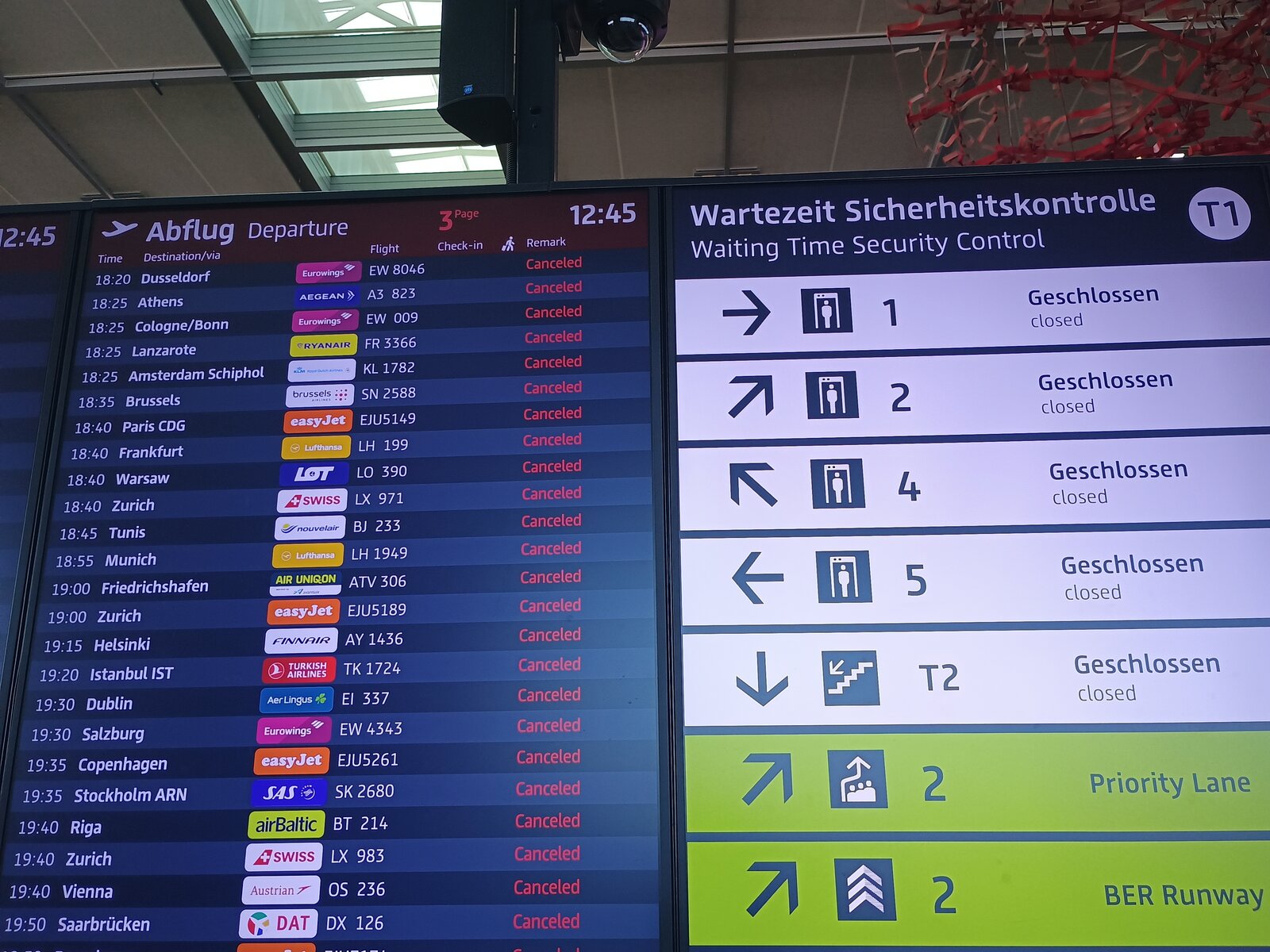
Brent declined because the market judged new supply pathways — Russian diesel entering the American market under a Treasury license — as more consequential than the physical risk from continued Houthi strikes. The fall came despite KKIA remaining closed until at least October 17, with 78 percent of its scheduled services cancelled.
| Date | Event | Brent ($/barrel) | Source |
|---|---|---|---|
| Apr 30 | 2026 peak | $126.41 | Aletihad/Reuters |
| Sep 9 | IEA benchmark | $113.48 | IEA, Sep 11 |
| Oct 9 | Trump rules out Iran strikes | $102.94 | CNBC |
| Oct 13 | KKIA struck again; diesel deal in effect | $105.35 (-$1.30) | Irish Times/Reuters |
Brent had shed more than $21 since its April 30 peak and recovered from the October 9 low — which followed Trump ruling out strikes on Iran before the November 3 midterms — before the October 13 retreat erased part of the recovery and marked the first daily decline in that span.
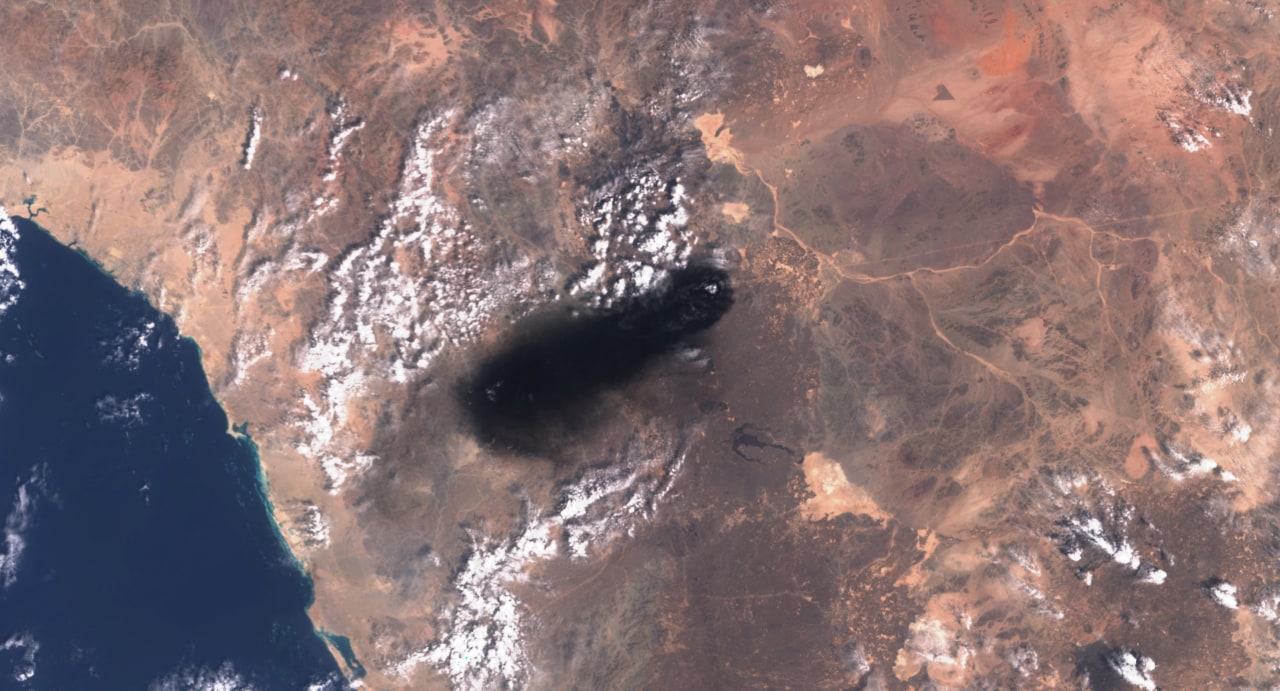
The physical risk backdrop was worsening, not easing. The October 10 Houthi attack on KKIA killed at least twelve people — Al Jazeera reported twelve; the BBC said thirteen after an Indian victim’s death — and injured more than 308. Across Saudi airports, at least twenty people died between October 6 and October 11, according to the BBC. On October 11, a projectile hit Terminal 4, killing a Pakistani resident and injuring eleven, and Dammam airport was attacked, CNN reported.
Aramco responded on the supply side by cutting its November Arab Light official selling price to Asia by $3, widening the discount to Oman/Dubai benchmarks to the most since June 2020, according to Reuters. The OPEC+ November production target for Saudi Arabia stood at 10.5 million barrels per day, according to Enerdata. The kingdom was producing. It was also discounting.
The Middle East briefing 3,000+ readers start their day with.
One email. Every weekday morning. Free.
A KCM Trade chief analyst told the Irish Times on October 13 that “fresh diesel supply from Russia and steadier Saudi flows are offering some relief, yet the market still looks more worried about the risk of further hits to ships or pipelines in the Gulf than it is reassured by extra barrels.” The assessment captured the paradox: traders still feared physical disruption but no longer priced Saudi supply as irreplaceable. Risk persisted. The premium attached to it narrowed.
VLCC charter rates from the Gulf to China — at $1.2 million per day against approximately $80,000 a year earlier, according to LSEG data via bdnews24 and Reuters — confirmed that the shipping market still treated the Gulf as a war zone. Yet Brent fell. The divergence between shipping costs and crude prices measured the distance between the physical war and the market’s judgment about supply alternatives.
What Did Trump’s Russian Diesel Deal Actually Secure?
Trump announced on October 9 via Truth Social that Russia had agreed to supply 300,000 tonnes of diesel immediately, 500,000 tonnes in November, and one million tonnes per month thereafter, with a conditional ceiling of three million tonnes dependent on refinery capacity, according to Al Jazeera. The Treasury’s Office of Foreign Assets Control issued a temporary general license — General License No. 135 — the same day, authorising Russian diesel imports through April 7, 2027.
The deal addressed American diesel at $6.52 per gallon in September — up 70 percent since the start of the US-Israel campaign against Iran, Al Jazeera reported on October 10. Trump told Fox News on October 12 that oil would “drop like a rock” once the Iran war ended “very soon.”
Market scepticism was immediate. Chris Beauchamp, chief market analyst at IG Group, called the arrangement “a short-term solution” with “no certainty that any of the objectives will be achieved,” Al Jazeera reported. Neil Atkinson, a former head of the IEA’s oil markets division, said the volumes “don’t really move the needle.”
The opposition extended to Congress. Seven US senators — four of them Republican — wrote to Trump on October 12 asking him to reverse the deal, citing the Graham Sanctioning Russia Act, according to Time. ING analysts noted “considerable scepticism over the Russia-Ukraine energy ceasefire, particularly with reports that Russia has hit Ukrainian energy targets since Trump announced it,” the Irish Times reported on October 13.
For Saudi Arabia, the substance mattered less than the signal. An American president had publicly treated Russian diesel as a substitute for Gulf supply at the moment when King Khalid International Airport was closed indefinitely and Aramco was routing crude through a pipeline whose vulnerabilities September had exposed to the Red Sea port of Yanbu.
Novak Offered Three Million Tonnes — Bousso Counted Twelve Hours
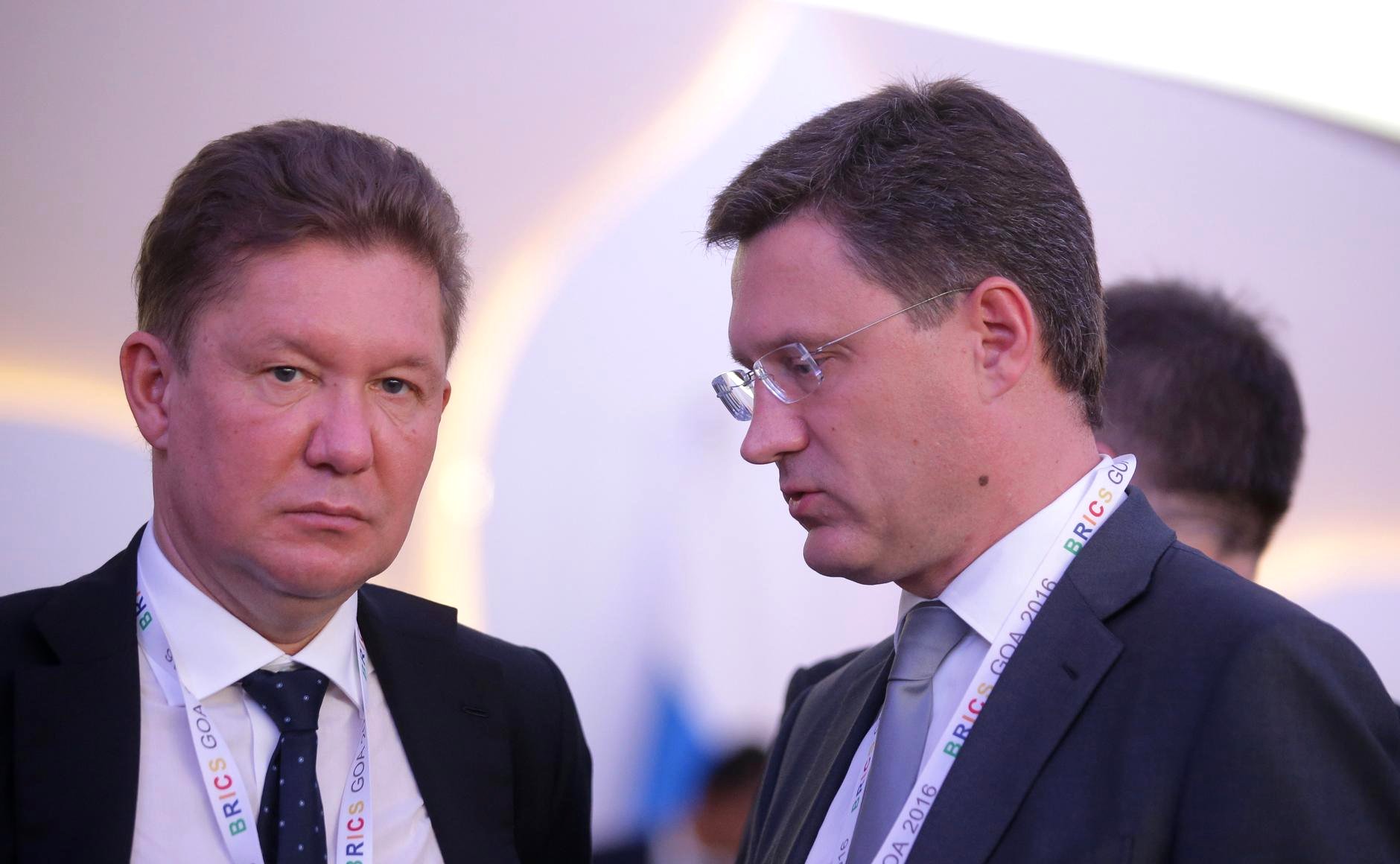
The gap between Moscow’s promises and the market’s arithmetic defined the first week of the diesel deal. Russian Deputy Prime Minister Alexander Novak said on October 12 that Russia could reach supply volumes of “3.5 million tons per month to global markets, just as before the crisis,” according to TASS. He attributed a “5-6% downward adjustment in global diesel prices” to the arrangement.
Ron Bousso, Reuters’ energy columnist, offered a different scale.
“If you put together all the numbers that Donald Trump said Russia would supply, it totals 12 hours of global supply.” — Ron Bousso, Reuters energy columnist, ABC News Australia, October 12
The discrepancy was not a contradiction. Three million tonnes of diesel per month is a meaningful volume for American refiners but a marginal one in global crude flows. What moved the price was not the tonnage but the precedent: an OFAC license reversing a section of the post-2022 sanctions architecture in response to a supply shock that originated in the Gulf. Trump’s own announcement acknowledged the constraint: the three-million-tonne figure was conditional on refinery capacity, according to Al Jazeera. Novak’s pledge to reach 3.5 million tonnes by year-end, per TASS, was an aspiration whose timeline the market could not yet verify.
Moscow positioned itself as the reliable supplier that a disrupted Saudi Arabia could no longer be — a framing that bypassed the question of why Saudi supply was disrupted in the first place. The Iran-backed Houthis who had closed KKIA and forced Aramco to reroute exports through Yanbu were the proximate cause of the supply disruption that Russian diesel now proposed to ease. Moscow was offering to fill a gap that its own geopolitical alignment with Tehran had helped create.
How Far Has OPEC’s Demand Outlook Deteriorated?
OPEC Secretary General Haitham Al Ghais told the World Petroleum Congress on October 12 that the cartel had revised its 2026 demand growth forecast to 400,000 barrels per day, down from 1.4 million barrels per day at the start of the year, according to BOE Report. The revision cut a million barrels per day from the growth estimate — reflecting war disruption, sanctions reconfiguration, and shifting Asian buying patterns.
IEA Executive Director Fatih Birol said on October 12 that conditions in the oil market “merit immediate attention,” according to ABC News Australia. Brent had lost more than eight dollars from its September 9 level in five weeks.
Aramco’s pricing response — the November Arab Light discount — accepted lower per-barrel revenue in exchange for volume in Asian markets where buyers were finding alternatives to Saudi crude. That trade-off grew harder to sustain as the fiscal deficit widened.
A lower demand growth trajectory compressed the pricing band within which Saudi Arabia could simultaneously fund its budget, maintain OPEC+ cohesion, and defend market share. At 400,000 barrels per day of demand growth — with a deficit of 245 billion riyals to finance and a diesel-deal precedent that invited further substitution of Gulf supply — there was less room for all three. The January estimate of 1.4 million barrels per day had assumed a different year.
Prince Abdulaziz at the World Petroleum Congress
Prince Abdulaziz bin Salman delivered two addresses at the World Petroleum Congress in consecutive days. On October 11, he told attendees: “I am proud to say that this country, and the city of Riyadh, is the capital of energy security,” as reported by Asharq Al-Awsat.
On October 12, he returned with broader claims. “Resilience is built before a crisis begins,” he said, adding that “pipelines do not repair themselves… people do,” according to The National. He also stated that “the word ‘fear’ in the Saudi dictionary does not exist.”
The pipeline reference pointed to the East-West line. Prince Abdulaziz had said on October 6 that it was running at 5.8 million barrels per day: “And, thank God, as of this morning we’re back up to 5.8 million barrels,” he told Al Jazeera. The pipeline had been suspended on September 12 and restarted on September 22, according to Saudi Gazette and Zawya. Its design capacity is approximately seven million barrels per day, with about five million exportable, according to Aramco. At 5.8 million bpd, the pipeline was operating near its export ceiling — a figure that spoke to recovery, not surge capacity.
The WPC addresses operated in a register that the market did not share. Prince Abdulaziz spoke of resilience, repair, and national pride at a congress hosted in a city whose main airport had been struck three days earlier, killing at least twelve people. The juxtaposition was not lost on traders. Saudi Arabia was declaring itself the capital of energy security while Aramco discounted its November crude to a six-year low against Oman/Dubai benchmarks and OPEC’s own secretary general, at the same congress, announced a demand revision that cut a million barrels per day from the growth outlook.
Can Riyadh Host a Summit It Cannot Fly Delegates Into?
KKIA remained closed until at least 21:00 UTC on October 17, with 78 percent of its services cancelled and 46 percent of Saudi airport departures cancelled on October 14, according to Air Data News. Three major international carriers suspended service to the kingdom through the end of October or beyond.
The airline suspensions, all reported by Air Data News on October 13, stretched well past the official closure window:
- Air France-KLM suspended Saudi operations through the end of October
- Lufthansa suspended through October 16
- Philippine Airlines — serving a labour migration corridor Saudi Arabia depends on — cancelled through November 29
- Delta Air Lines deferred its planned Atlanta-Riyadh route to March 2027
The closures threatened an events calendar that Saudi Arabia had spent years constructing. Riyadh Season was scheduled for October 21. The EU-GCC summit, with European Council President Antonio Costa’s invitation setting it for October 24, was planned as the first standalone GCC-EU leaders’ summit. The Future Investment Initiative was set for October 26-29. The New York Times reported on October 10 that airport strikes threatened the events calendar. FII organisers indicated the summit would proceed, according to AGBI.
GCC solidarity statements came quickly after the October 10 KKIA strike. Qatar called it “a direct threat to the security of the region,” according to Al Jazeera. The UAE declared “full solidarity,” per CBS News. Kuwait said Saudi security was “an inseparable part of the security” of Kuwait and the GCC, Fortune and the Associated Press reported on October 9. The statements registered support but did not address logistics. They did not resolve the question of how delegates would arrive at a summit in a city whose airport remained under periodic attack.
Trump confirmed on October 12 that he had spoken with Crown Prince Mohammed bin Salman, telling Fox News that the Houthis were “misbehaving very badly. No good.” Saudi Arabia’s options for responding were narrowing. Washington had deployed more than 100 US military advisers for intelligence support only, according to CNN. The possible $24.3 billion sale of 48 F-35A fighters, reported by The Aviationist on September 17, remained a notification rather than a delivered capability.
At sea, the constraints were equally visible. CENTCOM reported that 135 ships had been turned around since the Houthi blockade began on July 14, per CBS News. Houthi targeting of Saudi airports had been systematic, and the question of physical access to Riyadh — by air and by sea — had become the binding constraint on the kingdom’s role as host, customer, and supplier.
The Fiscal Arithmetic: 245 Billion Riyals
Saudi Arabia’s fiscal position deteriorated faster than the oil price. The 2026 deficit was revised to 245 billion riyals on September 30, up from a budgeted 165 billion, according to Zawya and Reuters. Real GDP contracted 3.6 percent, driven by a 21.8 percent decline in oil sector activity.
| Metric | 2026 (revised) | 2027 (budget) | Source |
|---|---|---|---|
| Deficit (billion riyals) | 245 | 191 | Zawya/Reuters, Sep 30 |
| Spending (trillion riyals) | — | 1.39 | Zawya/Reuters, Sep 30 |
| Revenue (trillion riyals) | — | 1.20 | Zawya/Reuters, Sep 30 |
| Real GDP growth | -3.6% | — | Zawya/Reuters, Sep 30 |
| Oil sector activity | -21.8% | — | Zawya/Reuters, Sep 30 |
| OPEC+ Saudi target (Nov) | 10.5 mb/d | — | Enerdata, Oct 4 |
The 2027 budget projected spending of 1.39 trillion riyals against revenue of 1.20 trillion, leaving an expected deficit of 191 billion riyals, Zawya and Reuters reported. The gap between the 2026 deficit and the 2027 projection implied improvement. But the pre-budget statement forecast real GDP rebounding 12.8 percent in 2027, according to the same report — a swing that required oil sector activity to reverse its 21.8 percent contraction. At Brent’s current level, with OPEC demand growth at 400,000 barrels per day and a diesel-deal precedent that allowed Washington to route around Gulf supply, the revenue base on which that rebound depended was narrowing before the fiscal year began.
The fiscal pressure interacted with the pricing pressure. Aramco’s November OSP discount was a revenue trade-off: lower per-barrel income in exchange for maintaining volume in Asian markets where Iranian diplomatic positioning and Russian supply alternatives were reshaping competition. Each dollar Brent fell below the kingdom’s revenue assumptions tightened the space available for defence spending, event hosting, and the capital expenditure that Vision 2030 still required.
Who Benefits from the Diesel License — Moscow or Washington?
Both governments claimed the deal as a win, but for different reasons and with different timelines. Washington extracted domestic price relief without military escalation. Moscow extracted a bilateral supply relationship with the world’s largest consumer — and a precedent that its alignment with Tehran had not precluded energy cooperation with Washington’s closest Gulf partner’s principal adversary.
Kirill Dmitriev, a Kremlin aide, described the deal on October 9 as evidence that “Russia-US cooperation on diesel and energy will benefit the world,” according to Al Jazeera. Russian Ambassador Miroshnik described it on October 13 as “a significant step toward each other” that could “expand to other issues,” according to TASS. Analyst Suslov called it “the most significant positive development in US-Russia relations since the Anchorage summit,” also per TASS.
Moscow’s framing was consistent: Russia as the global diesel backstop that Saudi Arabia’s disrupted infrastructure could no longer provide. The framing sidestepped the origin of that disruption — the Iran-backed Houthi campaign that Russia had not condemned at the UN Security Council — and positioned Russian supply as a stabilising force rather than a geopolitical instrument.
For Washington, the benefit was domestic and immediate. Trump had ruled out strikes on Iran before the November 3 midterms, according to The National on October 8. The diesel license offered price relief without escalation — at the cost of the sanctions architecture that seven senators, four of them Republican, invoked in their October 12 letter to the president, as reported by Time.
Zelenskyy said on October 10 that easing sanctions on Russian energy “plays into Russia’s hands,” according to Al Jazeera. The objection registered in Congress but did not alter the license terms. The bipartisan senatorial opposition — four Republicans and three Democrats, per Time — meant the deal faced legislative headwinds from both flanks, but the OFAC license was an executive instrument that did not require congressional approval to issue.
For Riyadh, the consequence was structural rather than volumetric. An American president had publicly substituted Russian fuel for Gulf supply during an active conflict in the Gulf — a precedent that rearranged the assumptions on which Saudi Arabia’s swing-producer identity rested. The kingdom’s defence relationship with Washington was already under active renegotiation, and the diesel deal added an energy dimension to a security dependency that had been fraying since the summer. As of October 13, Saudi Arabia had issued no public response to the Russian diesel deal.
Frequently Asked Questions
What is the OFAC temporary general license for Russian diesel?
The Office of Foreign Assets Control, a division of the US Treasury, issued General License No. 135 on October 9, 2026, creating a legal pathway for American refiners and importers to purchase Russian diesel without obtaining individual Treasury approval. The license expires on April 7, 2027. General licenses differ from specific licenses in that they authorise a class of transactions rather than individual ones, making Russian diesel available to any qualifying US buyer rather than to a single named importer. Previous OFAC general licenses for energy products have been extended when the domestic price pressures that prompted them persisted.
How does the East-West pipeline compare to the Hormuz route for Saudi exports?
The East-West pipeline runs from Saudi Arabia’s Eastern Province to Yanbu on the Red Sea coast. Its design capacity is approximately seven million barrels per day, with about five million exportable, according to Aramco figures cited by Saudi Gazette and Zawya. Before the Hormuz disruption, Saudi Arabia exported the majority of its crude eastward through the Strait. The pipeline’s reactivation shifted the kingdom’s export geography westward, but Yanbu’s port and tanker infrastructure handles lower throughput than the eastern terminals did pre-war — meaning Yanbu operates closer to its ceiling even when the pipeline runs below its own.
What does OPEC’s demand growth revision mean for Saudi fiscal planning?
The cut from 1.4 million barrels per day to 400,000 bpd means OPEC expects roughly one million fewer barrels of daily demand growth than it projected in January 2026. For Saudi Arabia, which calibrates spending against expected oil revenue, the revision compresses the margin between income and outlay. If demand growth remains at 400,000 bpd, OPEC+ members face a choice between cutting production further — reducing Saudi volume and revenue — or maintaining output and accepting lower prices. Either path widens a 2026 deficit already revised to 245 billion riyals.
Has Saudi Arabia responded officially to the Russian diesel deal?
No sourced Saudi government statement on the deal had been published as of October 13, 2026. Saudi Arabia’s public messaging during this period focused on infrastructure resilience — Prince Abdulaziz’s WPC addresses on October 11 and 12 — rather than on the implications of American-Russian energy cooperation. The kingdom’s historical response to unwelcome US energy diplomacy has operated through pricing and volume rather than public statements, a pattern visible in the November Arab Light OSP cut to a six-year-wide discount against Oman/Dubai benchmarks.
What does the diesel deal mean for OPEC+ cohesion?
Russia is an OPEC+ member, and the diesel deal creates a bilateral supply channel between Moscow and Washington that operates outside the cartel’s collective framework. Diesel is a refined product rather than crude, so the arrangement does not directly contravene OPEC+ production quotas. But the precedent — a member state securing a preferential bilateral deal with the world’s largest consumer — tests whether collective discipline holds when individual members can capture market share through sovereign agreements. The deal’s expansion clause, with Novak citing a target of 3.5 million tonnes per month according to TASS, would amplify that tension.