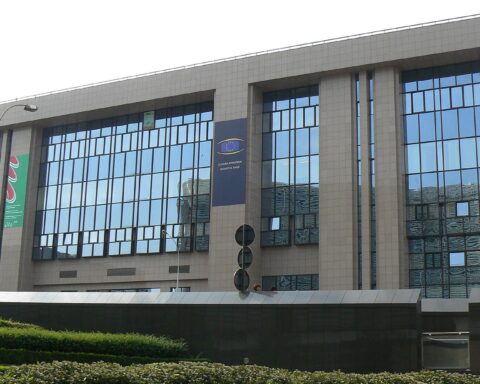
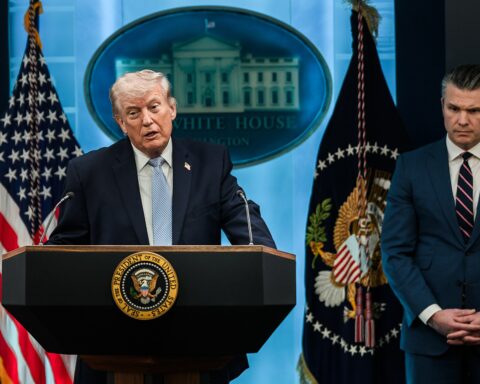
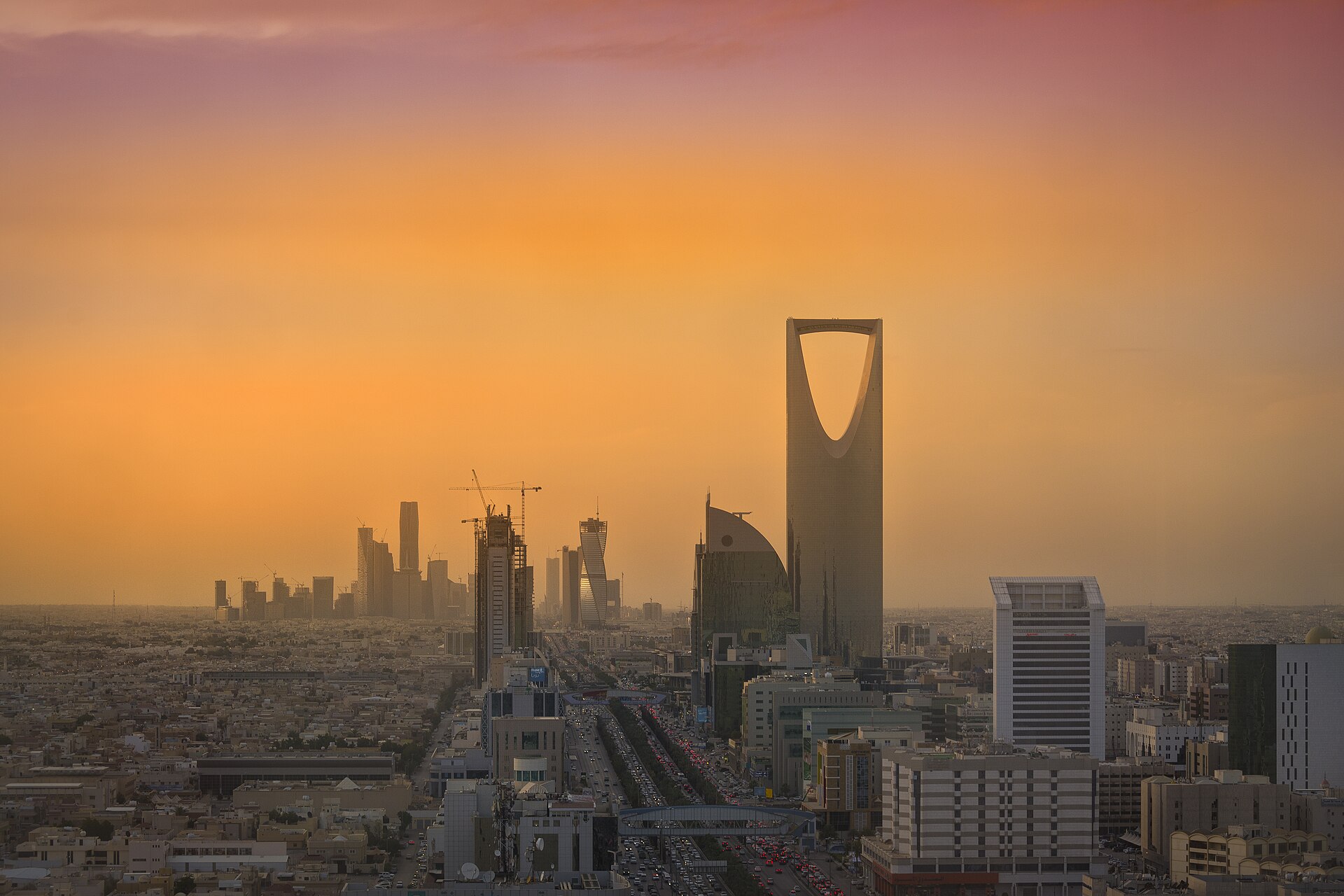
RIYADH — The second EU-GCC summit, scheduled for 24 October in Riyadh, was formally postponed on 15 October with no new date set. The GCC Secretariat cited “the Houthi group’s continued attempts to target the Kingdom of Saudi Arabia and its civilian objects” and “the extended suspension of flight operations at King Khalid International Airport,” which has been closed since a Houthi strike on 10 October killed 13 people and wounded between 308 and 309, according to the BBC and Al Jazeera.
Twenty-seven EU heads of government were supposed to sit across from Crown Prince Mohammed bin Salman and European Council President Antonio Costa on the 24th, with an agenda that carried three decades of unfinished business: a free trade agreement stalled since negotiations began in 1990, a Schengen visa waiver for GCC citizens, and a Bulgarian-proposed railway corridor designed to bypass the very Hormuz blockade that the war has made urgent. The postponement is not an isolated calendar adjustment but the most diplomatically visible entry in a cascade of cancellations that has hollowed out Riyadh’s October, a month built to showcase Saudi Arabia as a destination the world flies to — now recording the events the world will not attend.
GCC Secretary-General Jasem Mohamed Albudaiwi said the decision was taken “out of keenness to ensure the safety of participating delegations” and that the meeting would be rescheduled “to a later date to be agreed upon in due course.” The European Council confirmed that the EU “remains committed to deepening this partnership and sustaining the momentum built since the first Summit in October 2024,” which is diplomatic language that preserves the relationship without naming a date, a venue, or a route back to the table.
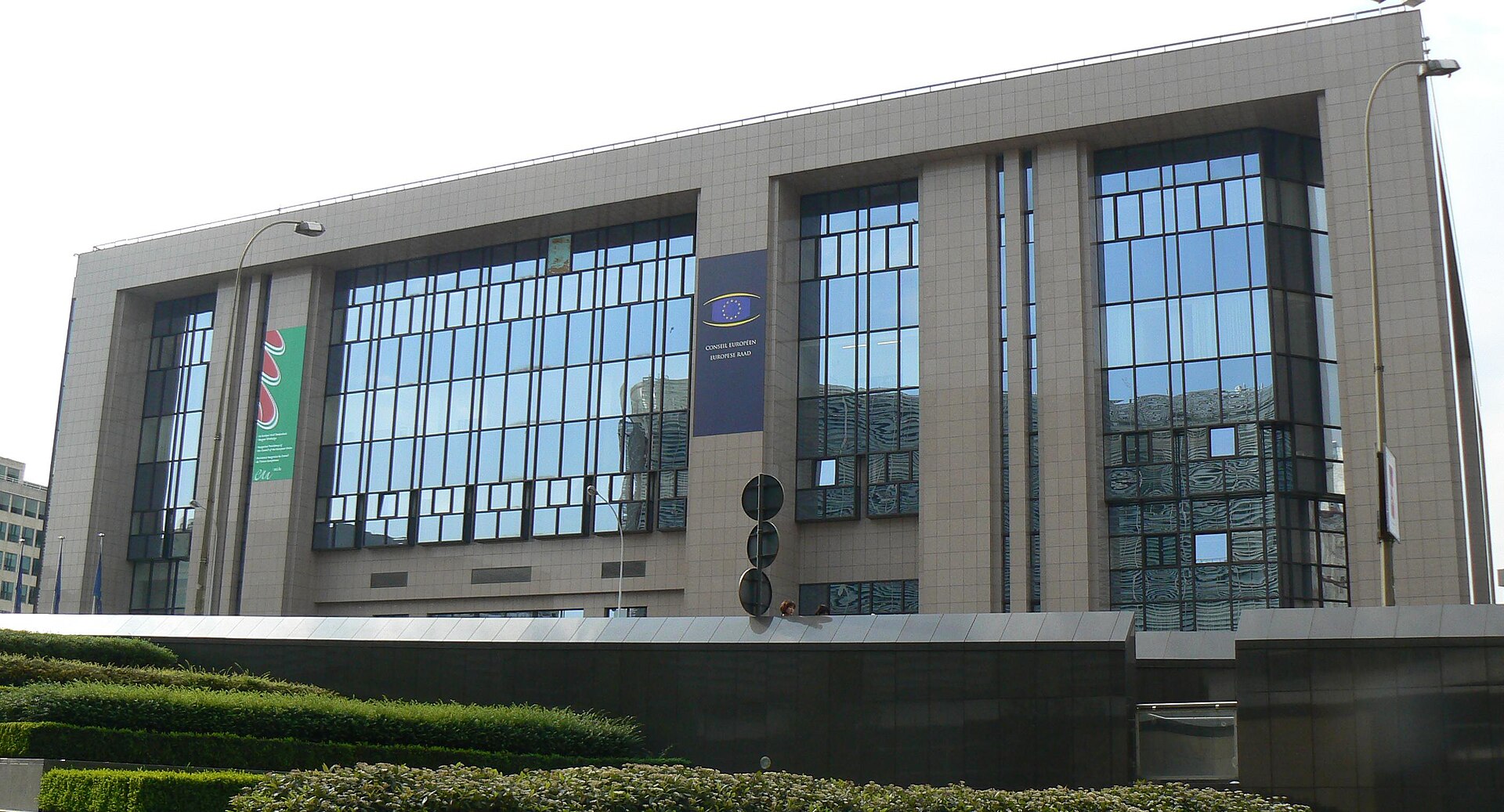
Table of Contents
- What Was on the Table at the EU-GCC Summit?
- Why Did the Airport Closure Kill the Summit?
- What Else Has Riyadh Lost This Month?
- Can the FII Survive What the Summit Could Not?
- How Much Trade Hangs on a Summit That Has No Date?
- The Security Premium Returns to Riyadh
- Araghchi Offered Mediation While the Calendar Collapsed
- Does Riyadh Season Open Into an Empty Calendar?
- Frequently Asked Questions
What Was on the Table at the EU-GCC Summit?
The Riyadh summit was the first EU-GCC leaders’ meeting to be hosted by the Gulf side, following the inaugural summit in Brussels on 16 October 2024, where both blocs agreed to advance free trade agreement discussions including an investment chapter (European Council, 2024-10-16). King Salman personally issued invitations to Gulf rulers including Kuwait’s Emir and Bahrain’s King (Asharq Al-Awsat, 2026-09-29), and UAE President Sheikh Mohamed bin Zayed received his written invitation on 8 October (UAE MOFA, 2026-10-08) — seven days before the whole exercise was postponed.
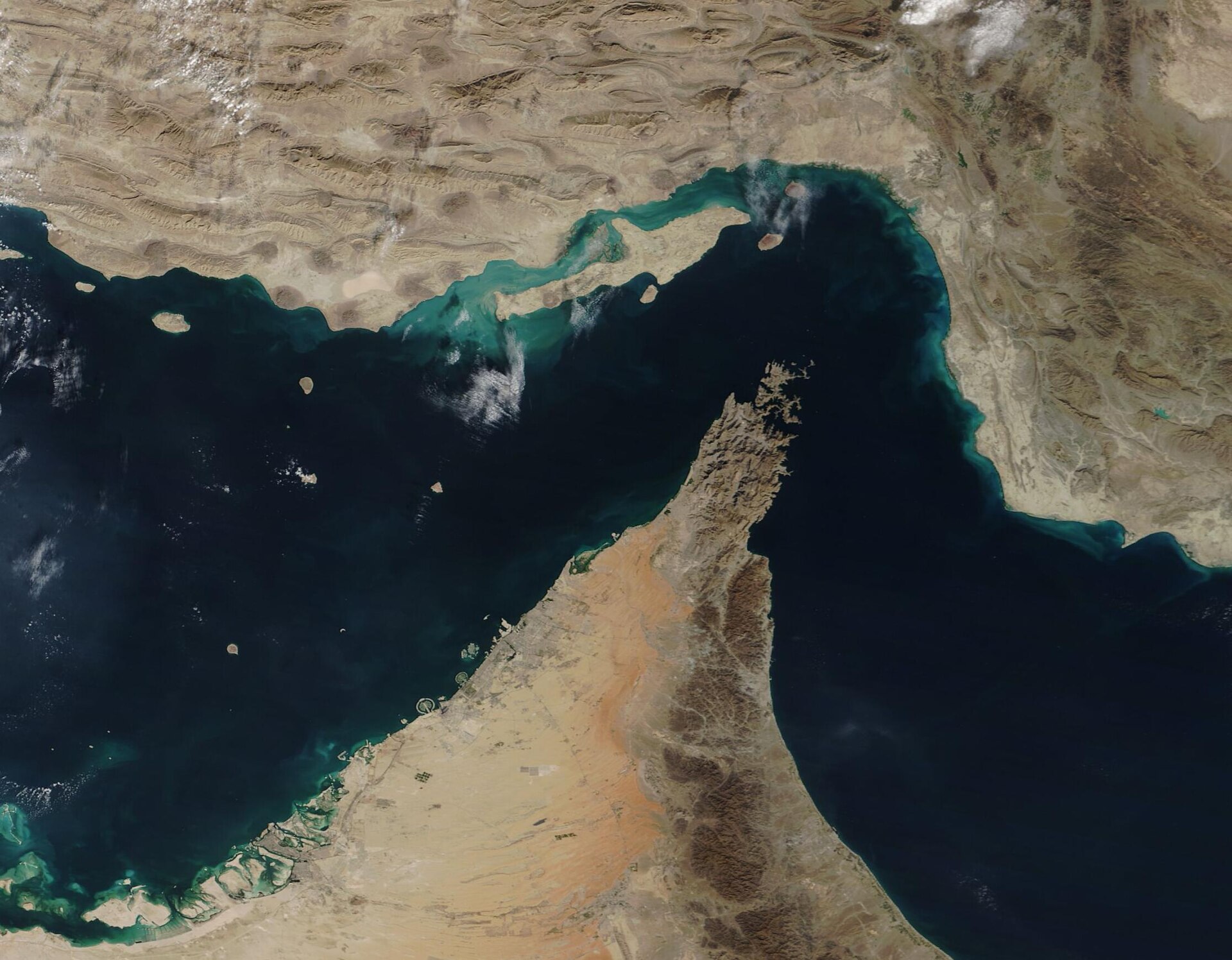
The agenda carried four items that were material beyond ceremony, each one representing years of preparatory diplomacy that now sits in indefinite suspension. The EU-GCC free trade agreement has been in negotiation since 1990, making it the longest-running FTA process in either bloc’s history at 36 years (tariffmanagement.com), with the most recent round stalling around 2008. The harmonisation of Schengen visa waivers for Saudi, Qatari, Omani, Bahraini, and Kuwaiti citizens was expected to accelerate Gulf tourism and student flows into Europe (The National, 2026-10-15). Bulgaria’s proposed railway corridor to transport Saudi oil through Syria and Turkey to Europe would have offered a physical bypass of the Hormuz blockade — a corridor the war itself has made existentially urgent (Brussels Times; The National). And the summit was supposed to convert the political commitments of the 2024 Brussels meeting into binding chapters on investment and energy security.
For comparison, the GCC-UK bilateral FTA was concluded on 20 May 2026, covering approximately $5 billion in annual trade (Gulf Business, 2026), after a negotiation period measured in years rather than decades. The EU-GCC trade relationship is more than thirty times that size by volume and has no comparable framework governing it — a gap that the Brussels summit was supposed to begin closing and that the Riyadh follow-up was supposed to narrow to something resembling a deal.
The Middle East briefing 3,000+ readers start their day with.
One email. Every weekday morning. Free.
Why Did the Airport Closure Kill the Summit?
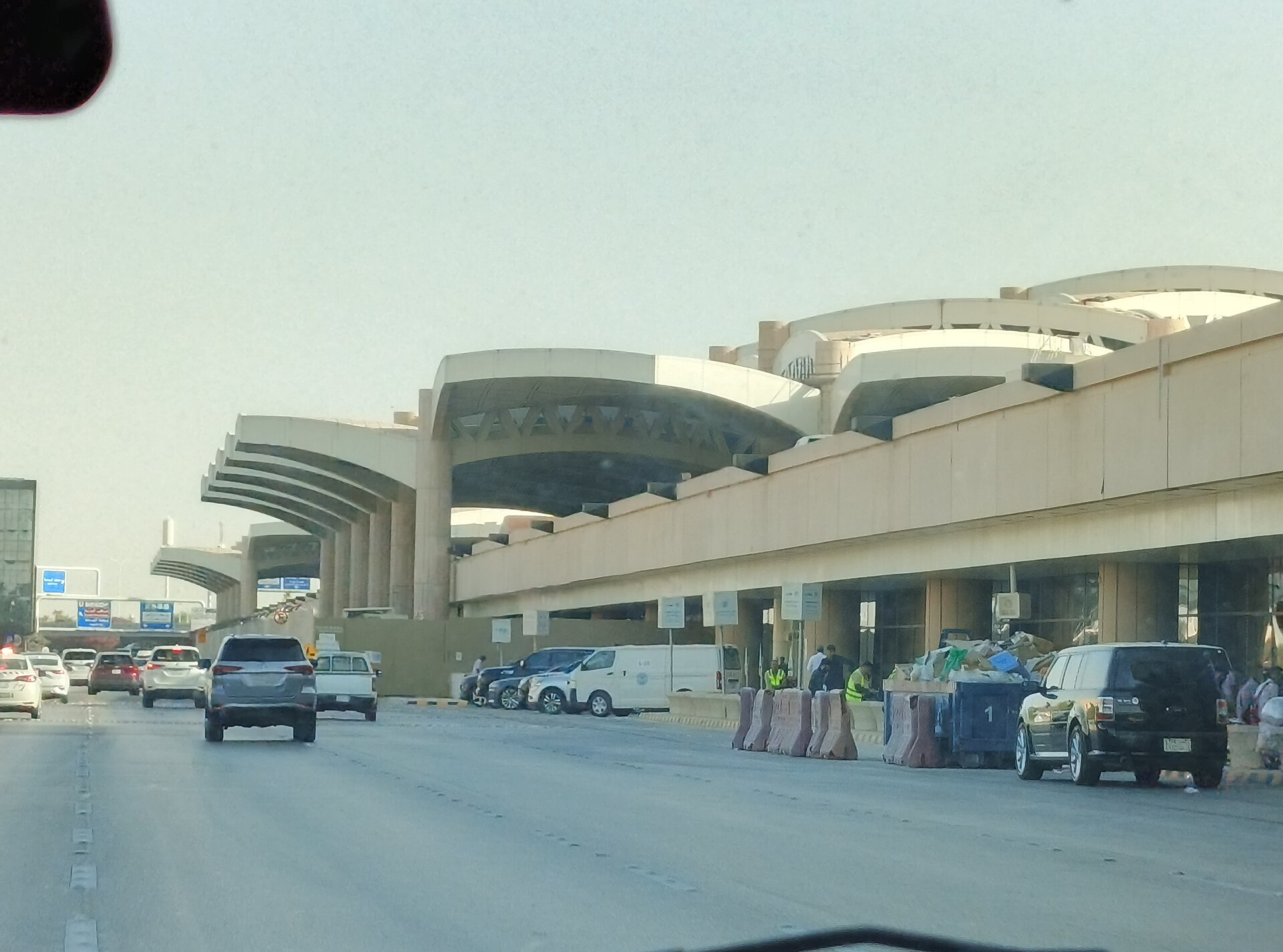
King Khalid International Airport, Riyadh’s primary international gateway, has been closed since a Houthi missile strike on 10 October killed 13 people and wounded between 308 and 309 — Al Jazeera reported 309 injured on 10 October; the BBC reported 308 on 11 October. The Qatar Tribune reported on 12 October that flight operations were suspended at least through the end of that week, and France 24 confirmed the closure was extended with no firm reopening date as of its reporting.
The closure created a regulatory cascade that made flying twenty-seven heads of state into the kingdom operationally indefensible, not merely inconvenient. The EU Aviation Safety Agency widened its Saudi airspace guidance on 9 October, Lufthansa Group suspended all Riyadh flights through at least 16 October (Fortune, 2026-10-09), and airlines across the region pulled routes, including carriers serving India’s Kerala according to News18. A second strike hit KKIA’s Terminal 4 on 11 October, killing a Pakistani resident and injuring 11, while Dammam airport was attacked the same day (CNN, 2026-10-11) — making the problem not just one airport but a pattern of targeting that extended to other Saudi aviation infrastructure.
Albudaiwi’s statement made the causal link explicit: the postponement was taken “out of keenness to ensure the safety of participating delegations,” citing both the Houthi attacks and the airport suspension. No Saudi government statement directly addressing the EU-GCC postponement was found as of 15 October, and no alternative venue — Jeddah, Al-Ula, or a Gulf neighbour — was offered in the joint announcement. For a kingdom that has invested billions positioning Riyadh as a global convening capital, the inability to guarantee safe passage to its own airport carries a cost that extends well beyond a rescheduled diary entry.
What Else Has Riyadh Lost This Month?
The EU-GCC summit sits at the top of a list that grows longer with each passing day, each entry confirming that the October calendar Riyadh built as proof of its global stature is being disassembled by forces it cannot stop and, so far, cannot deter. Seven events have been postponed, relocated, or cancelled outright since the 10 October airport strike.
| Event | Original Date | Current Status | Source |
|---|---|---|---|
| EU-GCC Summit | 24 October | Postponed indefinitely | European Council / QNA, 15 Oct |
| Six Kings Slam (tennis) | 21–24 October | Moved to 27–30 December | Gulf News, 14 Oct |
| FIFAe Finals (Jeddah) | 16–25 October | Postponed; Japan, Brazil withdrew | Dawn / FIFA, 14 Oct |
| Riyadh Fashion Week | 15–20 October | Postponed to 2027 | Siasat.com, 15 Oct |
| Misk Global Forum | 11–12 November | Cancelled entirely | Siasat.com, 15 Oct |
| Saudi Pro League (incl. Al Nassr) | Various October | Rescheduled | Siasat.com, 15 Oct |
| Asian Cup (Saudi host) | TBD | AFC “open to postponing” | Japan Times, 15 Oct |
GEA Chairman Turki Alalshikh cited “logistical reasons” for the Six Kings Slam postponement (Gulf News, 2026-10-14), which is the same euphemism that “in due course” is in the diplomatic register — a phrase that confirms what the audience already suspects while declining to say it plainly. The Misk Global Forum cancellation carries a different weight entirely, because the Misk Foundation was founded by Crown Prince Mohammed bin Salman and the forum is personally associated with his reform brand; its removal from the calendar signals that decisions about November’s viability are being taken at the highest level, not by event promoters adjusting logistics.
The Asian Football Confederation said on 15 October that it is “open to postponing” the Asian Cup, which Saudi Arabia is scheduled to host (Japan Times, 2026-10-15). If the tournament follows the trajectory of the Asian Winter Games — postponed in January 2026 (MEED, 2026-01-26) — and Trojena, whose construction contracts were terminated in March (MEED, 2026-03-26), then the mega-event calendar that underpinned Vision 2030’s global profile is not being deferred but dismantled, one cancellation notice at a time, with no indication that the conditions producing the cancellations are likely to reverse.
Can the FII Survive What the Summit Could Not?
The Future Investment Initiative — the annual conference that earned the “Davos in the Desert” label — is officially proceeding for 26–29 October, eleven days after the EU-GCC postponement and just over two weeks after the airport strike. But it is proceeding on terms that would have been unthinkable a year ago: the FII has shifted to a hybrid format, with Saudi authorities offering transit via alternative Gulf airstrips because Riyadh’s own airport cannot guarantee safe arrivals (Fortune / Reuters via Middle East Eye, 2026-10-14).
Executives from JPMorgan (Jamie Dimon), BlackRock (Laurence Fink), Goldman Sachs (David Solomon), and HSBC (Georges Elhedery) are confirmed as speakers, though whether any of them attend in person or remotely has not been settled as of the research date (Fortune, 2026-10-14). The FII Institute advertises 10,000 expected attendees and 550 speakers under this year’s theme — “The Power of Legacy” — with $250 billion in cumulative signed agreements and pledges across all ten editions.
“For foreign firms weighing up significant capital investments in the kingdom, the images of missiles falling apparently unhindered on the capital’s airport will be shocking and difficult to forget.”
James Reeve, former senior director at the Public Investment Fund, to Fortune (2026-10-14)
A harbinger of what the FII faces arrived at the World Petroleum Congress, which opened in Riyadh on 11 October: the CEOs of Shell, TotalEnergies, BP, and ExxonMobil were conspicuously absent (Fortune, 2026-10-14). Reeve told Fortune that “foreign investments already made in Saudi are unlikely to be reversed in the near term,” but the qualifier — “in the near term” — is doing as much work as the reassurance, and the FII surviving on hybrid power while the EU-GCC summit was postponed outright reveals a hierarchy Riyadh would prefer not to acknowledge. The kingdom can push its own conference through by routing attendees via back channels and alternative airstrips, but it cannot compel twenty-seven sovereign governments to disregard their own security assessments of a capital whose airport remains closed.
How Much Trade Hangs on a Summit That Has No Date?
EU-GCC trade totalled €165.6 billion in 2025, with EU exports of approximately €110 billion and EU imports of approximately €55.6 billion, according to European Commission figures cited by the Brussels Times. Services trade added €84.4 billion in 2024. The investment relationship runs deeper still: GCC foreign direct investment in the EU stands at €189.8 billion, while EU FDI in the GCC totals €163.1 billion (Brussels Times) — a combined investment stock of more than €350 billion governed by no comprehensive trade framework after 36 years of trying.
More than 75 percent of EU imports from GCC countries are fuels (European Commission via The National, 2026-10-08), which makes the summit’s energy agenda — the Bulgarian railway bypass, the FTA’s energy chapter, the broader question of how Europe secures hydrocarbon supply from a region under active military disruption — directly material to European energy security in ways that go well beyond diplomatic symbolism. Saudi Arabia’s own crude pricing reflects the pressure: Aramco cut its November Arab Light official selling price to Asia by $3, to $5 below the Oman/Dubai benchmark, the widest discount since June 2020 (bdnews24 / Reuters, 2026-10-05), trading price for volume at a moment when both are under threat from the same conflict that postponed the summit.
The 36-year FTA impasse is not a diplomatic footnote but a structural gap that the GCC-UK deal — concluded in May 2026, as noted above — makes visible by simple comparison. The first EU-GCC summit in Brussels was supposed to change the trajectory — its joint statement committed both sides to advancing FTA discussions including an investment chapter (European Council, 2024-10-16). The Riyadh summit was supposed to deliver on that commitment, and its indefinite postponement means that a process begun under George H.W. Bush has now survived seven US presidents without producing a binding text, with the regional diplomatic architecture that was supposed to support it shedding members faster than the negotiators can draft chapters.
The Security Premium Returns to Riyadh
Andreas Krieg, a Middle East security analyst at King’s College London, told Fortune that “the important effect is not simply physical damage to an airport or the cancellation of individual flights — it is the return of a security premium to doing business in Saudi Arabia,” adding that “the immediate consequences are likely to be delayed investment decisions, higher required returns, and greater dependence on state capital” (Fortune, 2026-10-14). That assessment is not speculative — the macroeconomic data is already carrying its weight.
The Saudi economy contracted 4.8 per cent year-on-year in the second quarter of 2026, according to TradeArabia citing official data (2026-08-19), and the government’s own pre-budget statement projects 3.6 per cent contraction for the full year, driven by a 21.8 per cent fall in oil activities (Zawya / Reuters, 2026-09-30). The revised 2026 budget deficit stands at 245 billion riyals — approximately $65 billion — up from a budgeted 165 billion riyals, representing 4.9 percent of GDP (Zawya / Reuters, 2026-09-30). The kingdom entered October already carrying the fiscal burden of a war it did not choose to escalate and an oil market disruption it has been unable to resolve; the collapse of the events calendar adds reputational damage to what was already a balance-sheet emergency.
Hesham Alghannam, a Saudi political analyst and Carnegie Middle East scholar, told the Christian Science Monitor that “the attacks have narrowed the space Saudi Arabia had maintained between regional conflict and everyday life” (CSM, 2026-10-13). That narrowing is exactly what the events calendar was engineered to prevent — the entire architecture of Riyadh Season, the FII, the sports calendar, and the EU-GCC summit rested on the premise that the kingdom could compartmentalise war from commerce, hosting tennis players and heads of state while conducting airstrikes in Yemen and absorbing missiles from it.
Dr. Yoel Guzansky of Israel’s Institute for National Security Studies described the current situation as “one of the most serious crises Saudi Arabia has ever experienced” in the past 35 years, adding that “the promise of Vision 2030, which was already struggling and faltering, will now be even more difficult to fulfill” (Ynetnews, 2026-10-15). The giga-project retrenchment predates the October airport strikes — the Asian Winter Games were postponed in January (MEED, 2026-01-26), Trojena’s contracts were terminated in March (MEED, 2026-03-26), and The Line was reportedly halted until after 2030 (Semafor, 2026-05-22) — but what October added was a security dimension to what had previously been a financial and logistical pullback, the difference between investors questioning whether Vision 2030 can be built on schedule and investors questioning whether the building site is safe enough to visit.
“Saudi Arabia has something to lose. They do not.”
Farea Al-Muslimi, Chatham House, to Ynetnews (2026-10-15)
Araghchi Offered Mediation While the Calendar Collapsed
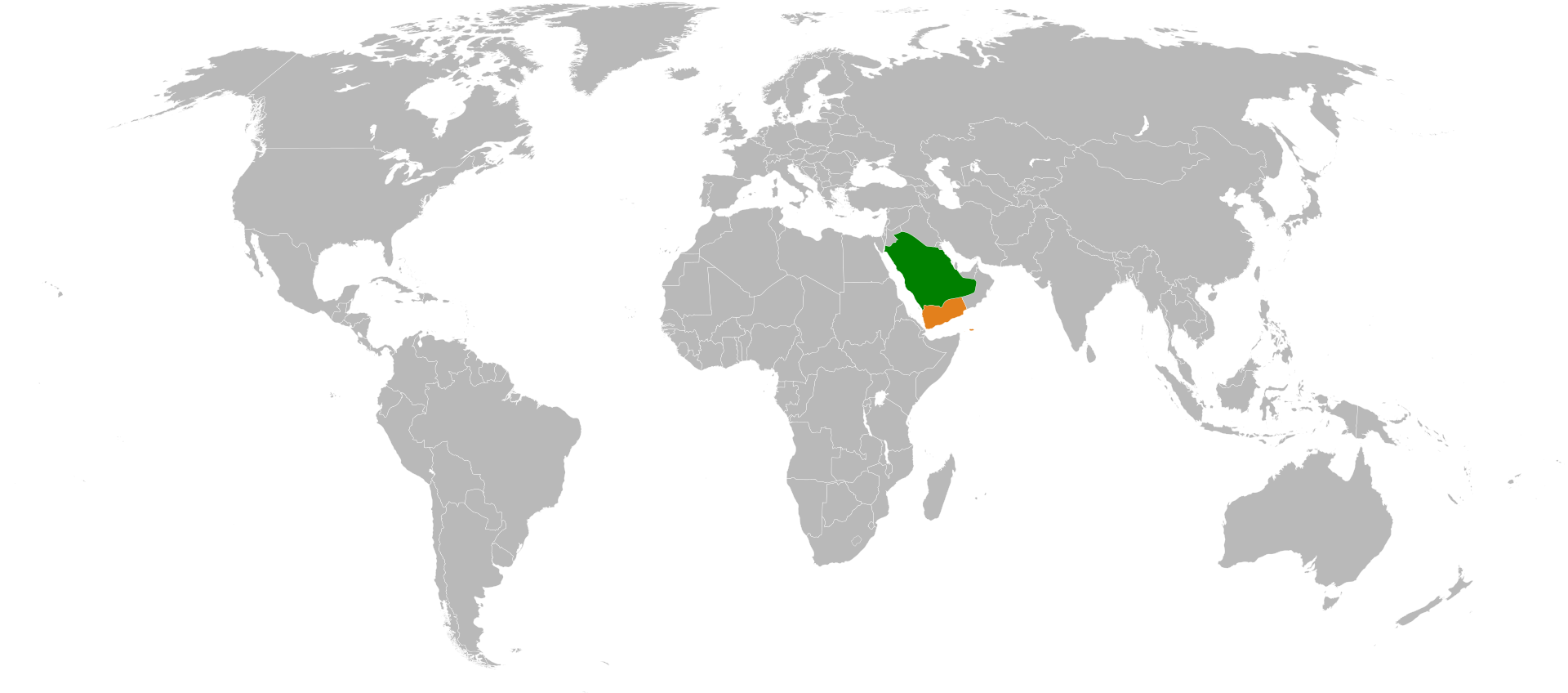
Iran’s foreign minister, Abbas Araghchi, offered on 11 October to “facilitate dialogue between Saudi Arabia and Yemen” (BBC, 2026-10-11), a parallel diplomatic thread that runs directly against the narrative Riyadh has tried to project at every cancelled event: that the Houthi attacks are unprovoked terrorism rather than the extension of a war in which Saudi Arabia is an active combatant. The offer arrived in the same week that MBS reportedly sought US strikes on the Houthis that Trump had twice declined, according to CNN (2026-10-10), leaving the kingdom’s diplomatic options thinner than its October calendar.
The Houthis have consistently framed their strikes as retaliation for Saudi coalition airstrikes on Yemen, describing Saudi infrastructure as legitimate targets; France 24 reported on 14 October that the group vowed to continue striking Saudi airports and oil facilities. No Houthi statement specifically claiming the EU-GCC summit postponement as a strategic victory was found in verified sources — but the asymmetry does not require a press release to be legible, given that the cost of the missiles that struck KKIA is a rounding error against a summit that represented €165.6 billion in annual trade and 36 years of diplomatic preparation.
Salman al-Dosari, the Saudi minister of media, told the Christian Science Monitor that “we are dealing with a terrorist militia — the kingdom’s top priority is ensuring the safety of its citizens and residents” (CSM, 2026-10-13). Prince Abdulaziz bin Salman, the energy minister, told reporters that “the word fear does not exist in the Saudi lexicon — we Saudis are fearless” (Ynetnews, 2026-10-15), a statement delivered in the same week that EASA widened its airspace warning, Lufthansa pulled its Riyadh flights, and twenty-seven European leaders received word that they would not be flying in on the 24th.
Does Riyadh Season Open Into an Empty Calendar?
Riyadh Season 2026 was publicly scheduled to open on 21 October with ten weeks of entertainment, as announced by GEA Chairman Turki Alalshikh on 27 September (Gulf News, 2026-09-27). As of 15 October — six days before the launch — the overall season opening has not been formally postponed, but its flagship October tennis event has been moved to December, the fashion week that was supposed to run alongside it has been pushed to 2027, and the surrounding calendar of sports, diplomacy, and investor events has been stripped to a single hybrid-format conference and whatever the kingdom can assemble around it.
The EU-GCC summit was meant to validate the premise on which Riyadh Season operates — that Saudi Arabia is a destination rather than a conflict zone, and that the world’s appetite for the kingdom’s entertainment and investment calendar outweighs its concern about the security situation. Every external decision made in October has tested that premise: EASA widened its guidance, Lufthansa suspended its flights, the EU postponed its summit, and Japan and Brazil withdrew their teams from the esports finals — a pattern that is not ambiguous even if its endpoint remains unclear.
When Alalshikh set the 21 October date in late September, the airport was operational, the EU-GCC summit was confirmed for the 24th, and the World Petroleum Congress had not yet opened to discover that its most prominent CEO names had stayed away. Three weeks later, the Aramco headquarters has taken a missile, the airport is shut, the summit has no date, and “in due course” is the best answer anyone in Riyadh or Brussels can offer for when any of it comes back.
Frequently Asked Questions
Will the EU-GCC free trade agreement be signed in 2026?
Almost certainly not. The FTA negotiations have been active since 1990 without producing a binding framework, and the indefinite postponement of the second EU-GCC summit removes the leaders-level meeting required to advance the investment and energy chapters. The GCC-UK FTA, concluded in May 2026 after a negotiation period measured in years rather than decades, covered a trade volume roughly thirty times smaller than the EU-GCC relationship, which suggests that a comprehensive EU-GCC deal would require multiple additional leaders’ summits even under conditions far more favourable than those prevailing in October 2026.
Is it safe to travel to Saudi Arabia in October 2026?
Multiple government advisories currently counsel caution. The UK advises against all travel within 10 kilometres of the Yemen border (BBC, 2026-10-11), and the US has barred its staff from travel within 20 miles of the border (Gulf News, 2026-10-07). EASA widened its Saudi airspace guidance on 9 October, Lufthansa Group suspended Riyadh flights through at least 16 October, and King Khalid International Airport remains closed with no announced reopening date. Jeddah and Dammam airports are operational, though Dammam was attacked on 11 October (CNN, 2026-10-11), and FII organisers are routing participants through alternative Gulf airstrips.
When will King Khalid International Airport reopen?
No official reopening date has been announced. The Qatar Tribune reported on 12 October that flight operations were suspended at least through 17 October, and the Saudi General Authority of Civil Aviation has not issued a public timeline beyond that date. FII organisers are routing conference participants through alternative Gulf airstrips for the 26–29 October event, which suggests that Saudi authorities do not expect the airport to reopen before the end of October at the earliest.
What is the Asian Cup and will Saudi Arabia still host it?
The AFC Asian Cup is Asia’s premier international football tournament, and Saudi Arabia was selected as host. The Asian Football Confederation said on 15 October that it is “open to postponing” the event (Japan Times, 2026-10-15). Saudi Arabia’s sports hosting track record under wartime conditions has deteriorated: the Asian Winter Games, planned for the Trojena mountain resort, were postponed in January 2026 and the venue’s construction contracts were terminated two months later. The FIFA World Cup 2034, awarded to Saudi Arabia in December 2024, has a longer runway but faces similar questions about infrastructure and security if the current conflict persists beyond 2026.
What is the Misk Global Forum and why was it cancelled?
The Misk Global Forum is an annual conference organised by the Misk Foundation, which Crown Prince Mohammed bin Salman founded in 2011. It focuses on youth empowerment, technology, and innovation, and typically draws international speakers alongside Saudi government officials. Its outright cancellation for November 2026 — it is the only event on the October-November list cancelled rather than postponed or relocated — is particularly notable because of MBS’s personal association with the foundation. The cancellation suggests a decision taken at the crown prince’s level rather than a logistical deferral by event promoters responding to scheduling constraints.