
RIYADH — The Saudi-led coalition’s October 19 warning against using fishing boats to smuggle weapons into Yemen is not a security bulletin. It is an enforcement-gap confession. By naming four specific traditional vessel types and urging fishermen to protect “their lives and property,” Maj. Gen. Turki Al-Maliki publicly acknowledged a supply corridor that the coalition cannot interdict at scale without confronting the constraints of international maritime law (Yemen Monitor, 2026-10-20). A coalition source separately told Al Jazeera that a weapons shipment had been intercepted and destroyed off Yemen’s coast around the same time (Middle East Eye, 2026-10-20).
One interception does not close a corridor. The UN Panel of Experts identified approximately 70 vessels under investigation on the Somalia–Yemen route alone (South24, citing Panel report S/2025/650). The EU extended funding for Yemen’s UN inspection mechanism through December 2027, citing an escalation in arms trafficking across the region (EUR-Lex, 2026-09-22). The question is not whether fishing boats are being used — the UN has documented that for years. The question is why the coalition’s principal response, after a decade of naval patrols and two embargo extensions, is to ask fishermen to stop.
Table of Contents
- What Did the Coalition Actually Say?
- Why Do Fishing Boats Exploit a Gap That Warships Cannot Close?
- What Did the July 2025 Dhow Seizure Reveal?
- The UNMHA Gap and the Embargo’s Expiry Clock
- Can a Multinational Coalition Close What a Naval Embargo Cannot?
- The Hormuz Factor and the Alternative Route
- How Has Iran Responded to Smuggling Accusations?
- The Warning as Confession
- Frequently Asked Questions
What Did the Coalition Actually Say?
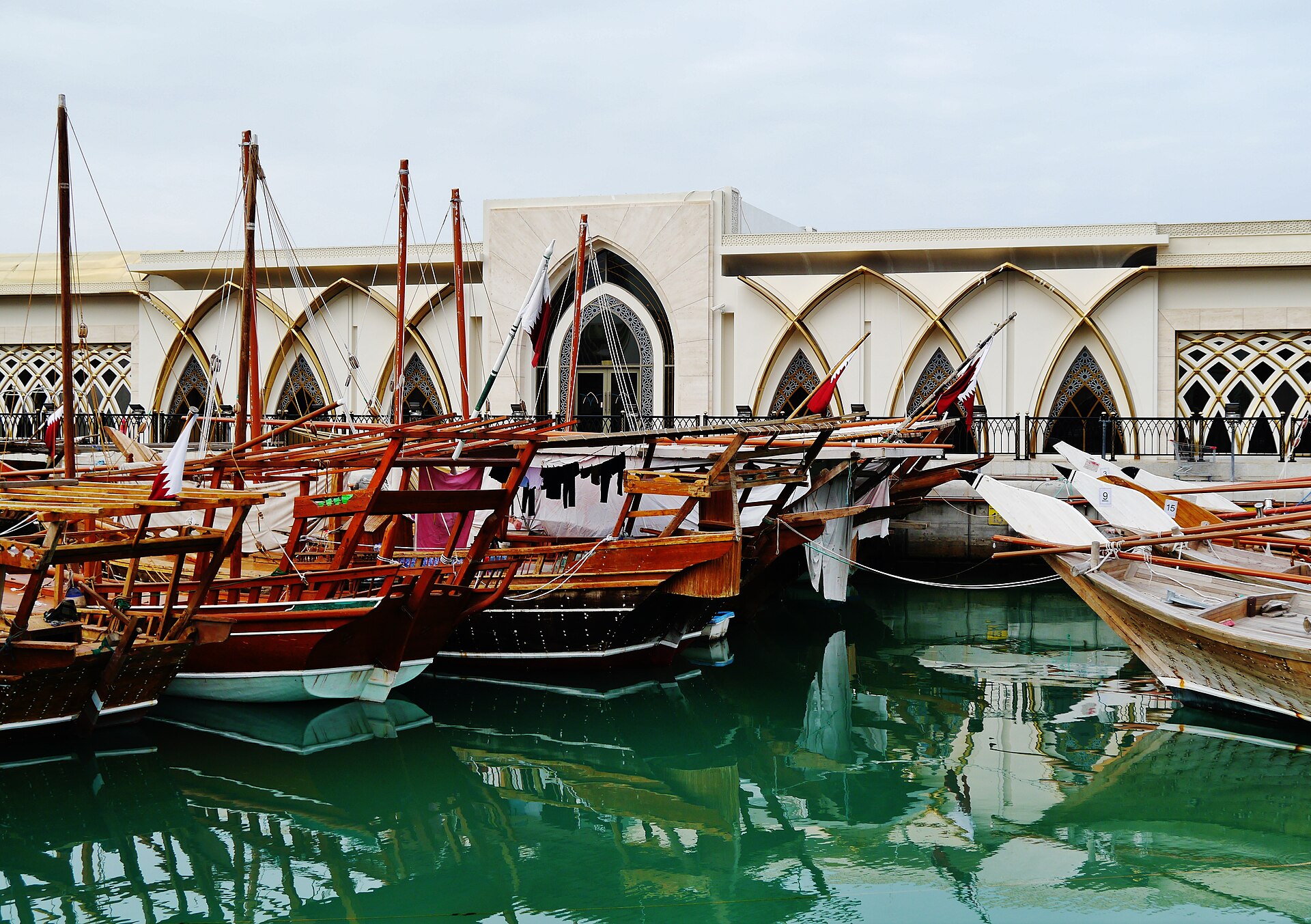
On October 19, 2026, Maj. Gen. Turki Al-Maliki, spokesman for the Coalition to Restore Legitimacy in Yemen, issued a formal warning against using traditional maritime vessels to smuggle weapons, missiles, and military equipment into Yemen (Al Arabiya English, 2026-10-19). The statement named four vessel types: the Za’ima (Al-Za’eema), the Huri (Al-Houri), the Jalbah (Al-Jalbah), and the Sanbuq (Al-Sanbouk) — traditional shallow-draft fishing and trading craft common in Yemeni, Omani, and Gulf coastal waters (Yemen Monitor, 2026-10-20).
The coalition said that smuggling weapons by sea “threatens Yemen’s security, regional and international security, and endangers civilian lives” (Asharq Al-Awsat, 2026-10-20). It urged “all owners of maritime vessels” not to cooperate with the Houthis and to protect “their lives and property” (Yemen Monitor, 2026-10-20). Asharq Al-Awsat framed the smuggling operations as carried out by “organized crime gangs working with the Houthis,” though no group names were given (Asharq Al-Awsat, 2026-10-20).
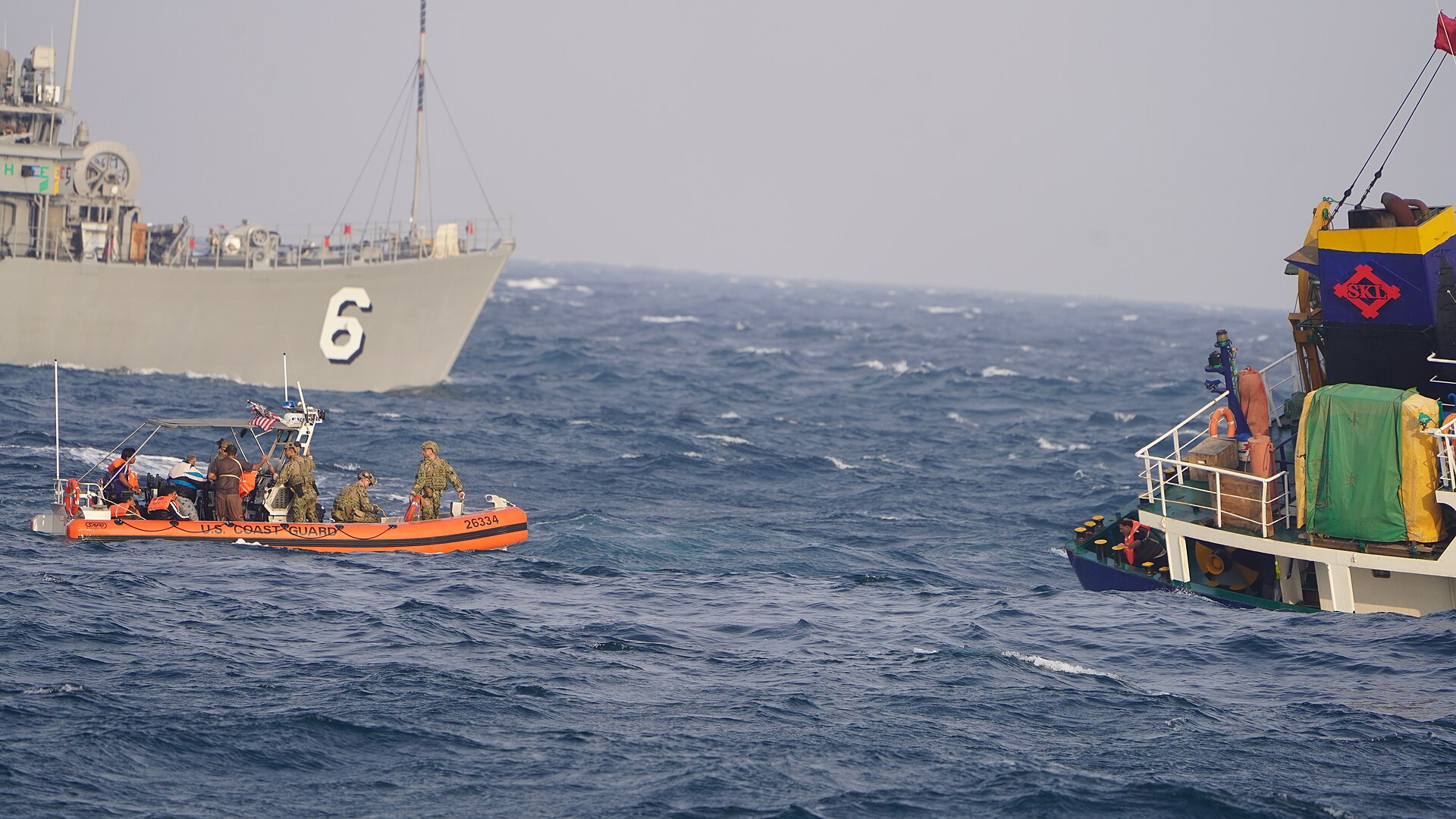
A coalition source told Al Jazeera that the coalition had intercepted and destroyed a weapons shipment off the Yemeni coast around the time the warning was issued (Middle East Eye, 2026-10-20). No vessel name, cargo weight, or specific location was confirmed publicly.
The timing is significant. The warning arrived amid the most sustained Houthi assault on Saudi civilian infrastructure since the war restarted. Saudi airport attacks between October 6 and 11 killed 20 people (BBC, 2026-10-08/11). The coalition intercepted two ballistic missiles aimed at Riyadh on October 8 (AP via NY1, 2026-10-08). Saudi Arabia asked the UN Security Council to act on October 9 (Al Jazeera, 2026-10-09). Against that backdrop, the fishing-boat warning is a tacit acknowledgment that the weapons fuelling these strikes are still arriving — and that the coalition has not found a way to stop them at the source.
The Middle East briefing 3,000+ readers start their day with.
One email. Every weekday morning. Free.
The language matters. A military coalition that conducts airstrikes, operates naval patrols, and claims to enforce a UN arms embargo does not typically ask fishermen for help. The plea to “protect your lives” is directed not at combatants but at civilians whose boats have become the embargo’s most persistent vulnerability.
Why Do Fishing Boats Exploit a Gap That Warships Cannot Close?
Fishing boats work as smuggling vectors for three structural reasons that coalition naval power cannot offset: the scale of Yemen’s coastline, the constraints of international law, and the IRGC’s transfer model.
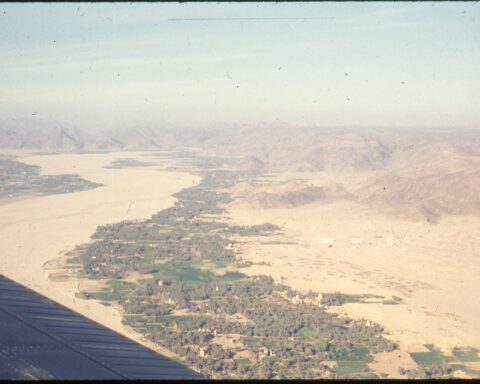
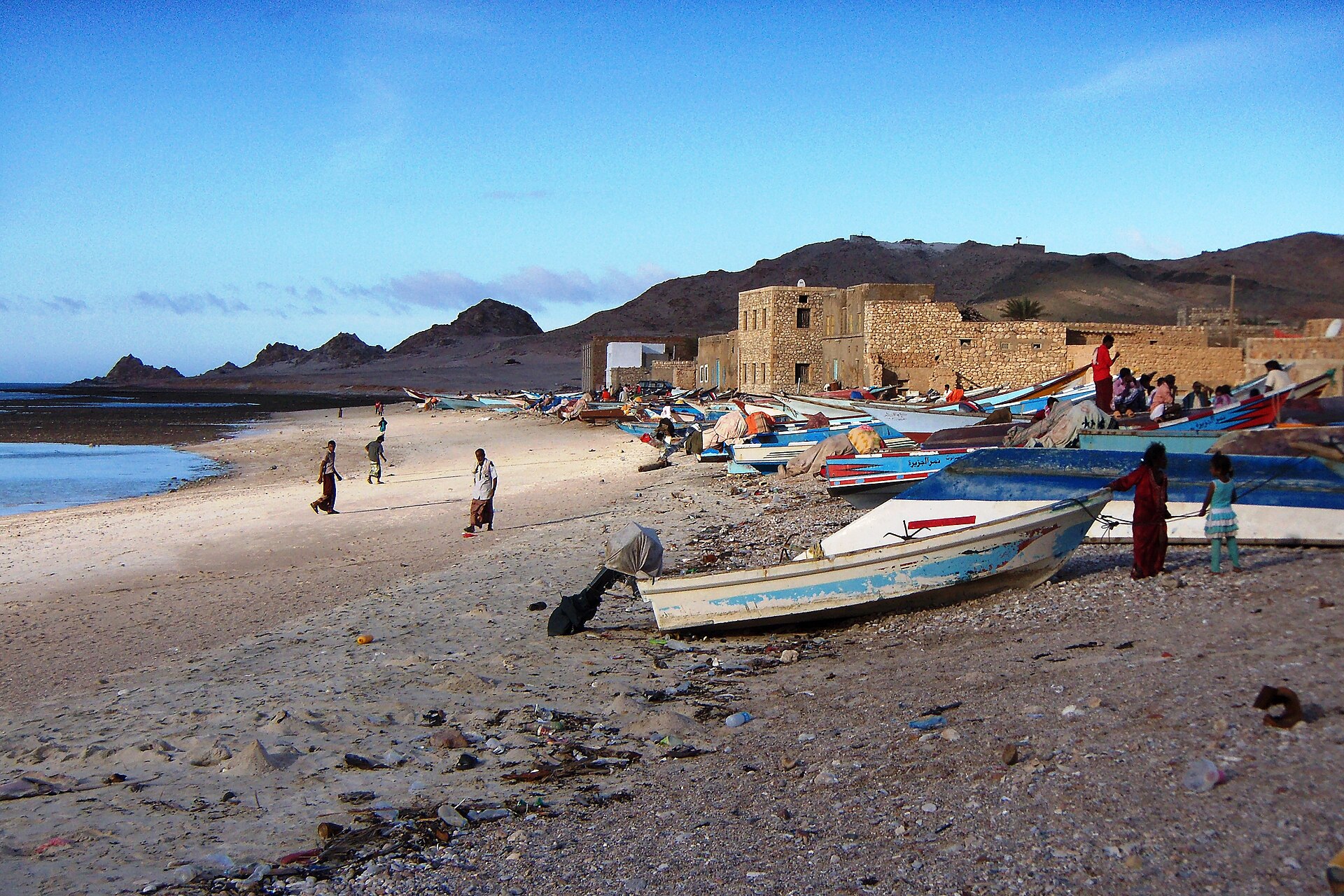
Yemen’s coastline stretches roughly 2,000 kilometres along the Red Sea and the Gulf of Aden, with additional exposure on the Arabian Sea. Thousands of small fishing craft operate along it daily. The UN Panel of Experts documented smuggling dhows operating without automatic identification signals (AIS) and without proper registration on the Somalia–Yemen route, from ports including Qandala, Alula, and Ras Asir to landing points in Hadramout and Shabwa (South24, citing Panel report S/2025/650). Identifying a smuggling vessel among thousands of identical, unregistered boats requires approaching each one — an operational impossibility at any sustained scale.
The legal constraint is equally fundamental. Under the UN Convention on the Law of the Sea (UNCLOS), ships on the high seas fall exclusively under the jurisdiction of the flag state (Article 92). Non-consensual boarding is limited to cases of piracy, slave trade, or statelessness (Article 110). Arms smuggling is not among the listed exceptions. Prof. Raul (Pete) Pedrozo of the US Naval War College, writing for the Lieber Institute at West Point, concluded that “the embargo imposed by UNSCR 2216 does not authorize all necessary means to enforce it.” Beyond the territorial sea and contiguous zone, “flag State consent is required” for boarding (Lieber Institute, 2024-03-28).
Many smuggling dhows are stateless — operating without registration, flags, or AIS. This makes them theoretically boardable under UNCLOS Article 110. But statelessness must be established on approach, and that determination requires physically stopping and inspecting the vessel. With thousands of small craft at sea on any given day, the identification problem overwhelms available naval resources before a single legal question arises.
The third factor is the IRGC’s documented transfer model. Rather than running a flagged vessel directly to Yemen, the IRGC has historically anchored a registered mothership offshore — typically off Somalia — and transferred cargo to local Yemeni fishing boats indistinguishable from legitimate traffic (Maritime Executive, July 2025). The mothership may be trackable. The fishing boat is not. The handoff occurs at sea, in waters where no single navy maintains persistent surveillance.
The Stimson Center assessed that the interdiction campaign is “squeezing the pipeline, but has not sealed it” (Stimson Center, 2026). The Century Foundation, drawing on approximately 150 interviews and a database of more than 370 items seized in nearly 140 land and sea interdictions, concluded that counter-smuggling policies have “so far, been well off the mark” (The Century Foundation, 2025). These are not adversary assessments. They come from Washington-based institutions with access to the intelligence briefings that inform US policy.

What Did the July 2025 Dhow Seizure Reveal?
The largest single interception of Iranian-supplied arms bound for the Houthis took place on July 16, 2025, when Yemen’s National Resistance Forces seized a dhow carrying more than 750 tons of materiel (Gulf International Forum, July 2025). The cargo included components for Al Mandab 2 anti-ship cruise missiles, Type 358 surface-to-air missiles, approximately 100 Shahed-131/136-compatible UAV engines, IRGC Farsi-language technical manuals, Dehlavieh anti-tank guided missiles, and Misagh-type man-portable air defence systems (Gulf International Forum, July 2025; Maritime Executive, July 2025).
Four crew members were Houthi affiliates trained by the IRGC Qods Force (Maritime Executive, July 2025). They described three supply routes to investigators:
- An overt commercial route from Bandar Abbas to Salif port, recently disrupted by US and Israeli airstrikes.
- A mothership route, in which an IRGC-linked vessel anchored off Somalia transferred cargo to local Yemeni fishing boats.
- A front-company route via Djibouti using false consignment papers (Maritime Executive, July 2025).
The second route — mothership to fishing boat — is the one most relevant to the coalition’s October 2026 warning. It exploits exactly the vessels Al-Maliki named: Za’ima, Huri, Jalbah, and Sanbuq. These are the craft that receive Iranian cargo beyond the coalition’s patrol radius and carry it to shore as routine fishing traffic.
The IRGC had previously stationed IRISL-registered vessels MV Saviz (IMO 9167253) and MV Behshad (IMO 9167289) as floating logistics hubs in the region. Behshad relocated to the Gulf of Aden off Djibouti in January 2024 (Maritime Executive, July 2025). Whether these mothership routes remained active after the July 2025 seizure is not confirmed in open-source reporting.
The three routes the crew described map the spectrum of Iranian supply methods — from overt commercial shipping to covert at-sea transfers to document fraud. The coalition’s warning addresses only the middle route. The other two — direct commercial smuggling and front-company operations — operate through entirely different vectors that a plea to fishermen cannot touch.
The seizure demonstrated that the pipeline is industrial in scale. Seven hundred and fifty tons is not a black-market sideshow. The cargo manifest reads like the inventory of a conventional military: cruise missile components, air defence systems, drone engines, anti-tank weapons. The coalition’s fishing-boat warning, issued fifteen months later, addresses the same vector the seizure exposed — and the fact that it needed to issue such a warning suggests the vector remains open.
The UNMHA Gap and the Embargo’s Expiry Clock
Two institutional mechanisms that once provided at least partial oversight of arms flows into Yemen have either ended or face imminent expiry.
The UN Mission to Support the Hudaydah Agreement (UNMHA), established to oversee the ceasefire at the Red Sea port of Hudaydah, ended on March 31, 2026 under Resolution 2813. Its termination removed the last dedicated UN maritime-entry oversight at a moment when the 2022 Saudi–Houthi truce had collapsed — fighting resumed at scale in July 2026 (BBC, 2026-10-11) — and the coalition launched Operation “Dawn of Yemen” on October 4, saying 100 jets flew in the opening wave (Oman Observer, 2026-10-05).
The arms embargo itself operates on a renewable clock. UN Security Council Resolution 2801, passed in November 2025 with 13 votes in favour and abstentions from China and Russia, extended the Yemen arms embargo to November 14, 2026 (AA.com.tr, November 2025). That resolution explicitly tasked the Panel of Experts with producing a report on “enhancing states’ capabilities to prevent vessels suspected of transporting weapons from entering Yemeni ports” (AA.com.tr, November 2025). The embargo expires in less than a month. Its renewal requires navigating the same Security Council dynamics that produced the abstentions.
The EU, in a September 22, 2026 decision, extended financial support for the UN Verification and Inspection Mechanism (UNVIM) — which monitors commercial imports through Yemen’s Red Sea ports — to December 31, 2027. The EU’s justification cited “a dramatic increase in the trafficking of weapons across Yemen, the Red Sea and the Horn of Africa” (EUR-Lex, 2026-09-22).
UNVIM inspects declared commercial cargo at designated ports. It does not patrol coastlines or intercept unregistered fishing boats. The gap between what UNVIM inspects — containers at Hudaydah — and what the coalition warns about — small craft landing on unmonitored stretches of coast — captures the enforcement failure the arms embargo cannot resolve by design.
Can a Multinational Coalition Close What a Naval Embargo Cannot?
Saudi Arabia attempted to build a multilateral answer to the maritime threat. In July and August 2026, Riyadh hosted representatives of 43 countries and the European Union to draft a Multinational Maritime Defence Coalition charter for Bab el-Mandeb and the Red Sea (UKMTO/JMIC Advisory, August 2026). By August 13, 15 countries had signed the declaration and 13 had formally joined (Al Jazeera, 2026-08-14). As of the JMIC advisory dated August 4, no joint patrols had been confirmed operational (UKMTO/JMIC, August 2026).
The coalition’s formation came after the Houthis declared a maritime blockade of Saudi Arabia on July 20, 2026 (Al Jazeera, 2026-07-28) and the broader conflict had escalated sharply. Houthi strikes targeted Aramco’s Dhahran headquarters in mid-October. The operational tempo left little room for standing up a new maritime patrol framework.
The maritime coalition was designed for a different threat: anti-shipping attacks in the Bab el-Mandeb strait and the southern Red Sea. Fishing-boat smuggling along Yemen’s Arabian Sea coast is a different operational challenge. It requires sustained, close-in patrols along hundreds of kilometres of coastline, boarding parties trained in search and seizure, and legal authorities the current framework does not provide. A multinational coalition built for commercial-shipping escort through a choke point is not configured to inspect thousands of small craft in littoral waters.
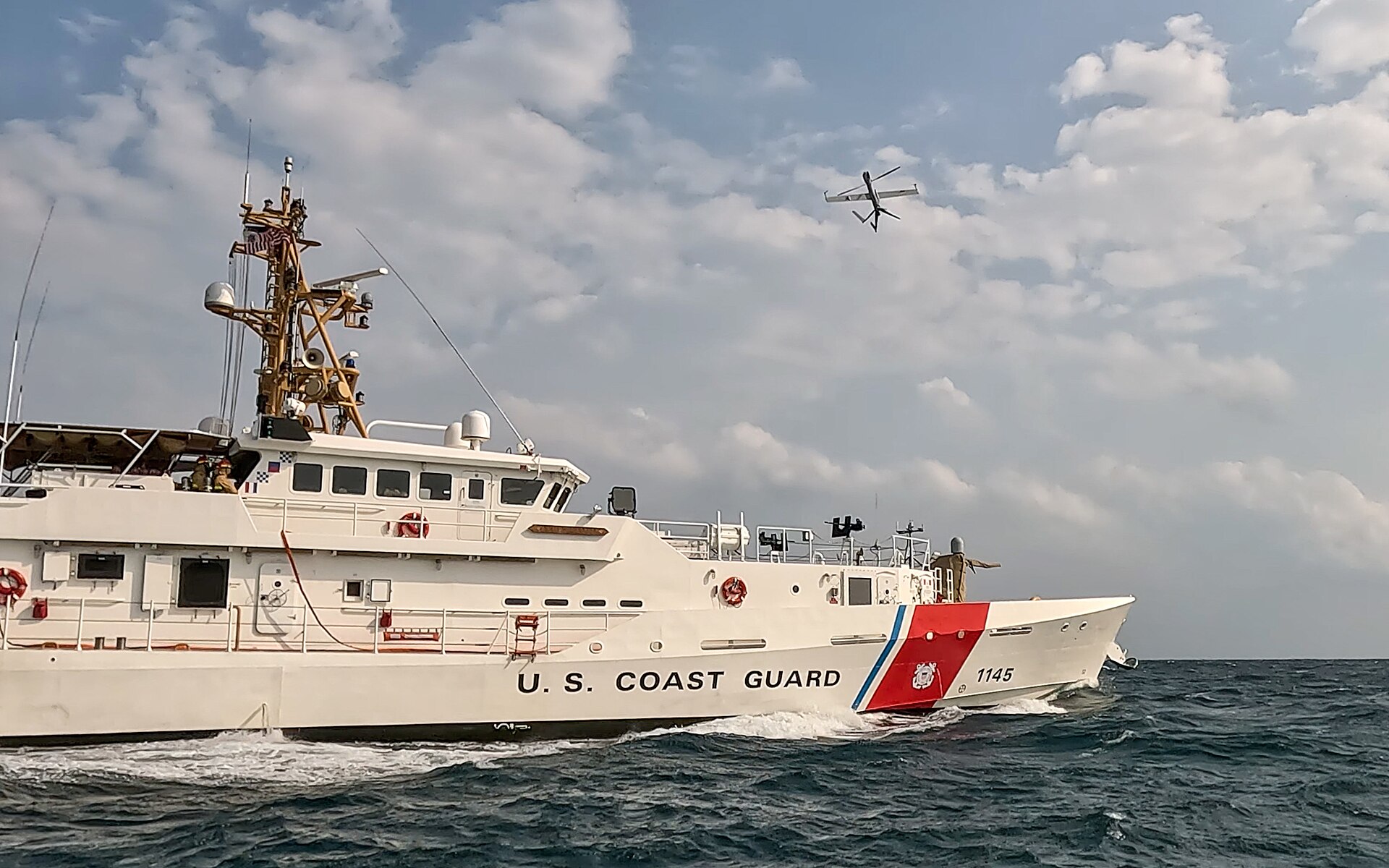
The January 2025 interception by the USCGC Clarence Sutphin Jr. — a Sentinel-class cutter forward-deployed to Manama — showed that targeted patrols can produce individual results. That vessel intercepted a dhow in the Arabian Sea carrying Iranian-made components for sea drones, ballistic missiles, and anti-tank missile launchers (Baird Maritime, 2025-02-27). But the Clarence Sutphin is a 154-foot cutter executing a single-point mission. Scaling that to coastline-wide operations, while naval assets are simultaneously stretched across Hormuz, Bab el-Mandeb, and the Red Sea, is a resource problem no charter declaration has solved.
The gap between aspiration and capability runs deeper than headcount. Even with the US Fifth Fleet headquartered in Bahrain, maritime interceptions of Houthi-bound arms have been episodic rather than systematic across years of enforcement. The multinational coalition charter commits signatories to coordination, not to the persistent coastal presence the fishing-boat corridor demands. France confirmed troops, radars, and air defences for Yanbu in September (Al Jazeera, 2026-09-25). Britain sent an RAF Voyager tanker (The National, 2026-09-22). Pakistan, Turkey, and Saudi military chiefs met in Riyadh (Gulf News, 2026-09-26). None of these deployments addressed the coastal-patrol gap. They were configured for air defence and Red Sea escort — the threats that commanded headlines — not for the slow, unglamorous work of intercepting fishing boats in littoral waters.
The Hormuz Factor and the Alternative Route
The Hormuz blockade creates a specific and underexamined pressure on the fishing-boat corridor. When Iran declared the Strait of Hormuz closed in July 2026, CENTCOM reported that 135 ships had been turned around since the blockade began on July 14 (CBS News, 2026-10-10). Insurance markets followed and shipping rerouted.
Before the blockade, the primary Iran-to-Houthi maritime route ran through the Persian Gulf, around the Arabian Peninsula, and into the Red Sea or Gulf of Aden. With Hormuz choked, the IRGC has incentive to push more cargo through the mothership-and-fishing-boat model — transferring weapons off the Somali coast or from ports in Djibouti and landing them on Yemen’s southern shores, bypassing the strait entirely.
The coalition’s warning to fishermen suggests awareness of exactly this shift. Naming Za’ima, Huri, Jalbah, and Sanbuq vessels — craft associated with Yemeni and Gulf coastal waters — indicates the coalition is tracking activity in the Arabian Sea and Gulf of Aden, not just the Red Sea approaches it has historically patrolled.
Houthi claims of multiple simultaneous operations against Saudi airports and Aramco facilities in mid-October underscore the operational significance. The weapons arriving on fishing boats are not small arms. The July 2025 dhow, as detailed above, carried cruise missile components, air defence systems, and drone engines. Each successful delivery extends the Houthis’ ability to strike targets deep inside Saudi Arabia — airports, refineries, and corporate headquarters the coalition is trying to defend with the same naval assets it would need to patrol the coastline.
The resource competition is direct. Every warship assigned to Hormuz enforcement is a warship unavailable for Gulf of Aden patrols. Every surveillance aircraft tracking tanker traffic through the strait is an asset not watching the fishing grounds off Hadramout. The US had sent more than 100 military advisers under a new joint command for intelligence support (CNN, 2026-10-11), but intelligence identifies targets — it does not physically interdict fishing boats at sea. The coalition’s warning to fishermen arrived at the precise moment when naval resources face their most acute allocation pressure in the current conflict.
How Has Iran Responded to Smuggling Accusations?
No Houthi or Iranian statement responding to the October 19 fishing-boat warning was found in three targeted searches of English-language media. This does not confirm silence — statements may exist on Arabic-language channels not indexed in English-language databases.
The historical pattern is consistent denial. In 2015, Iran dismissed coalition claims of maritime weapons seizures as “psychological warfare” (Gulf News, 2015). In 2020, Iran’s foreign ministry called a US interception claim “a lie aimed at extending UN arms embargo on Tehran” (Reuters/Radio Farda, 2020). The documented evidence — IRGC Farsi-language manuals aboard the July 2025 dhow, crew members trained by the IRGC Qods Force, IRISL-registered vessels serving as logistics hubs — runs counter to these denials but has not produced a formal Iranian acknowledgment of the supply chain.
Iran’s Foreign Minister Araghchi offered in October 2026 to “facilitate dialogue between Saudi Arabia and Yemen” (BBC, 2026-10-11). That offer arrived while the IRGC’s documented supply infrastructure remained in place and after the coalition had publicly named the fishing-boat vector through which Iranian weapons reach Houthi forces. The diplomatic offer and the logistics pipeline run in parallel — Tehran positions itself as mediator in a war its own supply chain sustains.
The Warning as Confession
The coalition’s October 19 statement reads differently when placed against this background. It is not a routine threat advisory. It is an admission that a key segment of the Iran-to-Houthi supply chain operates through vessels too small to track, too numerous to board, and too deeply embedded in civilian maritime life to interdict without consequences the coalition is unwilling to accept.
The legal framework prevents mass boarding on the high seas. The institutional framework — UNMHA ended, UNVIM inspects only commercial ports, the embargo expires November 14 — provides no dedicated coastal-patrol mechanism. The multinational coalition framework — 43 countries invited, 13 joined, no confirmed joint patrols as of August — has not produced the close-in littoral operations the problem demands.
What remains is a warning. Protect your lives. Protect your property. Do not cooperate with the Houthis. The language is that of a government asking for civilian compliance because enforcement has reached its structural limit.
Unexplained explosions over Saudi cities and repeated strikes on civilian infrastructure are downstream consequences of this supply corridor. Every cruise missile component, every drone engine, every anti-ship missile kit that arrives on a Yemeni fishing boat extends the Houthis’ reach northward. Tehran has signalled it understands the infrastructure underneath Saudi Arabia’s defences. The weapons needed to test those defences arrive by sea, often on the very boats the coalition has now asked to stop cooperating.
The fishing-boat problem is also a civilian-protection dilemma. If the coalition escalates to treating all unregistered small craft as potential weapons carriers, it risks destroying fishing boats that are, in fact, fishing boats. The reputational and legal costs of sinking civilian vessels — even inadvertently — would undermine the coalition’s stated mission to restore legitimacy in Yemen. The warning attempts to thread that needle: it establishes public notice, creating a basis for future action while deferring the action itself.
The coalition’s warning will not close the corridor. The gap is structural — embedded in UNCLOS, in the geography of Yemen’s coastline, in the economics of fishing communities that have no reason to refuse well-paying smugglers, and in the IRGC’s demonstrated ability to reroute logistics when one pathway is disrupted. What the warning can do, and perhaps what it is designed to do, is shift responsibility. If fishermen were warned and continued to cooperate, the coalition has a public basis for treating their vessels as hostile — a legal and political predicate for the kind of force the current framework does not authorise.
That is the confession embedded in the warning. Not that fishing boats are being used — the UN Panel has documented that for years. The confession is that the coalition’s principal response, after years of naval patrols, embargo renewals, a multinational conference, and a record-breaking seizure, is to ask the fishermen to stop.
Frequently Asked Questions
What are Za’ima, Huri, Jalbah, and Sanbuq vessels?
These are traditional wooden sailing and fishing craft indigenous to the Arabian Peninsula and the Horn of Africa. The Za’ima and Huri are small, open-hulled boats used for coastal fishing. The Jalbah is a medium-sized motorised vessel common in Yemeni waters. The Sanbuq (also spelled Sambuk) is a larger deep-hulled dhow historically used for pearling, long-distance trade, and cargo transport across the Red Sea and Gulf of Aden. All four draw shallow water, typically carry no AIS transponders, and are visually indistinguishable from thousands of identical civilian craft operating along Yemen’s coastline.
How does the Houthi maritime blockade of Saudi Arabia differ from arms smuggling into Yemen?
The Houthi maritime blockade, declared on July 20, 2026, targets Saudi-bound commercial shipping — tankers and freighters — to pressure Riyadh economically. Arms smuggling runs in the opposite direction: Iranian-supplied weapons flow inbound to Yemen’s coast. The two operations share waterspace but serve different strategic purposes. One is economic coercion against Saudi Arabia; the other is military resupply for continued Houthi offensive capability against Saudi airports and oil infrastructure.
What penalties do fishermen face for cooperating with Houthi smuggling?
The coalition’s October 19 warning did not specify criminal penalties. Under UNSCR 2216 and its successors, member states are obligated to prevent arms transfers to designated entities, but enforcement falls to national jurisdictions. Yemeni fishermen in ungoverned waters face no functioning judicial authority. The coalition’s “protect your lives and property” language implies a threat of kinetic action — that vessels found carrying weapons may be destroyed — rather than a promise of legal prosecution.
Has the UN considered expanding boarding authority for the Yemen arms embargo?
UNSCR 2801, passed in November 2025, tasked the Panel of Experts with recommending ways to “enhance states’ capabilities” to prevent suspected weapons shipments. No follow-up resolution granting expanded boarding authority has been adopted. A comparable precedent exists: UNSCR 2292 (2016) authorised high-seas inspection of vessels to enforce the Libyan arms embargo. No equivalent resolution covers Yemen, and the abstentions of China and Russia on UNSCR 2801 suggest limited Security Council appetite for expanding enforcement powers in this case.