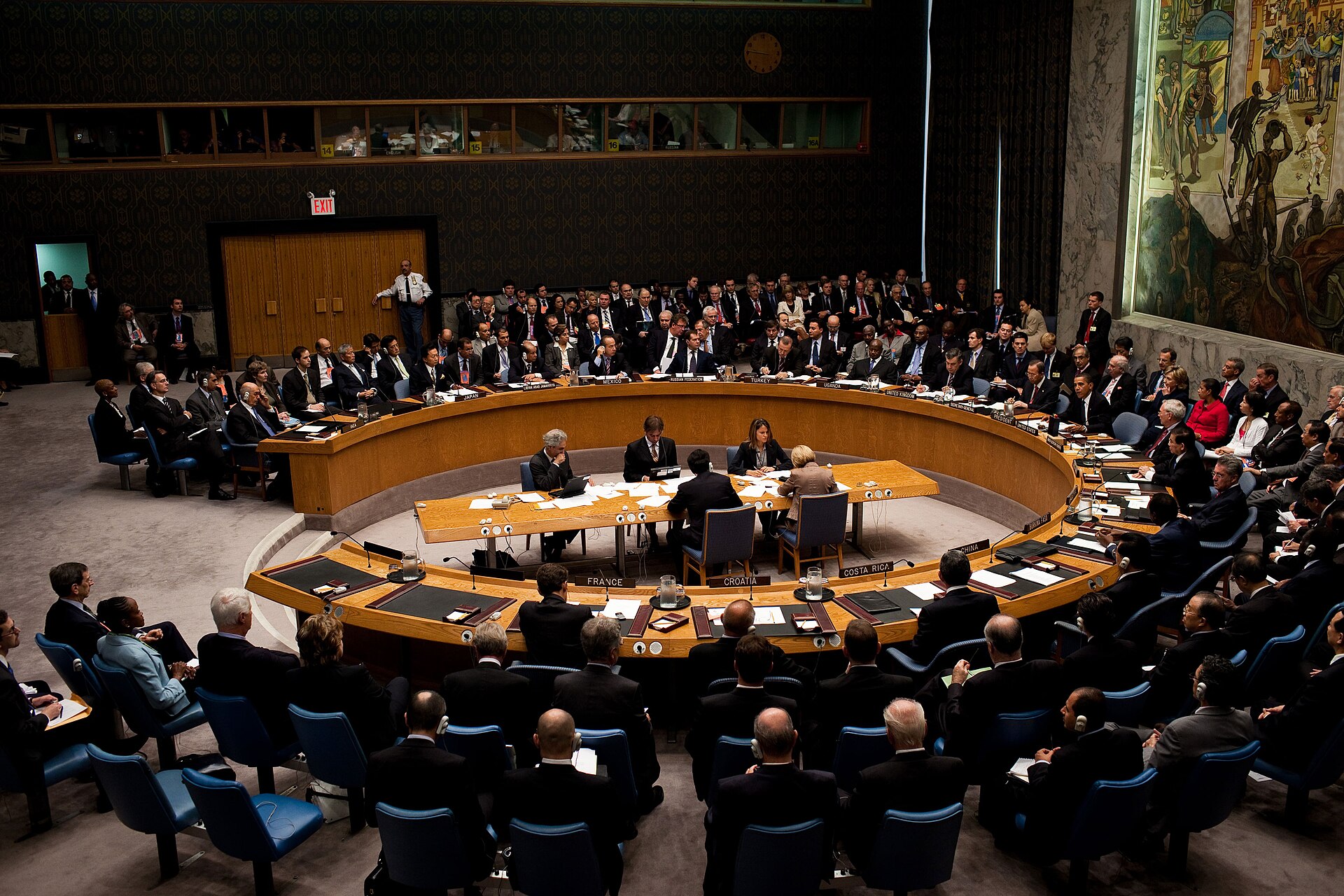

NEW YORK — The United Nations Security Council adopted presidential statement S/PRST/2026/4 on October 15, condemning Houthi attacks on Saudi Arabia in its first formal action on Yemen since a presidential statement in August 2019. Saudi Arabia’s Cabinet welcomed the document on October 20 while asserting the kingdom’s right to “all necessary measures to defend its security and protect its citizens and residents,” according to the Saudi Press Agency. Bahrain escalated the legal framing on October 22, explicitly invoking Article 51 of the UN Charter and demanding Chapter VII enforcement.
The statement passed by consensus of all 15 members at the Council’s 10,244th meeting. Russia and China signed it after negotiating out some of the strongest proposed language. It carries no binding legal force. The distance between the condemnation and the Council’s capacity to enforce it — exposed on April 7 when Russia and China vetoed a Hormuz navigation resolution — defines the position Saudi Arabia now occupies. The kingdom holds a consensus document that validates its grievance, issued by an institution structurally unable to act on it. The Cabinet’s response, welcoming the statement while asserting self-defense rights in the same sentence, used the Council as a legitimacy ledger rather than a deterrent.
Table of Contents
- What Is a UNSC Presidential Statement?
- What Did the October 15 Statement Condemn?
- The April 7 Veto and What Followed
- UNSC Yemen Action Record, 2015–2026
- What Does Saudi Arabia’s Self-Defense Language Signal?
- Iran, Russia, and the Council’s Structural Divide
- What Can the Statement Enforce?
- Frequently Asked Questions
What Is a UNSC Presidential Statement?
A presidential statement is the second-weakest formal instrument the Security Council issues, above press statements but below all resolutions. It requires consensus from all 15 members, is read aloud by the Council president, and carries no legally binding force under the UN Charter. It cannot authorize sanctions, arms embargoes, naval interdictions, or the use of force.
The House of Saud Daily Briefing
Saudi Arabia's news in 3 minutes, every morning. Free. See today's issue
The hierarchy of Council instruments runs in ascending order of legal authority. Press statements are informal and carry no legal effect. Presidential statements — designated S/PRST — are formal, reflect the Council’s agreed position, and bind no one. Chapter VI resolutions authorize the Council to recommend actions for the peaceful settlement of disputes. Chapter VII resolutions are legally binding on all 193 UN member states under Article 25 of the Charter and can authorize enforcement measures, including economic sanctions and military action.
S/PRST/2026/4 sits at the second level. The Council’s binding actions on Yemen — Resolution 2216’s arms embargo in April 2015, Resolution 2722’s demand in January 2024 that the Houthis cease Red Sea attacks — used higher instruments. The October 15 presidential statement is the formal expression of the Council’s unified condemnation. Its practical effect depends on whether member states choose to treat it as a mandate for independent action, which is how Saudi Arabia and Bahrain have read it.
The consensus requirement gives every Council member — including Russia — a veto over the text itself, not just over the decision to issue it. A resolution can pass over objections: nine votes and no P5 veto are sufficient. A presidential statement cannot. Russia’s agreement to the October 15 document was not a concession; it was a negotiating position. Moscow shaped the text it signed, removing language it opposed and inserting language it wanted. The result is an instrument that reflects what all 15 members could accept, which is structurally different from what 11 or 13 of them might have preferred. That distinction explains why the statement affirms self-defense without naming Article 51, condemns attacks without attributing them as directly to the Houthis as earlier drafts reportedly did, and calls for the full implementation of an arms embargo without proposing any mechanism to enforce it.
What Did the October 15 Statement Condemn?
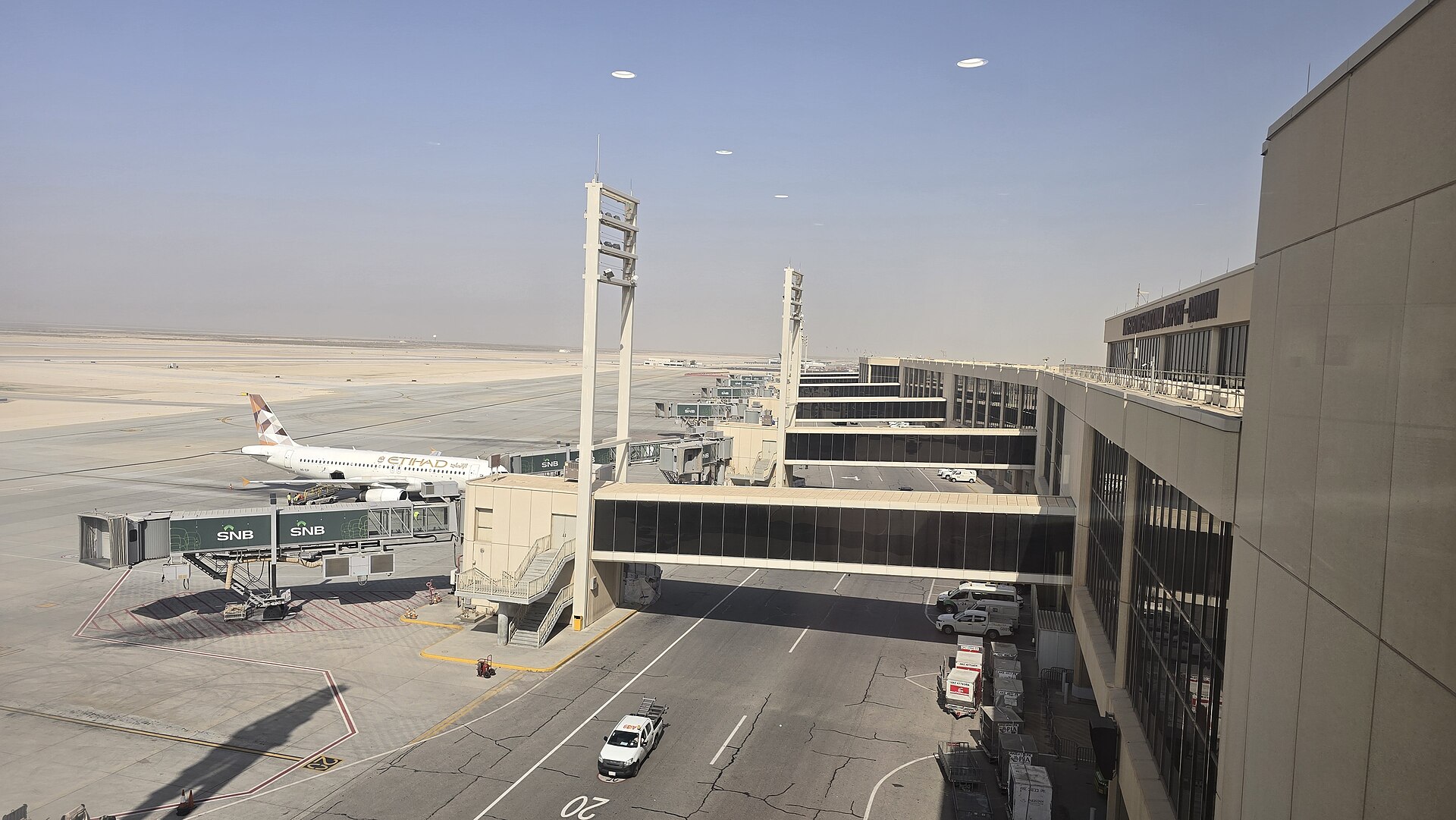
S/PRST/2026/4 condemns “reckless strikes” on King Khalid International Airport on October 10 and 11 that killed 13 people and wounded more than 300, along with attacks on other Saudi airports and Aramco facilities, according to the UN press summary. The statement affirms Saudi Arabia’s inherent right of self-defense under international law. It does not cite Article 51 by name or invoke Chapter VII.
The text was not adopted as drafted. Russia sought to remove the phrase “in the strongest terms” from language condemning attacks on shipping, to strip explicit attribution to the Houthis, and to delete the self-defense affirmation for Saudi Arabia, according to the Security Council Report’s What’s In Blue briefing. The UK, which held the pen, rejected most of these attempts. Russia succeeded in inserting one clause: “sustainable peace in Yemen cannot be achieved through violence, coercion or use of force.” That sentence, directed at all parties, sits inside a document condemning one party’s attacks on another’s airports.
The statement also calls for the “full implementation” of Resolution 2216 — the April 2015 arms embargo on the Houthis. That resolution, now eleven years old, remains the strongest binding Council action on Yemen. UN Special Envoy Hans Grundberg had warned the Council six days earlier, on October 9, that Yemen had slid back into “full-scale war,” according to Al Jazeera. The presidential statement references an unenforced 2015 embargo as the instrument that should be implemented — the gap between the instruction and the reality it describes has been growing for a decade.
The statement did not emerge from the Council’s own initiative. Saudi Arabia formally asked the Security Council to act on October 9, according to Al Jazeera. On October 11, Saudi Arabia, Egypt, Pakistan, and Turkey issued a joint condemnation of the Houthi attacks, according to CBS News — the four signatories of the Mecca Joint Defence Agreement presenting a united diplomatic front. Saudi diplomat Rayed Krimly told Al Arabiya on October 16, the day after the statement was adopted, that Iran “continues to arm, train and support the Houthi militia in violation of UN Security Council resolutions” and that the latest escalation was “encouraged by Iran.” The presidential statement was the Council’s answer to a request the kingdom had made public, backed by a coalition of four states with security treaty obligations to one another.
The April 7 Veto and What Followed
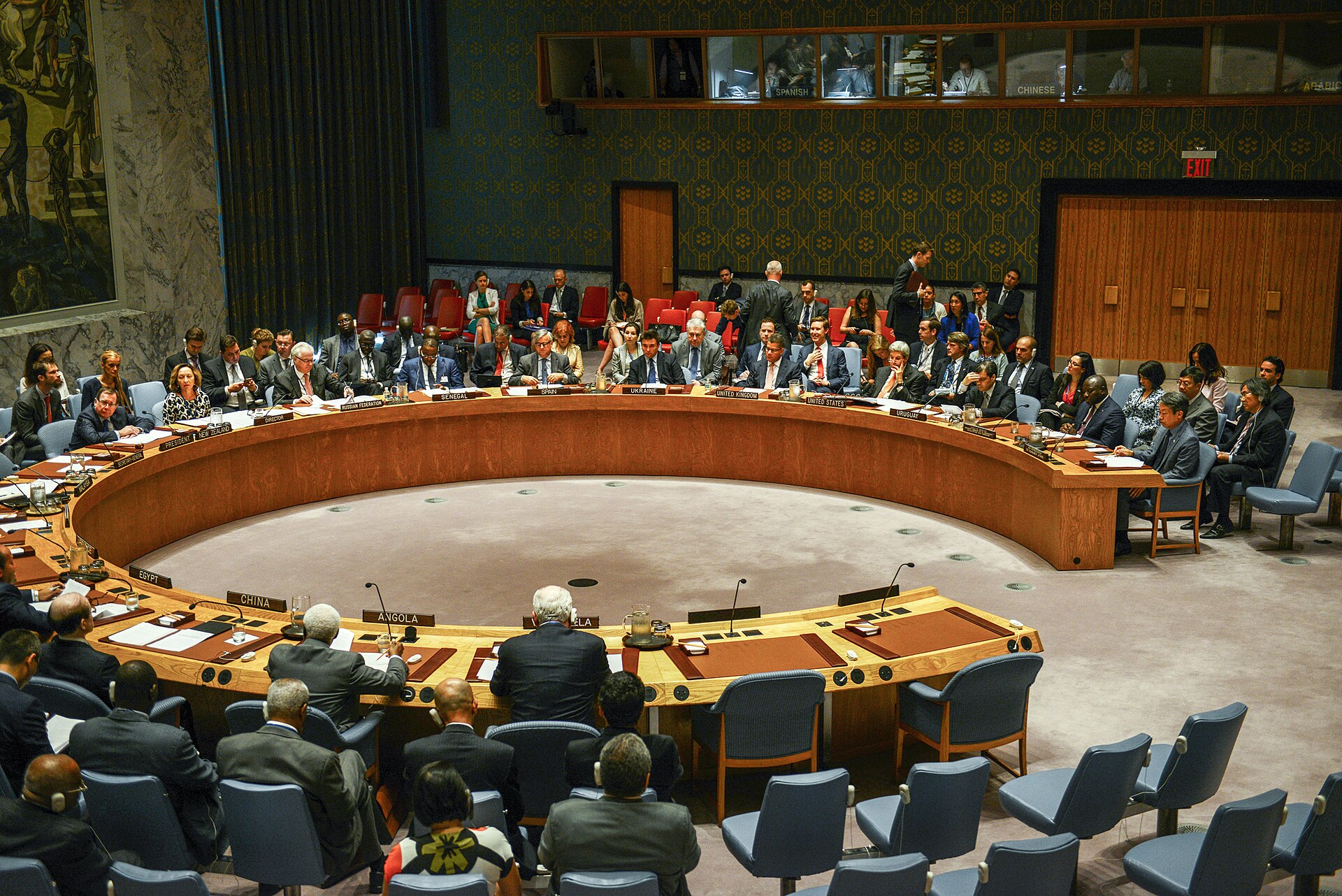
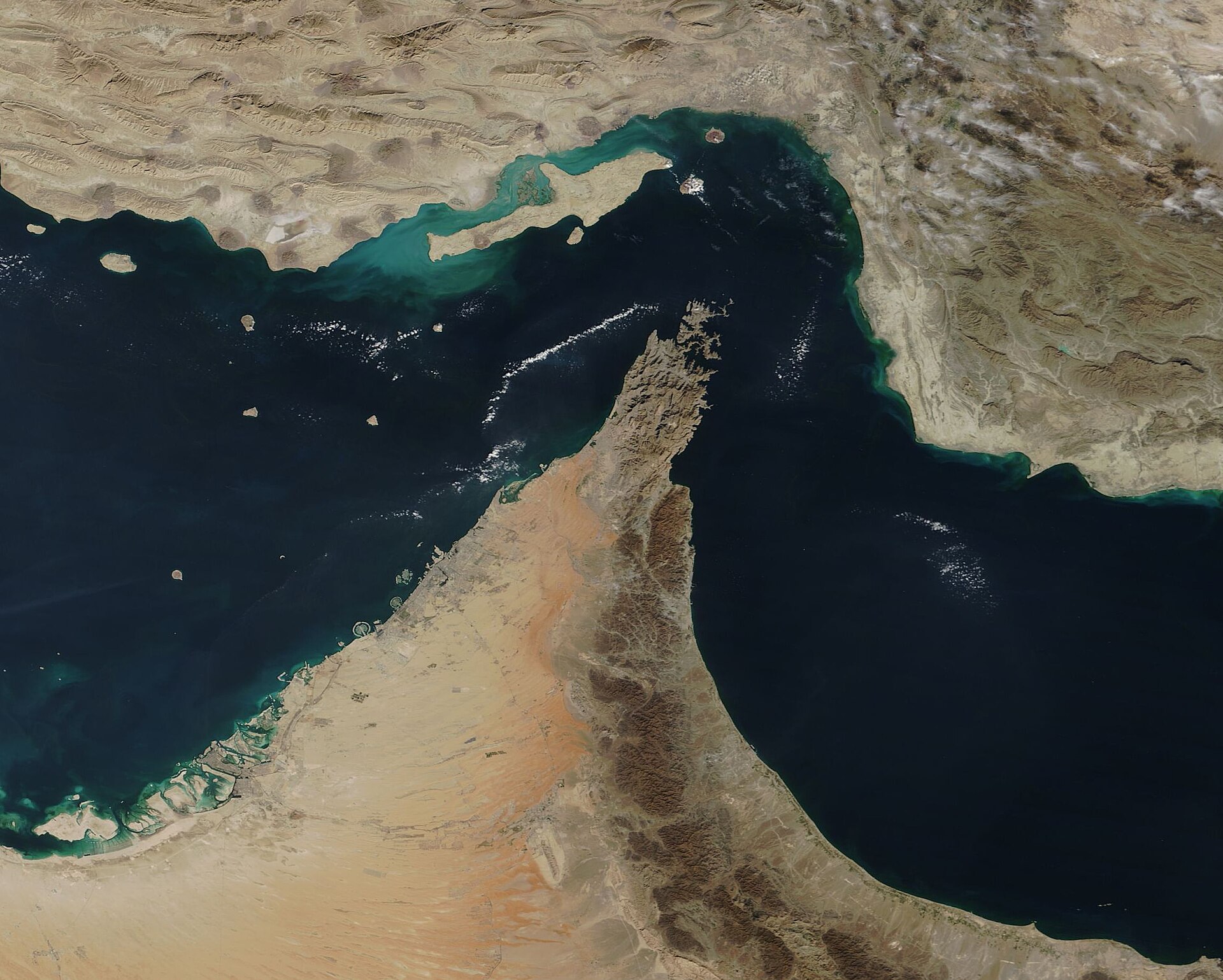
The October presidential statement is the Council’s strongest available response because its more authoritative options are blocked. On April 7, Russia and China vetoed a Bahrain-led draft resolution on navigation freedom in the Strait of Hormuz. The vote was 11 in favor, two vetoes, and two abstentions from Colombia and Pakistan, according to Al-Monitor. The draft had already been diluted from a version that would have authorized “all necessary means” under Chapter VII.
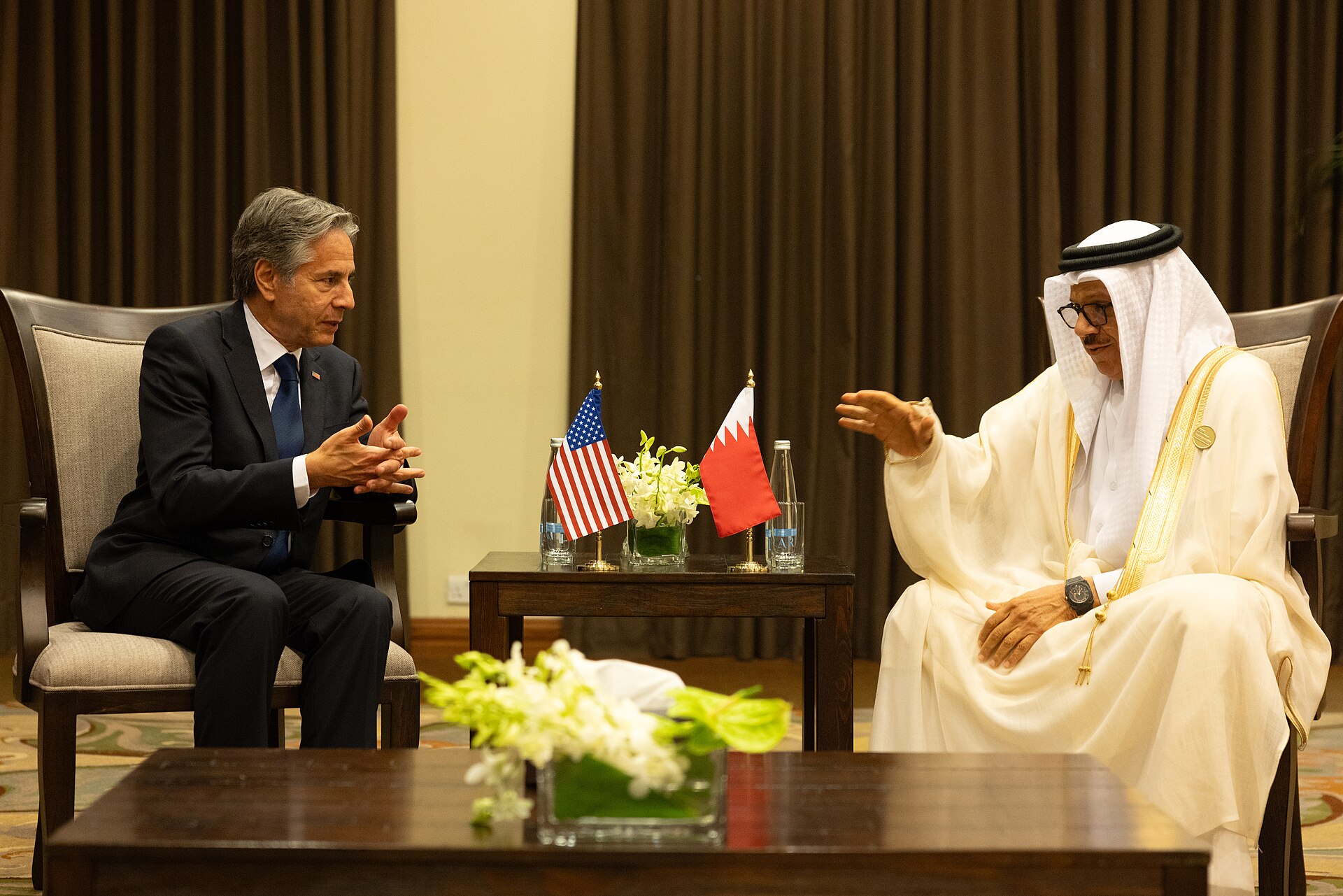
Russia’s Ambassador Vasily Nebenzya called the draft “unbalanced, inaccurate and confrontational” and said adopting it would “undermine prospects for resuming negotiations.” US Ambassador Mike Waltz said Russia and China were backing “a regime that seeks to intimidate the Gulf into submission.” Bahrain’s Foreign Minister Abdullatif bin Rashid al-Zayani addressed the Council directly: “Failing to adopt this resolution sends the wrong signal to the world.”
The April 7 veto established the ceiling for Council action on Iran-linked hostilities for the remainder of 2026. Every subsequent instrument — press statements in August, September, and late September, then the October presidential statement — operated below it.
No binding enforcement mechanism was produced between the April 7 veto and the October 15 presidential statement. A US-Bahrain draft resolution focused on de-mining — reportedly backed by 138 co-sponsors — was never put to a vote after China and Russia signalled opposition, according to the Security Council Report’s mid-year assessment. The IRGC mine blockade that cut Hormuz tanker transits from 85 to four a day continued without a Council response. The Houthi attack on King Fahd Airport, the strikes on King Khalid International Airport, and the claimed strike on the Saudi Defense Ministry all followed. Each escalation occurred with the knowledge that the Council’s binding mechanisms were unavailable.
“Failing to adopt this resolution sends the wrong signal to the world.”
— Abdullatif bin Rashid al-Zayani, Bahrain’s Foreign Minister, at the Security Council, April 7, 2026
The signal was received on the ground. The gap between CENTCOM’s declaration that Hormuz was open and the UKMTO’s record of 15 attacks in nine days registered the operational reality the Council’s paralysis produced.
UNSC Yemen Action Record, 2015–2026
The record below traces the Council’s engagement with Yemen and Houthi-linked hostilities over eleven years. The only Chapter VII action came in 2015, when Russia and China voted in favor. Every subsequent measure has carried less authority. The trajectory since 2024 — abstentions hardening into vetoes on stronger instruments, then softening back into consensus on weaker ones — is visible in the final column.
| Date | Action | Type | Russia / China |
|---|---|---|---|
| April 2015 | Res. 2216 — arms embargo on Houthis | Binding (Ch. VII) | Both in favor |
| February 2018 | UK draft on Iran arms violations | FAILED | Russia vetoed |
| January 2024 | Res. 2722 — demand Houthis cease Red Sea attacks | Adopted (11-0) | Abstained (with Algeria, Mozambique) |
| 2024–2026 | Res. 2722 renewals (4 times) | Adopted | Abstained |
| March 11, 2026 | Res. 2817 — condemns Iran’s Gulf attacks, Hormuz threat | Adopted (13-0) | Abstained |
| April 7, 2026 | Bahrain-led Hormuz navigation draft | VETOED | Both vetoed |
| August 7, 2026 | SC/16429 press statement on Houthi attacks | Press statement | Consensus |
| September 25, 2026 | Joint statement via rotating presidency | Press statement | Consensus |
| October 15, 2026 | S/PRST/2026/4 — presidential statement | Presidential statement | Consensus (Russia negotiated) |
What Does Saudi Arabia’s Self-Defense Language Signal?
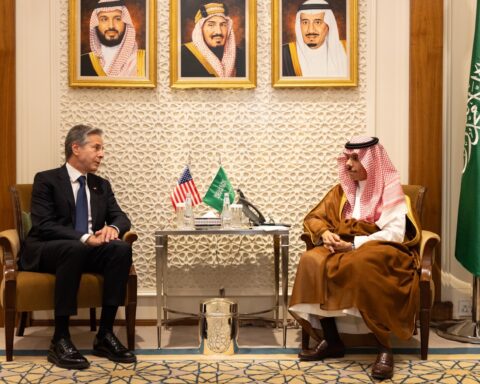
Saudi Arabia’s October 20 Cabinet statement asserted the kingdom’s “right under international law to take all necessary measures to defend its security and protect its citizens and residents,” according to the Saudi Press Agency. This tracks the standard legal formulation states use when building a case for action under Article 51 of the UN Charter, which the Cabinet did not name explicitly.
Bahrain dispensed with the ambiguity on October 22. Its government explicitly invoked “Saudi Arabia’s inherent right to self-defense under Article 51 of the United Nations Charter,” according to Asharq Al-Awsat. The statement declared Saudi security “is an integral part of Bahrain’s security and that of the GCC” and said the attacks “warrant action by the United Nations Security Council under Chapter VII of the Charter.” Bahrain requested exactly what the April 7 veto ensured the Council could not deliver.
Saudi Arabia has invoked Article 51 before in 2026. On July 29, the kingdom announced precision strikes on militia targets inside Iraq in coordination with CENTCOM, citing Article 51 as the legal basis, according to Asharq Al-Awsat. Seven Gulf states collectively affirmed Article 51 self-defense rights in a joint statement published in Okaz. Prince Khalid bin Salman said on October 6 that the Mecca pact committee had agreed to “activate collective deterrence measures,” according to Al Jazeera.
Saudi Foreign Minister Faisal bin Farhan, speaking in Moscow on September 8, said: “The Houthis have started something they cannot handle,” according to Asharq Al-Awsat. He added that Saudi Arabia “will not hesitate to defend itself against any aggression” and would “use all available means.” Deputy Foreign Minister Rayed Krimly told Al Arabiya on October 16 that Iran “continues to arm, train and support the Houthi militia in violation of UN Security Council resolutions.” The diplomatic record since September — from Moscow to the Cabinet’s October 20 statement — constitutes a sequence of documented legal and political statements, each addressed to a different audience, each escalating the legal register.
The legal architecture of Article 51 assumes a functioning Security Council. The Charter envisions self-defense as a temporary measure: a state may defend itself “until the Security Council has taken measures necessary to maintain international peace and security.” The implicit bargain is that the Council will eventually act, at which point individual self-defense yields to collective security. When the Council cannot act — because a permanent member’s veto blocks the necessary measures — the temporary right extends indefinitely. Saudi Arabia’s self-defense posture exists not despite the Charter framework but because of a structural failure within it.
Davit Khachatryan, writing in Opinio Juris on August 17, identified this condition directly. When a permanent member of the Security Council is itself using force or supporting parties to a conflict, he argued, “the Council cannot act as the custodian Article 51 assumes.” States are left to defend themselves “outside the Charter’s framework” — what Khachatryan called “the best available self-defense.”
Iran, Russia, and the Council’s Structural Divide
Iran’s position has remained consistent in public. President Masoud Pezeshkian told reporters that the Houthis are independent actors: “They don’t take directions from us,” he said, as reported by Geo.tv and TRT World. Iran’s Foreign Ministry spokesman Esmaeil Baqaei denied Saudi accusations and reiterated Tehran’s offer to mediate between Saudi Arabia and the Houthis — a framing that casts Tehran as a neutral party to a conflict its proxies are waging. The presidential statement itself does not name Iran. The Saudi response does — Krimly had told Al Arabiya on October 16 that Iran was arming the Houthis and encouraging the escalation.
The Iranian position rests on a distinction the Saudi government does not accept: that the Houthis are an autonomous Yemeni movement rather than an Iranian proxy. Pezeshkian’s formulation — “They don’t take directions from us” — is the public version of that claim. The arms embargo established by Resolution 2216 in 2015, which the October presidential statement calls to be fully implemented, was adopted in part because of evidence of Iranian weapons transfers to Houthi forces. Tehran’s offer to mediate between Saudi Arabia and a group that, by the terms of the embargo the Council just reaffirmed, should not be receiving Iranian weapons at all, is the kind of contradiction the Council’s consensus-based instruments are not built to resolve.
Russia’s position on the Council is legible across a decade of votes. Moscow vetoed a UK-drafted resolution on Iran’s arms embargo violations in February 2018, when the vote was 11 in favor with Russia and Bolivia opposed and China and Kazakhstan abstaining, according to Security Council Report veto data. Russia abstained on Resolution 2722 in January 2024 and on Resolution 2817 in March 2026. It vetoed the Hormuz draft in April. Then it signed the October presidential statement after negotiating out the language it considered most threatening and inserting a clause — “sustainable peace in Yemen cannot be achieved through violence, coercion or use of force” — that can be read as cautioning against the military response the statement’s own self-defense affirmation implies.
China’s position is harder to trace. No formal Chinese public statement explaining Beijing’s agreement to the October presidential statement has been confirmed as of October 22. China followed Russia’s lead on every major vote: abstaining on Resolutions 2722 and 2817, joining the April 7 Hormuz veto, and accepting the October statement after Russia’s negotiations narrowed its scope. Only 57% of first-half 2026 Security Council resolutions passed unanimously, down from historical norms, according to the Security Council Report’s mid-year assessment. China and Russia are in the longest Iran-sanctions committee deadlock since 1979, by the same account.
The pattern across eleven years is not one of blanket opposition to Yemen-related Council action. Russia and China voted for Resolution 2216 in 2015. They have consistently abstained rather than vetoed renewal of Resolution 2722. They signed the October presidential statement. What they have blocked is the transition from language to enforcement — from condemnation to Chapter VII authorization. Consensus is available for instruments that carry no binding force. Vetoes are reserved for the threshold where Council words might become Council actions.
What Can the Statement Enforce?
Nothing, by itself. S/PRST/2026/4 carries no legal enforcement mechanism — it cannot authorize sanctions, no-fly zones, or military action. What it establishes is political: all 15 Council members, including Russia and China, formally condemned the Houthi attacks on Saudi Arabia and affirmed the kingdom’s right to self-defense under international law. No member dissented.
Saudi Arabia’s use of the document is already visible. The Cabinet cited it while asserting the right to “all necessary measures” in the same October 20 statement, according to the Saudi Press Agency. The kingdom had already established the Article 51 precedent with its July 29 Iraq strikes. Bahrain’s October 22 demand for Chapter VII enforcement, whether or not the Council grants it, creates a formal record: a Gulf state requested binding action, and the Council’s structural limitations prevented it from responding. That record has legal value independent of the Council’s response.
The Iranian military doctrine shift announced in October, which declared an offensive posture and claimed a missile arsenal 1.5 times larger than previously acknowledged, and the US decision to pull non-emergency diplomats from Saudi Arabia amid continuing Houthi attacks, form the backdrop against which the self-defense framework will be tested. The Iranian refusal to reopen the Strait of Hormuz or transfer enriched uranium continues regardless of the presidential statement’s language.
Resolution 2216’s arms embargo, adopted when Russia and China voted in favor eleven years ago, has not prevented Iranian weapons transfers — Krimly’s October 16 accusation states the point directly. The presidential statement calls for the embargo’s “full implementation” without providing any new mechanism to achieve it. Eleven years of calling for implementation have not produced it. The October statement adds the Council’s voice to a demand the Council has not matched with enforcement since 2015.
Between that request and the presidential statement the Council produced on October 15, the distance between what the Security Council condemns and what it can enforce is measured precisely. The Saudi Cabinet positioned the kingdom inside that space on October 20: citing the Council’s own document while asserting the right to act where the Council will not.
Frequently Asked Questions
Has Saudi Arabia filed a formal Article 51 letter with the UN Secretary-General?
As of October 22, no formal Article 51 notification to the UN Secretary-General has been publicly confirmed in relation to the October Houthi escalation. Standard practice under Article 51 requires states exercising self-defense to “immediately report” the measures taken to the Security Council. Saudi Arabia’s Cabinet used language tracking the standard Article 51 formulation on October 20, and the kingdom cited Article 51 explicitly for its July 29 Iraq strikes with CENTCOM. Whether a new letter covering the current escalation has been filed remains unconfirmed.
How does Resolution 2817 compare to the October presidential statement?
Resolution 2817, adopted March 11, 2026, is the stronger instrument. Passed 13-0 with Russia and China abstaining, it condemned Iran’s attacks on Gulf states and declared the Hormuz blockade “threatens international peace and security” — a finding that places the matter within the Council’s Chapter VII jurisdiction, according to the Middle East Council on Global Affairs. The resolution attracted 135 co-sponsors, described as the highest number ever for a Security Council resolution. The October presidential statement lacks that “threat to international peace and security” finding and carries no binding authority.
What was Iran’s proposed roadmap for Hormuz?
Iranian Foreign Minister Abbas Araghchi proposed a seven-day roadmap via Qatar on September 25, offering to reopen the Strait of Hormuz in exchange for the US lifting its naval presence, sanctions waivers, and the release of approximately $12 billion in frozen Iranian assets, according to Al Jazeera. The proposal did not advance. The Strait of Hormuz remained closed through October 22, with Gulf states absorbing the blockade’s costs as Washington’s midterm calendar extended the pause.
How many ships has the Hormuz blockade affected?
CENTCOM reported that 135 ships had been turned around since the blockade began on July 14, according to CBS News on October 10. Trump stated on October 8 that the US “will not be attacking Iran at any time prior to the midterm elections,” according to The National. The combination of the Council’s inability to pass a binding Hormuz resolution and Washington’s self-imposed pre-election pause has left the blockade’s shipping disruptions without either a multilateral or a unilateral military response from the parties best positioned to address them.
The House of Saud Daily Briefing
Saudi Arabia's news in 3 minutes, every morning. Free. See today's issue