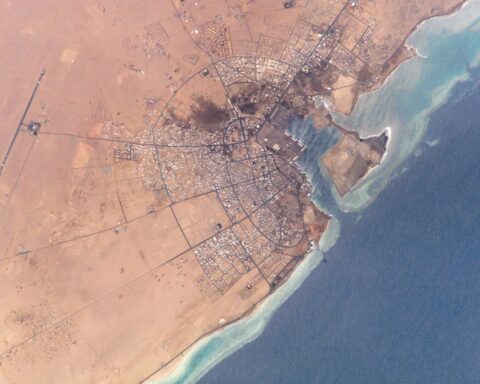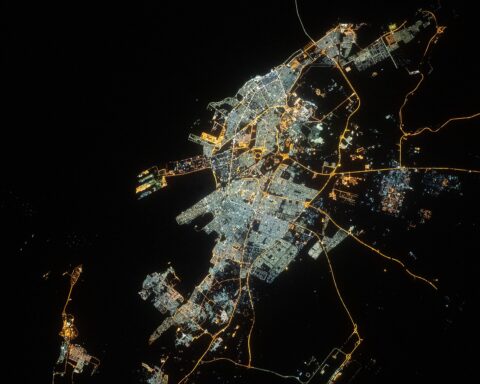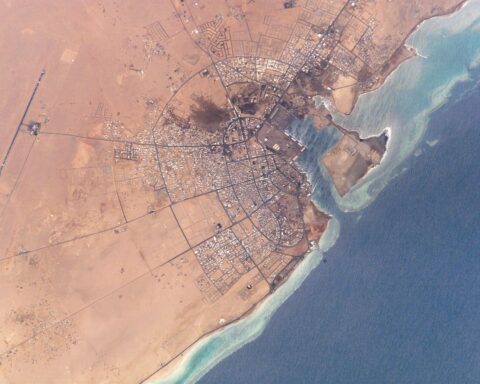

DHAHRAN — Aramco’s Dhahran headquarters, home to the Oil Supply Planning and Scheduling Center that coordinates the movement of 15 million barrels of oil equivalent per day, remains evacuated under an order issued on October 22 with no timeline for return. The evacuation — the first full headquarters evacuation since the war began, according to Reuters — came nine days after a Houthi ballistic missile struck the complex and set fire to the upper floors of an office block. Six people with knowledge of the matter told Reuters that staff were ordered to work from home “until further notice.” Brent crude stood at $114.59 on the morning of October 23, having touched $115 overnight.
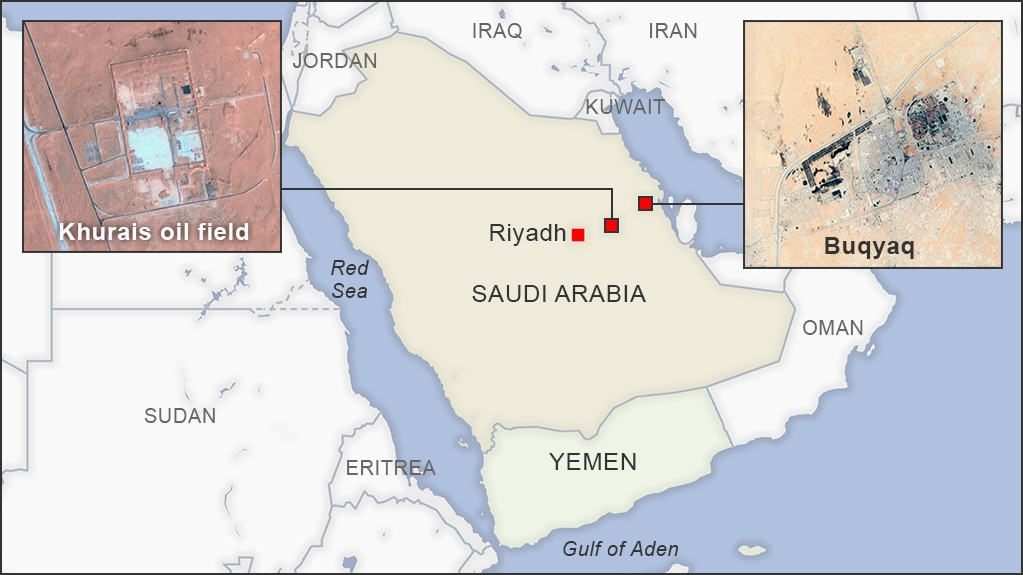
The distinction matters because it is not the one that markets, or Aramco’s own leadership, have been drawing. In 2019, when drones and cruise missiles knocked out 5.7 million barrels per day at Abqaiq and Khurais, the damage was to processing capacity — stabilisation towers, separators, physical infrastructure that could be rebuilt on a stated timeline. The Dhahran headquarters was untouched. In October 2026, the target is the building that runs the entire system: nominations, liftings, pipeline dispatch, vessel routing, terminal loadings. The processing plants are intact. The command centre is empty.
Table of Contents
- What Does OSPAS Do and Why Does Its Evacuation Matter?
- The October 13 Strike: Damage, Response and the Partial Return
- The October 22 Evacuation: What Triggered It?
- Why 2026 Is Not 2019: Processing Capacity vs. Command Capacity
- How Much Oil Can Aramco Move Without Dhahran?
- The Market’s Reading vs. the Operational Reality
- Shaybah and the Widening Perimeter
- What Aramco’s CEO Has Said — and When He Said It
- FAQ
What Does OSPAS Do and Why Does Its Evacuation Matter?
The Oil Supply Planning and Scheduling Center — OSPAS — is what Aramco calls “the core of Aramco’s operations” and its “nerve center,” according to Saudipedia, citing Aramco’s own description. Inaugurated by King Salman on December 1, 2016, it sits inside the Dhahran headquarters complex. It plans, schedules, coordinates and monitors the movement of hydrocarbons from production facilities through pipelines, terminals and tankers to customers worldwide.
The House of Saud Daily Briefing
Saudi Arabia's news in 3 minutes, every morning. Free. See today's issue
The scale is specific. OSPAS manages 15 million barrels of oil equivalent per day across onshore and offshore facilities, tracking flows through 100,000 sensors displayed on a 67-metre wall of 150 integrated screens, according to Saudipedia. It tracks every ship’s cargo and destination and directs daily vessel movements and terminal loadings. The centre has four operational divisions — Oil; Gas and NGL; Refined Products; and Terminal Planning — plus three supporting divisions including Corporate Emergency Management and Continuity.
When a customer in Tokyo or Rotterdam lifts Saudi crude, the nomination passes through OSPAS. When a tanker at Ras Tanura or Yanbu receives its loading schedule, OSPAS dispatches it. When crude moves through the East-West pipeline from the Eastern Province to the Red Sea coast, OSPAS routes it. This is not a single refinery or processing tower. It is the operating system for the world’s largest oil exporter.
Oil nominations, gas allocation, refined product scheduling and terminal dispatch all run from the same floor. The Corporate Emergency Management and Continuity division — one of OSPAS’s supporting units — exists precisely for the scenario now unfolding. Whether its plans assumed a ten-day window between a direct missile hit and a second full evacuation is another question.
As of October 23, the building housing that system is empty. Aramco has not said which functions, if any, have been transferred to backup facilities. Reuters reported after the October 13 strike that “some functions were moved to global offices,” but did not name them. No source has confirmed whether those transfers remained in place through October 22 or whether the full evacuation disrupted them as well.
The October 13 Strike: Damage, Response and the Partial Return
On the evening of October 13, a ballistic missile hit the Aramco Dhahran headquarters complex. The Saudi Energy Ministry described it as causing a “limited fire” with no injuries, according to Reuters. The Saudi-led coalition said it intercepted three missiles and two drones aimed at Riyadh and the Dhahran complex, with fragments of an intercepted missile injuring four people in a residential area and causing limited damage to 15 homes.
The Energy Ministry’s description and what Reuters sources described were difficult to reconcile. Three Reuters sources said fire spread between the 6th and 10th floors of an office block. A fourth source said the top three floors — which house CEO Amin Nasser’s office — were “severely damaged,” with part of the ceiling caved in and windows and doors blown out, according to the BOE Report, citing Reuters.
Before the strike, Houthi spokesperson Yahya Saree had threatened a “harsh and painful” response to coalition strikes on Sanaa, naming the Dhahran headquarters and a Riyadh refinery as targets, Reuters reported via political.org. The building, Reuters noted, “hosts a major Aramco operations centre” overseeing oil rigs, pipelines, refineries and export terminals.
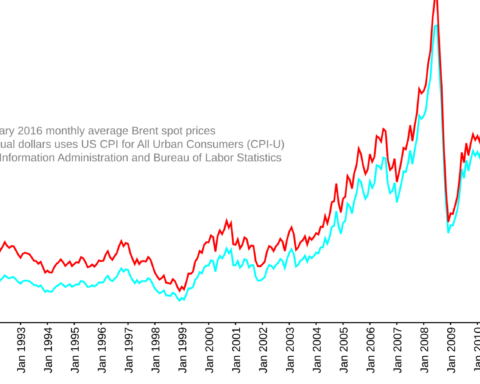
Aramco’s response was partial. Reuters sources said operations “continued normally” after October 13, though some employees were asked to work from home and some functions were moved to global offices. For nine days, this arrangement held. Markets treated it as resolution. Brent, which had been at $102.94 on October 9 according to CNBC, climbed past $108 territory by late September on the pipeline suspension but did not spike on the Dhahran strike itself. The assumption was that a headquarters attack was manageable — a one-off.
That assumption held until October 22.
The October 22 Evacuation: What Triggered It?
On October 22, Aramco reversed that partial normalcy. Reuters — citing six people with direct knowledge — reported that the company ordered all staff to evacuate the Dhahran headquarters and work from home. Gulf News, citing three sources, described it as a “full evacuation” — the first since the war began. Bloomberg reported the evacuation followed “an alarm” whose trigger was not immediately known.
No outlet has reported what set off the alarm. Aramco has not issued a public statement explaining it. The October 22 order is “until further notice,” with no timeline for return. The distinction from October 13 is categorical: after the missile strike, some staff stayed and some functions continued on-site. After October 22, the building was cleared entirely. Gulf News noted there was “no immediate indication” of operational impact — a careful hedge that acknowledged uncertainty rather than asserting continuity.
The timing compounded the pressure. October 22 was the same day the Houthis claimed a strike on the Saudi Defense Ministry, and the same day Aramco confirmed two workers had been killed at Shaybah. The confluence — a claimed strike on the ministry, confirmed deaths at a remote oil field, and a full evacuation of the company that funds the state — made October 22 the most operationally consequential day of the war for Saudi Arabia’s oil apparatus.
The Saudi TASI stock index fell 2.5 percent on October 22, according to Reuters and LSEG data. Brent crude rose to $111.88 that day, then climbed to $114.59 by the morning of October 23, touching $115 overnight, Energy News Beat reported.
Why 2026 Is Not 2019: Processing Capacity vs. Command Capacity
The 2019 Abqaiq-Khurais attack remains the reference point for every assessment of Saudi oil infrastructure vulnerability. On September 14, 2019, drone and cruise missile strikes knocked out approximately 5.7 million barrels per day — about 5 percent of global supply. Khurais resumed output within approximately 24 hours. Abqaiq was processing about 2 million barrels per day by September 17, and Saudi capacity exceeded 11 million barrels per day by around September 25, roughly a week ahead of the stated target, according to World Oil.
That recovery followed a known model: physical damage to physical infrastructure, repaired by engineers on a timeline that could be announced, tracked and priced. Even so, the restoration was incomplete. As of October 13, 2019 — nearly a month after the attack — three of the five originally damaged processing towers at Abqaiq were still being repaired, and maximum sustainable capacity of 12 million barrels per day was not expected until late November 2019, ABS-CBN reported.
The 2026 situation is structurally different. The Abqaiq stabilisation towers did not run themselves. They processed crude that OSPAS had scheduled for them, through pipelines OSPAS had routed, for tankers OSPAS had dispatched. In 2019, the towers were hit and the command centre was untouched. In 2026, the command centre has been attacked and evacuated — twice in ten days — while the processing infrastructure itself remains intact.
| Dimension | Abqaiq-Khurais (September 2019) | Dhahran (October 2026) |
|---|---|---|
| What was hit | Processing towers, separators at 2 facilities | Administrative headquarters housing OSPAS |
| Capacity knocked offline | ~5.7 million bpd (World Oil) | Not applicable — no processing damage confirmed |
| Dhahran HQ status | Untouched, fully operational | Evacuated “until further notice” (Reuters) |
| Recovery model | Physical repair: Khurais ~24 hrs, Abqaiq partial by day 3, capacity above 11 mb/d by day 11 | Unknown — depends on when personnel return |
| CEO timeline given | “Weeks” to full capacity (confirmed met) | “Days, not weeks or months” (said September 25, before the strike) |
A damaged stabilisation tower can be rebuilt. A timeline can be given. But a command-and-control centre depends on people being present and systems being online. Whether OSPAS’s physical systems sustained damage in the October 13 strike has not been confirmed. What has been confirmed is that the people who operate them are not in the building.
How Much Oil Can Aramco Move Without Dhahran?
Aramco CEO Amin Nasser said on October 22 — the same day as the evacuation — that the East-West pipeline’s capacity had grown from about 2 million barrels per day to 7 million barrels per day, and that Aramco was studying expansion to 10 million barrels per day, according to Al Arabiya as cited by Energy News Beat. The pipeline runs from the Eastern Province to Yanbu on the Red Sea coast, bypassing the Strait of Hormuz.
The rated capacity and the current throughput are not the same number. Saudi Arabia suspended East-West pipeline flows on September 12 as a precaution, then restarted the line on September 22, but Aramco said full capacity could take six weeks or more, according to Baird Maritime, citing Reuters. That six-week window, counted from September 22, runs to early November. Current throughput has not been publicly confirmed.
The IEA said Saudi crude supply stood at 5.97 million barrels per day in August, according to Trend. That was before the pipeline suspension, before the October airport strikes, and before the Dhahran evacuation. OPEC+ kept Saudi Arabia’s November production target unchanged at 10.5 million barrels per day, according to Enerdata — a target the kingdom has not been able to meet. Aramco cut its November Arab Light price to Asia by $3, to $5 below the Oman/Dubai benchmark, the widest discount since June 2020, according to bdnews24, citing Reuters. Aramco told European customers there would be no October crude.
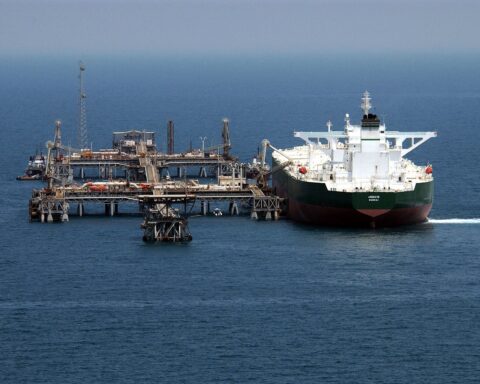
The export picture adds a layer. Ras Tanura — Saudi Arabia’s largest oil terminal, on the Persian Gulf — averaged 2.98 million barrels per day in the first half of October, down from 4.16 million barrels per day in September, according to Kpler data reported by Oil and Gas Middle East, though the source page could not be independently verified. Yanbu, on the Red Sea coast, averaged 2.34 million barrels per day, down from 2.54 million barrels per day in September, by the same measure. Combined October 1-15 exports averaged roughly 5.55 million barrels per day — for a country whose OPEC+ target is nearly double that.
Those figures, to the extent they are reliable, predate the October 22 evacuation. The question is not whether individual facilities can pump oil. It is whether the system that schedules, routes and delivers it to paying customers can function from dispersed home offices with the same precision as a purpose-built operations centre running 100,000 sensors on a 67-metre wall display. Aramco has not addressed this question publicly.
The Market’s Reading vs. the Operational Reality
Brent crude’s path through October has moved on one assumption: that disruptions are temporary — that the all-clear always comes.
The “all-clear” framing deserves scrutiny. After October 13, Reuters sources said operations “continued normally.” Some employees returned. Markets read that as resolution. But the October 22 evacuation reversed whatever normalcy existed. As of publication, the building is empty, the order is open-ended, and the trigger for the evacuation has not been explained. The all-clear came at the price level. It did not come at the operational level.
Saudi Arabia’s fiscal position makes the distinction more than academic. The pre-budget statement raised the 2026 deficit estimate to SAR 245 billion, up from a budgeted SAR 165 billion, and forecast real GDP falling 3.6 percent in 2026 on a 21.8 percent drop in oil activities, according to Reuters via Zawya. The kingdom projected 2027 spending of SAR 1.39 trillion against revenue of SAR 1.20 trillion — a deficit of SAR 191 billion, or 3.6 percent of GDP. Those projections assumed a functioning oil supply chain.
The VLCC rate for the Gulf-to-China route had already reached $1.2 million per day, against approximately $80,000 a year earlier, according to LSEG data cited by bdnews24. Aramco raised its November northwest Europe prices by $3 even as it slashed Asia-bound prices, according to the same source — a pricing asymmetry that reflects route-specific supply constraints, not global demand shifts. Every day the command-and-control centre sits empty is a day the system that generates Saudi Arabia’s revenue operates in a mode it was not designed for.
Shaybah and the Widening Perimeter
On October 21, Saudi air defences intercepted a drone targeting a processing facility at the Shaybah oil field in the Rub’ al-Khali desert, near the UAE border. Debris killed two workers — a Filipino national and a Nepali national — and injured two others, according to Energy News Beat. The Saudi Energy Ministry said operations were not affected. Shaybah has a production capacity of about 1 million barrels per day.
The Shaybah strike matters for what it reveals about the target set. Dhahran is the administrative and operational headquarters. Shaybah is a remote production facility 600 kilometres from the nearest city. The Houthis, or their suppliers, have demonstrated the ability to reach both. Saudi Arabia confirmed on October 22 that two Aramco workers had been killed at Shaybah.
The progression runs from airports to headquarters to remote oil fields. Between October 6 and 11, strikes on King Khalid International Airport killed 20 people, according to BBC. Then the Dhahran headquarters on October 13. Then Shaybah on October 21. Then the full Dhahran evacuation on October 22. Houthi spokesperson Saree had named Aramco facilities as targets before the October 13 strike, and on October 13 the Houthis warned employees and citizens near any Aramco oil facility to evacuate, calling them legitimate targets, according to Newsquawk.
The target set now spans the full length of Aramco’s operational chain: the airports that move personnel, the headquarters that dispatches oil, and the remote fields that produce it. No single attack has shut down Saudi production. But the cumulative effect — dispersed staff, elevated threat to facilities, an open-ended evacuation of the nerve centre — is a different kind of disruption than a single processing plant strike, and one that does not come with an announced repair schedule.
What Aramco’s CEO Has Said — and When He Said It
Aramco CEO Amin Nasser has made three public statements relevant to the current situation. The first, on August 4, on a call with reporters: “No material impact on our capabilities,” crediting storage capacity, export terminals and the East-West pipeline, according to the Khaleej Times, citing Reuters. The second, on September 25: disruptions typically last “days, not weeks or months,” according to the Saudi Gazette via Zawya. The third, on October 22 — the day of the full evacuation — was the announcement of the pipeline capacity increase to 7 million barrels per day.
The August statement preceded the September pipeline suspension, the October airport strikes, the October 13 missile strike on his own office building, the Shaybah drone attack that killed two workers, and the October 22 evacuation of the headquarters. The September statement preceded all of the above except the pipeline suspension. The October 22 statement, about pipeline capacity, came on the same day Aramco cleared its own building.
Nasser’s “days, not weeks or months” framing was built for the Abqaiq model — physical damage with a physical repair timeline. The Dhahran evacuation does not fit that model. There is no processing tower to weld back together. There is a building that 15 million barrels of oil equivalent per day passes through, administratively, every day. The question is not how long the repair takes. It is how long the people stay away.
“No material impact on our capabilities.”
— Amin Nasser, Aramco CEO, August 4, 2026, on a call with reporters (Khaleej Times/Reuters)
Aramco’s Q2 2026 net income was $32.69 billion, with an average realised price of $108.1 per barrel, according to Zawya, citing Aramco. That was the quarter before the pipeline suspension, before the headquarters was struck, and before it was evacuated. Brent on October 23 traded above Aramco’s Q2 realised price — $114.59 against $108.1 — which under normal circumstances would mean higher revenue per barrel. But revenue is price multiplied by volume, and volume is what an evacuated command centre puts at risk.
The next earnings report will be the first to capture what it means to run the world’s largest oil company from home. Whether that is “days, not weeks or months,” as Nasser said in September, or something longer, depends on a variable no Aramco statement has yet addressed: when the people who coordinate 15 million barrels of oil equivalent per day are allowed to go back to their desks.

FAQ
Has Aramco activated a disaster recovery site for OSPAS?
No confirmed report exists as of October 23. OSPAS’s supporting divisions include Corporate Emergency Management and Continuity, according to Saudipedia, which suggests contingency planning exists. But whether a physical backup site has been activated, and whether it can replicate the capabilities of the 100,000-sensor, 150-screen primary facility, has not been addressed by Aramco or reported by any wire service.
How does the Dhahran evacuation affect Saudi Arabia’s OPEC+ commitments?
Saudi Arabia’s November OPEC+ production target remains at 10.5 million barrels per day, according to Enerdata. The next OPEC+ meeting is November 1, according to Nation Thailand. Saudi crude supply in August was 5.97 million barrels per day according to the IEA — already well below the target before the headquarters evacuation. Whether the evacuation widens that gap depends on how long it lasts and which OSPAS functions can operate remotely, neither of which Aramco has disclosed.
When was the last time Aramco’s Dhahran headquarters was attacked before 2026?
The Dhahran complex was not targeted in the 2019 Abqaiq-Khurais attacks, which hit processing infrastructure 330 kilometres to the northwest. The most notable prior attack on oil infrastructure in the Eastern Province was the 2006 attempted car bombing of the Abqaiq processing facility, which was stopped at the outer perimeter. The October 13, 2026, strike was the first confirmed missile hit on the Dhahran headquarters complex itself.
Could Aramco declare force majeure on November crude liftings?
A Foley Hoag legal alert published on October 7 discussed force majeure remedies as a possibility in the context of Saudi oil supply disruptions. Aramco has already informed European customers that no October crude would be available. Whether formal force majeure notices have been issued for November liftings has not been reported. The Foley Hoag alert noted that the legal threshold depends on whether the disruption is beyond the seller’s control and was unforeseeable — conditions that sustained military attacks on headquarters facilities could meet.
The House of Saud Daily Briefing
Saudi Arabia's news in 3 minutes, every morning. Free. See today's issue