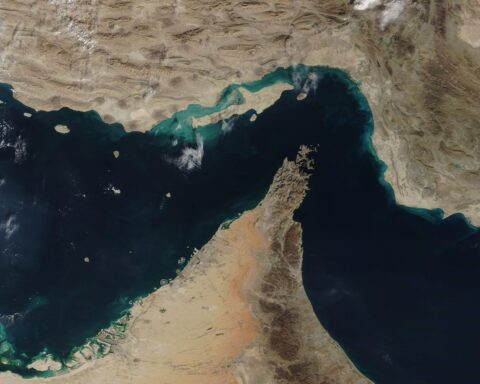

WASHINGTON — President Donald Trump told CNN on Sunday that renewed US strikes on Iran are “highly unlikely” if Tehran agrees to a nuclear deal and fully reopens the Strait of Hormuz — a direct reversal of the military posture he confirmed just 24 hours earlier. In a roughly 20-minute phone interview with Jim Sciutto, Trump repeated the phrase “highly unlikely” five times and said the outcome “depends on whether or not they sign a very strong agreement,” according to CNN.
The shift arrived as Secretary of State Marco Rubio issued a blunt counter-signal from the State Department, calling Iranian demands “simply unacceptable” and “in some cases outrageous, ridiculous, and detached from reality,” according to the Jerusalem Post. Three US carrier strike groups are in the region — by Trump’s own count — and the Strait of Hormuz remains effectively closed. The gap between Trump’s conditional off-ramp and Rubio’s assessment that talks had not been productive frames a White House that is publicly negotiating with itself as much as with Tehran.
The House of Saud Daily Briefing
Saudi Arabia's news in 3 minutes, every morning. Free. See today's issue
Table of Contents
- Trump’s Conditions: Nuclear Deal and Hormuz Reopening
- Why Did Rubio Contradict Trump on the Same Day?
- Trump Plans Iran Talks With Xi and Putin at APEC
- How Did Iran Respond?
- Oil Markets: Brent Falls but Physical Gulf Crude Climbs
- Saudi Arabia Between the Battlefield and the Negotiating Table
- Background: From Strikes to Off-Ramp in 24 Hours
- Frequently Asked Questions
Trump’s Conditions: Nuclear Deal and Hormuz Reopening
Trump framed his position as conditional, not conciliatory. “The answer is highly unlikely it’s going to be necessary. They’re a failing nation,” he told CNN’s Sciutto, according to CNN and CNBC. The two conditions he named were explicit: Iran must sign “a very strong agreement” covering its nuclear program, and the Strait of Hormuz must reopen fully, according to CNN.
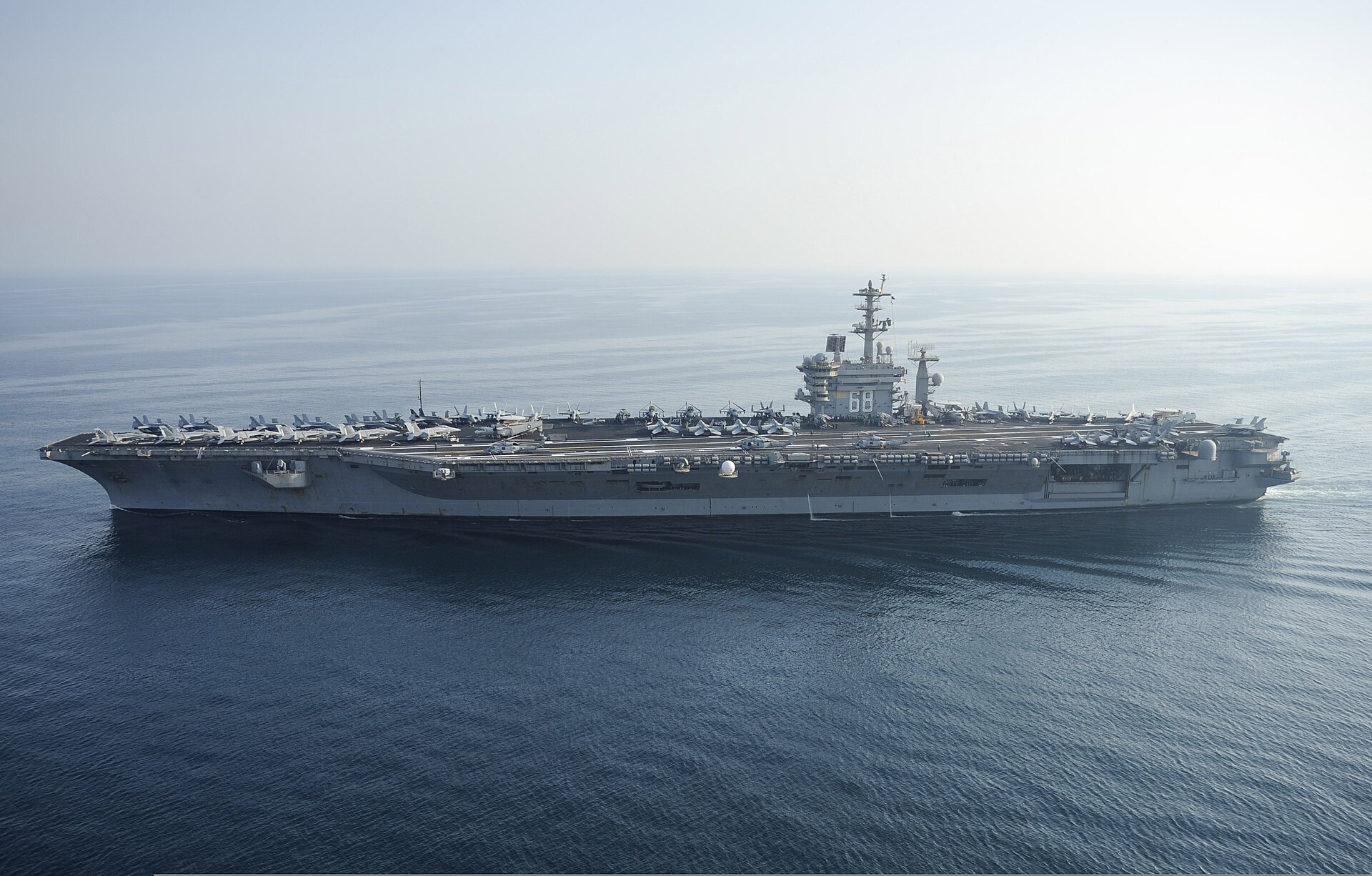
The interview mixed diplomatic language with military threat. Trump said the US has “38 bridges in our sight that we can knock down in literally one hour” and that three carrier strike groups are “fully locked and loaded,” according to CNBC. He also posted on Truth Social that “Task Force Iron Gate is in full force and effect in the Islamic Republic of Iran,” according to CNBC — a reference to the CENTCOM task force announced November 7.
Trump offered his own assessment of Iran’s remaining military capacity, claiming the country retains approximately 10 percent of its missile capability and 15 percent of its drone fleet after US strikes, and cited 301 percent inflation, according to CNN. These are Trump’s assertions; no independent confirmation appeared in the reporting.
The combination — “highly unlikely” repeated five times in 20 minutes, alongside specific bridge counts and carrier deployments — reads less like a peace offering than a public negotiating position: the strikes can stop, but only on Washington’s terms, and the hardware stays in place.
Why Did Rubio Contradict Trump on the Same Day?
Within hours of Trump’s CNN interview, Rubio made statements that could have come from a different administration. “The Iranian demands are simply unacceptable, and in some cases they are outrageous, ridiculous, and detached from reality,” he told reporters, according to the Jerusalem Post. He added that the talks had not been productive.
Rubio went further, telling CNBC and The Hill: “I wouldn’t say we’re on the verge of a breakthrough.” The Wall Street Journal had previously reported that Trump’s top advisers are divided over whether to resume strikes or continue negotiating, according to The Hill’s citation of the WSJ.
The divergence is not new. Trump has oscillated between military action and diplomatic signaling throughout the conflict — telling reporters on November 6 that the US was “doing very well with Iran” while Hormuz mine attacks continued that same day. But the November 8 split was unusually sharp: the president calling strikes “highly unlikely” while his secretary of state described talks as stalled and Iranian positions as delusional.
The split may serve a purpose. A president signaling willingness to deal and a top diplomat insisting on maximum terms is a negotiating posture older than the current crisis. Whether it is coordinated or genuine disagreement, the practical effect is the same: Tehran receives both a carrot and a reminder that the stick remains.
Trump Plans Iran Talks With Xi and Putin at APEC
Trump told the same CNN interview — reported by Nikkei Asia — that he “thinks” he will meet Chinese President Xi Jinping and Russian President Putin at the APEC Economic Leaders’ Meeting in Shenzhen on November 18–19. “One of the meetings, I think, will be with President Putin and President Xi, and that’ll be interesting,” Trump said, according to Nikkei Asia.
On the agenda: “We’re talking a lot of things, including denuclearization, but we’ll be talking a lot of things,” Trump said, according to Nikkei Asia. Neither China nor Russia has confirmed the meetings, Nikkei Asia reported.
The APEC angle matters for three reasons. China and Russia are Iran’s two most consequential external partners — Beijing as Tehran’s largest oil buyer, Moscow as its diplomatic shield at the UN Security Council. Any deal that ends the Hormuz closure and addresses Iran’s nuclear program will require at minimum their acquiescence and likely their active participation. Iran has already conveyed a nuclear proposal via Qatar. Tehran insists, however, that it will not discuss its nuclear program until Washington first meets seven preconditions — ending the war, lifting the naval blockade, releasing frozen assets, compensating war damage, and lifting sanctions among them.
An APEC sidebar with Xi and Putin would represent the first trilateral channel through which Iran’s future is discussed since the crisis escalated in early 2026. It would also bring Iran policy into the same conversation as trade, Taiwan, and Ukraine — giving Trump additional leverage points, but also additional complications.
How Did Iran Respond?
Iranian Foreign Minister Abbas Araghchi said Tehran’s two-day proposal — under which Iran would reopen Hormuz in exchange for the US lifting its naval blockade and releasing a portion of its frozen assets — “stands,” according to Al Jazeera. Araghchi attributed the stall in talks to mediators pausing travel after the US midterm results on November 4, according to Al Jazeera.
Araghchi also warned that Iran would “rain down hell” if the US resumes attacks, according to Al Jazeera. The threat, paired with the diplomatic offer, mirrors the dual-signal pattern from Washington — conditional willingness to talk, matched with explicit warnings about the alternative.
No direct response to Trump’s November 8 “highly unlikely” statement from Iranian state media — IRNA, PressTV, or Tasnim — was confirmed in available reporting. The absence is itself a data point: Tehran may be waiting to see whether Trump’s words translate into a concrete proposal, or whether the Rubio counter-signal better reflects actual US policy.
Iran’s seven preconditions for reopening Hormuz — reiterated by Iranian Army spokesman Brig. Gen. Mohammad Akraminia on November 6 — remain far from anything Washington has indicated willingness to accept. The gap between Trump’s two conditions (nuclear deal plus Hormuz) and Iran’s seven (ending the war, lifting the blockade, releasing assets, compensating damage, lifting sanctions, among others) is wide enough that “highly unlikely” may describe not just the prospect of new strikes, but the prospect of a deal.
Oil Markets: Brent Falls but Physical Gulf Crude Climbs
Brent crude settled at $98.32 per barrel on Friday, November 6, having fallen more than 16 percent on the week — the steepest weekly decline since 2020, according to Gulf News and OilPrice.com. By Monday, November 9, Brent had slipped further to $97.49, down 0.84 percent, according to Gulf News.
The futures price tells only half the story. Physical Gulf crude — Murban — rose $3.28, or 3.42 percent, to $99.17 on the same day, according to Gulf News. The premium reflects buyers paying above the benchmark to secure actual barrels loading from Gulf ports, a signal that supply disruption fears remain acute even as futures traders price in the possibility of de-escalation.
The Strait of Hormuz, through which the world’s crude oil shipments flow, recorded just one vessel transit on November 1, against a pre-crisis baseline of 85 transits per day measured by IMF PortWatch methodology, according to Gulf News. The JMIC baseline — using a different counting methodology — puts the pre-crisis figure at 138 ships per day. By either measure, the strait is functionally closed.
Trump’s “highly unlikely” language likely contributed to the futures decline, which began earlier in the week as diplomatic signals accumulated. But the Murban premium suggests physical market participants — refiners, shippers, national oil companies — are less convinced that diplomacy will deliver barrels soon.
Saudi Arabia Between the Battlefield and the Negotiating Table
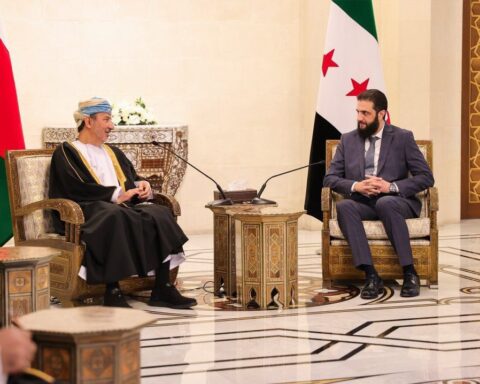
Trump’s conditional off-ramp arrived on the same day Saudi Arabia signed a defense pact and $403 million in concessional loans with Syria — the first bilateral defense agreement between Riyadh and post-Assad Damascus. The timing was coincidental in scheduling but not in strategic logic: Saudi Arabia is building its own security architecture in parallel with, and partly because of, uncertainty over US intentions.
The kingdom has absorbed daily Houthi attacks throughout November. On November 8 alone, a Houthi strike damaged the Aramco tower in Riyadh’s King Abdullah Financial District, while the coalition intercepted a ballistic missile over the Eastern Province. Turkey ratified the Makkah Pact on November 5 by a 279–119 parliamentary vote, according to Anadolu Agency — adding a NATO military to the Saudi-led collective defense framework.
Saudi FM Prince Faisal bin Farhan has called a diplomatic solution “essential for achieving peace and stability,” according to Arab News. Crown Prince Mohammed bin Salman made two appeals to Trump in September for US strikes on Iran, both declined, according to CNN reporting from October 10. The kingdom now finds itself in a position where the man who refused those requests is publicly offering Iran an off-ramp — while the Houthis, Iran’s proxy, continue striking Saudi cities.
The US midterms on November 4 added a new variable. Democrats won both chambers of Congress, and the Senate has voted to restrict presidential Iran war authority “at least ten times, per NPR,” according to NPR. A new Democratic Congress taking office on January 3 could constrain Trump’s military options in ways his “highly unlikely” framing may already be anticipating.
Background: From Strikes to Off-Ramp in 24 Hours
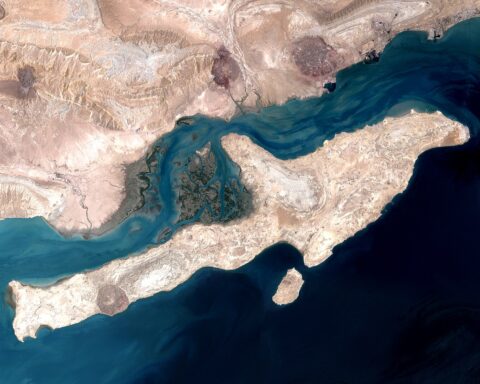
The speed of Trump’s pivot is the story’s most striking feature. On November 7, he confirmed new US strikes on Iran, describing them as “minor” to Fox News. Iranian state media placed the strikes on Qeshm Island. Twenty-four hours later, he told CNN that renewed strikes are “highly unlikely.”
The broader diplomatic timeline adds context. Qatar submitted its 48-hour, two-stage plan on November 6, under which Iran would invite IAEA inspectors to bombed nuclear sites on Day 1 in exchange for the US lifting its naval blockade and releasing a portion of frozen assets; Iran would reopen Hormuz on Day 2. Neither side accepted. Araghchi’s seven-day plan, submitted September 25, remains the existing Iranian diplomatic framework, according to Al Jazeera.
The IRGC declared Hormuz fully closed on October 26, following the original closure dating to April 13. The US naval blockade remains in effect. CENTCOM’s Task Force Iron Gate — announced November 7 — represents the land-side complement to the maritime enforcement, according to CENTCOM.
Trump’s moratorium on strikes before the November 4 midterms, announced October 8 according to The National, has now expired. With that political constraint lifted and a new Congress incoming, the window in which Trump has maximum freedom of action is narrow — roughly eight weeks before January 3. The “highly unlikely” framing may reflect a calculation that the window is better spent negotiating than bombing.
Frequently Asked Questions
What is the APEC Economic Leaders’ Meeting in Shenzhen?
APEC (Asia-Pacific Economic Cooperation) hosts its annual leaders’ summit in Shenzhen, China, on November 18–19, 2026. The forum brings together leaders from 21 Pacific Rim economies. China, as host, sets the agenda and controls bilateral meeting logistics — giving Beijing the ability to shape which sidebar conversations happen and in what order, a structural advantage when Iran policy may be discussed alongside trade and regional security.
What are Iran’s seven preconditions for reopening Hormuz?
Iran has conditioned Hormuz’s reopening on the US meeting all seven demands: ending the war on all fronts, lifting the naval and maritime blockade, releasing frozen assets, compensating war damage, lifting sanctions, and additional security guarantees. The full list was reiterated by Iranian Army spokesman Brig. Gen. Mohammad Akraminia on November 6. Iran insists nuclear discussions cannot begin until these conditions are met — the reverse of Trump’s sequencing, which places a nuclear deal as a precondition for de-escalation.
How many US carrier strike groups are in the region?
Trump claimed three carrier strike groups are deployed to the region, saying “the other one just arrived” and that they are “fully locked and loaded.” The Pentagon has not independently confirmed the three-group deployment in public statements cited in available reporting. The US Navy typically rotates one to two carrier groups through the Fifth Fleet area of operations; three would represent a surge deployment last seen during the 2003 Iraq invasion.
What is the Qatar 48-hour plan?
Qatar submitted a two-stage proposal on November 6 that differs from Iran’s own two-day plan by adding a nuclear inspection component on Day 1. Under Qatar’s plan, Iran would invite IAEA inspectors to bombed enrichment sites and the US would lift its naval blockade and release a portion of frozen assets on the first day; Iran would reopen Hormuz on Day 2 and broader nuclear talks on high-enriched uranium stockpiles would resume. Iran’s own two-day plan is limited to Hormuz reopening in exchange for blockade lifting and asset release — with no IAEA component. Neither Washington nor Tehran has accepted the Qatar proposal.
Has the Strait of Hormuz been fully closed before?
The current closure dates to the IRGC’s October 26 declaration, but the strait has been contested since April 13, 2026, when Iran first restricted transit. A brief reopening occurred under a June 2026 agreement before Iran declared it closed again in July, according to Reuters. IMF PortWatch recorded just one vessel transit on November 1, against a baseline of 85 per day by its methodology. The JMIC uses a higher baseline of 138 ships per day. By either measure, the strait is effectively shut to commercial traffic.
The House of Saud Daily Briefing
Saudi Arabia's news in 3 minutes, every morning. Free. See today's issue