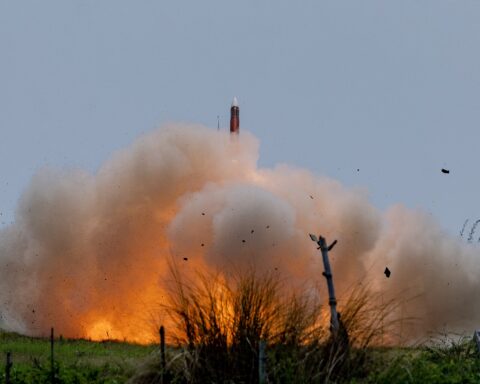
RIYADH — Saudi civil defence pushed a hostile aerial threat alert to every mobile phone in Riyadh shortly after midday on Monday, November 9, then lifted it minutes later without disclosing what triggered the warning or what resolved it. The brief alarm — gone almost before residents could move away from their windows — came less than 24 hours after Houthi missile debris shattered windows across several floors of the Aramco Tower in King Abdullah Financial District.
No casualties or damage were reported from Monday’s alert, according to Yeni Safak and the Oman Observer. But the speed of the cycle — warning to all-clear in minutes, with no public explanation of what passed overhead — has become a defining feature of life in a capital that has absorbed near-daily Houthi strikes since October, according to AFP. The Wall Street Journal had reported on October 12 that Saudi Arabia was “running low on interceptor missiles,” citing unnamed Saudi officials.
The House of Saud Daily Briefing
Saudi Arabia's news in 3 minutes, every morning. Free. See today's issue
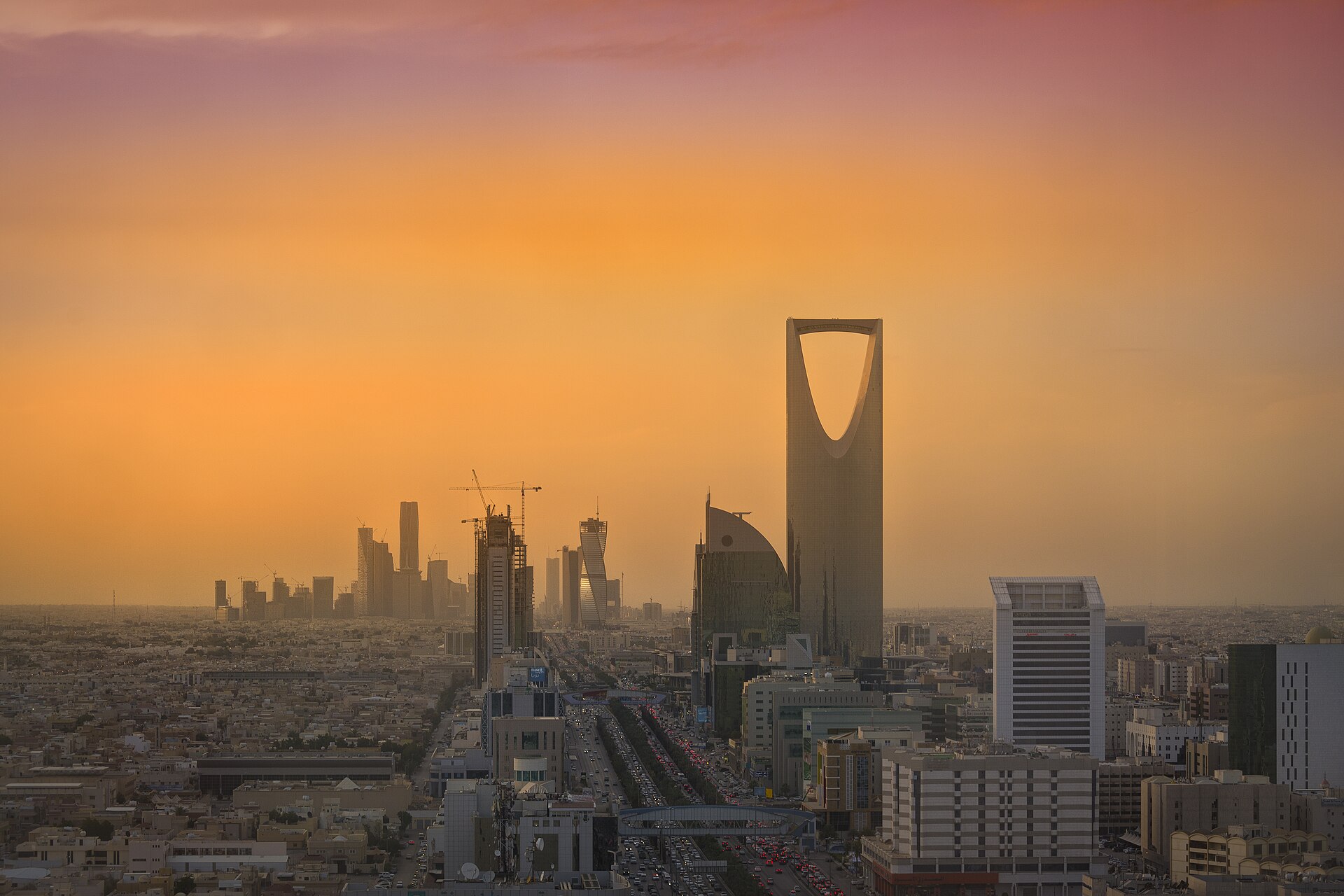
Table of Contents
What the Alert Said
The message was delivered by cellular broadcast through the National Early Warning Platform — a push alert that reaches every phone in the affected area with no opt-in required, according to Anadolu Agency. The text read: “Warning. The area is under a hostile aerial threat.” Residents were instructed to “stay indoors or in a safe place away from windows and doors,” according to Yeni Safak.
Minutes later, a second notification told them “the threat had passed in the city,” according to Anadolu Agency. Saudi authorities offered nothing more — not whether air defences had fired, not whether radar tracks had been evaluated and dismissed, not whether a Houthi launch had failed before reaching Saudi airspace.
The silence was consistent with the government’s approach throughout the current campaign. After the November 8 attack on KAFD, civil defence explicitly warned residents that “filming or sharing information about interceptions or impact sites could expose people to legal liability,” according to Gulf News. Since the Houthis resumed strikes in July — when the 2022 ceasefire collapsed, according to the Daily Maverick — social media footage of interceptions and debris has repeatedly surfaced despite official efforts to control what residents can say about what happens above their heads.
The gap between what Riyadh’s population experiences — the booms, the contrails, the phone alerts that rattle through a silent office — and what the state is willing to confirm has widened with each passing week. Monday’s alert delivered the starkest version of that asymmetry: a warning pushed to millions of phones, followed by an all-clear that told them nothing about what had passed overhead.
What Did the November 8 Attack Leave Behind?
The backdrop to Monday’s alarm was still visible across the KAFD skyline. On Sunday, November 8, coalition spokesman Turki Al Maliki said air defences “intercepted and destroyed two ballistic missiles launched by the Houthi terrorist militia towards Riyadh,” according to Gulf News. The coalition also intercepted two cruise missiles targeting Riyadh and the kingdom’s southern region, The National reported — four projectiles engaged over a single day.
“Air defences intercepted and destroyed two ballistic missiles launched by the Houthi terrorist militia towards Riyadh.”
Turki Al Maliki, Saudi-led coalition spokesman, November 8 — Gulf News
But interception did not mean the capital escaped untouched. Debris from Sunday’s engagement blew out windows across several floors of the Aramco Tower in KAFD — the centrepiece financial district of Saudi Arabia’s Vision 2030 economic programme. The Saudi Energy Ministry said the administrative building sustained “minor damage from falling shrapnel, with no injuries or deaths,” and that authorities “responded promptly to the incident and taken the necessary measures,” according to The National.

An unnamed AFP witness described the scene to Gulf News: “Aramco tower in KAFD has been targeted, that’s the sure thing.” A witness who spoke to The National described “shattered glass and damage visible on part of the tower’s facade.” The Energy Ministry’s characterisation — “minor damage” — competed with those ground-level accounts for the rest of the day.
The timing gave the attack an additional edge. It arrived hours after the Education Ministry announced the return of in-person classes in Riyadh, according to Gulf News. Children were heading back to school the same morning that glass was being swept from the KAFD pavements — a cycle of normalisation and disruption that has defined Riyadh’s rhythm for weeks.
How Does the Warning System Work?
The system was first used in Riyadh in March 2026, during the initial phase of the US-Iran conflict. At the time, it marked the first use of the system in the capital.
By September, it had returned. The Khaleej Times described the September 19 alert as “Riyadh’s first air-raid alert since Houthi hostilities resumed” in July. Since that September notification, the alerts have grown more frequent — though Saudi authorities do not publish a tally or release data on how many warnings the platform has pushed to Riyadh phones. A system built for extraordinary emergencies now operates as something closer to routine municipal infrastructure.
The speed of Monday’s all-clear — minutes between the warning and the stand-down — leaves several possibilities open. Air defences may have engaged and destroyed an incoming projectile, a tracked object may have broken up or fallen short, or a Houthi launch may have failed before the weapon reached Saudi airspace.
Saudi authorities have not publicly distinguished between these scenarios, and the legal prohibitions on sharing interception footage make independent verification from the ground nearly impossible. The result is a city where millions of people receive warnings and all-clears without ever being told what passed between the two notifications.
What the alerts do provide is a rough clock of the threat tempo. In the space of a single week, the coalition has intercepted cruise missiles over Riyadh, defended the Eastern Province, and pushed warning after warning to the capital’s phones. Each all-clear resets the clock; each new alert restarts it.
Can Saudi Air Defence Keep This Up?
The Wall Street Journal, citing unnamed Saudi officials, reported on October 12 that the kingdom was “running low on interceptor missiles” and “struggling to cover the vast country with air defense.” Missile defence batteries were being shuffled across the country to protect energy infrastructure and royal palaces, the WSJ reported. The Saudi government did not respond to the Journal’s request for comment, according to the Times of Israel via AFP.
“[Saudi Arabia is] struggling to cover the vast country with air defense.”
Wall Street Journal, citing unnamed Saudi officials, October 12 — via Times of Israel/AFP
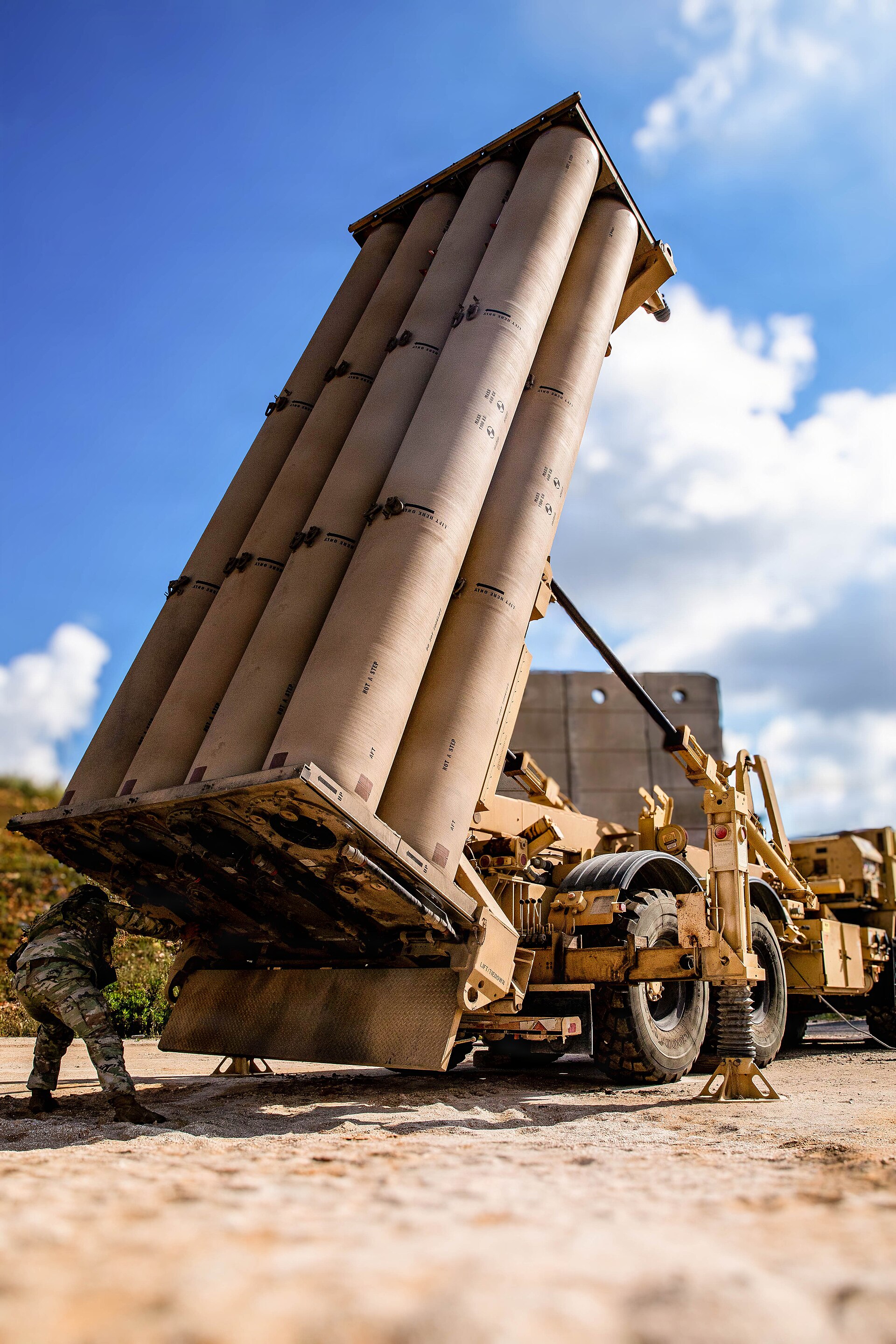
The sustainability question has been building for weeks. The National reported in October that Saudi Arabia held more than 1,800 Patriot interceptors before the current escalation — a figure from The National’s own reporting, not an official Saudi number — and that replenishing stocks could take up to 30 months. Dr Lynette Nusbacher, a former military intelligence officer, told The National that THAAD and Patriot were “not available in quantity and we’re seeing leakage,” and that planners had not anticipated the “profligate use of high-value, exquisite air defence systems” in a conflict stretching beyond a few weeks.
The pressure extends beyond Saudi Arabia’s own stockpiles. Francis Tusa, a military analyst at Defence Eye, told The National that the rate of interceptor use had strained American reserves, citing US generals who told the president: “We haven’t got the rounds left.” Robert Tollast of the Royal United Services Institute warned of the risk of “putting so much resource into interceptors around that facility that you leave other critical areas uncovered” — a triage problem that sharpens with every day of Houthi launches.
Not everyone sees a crisis in the making. Nawaf Obaid of King’s College London told The National that “Saudi Arabia does not lack air defences,” describing the kingdom as possessing “one of the world’s most sophisticated integrated air and missile defence architectures.” The disagreement between analysts reflects a genuine uncertainty about how long the current posture can hold. The coalition’s decision to destroy a Houthi launch platform in Sanaa earlier on November 9 suggests Riyadh is trying to degrade the threat at its source before interceptor stocks run dry.
What the Houthis Are Claiming
Houthi military spokesman Yahya Saree said on Sunday, November 8, that the group “carried out four operations,” naming King Khalid International Airport, Aramco oil storage, the Riyadh Financial Centre, and Abqaiq as targets, according to The National. Saree claimed the strikes caused “significant damage.” Those claims could not be independently confirmed.
The day before, on November 7, Saree had claimed six operations using ballistic missiles, cruise missiles, and drones against targets including KKIA, Aramco facilities in Riyadh and Khurais, Pumping Station No. 8 in Dawadmi, and a National Guard camp in Najran, according to RTV English. He claimed Saudi troop deaths and “extensive property damage” — also unverified.
The group has drawn no public distinction between military facilities and civilian infrastructure in its recent target lists — KKIA serves millions of commercial passengers each year, KAFD houses banks and corporate headquarters, and Aramco oil storage is economic infrastructure tied to global energy markets. The standing Houthi position, as Saree has stated repeatedly, is that operations will continue until what he describes as “the aggression and blockade against Yemen” ends, according to The National.
The discrepancy between Saree’s Saturday and Sunday claims — six operations one day, four the next, with partially overlapping target lists — illustrates the difficulty of reconciling Houthi statements with verifiable events on the ground. The coalition confirms intercepts without specifying how many projectiles were launched; the Houthis claim operations without providing evidence of the damage they describe. Riyadh’s residents live inside that gap every time their phones buzz with a new alert.
A Capital Under Sustained Fire
The Houthi aerial campaign against Saudi Arabia entered its current phase when the 2022 ceasefire collapsed in July, according to the Daily Maverick. What began as sporadic cross-border strikes escalated through the autumn into a sustained multi-vector assault aimed at the capital and the kingdom’s energy infrastructure.
The most lethal single event came on October 10, when a strike on King Khalid International Airport killed 14 people and injured 309, according to Saudi Gazette. The official toll rose from 12 to 14 as two Indian nationals died of their injuries in the weeks after the strike. That incident demonstrated a grim reality of modern air defence: even when interceptors perform as designed, debris falling on crowded civilian infrastructure can produce mass casualties.
Since then, the tempo has not eased. Airlines cancelled flights across Saudi Arabia on November 9 as the threat to airports continued. Riyadh’s Education Ministry has switched in-person classes on and off as conditions shift by the day. For travellers and residents monitoring the security situation, updated assessments are available in our guide to safety in Saudi Arabia.
On Monday afternoon, the alarm arrived and departed within minutes. Across Riyadh, millions of people did what they have learned to do since October — check the phone, step back from the glass, and wait for the second message that means the day can go on.
Frequently Asked Questions
How long did the November 9 Riyadh alert last?
The alert was issued shortly after midday on Monday, November 9, and lifted within minutes, according to Yeni Safak. Saudi civil defence said only that “the threat had passed in the city” and did not specify the nature of the threat or whether air defences were engaged, according to Anadolu Agency. No casualties or damage were reported, according to Yeni Safak and the Oman Observer.
Has Riyadh received aerial threat alerts before November 9, 2026?
Yes. Saudi Arabia’s National Early Warning Platform was first used in Riyadh in March 2026, during the initial phase of the US-Iran conflict. The Khaleej Times described a September 19, 2026 alert as “Riyadh’s first air-raid alert since Houthi hostilities resumed” in July. Since that September notification, the system has been activated on multiple occasions as Houthi strikes against the kingdom continued through the autumn.
Is Saudi Arabia running low on interceptor missiles?
The Wall Street Journal, citing unnamed Saudi officials, reported on October 12 that the kingdom was “running low on interceptor missiles” and that missile defence batteries were being moved to prioritise energy infrastructure and royal palaces. The Saudi government did not respond to the WSJ’s request for comment. The National reported in October that Saudi Arabia held more than 1,800 Patriot interceptors before the current escalation — a figure from The National’s reporting, not an official number — and that replenishing stocks could take up to 30 months. Nawaf Obaid of King’s College London disputed the shortage narrative, telling The National that “Saudi Arabia does not lack air defences.”
Can residents legally film interceptions or debris impacts?
Saudi civil defence warned after the November 8 Riyadh attack that “filming or sharing information about interceptions or impact sites could expose people to legal liability,” according to Gulf News. The warning applies to social media posts and footage captured during or after attacks. Authorities have directed residents to rely on official channels for information about aerial threats and to refrain from documenting interceptions or their aftermath.
Are flights to Saudi Arabia disrupted?
Airlines cancelled flights across Saudi Arabia on November 9 due to the ongoing Houthi threat to airports, with King Khalid International Airport in Riyadh among the most heavily affected facilities since the October 10 strike that killed 14 and injured 309. Passengers can check current disruptions and travel advisories in our Saudi Arabia travel status guide.
The House of Saud Daily Briefing
Saudi Arabia's news in 3 minutes, every morning. Free. See today's issue