
RIYADH — Donald Trump stepped up to the Brady Briefing Room podium on November 9 and told reporters that “Iran militarily is effectively over” and that the United States was “just keeping it the status quo,” naming Saudi Arabia among the Gulf states that would, in his telling, prefer things stay that way. Within hours, the Saudi-led coalition was intercepting Houthi projectiles aimed at Riyadh, and by the following morning Iran’s Revolutionary Guards had claimed a strike on navigation aids at Oman’s Didamar Island in the Strait of Hormuz — an escalation that Muscat had not confirmed.
No Saudi official responded to Trump’s declaration. Not the Crown Prince, not the Foreign Ministry, not the cabinet. The Kingdom’s standing doctrine was already on record: Crown Prince Mohammed bin Salman had told the Shura Council on September 30 that Saudi Arabia would act “without the slightest compromise when it comes to safeguarding our security” and “will not hesitate to respond firmly to any threat or attack that seeks to undermine it,” according to Asharq Al-Awsat’s readout of the address. What the American president considered finished and what the Saudi government considers unfinished are not the same war.
The House of Saud Daily Briefing
Saudi Arabia's news in 3 minutes, every morning. Free. See today's issue
Table of Contents
- What “No Compromise” Means in Saudi Doctrine
- Why Did Trump’s “Effectively Over” Land Without a Saudi Reply?
- Has Saudi Arabia Ever Accepted a Washington-Defined End-State?
- What Does Saudi Arabia Need to End This War?
- The Coalition Saudi Arabia Built Without the US
- Can Saudi Arabia Afford Its Own Doctrine?
- What Happens When Washington Declares Enough
- Frequently Asked Questions
What “No Compromise” Means in Saudi Doctrine
The September 30 Shura Council address was not an off-the-cuff remark at a press conference — it was the Crown Prince’s annual policy speech, delivered to the advisory body that functions as the closest thing Saudi politics has to a deliberative chamber, and its language on security was the most direct MBS had used since fighting escalated in the spring. “Without the slightest compromise when it comes to safeguarding our security,” he told the assembly, according to Asharq Al-Awsat. “We will not hesitate to respond firmly to any threat or attack that seeks to undermine it.”
The doctrine hardened through October as the attacks worsened. After Houthi strikes killed and wounded hundreds at King Khalid International Airport in the first 15 days of the month — the deadliest sustained assault on Saudi civilian infrastructure since the war began — the cabinet issued its own formulation on October 13. The Kingdom, it said, “remains a bastion of security and stability” and “will not tolerate threats to its security or to maritime navigation in the Red Sea and the Bab al-Mandab Strait,” per Asharq Al-Awsat’s coverage of the session.
By October 27, with Turkey’s parliamentary ratification of the Makkah Pact secured and Pakistan’s ratification already in hand, the cabinet backed the alliance’s mediation efforts while continuing to condemn Houthi attacks, according to Al Arabiya. Pursuing diplomacy and assembling a multilateral military coalition at the same time is not what a government does when it considers a war to be winding down — it is what a government does when it intends to set the terms on which the war ends.
The language across all three statements shares a feature that matters more than its specific phrasing: none of it is conditional. There is no “unless,” no “provided that,” no clause suggesting Saudi Arabia’s security posture depends on what the United States decides to do. Faisal al-Shammeri, a Saudi political researcher, described the Kingdom after MBS’s address as acting “from the position of a confident state” that “did not seek escalation” but would not leave a “strategic vacuum” in its neighbourhood, as he wrote in Asharq Al-Awsat on October 2 — a phrase that appeared four weeks before Trump declared the war effectively finished.
Why Did Trump’s “Effectively Over” Land Without a Saudi Reply?
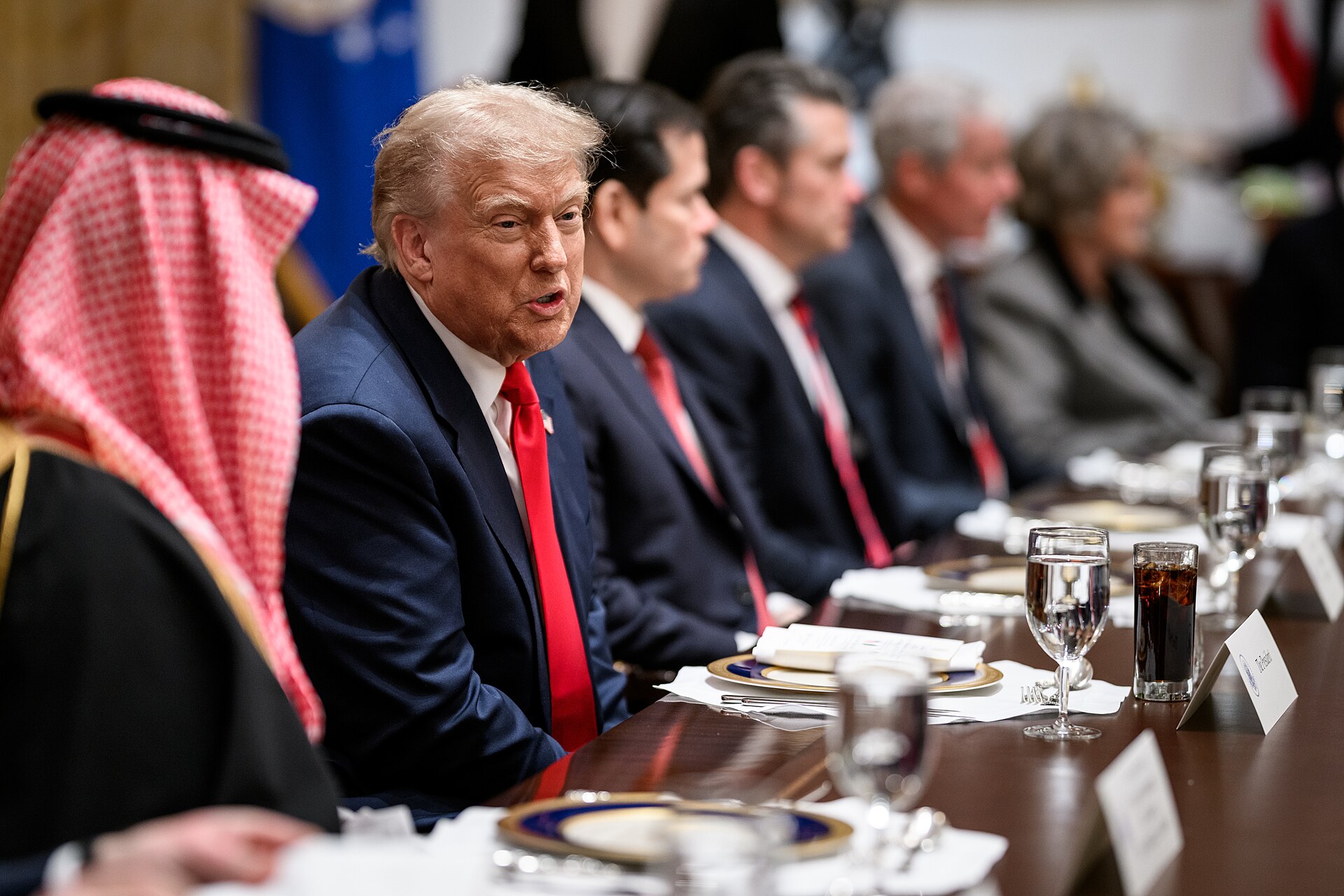
Trump made his remarks during a White House press briefing on November 9, using language that collapsed months of active combat — daily Houthi missile launches, Iranian mine-laying in Hormuz, coalition air operations over Yemen — into a past-tense assessment of completion. “Iran militarily is effectively over,” he told reporters, according to Al Jazeera’s coverage of the briefing. “We’re just keeping it the status quo.” He went further, naming Saudi Arabia among Gulf states that “would prefer the status quo,” a characterization the Jerusalem Post reported and that no Saudi official has endorsed or denied.
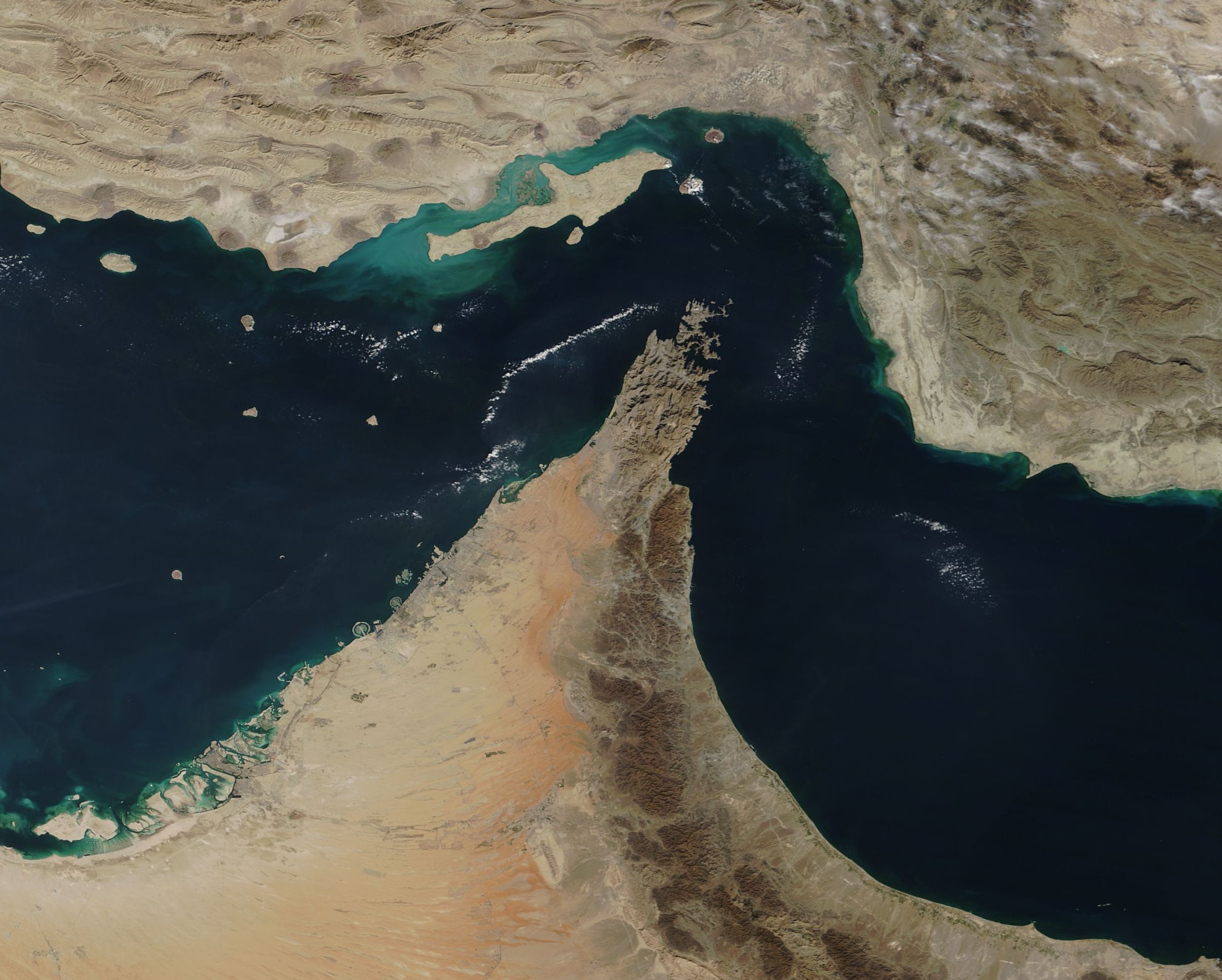
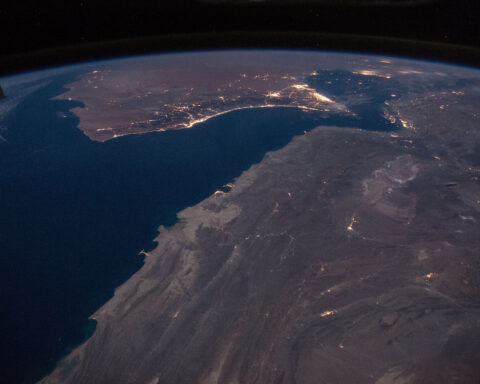
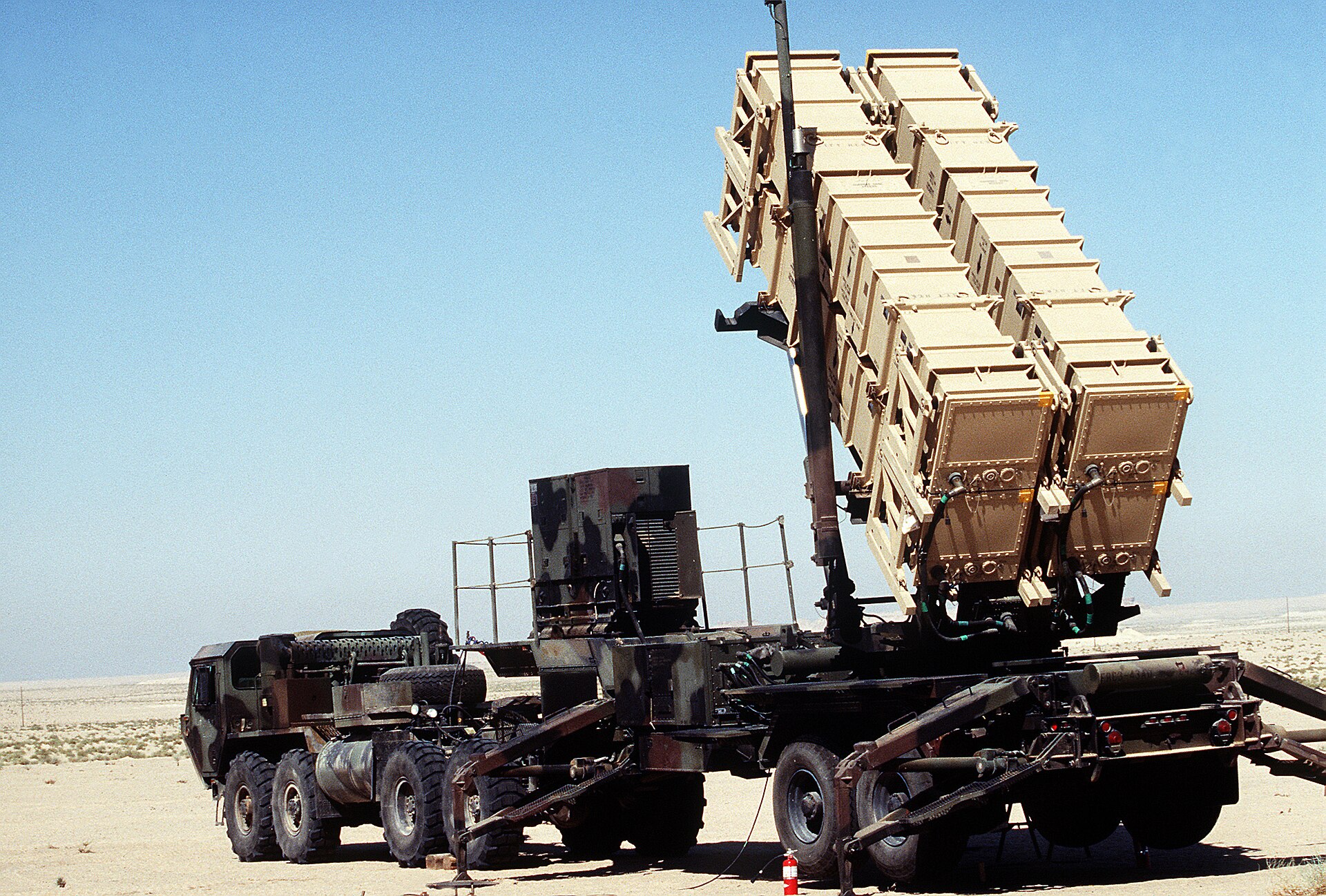
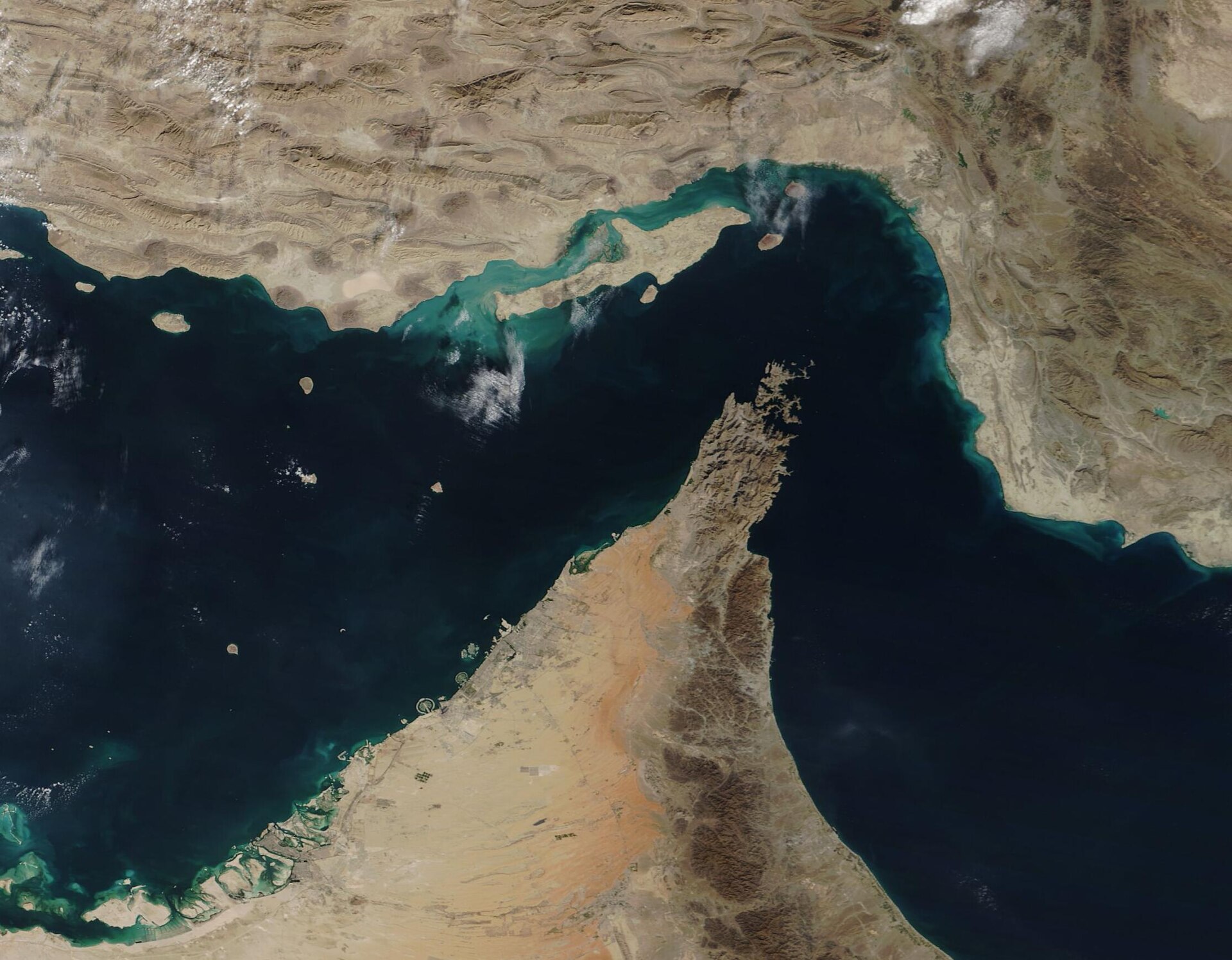
The timing made the statement more revealing than its content. The Saudi-led coalition intercepted Houthi projectiles over Riyadh within hours of Trump’s remarks — Al Jazeera and Kuwait Times reported three intercepts on November 10, including a ballistic missile and a cruise missile targeting the capital and a ballistic missile over the southern region — and the IRGC claimed the following morning that it had struck navigation aids on Oman’s Didamar Island in the Strait of Hormuz. If confirmed, the Didamar strike would represent Iran expanding its targeting from commercial tankers to the sovereign infrastructure of a neutral Gulf state, because those navigation aids are what ships transiting the narrowest channel of Hormuz rely on to avoid running aground.
“Fold your hand. Stop manufacturing fake news about imaginary talks.”
Mohsen Rezaei, Secretary of Iran’s Supreme National Security Council, on X, November 10 (Euronews)
Iran’s response to Trump’s framing was contempt. Rezaei’s public dismissal was echoed by Foreign Minister Abbas Araghchi, who denied that any US-Iran meeting was being planned and accused Washington of blocking the path to negotiations, per Euronews on November 10. Supreme Leader Mojtaba Khamenei, in a written statement reported by Dawn and multiple news outlets, warned that if aggressions were repeated, “the war’s scope will become much wider” and said those expecting a shift in US policy after the midterms were “seriously mistaken.”
The Saudi government issued none of this commentary — no endorsement of Trump’s framing, no rebuttal, no clarification. The air defence systems protecting Riyadh did not pause for the American president’s assessment, and no Saudi spokesperson explained whether the silence reflected agreement, disagreement, or simply the calculation that dignifying Trump’s declaration with a response would accomplish nothing that the continued sound of interceptor launches was not already communicating, as Shafaq News and other outlets noted by November 10.
Has Saudi Arabia Ever Accepted a Washington-Defined End-State?
The pattern is older than the current conflict, older than MBS, and older than the modern alliance in its present form. When Washington declares a Gulf war done, Washington means that the kinetic operations the United States is conducting or supporting have reached a level the White House considers acceptable — it does not mean the threat Saudi Arabia entered the fight against has been eliminated, and Riyadh has spent decades absorbing the gap between American declarations and Saudi security needs.
In 1991, the US-led coalition liberated Kuwait in a hundred-hour ground war and stopped. Saddam Hussein remained in power, launching Scud missiles at Saudi cities during the conflict and menacing the Kingdom’s northern border for another twelve years afterward. Saudi Arabia had hosted hundreds of thousands of American troops and staked its regional credibility on the campaign’s outcome. Washington’s end-state — Iraqi withdrawal from Kuwait, coalition unity preserved — was achieved. Riyadh’s was not: the regime that had invaded its neighbour, fired Scud missiles at Dhahran and Riyadh, and threatened to overrun the Eastern Province remained in power, and the Kingdom spent the next decade living under the shadow of a dictator whose removal Washington had explicitly decided against.
The 2015–2022 Yemen intervention traced the same arc at a slower pace. Saudi Arabia entered the war to reverse the Houthi takeover of Sanaa and restore the internationally recognised Yemeni government, but the Biden administration suspended offensive arms sales in 2021 and withdrew American support for Saudi offensive operations, imposing a ceiling on the campaign without achieving any of Riyadh’s stated aims. The 2022 UN-mediated truce was brokered without Houthi disarmament, without the return of seized territory, and without addressing the Iranian supply lines that kept the militia armed. When the truce expired, the Houthis retained their territorial gains and had rearmed substantially — the maritime strike capabilities they later used to disrupt Red Sea shipping and threaten Saudi ports were developed during and after the truce period, not before it.
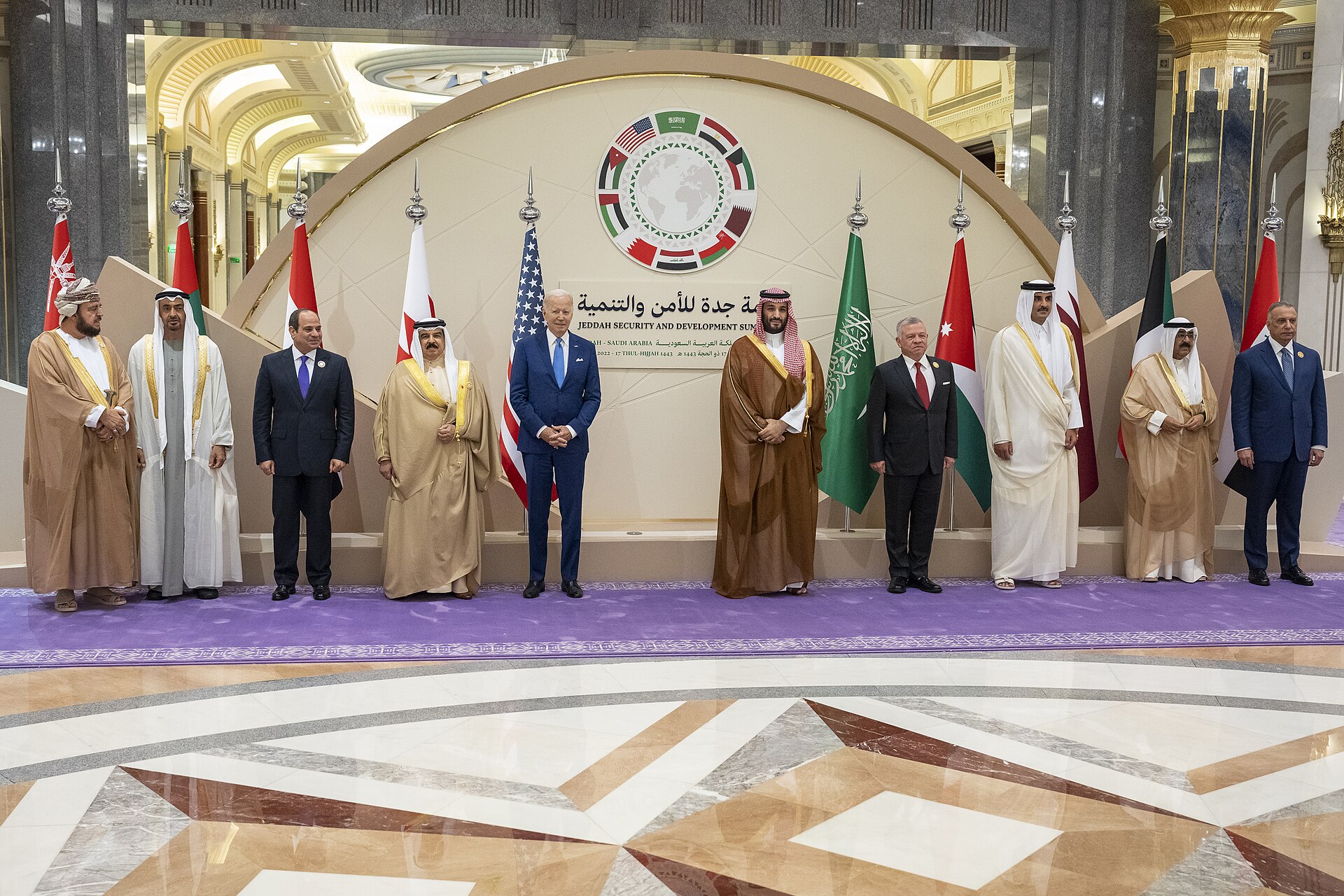
The 2023 Saudi-Iran normalization deal, brokered through Chinese mediation in Beijing, represented something different entirely — because Riyadh acted without waiting for Washington at all. The Kingdom restored diplomatic relations with Tehran through a channel the United States had not brokered and had not anticipated, a move that caught the State Department by surprise and established a clear precedent: when American timelines and Saudi security needs diverge, Riyadh will pursue its own diplomacy. That instinct has deepened since the current war began, with Saudi Arabia building both a military coalition and a diplomatic track to Tehran that runs parallel to — and increasingly independent from — whatever framework Washington may be working toward.
What Does Saudi Arabia Need to End This War?
The honest answer is that nobody outside MBS’s inner circle knows precisely, because Saudi Arabia’s end-state conditions have never been formally articulated in public — an ambiguity that may itself be strategic, since naming specific conditions would either commit the Kingdom to fighting until every one was met or invite the perception of compromise when any were traded away at the table. The gap between the cabinet’s language — “restore stability, confront the Houthi militia” — and an actual ceasefire framework has not been bridged by any Saudi document, speech, or ministerial statement, which makes Trump’s declaration that the war is over a unilateral assessment the Kingdom has neither the obligation nor the incentive to validate.
What is public is the distance between maximalist aims and operational reality. Saudi Arabia’s stated position, reiterated in cabinet communiqués, is that it rejects any ceasefire until the Houthis return seized Yemeni territory — a demand the militia has dismissed entirely. According to the Wall Street Journal, Saudi Arabia reportedly offered $1 billion through Iran as a parallel settlement track, and Israel Hayom reported that the Houthis responded by demanding $51 billion and formal recognition as a sovereign entity.
Anni Coonan, a partner at the law firm Steptoe in Washington, wrote in a November 5 analysis that Saudi Arabia’s ideal outcome is to “eliminate the military threat from the Houthis” but that its practical priority is “avoiding a long war and reversing economic damage,” and she assessed that decisive military victory is “unlikely.” Hesham Alghannam, a Carnegie Middle East scholar based in Riyadh, told the Christian Science Monitor’s Taylor Luck on October 13 that the coalition’s “real test” is whether it can deter attacks “without an open-ended Yemeni war” — a framing that suggests the analysts closest to the Saudi policy establishment see deterrence, not total battlefield victory, as the realistic objective.
The human cost of the status quo makes the question urgent rather than theoretical. Houthis killed 17 people and injured more than 330 in strikes on King Khalid International Airport alone during the first 15 days of October, according to a Saudi coalition statement reported by multiple outlets on October 16, and attacks have continued daily since — targeting Riyadh, the Eastern Province, and southern cities — with the coalition intercepting and the Houthis launching in a cycle that Trump’s “effectively over” declaration did nothing to interrupt.
The Coalition Saudi Arabia Built Without the US
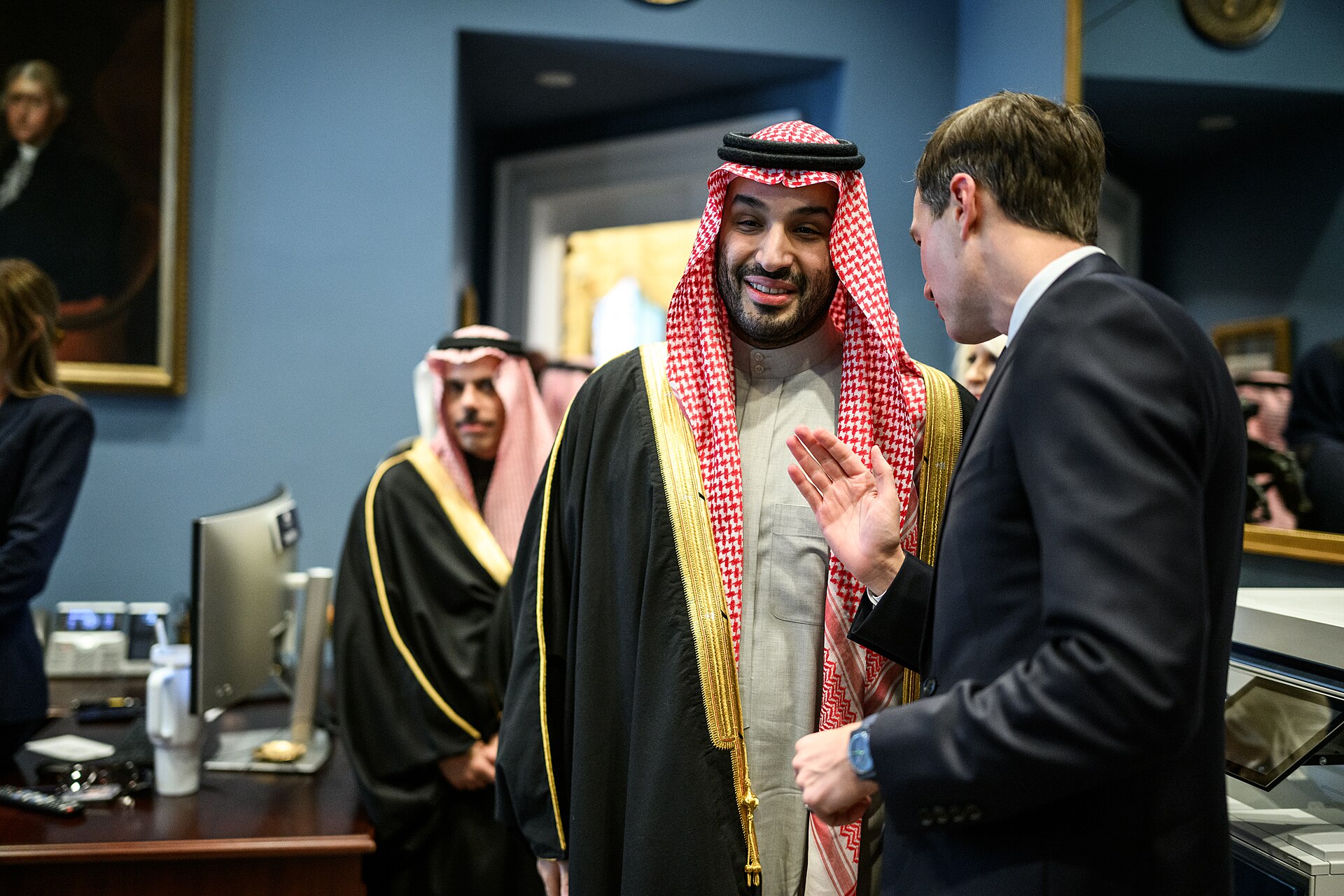
MBS called Donald Trump twice in a single day in September 2026, urging US military strikes against the Houthis, according to the New York Times (via the Philadelphia Inquirer on September 21) and CNN’s October 10 reporting. Trump initially ordered the Pentagon to prepare strike options and then reversed course on September 20. The calls tell you what MBS wanted; the reversal tells you what he got — which was the operational confirmation of a vulnerability that Max Becker-Hicks at the New Lines Institute had described months earlier in an April 2026 analysis: “the lack of any codified US-Saudi mutual defense treaty raises the risk of a US disengagement.” The November 2025 Strategic Defense Agreement, Becker-Hicks noted, “did not add treaty-level commitments.”
Saudi Arabia’s response was to build around the gap rather than protest it. The Makkah Pact — the joint defence agreement between Saudi Arabia, Turkey, and Pakistan — was ratified by Turkey’s parliament on November 5 in a 279-119 vote, according to Anadolu Agency, having already been ratified by Pakistan on October 23. Egypt confirmed it had troops in Saudi Arabia, a deployment Cairo’s foreign minister described as having been in place “for months.” Syria dispatched military advisers under a separate defence cooperation agreement valued at $403 million.
“It is misguided to believe that Saudi Arabia doesn’t have an option for deterrence and retaliation without US support.”
Cinzia Bianco, European Council on Foreign Relations, to Middle East Eye, September 2026
Bianco’s assessment gained operational substance through October and November as the coalition’s non-American components deployed. Turkey’s foreign minister, Hakan Fidan, told the Christian Science Monitor’s Taylor Luck on October 13 that the coalition Turkey had joined would not take offensive action, consistent with what he described as its “defensive” mandate — a clarification that limits the pact’s scope but confirms it exists as a functioning military reality rather than a treaty-signing ceremony.
Saudi Arabia, Turkey, and Pakistan sent high-ranking diplomats to Tehran in late October to negotiate an end to the war separately from any US-brokered framework, the Washington Post reported on October 26. The Kingdom was running its own military track through the Makkah Pact and its own diplomatic track through Tehran at the same time — and neither depended on the American president’s assessment of whether the war was effectively over.
Can Saudi Arabia Afford Its Own Doctrine?
The fiscal picture is strained, and the data predates the worst weeks of fighting. Saudi Arabia’s 2026 fiscal deficit was revised upward to 245 billion riyals — roughly $65 billion — from a budgeted 165 billion riyals, according to Reuters and Zawya on September 30. Real GDP was forecast to contract by 3.6 percent in 2026, a reversal driven by the combined pressure of war expenditures and the disruption to oil exports from Houthi attacks on Red Sea shipping and Iran’s mining of the Strait of Hormuz.
| Indicator | Figure | Source |
|---|---|---|
| Fiscal deficit (budgeted) | 165 billion riyals | Reuters/Zawya |
| Fiscal deficit (revised) | 245 billion riyals | Reuters/Zawya |
| Real GDP growth forecast | −3.6% | Reuters/Zawya |
| Brent crude (post-Nov. 9) | ~$92/barrel | CBS News |
Brent crude, which might have been expected to hold steady on continued Middle Eastern instability, fell to approximately $92 per barrel after Trump’s November 9 declaration, according to the CBS News live blog. The market read his words as a signal that the conflict was winding down — even as coalition air defences intercepted Houthi projectiles the same day — and that gap between financial sentiment and operational reality costs Saudi Arabia on every barrel it exports, because the price is tracking a political narrative rather than the military reality on the ground.
No Saudi official has signalled readiness to compromise on the security conditions MBS articulated in September, despite the economic pressure. The deficit figures were collected before the heaviest fighting weeks of late October and early November, which means the fiscal position at the time of Trump’s declaration was almost certainly worse than the September revision suggests. Whether Saudi Arabia can sustain both its military tempo and its economic ambitions through a winter of continued combat depends on variables the September budget revision did not anticipate — including an oil price that keeps responding to Trump’s words rather than to the coalition’s operations, and a revenue base that is shrinking at the same time as Vision 2030’s infrastructure commitments demand it grow. The Kingdom’s non-oil industrial output showed year-on-year growth in September, according to GASTAT data released this month, driven by mining — a sign the non-oil economy retains some momentum, but not enough on its own to close a deficit that has widened by 80 billion riyals in a single revision.
What Happens When Washington Declares Enough
Trump’s “effectively over” framing reads, in its plainest interpretation, as a statement about American priorities rather than Iranian military defeat — an attempt to impose a political end-state that serves Washington’s domestic calendar without requiring the outcome Saudi Arabia’s doctrine demands. He made the remarks ten weeks before a new Congress would be seated, with Democrats having won both chambers in the November 3 midterms and legislative pressure on Gulf military engagement set to intensify. The Senate has voted on Iran war-powers resolutions at least ten times, according to NPR, and a Democratic majority makes it more likely the question will be forced again.
The other parties to this war did not accept his assessment. Khamenei’s warning about a “much wider” war, Rezaei’s dismissal of “imaginary talks,” and Araghchi’s denial of any planned talks all pointed in the same direction — Tehran viewed Trump’s declaration as narrative management, not as a description of anything that had happened on the ground. Iran’s own operations confirmed it: the IRGC claimed the strike on Didamar Island’s navigation aids the morning after Trump spoke, and Iran’s negotiating position — seven conditions submitted through Qatar on September 25, including lifting the naval blockade, sanctions waivers, and the return of approximately $12 billion in frozen assets — had not softened.
No readout of a phone call between Trump and MBS around November 9 or 10 has been published by either the White House or the Saudi Royal Court, and whether the two leaders discussed the declaration before it was made is not publicly known. The Houthis continued launching — their attack on Riyadh the day of Trump’s statement was, at minimum, a demonstration that whatever understanding Washington believes is in place does not bind the people firing the missiles. The Saudi-led coalition intercepted and continued operating as it had every day before the declaration was made.
On the morning of November 11, the navigation aids at Didamar Island — the markers that guide loaded tankers through the narrowest and most dangerous channel in the Strait of Hormuz — were, according to Iran’s Revolutionary Guards, no longer functioning. Oman had not confirmed the strike, the coalition had not commented, and ships kept transiting the strait the way they always do when the aids go dark: slowly, by radar, and at their own risk.
Frequently Asked Questions
Did Saudi Arabia and the US coordinate before Trump declared the war “effectively over”?
No public readout of a Trump-MBS phone call around November 9 or 10 has been released by either the White House or the Saudi Royal Court. MBS’s most recent confirmed direct communication with Trump regarding the war was in September, when he called twice in one day requesting US military strikes against the Houthis, per the New York Times. The US-Saudi Strategic Defense Agreement signed in November 2025 does not constitute a mutual defense treaty — unlike the US-Japan Security Treaty or NATO’s Article 5, it carries no automatic consultation obligation when one party makes a public declaration about a shared conflict, which means Trump was under no formal requirement to advise Riyadh before characterizing the war’s status.
What are Iran’s conditions for reopening the Strait of Hormuz?
Foreign Minister Abbas Araghchi submitted conditions through Qatar’s diplomatic channel on September 25, 2026. Published elements include: lifting the US naval blockade of Iran, sanctions waivers, the return of approximately $12 billion in frozen assets, reducing the American military presence in the Gulf to pre-blockade levels, and ending hostilities on all fronts including Lebanon, per Middle East Eye and Borna News. SNSC Secretary Mohsen Rezaei called Washington’s counter-response “unconvincing.” The full text of all seven conditions has not been released as a single document by any party, and several conditions remain publicly unspecified.
Has any Gulf state endorsed Trump’s “effectively over” characterization?
As of November 11, no Gulf Cooperation Council member state has publicly endorsed or disputed Trump’s framing. Qatar, which has been mediating between Washington and Tehran through the Araghchi conditions framework, continued its diplomatic track without addressing Trump’s November 9 remarks. The UAE, Kuwait, and Bahrain have each issued statements on various aspects of the war during October and November, but none has responded to the specific “effectively over” characterization — a region-wide silence that mirrors Saudi Arabia’s.
What military forces has the Makkah Pact deployed?
Turkey ratified the pact on November 5 with a 279-119 parliamentary vote, per Anadolu Agency, and Pakistan ratified on October 23. Under Turkey’s constitution, ratification alone does not authorise troop deployment — sending forces abroad requires a separate motion under Article 92, which must pass the full assembly with its own debate and vote. Egypt has confirmed troops in Saudi Arabia, described by its foreign minister as deployed “for months,” though neither Cairo nor Riyadh has disclosed troop numbers or specific locations. Syria signed a separate $403 million defence cooperation agreement and dispatched military advisers. Hakan Fidan described the pact’s mandate as “defensive” to the Christian Science Monitor on October 13, a clarification that distinguishes its scope from the offensive US military strikes Saudi Arabia requested and was denied in September.
The House of Saud Daily Briefing
Saudi Arabia's news in 3 minutes, every morning. Free. See today's issue