JIZAN — The Houthis claimed responsibility on November 18 for targeting “a vital site in the Jizan” and Khamis Mushait Air Base, while coalition spokesman Major-General Turki al-Maliki said the following day that air defences intercepted four ballistic missiles and one cruise missile launched toward “the southern region, bordering Yemen,” according to Asharq Al-Awsat. The attacks are part of daily strikes on Saudi territory since November 7, according to the Foundation for Defense of Democracies.
Jizan is Saudi Arabia’s most densely populated province — 1,404,997 residents in the 2022 census — and sits on the border with Yemen, within range of Houthi ballistic missiles launched from Saada. It hosts the Port of Jazan, a planned economic city valued at $26.7 billion, and a special economic zone covering 24.6 square kilometres. Yet the six-month military campaign that Saudi Arabia announced on November 19 focuses, Reuters reported, on territorial gains around Aden and Bab el-Mandeb — not on defending Jizan. This editorial examines what the southern front’s continued exposure reveals about the limits of Saudi defence architecture, the logic of the new campaign, and why the kingdom’s most vulnerable border province may be its lowest strategic priority.
The House of Saud Daily Briefing
Saudi Arabia's news in 3 minutes, every morning. Free. See today's issue
Table of Contents
- What Happened in Jizan on November 18?
- Why Does Jizan Keep Getting Hit?
- The Southern Defence Gap
- The Houthi War Economy
- How Does the 6-Month Campaign Plan Address the South?
- What Does the al-Ruwaili Appointment Mean for Coalition Strategy?
- The Aden Equation
- Jizan’s Economic Stakes
- Frequently Asked Questions
What Happened in Jizan on November 18?
Houthi military spokesman Yahya Saree claimed on November 18 that the group targeted “a vital site in the Jizan and Khamis Mushait airbase in the south, where alerts were sounded,” Al Jazeera reported on November 19. Coalition spokesman Major-General Turki al-Maliki said air defences “intercepted and destroyed four ballistic missiles launched by the terrorist Houthi militia toward the southern region” and that a cruise missile directed at the southern region was also destroyed, according to Asharq Al-Awsat on November 19.
Al-Maliki added that ballistic missile launchers were destroyed in Dhamar and Saada, in Yemen. The launcher in Dhamar, he said, had been used in an attempted attack on Riyadh. The coalition’s response was retaliatory destruction of launch infrastructure — standard procedure after attacks on the kingdom’s south, and a measure that has not prevented the next launch.
The November 18 claim was not an isolated event. Five days earlier, on November 13, Saree claimed a ballistic missile attack on Saudi forces in Jizan province, alleging “dozens were killed or injured.” The coalition did not confirm casualties and no independent source has verified the claim, according to the Foundation for Defense of Democracies’ Long War Journal on November 14. At least seven emergency warnings were issued across various parts of Saudi Arabia on November 19 alone. Saudi Civil Defence issued separate alerts for Khamis Mushait governorate and Abha city before saying the danger had passed, Al Jazeera reported.
Since November 7, the Houthis have launched daily attacks on Saudi military installations, airports, and energy infrastructure, according to the Long War Journal. November targets have included Khamis Mushait Air Base on November 12, Aramco facilities in Riyadh on November 7 and 8, a National Guard camp in Najran on November 7, King Khalid International Airport, and — on November 19 — the PIF Tower in Riyadh’s financial district, where Reuters reported windows on seven to eight floors were destroyed. The PIF Tower strike led the coverage from Al Jazeera, Middle East Eye, and Reuters that day. Jizan was buried in a single paragraph of Al Jazeera’s November 19 report.
Why Does Jizan Keep Getting Hit?
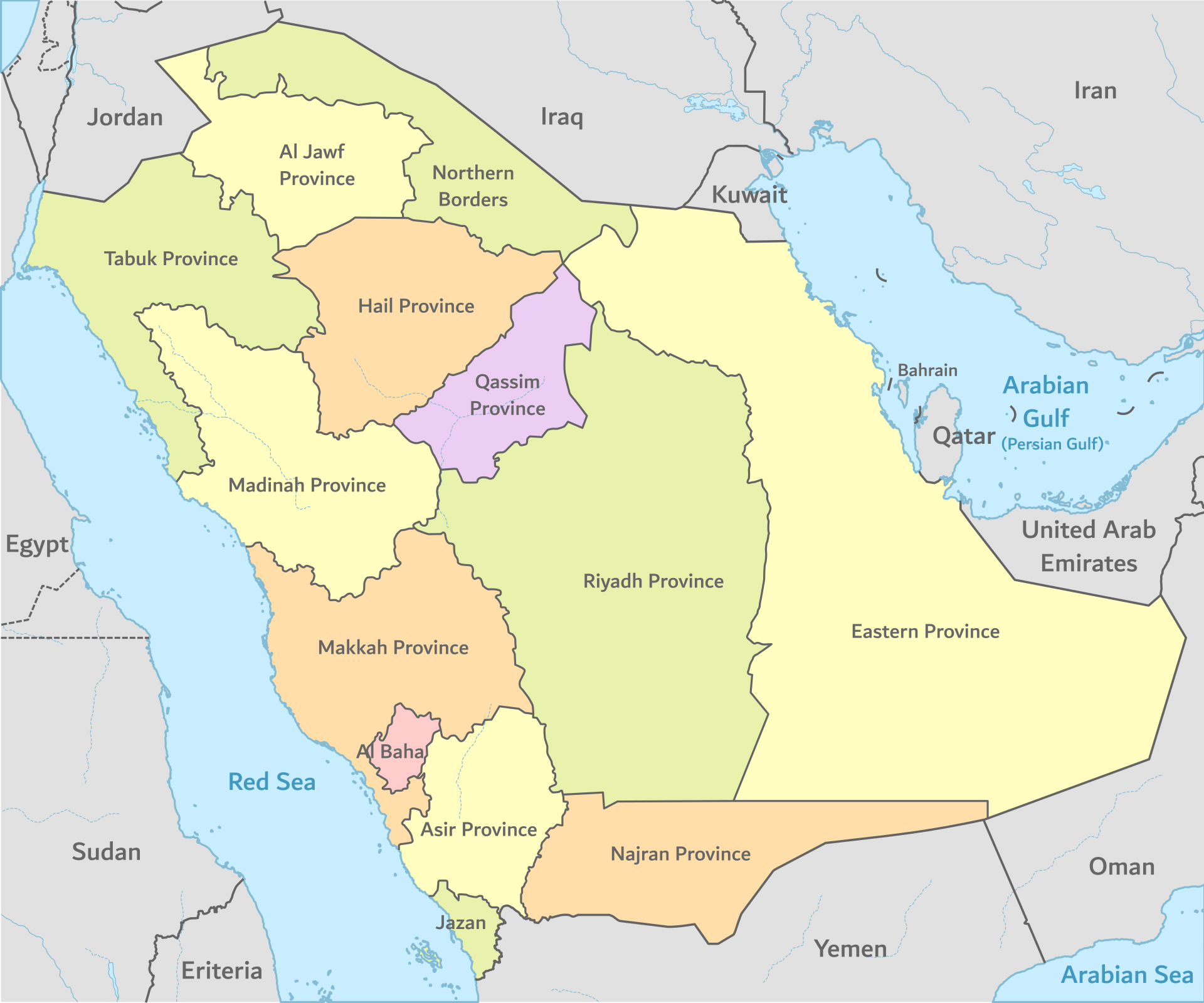
Jizan Province shares a direct land border with Yemen’s Saada governorate — the Houthi political and military heartland — making it the closest major Saudi population centre to Houthi launch sites. The province stretches approximately 300 kilometres along the southern Red Sea coast, and its capital sits just north of the Yemeni border. Ballistic missiles from Saada require minimal range to reach targets in the province, arriving faster and with less warning than the long-range weapons aimed at Riyadh.
The territory carries historical weight. Jazan Province was the site of the 1934 Saudi-Yemeni war, in which Saudi forces repelled a Yemeni incursion. The territorial dispute was not formally resolved until the Treaty of Jeddah in 2000. Many Yemeni nationalists have historically claimed parts of Jazan as “greater Yemen,” according to regional historical accounts. The Houthis, whose political identity draws on northern Yemeni tribal networks rooted in Saada, treat the border as a seam rather than a barrier.
What sets Jizan apart from other Saudi targets is the compression of risk. It is simultaneously the kingdom’s most densely populated province and its most geographically exposed. Riyadh lies roughly 1,000 kilometres northeast of Houthi positions; missiles that reach the capital must carry sufficient range and evade multiple layers of detection and interception. Jizan offers no such buffer. The coalition’s repeated strikes on launchers in Saada and Dhamar — including those al-Maliki announced on November 19 — have degraded but not eliminated the launch infrastructure that threatens the province.
Between the border and the launch sites, there is not enough distance for early warning to function the way it does over the capital. The emergency alerts that Civil Defence issued for Khamis Mushait and Abha on November 19 came with minimal lead time. For Jizan city, the geometry is worse still.
The Houthis are aware of the advantage. Their November claims have concentrated disproportionately on the southern region. Saree’s November 13 claim specified Jizan by name — an unusual level of geographic precision in Houthi communiques, which more often reference “the south” generically. The specificity suggests Jizan carries symbolic as well as military value for the Houthi leadership: a Saudi province that Yemeni nationalists have historically claimed, now under fire from Yemeni fighters.
The Southern Defence Gap
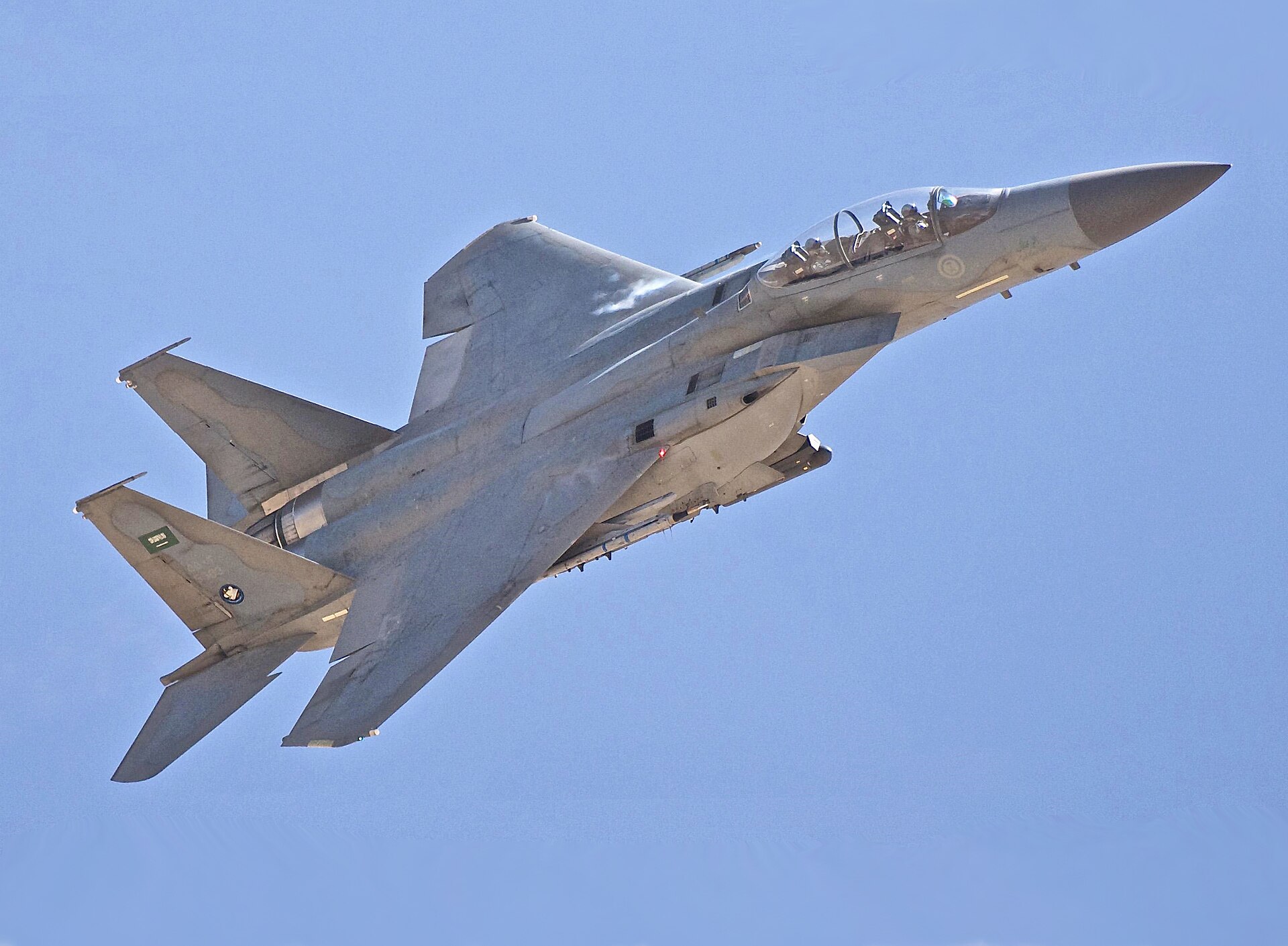
The defence of Riyadh has been, visibly and by design, the coalition’s priority since the war resumed. France confirmed in September 2026 that it deployed troops, radars, and air defences to Yanbu, according to Al Jazeera. CENTCOM commander Admiral Brad Cooper met Crown Prince Mohammed bin Salman in Riyadh on November 19, the same day the coalition announced the campaign plan and al-Maliki confirmed the southern interceptions. The United States approved a possible $24.3 billion sale of 48 F-35A fighter jets to Saudi Arabia in September, according to The Aviationist — a generational upgrade to the kingdom’s air power, but one that will not deliver aircraft for years.
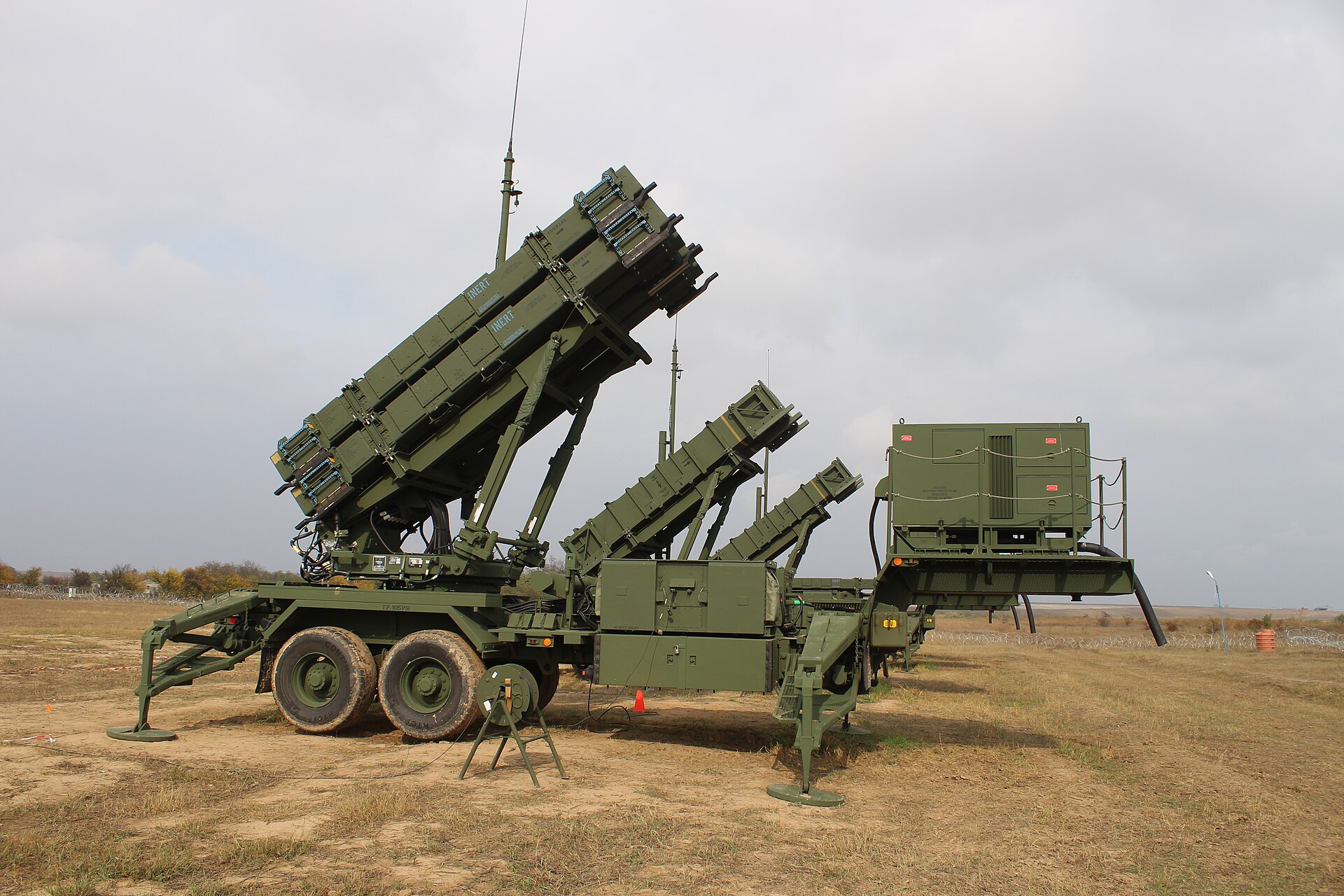
The Wall Street Journal estimated that Saudi Arabia holds “fewer than 1,000” Patriot interceptors. The geographic distribution of those interceptors — between Riyadh, the Eastern Province oil infrastructure, and the southern border — has never been publicly disclosed. The gap between what can be inferred and what has been stated is itself telling: the coalition has detailed its defence of the capital repeatedly while saying almost nothing about what stands between Houthi launchers in Saada and 1.4 million civilians in Jizan.
Saudi, Pakistani, and Turkish military chiefs met in Riyadh in September 2026, according to Gulf News — a trilateral coordination effort that, combined with the Makkah Alliance framework, could eventually extend additional air defence resources to the kingdom’s south. But those deployments, if they materialise, lie ahead of the current threat cycle. The attacks on Khamis Mushait, Abha, and Jizan throughout November have outpaced whatever planning those consultations produced.
The November 19 response to the southern attack illustrates the pattern. Al-Maliki’s statement confirms interception of five projectiles — but the coalition’s counterstrike targeted launchers in Yemen, not a defensive perimeter around Jizan. Riyadh’s defence is layered: Patriot batteries, radar networks, allied deployments, aircraft on alert. Jizan’s defence, as far as publicly available information suggests, is reactive — interceptions where possible, retaliatory strikes on launch sites after the fact. In September, Houthi strikes wounded 13 civilians in Khamis Mushait, Abha, and Taif, according to the Khaleej Times.
Those seven warnings in a single day — with separate alerts for Khamis Mushait and Abha, Al Jazeera reported — are not signs of a country that has solved its southern air defence problem.
The Houthi War Economy
The persistence of Houthi attacks on the southern front is not a matter of will alone. It is financed. The Mokha Center for Strategic Studies estimated in July 2026 that the Houthi financial system generates approximately $2.5 billion annually, according to Al Jazeera on November 18. Selected revenue streams the Mokha Center identified:
| Revenue Source | Annual Estimate |
|---|---|
| Taxes and customs | ~$800 million |
| Additional fees and levies | ~$600 million |
| War effort contributions | ~$300 million |
| Mobilisation-linked revenue | ~$100 million |
Separately, the US Department of the Treasury said in January 2026 that Iran provides a free monthly oil shipment to the Houthis through affiliated companies, estimating Houthi earnings from illicit oil sales at “over $2 billion annually,” Al Jazeera reported on November 18. Sixty percent of revenues in Houthi-controlled areas go to security and military sectors, according to a May 2026 Mokha Center report cited by Al Jazeera. A 2024 United Nations panel of experts estimated the number of Houthi fighters at around 350,000.
Wafiq Saleh, executive director of the Taiz Centre for Yemeni-Gulf Studies, told Al Jazeera that “about one million Yemeni public employees have not received their salaries regularly since 2016. Meanwhile, the group has developed its arsenal and funded its war efforts. When war is a priority, the living conditions of the population become miserable.”
The Houthis describe their strikes on Saudi airports, oil facilities, and financial infrastructure as retaliation for Saudi airstrikes supporting Yemen’s internationally recognised government, according to the Long War Journal. A 19-year-old Houthi fighter identified only as “Mohammed” told Al Jazeera on November 18 that funding the war is “every patriot’s priority” and “a long-term investment.” He added: “It is not always war and death on the battlefield. We have a good time. We eat the best food.”
“Their control over import permits, fees, and access to foreign currency also gives them considerable leverage over traders and businesses. These resources sustain the security apparatus and patronage networks through which the movement enforces compliance and consolidates its authority.”
— Yazeed Al-Jeddawy, research manager, Sanaa Center for Strategic Studies (Al Jazeera, November 18, 2026)
How Does the 6-Month Campaign Plan Address the South?
Saudi war planners described the campaign objective as achieving “territorial gains on the ground for Yemen’s internationally recognised government and its allies before entering any negotiations with the Houthis,” Reuters reported. The geographic focus is Aden and Bab el-Mandeb — the two positions the coalition has lost ground on most dramatically in recent weeks — not the defence of Saudi border provinces such as Jizan or Najran.
The campaign builds on Operation Dawn of Yemen, launched on October 4, in which coalition spokesman al-Maliki said 100 fighter jets flew. On November 18, the coalition struck dozens of targets across Yemen as Houthi forces pressed toward Aden. The human cost has been severe and rising. The World Health Organization said the death toll from the escalation that began in August 2026 had reached 2,260, with 10,519 wounded, as of November 16, Al Jazeera reported on November 19. UNICEF said on November 19 that more than 330,000 people, including an estimated 174,000 children, had been displaced since the renewed military escalation, according to Al Jazeera.
The strategic logic of the campaign is that relieving Jizan and the southern border requires changing the military balance inside Yemen — pushing Houthis back from Aden, reclaiming the Bab el-Mandeb coast, and creating conditions for negotiation from strength. It is indirect defence of the border through offensive action elsewhere. The coalition pursued a broadly similar approach from 2015 to 2022, when the UN-brokered truce that “largely halted the exchange of attacks” was agreed, Al Jazeera reported. That truce collapsed in July 2026.
The question the campaign leaves unanswered is what happens to Jizan in the intervening six months. If the Houthis have launched daily attacks throughout November — and those attacks include ballistic missiles that reach the southern region at least twice in a single week — then the population of Jizan province is being asked to absorb the cost of a campaign whose benefits, if they arrive, will be felt first in Aden and at Bab el-Mandeb. The province that sits closest to the threat is furthest from the plan’s objectives.
What Does the al-Ruwaili Appointment Mean for Coalition Strategy?
King Salman issued a decree on November 16 replacing Lt Gen Fahd bin Hamad al-Salman as coalition forces commander, assigning General Fayyad al-Ruwaili — Saudi Arabia’s Chief of the General Staff since February 2018 — to that role in addition to his existing post, Al Jazeera reported on November 16. Lt Gen al-Salman was appointed military adviser to the defence minister.
The timing was precise and the sequence deliberate. The decree came one day after the Houthis retook the Bab el-Mandeb coast on November 15, bringing them within 40 miles of Aden according to the Long War Journal, and three days before the six-month campaign plan was made public. Ali al-Dahab, a military and strategic affairs expert, told Al Jazeera on November 17 that the appointment “gives the position greater power because whoever will assume command of the joint forces is the Saudi Chief of Staff.”
Al-Dahab also assessed the broader military balance. “Without the support of the government and the support of Saudi Arabia,” the Southern Transitional Council “cannot” repel the Houthis, he told Al Jazeera. “The capabilities of the Houthis have exceeded the combined capabilities of the government, let alone the Transitional Council.”
Al-Ruwaili now holds both posts simultaneously — chief of the Saudi military and commander of the coalition — concentrating authority at a level the structure had not previously allowed. His task, as defined by the campaign plan, is territorial gains inside Yemen. The defence of Saudi border provinces such as Jizan draws on the same finite stock of interceptors, aircraft, and intelligence assets that the coalition’s offensive operations in Yemen also require. Every Patriot battery deployed to protect a launch site in Jizan is one not available for the air umbrella over Aden or the Eastern Province. Every sortie flown to destroy launchers in Saada is one not flown over the Bab el-Mandeb coast. The consolidation of command under al-Ruwaili may bring coherence to these trade-offs; it does not eliminate them.
The Aden Equation
The six-month campaign’s geographic focus reflects the military reality on the ground. Houthi forces advanced to within 60 kilometres of Aden by approximately November 16, Al Jazeera reported. The day before — November 15 — they seized territory along the Bab el-Mandeb Strait, according to the Long War Journal on November 16. Majed al-Nuzaili, spokesperson for the Yemeni Armed Forces, described the Red Sea coast retreat as “part of a wider tactical manoeuvre,” Al Jazeera reported on November 16. Few analysts or Western officials accepted that framing at face value.
The loss of the Bab el-Mandeb coast compounded a fracture that Saudi Arabia itself created. In late 2025, the kingdom conducted strikes on UAE-linked weapons shipments destined for the Southern Transitional Council — the most effective anti-Houthi ground force in the south. STC president Aidarous al-Zubaidi fled Yemen, Al Jazeera reported on November 17. The STC’s dissolution was announced at the start of the year, though the move remained contested. Despite all this, tens of thousands marched weekly across the south in support of the STC, and its fighters stepped up to defend Aden as the Houthis approached.
“In January, the most effective anti-Houthi force in Yemen was taken apart by decisions in Riyadh, not by the Houthis. No front can be held for long when the people defending it have no say in how it is defended.”
— Amr al-Bidh, special representative for the STC president (Al Jazeera, November 17, 2026)
Abdy Yeganeh, policy director at Independent Diplomat, told Al Jazeera on November 17 that “as a result of the January fallout between Saudi Arabia and the STC, the STC forces were weakened and undermined.” He added: “Events in recent weeks have shown that despite attempts of marginalising the STC, they remain a credible local entity with significant popular support, with tens of thousands marching weekly across the south in their favour and with a capable military.”
Al-Bidh’s assessment pointed to the same question the campaign plan must answer. “What’s missing is a political decision to let southerners lead their own defence,” he told Al Jazeera. “We’re ready to put every capacity we have towards defending Aden.” Whether the six-month campaign empowers the STC as a ground-holding force or continues to treat it as a competitor for influence in southern Yemen will shape whether Aden holds — and by extension, whether the Houthi advance that keeps Jizan under fire can be reversed from the south.
Jizan’s Economic Stakes
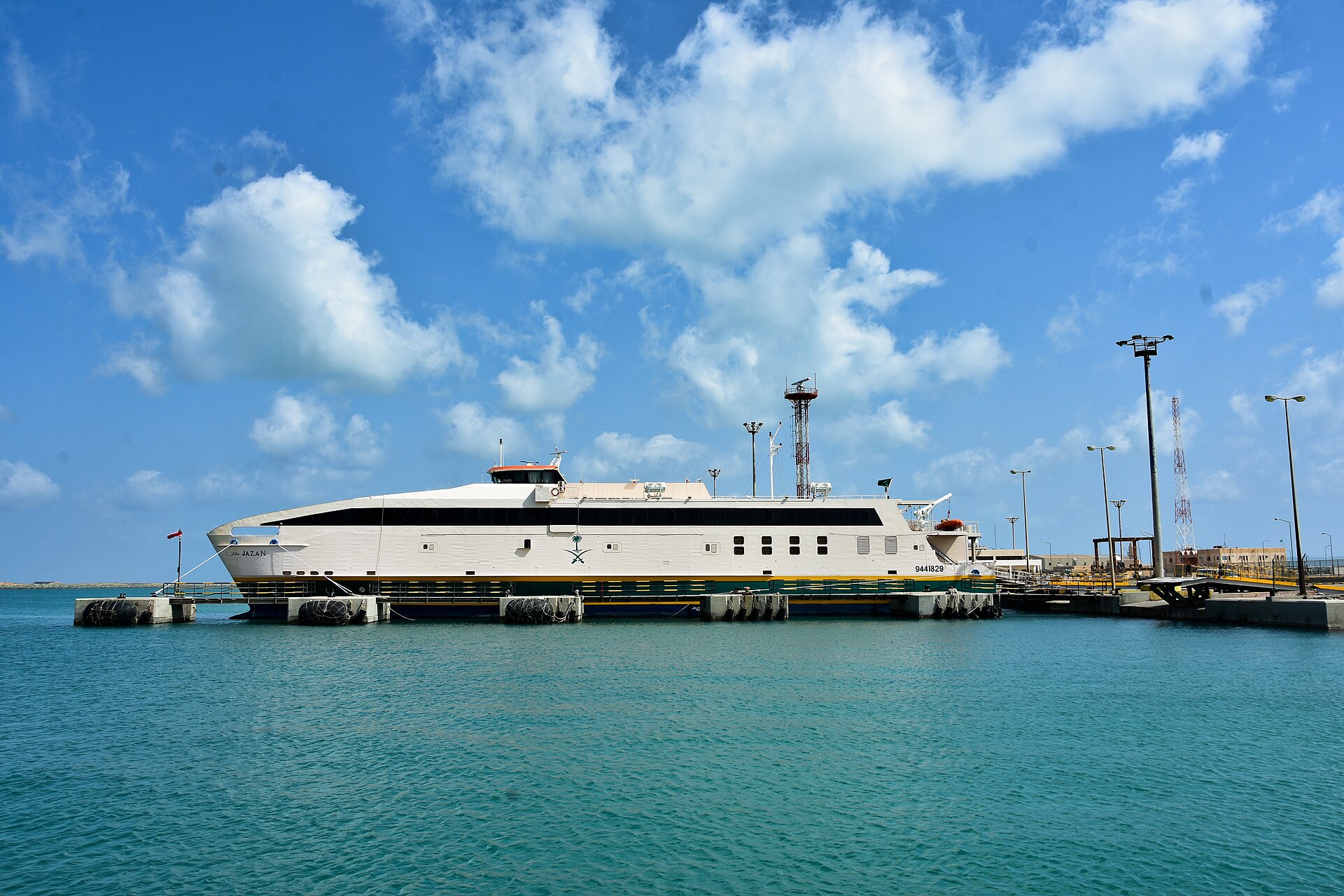
What the Houthis can reach, investors will eventually price. Jizan Province hosts the Jazan Special Economic Zone, announced by Crown Prince Mohammed bin Salman in April 2023, covering 24.6 square kilometres, according to official announcements. The zone sits alongside a larger Jazan Economic City that Saudi Arabia announced in 2006 with a planned investment of $26.7 billion, according to the Financial Express. The province also hosts the Port of Jazan on the Red Sea and King Abdullah International Airport.
The refinery project at Jazan was described as forming “the backbone of Jazan Economic City.” These are Vision 2030 assets. They presume a secure southern border. A province that receives ballistic missile attacks and emergency warnings throughout November — as Jizan and its neighbouring governorates have — is not the environment that attracts the foreign capital those zones require. The gap between the investment thesis and the security reality is the gap the broader cost of the Iran war has opened across Saudi Arabia’s economy.
Jizan’s population of more than 1.4 million lives with a reality that the rest of the kingdom encounters only during the most dramatic Houthi escalations. Riyadh’s residents experienced the PIF Tower strike and the airport closures of October — events that commanded international headlines and triggered visible government responses. Jizan’s residents experience the emergency alerts, the sonic booms of interceptions, and the knowledge that the next launch from Saada may come tomorrow — as the Houthis have claimed daily strikes on the southern region throughout November, according to the Long War Journal.
The province that was designed to be the kingdom’s southern economic gateway has instead become its most exposed front. The investments — the SEZ, the port, the refinery, the airport — remain on paper and in concrete. The security guarantee that underpins their viability is the part that has not been built to match.
Frequently Asked Questions
Have the Houthis conducted ground incursions into Saudi territory?
Yes. The Houthis have carried out cross-border raids on Saudi border posts in recent months, seizing small arms from Saudi border security forces, Middle East Eye reported, as cited by the Long War Journal on November 14, 2026. These ground-level infiltrations are separate from the aerial campaign of ballistic missiles and drones, adding a close-proximity threat that air defence systems alone cannot address and that requires significant ground forces to monitor along the extended frontier.
Is Syria sending troops to Saudi Arabia’s southern border?
The Associated Press reported on November 8, 2026 that Syria would send 600 troops to the Saudi southern border. Syria’s foreign minister denied the report, according to the Long War Journal on November 14, 2026. The claim remains unverified and contested. If confirmed, it would mark the first deployment of Syrian ground forces to Saudi Arabia and suggest that the kingdom is seeking additional manpower for border security that its own forces and coalition partners have not been able to fully provide.
How do the Houthis recruit fighters to sustain daily attacks?
Yazeed Al-Jeddawy, research manager at the Sanaa Center for Strategic Studies, told Al Jazeera on November 18, 2026 that “joining Houthi forces has become one of the few sources of income available to some young men. Recruitment is accompanied by ideological indoctrination, extending the movement’s influence from military camps into families and local communities. Economic deprivation therefore does more than facilitate mobilisation: it helps the group militarise everyday life and reinforce their authority at the social level.”
What was the death toll from earlier Houthi attacks on Saudi airports in October?
Attacks on King Khalid International Airport in Riyadh killed three people and wounded 36 on October 6–7, according to the BBC. A strike on October 10 killed 12 to 13 at the airport, the BBC reported. The total reached approximately 20 deaths in Saudi airport attacks between October 6 and 11. These attacks led to extended airport closures, airline fleet evacuations from Riyadh, and a Saudi Civil Defence review of the capital’s warning systems.
The House of Saud Daily Briefing
Saudi Arabia's news in 3 minutes, every morning. Free. See today's issue