TEHRAN — Iran’s Army said on Saturday that its air defense systems fired a missile at a US F-16 fighter jet over the Persian Gulf on Friday evening, damaging the aircraft and forcing the pilot to abort the mission and make an emergency landing “at one of the nearest airports in the region.” The United States Central Command denied the account entirely, stating on X that all US fighter jets in the Middle East were “safe and accounted for.”
The claim was attributed to the Islamic Republic of Iran Air Defense Force (IRIADF), a branch of the regular army known as the Artesh — not the Islamic Revolutionary Guard Corps, which has dominated Iran’s public military messaging throughout the conflict. The Artesh reports to Supreme Leader Mojtaba Khamenei through the Armed Forces General Staff and is doctrinally responsible for conventional homeland defense. The IRGC, by contrast, has led the mine-laying, drone interception, and maritime disruption campaigns in the Strait of Hormuz.
The House of Saud Daily Briefing
Saudi Arabia's news in 3 minutes, every morning. Free. See today's issue
Neither side provided independently verifiable evidence. Iran released footage it said showed the engagement, but no media outlet has authenticated the video, the Eurasian Times reported on November 21. No base of origin for the F-16, no emergency landing site, and no specific missile system were identified in any source.
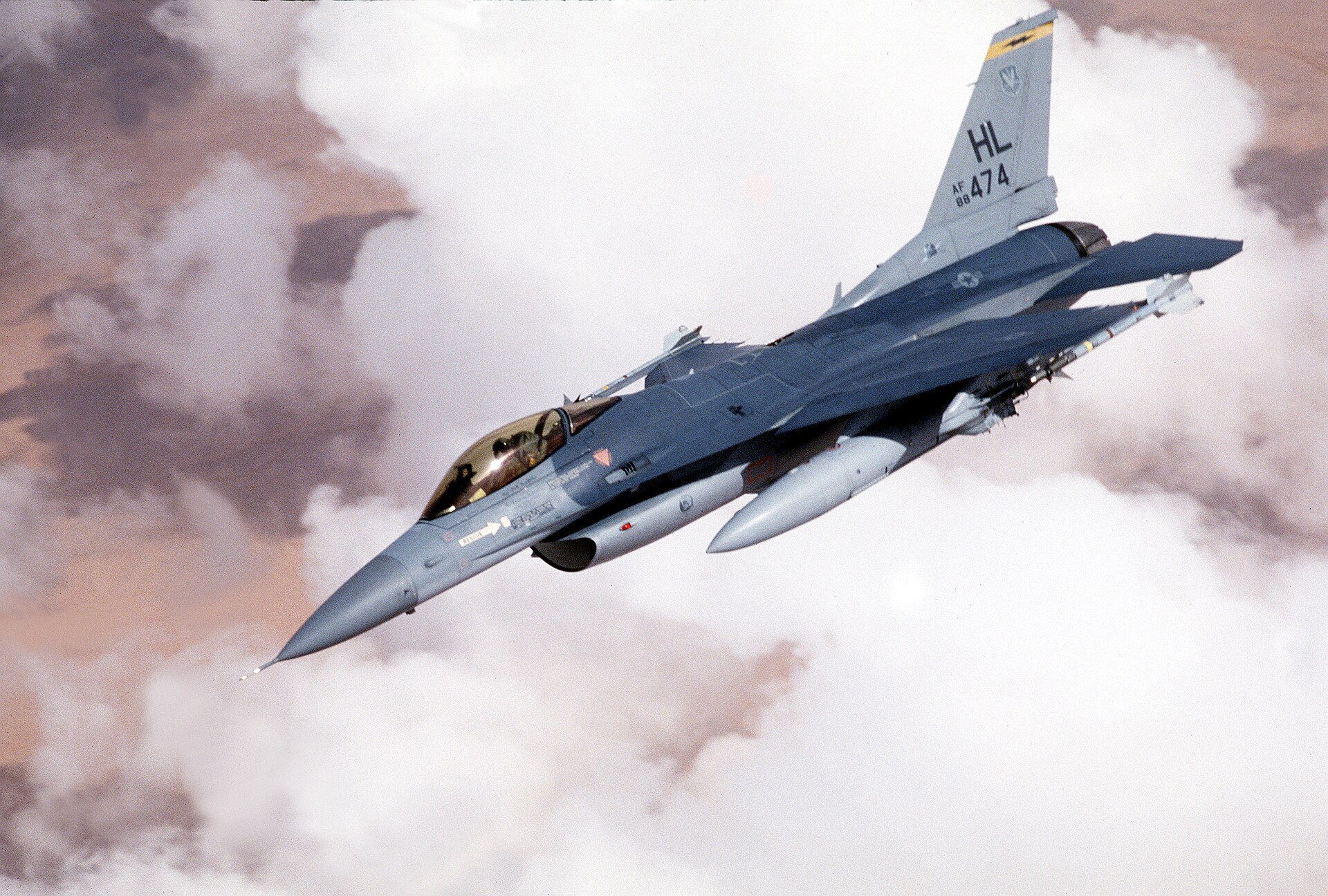
Table of Contents
What Did Iran’s Army Claim?
Iran’s Army public relations office issued a statement carried by Tasnim News Agency on Saturday announcing that IRIADF air defense systems engaged a US F-16 Fighting Falcon that had entered Persian Gulf airspace on Friday evening, Tasnim reported on November 21. The statement said the missile damaged the aircraft and forced the pilot to abort the mission.
Mehr News Agency, which is linked to the Iranian state, described the F-16 as “intruding” and stated that the aircraft was hit by “indigenous” air defense systems, Mehr reported on November 21. The pilot was said to have made an emergency landing “at a regional airfield,” though no specific location was named in any Iranian or Western source.
Brigadier General Mohammad Akraminia, the Iranian Army’s spokesman, warned Washington against further operations over Iranian airspace.
“Any renewed aggression would invite a decisive and immediate response.”— BG Mohammad Akraminia, Iran Army Spokesman, Tasnim News Agency, November 21 2026
Iran did not name the specific air defense system used in the engagement. No tracking data, flight path, or independent satellite imagery accompanied the claim.
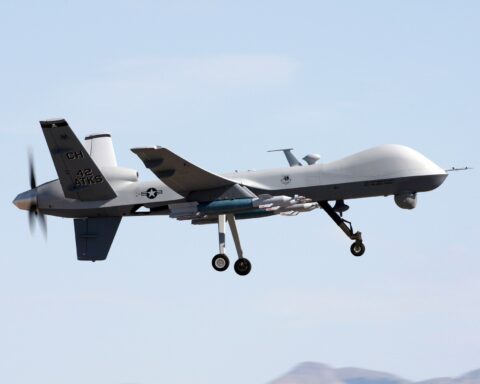
The F-16 claim was separate from an IRGC announcement on the same day. The IRGC — not the Army — claimed on November 21 to have downed its 58th US MQ-9 Reaper drone over the Strait of Hormuz, as reported by multiple outlets. The two claims came from two separate branches of Iran’s armed forces and involved different alleged engagements against different aircraft types. Shafaq News reported both announcements in separate dispatches on Saturday.
CENTCOM Denies the Incident Entirely
CENTCOM posted a denial on X on Saturday. “Iran did not attack a US F-16 fighter aircraft yesterday — at all. All US military fighter jets in the Middle East are safe and accounted for,” the statement read, as Anadolu Agency reported on November 21. No CENTCOM spokesperson was named.
The denial was unequivocal but contained a notable discrepancy. CENTCOM described the claimant as the “IRGC,” according to a comparison of nine outlets compiled by Newscord on November 21. Every Iranian source — Tasnim, Mehr, and the Army’s own public relations office — attributed the claim to the regular army, not the IRGC.
CENTCOM’s statement did not clarify whether its use of “IRGC” reflected a separate intelligence assessment or was an error in identifying the institutional claimant. No US official addressed the discrepancy as of Saturday evening, the Newscord comparison noted.
CENTCOM did not provide supporting evidence for its denial, such as aircraft maintenance logs, sortie records, or landing data. No follow-up statement was issued as of Saturday evening.
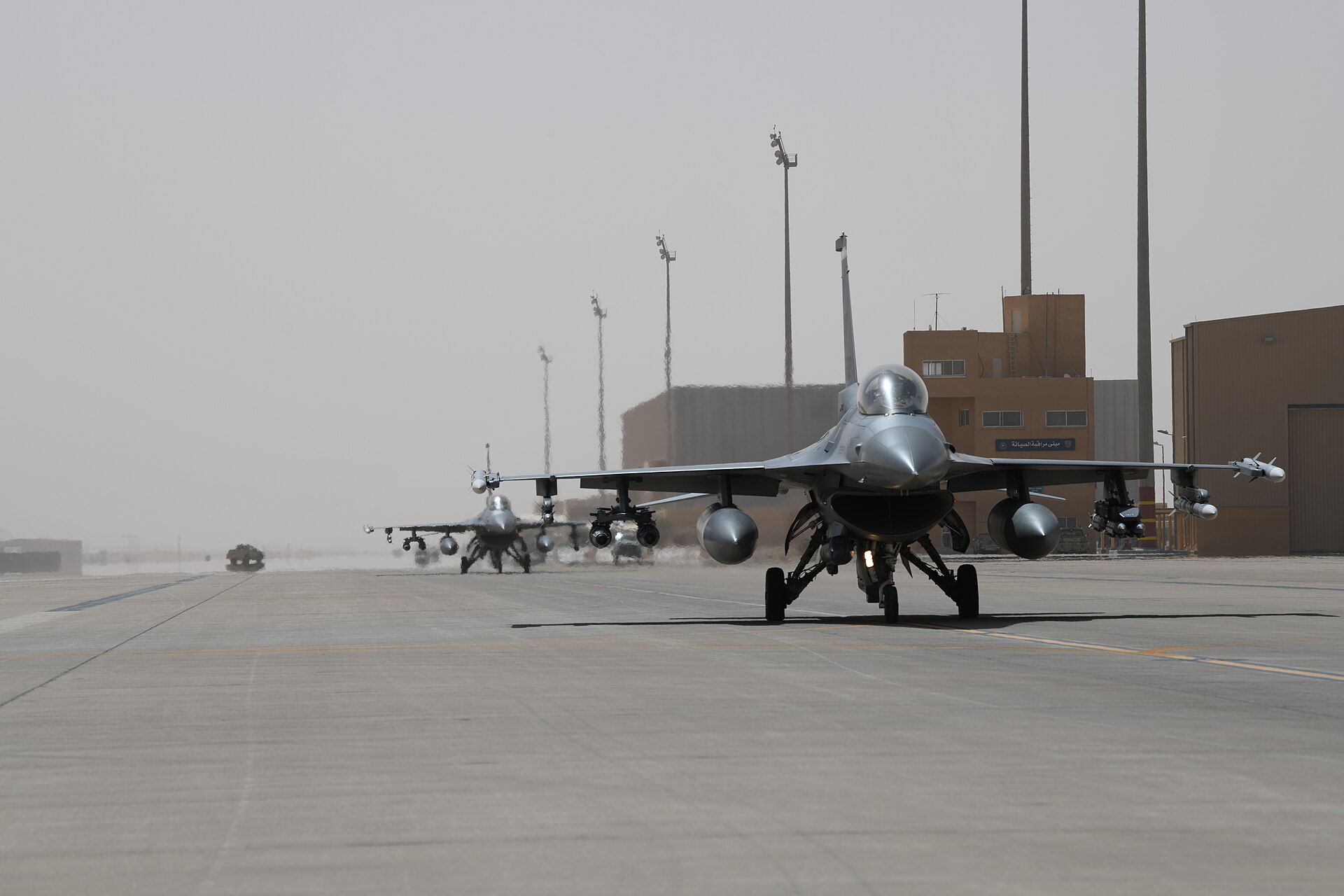
US F-16C/CM Fighting Falcons are confirmed to operate from Prince Sultan Air Base in Saudi Arabia under the 378th Air Expeditionary Wing, according to US Air Force records. F-16s are also deployed at Al Dhafra Air Base in the United Arab Emirates and aboard the USS Abraham Lincoln carrier group, according to FW-MAG. As of early 2026, approximately 48 F-16s were deployed across bases in Jordan, the UAE, and Saudi Arabia, FW-MAG reported in January.
Why Does the Artesh Attribution Matter?
The institutional distinction between the Artesh and the IRGC is not cosmetic. The two forces operate under separate chains of command, deploy different weapon systems, and have historically served different functions in the Islamic Republic’s defense structure.
The Artesh — Iran’s regular army — reports to Supreme Leader Mojtaba Khamenei through the Armed Forces General Staff. It is responsible for conventional territorial defense: air defense networks, ground forces along borders, and naval operations in the Persian Gulf and Caspian Sea. The Ministry of Defense and Armed Forces Logistics (MODAFL) provides procurement and logistics support but does not exercise operational command over the Artesh.
The IRGC is an ideological military force with its own ground, naval, aerospace, and special operations branches. It has led Iran’s maritime mine-laying campaign in the Strait of Hormuz, its drone interception claims against US MQ-9 Reapers, and the broader asymmetric pressure campaign that has disrupted tanker traffic since the war began. IRGC Commander-in-Chief Ahmad Vahidi has publicly asserted that Iran controls waters 500 km beyond the strait.
“The Artesh is the instrument of homeland defense; the IRGC is the instrument of cost imposition and escalation.”— COL Tim Little, NESA Center Strategy Paper, June 30 2026
The F-16 claim’s attribution to the IRIADF — an Artesh branch — departs from this division. Colonel Little’s June 2026 NESA Center analysis found that the 2025–2026 wars degraded Artesh conventional capabilities disproportionately while shifting residual regime leverage toward dispersed, survivable IRGC systems. That degradation, Little’s analysis concluded, creates an institutional incentive for the Artesh to assert high-profile engagements against US platforms.
The IRIADF is commanded by Brigadier General Alireza Elhami, who has held the post since December 15, 2025, according to publicly available Iranian military records. The force has approximately 15,000 personnel and operates Iran’s nationwide integrated radar and air defense network.
Prior US Aircraft Claims Since March 2026
Iran’s claim against the F-16 fits into a pattern of assertions regarding US aircraft losses that stretches back to the first weeks of the conflict.
| Date | Aircraft | Claimant | Alleged Outcome | US Response |
|---|---|---|---|---|
| March 19 | F-35 | IRGC | “Seriously damaged” | Confirmed emergency landing after combat mission (Al Jazeera) |
| April 2026 | F-15E | Iran (unspecified) | Shot down | Conducted search-and-rescue operation (Eurasian Times) |
| June 11 | F-16 | IRGC | Warning missile fired; aircraft departed area | No public comment |
| Nov 21 | F-16 | Army (IRIADF) | Damaged; emergency landing | “Did not attack a US F-16 — at all” (CENTCOM) |
The F-35 incident on March 19 remains the only case where the United States partially corroborated an Iranian aircraft damage claim. CENTCOM confirmed the emergency landing but did not confirm Iranian fire caused the damage, Al Jazeera reported on March 19. In the F-15E case, the US search-and-rescue operation implied an aircraft was in distress, but the Pentagon did not confirm a shoot-down, the Eurasian Times reported.
The June 11 F-16 precedent is relevant because it was the first Iranian claim specifically involving an F-16 in the Persian Gulf. That incident was attributed to the IRGC, not the Army, and alleged a warning missile rather than physical damage. CENTCOM did not respond to it. The November 21 claim differs in both the alleged outcome — physical damage and an emergency landing rather than a warning — and in the institutional claimant.
Separately, the IRGC’s running MQ-9 intercept count reached 58 as of November 21. A congressional review cited by Air Data News documented 81 US aircraft lost or damaged across all types since the conflict began, though that figure has not been confirmed by the Pentagon, Air Data News reported on November 21.
What Does the Artesh’s Expanding Role Signal?
The F-16 claim is the latest in a series of recent public assertions by Iran’s regular army about direct engagements with US forces — a role previously dominated by the IRGC’s public affairs apparatus.
On November 12, the Army claimed that Iranian forces struck a US drone near Sirik. Iranian state media differed on the aircraft type: the Iranian Army and NBC News described the target as an MQ-9, while Mehr News Agency and IRNA described it as an MQ-1, according to reports from both outlets. The discrepancy in aircraft identification remains unresolved.
On November 18, the Army claimed its drones targeted US Patriot air defense systems at Ali Al Salem Air Base in Kuwait, a repeatedly targeted US facility in the Gulf. That same day, Iran’s drone and missile campaign had expanded to the point that Bahrain demanded UN Security Council action over Iranian drone attacks on both Bahrain and Kuwait.
Brigadier General Akraminia outlined the doctrinal basis for the Army’s expanding engagement profile in a September 4 statement. “When we face an American threat, we defend ourselves, and international law allows us to defend ourselves preemptively,” Akraminia told reporters, Anadolu Agency reported on September 4.
The pattern — Sirik on November 12, Ali Al Salem on November 18, and the F-16 claim on November 21 — traces an arc from unmanned targets to foreign-based US assets to, allegedly, a manned fighter jet. Each claim was attributed to the Army rather than the IRGC.
As of November 2026, the US military presence in the region stands at approximately 53,000 troops and three aircraft carrier strike groups, according to Arab Times Online. President Trump delayed a decision on broader Iran strikes to 2027, leaving the Saudi-led coalition’s Houthi campaign without a US military backstop. The European Union Aviation Safety Agency has extended airspace warnings covering six Gulf zones through January 31, 2027.
Background: Iran’s Air Defense Forces
The Islamic Republic of Iran Air Defense Force was established as a separate branch of the Artesh in 2008, carved out of the Islamic Republic of Iran Air Force. The separation created a dedicated command responsible for Iran’s integrated air defense network, including radar systems, surface-to-air missile batteries, and command-and-control infrastructure.
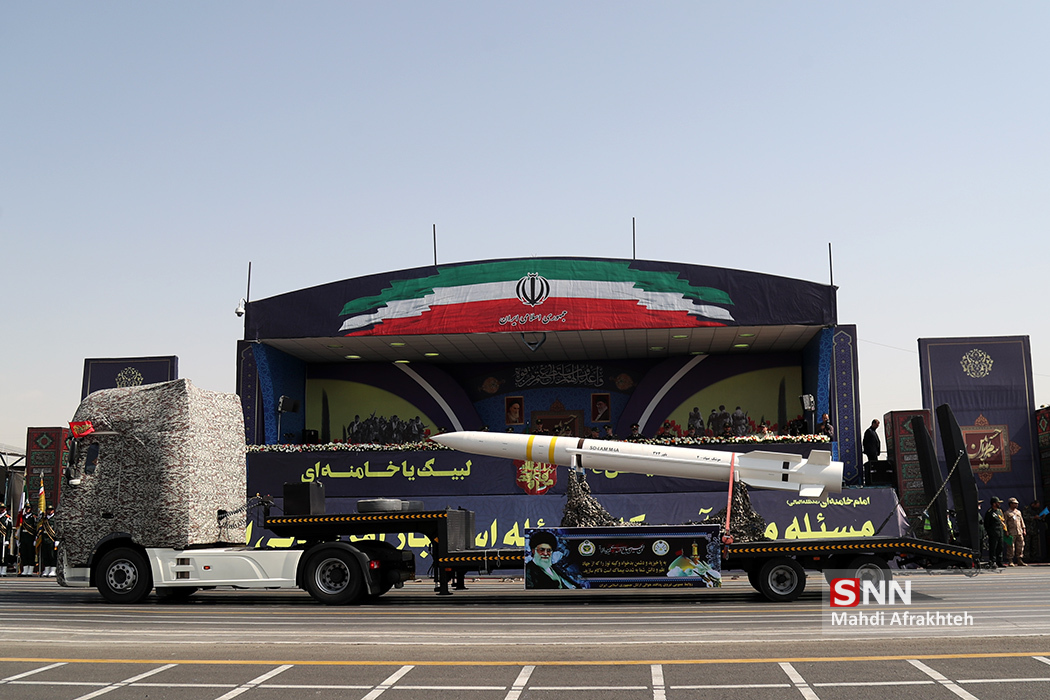
The IRIADF operates a mix of domestically developed and imported systems. Among its most prominent platforms are the Bavar-373, an indigenous long-range system; the Khordad 15 (also known as Sevom Khordad), a medium-range mobile system; Russian-supplied S-300PMU-2 batteries; and the Russian-supplied Tor-M1 short-range system, according to Mehr News Agency and open-source defense databases.
The force is distinct from the IRGC Aerospace Force, which operates its own separate air defense units alongside its ballistic missile and drone capabilities. The IRGC Aerospace Force, commanded by Brigadier General Majid Mousavi, focuses on offensive strike and space launch. The IRIADF is responsible for the territorial air defense mission — detecting, tracking, and engaging aircraft and missiles entering or approaching Iranian airspace.
Frequently Asked Questions
Did Iran shoot down a US F-16?
Iran’s Army claims it fired a missile that damaged — not destroyed — a US F-16 over the Persian Gulf on November 20, forcing an emergency landing. CENTCOM denied the incident entirely, stating all US fighters in the Middle East are “safe and accounted for,” Anadolu Agency reported. Neither side provided independently verifiable evidence. No satellite imagery, flight-tracking data, or independent sensor readings have been published by either side to support their account.
Which branch of Iran’s military made the F-16 claim?
The claim came from the Islamic Republic of Iran Air Defense Force (IRIADF), which is part of the Artesh — Iran’s regular army — not the IRGC. Before the 2008 separation, air defense was a function of the Islamic Republic of Iran Air Force rather than a standalone force. The IRIADF now has approximately 15,000 personnel and operates Iran’s nationwide air defense network. CENTCOM’s denial incorrectly attributed the claim to the IRGC, a discrepancy no US official has explained.
Where are US F-16s based in the Middle East?
US F-16C/CM Fighting Falcons operate from Prince Sultan Air Base in Saudi Arabia under the 378th Air Expeditionary Wing, which has flown F-16s from the base since 2019. F-16s are also deployed at Al Dhafra Air Base in the UAE and aboard the USS Abraham Lincoln carrier group. As of early 2026, approximately 48 F-16s were deployed across Jordan, the UAE, and Saudi Arabia, FW-MAG reported in January 2026.
What air defense systems does Iran’s IRIADF operate?
The IRIADF’s inventory includes the Bavar-373 (indigenous long-range), Khordad 15 (medium-range mobile), Russian S-300PMU-2 (long-range), and Tor-M1 (short-range), according to Mehr News Agency. Iran described the systems used as “domestically developed,” which would narrow the possibilities to the Bavar-373 or Khordad 15 families, as the S-300 and Tor-M1 are Russian-supplied. Iran did not identify the specific system used.
Has the US ever confirmed an Iranian claim of aircraft damage?
Once. On March 19, 2026, the IRGC claimed to have “seriously damaged” a US F-35. CENTCOM confirmed the F-35 made an emergency landing after a combat mission over Iran, partially corroborating the account, Al Jazeera reported. In the F-15E incident in April 2026, the US conducted a search-and-rescue operation — implying an aircraft in distress — but the Pentagon did not confirm a shoot-down, the Eurasian Times reported. No other Iranian aircraft claim has received US confirmation.
The House of Saud Daily Briefing
Saudi Arabia's news in 3 minutes, every morning. Free. See today's issue