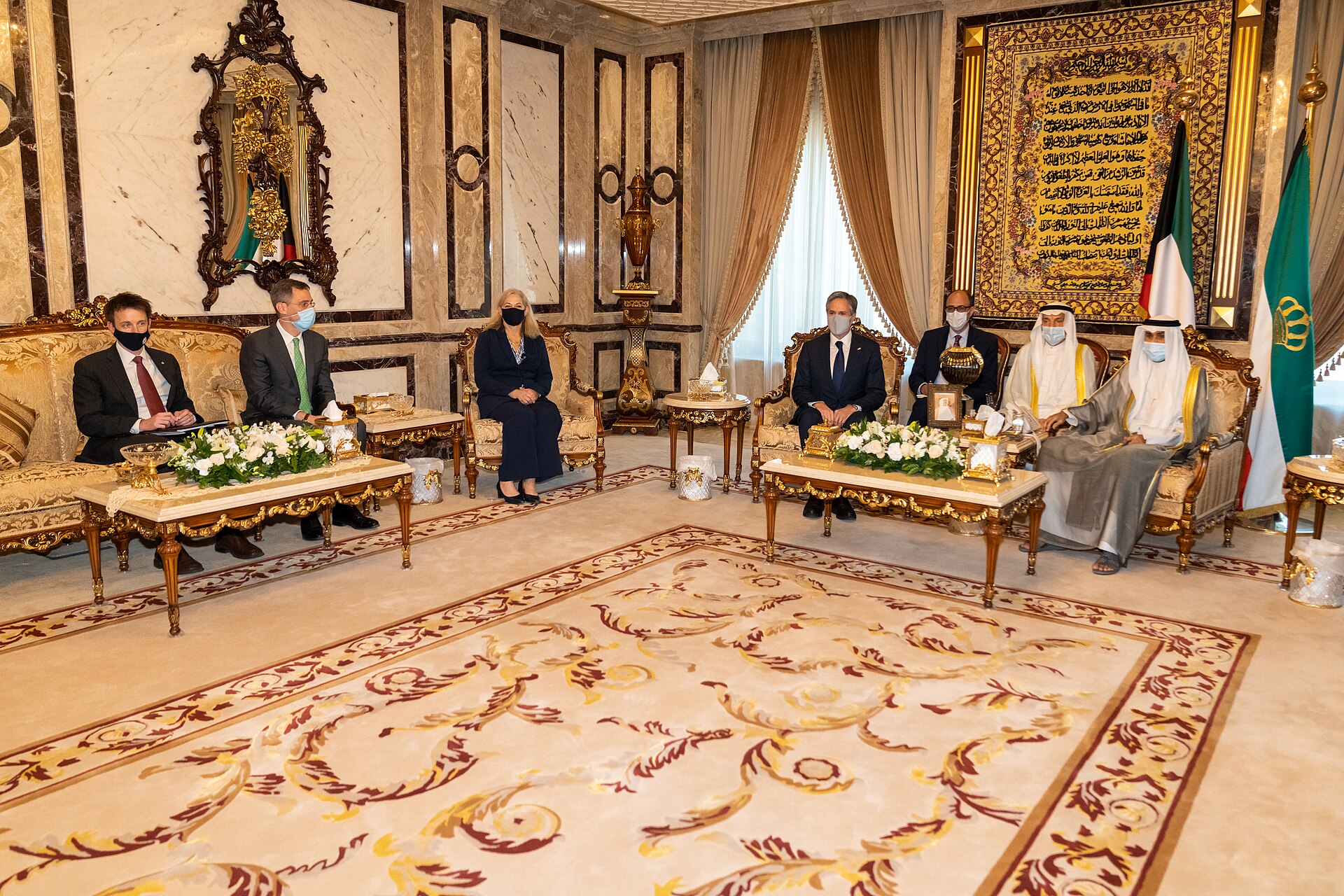

RIYADH — Saudi Crown Prince and Prime Minister Mohammed bin Salman phoned Kuwait’s Emir, Sheikh Mishal Al-Ahmad Al-Jaber Al-Sabah, on Monday, November 23, to ask after his health, Saudi Gazette reported. The crown prince conveyed King Salman’s greetings and his wishes for the Emir’s “continued good health,” and the Emir thanked both men for what the report called their “kind fraternal sentiments.”
The call came after the Emir returned to Kuwait on November 15 from medical examinations in the United States. It also came five days after Iranian drones targeted Ali Al Salem Air Base in Kuwait, the latest Iranian attack on a state that is to host a forward headquarters of the Gulf Cooperation Council’s Unified Military Command. Arab News, citing the Saudi Press Agency, reported that the two leaders also discussed relations between their countries and regional developments.
The House of Saud Daily Briefing
Saudi Arabia's news in 3 minutes, every morning. Free. See today's issue
Table of Contents
- What Did the Saudi Crown Prince and Kuwait’s Emir Discuss?
- The Emir’s Medical Trip and the Gulf Response
- How Has the Iran War Shaped Saudi-Kuwaiti Leader Calls in 2026?
- The November 18 Attack on Ali Al Salem
- What Will the GCC Command in Kuwait Do?
- Background: Saudi-Kuwaiti Ties
- Frequently Asked Questions
What Did the Saudi Crown Prince and Kuwait’s Emir Discuss?
Two versions of the call were published on November 23. Saudi Gazette described only the health inquiry set out above, adding that the crown prince wished the Emir “continued health and well-being.” Arab News, citing the Saudi Press Agency, reported that the leaders also “discussed relations between their countries and regional developments.” Neither report carried direct quotes from either leader on policy.
The Saudi Gazette account, datelined Riyadh, ran under the headline “Saudi Crown Prince calls Emir of Kuwait to inquire about his health.” It made no mention of Iran, the GCC or the November 18 attack. It described Mohammed bin Salman by both of his government titles, “Crown Prince and Prime Minister.”
The Arab News wording, “regional developments,” matches language used after the July 22 call between the same two leaders, when the subject was Iranian strikes on Kuwait. Ajel reported then that the two “discussed recent regional developments and efforts to promote security and stability.” Monday’s reports did not say whether Iran, the Houthis or the GCC command were raised.
No Iranian reaction to the call had been reported by Monday evening. Tehran’s most recent public message to Kuwait came through its army, which said on November 18 that it had targeted US systems on Kuwaiti soil, as set out below.
The Emir’s Medical Trip and the Gulf Response
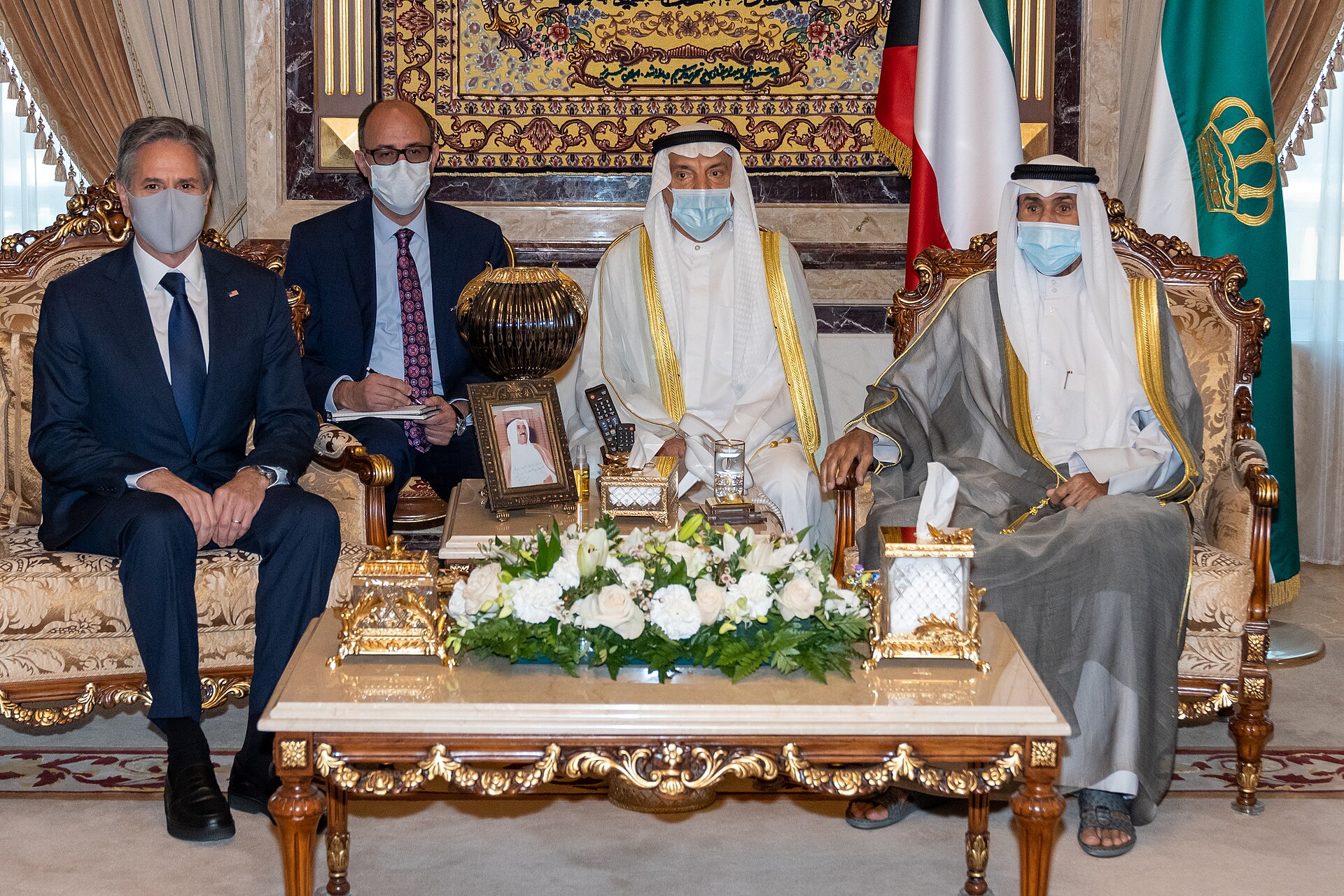
Sheikh Mishal left Kuwait for the United States on Friday, November 6, “to undergo routine medical examinations, according to an official announcement,” Arab Times reported. The paper said the trip was for “the Amir’s customary medical examinations in the United States.” Crown Prince Sheikh Sabah Khaled Al-Hamad Al-Sabah and Prime Minister Sheikh Ahmad Abdullah Al-Ahmad Al-Sabah led those seeing him off.
The Emir returned on Sunday, November 15, “following the successful medical examinations His Highness underwent abroad,” according to a Kuwait Times opinion column by Abdullah Abbas Buwair, director of the Kuwait Historical Archive Center Museum at Kuwait University. No official Kuwaiti statement found for this article described what the examinations covered or what they found.
Gulf rulers sent messages after his return. UAE President Sheikh Mohamed bin Zayed Al Nahyan cabled the Emir to congratulate him on his medical results, Sharjah 24 reported on November 17. Dubai’s ruler Sheikh Mohammed bin Rashid Al Maktoum and Vice President Sheikh Mansour bin Zayed sent similar cables. The rulers of Ajman, Fujairah, Umm Al Quwain and Ras Al Khaimah sent similar cables the same day, the outlet said.
Against that sequence, the Saudi call reads first as a courtesy between ruling families, in line with the UAE cables a week earlier. Saudi Gazette’s account of Monday’s call contains nothing beyond the health inquiry and King Salman’s greetings. No separate Saudi policy statement on Kuwait was published alongside it.
How Has the Iran War Shaped Saudi-Kuwaiti Leader Calls in 2026?
Since Iran began firing on Gulf states after the US-Israeli strikes of February 28, the published calls between Mohammed bin Salman and Sheikh Mishal have tracked Iranian pressure on Kuwait. Saudi and regional readouts from March and July framed Iranian attacks as an escalation and pledged Saudi support for Kuwait. Monday’s published readouts, by contrast, centred on the Emir’s health.
On March 9, Sheikh Mishal used a televised address for the last ten nights of Ramadan to describe Iran’s strikes as a “brutal attack,” Asharq Al-Awsat reported. He said Kuwait had kept its territory closed to military action against Iran. By then 12 people had been killed in Kuwait, according to the same report.
Around the Eid al-Fitr holiday in March, the two leaders exchanged greetings and affirmed their “commitment to defending Gulf stability,” according to the Saudi Press Agency headline. Arab News reported that in that exchange they called Iran’s attacks on GCC countries a “dangerous escalation.”
On July 22, as Iranian strikes hit Kuwaiti power and desalination plants, the tone was sharper. The crown prince expressed “the Kingdom’s full solidarity with and support for the State of Kuwait, as well as its strong condemnation of the continued and blatant Iranian attacks on Kuwaiti territory,” Qatar News Agency reported. Khaleej Times reported an Iranian strike on a Kuwaiti power and desalination plant on July 17; a second followed on July 18.
“Our country has been subjected to a brutal attack by a neighboring Muslim country, which we consider a friend, even though we have not permitted the use of our land, airspace, or coasts for any military action against it.”Sheikh Mishal Al-Ahmad Al-Jaber Al-Sabah, Emir of Kuwait, March 9, 2026 (Asharq Al-Awsat)
Saudi condemnations of attacks on Kuwait have also come through the Foreign Ministry. On November 18, the ministry said it strongly condemned “the Iranian attacks on Kuwait, Bahrain, and a UAE-owned oil tanker,” MTV Lebanon reported. The ministry had issued a separate statement on attacks against Bahrain a day earlier, covered in our report on Saudi Arabia’s condemnation of Iranian attacks on Bahrain.
The November 18 Attack on Ali Al Salem
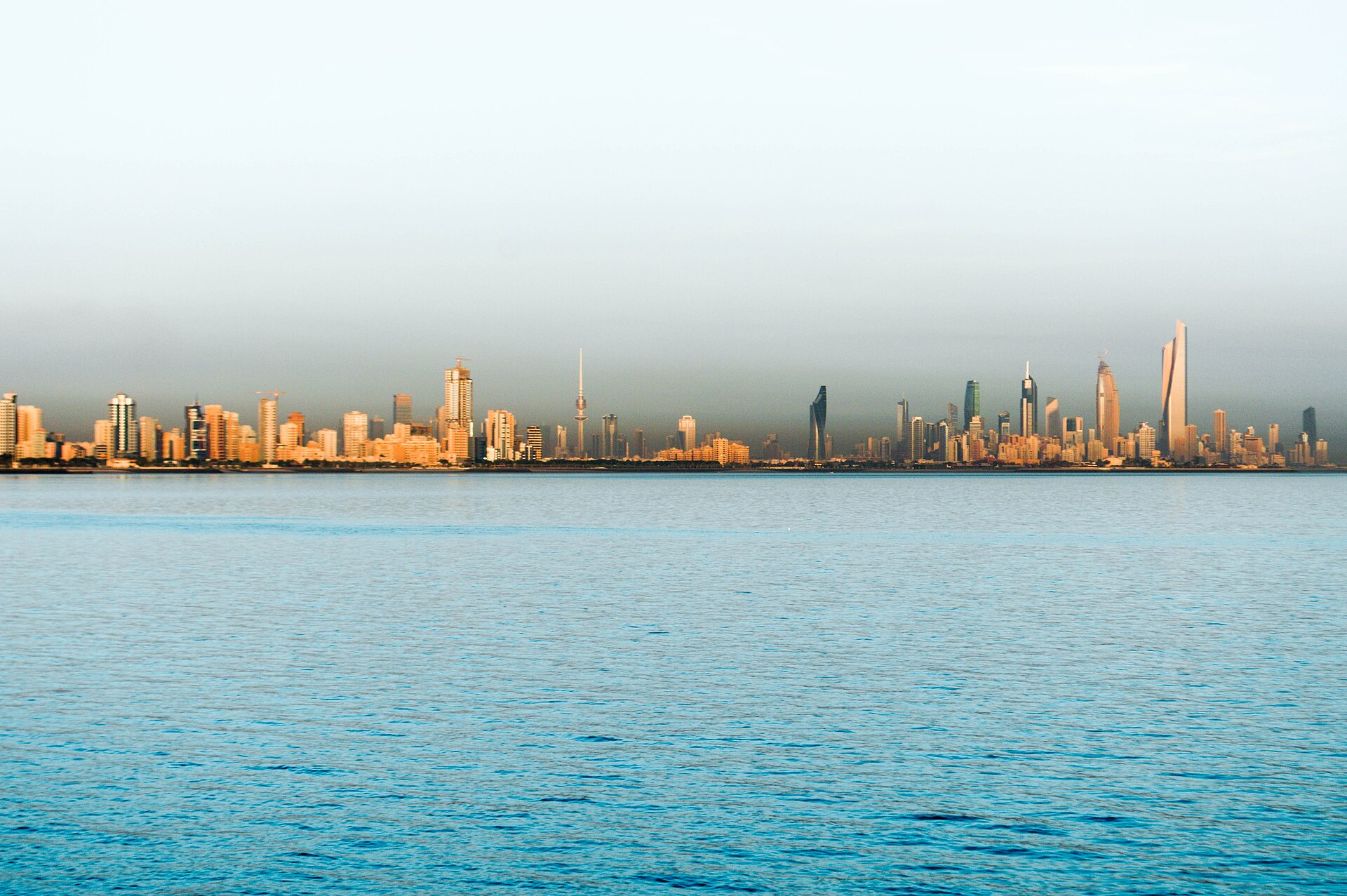
Iranian drones targeted Ali Al Salem Air Base, which hosts US forces, overnight into Wednesday, November 18. Kuwait’s military said on Tuesday night that its air defences engaged “drone threats,” and Kuwaiti authorities reported no casualties or damage, AP and Reuters reported. Reuters reported the attack was the first Iranian strike on Kuwait since September.
The Associated Press, citing Iran’s state broadcaster, reported that Iran’s army said its drones had targeted “US Patriot air defence systems and drone and missile launch platforms” at the base. The details of our earlier coverage are in the Iranian army’s claim on Ali Al Salem and Kuwait’s interception of the drones.
The attack followed a US strike. On the night of November 17, US fighter jets hit a missile launch site on Iran’s Qeshm Island “with precision munitions,” US military officials said, according to AP. Iranian media reported explosions on the island but quoted a local official as saying there was no damage to infrastructure.
Ali Al Salem has been a repeated target. During the war, the base “has been struck at least 30 times by Iran, damaging or destroying at least 15 aircraft hangars, numerous warehouses and 10 buildings near a residential area,” according to an AP analysis published with its November 18 report.
Kuwait’s Foreign Ministry said in a statement that the attack “flagrantly violated Kuwait’s sovereignty, directly threatened its security and stability, and constituted a grave breach of international law.” The AP said the ministry called the repeated Iranian attacks “criminal.” Qatar, which has mediated between Iran and the United States, called the attacks on its neighbours a “dangerous escalation that threatens to complicate efforts aimed at containing tensions.”
Tehran framed the strike as a response to the United States, not to Kuwait. Iranian army commander-in-chief Maj. Gen. Amir Hatami warned that “if the enemy repeats its mistake… we have the readiness and the plans to confront it and its supporters in a stronger, more crushing way and without geographic limitations,” Reuters reported. Hatami did not say which states he counted among the enemy’s “supporters.”
Hamidreza Azizi, senior Iran analyst at the International Crisis Group, warned of the wider risk in an analysis posted on X after the Kuwait attack. “Even if neither side intends to enter a broader confrontation, the accumulation of military incidents across multiple fronts increases the risk of miscalculation and escalation,” he wrote, as quoted by AP. Bahrain’s military said on November 18 that its air defences had “intercepted and destroyed several Iranian aerial attacks,” AP reported. Later Bahraini and Saudi moves are in our coverage of Bahrain and Saudi Arabia after the November 21 strike.
What Will the GCC Command in Kuwait Do?
The GCC’s new Kuwait headquarters will be a forward post of the bloc’s Unified Military Command, whose main headquarters is in Riyadh. Defence ministers approved it in Manama on November 10 and agreed to assign “appropriate” forces to it. Its location, troop numbers, force types and opening date have not been disclosed, Al Jazeera and The National reported.
Secretary General Jasem Mohamed Albudaiwi announced the decision after the 23rd session of the GCC Joint Defence Council, chaired by Bahrain’s Defence Minister Lt Gen Abdullah bin Hassan Al Nuaimi, The National reported. The Unified Military Command was established in 2013, and its Riyadh headquarters opened in 2021, according to Al Jazeera. Our analysis of the GCC forward command in Kuwait covers the decision in detail.
Analysts read the site as a message about Kuwait’s exposure. “It puts a unified command at the top of the Gulf, in Kuwait in particular. That means they are establishing a … permanent presence there,” Muhanad Seloom, a nonresident senior fellow at the Middle East Council on Global Affairs, told Al Jazeera. He added that the command “sends a message to Iran and also Iraq,” where Iran-aligned groups have launched drones at Gulf states.
Seloom said he did not see the move “as a response to US failure, but as a wake-up call for the GCC that they need to take matters into their own hands.” Albert Vidal, a Gulf analyst at the International Institute for Strategic Studies, told Al Jazeera the announcement did not itself suggest a shift away from the United States. “In fact, I would argue that the US would like to see GCC countries work more closely and share more information with each other directly,” Vidal said.
For Saudi Arabia, the Kuwait post adds to a set of overlapping arrangements. In August, Saudi Arabia, Pakistan and Turkey signed the Makkah Joint Defense Agreement, under which an attack on any member counts as an attack on all, Kuwait Times reported. Our report on the Makkah pact’s implementation follows that track. Kuwait is not a party to that agreement.
Background: Saudi-Kuwaiti Ties
Trade between Saudi Arabia and Kuwait runs heavily in the kingdom’s favour. Two-way trade reached about SAR 9.5 billion by the end of November 2025, according to Salman bin Hassan Al-Aqial, as reported by Asharq Al-Awsat citing SPA. That total comprised SAR 8 billion in Saudi exports and SAR 1.5 billion in Kuwaiti imports.
Al-Aqial chairs the first Saudi-Kuwaiti Joint Business Council, whose inaugural term the Federation of Saudi Chambers announced in February 2026. Saudi Arabia’s General Authority for Foreign Trade (GAFT) approved the council’s final formation and put two-way trade over 2020-2024 at about $12 billion.
Political contact between the two royal courts continued through the autumn. In late September, King Salman invited Kuwait’s Emir and Bahrain’s King to the second GCC-EU summit hosted by Saudi Arabia in October, Asharq Al-Awsat reported. The Saudi cabinet’s own handling of the war is covered in our report on the November 17 cabinet session.
Bahrain’s experience runs parallel to Kuwait’s. The BBC reported on November 18 that Bahrain, which hosts the US Navy’s 5th Fleet, had recorded four attacks over the previous six days, after a two-month lull. Our report on Iran’s latest claims in Bahrain follows the exchanges since then.
Frequently Asked Questions
Who is next in line to rule Kuwait?
Sheikh Sabah Khaled Al-Hamad Al-Sabah holds the titles of Deputy Amir and Crown Prince, according to Arab Times. He was among the officials who saw Sheikh Mishal off on November 6, alongside Prime Minister Sheikh Ahmad Abdullah Al-Ahmad Al-Sabah and Minister of Amiri Diwan Affairs Sheikh Hamad Jaber Al-Ali Al-Sabah.
What legal basis has Kuwait cited for defending itself against Iran?
In his March 9 address, Sheikh Mishal invoked Kuwait’s “full and inherent right to self-defense” under Article 51 of the United Nations Charter, according to Asharq Al-Awsat. He said any response would be proportionate to the scale and nature of the attack and in line with international law.
Did the GCC take other military steps before approving the Kuwait headquarters?
Yes. GCC armed forces chiefs of staff met in Manama on October 29 to discuss defence coordination, The National reported. At an extraordinary summit in Jeddah in April, Gulf leaders called for the “accelerated” completion of a joint early warning system against ballistic missiles, according to Albudaiwi.
What goods do Saudi Arabia and Kuwait trade?
Saudi exports to Kuwait are led by dairy products and plastics, according to GAFT. Imports from Kuwait are mainly mineral fuels, oils and waxes, as well as works of art and antiques. GAFT supervises 105 bilateral and regional joint business councils, including the Saudi-Kuwaiti council.
The House of Saud Daily Briefing
Saudi Arabia's news in 3 minutes, every morning. Free. See today's issue