
Table of Contents
DUBAI — A vessel calling itself “Khat Shekan” — Persian for “Line Breaker” — appeared on MarineTraffic and other AIS tracking platforms around November 21, claiming to be an Iranian VLCC moving through the Strait of Hormuz past the US naval blockade line. Within hours, TankerTrackers declared the signal spoofed and the tanker nonexistent, while satellite imagery showed no vessel making the reported movements, according to Iran International and gCaptain.
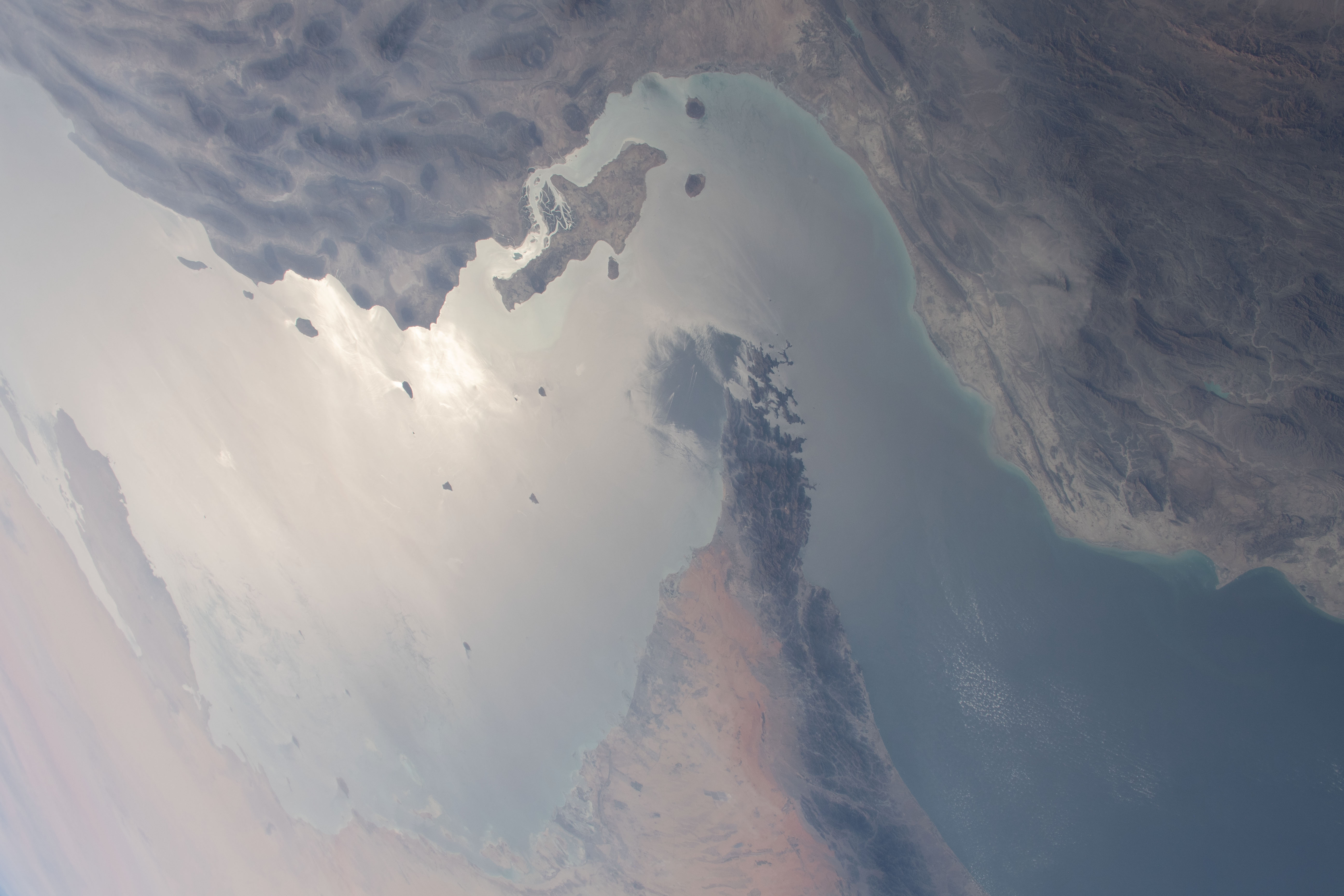
The phantom signal surfaced days after the US Joint Maritime Information Center expanded the blockade on November 18 to cover ship-to-ship transfers of Iranian cargo, and one day before President Donald Trump told Fox News that any Iranian ship attempting to breach the blockade would end up “at the bottom of the sea.” The episode exposed both the vulnerability of maritime tracking systems around Hormuz and the growing desperation of an Iranian economy that Kpler projects will earn zero oil export revenue by mid-December.
The House of Saud Daily Briefing
Saudi Arabia's news in 3 minutes, every morning. Free. See today's issue
A Tanker That Did Not Exist
The vessel appeared on AIS platforms displaying as a VLCC — a very large crude carrier — flying an Iranian flag and transmitting a position inside the Strait of Hormuz. Its name, “Khat Shekan,” was itself a declaration: “Line Breaker” in Persian, an apparent taunt aimed at the US naval cordon that has blockaded Iranian ports for 130 consecutive days as of November 21, according to CENTCOM.
“All of the data supplementing that AIS transmission is wrong,” TankerTrackers said in a social media post reviewed by Euronews and gCaptain. The firm said the tanker “does not even exist.”
The vessel had no IMO number. Searching its Maritime Mobile Service Identity number on the IMO database returned an error message: “Only ships in service are displayed,” gCaptain reported on November 23. The ship had no voyage record before its sudden appearance and did not appear on Bloomberg, Starboard Maritime Intelligence, Kpler, Vortexa, or Equasis — the principal commercial tracking platforms used by oil traders and sanctions monitors.
TankerTrackers identified further anomalies. The vessel’s listed call sign belonged to the Stolt Bobcat, a Liberian-flagged chemical tanker that was located in Tarragona, Spain at the time, Iran International reported. The listed arrival time would have required the vessel to sail from Iran to Nigeria in a matter of hours, with a destination field reading “OIL TERMINAL” matched to a terminal in Nigeria, according to gCaptain.
MarineTraffic confirmed the assessment. “Our analysis indicates AIS spoofing,” the platform stated, defining the technique as sending false tracking or navigation data to plant incorrect information or confuse observers, gCaptain reported.
The origin of the false signal is not confirmed. No open source attributes the spoof to Iran’s government, the IRGC, or any specific actor.
How Did Tracking Firms Expose the Spoof?
The unraveling was swift because the spoof was crude. A legitimate VLCC would carry an IMO number — a permanent seven-digit identifier assigned at the hull’s construction and tracked through every ownership change. The Khat Shekan had none. Its MMSI number, the digital identifier broadcast by every vessel’s AIS transponder, returned no match in the IMO’s database of ships in service.
Cross-referencing the call sign against existing registries revealed it belonged to the Stolt Bobcat, a chemical tanker thousands of kilometres away in Spain. The claimed transit speed — implying a journey from Iran to Nigeria in hours — exceeded any vessel’s physical capability. And satellite imagery of the reported position showed open water.
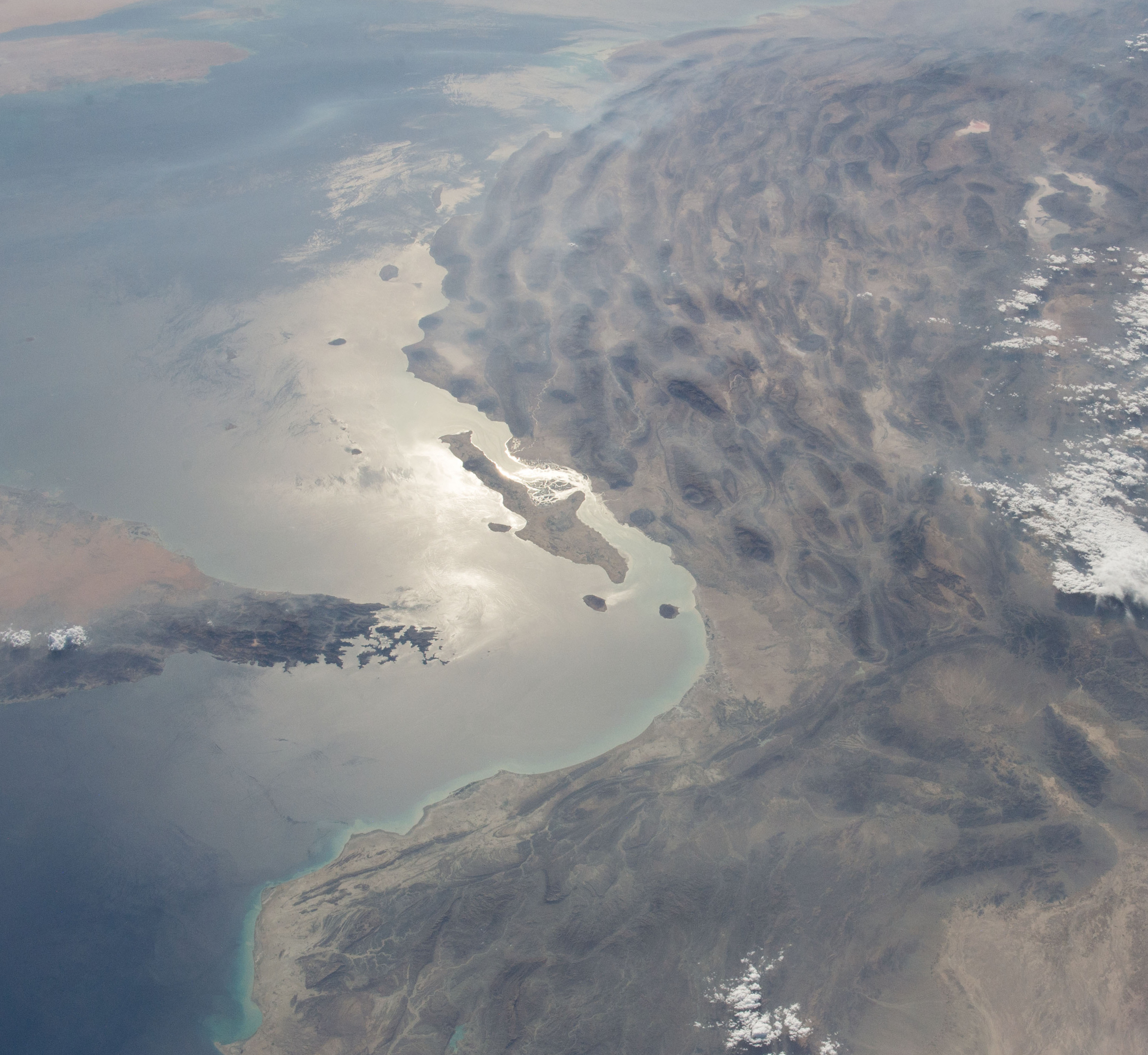
Mark Douglas, an analyst at Starboard Maritime Intelligence, told gCaptain that AIS spoofing attempts are “an unwelcome addition to an already dangerous situation.” The Strait of Hormuz, through which roughly a fifth of the world’s traded oil passes in normal conditions, has seen its traffic fall sharply since Iran’s closure of the waterway and the US counter-blockade. Hormuz oil flows fell to 10 million barrels a day in November as attacks mounted on both sides.
How Does Real Evasion Differ from AIS Spoofing?
The Khat Shekan was not a real ship with a fake flag. It was a fabricated AIS signal from a vessel that never existed — a distinction that matters for understanding the actual state of blockade enforcement. Real evasion of the US naval cordon has used different methods entirely.
Jemima Shelley, a senior analyst at United Against Nuclear Iran, told Fox News Digital on November 1 that at least nine small tankers carrying Iranian oil or liquefied petroleum gas had evaded the blockade since its July reimposition. The tactics included switching off AIS transponders entirely, flying false flags that made vessels “completely stateless,” conducting ship-to-ship transfers in the Gulf of Oman beyond the immediate blockade zone, and operating through front companies.
These are physical operations involving real vessels, real crews, and real cargo — the opposite of a phantom AIS signal. The US military has responded with force to actual blockade runners. CENTCOM reported that as of October 9, it had redirected 133 commercial vessels and separately destroyed 13 commercial vessels over a 12-week period. In April, the US Navy seized the Iranian-flagged cargo ship Touska, using 5-inch gun fire to disable it before Marines boarded, according to USNI News.
Trump has claimed the US has “total control” of Hormuz, but the nine documented evasions suggest the cordon is not airtight — a gap the November 18 expansion was designed to close.
US Expands Blockade to Close Ship-to-Ship Loophole
On November 18, the Joint Maritime Information Center — a CENTCOM-based intelligence fusion unit — issued new guidance expanding the scope of interdiction. Under the revised rules, ships receiving Iranian cargo via ship-to-ship transfers at sea may now be stopped, boarded, diverted, captured, or ordered to the Iranian port of origin — even if those ships never entered Iranian territorial waters or called at an Iranian port, the Maritime Executive reported.
The expansion targeted a specific loophole. A tanker could previously load Iranian crude via a ship-to-ship transfer in the Gulf of Oman from a vessel that had cleared the blockade zone, then proceed onward with Iranian cargo while technically never having breached the blockade line itself. USNI News confirmed the new guidance on November 19.
The timing aligned with what UANI had documented: the nine successful evasions since July relied heavily on ship-to-ship transfers and false-flag operations in waters outside the original interdiction perimeter. The JMIC expansion effectively pushed the enforcement boundary outward, treating any vessel carrying Iranian-origin cargo as subject to interdiction regardless of where it loaded.
The blockade’s cost is substantial on both sides. Acting Navy Secretary Hung Cao confirmed the US operation costs approximately $32.5 million per day, a figure also cited by Senator Elizabeth Warren, according to RFE/RL. The Pentagon put the overall Iran war cost at $48.3 billion as of November 13, RFE/RL reported. Bloomberg reported the blockade operation ties up more than 30 percent of US Navy warships.
Can Iran Afford to Wait?
The phantom tanker episode and the convoy rhetoric arrive against a backdrop of accelerating economic distress in Iran. Kpler, the commodity data firm, projects that Iran’s crude and condensate export revenue could hit zero by mid-December 2026 — which Kpler describes as the first time in Iran’s history, RFE/RL reported on November 24.
Kpler estimated the blockade is costing Tehran between $200 million and $250 million in lost oil revenue per day. Approximately 43 million barrels of Iranian crude remain stranded inside the blockade zone. Iranian oil on water outside the blockade peaked at 88.8 million barrels on July 14, when the blockade was reimposed; by mid-October it had fallen to zero, according to Kpler data cited by RFE/RL.
The domestic effects are visible. Iran’s inflation reached 88.7 percent year-on-year in October. Power plants lack fuel, forcing electricity cuts. Supplies of motor oil and tyres are down 30 percent and 40 percent respectively compared to the previous year. Approximately 1,200 lorries are stuck in a 42-kilometre queue at borders with Kazakhstan and Uzbekistan, The National reported on November 24.
Iran has threatened to use “all available means” against the US naval blockade, with officials from the foreign ministry, the IRGC, and the Majlis all issuing statements in the past week. Iranian Foreign Minister Abbas Araghchi said “the blockade must be broken” and that the Strait of Hormuz “could reopen within two hours” if the US met its commitments, Iran International and gCaptain reported.
Esmaeil Baghaei, the Iranian foreign ministry spokesman, called the blockade “an act of crime” violating the UN Charter at his weekly press briefing on Monday November 23. “We will certainly not tolerate this situation and will use every means to counter US aggression,” Baghaei said, according to Euronews.
The 14-Tanker Convoy That Never Sailed
The Khat Shekan spoof overlapped with a separate Iranian claim that generated confusion of its own. Hamshahri, a Tehran municipality-linked outlet, reported on November 20 that 14 Iranian tankers with identified crews, flying Iranian flags, were preparing to sail for the Gulf of Oman. The plan was described as an open, flagged convoy — not a covert operation — in what appeared to be a direct challenge to the US blockade, Yahoo News and The National reported.
Iran’s state broadcaster IRIB denied any convoy had set sail. Kpler identified only one tanker moving as of late November, according to The National and RFE/RL. Homayoun Falakshahi, Kpler’s senior commodity analyst, said it was “too early to conclude Iran has seriously acted to break the blockade” and that more tanker movements must be watched over coming days, RFE/RL reported.
Iran’s Supreme National Security Council reportedly held an emergency session on Saturday and decided to halt dispatch of the 14 tankers, though this remains unverified. The National reported the claim on November 24 without a named source. Tasnim, an outlet close to the IRGC, said plans to break the blockade were being drawn up but were known only to a small circle of decision-makers, according to Euronews.
Charlie Brown, a senior adviser at UANI and maritime sanctions enforcement expert, called the 14-tanker convoy plan “farcical” and “propaganda.” A 14-vessel convoy would need lead and trailing ships, coordinated communications, and procedures for responding to US orders, Brown told Yahoo News. He disputed that significant loading was underway based on satellite imagery.
Hamidreza Azizi, an analyst at the International Crisis Group, offered a different reading. Iran appears to be trying to challenge the blockade and shift responsibility for the next escalation to Washington, Azizi told RFE/RL.
Trump’s response was blunt. In a Fox News interview with chief foreign correspondent Trey Yingst on Sunday November 22, the president was asked whether Iran would try to breach the blockade. “I hope they do, they’ll all be at the bottom of the sea like the rest of the navy,” Trump said, according to Iran International, Euronews, Antiwar.com, and Yahoo News. He described the blockade as “an impenetrable steel wall,” Euronews reported. Trump also said in the same interview that he was inclined to resume strikes on Iran after the new year if no deal is reached, Iran International reported.
US and Iranian forces exchanged strikes near Hormuz on November 24, while the IRGC claimed three oil tankers hit mines in the strait under US escort.
Iran’s army ordered Hormuz closed further each day until its conditions are met.
Majlis Speaker Mohammad Bagher Ghalibaf added a military dimension. “There are military ways to break the blockade, and we will pursue them in the near future,” Ghalibaf said, according to The National on November 24. Mostafa Izadi, the IRGC deputy commander, said Iran’s missile range had been “significantly upgraded” and any threat would draw an immediate response “without geographical limitations,” Euronews reported.
IRGC-affiliated Fars News called for an Iranian tanker convoy and threatened strikes on oil facilities in Qatar, Saudi Arabia, and the UAE if US forces attacked Iranian vessels, according to RFE/RL and The National. The Iranian foreign ministry declared the Islamabad MOU dead, while Trump called the talks “a load of nonsense,” Euronews reported.
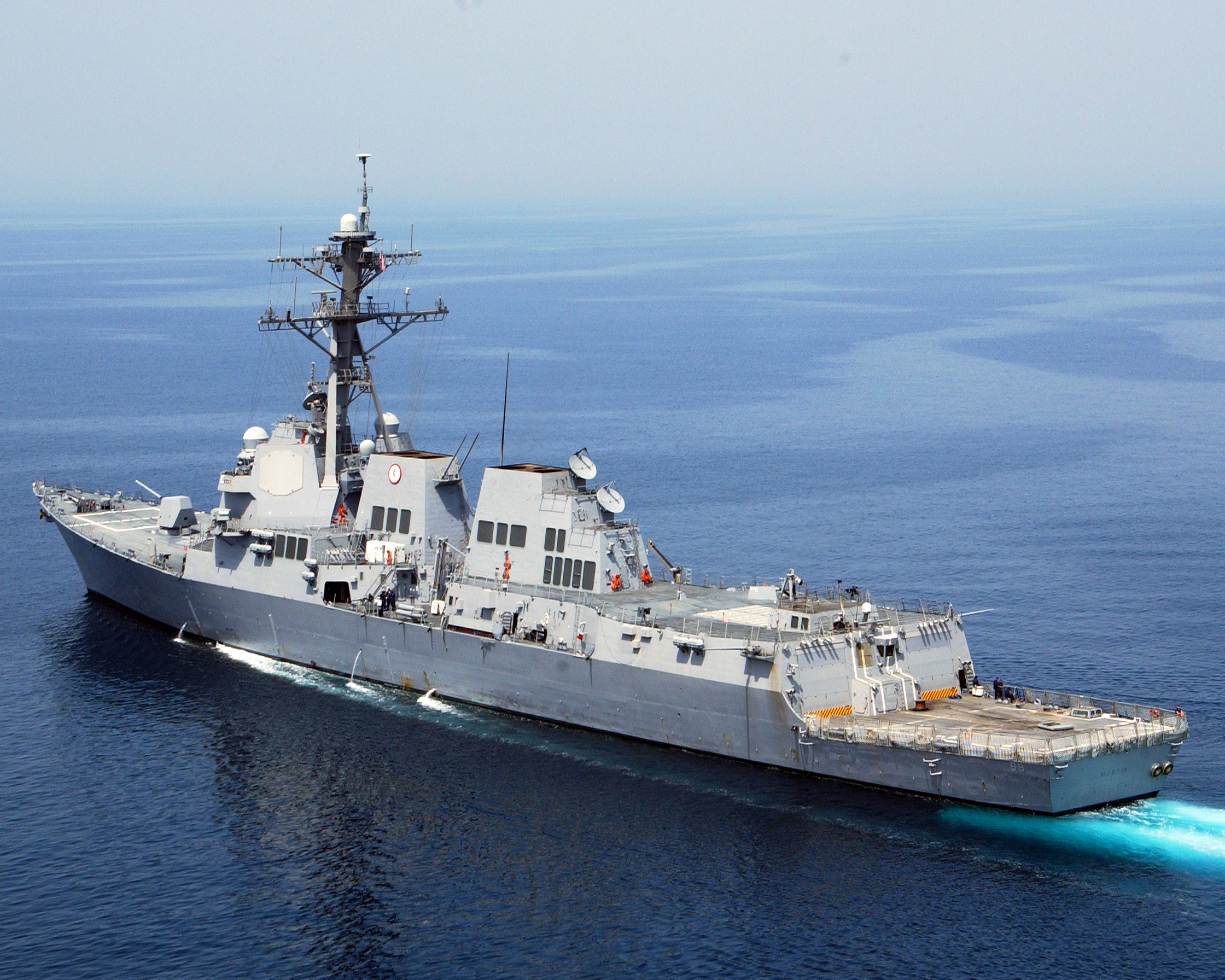
The blockade was first imposed on April 13, lifted on June 18 under a draft memorandum of understanding, and reimposed on July 14. Iranian ports have been blockaded for approximately 195 days in total, according to CENTCOM and RFE/RL. Kazem Gharibabadi, Iranian Deputy Foreign Minister, said Iran would take “whatever measures are necessary” to break the blockade, gCaptain reported. IRGC spokesman Hossein Mohebbi said on November 19 that Iran would not accept the continued naval, land, and air blockade, according to RFE/RL.
Frequently Asked Questions
What is AIS and why can it be spoofed?
The Automatic Identification System is a tracking technology required on all commercial vessels over 300 gross tonnes under international maritime law. Ships broadcast their position, speed, heading, and identity via VHF radio signals that are received by coastal stations and satellites. Because AIS relies on self-reported data transmitted over open radio frequencies, a bad actor can broadcast false information — fabricating a vessel’s position, identity, or even its existence — using relatively inexpensive radio equipment. The IMO and flag states have no real-time authentication mechanism to verify that an AIS signal comes from the vessel it claims to represent.
Has AIS spoofing been used before in the Hormuz region?
Yes. Maritime security analysts have documented AIS manipulation in the Persian Gulf for years, primarily by Iranian-linked tankers attempting to disguise their origin or destination to evade sanctions. Common techniques include “going dark” (switching off transponders entirely), “flag-hopping” (changing the reported flag state mid-voyage), and “location spoofing” (broadcasting a false position). The Khat Shekan case was unusual because it involved fabricating an entirely fictional vessel rather than disguising a real one.
What did the November 18 JMIC expansion change for non-Iranian ships?
Before November 18, the JMIC’s interdiction authority applied primarily to vessels that had entered Iranian waters or departed from an Iranian port. The expansion made the enforcement boundary follow the cargo rather than the geography: a third-country tanker that loaded Iranian crude via a ship-to-ship transfer in the Gulf of Oman — without ever calling at an Iranian port — is now legally subject to the same stop, board, divert, or capture procedures as a vessel caught leaving Bandar Abbas. The expansion targeted the tactic UANI documented as most effective: of the nine tankers that evaded the blockade since July, ship-to-ship transfers in the Gulf of Oman outside the original interdiction perimeter had been a primary method, according to UANI.
What are Iran’s stated conditions for reopening Hormuz?
Iran has demanded the lifting of US sanctions, the end of the naval blockade, and implementation of commitments from the Islamabad MOU — a draft agreement reached during earlier negotiations. Trump declared the Islamabad MOU null and void. Iran’s foreign ministry declared the MOU dead on November 22, while signalling openness to a new framework.
How much of the world’s oil normally transits the Strait of Hormuz?
Before the Iran conflict, approximately 20 to 21 million barrels of oil per day — roughly a fifth of global oil consumption — transited Hormuz daily. The Joint Maritime Information Center set the pre-conflict baseline at about 138 commercial vessel transits per day. Because the strait is the only exit route from the Persian Gulf, that baseline captures Saudi, Iraqi, Kuwaiti, Emirati, and Qatari exports as well as Iranian volumes — making every disruption a shared regional cost, not only an Iranian one.
The House of Saud Daily Briefing
Saudi Arabia's news in 3 minutes, every morning. Free. See today's issue