RIYADH — Saudi Arabia’s merchandise trade surplus jumped 74.5% year-on-year to SR41.36 billion ($11.02 billion) in September, the General Authority for Statistics (GASTAT) reported on Wednesday. Oil exports rose 25.6% in value in a month when the kingdom’s main export pipeline sat idle for 10 days, because Brent crude climbed above $108 a barrel just as the oil started flowing again.
The headline number looks like a recovery. The Ministry of Finance’s own figures say otherwise: oil revenue fell 23% year-on-year in the third quarter to SAR 116.5 billion, the lowest quarterly oil take since 2020, and the nine-month budget deficit of SAR 244.31 billion has already overshot the full-year target of SAR 165.4 billion. September was a photograph of a good fortnight, and Brent has since fallen below $89.
The House of Saud Daily Briefing
Saudi Arabia's news in 3 minutes, every morning. Free. See today's issue
Table of Contents
- What Did GASTAT Report for September 2026?
- Why Did Oil Exports Rise While the Pipeline Was Shut?
- Non-Oil Exports and Re-Exports Fall Through October
- Why Is the Budget Deficit Widening as the Trade Surplus Grows?
- Fourth-Quarter Oil Revenue Forecasts Rest on $105 Brent
- Background: The Pipeline, the War and the 2026 Budget
- Frequently Asked Questions
What Did GASTAT Report for September 2026?
Total merchandise exports reached SR115.5 billion in September, up 14.2% on the same month last year, according to GASTAT data reported by Economy Middle East. Imports fell 4.3% to SR74.13 billion. The gap between the two is the SR41.36 billion surplus, and both sides of the ledger moved in the kingdom’s favour at once.
Oil did the heavy lifting. Crude and refined product exports rose 25.6% year-on-year in value, and oil’s share of total exports climbed from 68.6% in September 2025 to 75.4% this September, Sabq reported from the GASTAT release. Three of every four riyals Saudi Arabia earned abroad in September came from oil, a higher dependence than a year ago, not a lower one.
The month-on-month swing was violent. GASTAT’s August release put that month’s surplus at SR15.59 billion ($4.16 billion), 21% below August 2025, as pipeline attacks cut the volume of oil the kingdom could sell. September’s surplus was more than double that figure. GASTAT flags every 2026 number as preliminary, so both months remain open to revision.
| Indicator | September 2026 | Change vs September 2025 |
|---|---|---|
| Trade surplus | SR41.36 billion ($11.02 billion) | +74.5% |
| Total exports | SR115.5 billion | +14.2% |
| Imports | SR74.13 billion | -4.3% |
| Oil exports (value) | 75.4% of total exports | +25.6% (share up from 68.6%) |
| Non-oil exports incl. re-exports | n/a | -10.8% |
| National non-oil exports excl. re-exports | n/a | -4.6% |
| Memo: August 2026 surplus | SR15.59 billion ($4.16 billion) | -21% vs August 2025 |
Asia bought most of it. South Korea was the top destination for Saudi exports in September at 18.9% of the total, followed by India at 14.3% and China at 12.9%, according to Arab News. Those three refining markets took almost half of everything the kingdom shipped, so September’s windfall depended largely on Asian refiners paying war-premium prices.
Why Did Oil Exports Rise While the Pipeline Was Shut?
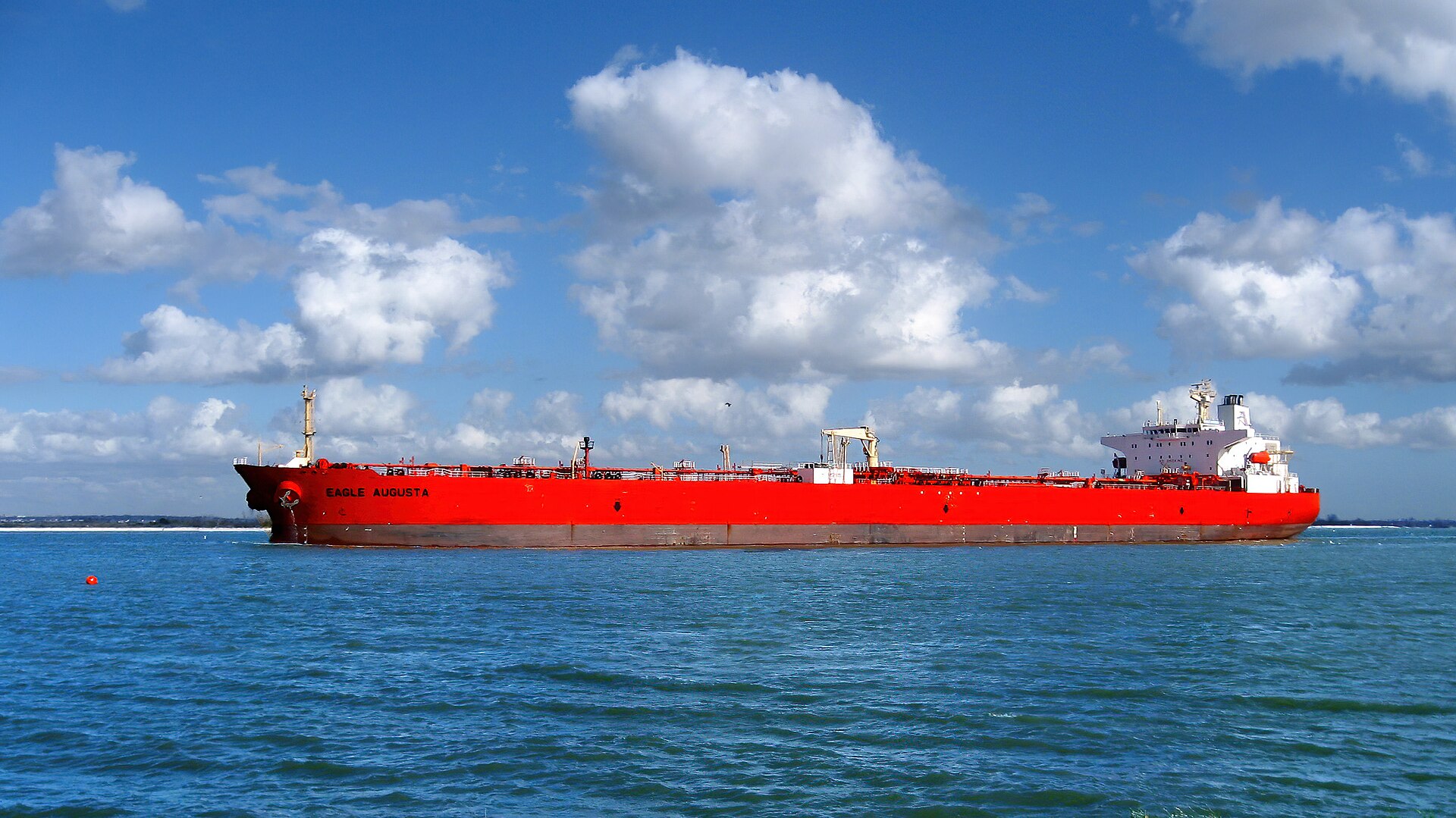
The East-West pipeline, which carries crude from the Eastern Province to the Red Sea port of Yanbu and away from the Strait of Hormuz, was suspended on September 11 by drone attacks from Iraq and restarted on September 22, according to Saudi Gazette via Zawya and Reuters. For 11 of September’s 30 days, the kingdom’s escape route from Hormuz was closed. A month with a third of its days lost to a shutdown should have produced weak export numbers.
Price rescued it. Brent topped $108 a barrel on September 24, two days after the restart, Al Jazeera reported. During the shutdown itself, higher prices partly made up for the lost barrels. That means the volume picture was worse than the trade balance suggests: Saudi Arabia shipped fewer barrels and was paid more for each one.
Aramco chief executive Amin Nasser offered reassurance as the pipeline came back. Speaking on September 25, he said disruptions of this kind typically last “days, not weeks or months,” according to Zawya.
Disruptions typically last days, not weeks or months.— Amin Nasser, President and CEO, Saudi Aramco, via Zawya, September 25, 2026
Two months later, that forecast has not held. Aramco’s nine-month output is down 13.7% and Yanbu is still loading below 3 million barrels per day as pipeline attacks continue. Nasser’s “days” have become a full quarter.
The company’s own pricing shows how much the war premium mattered. Aramco’s average realized price in the third quarter was $95.20 a barrel, according to Niche Financial Markets and Saudi Gulf Projects. Late September, with Brent above $108, was the top of that range, and the September trade data captured it at its peak.
Non-Oil Exports and Re-Exports Fall Through October
Strip out oil and September looks like a contraction. Non-oil exports including re-exports fell 10.8% year-on-year, The Edge reported from the GASTAT data. National non-oil exports, which exclude goods passing through Saudi ports on their way elsewhere, fell 4.6%.
That second number matters more. National non-oil exports measure what Saudi factories, petrochemical plants and farms actually sell abroad, the part of the economy built to outlast oil. It shrank in a month when the oil line grew by a quarter, which is why oil’s share of exports rose by almost 7 percentage points.
October is worse. GASTAT’s preliminary October release, published alongside the September figures, shows non-oil exports of SAR 29.0 billion, down 14.8% year-on-year, The Edge reported. Re-exports fell to SAR 10.4 billion, a 29.5% drop, as goods that once moved through Saudi logistics hubs found other routes or stopped moving.
Imports fell too. October imports dropped 11.0% to SAR 73.7 billion, a steeper decline than September’s 4.3%. Falling imports flatter the trade balance, but they are consistent with weakening domestic activity: fewer machines, fewer materials and fewer consumer goods coming into a wartime economy.
GASTAT has not yet published October oil exports, so no October surplus can be calculated. What the preliminary data does show is the non-oil half of the ledger shrinking faster each month, and the trade surplus relying even more on a single commodity whose price has since fallen sharply from its September peak.
Why Is the Budget Deficit Widening as the Trade Surplus Grows?
The Ministry of Finance’s third-quarter budget statement, released on November 3, recorded a deficit of SAR 84.3 billion for July through September, according to Saudi Gazette. Oil revenue for the quarter was SAR 116.5 billion, down 23% year-on-year and the lowest quarterly oil receipts since 2020. The same quarter that ended with a 74.5% trade surplus jump delivered the state its thinnest oil income in six years.
The two sets of numbers measure different things. The trade data counts the value of every barrel shipped across the border; the budget counts what reaches the treasury, which arrives mainly through Aramco’s payments to the government. Monica Malik, chief economist at Abu Dhabi Commercial Bank, said the shortfall matched those payments rather than the market.
The oil revenue surprised to the downside in the third quarter, given the oil market fundamentals, though [it] is in line with the Aramco payments to the government.— Monica Malik, Chief Economist, ADCB, to Bloomberg, November 3, 2026
Aramco itself is not short of money. The company reported third-quarter adjusted net income of about $31.2 billion, up roughly 9% year-on-year, according to Saudi Gazette and Gulf Business. Its upstream earnings before interest and tax, the part that pumps and sells crude, fell to $46.8 billion year-on-year, a sign that lost volumes hurt even as prices rose.
The cumulative damage is already done. The nine-month deficit reached SAR 244.31 billion, according to AGBI, beyond the SAR 165.4 billion the government budgeted for the entire year. Reuters, via Zawya, reported on September 30 that the full-year deficit was estimated at SAR 245 billion, against an original budget of SAR 165 billion. Nine months in, the kingdom is within SAR 1 billion of that full-year estimate, which leaves the fourth quarter almost no room for any further gap.
Malik forecasts a 2026 deficit of 5.6% of GDP. Tim Callen, the former International Monetary Fund mission chief for Saudi Arabia, puts it near 6%, AGBI and Bloomberg reported. The government revised its 2026 GDP estimate to a 2.1% contraction from 3.6%, The National reported on November 24, but a smaller economy still makes any deficit a larger share of output.
Fourth-Quarter Oil Revenue Forecasts Rest on $105 Brent
Not every economist sees the deficit getting worse. Callen expects oil revenue to “rebound strongly” in the fourth quarter, AGBI and Bloomberg reported. If government receipts follow Aramco’s payments, as Malik said they did in the third quarter, the high prices of late September could still reach the treasury in the final three months of the year.
Mohamed Abu Basha of EFG Hermes put a figure on it. He estimated an extra $8 billion in oil revenue across October and November if exports held and Brent stayed near $105 a barrel, AGBI reported. Both conditions have since failed.
Brent has posted three consecutive weekly losses and fell to around $89 a barrel on November 23, the lowest level since August. That is roughly $16 under the price behind Abu Basha’s estimate and about $19 below the September 24 peak. Every dollar lost on a barrel comes off the revenue the fourth-quarter rebound was supposed to deliver.
Exports have not held either. Yanbu remains below 3 million barrels per day, and the Eastern Province terminals face their own risk, with fresh drone attacks on Ras Tanura on Wednesday, the same day GASTAT released the September data. Callen’s rebound and Abu Basha’s $8 billion both depended on higher prices and steady exports, and Saudi Arabia currently has neither.
The September surplus therefore marks a high point rather than a new baseline. It came from a pipeline restart and a price spike landing in the same week, after an August surplus that had shrunk by 21%. Without the October oil figures, nobody outside GASTAT knows how much of that surplus survived into the autumn, but every input that produced it has moved in the wrong direction.

Background: The Pipeline, the War and the 2026 Budget
Saudi Arabia entered 2026 with a comfortable trade position. The first-half merchandise trade surplus reached SAR 154.72 billion, 53% above the first half of 2025, Saudi Gazette reported. That cushion was built before the attacks on the kingdom’s export infrastructure intensified over the summer.
The budget was written for a different year. The original 2026 plan set the deficit at SAR 165 billion. By September the government’s own estimate, as reported by Reuters, had risen to SAR 245 billion, and the third-quarter statement confirmed the gap had almost reached that level with a quarter still to run. The question for the next three months is not whether Saudi Arabia overshoots its budget, which it already has, but whether the fourth quarter adds to the overshoot.
Frequently Asked Questions
Is September 2026 the largest Saudi trade surplus in more than a year?
TradingEconomics described the September figure as a 16-month high. Most other outlets covering the GASTAT release either called it a six-month high or did not make a comparison, so the 16-month description should be read as TradingEconomics’ own assessment rather than a GASTAT statement.
Where does Saudi Arabia buy its imports from?
China was the largest source of Saudi imports in September 2026 at 24.9% of the total, according to Arab News. The United States was second at 8.2% and Egypt third at 6.2%, which means China supplied roughly three times as much as the next-largest supplier.
Does OPEC+ limit how much oil Saudi Arabia can export?
Saudi Arabia’s OPEC+ production target for November 2026 was 10.5 million barrels per day, Enerdata reported on October 4. Export volumes this autumn have been constrained more by attacks on pipelines and terminals than by the quota, with Yanbu loading below 3 million barrels per day.
How does the trade data affect the 2027 budget?
The Saudi cabinet approved the 2027 budget on November 24, including SAR 263 billion for defence. That spending will be funded largely by oil revenue that, on the third-quarter figures, is running well below last year’s level, and GASTAT’s preliminary 2026 trade figures may still be revised.
The House of Saud Daily Briefing
Saudi Arabia's news in 3 minutes, every morning. Free. See today's issue