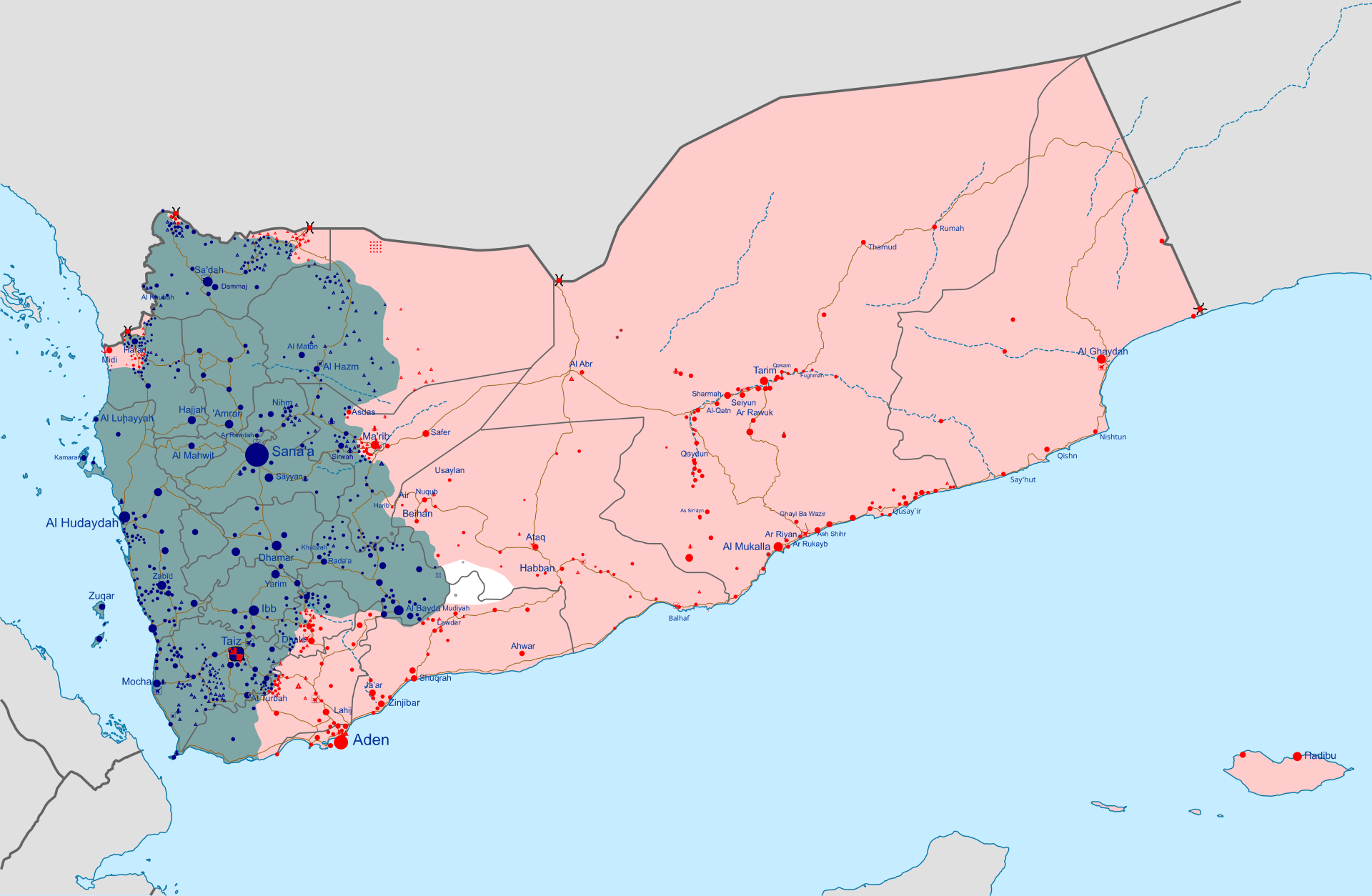
RIYADH — The Saudi-led coalition struck Houthi-held Sanaa on Thursday, launching airstrikes on the Yemeni capital two days after a Houthi drone struck a tower in Riyadh’s King Abdullah Financial District and wounded 11 people. An AFP journalist present in Sanaa reported columns of smoke rising in the vicinity of Sanaa International Airport, though neither the coalition nor Houthi authorities confirmed that the airport itself was targeted, and Houthi-aligned Al-Masirah TV reported strikes on a factory and warehouses in the northern Bani al-Harith district.
The choice of Sanaa — rather than the tactical logistics nodes at Hodeidah port that have absorbed most coalition ordnance since the summer — raises a pointed question about whether the Kingdom is prepared to bring sustained military pressure directly to the seat of Houthi political power. It came as the Houthis pushed their own attacks deeper into Saudi critical infrastructure on the same day, with spokesman Yahya Saree claiming a strike on the Ras Tanura refinery, Aramco’s largest, where CNN satellite imagery showed a large plume of black smoke rising from the peninsula.
The House of Saud Daily Briefing
Saudi Arabia's news in 3 minutes, every morning. Free. See today's issue
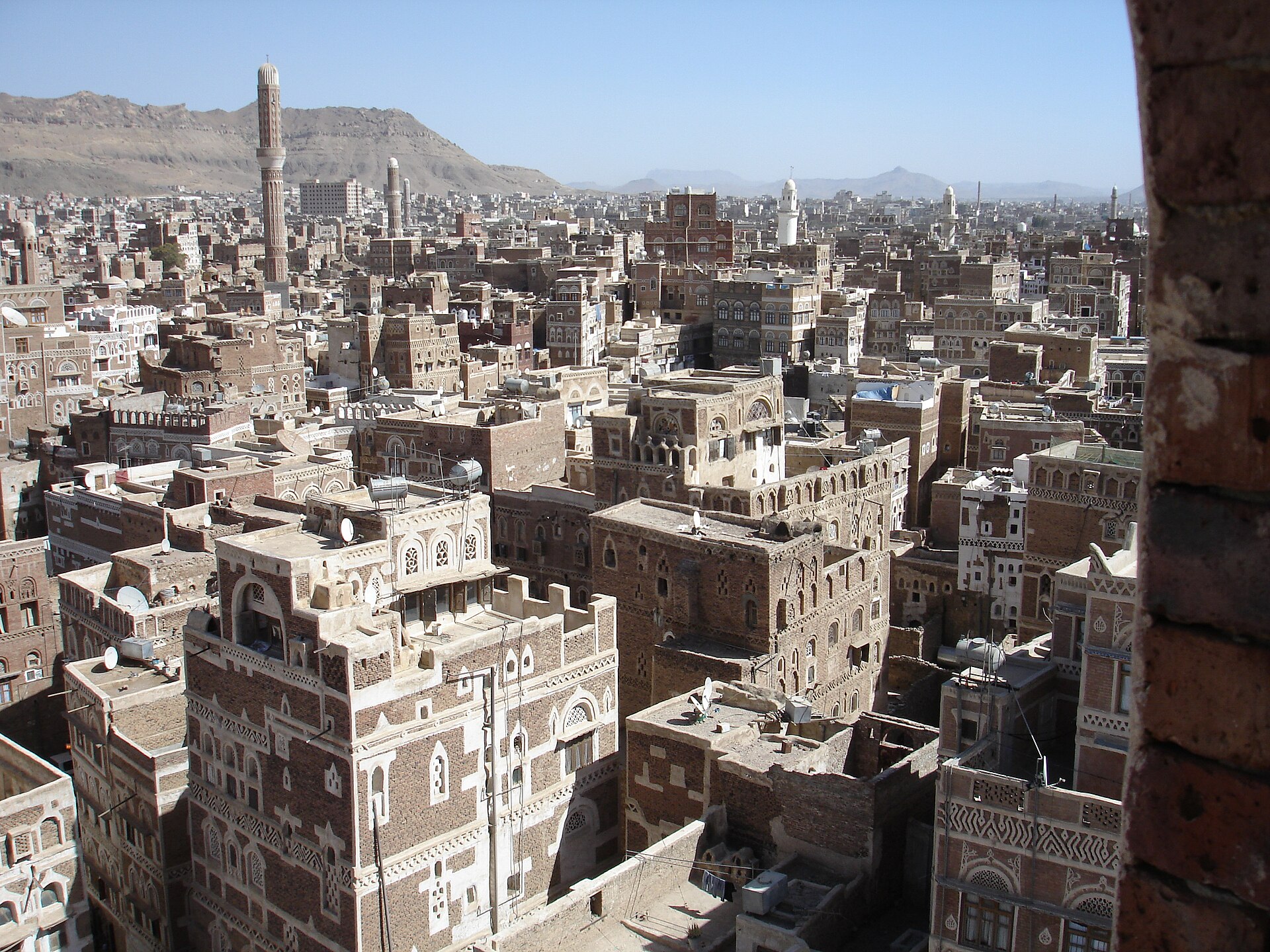
Table of Contents
What Was Targeted Inside Sanaa?
The coalition provided no official list of targets for Thursday’s airstrikes, and the picture that emerged from wire reports and Houthi media was fragmented at best. An AFP dispatch carried by Daily Sabah confirmed that strikes hit the Yemeni capital on November 26, with a Houthi press agency official telling the news agency that “the air force of the Saudi enemy that day launched a series of strikes at the capital, Sanaa.”
Houthi-aligned Al-Masirah TV went further, reporting that strikes hit “a factory and warehouses in Bani al-Harith” — a commercial and residential district in northern Sanaa — and naming the target as the shoe and textile factory of the Alyateem Development Foundation, according to the same AFP report. No independent confirmation of the target’s current operational use or the extent of damage was available; the coalition has previously described industrial sites in Sanaa as dual-use facilities when Houthi media characterised them as civilian targets.
The most recent coalition description of Sanaa targets came from spokesperson Turki al-Maliki on November 20, when he confirmed a “special operation” that hit “military targets [in Sanaa], including missile and drone facilities and a supply depot,” according to Al-Monitor. Whether Thursday’s strikes followed the same target set or expanded beyond it remains unclear without a formal coalition statement, but the absence of any mention of Hodeidah among Thursday’s targets — a facility the coalition struck just the day before — suggests the operation was calibrated for the capital specifically, in a week when the war reached Riyadh in a way that demanded a visible answer.
The KAFD Tower Attack That Drew Retaliation
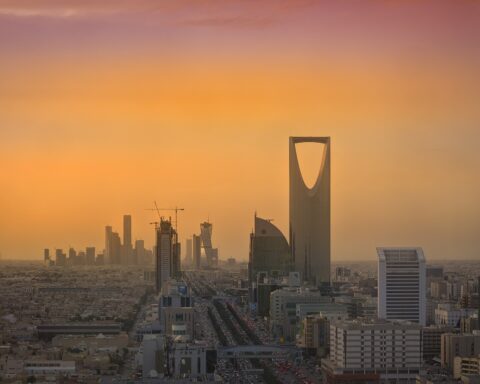
The immediate trigger was a Houthi drone attack on November 24 that struck a tower in Riyadh’s King Abdullah Financial District, wounding 11 people, according to The National. Coalition spokesperson Turki al-Maliki vowed “a firm response to the deliberate targeting of civilians and civilian objects,” in a statement carried by AFP and reported by Daily Sabah.
The KAFD district is a cluster of commercial towers in northern Riyadh that houses the headquarters of multiple Saudi financial institutions and forms part of the capital’s prestige commercial core. Saudi authorities say Houthi attacks on Saudi territory have killed 26 people since the conflict intensified, a cumulative toll cited in the Daily Sabah/AFP report — a measure of how deeply the war has reached into civilian life inside the Kingdom.

On the same day as the Sanaa strikes, the coalition reported intercepting 2 ballistic missiles aimed at Riyadh, 2 drones approaching the Eastern Province, a cruise missile heading toward western Saudi Arabia, and a drone over Jeddah port, according to The National. The sheer volume of incoming fire — attacks on the capital, the energy coast, the Red Sea coast, and the western region simultaneously — showed the Houthis launching across multiple Saudi fronts even as their own capital came under bombardment, a tempo of operations that has tested Saudi air defences daily through November.
Did Houthis Hit Saudi Arabia’s Largest Refinery?
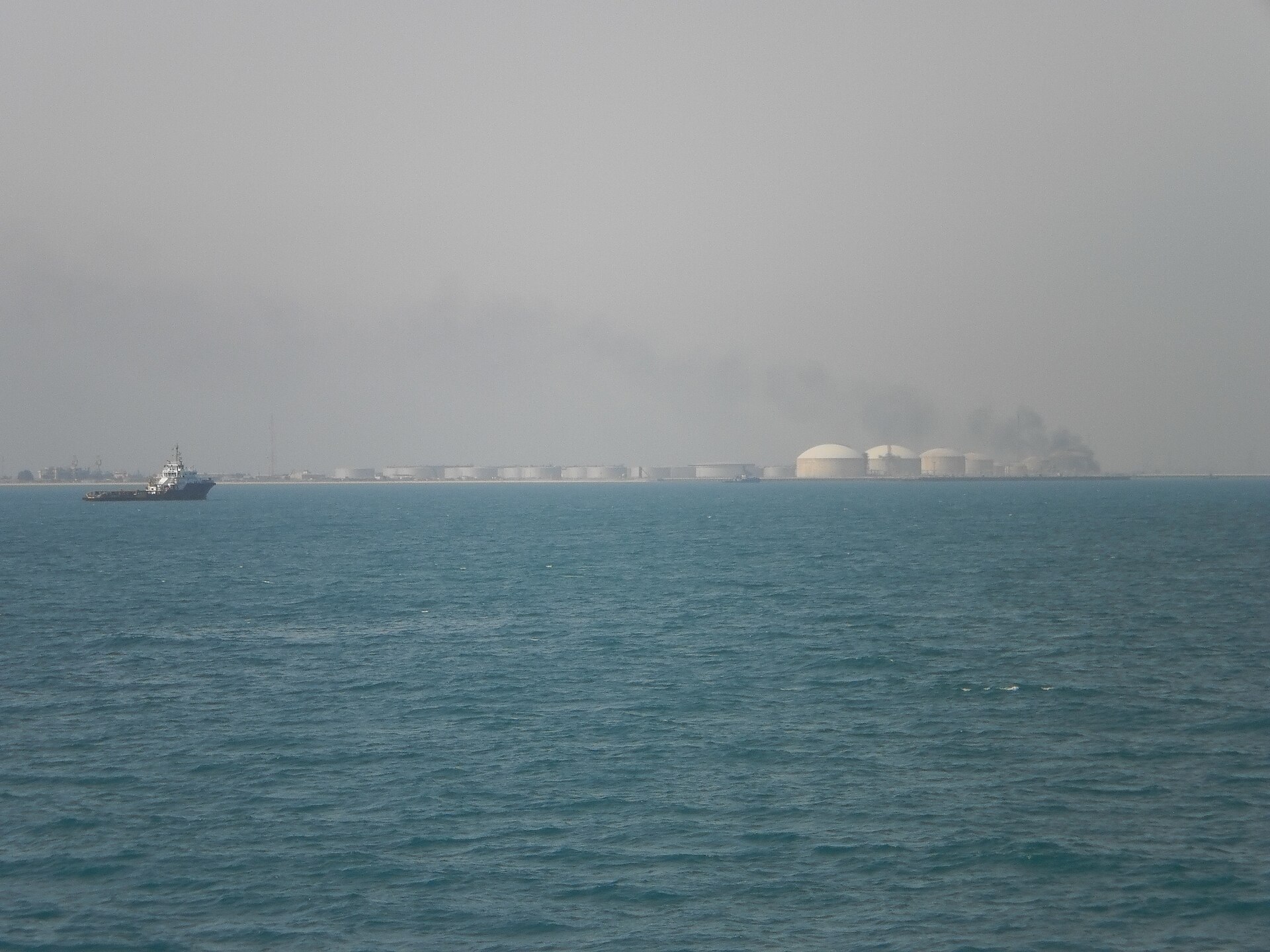
Hours before the coalition struck Sanaa, Houthi spokesman Yahya Saree claimed an attack on Aramco’s Ras Tanura refinery, the Kingdom’s largest with a processing capacity of 550,000 barrels per day, according to Al-Monitor. CNN reported that satellite imagery showed “a huge plume of black smoke” rising from the Ras Tanura peninsula on November 26, and a shipping source told the network that oil loadings at the terminal had been suspended.
The coalition said it had intercepted and destroyed 4 drones in the Eastern Province on the same day, according to The National, but did not confirm whether the refinery or its export terminal sustained damage. The gap between the Houthi claim, the visible smoke captured by satellite, and the coalition’s silence on the refinery’s condition leaves a question that matters well beyond the immediate conflict: whether Saudi Arabia’s oil export infrastructure has been compromised in a way the Kingdom has not yet acknowledged, or whether the interceptors caught the drones before impact and the smoke came from debris or a secondary source.
Ras Tanura is not merely a refinery — it is the terminal through which a substantial share of Saudi crude reaches global tanker routes, and the suspension of loadings, even as a precautionary measure, signals that the Houthi drone campaign has now reached the most sensitive node in Saudi energy infrastructure, following earlier interceptions near the same facility in recent days that showed the Houthis had already identified it as a priority target.
The Port-for-Port Doctrine
The Sanaa strikes unfolded against a backdrop of intensifying tit-for-tat attacks on port infrastructure along both the Red Sea and Gulf coasts. On November 25, the coalition struck Hodeidah port — the Houthi-held facility that serves as Yemen’s primary commercial and humanitarian gateway — and the Houthis responded by attacking Saudi Red Sea ports, with Houthi spokesman Yahya Saree saying the strikes were retaliation for the coalition’s attack on Hodeidah, according to The National.
Houthis claimed to have targeted both Jeddah port and Jazan port on the Saudi Red Sea coast — with no immediate confirmation that Jeddah port was hit — and a projectile did land at Jazan port, causing minor damage with no civilian casualties, according to The National. Anadolu Agency also reported the Jazan strike. The Houthi articulation of an explicit retaliatory formula — any strike on Hodeidah draws an immediate response on Saudi ports — represents an attempt to impose cost symmetry on the coalition, constraining its offensive options by tying every military action against Yemeni port infrastructure to a defensive consequence on Saudi soil.
That dynamic is what makes the coalition’s choice of Sanaa over Hodeidah on Thursday worth scrutiny. By hitting the capital rather than the port, the coalition may have been seeking to target assets the Houthis value politically — command infrastructure, weapons facilities, the machinery that sustains the drone and missile campaign — without triggering the cycle of port-for-port retaliation that has pulled Jeddah and Jazan into the firing line, though the Houthis’ attacks on Saudi territory on the same day suggest any such calculation offers limited protection.
How Far Will Saudi Arabia Push Into Sanaa?
“Saudi Arabia faces no good options with the Houthis. Military escalation was inevitable and is likely to continue — but it will hurt Saudi Arabia more than the Houthis.”
Thomas Juneau, Chatham House — Jerusalem Post, October 2026
Thomas Juneau, a Chatham House analyst, made that assessment six weeks before Thursday’s strikes in an October analysis for the Jerusalem Post, and it reads like a forecast of exactly what unfolded. “The Houthis hold stronger cards, and they know it; their goal will be to extract maximal concessions from Saudi Arabia, which remains reluctant to pay this very high price,” Juneau told the Jerusalem Post. The Houthis have shown they can absorb coalition airstrikes — the decade-long Saudi-led intervention that began in 2015 never dislodged them from Sanaa — while continuing to extend their own reach into Saudi territory with attacks on Riyadh’s financial district and claimed strikes on the Kingdom’s largest refinery.
The coalition’s most recent acknowledged Sanaa operation, on November 20, targeted missile and drone facilities and a supply depot, according to Turki al-Maliki’s statement to AFP reported by Al-Monitor. If Thursday’s strikes followed a similar profile, they represent a continuation of a campaign to degrade Houthi launch infrastructure in the capital — a military objective with operational logic, even if its effectiveness against a dispersed, mobile arsenal remains an open question. No confirmed casualty figures for the November 26 Sanaa strikes were available at the time of publication.
On the same day, the United Kingdom sanctioned the Houthis and 4 senior Houthi leaders, a move described by analysts as “symbolic,” according to Al Jazeera. The sanctions underscored the international isolation of the Houthi movement but offered nothing resembling a mechanism for altering the military balance on the ground, where the cycle of strikes and counter-strikes has accelerated through November — and where the strikes on Sanaa now represent the coalition’s most direct attempt to pressure the Houthi leadership itself.
Background: The November Escalation
The escalation through November has followed a pattern of expanding target sets on both sides, moving progressively from military and logistics infrastructure toward the commercial and energy assets that underpin both economies. Coalition airstrikes expanded from Hodeidah port and Saada governorate into Sanaa itself from mid-November, as the Houthis simultaneously pushed their drone and missile campaign deeper into the Saudi interior.
Houthi attacks have made a parallel shift, moving beyond ballistic missiles aimed at Saudi military installations toward strikes on the Kingdom’s commercial and energy infrastructure deep inside its borders. The KAFD tower attack on November 25 and the claimed Ras Tanura refinery strike on November 26 represent the most penetrating Houthi operations of the current escalation, reaching the financial centre of the Saudi capital and the country’s largest refinery complex in a single 48-hour window. Saudi diplomatic efforts to marshal international support against the Houthi threat have continued alongside the military campaign, though neither track has yet slowed the tempo of attacks.
Houthis claimed 105 coalition airstrikes on Sanaa and 10 governorates on November 25 alone, according to Al Jazeera — a Houthi-sourced figure that, if even approximately accurate, would mark one of the most intensive coalition bombing days since the war’s early months, though independent verification of strike counts inside Houthi-held territory remains effectively impossible. The Saudi July 2026 strike on Sanaa airport was cited by the Jerusalem Post’s Seth Frantzman as a renewed escalation trigger in an October 13 analysis, and what has followed since — a widening of target sets on both sides, an explicit Houthi retaliatory doctrine, and attacks on infrastructure that the previous decade of war had largely left intact — means the coalition is now targeting Sanaa on days when Sanaa is targeting Riyadh, with neither side showing any inclination to stop first.
Frequently Asked Questions
Was Sanaa International Airport confirmed struck on November 26?
No confirmation has been issued by either side. An AFP journalist in Sanaa reported seeing smoke in the vicinity of the airport, but neither the coalition nor Houthi authorities stated that the airport itself was hit. The distinction matters because the coalition struck Sanaa airport in July 2026, an attack cited by the Jerusalem Post’s Seth Frantzman as a renewed escalation trigger — Thursday’s smoke near the airport raised immediate questions about a repeat, but whether it indicated a near-miss, intercepted debris, or a strike on adjacent facilities remains unresolved.
What is the Alyateem Development Foundation?
Al-Masirah TV named “the shoe and textile factory of the Alyateem Development Foundation” as one of the sites struck in Bani al-Harith, as reported by AFP and carried by Daily Sabah. The foundation is a Yemeni charitable and development organisation; no independent confirmation of the facility’s current operational use or the extent of damage was available at the time of publication, and the coalition has previously described industrial facilities in Sanaa as dual-use sites when Houthi media characterised them as civilian targets.
What does the suspension of oil loadings at Ras Tanura mean?
A shipping source told CNN that oil loadings at the Ras Tanura terminal were suspended on November 26 following the Houthi claimed attack. The terminal handles both refined products from the adjacent 550,000 bpd refinery and crude oil destined for export tankers — any prolonged disruption would affect tanker scheduling across the Gulf and could register in spot oil markets within days, particularly given the existing strain on Gulf shipping from the broader Hormuz tensions. The coalition destroyed 4 drones in the Eastern Province but has not confirmed or denied damage to the facility.
What do the UK sanctions on the Houthis involve?
On November 26, the United Kingdom sanctioned the Houthi movement and 4 senior Houthi leaders, according to Al Jazeera. Standard UK sanctions mechanisms include asset freezes and travel bans, though analysts described this package as “symbolic” — the Houthis have minimal financial exposure to the UK banking system, and existing international sanctions, including those imposed by the UN Security Council, have had no measurable effect on the group’s military capacity or willingness to escalate attacks on Saudi targets.
Have coalition airstrikes on Sanaa stopped Houthi attacks before?
Not in any sustained way. The Saudi-led intervention that began in 2015 included repeated campaigns targeting Sanaa without dislodging the Houthis from power or degrading their military capacity to the point of collapse. As Thomas Juneau assessed in October 2026, the Houthis hold stronger strategic cards and are positioned to extract maximal concessions — an assessment borne out by the tempo of their attacks through November. The current campaign focuses on a narrower objective — degrading missile and drone launch infrastructure rather than seeking regime change — but the Houthis’ dispersed, mobile arsenal has historically proven resilient to air campaigns.
The House of Saud Daily Briefing
Saudi Arabia's news in 3 minutes, every morning. Free. See today's issue