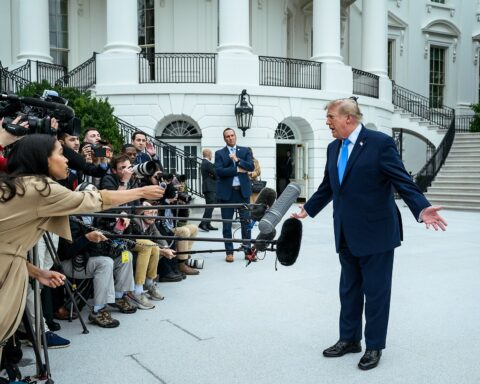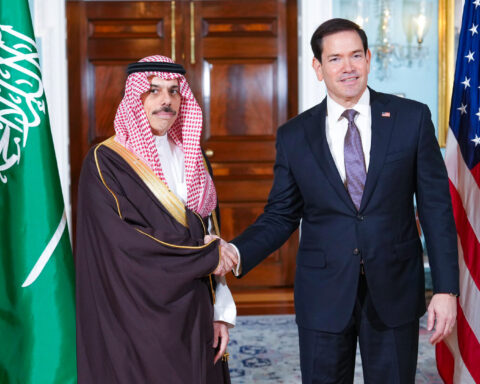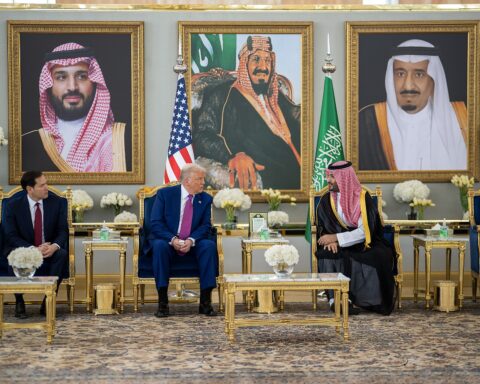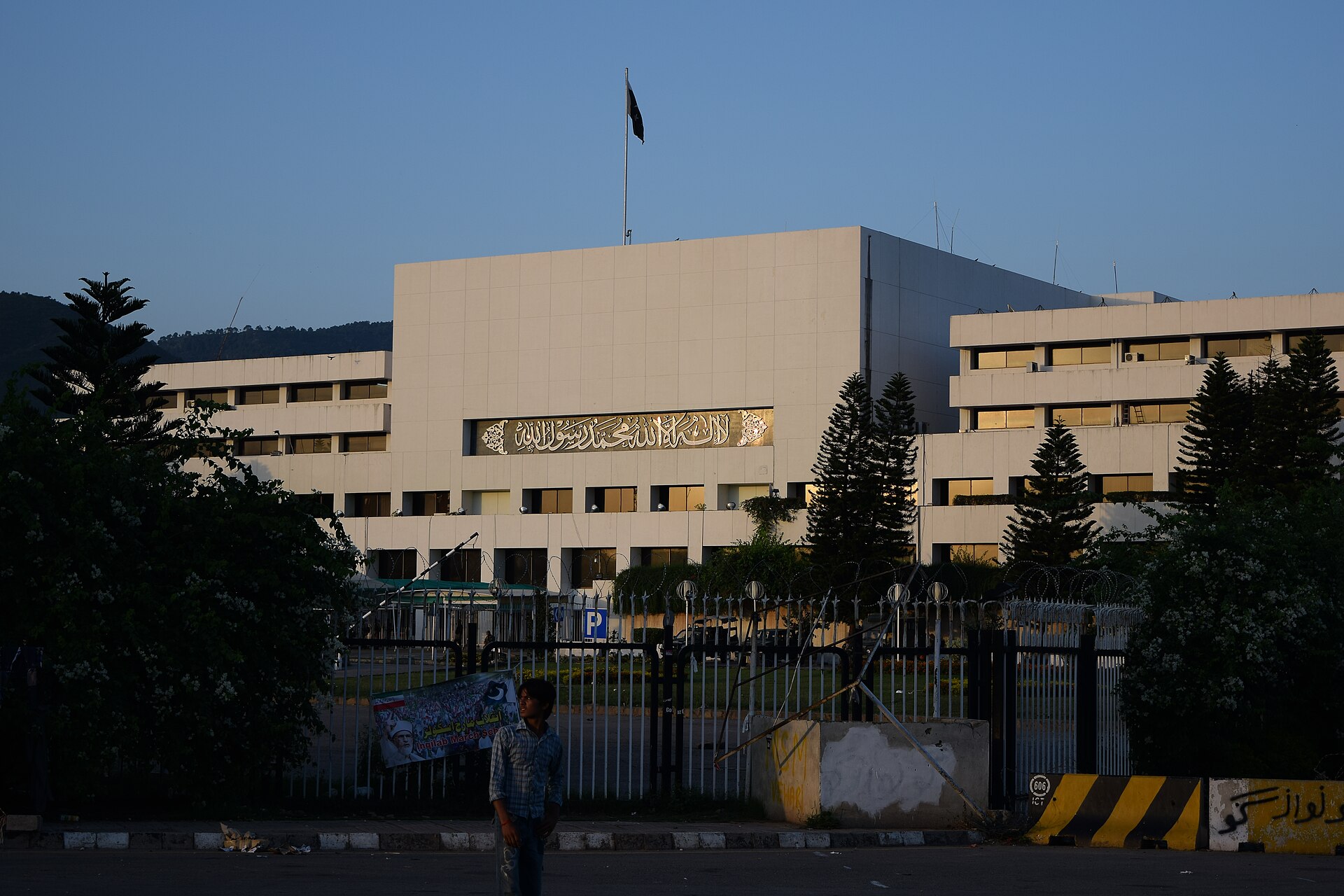

ISLAMABAD — Iran’s foreign minister Abbas Araghchi landed at Nur Khan airbase late Friday carrying what Pakistani officials described as a written “roadmap” of formal conditions for ending the 57-day war — and what Tehran’s own spokespeople insisted was nothing more than bilateral observations to be conveyed to Islamabad, not to Washington. The gap between what Tehran says publicly and what Pakistan is physically carrying to the American side has become the defining feature of what the Supreme National Security Council’s own media organ, Nournews, has openly branded “asymmetric diplomacy — the art of statecraft in an unequal world.”
Hours later, White House envoys Steve Witkoff and Jared Kushner boarded their own flight to Pakistan for what press secretary Karoline Leavitt called “direct talks — intermediated by the Pakistanis,” a description Iran’s foreign ministry had already pre-emptively denied. The two delegations are now in the same country, on the same weekend, negotiating the same war — through a government that both sides insist is merely a listener.
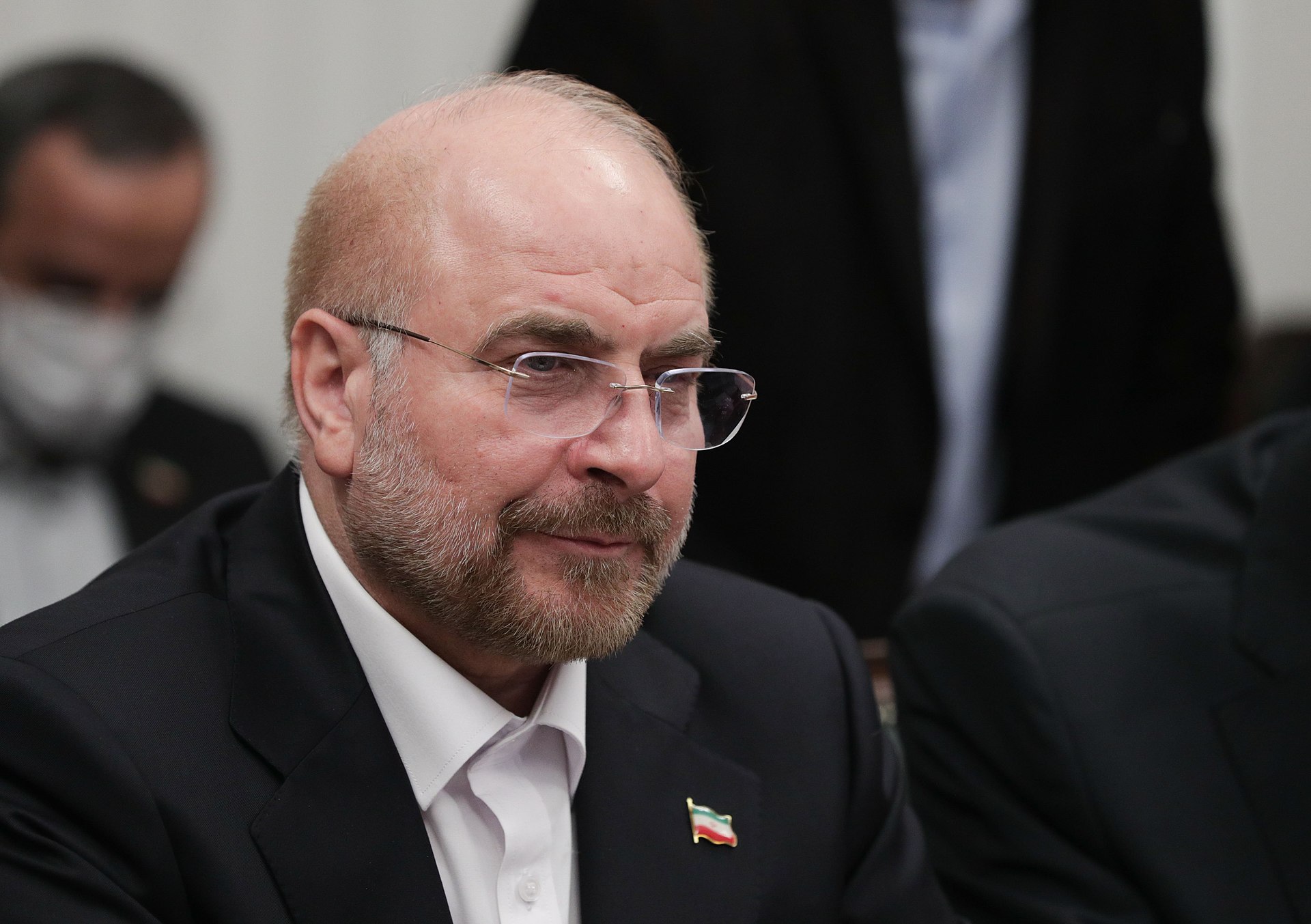
What Araghchi brought to Islamabad is structurally different from the 21-hour marathon of Round 1 on April 11-12, when 70 Iranian delegates sat across from a 300-member US team led by Vice President JD Vance. This time, Vance is “on standby,” according to US officials cited by Breitbart and the Washington Post, because his Iranian counterpart — Parliament Speaker Mohammad Bagher Ghalibaf — formally resigned from the negotiating delegation on April 24 after being reprimanded for exceeding his authorization. The resignation has narrowed Iran’s diplomatic bandwidth to a single authorized channel at the worst possible moment and raised the authorization ceiling problem — the structural disconnect between Iran’s elected officials and its IRGC military command — all over again.
What Did Iran Hand Pakistan, and Why Won’t Tehran Call It a Negotiation?
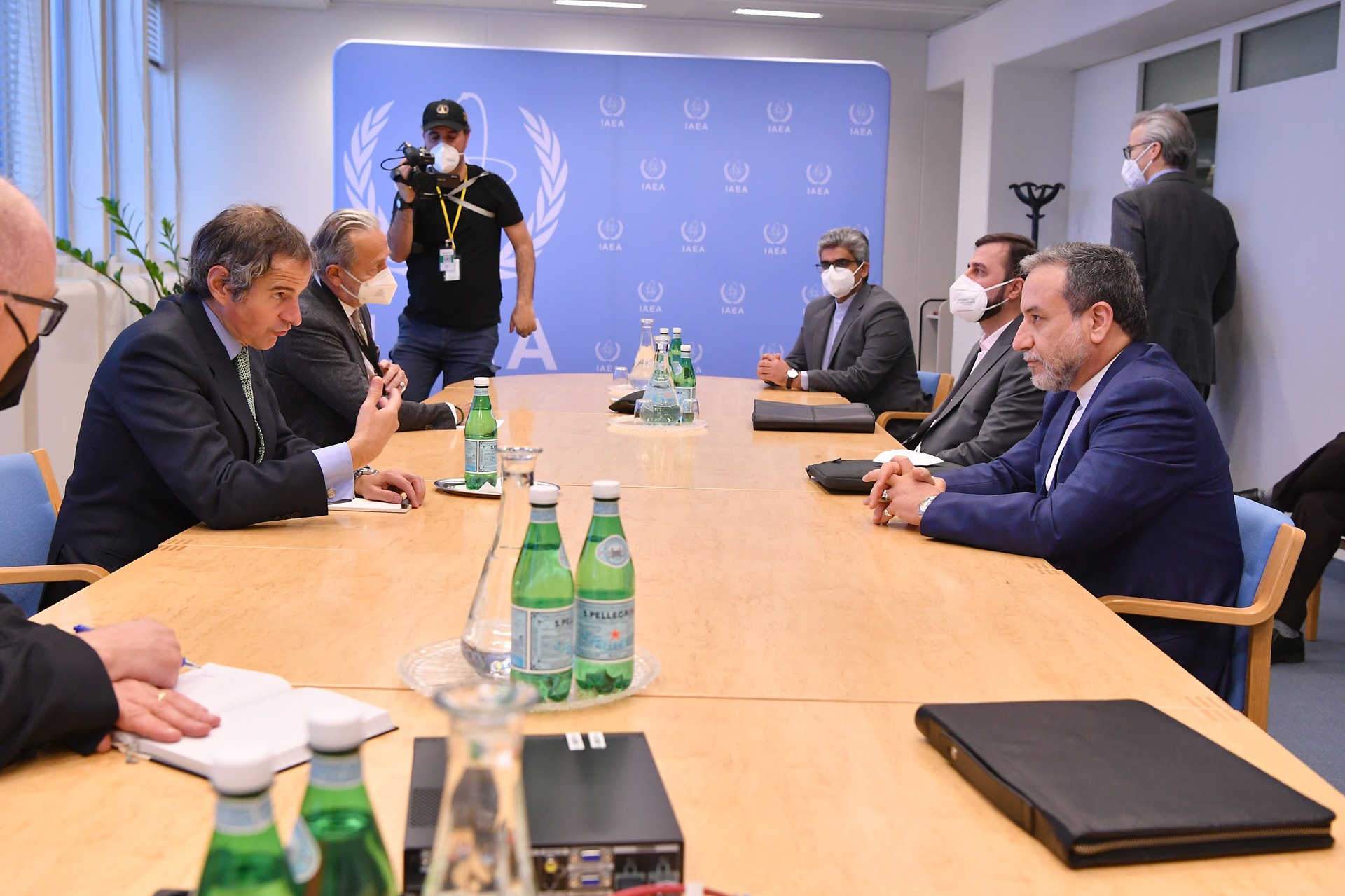
The choreography of denial was precise. Iranian Foreign Ministry spokesperson Esmaeil Baghaei posted on X on April 24 that “no meeting is planned to take place between Iran and the US” and that “Iran’s observations would be conveyed to Pakistan.” Tasnim News Agency, the semi-official outlet aligned with the IRGC, echoed the line nearly verbatim: “Currently there are no negotiations with the Americans on the agenda, and Mr. Araghchi’s trip to Islamabad is not for negotiations with the Americans but rather to discuss Iran’s considerations about ending the war with the Pakistani side.” IRNA, the state wire service, framed the visit as “bilateral in nature — to speak with Pakistani officials, rather than for talks right away with the US.” Nournews, affiliated with the Supreme National Security Council, confirmed Iran would not hold talks with Americans in Islamabad.
Araghchi himself described his purpose as “closely coordinating with our partners on bilateral matters and consulting on regional developments,” according to TRT World. Yet the document he carried — a written roadmap of Iran’s conditions — is addressed to a problem that has no bilateral dimension. Iran’s 10-point framework, submitted before Round 1, includes demands for US non-aggression commitments, the lifting of all primary and secondary sanctions, termination of all UNSC and IAEA resolutions against Iran, recognition of Iranian sovereignty over Hormuz, and withdrawal of US military forces from the region. None of these are matters between Tehran and Islamabad. Pakistan is the envelope, not the recipient.
The deniability serves a domestic audience that Nournews itself has defined. By framing Pakistan as “a regulating tool in the power game,” the SNSC-aligned outlet articulated what the IRGC requires: the ability to claim, should talks fail, that Iran never negotiated with Washington, and should they succeed, that Iran extracted concessions without the indignity of direct engagement. The architecture of denial makes every outcome attributable to Pakistan rather than to Tehran — a structural advantage that no Iranian negotiator inside the room could replicate.
The Middle East briefing 3,000+ readers start their day with.
One email. Every weekday morning. Free.
Why Does Ghalibaf’s Resignation Change Everything?
Ghalibaf’s departure from the negotiating team on April 24 is not merely a personnel change — it eliminates the only figure who bridged Iran’s civilian and military establishments at the table. Ghalibaf served as commander of the IRGC Aerospace Force from 1997 to 2000, giving him institutional credibility with the Revolutionary Guards that Araghchi, a career diplomat, does not possess. His resignation came after what Iran International reported as a formal reprimand for including the nuclear energy issue in negotiation axes — a decision that apparently exceeded the authorization granted by the Supreme National Security Council, whose hard-line bloc is dominated by Ahmad Vahidi, the same figure President Masoud Pezeshkian publicly named on April 4 as a ceasefire wrecker alongside Khatam al-Anbiya commander Abdollahi.
The practical consequence is that Vance, who led the US side in Round 1, now has no counterpart. The White House confirmed through US officials that the vice president remains “on standby” specifically because Ghalibaf stepped aside. Witkoff and Kushner, who served as supporting negotiators in the first round, have been elevated to lead a process that Iran insists is not happening. The asymmetry is deliberate: Iran has downgraded its representation to a foreign minister while denying the talks exist, while the US has replaced its vice president with envoys whose mandate — according to Leavitt — includes “direct talks.” The mismatch in both personnel and framing guarantees that any agreement will face the same authorization ceiling that collapsed the second round attempt, when Iranian negotiators simply failed to appear.
Under Article 110 of Iran’s constitution, the president has zero authority over the IRGC. Mojtaba Khamenei, operating as supreme leader, has communicated only via audio messages and has not appeared publicly in over six weeks. Pakistan Prime Minister Shehbaz Sharif publicly thanked Khamenei’s office for dispatching a “high-ranking delegation” — a detail that confirms a direct channel to the Supreme Leader’s office bypassing the Foreign Ministry, but reveals nothing about whether that channel carries authorization to agree to anything the Americans would accept.
What Is Pakistan’s Structural Position as Mediator?
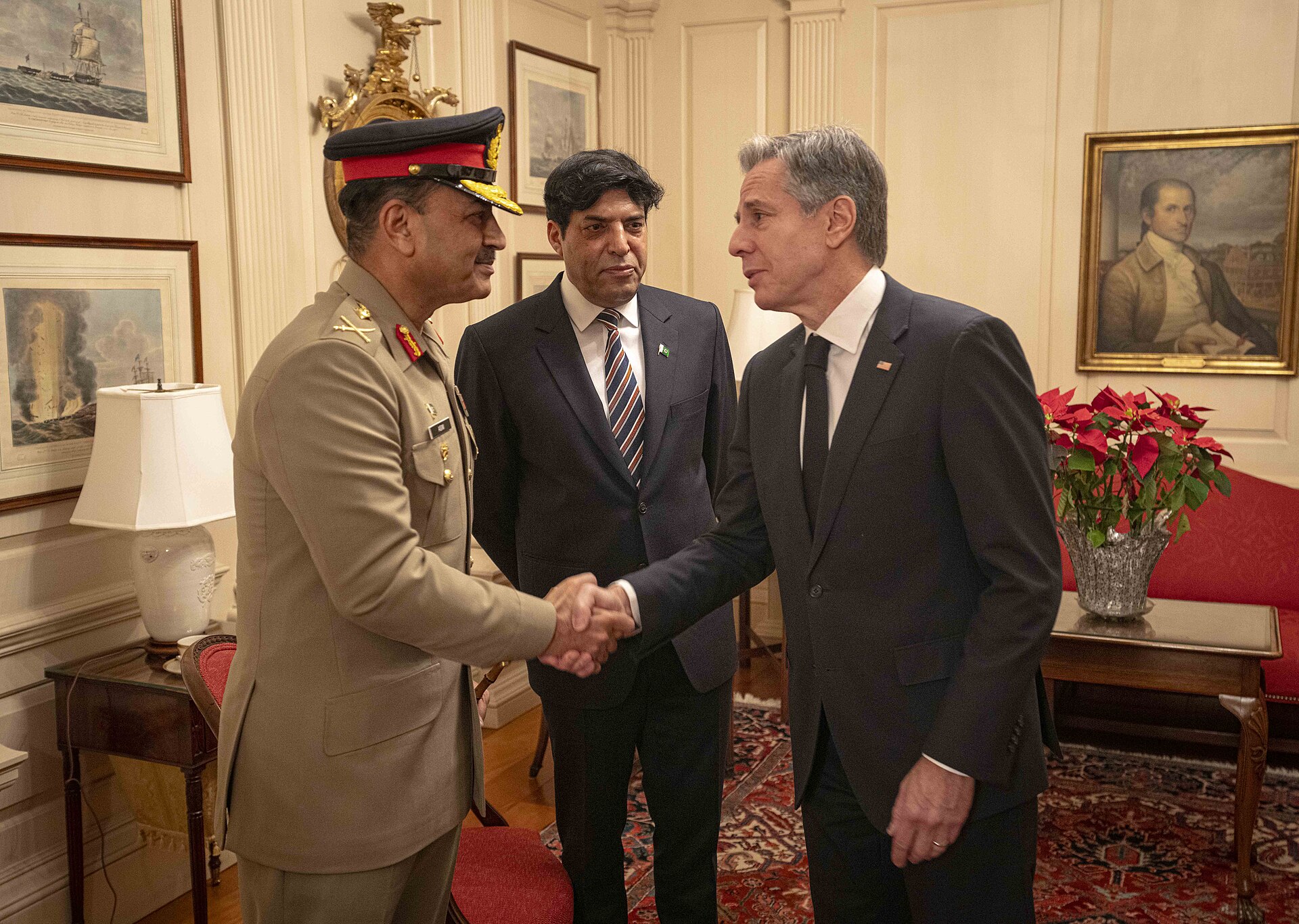
Pakistan FM Ishaq Dar received Araghchi at Nur Khan airbase alongside Army Chief Field Marshal Asim Munir, a pairing that reflects the operational reality of who runs Pakistan’s ceasefire diplomacy. The 27th Constitutional Amendment, passed in 2025, concentrated foreign policy authority in the military establishment, making this mediation Munir’s operation rather than the elected government’s. A senior Pakistani official told Voice of Emirates on April 25 that “there is a high likelihood of a breakthrough” and that “the goal is to move beyond the deadlock of the first round,” but Pakistan’s leverage is constrained by the same forces that make it indispensable.
Fahd Humayun, assistant professor at Tufts University, told the Stimson Center that “absent Pakistan, there really are not many countries who could claim to have sufficient strategic capital with both the Americans and the Iranians to be able to cast themselves as credible mediators.” The assessment is accurate but incomplete. Pakistan is simultaneously Iran’s interlocutor and Saudi Arabia’s treaty ally under the Saudi-Pakistan Mutual Defense Agreement signed on September 17, 2025, and a $5 billion Saudi loan to Islamabad matures in June 2026 — creating structural financial leverage that Tehran is fully aware of. Umer Karim, associate fellow at the King Faisal Center for Research and Islamic Studies, noted a more fundamental limitation: Pakistan has “struggled to develop a direct channel of communication with the powerful IRGC,” meaning Islamabad can transmit Iran’s written roadmap but cannot verify whether the military establishment that controls the Strait of Hormuz has authorized the conditions it contains.
The White House has been generous with its framing. Dawn reported that US officials described Pakistan as “incredible friends and mediators throughout this entire process.” But the process itself has a structural defect: the mediator’s channel runs to the foreign ministry and the Supreme Leader’s office while the authorization to stop seizing tankers and enforcing the Hormuz toll — Iran has collected zero revenue from the toll system in 57 days, despite issuing 60 permits and 8 payment requests — rests with an IRGC Navy that has been operating without a named commander since Tangsiri was killed on March 30.
How Does the Seizure of Two Ships Expose the Authorization Gap?
On April 22, hours after Trump extended the Israel-Lebanon ceasefire by three weeks — a move Axios reported was explicitly designed to preserve space for Iran diplomacy — the IRGC seized the MSC Francesca and the Epaminondas in the Strait of Hormuz, according to Al Jazeera. The timing was not incidental. Trump had stated that Iran would get “three to five days” to engage, a deadline the White House later walked back, according to NBC News. The IRGC’s response to a diplomatic opening was to close a shipping lane, a pattern consistent with the April 5 declaration of “full authority to manage the Strait” and the April 10 repetition of that claim while Araghchi was physically in Islamabad for Round 1.
The seizures illustrate why the written roadmap Araghchi carried to Pakistan on Friday may be operationally meaningless regardless of its diplomatic content. Iran holds approximately 440 to 460 kilograms of 60-percent-enriched uranium, according to the last IAEA figure from June 2025 — IAEA access was terminated on February 28, 2026 — placing the country roughly 25 days from weapons-grade material via its IR-6 cascade. The US demanded a 20-year moratorium on enrichment; Iran refused anything beyond five years. The US demanded removal of enriched uranium stockpile; Iran offered monitored down-blending inside the country. These positions have not moved since Round 1, and Ghalibaf’s reprimand for even raising the nuclear issue suggests the SNSC has narrowed the permissible scope of negotiation rather than widening it.
Araghchi himself acknowledged the gap after Round 1, telling reporters that Iran had been “inches away from an MoU” while accusing the US of “moving the goalposts.” Vance offered the mirror image, stating that the US had “made very clear what our red lines are … and they have not chosen to accept our terms.” The $20 billion in frozen Iranian assets — the working figure for potential sanctions relief — remains untouched, and with Iran’s internet blackout now at 56 consecutive days according to NetBlocks, the domestic information environment in which any deal would need to be sold remains completely controlled.
What Does Araghchi’s Tri-Nation Tour Signal?
Araghchi’s itinerary after Islamabad — Muscat, then Moscow — is itself a negotiating position. The sequencing signals that Iran is building a negotiating perimeter broader than the Pakistan channel alone, with Oman serving as the traditional back-channel to Washington (Muscat facilitated the original JCPOA secret talks in 2013) and Russia providing strategic reassurance that Iran is not negotiating from isolation. Tasnim and PressTV both reported the tri-nation tour on April 24, framing it as regional consultation rather than a single-track negotiation with the United States.
The Saudi dimension remains visible but excluded. Saudi FM Prince Faisal bin Farhan and Araghchi spoke by phone on April 13 — the same day CENTCOM’s naval blockade of Iranian ports took effect — confirming that Riyadh maintains its own parallel channel to Tehran while remaining formally outside the Islamabad process. The blockade itself, active since April 13, has imposed an estimated $435 million per day in economic damage according to FDD calculations, creating coercive pressure that operates on a different timeline than the diplomatic track Araghchi is performing for cameras at Nur Khan airbase.
PressTV has already framed the narrative for domestic consumption, running a headline after Round 1 characterizing Iran’s 10-point proposal as having “forced US surrender after 40 days of aggression.” That framing makes any concession politically toxic inside Iran, which is precisely why the roadmap was handed to Pakistan rather than presented across a table from Witkoff. If the conditions are rejected, Iran negotiated nothing. If they are accepted, Pakistan delivered the victory. The architecture is elegant in theory and structurally fragile in practice, because it depends on a mediator who cannot reach the IRGC and a Supreme Leader’s office communicating by audio message through a chain of command that just lost its most militarily credible civilian negotiator.
Can Round 3 Succeed Where Rounds 1 and 2 Failed?
The structural obstacles are not diplomatic — they are constitutional. The authorization ceiling that prevented Round 2 from happening at all has not been resolved by Ghalibaf’s departure; it has been deepened. Araghchi now carries Iran’s position alone, but he carries it as a foreign minister whose previous positions on Hormuz were publicly reversed by the IRGC within hours, whose mandate was scrutinized by the SNSC’s Zolghadr in a formal report accusing him of “deviation from the delegation’s mandate,” and whose institutional authority does not extend to the military forces whose behavior — seizing ships, mining shipping lanes, striking pipeline infrastructure — defines the war’s reality on the ground.
Round 1’s 21-hour marathon produced no MoU. The second round produced no Iranian delegation. Round 3 has produced, before it begins, a written document handed not to the opposing party but to the intermediary, accompanied by a simultaneous public denial that the handoff constitutes negotiation. The senior Pakistani official’s claim that “there is a high likelihood of a breakthrough” must be weighed against the Quincy Institute’s Trita Parsi, who puts the odds at one in four, and against the IRGC’s own actions — two ships seized after a ceasefire extension, a toll system collecting zero revenue, a strait declared a “danger zone” with no named commander enforcing the declaration.
Trump’s three-week extension of the Lebanon ceasefire on April 23 bought time, but time serves different purposes for each side. For Washington, it preserves the diplomatic track. For Iran, it preserves the ambiguity that Nournews has elevated to doctrine: asymmetric diplomacy, conducted through proxies who cannot verify the authority of the principals they represent, producing documents that their authors deny writing for recipients who deny receiving them. The roadmap is in Pakistan’s hands now. Whether the IRGC considers itself bound by its contents is a question Islamabad cannot answer and Tehran will not. Compounding the uncertainty is the financial architecture on the American side: Kushner, the envoy now leading the US team, collects $25 million per year from the Saudi PIF — a conflict of interest whose full dimensions are examined in Kushner Replaces Vance in Islamabad: The $137 Million Conflict of Interest at the Heart of Iran Talks.
Frequently Asked Questions
Has Iran conducted indirect talks with the US through Pakistan before this war?
Pakistan has served as an occasional back-channel between Tehran and Washington since at least 1992, when Islamabad became Iran’s protecting power in the United States after diplomatic relations were severed. The current mediation is qualitatively different: it is the first time Pakistan’s army chief has been structurally embedded as the operational controller of a live wartime negotiation, rather than a quiet courier between foreign ministries.
What does Iran’s 10-point framework actually demand?
Beyond the ceasefire conditions summarized in public reporting, Iran’s 10-point framework — submitted before Round 1 — includes a demand that Hormuz be recognized under Iranian sovereignty as a precondition for Phase 1, not deferred to Phase 2. That sequencing demand makes any interim ceasefire structurally impossible from the US side, because Washington will not recognize Iranian sovereignty over an international strait as the price of a temporary halt to hostilities.
What is Iran’s internet blackout and how does it affect negotiations?
Iran has maintained a near-total internet shutdown for over 56 consecutive days as of April 24, according to NetBlocks monitoring data. The blackout prevents Iranian citizens from accessing independent reporting on the war or diplomatic developments, giving the government complete control over the domestic narrative — which explains why state media can simultaneously deny negotiations exist while Iranian diplomats hand written conditions to Pakistani mediators.
Could the US naval blockade and the diplomatic track run simultaneously?
The US naval blockade, which has imposed an estimated $435 million per day in economic pressure since April 13, is deliberately calibrated to coerce rather than collapse. The Cuba 1962 precedent — a blockade maintained throughout parallel diplomatic communications — is the working template: Washington keeps the economic vice tightening while Witkoff and Kushner negotiate, calculating that pain is what drives Iran to authorize its diplomats to agree.
Why did Round 2 fail to produce any Iranian delegation at all?
Round 2 collapsed because the SNSC’s Zolghadr issued a formal report accusing Iran’s Round 1 negotiators of “deviation from the delegation’s mandate” — effectively voiding any authority Araghchi’s team believed they carried into the talks. No Iranian delegation arrived for Round 2 because Vahidi and the SNSC hard-line bloc had not authorized the terms on the table, and sending a team would have implied they had. The same authorization gap now defines Round 3 before it begins. Araghchi’s decision to travel from Islamabad directly to Muscat and then Moscow — building a parallel deniable back-channel that does not require public commitment — is analyzed in Araghchi’s Three-Stop Tour Builds a Back-Channel Architecture Iran Can Deny. The formal refusal of direct US talks — while Araghchi remained in the same city as the American delegation — is documented in Iran Refuses Direct US Talks in Islamabad While Sitting in the Next Room.
The diplomatic dead-end this document format produced — Araghchi leaving Islamabad before any American envoy arrived, Trump cancelling the trip on Fox News — is analyzed in Araghchi Left Islamabad Before Washington Packed a Bag: Both Sides Prefer It That Way, which examines why the written-roadmap-through-intermediaries format now serves both parties’ domestic requirements better than direct engagement.