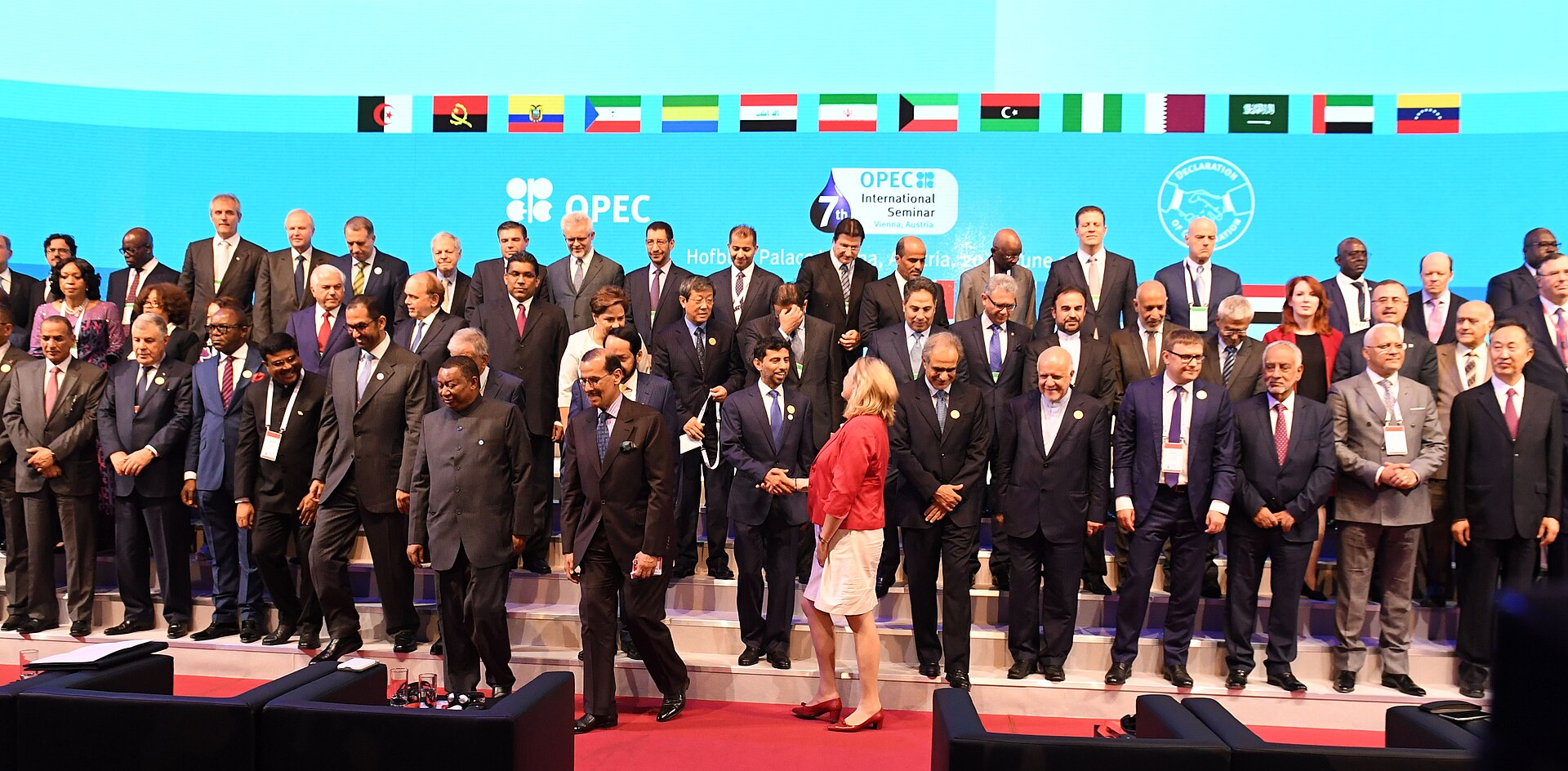

DHAHRAN — DeGolyer and MacNaughton, the Dallas-based petroleum consultants, are completing an independent audit of Saudi Arabia’s maximum sustainable crude oil production capacity this week, with findings due at the 42nd OPEC and non-OPEC Ministerial Meeting on November 29, according to Egypt Oil & Gas, citing Reuters. The audit will determine Saudi Arabia’s 2027 production quota under a new capacity-based system that OPEC+ approved at its November 30, 2025 ministerial, according to the Oil & Gas Journal.
The result arrives amid the widest divergence in years between Saudi Arabia’s self-reported output and the estimates produced by OPEC’s independent monitors. Saudi Arabia told OPEC it produced 10.563 million barrels per day in October 2026 — up 26 percent from September’s 8.372 million bpd — while OPEC’s secondary-source panel estimated 9.194 million bpd, a gap of 1.369 million bpd, according to TokenPost.
But a separate Saudi-reported metric — “supply to market,” which tracks crude that has actually left the kingdom for export terminals and domestic refineries — nearly matches the secondary-source estimate. The alignment confirms the divergence is structural: a measurement gap between wellhead production and marketed supply, not a factual dispute over how much oil Saudi Arabia is delivering to buyers.
The House of Saud Daily Briefing
Saudi Arabia's news in 3 minutes, every morning. Free. See today's issue
Table of Contents
What Is the DeGolyer and MacNaughton Capacity Audit?
DeGolyer and MacNaughton (D&M) is auditing what OPEC+ calls maximum sustainable capacity, or MSC — defined as the average maximum crude output a country can bring online within 90 days and sustain for a full year including planned maintenance, according to Project Fifty-4. The definition matters because it accounts for infrastructure limits, maintenance schedules and workforce constraints, not just the volume of oil underground. D&M is assessing 19 of the 22 OPEC+ members that hold production quotas, according to Egypt Oil & Gas.
Three countries fall outside the D&M scope. Russia and Venezuela are being audited by a separate, non-US firm. Iran is excluded entirely; its 2027 production baseline will instead be derived from the average of its August, September and October 2026 actual output, according to Project Fifty-4. The exclusion reflects the difficulty of auditing capacity in countries under active sanctions or at war.
The audit was originally scheduled for completion by the end of September 2026 but was pushed to mid-November after the Iran war disrupted capacity-expansion timelines and some members failed to submit required data on schedule, according to Egypt Oil & Gas, citing Reuters. The findings will go to both the 42nd OPEC and non-OPEC Ministerial Meeting — the group’s main policy-setting forum — and the 69th Joint Ministerial Monitoring Committee session, both set for November 29. OPEC fixed the date at its 41st ministerial on June 7, 2026.
D&M has prior experience with Saudi Arabia’s oil data. The firm audited Saudi Aramco’s proved crude oil reserves ahead of the company’s 2019 initial public offering, covering 54 of Aramco’s 368 major reservoirs and independently verifying approximately 213.1 billion barrels, according to OilPrice.com. The 2026 exercise is different in kind: it measures the capacity to produce at a given rate, not what remains in the ground. D&M declined to comment when contacted by Reuters.
Why Does Saudi Arabia Report 2 Different Output Numbers?
OPEC collects production data through two channels. Member states report their own figures directly to the secretariat. Separately, a panel of seven secondary sources — S&P Global Commodity Insights (Platts), Argus Media, Energy Intelligence, Wood Mackenzie, Kpler, OilX and ESAI — provides independent estimates. The IEA was removed from the panel in March 2022; the US Energy Information Administration and Rystad Energy were removed in February 2025 and replaced by Kpler, OilX and ESAI, according to MEES.
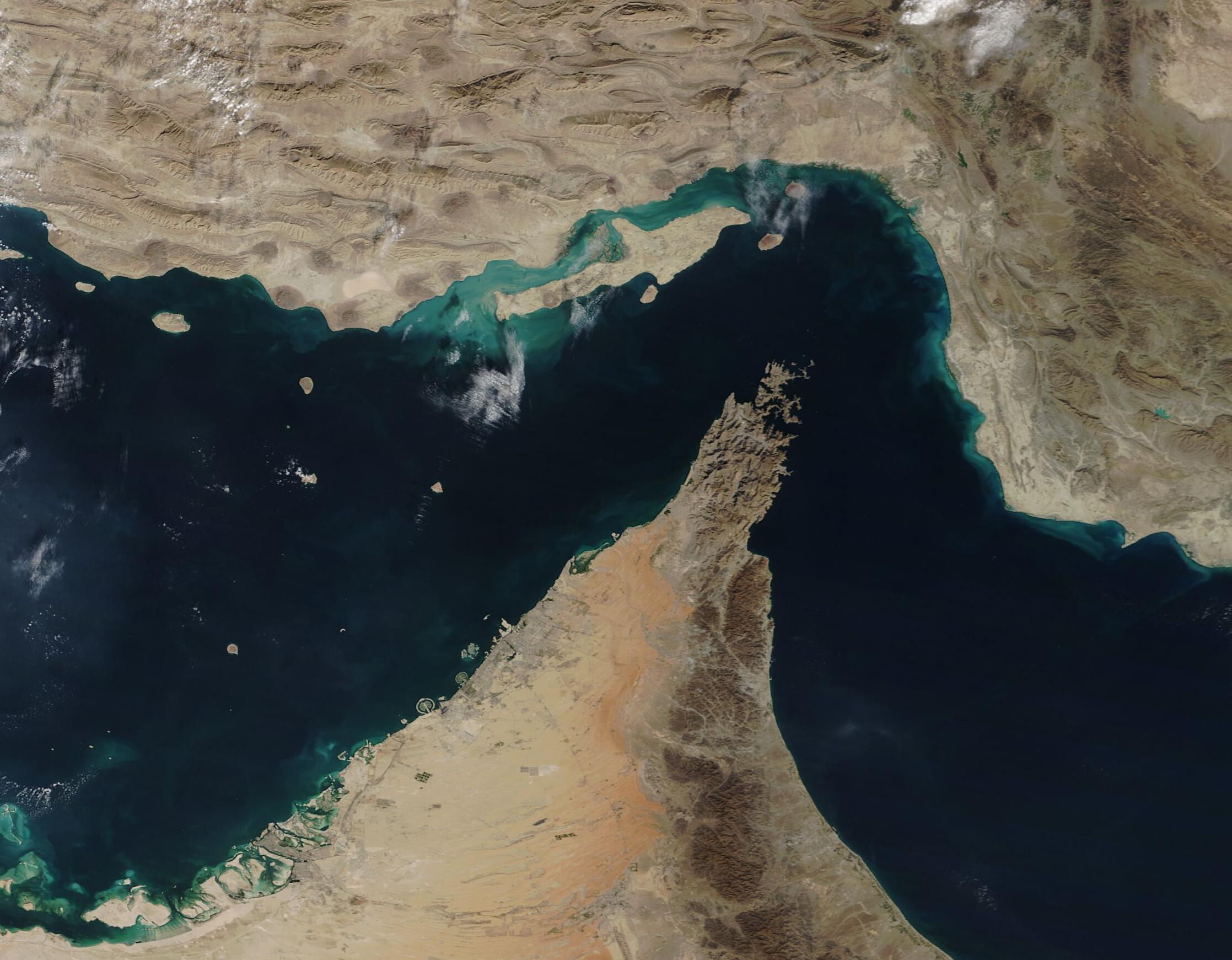
The methodological gap is well documented. Secondary sources estimate marketed supply by tracking crude exports first, then adding estimated domestic consumption, according to a 2018 KAPSARC study on OPEC production data. They do not attempt to measure wellhead output. When a producer rebuilds wellhead production faster than its constrained export infrastructure can deliver — as Saudi Arabia did in October 2026, following months of Strait of Hormuz disruption and pipeline damage — the two numbers diverge. Oil pumped from the ground that sits in storage or awaits pipeline capacity does not register in the secondary-source estimate.
For October, the data tells the structural story clearly. Saudi Arabia’s self-reported “supply to market” was 9.203 million bpd — within just 9,000 bpd of the 9.194 million bpd secondary-source estimate, according to TokenPost. Bloomberg’s independent monthly survey also put Saudi marketed output at approximately 9.2 million bpd for the same period. The near-identical alignment between three independently derived marketed-supply estimates — Saudi self-reported, OPEC secondary sources and Bloomberg — leaves little room for doubt about the volume that actually reached buyers.
Saudi Arabia formally asked OPEC’s secondary-source providers in June 2025 to adjust their methodology to reflect marketed supply rather than production estimates, Bloomberg reported through Energy Connects in July 2025. The capacity audit now effectively supersedes that debate: under the new quota system, what counts is not October’s marketed supply but the independently verified ceiling each country can sustain over a full year.
What Does Saudi Arabia’s Output Recovery Look Like?
Saudi Arabia’s production since the Iran war began in February 2026 traces a steep collapse and a sharp recovery. The kingdom self-reported a pre-war peak of 10.882 million bpd in February, according to Reuters. By August, with Hormuz under sustained disruption and the East-West pipeline damaged by Houthi attacks, self-reported output had fallen to 6.238 million bpd — the lowest since 1990, according to Gulf News.
The rebound since then has been rapid. October’s self-reported figure brought Saudi output close to its pre-war high, driven by the partial restoration of export routes and a concerted push to bring idled wells back online. The recovery has made Saudi Arabia the dominant force in OPEC+ supply: total OPEC+ output in October was 41.230 million bpd, according to TokenPost, with Saudi production accounting for the group’s largest single national contribution.
The International Energy Agency estimates Saudi Arabia’s maximum sustainable capacity at 12.11 million bpd, with spare capacity of approximately 2.2 million bpd, according to the IEA’s August 2026 Oil Market Report. If the D&M audit confirms a figure near the IEA’s estimate, it would give Saudi Arabia the largest verified capacity buffer in the group and a correspondingly large share of any quota increase.
Saudi Arabia’s current OPEC+ production quota stands at 10.478 million bpd for December 2026, unchanged after a November 1 decision by seven OPEC+ countries to keep December targets at September levels, according to OPEC and TASS. Brent crude’s last settlement before the November 1 decision was $117.64 per barrel on October 30, according to The National — a price that reflects both the supply constraints and the geopolitical risk premium that the audit’s outcome could begin to resolve.
How Will the Audit Shape 2027 OPEC+ Quotas?
The capacity-based quota mechanism approved at the November 30, 2025 ministerial replaces politically negotiated baselines with a formula tied to independently verified capacity, according to the Oil & Gas Journal. Each member’s 2027 quota will be derived from an equal percentage of its audited maximum sustainable capacity — a structure that rewards countries with large verified spare capacity and penalizes those whose ambitions outrun their infrastructure. Saudi Energy Minister Prince Abdulaziz bin Salman called the mechanism “a turning point” and “fair and transparent,” according to The Arab Weekly.
The shift has wide support among countries with verifiable capacity — and opposition from those without it. Tim Callen, a visiting fellow at the Arab Gulf States Institute and former head of the IMF division covering Gulf oil exporters from 2012 to 2021, said the audit “will likely show that there is little spare production capacity outside of Saudi Arabia,” according to Al-Monitor. He added that Saudi Arabia wants to move away from the long-running quota negotiations that he said drove the UAE and Angola out of OPEC.
The stakes extend well beyond Saudi Arabia. Iraq has requested a 2027 output baseline of 6 million bpd during the capacity review, though the IEA estimates Iraq’s sustainable capacity at approximately 4.9 million bpd, according to Bloomberg — a gap that the audit will expose. The UAE exited OPEC in May 2026 partly because Abu Dhabi had invested to reach 5 million bpd of capacity while its OPEC quota remained at 3.5 million bpd, according to Modern Diplomacy. As recently as late 2025, twelve of the 18 OPEC+ members with quotas were producing below their targets, according to Enterprise AM — a group-wide compliance picture that the capacity audit is designed to recast in terms of verified ability rather than voluntary restraint.
Approximately 2 million bpd of voluntary production cuts by several OPEC+ members expire at the end of 2026, and no decision has been announced on whether to extend them. Rystad Energy senior vice president Jorge Leon described the November 29 ministerial as “the much more important test,” calling the 2027 output decision “an extremely difficult call,” according to CNBC. The audit provides the data; the ministerial must produce the politics.
The Export Infrastructure Behind the Numbers
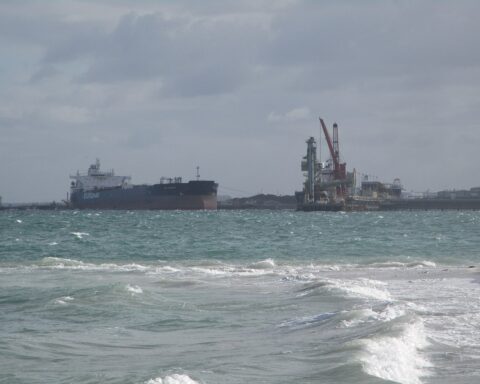
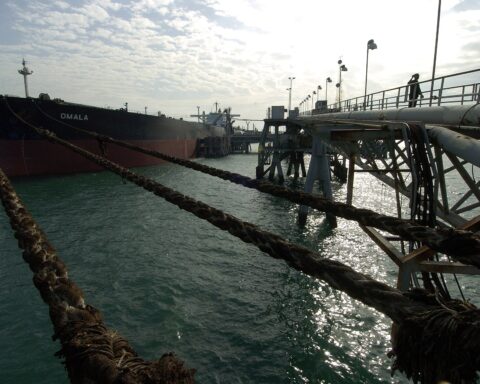
The gap between Saudi Arabia’s wellhead output and its marketed supply reflects physical bottlenecks that have constrained exports for most of 2026. The East-West pipeline — the kingdom’s main crude export bypass around the Strait of Hormuz, with a design capacity of roughly 7 million bpd — was damaged in April and struck again on September 10–11, when Houthi attacks halted Yanbu-bound exports entirely, according to BusinessToday India. Wood Mackenzie vessel-tracking data showed Yanbu crude loadings peaked in March 2026 and fell 41 percent by June, to approximately 2.39 million bpd, according to Hydrocarbon Engineering.
By October 6, the pipeline had been restored to 5.8 million bpd — approximately 83 percent of design capacity. “The East-West pipeline that was heavily attacked is operational now,” Prince Abdulaziz bin Salman said at a GCC forum in Bahrain on October 6, according to The National. He described “the most important lesson” as the resilience of “the supply and logistics chains,” and cited “multiple logistical options” as “one of the key factors that enabled us to deal with the crisis.”
The Saudi Cabinet this month called for an immediate end to threats in the Strait of Hormuz and Bab al-Mandeb. The kingdom’s export infrastructure constraints have global price implications. Umud Shokri, an energy strategist at George Mason University, said higher Saudi output “could help ease some of the inflationary pressure” facing US consumers but cautioned it “does not automatically mean lower prices at American gas stations,” according to Al Jazeera.
Saudi Arabia’s pre-budget statement forecast real GDP falling 3.6 percent in 2026 — driven by a 21.8 percent drop in oil activity — with a rebound to 12.8 percent growth in 2027, according to Reuters — a forecast that assumes the kingdom can close the gap between what it pumps at the wellhead and what it delivers to market. The capacity audit, and the quota it produces, will determine how quickly that happens.
Frequently Asked Questions
Could Saudi Arabia expand pipeline exports beyond 5.8 million bpd?
Prince Abdulaziz bin Salman said at the World Petroleum Congress in Riyadh on October 12 that Saudi Arabia was considering expanding pipeline crude export capacity to as much as 10 million bpd by repurposing a domestic gas pipeline, according to Bloomberg. He said a temporary conversion could add up to 1.2 million bpd of additional oil export capacity “within seven to eight weeks.” No timeline for a decision has been announced.
How do Iran and Russia’s October output compare to their quotas?
Iran produced 1.9 million bpd in October 2026 — its lowest since 1989 — with zero exports, according to BNN Bloomberg. Russia produced 8.668 million bpd against a quota of 9.949 million bpd. Both countries’ shortfalls are excluded from the D&M audit: Russia is assessed by a separate firm, while Iran’s 2027 baseline will be set from its average actual output over August to October, according to Project Fifty-4.
What does Saudi Arabia’s 2027 budget imply about oil revenue needs?
Saudi Arabia’s pre-budget statement projected 2027 spending at 1.39 trillion riyals against revenue of 1.20 trillion riyals, with a deficit of 191 billion riyals — 3.6 percent of GDP — according to Reuters. The same statement revised the 2026 deficit upward to 245 billion riyals from a budgeted 165 billion, reflecting the revenue toll of the Iran war and output disruptions, according to Reuters.
How does the November 29 ministerial differ from a JMMC session?
The 42nd OPEC and non-OPEC Ministerial Meeting is the group’s main policy-setting body, with authority to change production quotas and approve new frameworks. The 69th Joint Ministerial Monitoring Committee, also scheduled for November 29, is a compliance-review panel that recommends actions but cannot set quotas on its own, according to OPEC. Under OPEC+ practice, the JMMC recommends; the ministerial decides.
The House of Saud Daily Briefing
Saudi Arabia's news in 3 minutes, every morning. Free. See today's issue