PHP Warning: Trying to access array offset on false in /var/www/html/wp-content/plugins/postman-smtp/Postman/PostmanOAuthToken.php on line 45
Warning: Trying to access array offset on false in /var/www/html/wp-content/plugins/postman-smtp/Postman/PostmanOAuthToken.php on line 45
PHP Warning: Trying to access array offset on false in /var/www/html/wp-content/plugins/postman-smtp/Postman/PostmanOAuthToken.php on line 46
Warning: Trying to access array offset on false in /var/www/html/wp-content/plugins/postman-smtp/Postman/PostmanOAuthToken.php on line 46
PHP Warning: Trying to access array offset on false in /var/www/html/wp-content/plugins/postman-smtp/Postman/PostmanOAuthToken.php on line 47
Warning: Trying to access array offset on false in /var/www/html/wp-content/plugins/postman-smtp/Postman/PostmanOAuthToken.php on line 47
PHP Warning: Trying to access array offset on false in /var/www/html/wp-content/plugins/postman-smtp/Postman/PostmanOAuthToken.php on line 48
Warning: Trying to access array offset on false in /var/www/html/wp-content/plugins/postman-smtp/Postman/PostmanOAuthToken.php on line 48
PHP Warning: Undefined array key “SERVER_NAME” in /var/www/html/wp-content/plugins/postman-smtp/Postman/Postman-Mail/PostmanDefaultModuleTransport.php on line 37
Warning: Undefined array key “SERVER_NAME” in /var/www/html/wp-content/plugins/postman-smtp/Postman/Postman-Mail/PostmanDefaultModuleTransport.php on line 37
PHP Warning: Undefined array key “SERVER_NAME” in /var/www/html/wp-content/plugins/postman-smtp/Postman/Postman-Mail/PostmanDefaultModuleTransport.php on line 37
Warning: Undefined array key “SERVER_NAME” in /var/www/html/wp-content/plugins/postman-smtp/Postman/Postman-Mail/PostmanDefaultModuleTransport.php on line 37
PHP Warning: The magic method OCDI\OneClickDemoImport::__wakeup() must have public visibility in /var/www/html/wp-content/themes/fox/fox/inc/admin/import/demo-import/inc/OneClickDemoImport.php on line 128
Warning: The magic method OCDI\OneClickDemoImport::__wakeup() must have public visibility in /var/www/html/wp-content/themes/fox/fox/inc/admin/import/demo-import/inc/OneClickDemoImport.php on line 128
PHP Warning: foreach() argument must be of type array|object, null given in /var/www/html/wp-content/themes/fox/fox/inc/admin/import.php on line 298
Warning: foreach() argument must be of type array|object, null given in /var/www/html/wp-content/themes/fox/fox/inc/admin/import.php on line 298
WordPress database error You have an error in your SQL syntax; check the manual that corresponds to your MySQL server version for the right syntax to use near ‘%rank_math_sitemap%’ at line 1 for query DELETE FROM wp_options WHERE option_name LIKE %rank_math_sitemap% made by include(‘phar:///usr/local/bin/wp/php/boot-phar.php’), include(‘phar:///usr/local/bin/wp/vendor/wp-cli/wp-cli/php/wp-cli.php’), WP_CLI\bootstrap, WP_CLI\Bootstrap\LaunchRunner->process, WP_CLI\Runner->start, WP_CLI\Runner->load_wordpress, require(‘wp-settings.php’), do_action(‘init’), WP_Hook->do_action, WP_Hook->apply_filters, WP_CLI\Runner->{closure}, wp_update_post, wp_insert_post, do_action(‘save_post’), WP_Hook->do_action, WP_Hook->apply_filters, hos_clear_rankmath_sitemap_cache, hos_do_clear_sitemap_cache
PHP Warning: Constant DONOTCACHEPAGE already defined in /var/www/html/wp-content/mu-plugins/setup-33500.php on line 14
Warning: Constant DONOTCACHEPAGE already defined in /var/www/html/wp-content/mu-plugins/setup-33500.php on line 14
HOS setup-33500: category set to 145, cache cleared.
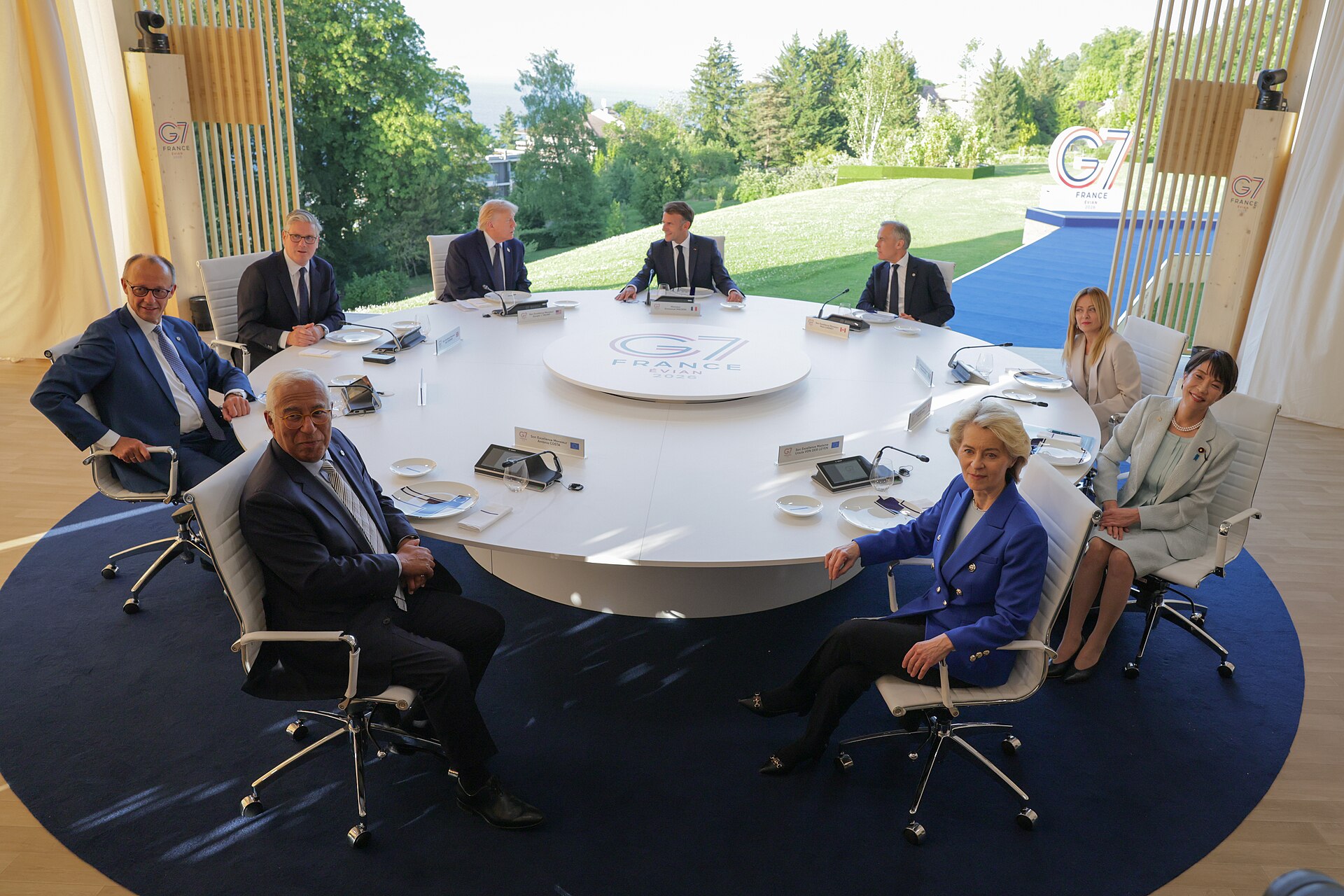
ÉVIAN — Donald Trump told the world’s press on June 17 that Iran can keep its ballistic missiles because Saudi Arabia has them too — invoking the same arsenal that, fourteen months earlier, justified a $142 billion American arms package sold to Riyadh specifically to counter Iran’s ballistic missile threat. At the G7 closing press conference in Évian, Trump framed Iran’s retained missiles as proportionate to Saudi holdings: “If Saudi Arabia and Qatar, and they all have some, I would say that in relative proportion, I think it’s okay.”
The remark abandoned Operation Epic Fury’s declared objective to “obliterate Iran’s ballistic missile arsenal and production capacity,” retroactively collapsed the threat rationale underpinning the largest US-Saudi defense agreement in history, and trapped Saudi Arabia in a silence from which no diplomatic exit is visible — because any formal protest from Riyadh would require confirming a missile programme the Kingdom has maintained under deliberate strategic ambiguity for thirty-eight years. The concession was made without Saudi consultation, and no Saudi representative was in the room, at the summit, or on the phone when it was delivered.
Table of Contents
What Trump Actually Said
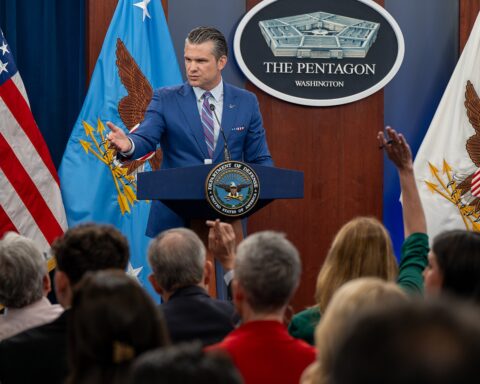
The G7 closing press conference in Évian on June 17 was supposed to be a victory lap — the culmination of three days spent corralling allied leaders toward endorsing a deal whose text none of them had read, whose signing ceremony in Geneva was two days away, and whose terms Washington and Tehran described in flatly contradictory language. The missile question, when it came, was not adversarial: a reporter asked whether Iran should be permitted to retain ballistic missiles under the emerging framework. Trump’s answer will define the strategic relationship between Washington and Riyadh for years.
“I mean, they have to have some,” Trump said. “Because other people have some. Somebody said ‘You shouldn’t give them more … sir, you shouldn’t let them have any missile.’ … What am I gonna do? I’m gonna let Saudi Arabia have missiles, but they can’t have them? It doesn’t work that way.” He then offered the formulation that collapsed the entire threat architecture of his own administration’s Gulf policy: “If Saudi Arabia and Qatar, and they all have some, I would say that in relative proportion, I think it’s okay.”
The remark drew immediate condemnation from Israeli commentators — the Jerusalem Post editorial board called it “a major and unnecessary unforced error, actually proactively endorsing Iran keeping its ballistic missile program” — but the Saudi dimension went almost entirely unexamined in every outlet that covered it. Trump had justified Iran’s arsenal by invoking Saudi Arabia’s as its moral equivalent, without telling Riyadh he was going to do it, and without any apparent awareness that the equivalence itself was the concession — that naming Saudi Arabia’s missiles on the record, in public, as the comparative basis for an Iranian permission, was not a rhetorical device but a policy act with structural consequences.
The Middle East briefing 3,000+ readers start their day with.
One email. Every weekday morning. Free.
Trump offered a supporting rationale that compounded the problem. He claimed US strikes during Operation Epic Fury had already destroyed “84 to 85 percent” of Iran’s missiles and that “the rest of them are underground; they can’t even get ’em out.” He proposed deferring the missile question to “a parallel effort with the Gulf nations to address nonnuclear issues, such as conventional ballistic missiles” — a track that does not exist, has no timeline, no mandate, and no institutional home, but that now carries the weight of the objective the White House’s own March 2026 launch statement called non-negotiable: to “completely raze their missile industry to the ground.”
The $142 Billion Premise
On May 13, 2025, Trump stood in Riyadh and signed the largest military cooperation agreement in US history. The White House Fact Sheet organised the $142 billion package into five pillars: air force and space, air and missile defence, maritime security, land forces modernisation and border security, and information and communications. “Air and missile defence” was not a footnote buried inside a broader security category — it was a standalone pillar, carrying its own line items, its own industrial commitments, and its own strategic justification. That justification was Iranian ballistic missiles.
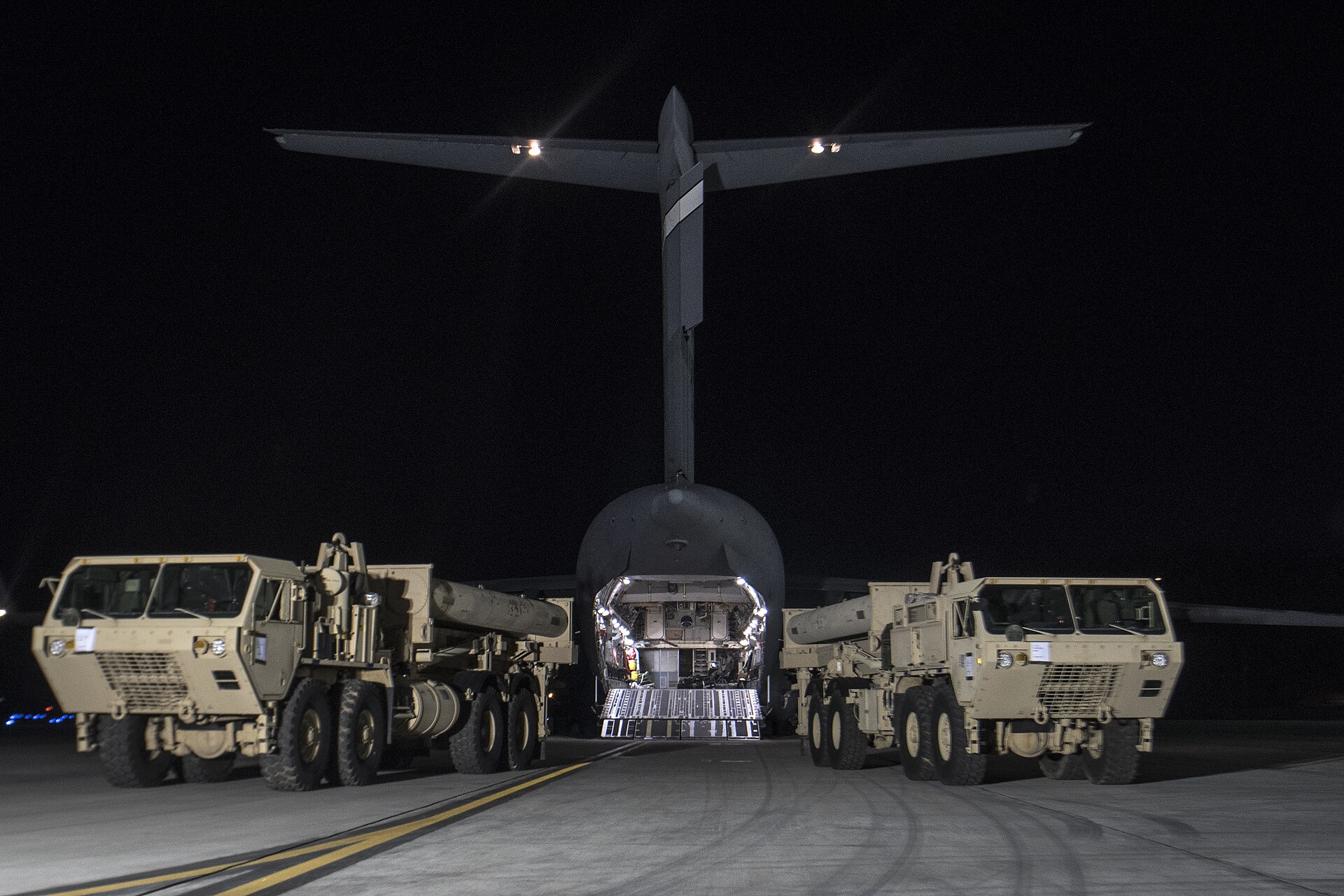
The Washington Institute for Near East Policy stated explicitly that the deal “should achieve the U.S. objective of improving defense interoperability between Saudi Arabia and other members of the Gulf Cooperation Council, which is seen as a vital element in countering the potential ballistic missile threat from Iran.” Army Recognition’s analysis of the same package named specific systems purchased under that pillar: Patriot PAC-3 MSE interceptor expansion and THAAD batteries — the Terminal High Altitude Area Defense system that intercepts incoming warheads above the atmosphere — both cited to counter “Iranian Fateh-110-class missiles,” the medium-range ballistic weapons that Iran’s IRGC Aerospace Force had fired at Saudi energy infrastructure, military installations, and population centres throughout the conflict that followed the deal’s signing.
Iran and Iranian proxies directed more than 1,200 missile and rocket attacks at Saudi infrastructure between February and May 2026 alone, a sustained bombardment that served as both the commercial justification and the political permission structure for the biggest weapons package Washington had ever assembled for a single buyer. That was the deal’s premise: Iranian missiles threatened Saudi Arabia’s survival, and Saudi Arabia needed American hardware to offset them. Thirteen months later, the president who signed that deal told the G7 press corps that the threat was, in relative proportion, okay — and the country he had armed against it was the reason why.
Why Can’t Saudi Arabia Object?
Saudi Arabia possesses ballistic missiles — this is not speculation, not intelligence community inference alone, and not a closely held secret, but a documented, partially inspected, and once publicly displayed reality stretching back nearly four decades. What Saudi Arabia has never done, across that entire span and under six kings, is officially confirm the scope, capability, or operational status of that arsenal in any public diplomatic, legal, or arms-control forum. That silence has been one of the most successful exercises in strategic ambiguity in modern defence history, and Trump’s G7 remark threatens to end it without Riyadh having any say in the matter.
The trap operates on an inescapable mechanism. If Saudi Arabia publicly protests Trump’s comparison of its arsenal with Iran’s — if it argues, as it logically must, that Saudi missiles are defensive, limited in number, and not comparable to Iran’s offensive programme — it must first acknowledge what it holds, in what quantities, and with what capabilities. Any formal Saudi objection would require Riyadh to state, on the record, that it possesses a specific class of weapons and then argue that those weapons are qualitatively different from Iran’s — a process that would destroy thirty-eight years of deliberate ambiguity, the ambiguity that allowed Saudi Arabia to deter without provoking, to signal strength without triggering non-proliferation obligations or international inspection demands, and to maintain Chinese supply relationships without formalising them in treaty-observable terms.
If Saudi Arabia stays silent, the equivalence stands as the US policy frame — endorsed at the G7 by implication, delivered by the president on the record — that will govern Phase 2 negotiations on conventional weapons. Trump himself said those negotiations would proceed on a “parallel effort” track involving “the Gulf nations,” a track that would require Saudi participation and, by definition, Saudi disclosure of its own holdings. The silence does not resolve the trap; it merely delays the moment when the trap’s jaws close, which is when someone at a negotiating table asks Riyadh what, exactly, it possesses in relative proportion.
Thirty-Eight Years of Ambiguity, One Sentence to Collapse It
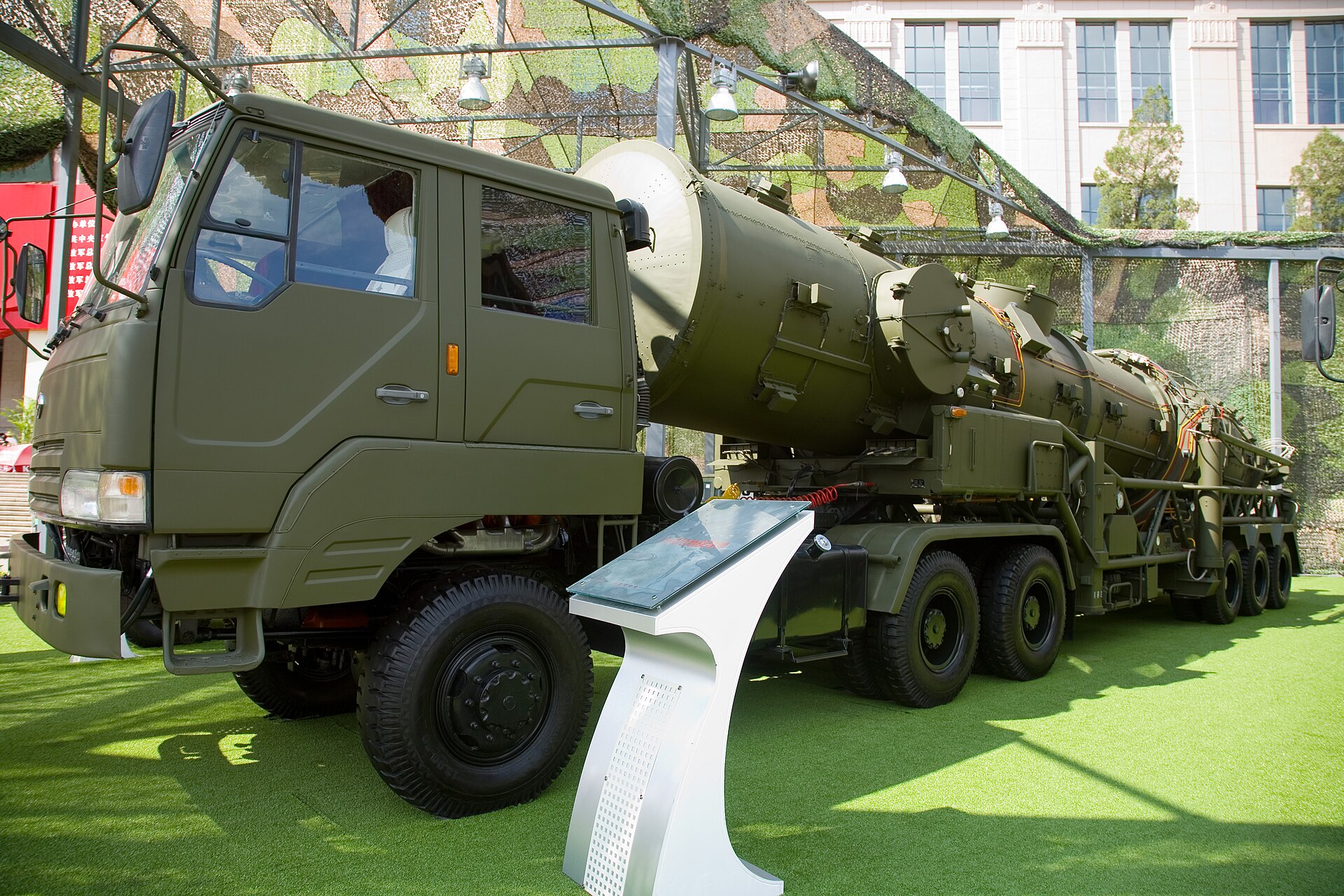
Saudi Arabia purchased between thirty-six and sixty DF-3A (CSS-2) intermediate-range ballistic missiles from China in 1988 for $3.5 billion — at that time the largest single arms export in Chinese military history. China did not merely ship the missiles and collect payment; it built at least two dedicated launch bases south of Riyadh, deployed People’s Liberation Army personnel for maintenance and training, and established a logistics chain requiring years of cooperative infrastructure development. The United States, once it discovered the sale, did not block it — it conditioned approval on conventional warheads only and dispatched CIA personnel to physically inspect the missiles inside Saudi Arabia, establishing a pattern of managed ambiguity in which Washington knew, Beijing knew Washington knew, and Riyadh kept silent.
The second generation was quieter and remains unconfirmed by either buyer or seller. Intelligence reporting compiled by the International Institute for Strategic Studies indicates that Saudi Arabia began purchasing DF-21 (CSS-5) solid-fuel medium-range ballistic missiles from China starting around 2007 — a different weapon from the DF-3A in every dimension that matters. Solid fuel instead of liquid means the DF-21 can be stored fuelled, transported on mobile launchers, and fired on short notice without the hours-long preparation that made the DF-3A operationally cumbersome; a range of 1,700 to 2,150 kilometres means Tehran is reachable; a smaller circular error probable means that what it targets, it can expect to hit. Neither Riyadh nor Beijing has confirmed the transaction, and Saudi Arabia has not publicly acknowledged owning DF-21 missiles in any forum or to any interlocutor on the record.
Fabian Hinz, writing for the IISS Missile Dialogue Initiative in February 2025, documented the most recent and most consequential phase of Saudi missile expansion. Saudi Arabia, Hinz concluded, “appears to have built a new missile base near al-Nabhaniyah” — the first new ballistic missile facility since the 1980s — and had expanded existing Royal Saudi Strategic Missile Force sites at multiple locations. The IISS assessment went further: “Saudi Arabia is known to have established a solid-propellant motor-production facility at the al-Watah missile base, and US intelligence assessments indicate that it is now producing ballistic missiles with Chinese assistance.” Domestic production is a qualitative leap beyond acquisition — it means Saudi Arabia is no longer merely a customer of Chinese missile technology but a manufacturer, one whose production capacity is growing, unmonitored by any international inspection regime, and entirely unacknowledged in official Saudi statements.
On April 29, 2014, Saudi Arabia displayed DF-3 missiles in a military parade — the only public exhibition of ballistic missiles in the Kingdom’s history, described by analysts as “a deterrent signal against Iran.” That was the closest Riyadh has come to confirmation, and it was carefully calibrated: a parade, not a policy statement, a display designed to signal capability without creating the declaratory record that could be cited in arms-control negotiations, non-proliferation reviews, or — as has now happened — a US presidential press conference comparing Saudi holdings to Iran’s. Trump’s casual “Saudi Arabia and Qatar, and they all have some” accomplished in a single off-the-cuff remark what decades of satellite imagery analysis, IISS open-source investigations, and classified intelligence assessments had not: it placed Saudi ballistic missile holdings into the public record of a US presidential statement, framed not as a defensive capability but as a moral equivalent to Iran’s offensive programme.
| Attribute | Saudi Arabia (assessed) | Iran (confirmed) |
|---|---|---|
| Primary systems | DF-3A (CSS-2); DF-21 (CSS-5) — unconfirmed | Kheibar Shekan, Fateh-110, Shahab-3, Emad, Sejjil |
| Most advanced system | DF-21: solid fuel, 1,700–2,150 km (unconfirmed) | Kheibar Shekan: solid fuel, 1,450 km, manoeuvring warhead |
| Production capacity | Domestic facility at al-Watah (IISS, Feb 2025) | 200–300 missiles per month (2026 assessments) |
| Official acknowledgement | Never confirmed by Riyadh or Beijing | Regularly displayed, tested, and documented by IRGC |
| International inspection regime | CIA inspection of DF-3A (1988); none ongoing | None (IAEA covers nuclear only) |
| Combat use (2024–2026) | None | ~550 missiles fired at Israel; 1,200+ at Saudi Arabia via proxies |
Sources: IISS Missile Dialogue Initiative (Feb 2025); US-China Economic and Security Review Commission; Arms Control Association; Jerusalem Post; Army Recognition; GlobalSecurity.org. Saudi production assessed from open-source satellite analysis and US intelligence assessments cited by IISS; Iranian production rate from 2026 defence intelligence estimates.
What Remains of Iran’s Arsenal?
Trump’s claim that the United States had destroyed “84 to 85 percent” of Iran’s missiles deserves scrutiny not because it is necessarily fabricated — the scale of Operation Epic Fury’s strikes was enormous — but because the figure itself is contested within his own intelligence community, and because the remaining fraction is not a rounding error. US agencies, according to intelligence reporting cited by the Jerusalem Post, assessed that Iran retained approximately 70 percent of its mobile launchers and roughly 70 percent of its prewar missile stockpile — a gap between presidential rhetoric and intelligence estimates wide enough to reframe the entire concession. If Trump is right that 15 percent remains, the concession is reckless; if his own agencies are right that 70 percent remains, it is something closer to capitulation.
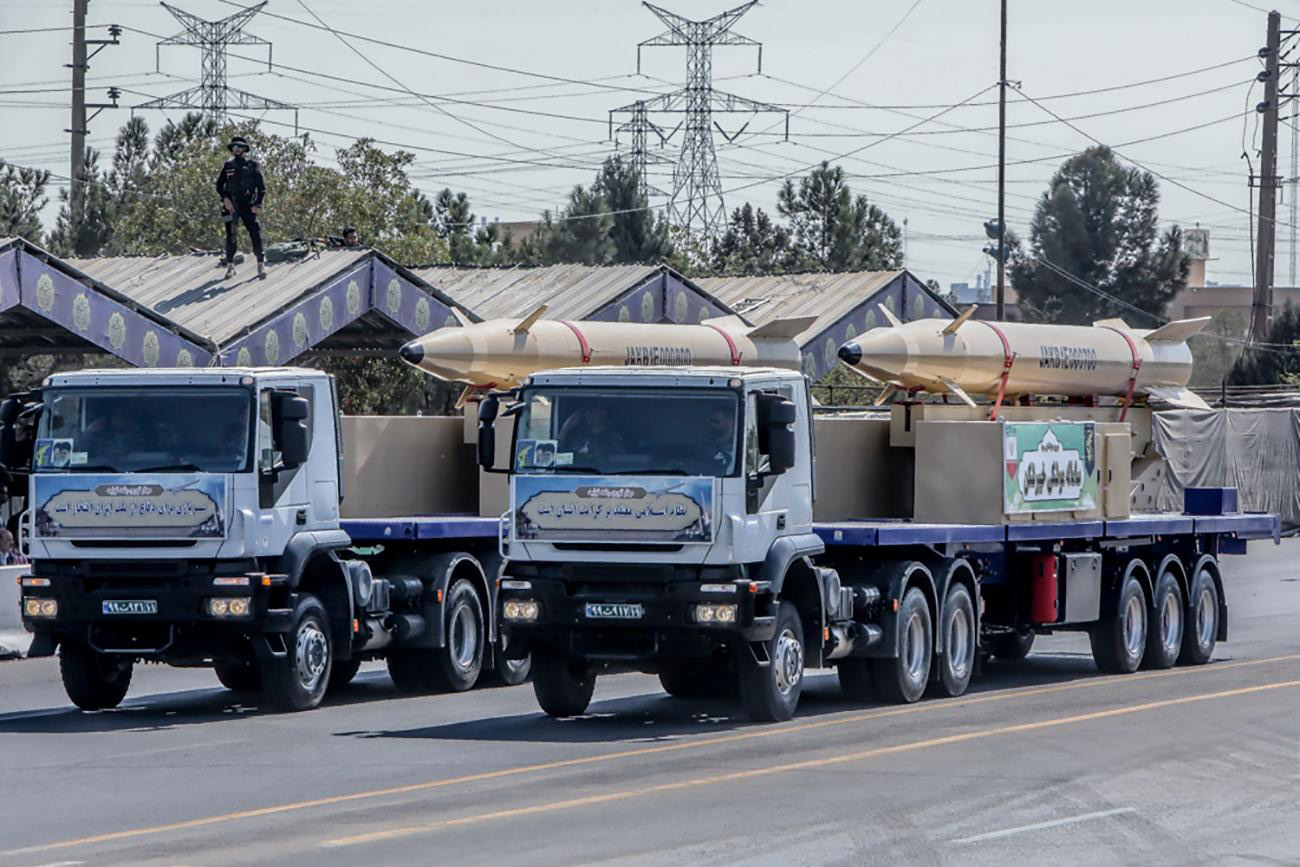
Iran’s most advanced confirmed ballistic missile, the Kheibar Shekan, was designed from its first engineering specifications to penetrate exactly the kind of layered air-defence architecture that the Riyadh arms deal was supposed to provide Saudi Arabia — a solid-fuel medium-range weapon with a 1,450-kilometre range, a manoeuvring warhead built to evade terminal-phase interception, and a launch-preparation time six times faster than its liquid-fuel predecessors. Defence intelligence estimates assessed Iran as producing between 200 and 300 ballistic missiles per month through 2026, a production tempo that means even an 85 percent destruction rate is temporary unless the production infrastructure is also eliminated, which it has not been. Iran fired approximately 550 missiles at Israel during the conflict; roughly 90 percent were intercepted, but around 50 penetrated — a figure that Israeli officials described as operationally concerning for a country with Israel’s defensive depth but existentially concerning for Saudi Arabia, whose critical energy infrastructure at Abqaiq, Ras Tanura, and Jubail sits within Kheibar Shekan range and whose air-defence coverage is a fraction of Israel’s layered Iron Dome, David’s Sling, and Arrow architecture.
The missiles Trump described as “underground” and unable to “even get ’em out” are the ones that worry defence planners most, because hardened underground launch facilities are designed specifically to survive the kind of air campaign that already happened — they are the reserve force, not the residual debris. Iran’s tunnel-based missile storage programme, documented extensively in the IRGC’s own propaganda releases over two decades, was built to ensure survivability against American airpower, and the idea that subterranean storage neutralises a missile’s threat misunderstands the entire purpose of putting it underground. What matters for Saudi Arabia is not whether those missiles are easy to extract but whether they exist in sufficient quantities and capability to strike Abqaiq — and by every assessment, including the White House’s own, they do.
Does THAAD Still Have a Mission?
THAAD — Terminal High Altitude Area Defense — intercepts ballistic missiles at altitudes between 40 and 150 kilometres, above the atmosphere, in the phase of flight where a warhead is descending toward its target at several kilometres per second. Without THAAD, Saudi Arabia’s defence against medium-range Iranian ballistic missiles collapses to the Patriot system alone, which operates at lower altitudes, shorter ranges, and with a fundamentally different interception geometry that was never intended to be the sole barrier against the class of threat Iran fields. The May 2025 deal expanded THAAD coverage in Saudi Arabia specifically because the Iranian missile threat required an exo-atmospheric interception layer that Patriot could not provide on its own.
The Americans operate THAAD in Saudi Arabia, the Americans maintain it, and the Americans — and only the Americans — control the AN/TPY-2 fire-control radar that makes it function. Saudi Arabia does not have independent operational authority over the system that defends it against the threat that Trump just declared proportionate to Saudi Arabia’s own capabilities. That dependency is the commercial and strategic foundation of the air-and-missile-defence pillar: Saudi Arabia pays for the hardware, but the Iranian threat justification is what gives Washington the political permission — under the Arms Export Control Act, under DSCA notification requirements to Congress, under the 30-day congressional review window that every major foreign military sale must survive — to sell it and keep selling it.
If the threat is “in relative proportion” to Saudi Arabia’s own arsenal, the air-and-missile-defence pillar loses its political predicate. Congressional opponents of Saudi arms sales — and there are enough of them, on both sides of the aisle, to have forced votes on Saudi weapons packages in every recent Congress — now have a presidential statement on the record declaring the threat equivalent to the customer’s own capability. Every future DSCA notification for THAAD maintenance, interceptor resupply, or system upgrades will arrive on Capitol Hill carrying the weight of Trump’s own words: the president who sold the system said the threat it was built to counter is, in relative proportion, okay. The contracts will survive — defence procurement has institutional momentum that outlasts press conferences — but the political permission structure for the next sale, the next expansion, the next interceptor order has been weakened by the one person whose job it was to defend it.
What Does ‘Parallel Effort’ Mean for Phase 2?
Trump’s proposed solution — deferring missiles to “a parallel effort with the Gulf nations to address nonnuclear issues, such as conventional ballistic missiles” — raises more problems than it resolves, starting with the most obvious: the parallel effort does not exist. There is no institutional framework, no mandate, no timeline, no designated mediator, no terms of reference, and no indication that any Gulf nation has been consulted about participating in a track that was announced at a press conference as the mechanism for resolving one of the most contentious security questions in the Middle East. It is a policy that currently consists of one sentence in a press-conference transcript.
The Geneva framework covers the nuclear track only, and the 60-day Phase 2 negotiation window that begins after the June 19 signing was always understood to address enrichment limits, IAEA access, and the disposition of Iran’s stockpile of highly enriched uranium — not missiles. Missiles were supposed to be resolved before Phase 2, or at minimum addressed within the MOU framework, not deferred into a structureless annexe. Trump had already signalled at the same summit that uranium “isn’t worth the bother,” and the missile deferral follows the same pattern: an objective declared non-negotiable in March, downgraded to a talking point in June. Wendy Sherman, who spent eighteen months negotiating the 2015 JCPOA, warned that “I can assure you they will not get all of this done in 60 days” — and she was talking about the nuclear issues alone, before missiles were stacked on top of an already overloaded agenda.
The “parallel effort” contains a second problem that no coverage has addressed: it requires Saudi Arabia to participate. Trump said the track would involve “the Gulf nations,” which means Saudi Arabia would be asked to negotiate — in a multilateral forum, with Iran, mediated or at minimum convened by the United States — on the subject of conventional ballistic missiles. A negotiation that, by definition, would require Saudi Arabia to disclose what it holds, what it considers defensive, and what it would accept as limits on the Iranian side, the same disclosure that four decades of strategic ambiguity was constructed to prevent. The “parallel effort” is not a resolution of Saudi Arabia’s predicament — it is the institutionalisation of the trap, with a chair reserved for Riyadh at a table designed to extract exactly the confirmation Riyadh has spent four decades refusing to provide.
The Silence
Saudi Arabia has issued no public statement on Trump’s June 17 missile parity remark. The Ministry of Foreign Affairs — which broke a twenty-four-day silence on the Iran negotiations only by routing an endorsement through Pakistan’s foreign minister, Ishaq Dar, rather than issuing its own statement — has not commented. The Saudi Press Agency has carried no report on the remark, and state-affiliated media have covered the G7 without referencing the missile parity formulation. Crown Prince Mohammed bin Salman, who declined the G7 Évian invitation for his third consecutive summit refusal, was not in the room to hear it, was not consulted before it was delivered, and has not responded through any channel visible to the public record.
The silence fits a pattern that has defined Saudi Arabia’s posture throughout the Iran-US negotiations: absence from every table where outcomes are decided, followed by exposure to every consequence of what gets decided there. Saudi Arabia was absent from the Geneva signing ceremony. It was absent from the G7 Évian session on Hormuz where Egypt, Qatar, and the UAE were present. It has no seat on the Lebanon monitoring committee, no role in the Hormuz minesweeping coalition, and it was not party to any of the three mediation tracks — Oman, Switzerland, or Pakistan — that produced the MOU. Now it has been invoked, by name, as the moral precedent for a concession it did not agree to, in a forum it chose not to attend, by the same president who fourteen months earlier stood in Riyadh and called Iran “the most destructive force in the Middle East.”
Iran’s chief negotiator characterised the broader deal as a “record of US failure,” a framing amplified by Tasnim and IRNA — though Tehran’s state media has not yet exploited the specific Saudi-equivalence angle, a restraint that is unlikely to survive the first moment it becomes useful in Phase 2 positioning. CIA Director John Ratcliffe and Defense Secretary Pete Hegseth were described by CNN as among “the most pessimistic” about whether Iran would honour its commitments — a detail suggesting the missile concession was not unanimous even within Trump’s own national security apparatus. The Jerusalem Post editorial board, arguing on the same day as Trump’s remarks, wrote that “the main reason Israel went to war in February of this year was not because of regime change, and not even because of the nuclear threat, but to get Tehran to back off an existential ballistic missile threat.” Israel went to war to destroy the missiles; Saudi Arabia paid $142 billion to defend against them; and the president who launched one campaign and signed the other told a press conference that keeping those missiles is, in relative proportion, fine.
“What am I gonna do? I’m gonna let Saudi Arabia have missiles, but they can’t have them? It doesn’t work that way.”
— Donald Trump, G7 Évian closing press conference, June 17, 2026
The deal was signed with a handshake in Riyadh, premised on a threat that the same president dismissed with a shrug in Évian. The missiles that required American THAAD batteries to counter in May 2025 are, by June 2026, the missiles that prove Iran deserves to keep its own — a closed logical loop in which Saudi Arabia’s defensive spending retroactively legitimises the offensive capability it was designed to offset. MBS was not asked, not told, and not present when Trump turned Saudi Arabia’s deterrent into Iran’s permission slip, and the Kingdom’s silence on what it holds — the silence that served it for thirty-eight years — is now the only thing standing between a diplomatic remark and a permanent policy frame. The concession was not made at a negotiating table, under pressure, with advisers present and a fallback position prepared; it was made in a press-conference digression, between questions, as an afterthought — which is, for Saudi Arabia, the most dangerous kind of concession there is, because it was made by a man who did not realise he was making one.
Frequently Asked Questions
Has any US president previously referenced Saudi Arabia’s ballistic missile holdings in a public statement?
No — Trump’s G7 Évian remark on June 17, 2026, is the first known instance of a sitting US president publicly naming Saudi Arabia as a ballistic missile power in the context of arms-control equivalence with Iran. Previous administrations maintained the diplomatic convention of treating Saudi missile holdings as an intelligence matter rather than a policy fact, despite the programme being documented in congressional research reports and the US-China Economic and Security Review Commission’s published analyses. The Reagan administration, which discovered the 1988 DF-3A purchase through intelligence channels, chose to manage the revelation through private diplomatic channels and conditional approval rather than public acknowledgement — establishing a precedent that every subsequent administration honoured until Trump abandoned it, apparently without awareness that the precedent existed or that breaking it carried consequences.
Does Qatar actually possess ballistic missiles comparable to Saudi Arabia’s or Iran’s?
No, and Trump’s inclusion of Qatar in his comparison — “Saudi Arabia and Qatar, and they all have some” — does not reflect Qatar’s known military inventory. Qatar operates short-range tactical missile systems and has purchased various precision-guided munitions through US foreign military sales, but it does not possess medium- or intermediate-range ballistic missiles comparable to Saudi Arabia’s assessed DF-3A and DF-21 holdings, or to any system in Iran’s arsenal. Qatar’s inclusion appears to have been improvisational rather than based on a briefed assessment, which compounds the concern: the equivalence framework that may now govern Phase 2 conventional-weapons negotiations was constructed, in part, from a factual error about what one of the named countries actually holds.
Could the $142 billion deal’s missile-defence components face congressional challenge based on Trump’s remark?
Under the Arms Export Control Act, major defence sales require a formal DSCA notification to Congress, triggering a 30-day review window during which either chamber can introduce a joint resolution of disapproval. The threat justification cited in DSCA notifications for Saudi air-and-missile-defence systems has consistently referenced Iran’s ballistic missile programme as the capability requiring offsetting American hardware. While Trump’s remark does not alter the legal basis for existing contracts already under execution, it provides a political predicate for senators who have previously introduced resolutions to block Saudi arms packages — a bipartisan cohort that has grown in every recent Congress — to argue that the executive branch’s own stated threat assessment no longer supports the sale’s premise. No senator has yet cited the June 17 remark in this context, but the Arms Export Control Act’s review structure means the risk materialises each time a new DSCA notification for THAAD interceptors, spare parts, or system upgrades lands on Capitol Hill.
What is the gap between Trump’s claimed missile destruction rate and US intelligence estimates?
Trump stated at Évian that US forces had destroyed “84 to 85 percent” of Iran’s missile inventory, a figure roughly consistent with the White House’s April 2026 claim that “more than 85% of the regime’s defense industrial base, including the majority of its ballistic missiles, launcher vehicles, and long-range attack drones, has been destroyed.” US intelligence agencies, however, assessed that Iran retained approximately 70 percent of its mobile launchers and roughly 70 percent of its prewar missile stockpile — a gap between presidential claims and agency estimates that suggests either a definitional disagreement about what counts as “destroyed” (fixed infrastructure versus mobile and concealed assets) or a more fundamental intelligence divergence. The distinction is operationally decisive: 15 percent of a prewar arsenal estimated at several thousand missiles is a residual nuisance; 70 percent is a reconstitutable strategic force.
How does the 123 nuclear cooperation agreement relate to the missile issue?
The Saudi 123 Agreement — signed alongside the $142 billion defence package on May 13, 2025, during Trump’s Riyadh visit — governs civilian nuclear technology transfer and grants Saudi Arabia enrichment rights without Additional Protocol safeguards, a concession that was itself controversial among non-proliferation specialists. While the 123 Agreement’s text covers nuclear cooperation only and is legally separate from the defence package, both were negotiated as a bundled strategic offering with the Iranian threat serving as the connective architecture: nuclear cooperation to build Saudi energy independence from a volatile region, military hardware to defend against the state making it volatile. Trump’s missile-parity remark does not formally contradict the 123 Agreement’s terms, but it severs the political logic that presented both agreements as a coherent response to a unified threat — and it leaves the 123 Agreement’s enrichment concession standing alone, without the security justification it was packaged with.
Eight days after Trump’s Évian remarks, all six GCC foreign ministers issued a collective response at the US-GCC Ministerial in Manama, demanding that Phase 2 address “the full spectrum of Iran’s threats, including its ballistic missiles.” The demand has no mechanism — no working group, no GCC seat at the Switzerland table, and no opening from either party to expand the mandate. The gap between the March red line and the June concession is documented in detail at The Gulf Asked for What Washington Already Conceded.