
RIYADH — The six GCC foreign ministers who gathered in Manama on June 25 demanded that Iran’s ballistic missiles, drones, and proxy networks be included in Phase 2 of the US-Iran nuclear deal. The demand arrived eight days after President Trump, standing at the G7 summit in Évian, invoked Saudi Arabia’s own missile arsenal as justification for Iran retaining its own — a concession that removed the item the Gulf states now say they want back.
The Manama joint statement calls for addressing “the full spectrum of Iran’s threats.” But the Phase 2 architecture finalized at Switzerland on June 21–22 contains no working group on missiles, no mechanism for Gulf input, and no seat for any GCC member. The demand was issued into a diplomatic process with no door through which to receive it. And Saudi Arabia, whose unacknowledged DF-21 arsenal Trump cited by name at Évian, cannot publicly challenge his reasoning without breaking the strategic ambiguity Riyadh has maintained for thirty-eight years.
Table of Contents
- What Did the GCC Foreign Ministers Demand at Manama?
- Eight Days Earlier, Trump Called It Fair
- Why Can’t Saudi Arabia Challenge the Évian Logic?
- The Phase 2 Architecture Has No Missile Door
- How Does Iran Frame the Missile Question?
- The Verification Problem Nobody Raised at Manama
- The Distance Between March and June
- What Position Does the GCC Hold in Phase 2?
- Frequently Asked Questions
What Did the GCC Foreign Ministers Demand at Manama?
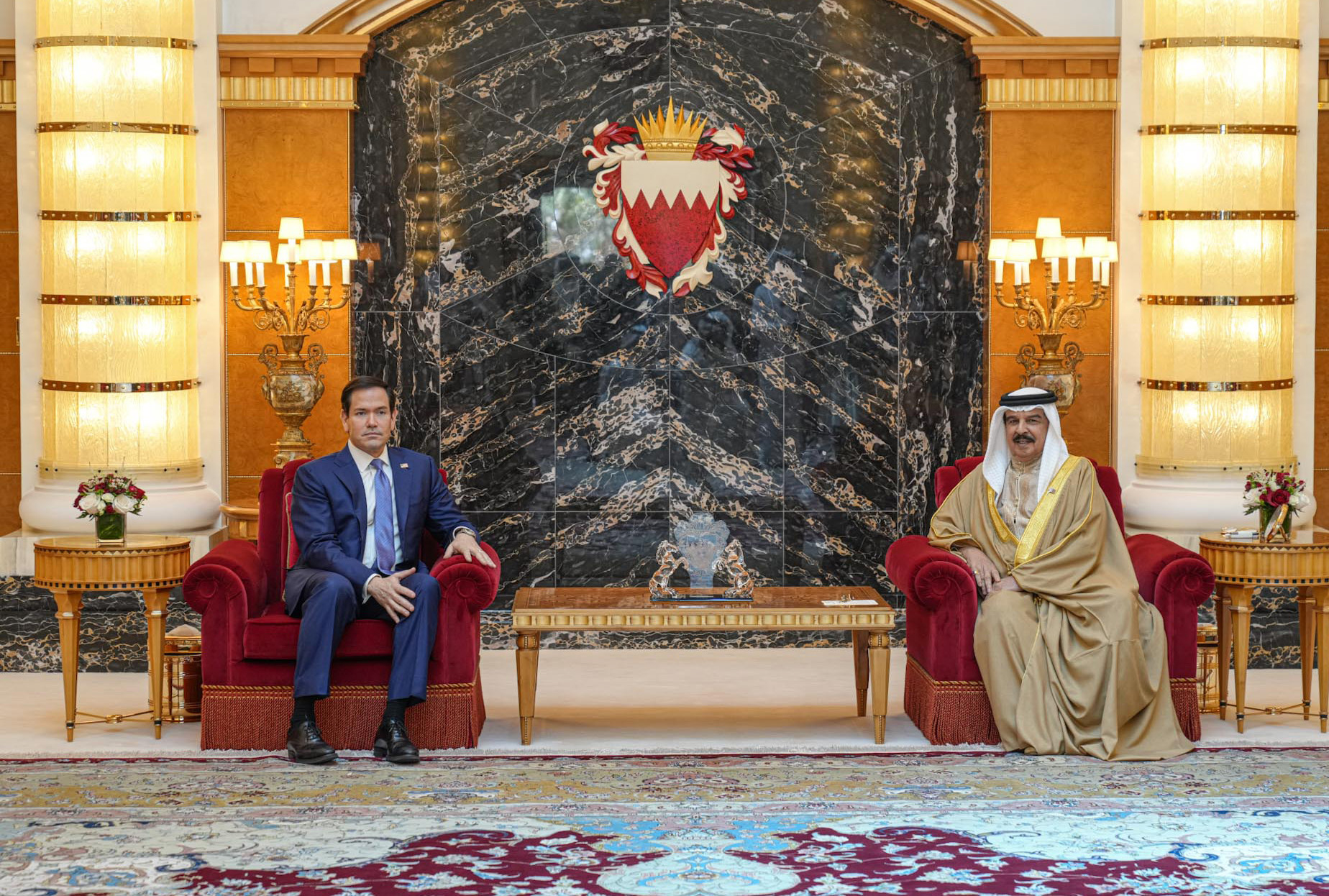
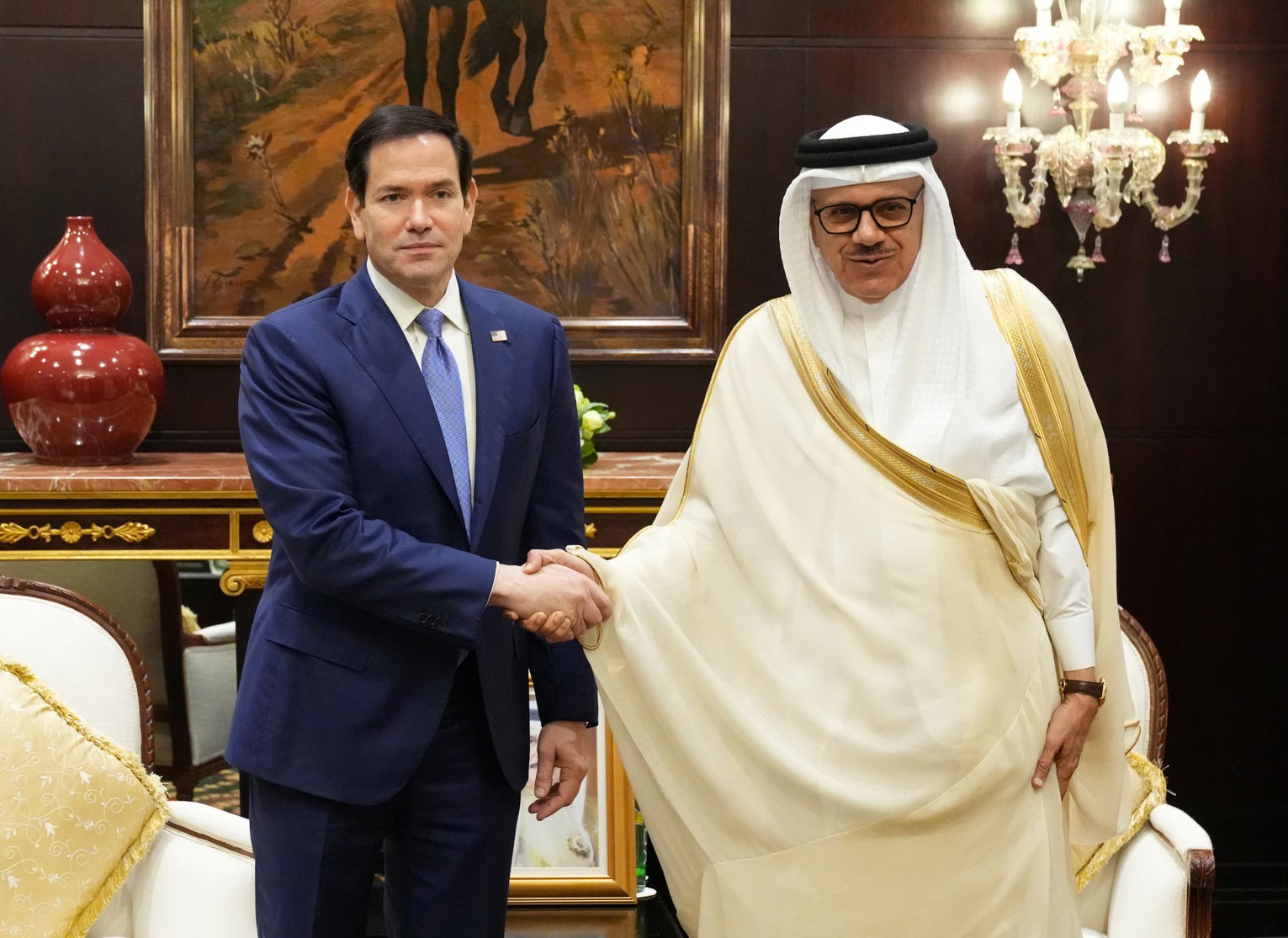
On June 25, 2026, all six GCC foreign ministers issued a joint statement in Manama — alongside Secretary of State Marco Rubio and GCC Secretary General Jasem Albudaiwi — demanding that Phase 2 of the US-Iran deal address “the full spectrum of Iran’s threats, including its ballistic missiles, drones, and support of proxies in the region.” The language covers three threat categories but specifies no caps, ranges, or timelines.
The meeting was co-chaired by Rubio and Bahraini Foreign Minister Abdullatif bin Rashid Al Zayani. It produced the first collective GCC position on missiles since the Phase 2 window opened on June 17. The statement bundles ballistic missiles, unmanned aerial vehicles, and proxy networks into a single aspirational sentence. There is no hierarchy among the three categories, no specification of which Iranian delivery systems fall under each, and no proposed verification architecture.
The Manama demand reads as diplomatic positioning, not a tabled negotiating proposal. It contains no enforcement mechanism. It identifies no forum through which it might be delivered to the parties at the table in Switzerland. And it addresses a process whose structure — three working groups finalized days earlier — was already set before the statement was drafted.
Iran’s response came within twenty-four hours. The Foreign Ministry in Tehran condemned the Manama joint statement as “interventionist, irresponsible and provocative,” stating it “distorted regional realities and repeated US and Israeli positions on Iran’s nuclear programme, missile capabilities, regional allies and the Strait of Hormuz.” The speed of the rejection was unremarkable. The structural problem the demand exposed lay not in Tehran but in the relationship between the Gulf capitals that issued it and the American president who had already disposed of the question eight days earlier.
The Middle East briefing 3,000+ readers start their day with.
One email. Every weekday morning. Free.
Eight Days Earlier, Trump Called It Fair
On June 17, at his closing press conference at the G7 summit in Évian, President Trump was asked about Iran’s ballistic missile program. His answer redrew the terms of the deal his own administration had launched a war to secure.
“If Saudi Arabia and Qatar, and they all have some, I would say that in relative proportion, I think it’s OK.”
— President Donald Trump, on Iran’s right to retain ballistic missiles, G7 Évian closing press conference, June 17, 2026
He added: “If other countries have them, it’s a little bit unfair for them not to have some.”
The statement contradicted the foundational rationale of Operation Epic Fury. The military campaign had been designed — and publicly justified — around the proposition that Iran’s ballistic missile arsenal constituted a threat so grave it warranted armed intervention. Secretary Rubio had articulated the logic in March, describing Iran’s missiles as a shield behind which Tehran was building nuclear capability. At Évian, Trump did not walk that position back through diplomatic channels or a formal policy review. He walked it back on camera, in a single sentence, by invoking the missile arsenals of the very Gulf allies whose security concerns the war had been waged to address.
Fox News captured the pivot in a headline that would have been unthinkable three months earlier: “Trump says Iran’s missiles ‘aren’t the problem’ after White House made them central to war rationale.”
Trump also offered his rationale for the deal in terms that had nothing to do with Gulf security. He was acting, he said, to avoid becoming “Herbert Hoover” — to prevent “an economic catastrophe.” The stated motivation was domestic political survival, not the strategic architecture of the Middle East.
At the same press conference, Trump described a “parallel effort” for Gulf conventional missile discussions. It was a single sentence. No working group was established for it. No negotiator was named. No timeline was set. No country was invited to participate. Nine days later, the parallel effort remains what it was at the moment of its creation: a clause fragment in a press conference transcript.
| Date | Actor | Position on Iran’s Ballistic Missiles |
|---|---|---|
| March 3, 2026 | Secretary Rubio | “We will not allow Iran to hide behind the immunity of a massive short-term ballistic missile inventory” |
| June 17, 2026 | President Trump (G7 Évian) | “In relative proportion, I think it’s OK” for Iran to retain missiles |
| June 20, 2026 | Fox News headline | “Trump says Iran’s missiles ‘aren’t the problem’” |
| June 21–22, 2026 | Phase 2 talks (Switzerland) | Three working groups established — no missile mandate in any |
| June 23, 2026 | President Pezeshkian (Islamabad) | “Does not exist in the MoU, and it never will” |
| June 25, 2026 | GCC-US Manama joint statement | Demands addressing “the full spectrum of Iran’s threats, including its ballistic missiles” |
The sequence reads as a trap. The GCC demand on June 25 calls for something the American president disposed of on June 17 and Iran’s president declared permanently off the table on June 23. The Phase 2 working groups finalized their mandates between those two dates. The ministers arrived after the structure was locked, the concession was made, and the counterparty had refused.
Why Can’t Saudi Arabia Challenge the Évian Logic?
Saudi Arabia cannot publicly dispute Trump’s “in relative proportion” framework without acknowledging the ballistic missile arsenal it has spent nearly four decades declining to confirm. Trump’s logic at Évian rests on a premise — that Gulf states possess comparable weapons — which Saudi Arabia has built its entire strategic posture around neither confirming nor denying.
The Royal Saudi Strategic Missile Force operates what open-source intelligence analysts assess as the most consequential undeclared missile program in the Middle East. Saudi Arabia acquired DF-3A liquid-fueled ballistic missiles from China in 1988 — the foundational purchase of a program that has never been officially acknowledged. In 2007, Saudi Arabia purchased DF-21 solid-fuel medium-range ballistic missiles from China, a deal that Newsweek reported in January 2014 and that was conditionally approved by Washington on the understanding the warheads would be conventional.
In February 2025, Fabian Hinz of the International Institute for Strategic Studies published satellite imagery showing that Saudi Arabia had constructed a new underground missile base near the town of al-Nabhaniyah — “the first new facility built since the 1980s,” according to Hinz’s analysis for the IISS Missile Dialogue Initiative. Construction began around 2019 and was largely complete by early 2024. Administrative buildings and tunnel entrances matched the profile of other known RSSMF installations. Saudi Arabia issued no comment.
Hinz’s research also documented a separate development at al-Watah: a solid-propellant motor production facility where Saudi Arabia, with Chinese technical assistance, appeared to be manufacturing its own ballistic missiles domestically. US intelligence assessments had flagged the program. Riyadh said nothing about that, either.
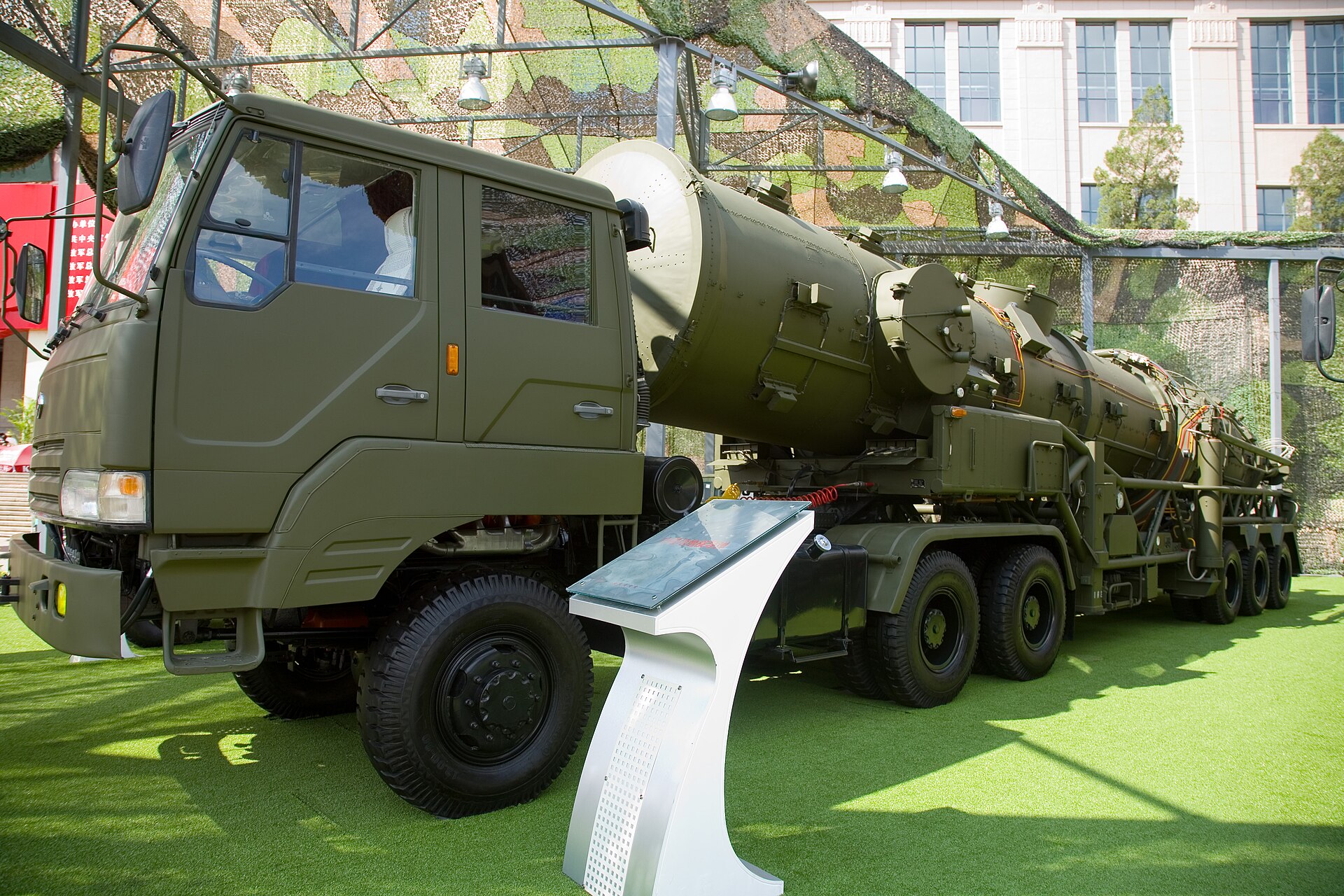
The silence is policy. It has been policy since the first Chinese-built launch facilities were completed south of Riyadh in the late 1980s. A Saudi official, speaking to Breaking Defense in 2022 on condition of anonymity, offered the only on-record articulation of the strategic logic: “Saudi Arabia is obliged, and duty-bound to build a strong ballistic missiles arsenal to create a balance of power with Iran and eventually have a reliable deterrent against Iran’s ballistic missile arsenal.”
The statement captures the paradox the Manama communiqué cannot resolve. Saudi Arabia wants Iran’s missiles constrained — or eliminated. But the framework Trump used to justify leaving them unconstrained is premised on the existence of Saudi missiles. Challenging the framework means confirming the arsenal. Confirming the arsenal invites the very equivalence Trump drew. And the equivalence, once drawn by the American president on the record at a G7 summit, cannot be undrawn by a joint communiqué from Manama that never mentions the Saudi program by name.
Crown Prince Mohammed bin Salman has invested a decade in positioning Saudi Arabia as a conventional military power through transparent procurement — THAAD batteries, PAC-3 interceptors, F-15SA advanced fighters — while the strategic missile force remains entirely in shadow. The Évian statement illuminated that shadow program in a context that serves Iranian interests, not Saudi ones.
The Phase 2 Architecture Has No Missile Door
The Phase 2 negotiations that commenced at Switzerland on June 21–22 established three working groups: nuclear, sanctions, and monitoring/dispute resolution. Missiles, drones, and proxy networks do not appear in the mandate of any group. No GCC member holds a seat at the table.
This architecture was not an oversight. It reflects the boundaries both parties — the United States and Iran — accepted when the MOU was signed on June 15. The MOU text, released after the Geneva ceremony on June 19, addresses Iran’s nuclear program, sanctions relief, and the mechanisms for verifying compliance. Ballistic missiles are absent from the document. Drones are absent. Proxy networks are absent.
Trump’s “parallel effort” exists outside the Phase 2 framework entirely. No institutional structure has been created for it. No meeting has been scheduled. No participant has been named. The phrase appeared once, at Évian, and has not been repeated by any administration official since.
The GCC demand issued at Manama addresses a diplomatic architecture that, by design, cannot receive it. The statement asks Phase 2 to expand its mandate to include ballistic missiles. But Phase 2’s mandate was set by the two parties at the table — Washington and Tehran — neither of which has signaled willingness to reopen the terms. The three working groups are staffed, scoped, and operating.
Adding a fourth mandate — missiles — would require the consent of both delegations, a new working group charter, and a timeline extension within the already compressed 60-day window. None of those steps was discussed at Manama. None has been proposed since.
There is a precedent for this failure. During the 2015 JCPOA negotiations, the United States attempted to incorporate limits on Iran’s nuclear-capable ballistic missiles. The effort was blocked. The resulting compromise — a non-binding clause in UN Security Council Resolution 2231 — expired in October 2023. Iran’s ballistic missile program has operated under zero international legal constraints since. The 2026 MOU does not attempt what the JCPOA failed to achieve. The GCC’s Manama demand asks a weaker agreement to do what a stronger one could not.
How Does Iran Frame the Missile Question?
Iran treats its ballistic missile program as existentially non-negotiable. President Masoud Pezeshkian, speaking at a press conference in Islamabad on June 23, stated: “The discussion over our missiles does not exist in the MoU, and it never will.” He added that Iran “will never negotiate its defense capabilities with any country.”
“The discussion over our missiles does not exist in the MoU, and it never will.”
— President Masoud Pezeshkian, press conference in Islamabad, June 23, 2026
Pakistan’s Prime Minister Shehbaz Sharif, standing beside Pezeshkian, confirmed the framing: “Iran’s missile programme wasn’t part of peace talks at any point.” Pakistan serves as a co-mediating state in the Phase 2 process. The statement was not a negotiating posture. It was a mediator’s account of the talks’ scope.
Pezeshkian also deployed the argument that has made missile disarmament politically toxic inside Iran. Iran’s missiles, he said, “prevented the fate of Gaza” — framing the arsenal not as an offensive capability but as the instrument that prevented national destruction. The statement embeds Iran’s missile program in a deterrence-as-survival narrative that makes any limitation existentially unacceptable to Iranian domestic opinion, regardless of what any diplomatic table might produce.
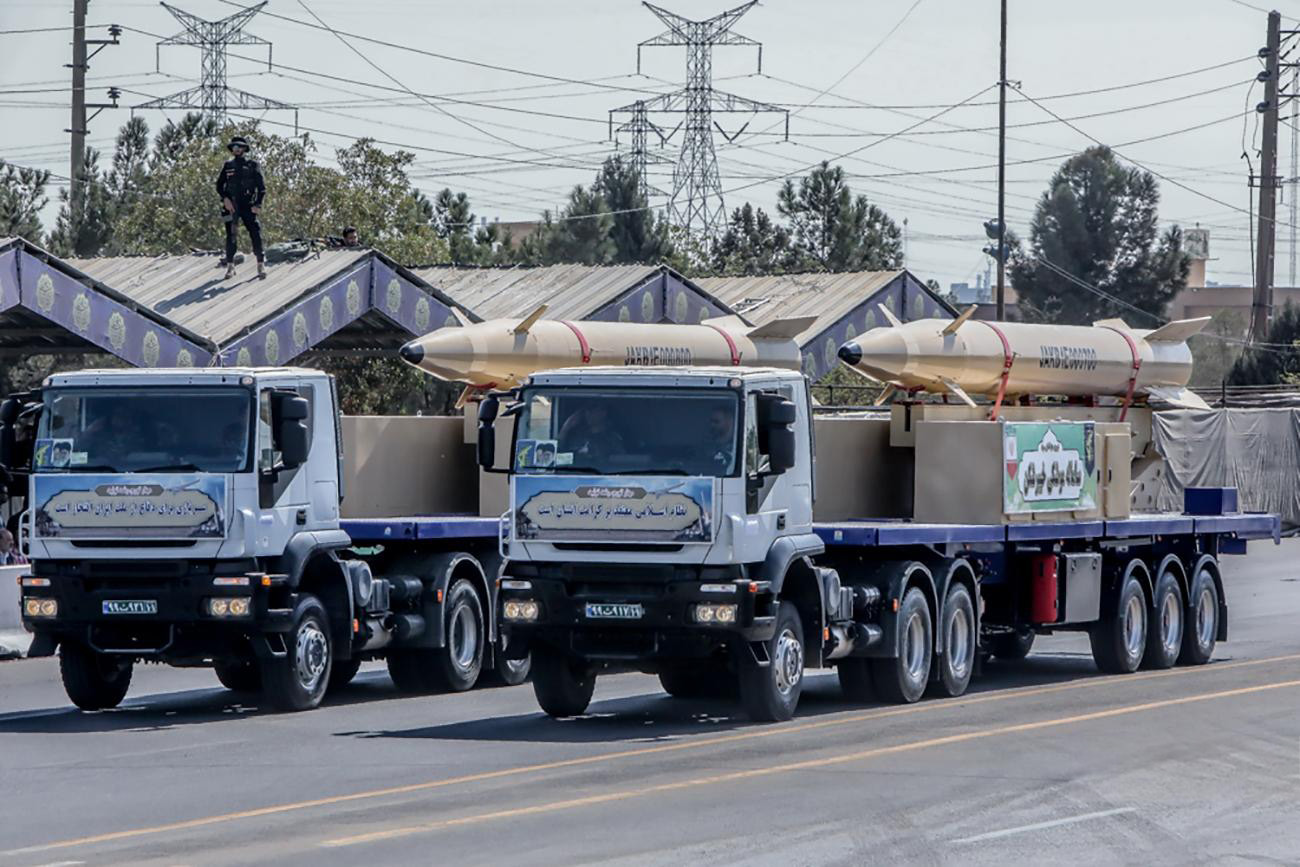
Iranian Foreign Minister Abbas Araghchi had established the position months earlier, stating in February 2026 that Iran’s missile program was “never negotiable” and “purely defensive.” The language has not varied across months, spokespeople, or settings. The institutional commitment behind it is equally fixed. Iran’s missile development infrastructure — dispersed across multiple facilities, embedded within dual-use industrial sectors, hardened and tunneled — was designed to survive exactly the kind of campaign Operation Epic Fury attempted. The portion that survived is operational.
The pattern is consistent across every prior diplomatic engagement where missiles were raised. Iran does not argue about the terms of missile limitation. It rejects the premise that limitation is a subject of discussion. The Manama demand asks Tehran to place on the table something Tehran has defined as existing outside all tables, permanently, by constitutional commitment and strategic doctrine.
Pezeshkian’s “it never will” was issued on June 23. The GCC’s “it must” was issued on June 25. The two statements addressed each other across a forty-eight-hour gap.
The Verification Problem Nobody Raised at Manama
The Manama statement demands that Phase 2 address Iran’s ballistic missiles. It does not address how any resulting agreement would be verified — a question that has defeated every prior attempt to constrain missile programs through negotiated frameworks.
Arms control analysts have documented three structural barriers to ballistic missile verification that have no parallel in nuclear arms control. First, there is no binding international regime governing ballistic missiles — no counterpart to the Nuclear Non-Proliferation Treaty that provides a legal basis for inspections. Second, there is no standing inspections mechanism — no equivalent of the IAEA, whose inspectorate can place seals on centrifuges and measure enrichment levels with physical instruments. Third, there is no fissile-material equivalent as a trackable unit. Enriched uranium can be weighed in kilograms; missiles are manufactured across dispersed supply chains with dual-use components that also serve civilian aerospace, automotive, and chemical industries.
Iran’s production infrastructure compounds every one of these barriers. The “missile cities” documented by open-source analysts are geographically dispersed, hardened against aerial bombardment, and embedded within industrial complexes that serve multiple functions. Before Operation Epic Fury, Rubio estimated Iran’s production rate at “over 100” ballistic missiles per month — a pace reflecting a broad industrial base, not a handful of identifiable assembly lines.
The current dispute between the IAEA and Iran over nuclear inspections offers a direct point of comparison. Director General Rafael Grossi has described a “war of statements” between Washington and Tehran over IAEA access to verify 440.9 kilograms of uranium enriched to 60 percent. Nuclear material is the most controlled, most monitored, most physically constrained category of weapons-relevant material in existence, and the verification system is still breaking down over it. The Manama demand extends the same expectation — verifiable limitation — to a domain where the institutional tools, legal authorities, and physical measurement techniques do not exist.
No GCC foreign minister at Manama proposed a verification mechanism. No portion of the joint statement addresses how missile limits would be monitored, by whom, under what legal authority, or with what right of access to Iranian territory. The demand for inclusion was issued without any framework for what inclusion would require.
The Distance Between March and June
On March 3, 2026, Secretary of State Marco Rubio stood at the State Department podium and described Iran’s ballistic missiles as the threat that justified military force. “Iran can never have a nuclear weapon,” he said, “and we will not allow Iran to hide behind the immunity of a massive short-term ballistic missile inventory.” He characterized Iran as “trying to build a conventional weapons capability as a shield where they can hide behind.” Iran was, by Rubio’s own assessment, producing “over 100” ballistic missiles per month. The policy, as stated, was the destruction of that capability and the prevention of its reconstitution.
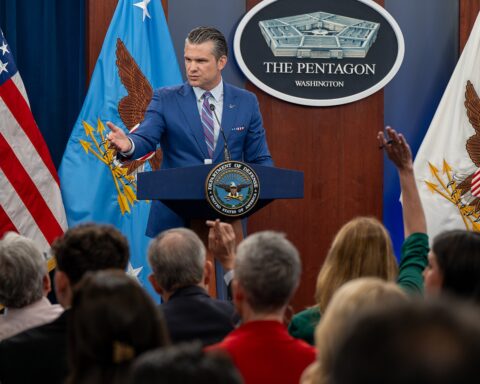
On June 25, Rubio sat in Manama alongside six foreign ministers who wanted to know what happened to that policy. His answer, as reported by Al Jazeera, Dawn, and France 24, was a pledge to “engage them on conversations about every decision that’s made with regards to this negotiation.” He described Washington as seeking “an enduring peace” that would not undermine “the security and prosperity of its allies.”
Between those two dates, the stated American position on Iran’s missiles shifted from elimination to acceptance. The shift was made not by Rubio but by Trump, at Évian, without interagency review and without advance notification to the Gulf allies whose security the March position had been designed to protect. Rubio’s March statement has never been formally retracted. His June pledge to “engage” did not reference it.
The Washington Post, covering Rubio’s Manama visit, captured the new reality in its headline: “Rubio’s new job? Selling Trump’s Iran deal to a worried Gulf.” The article noted that the agreement “does not address Iran’s ballistic missiles nor Tehran’s relations with its regional allies.” The purpose of the Manama visit, as the Post framed it, was not to address the GCC’s concerns about missiles but to manage those concerns — to reassure allies that their interests would be considered in a process from which they had been excluded.
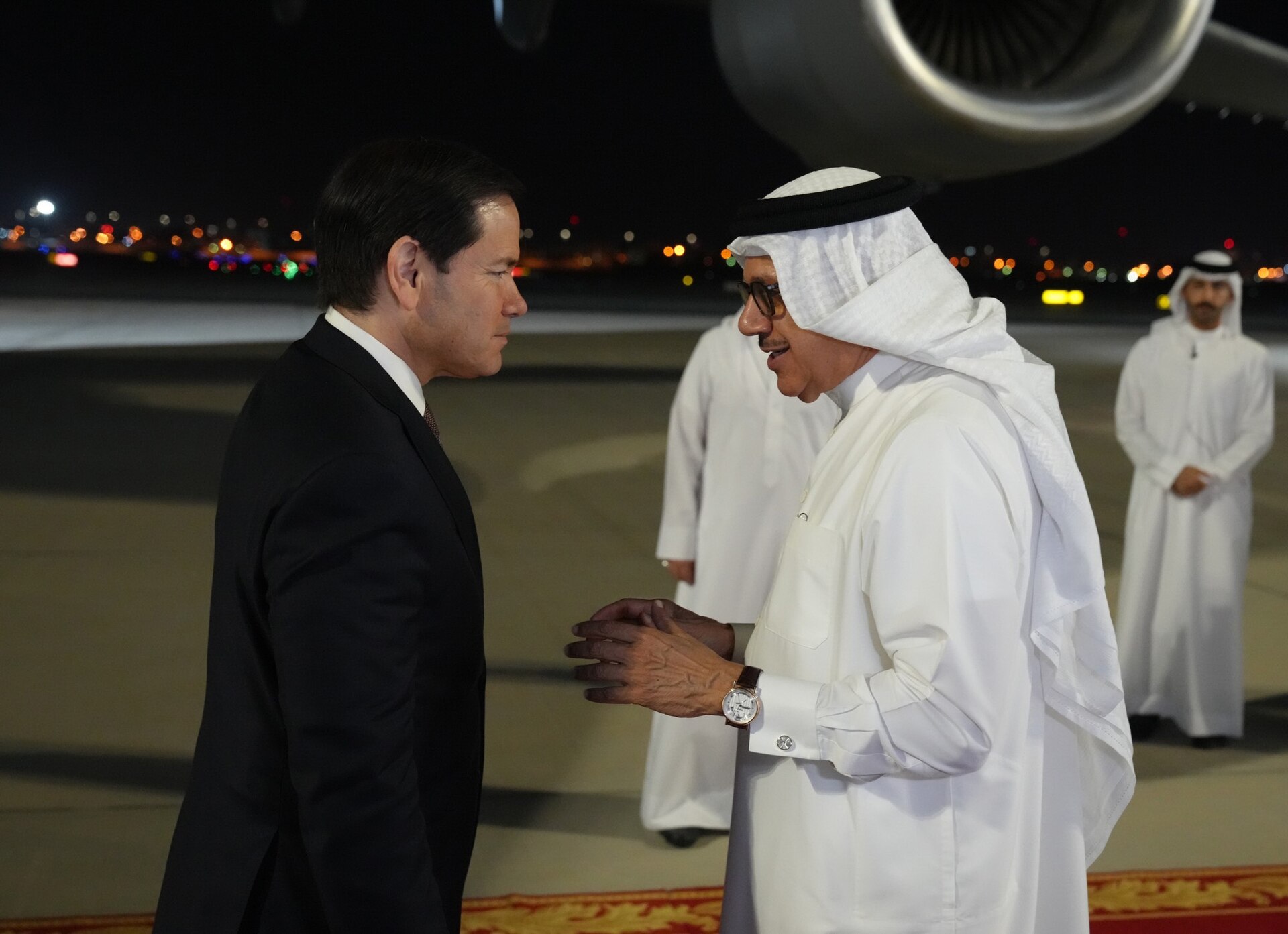
The Gulf ministers heard a commitment to consultation. They did not hear a commitment to reopen the missile question within the Phase 2 framework. They did not hear a mechanism by which their Manama demand would reach the Swiss working groups. And the question that hangs over the entire exchange — how “in relative proportion, I think it’s OK” coexists with “we will not allow Iran to hide behind the immunity of a massive short-term ballistic missile inventory” — was not asked at the Manama table, by any reporter or any foreign minister, at least not in public.
What Position Does the GCC Hold in Phase 2?
As of June 26, the GCC holds no seat in any Phase 2 working group, no veto over the deal’s missile provisions or lack thereof, and no mechanism to insert its Manama demand into the Switzerland process. Saudi Arabia’s sole formal instrument in the nuclear-adjacent space remains the May 13, 2026 US-Saudi 123 Agreement, which omits all three Gold Standard non-proliferation pillars — enrichment restrictions, reprocessing limits, and IAEA Additional Protocol requirements.
Foreign Minister Prince Faisal bin Farhan‘s sole public statement on Phase 2’s substance — “verification is key,” delivered at the European Council on Foreign Relations in Vienna — remains Saudi Arabia’s only direct input into the negotiations. It addressed nuclear verification, not missiles. No Saudi official has issued a public statement on ballistic missile provisions since Trump’s Évian remarks.
The 60-day Phase 2 window, which began on June 17, had approximately 51 days remaining as of June 26. The clock runs regardless of whether missiles are added to the mandate, regardless of whether the GCC’s demand is acknowledged, and regardless of whether the working groups produce results. When the window closes around August 16, any agreement reached — or not reached — will reflect the mandates that existed when the talks began: nuclear, sanctions, and monitoring. Not missiles. Not drones. Not proxies.
Gulf capitals raised a second concern at Manama that the Washington Post reported on June 25: that the proposed $300 billion reconstruction fund outlined in the MOU could be diverted to rebuild Iran’s military capabilities, including the missile infrastructure damaged by Operation Epic Fury. The MOU contains no provisions restricting the end use of reconstruction funds, no monitoring mechanism for military-relevant disbursements, and no oversight role for Gulf states.
The Manama statement’s strength is its collective nature — all six GCC foreign ministers, a unified front, with the American secretary of state as co-signatory. That unanimity is not trivial. It establishes a public record and registers Gulf objection to the deal’s scope at a moment when the scope might still, in theory, be contested. But the distance between registering an objection and altering a negotiation is measured in institutional access, not communiqués. The working groups in Switzerland have defined mandates, named participants, and a ticking clock. The Manama statement has a paragraph.
Three requirements would need to be met for the GCC’s missile demand to enter the Phase 2 process: both the United States and Iran would need to consent to expanding the mandate, a new working group or agenda item would need to be chartered, and the compressed timeline would need to accommodate a subject that defeated negotiators across eighteen months of JCPOA talks in 2014–15. As of June 26, none of the three has been proposed by either party at the table. The mechanisms that would convert the Manama demand into a negotiating position belong to Washington and Tehran. The Gulf ministers asked. The answer will be decided elsewhere.
Frequently Asked Questions
Has any international agreement ever placed binding limits on Iran’s ballistic missiles?
No. The most direct attempt came during the 2015 JCPOA negotiations, when the United States proposed incorporating constraints on Iran’s nuclear-capable ballistic missiles into the agreement. China and Russia blocked the effort, arguing that missiles fell outside the scope of a nuclear deal. The compromise reached through UN Security Council Resolution 2231 used the phrase “called upon” rather than “shall” — a deliberate choice of non-binding language under international law. That provision was further limited by an eight-year sunset clause, which expired in October 2023. Since that date, no international agreement, resolution, or binding legal instrument of any kind has constrained Iran’s ballistic missile development, testing, or production. The Missile Technology Control Regime, the only multilateral framework addressing ballistic missiles, governs export controls between supplier states — it does not restrict a country’s domestic production or holdings.
What specific missiles does Saudi Arabia possess?
Saudi Arabia’s Royal Saudi Strategic Missile Force operates at least two Chinese-origin ballistic missile systems it has never officially acknowledged. The DF-3A (NATO designation CSS-2), acquired in 1988, and the DF-21 (CSS-5), acquired in 2007, are detailed in the body of this article. What that account does not capture is the diplomatic management required to sustain the program. The Reagan administration discovered the DF-3A purchase only after it was complete, triggering a congressional notification fight — Congress was eventually informed under protest. For the DF-21 acquisition, Washington negotiated a condition requiring conventional-only warheads before approving the transfer. Saudi Arabia is the only country outside China to operate DF-series ballistic missiles. No US ally in Europe or the Indo-Pacific holds an equivalent Chinese-origin system, which makes the Trump “in relative proportion” equivalence legally and diplomatically without precedent in the US alliance network.
How many Iranian ballistic missiles survived Operation Epic Fury?
Estimates diverge between the White House and US intelligence agencies. President Trump claimed at the G7 Évian summit on June 17 that 84 to 85 percent of Iran’s missile capability had been destroyed. US intelligence agencies assessed a lower destruction rate — approximately 70 percent — according to reporting by the Foundation for Defense of Democracies and the Jerusalem Post. Iran possessed more than 2,000 medium-range ballistic missiles before the conflict. Among the systems confirmed to have survived is the Kheibar Shekan, a solid-fueled missile with a range of 1,450 kilometers and a maneuvering warhead specifically designed to evade missile defense systems including the PAC-3 and THAAD interceptors deployed by Gulf states. Secretary Rubio stated in March 2026 that Iran’s pre-war production rate exceeded 100 ballistic missiles per month — a pace that, if reconstituted, could replenish losses within months rather than years.
What role do GCC states play in Phase 2 of the US-Iran nuclear negotiations?
None, formally. The Phase 2 structure is a bilateral negotiation between Washington and Tehran, not a multilateral forum like the JCPOA’s P5+1 architecture, which included France, Germany, the United Kingdom, Russia, and China as co-negotiators. That broader format gave European parties formal standing to table proposals — standing no GCC state holds in 2026. Qatar serves as a co-mediator alongside Pakistan, but the mediator role in this architecture means conveying messages between the two parties, not tabling proposals or representing third-party interests. There is no procedural mechanism by which Qatar’s mediation function could transmit the Manama statement’s missile demand into any working group agenda. The GCC’s exclusion is not an oversight in the Phase 2 design; it reflects the bilateral character of the deal both parties accepted when the MOU was signed.
When does the Phase 2 deadline expire, and what happens if missiles are not addressed?
The 60-day Phase 2 window began on June 17, 2026, and expires approximately August 16. As of June 26, roughly 51 days remain. The deadline applies to the three established working groups and their defined mandates — nuclear, sanctions, and monitoring. If the window closes without a missile provision, which is the current trajectory given the absence of any missile-related working group, no binding limitation on Iran’s ballistic missile program will exist under any international agreement. The MOU’s “Day 61” provisions address the Strait of Hormuz transit fee structure, not weapons programs. No mechanism exists within the current Phase 2 framework to extend the negotiating window specifically for missile discussions, and no such extension has been proposed by either party at the table.