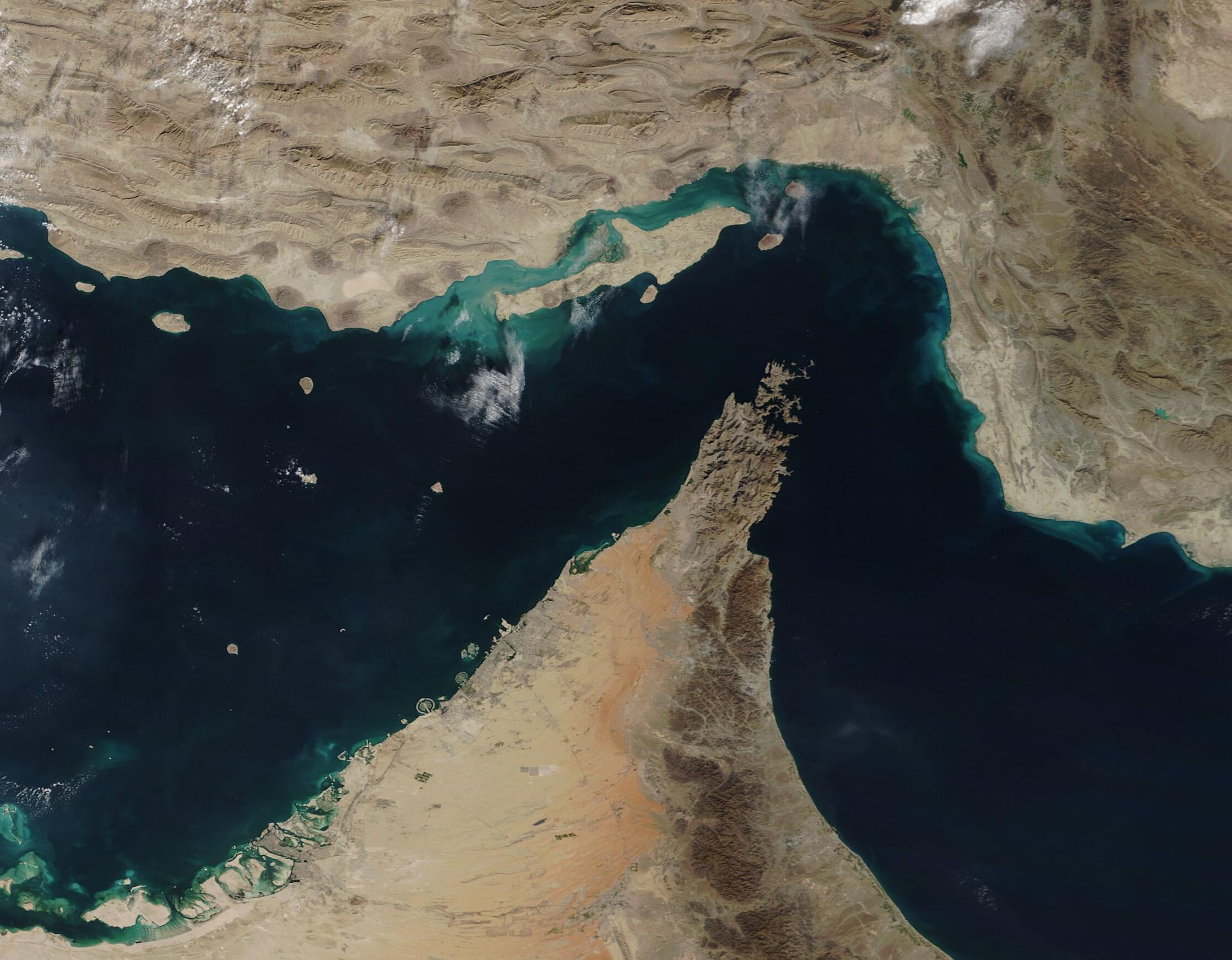

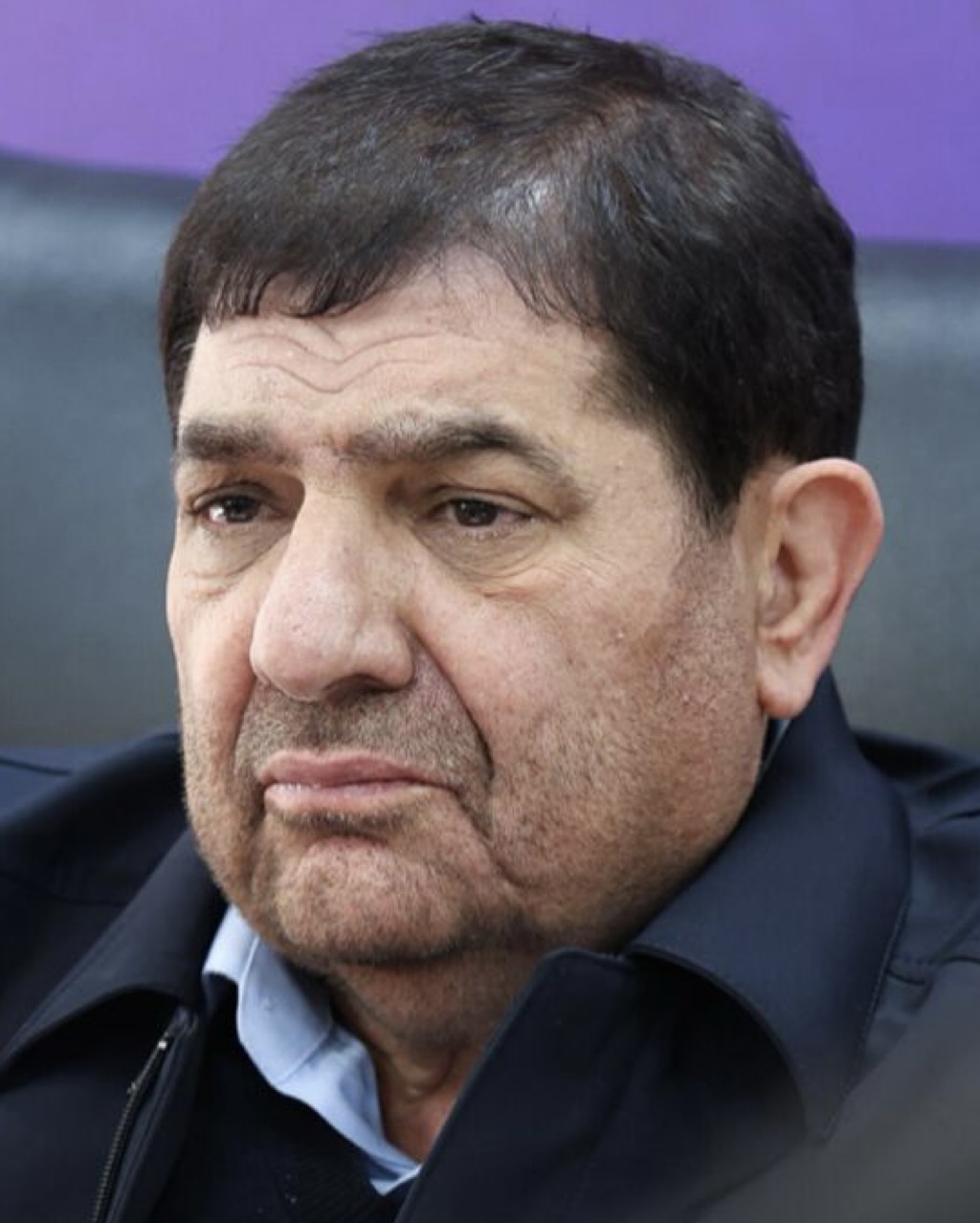
TEHRAN — When Mohammad Mokhber, identified across Mehr News Agency’s May 8 broadcast as an adviser to Supreme Leader Seyyed Mojtaba Khamenei, told Iranians that “the Strait of Hormuz is a capability equivalent to an atomic bomb,” he was not threatening escalation. He was disclosing a bargaining theory. Hormuz is now Iran’s nuclear program by other means — a deterrent that survives every airstrike, requires no enrichment, and can be re-imposed within 48 hours of any deal that asks Tehran to give it up. Mokhber’s address landed roughly 72 hours after Iran’s 14-point MOU response was due, and four to five days before President Donald Trump’s scheduled landing in Riyadh. Foreign Minister Abbas Araghchi has been negotiating a document that asks Iran to “lift restrictions” on Hormuz transit in Phase 1 and accept a 12-year enrichment moratorium with HEU exfiltration in Phase 2. Mokhber’s intervention reframes that document as a request that Iran disarm twice. The Phase 1 ask and the Phase 2 ask, he is telling the diplomatic track in front of the entire country, are the same surrender written two different ways.
Table of Contents
- The Disclosure, Not the Threat
- What Is Deterrence Substitution?
- Why Does the 14-Point MOU Trigger the Authorization Ceiling?
- Article 110 and the Limits of Araghchi’s Pen
- Parliament Is Codifying What the MOU Is Negotiating Away
- The Yongbyon Model, Inverted and Improved
- Why Can’t Saudi Arabia Host a US Hormuz Operation?
- What MBS Needs in Riyadh That Mokhber Has Now Foreclosed
- Through International Law If Possible — and the Other Half
- The Summit and the Sentence That Was Already There
- Frequently Asked Questions
The Disclosure, Not the Threat
Mokhber’s exact phrasing has now appeared in three translations from the same Mehr broadcast: “a capability equivalent to an atomic bomb,” “an opportunity as precious as an atomic bomb,” and the more revealing line — “having in one’s hands a position that allows you to influence the global economy with a single decision is a major opportunity.” Al Jazeera, Asharq Al-Awsat, Middle East Eye and the Times of Israel each carried versions during the May 9 news cycle. The translations diverge; the analytic content does not.
What separates Mokhber’s statement from a decade of Iranian Hormuz rhetoric is what he said next. Iran, he told viewers, had long “neglected” its privileged position along the strait. It would “not forfeit the gains of this war.” It would “change the legal regime of this strait” — through international law if possible, unilaterally if not. He also vowed additional “punishment” against the United Arab Emirates, a sentence that does not appear in the Western coverage but did appear in Mehr’s Persian-language broadcast.
This is the architecture of a position, not the temperature of an outburst. The phrase “atomic bomb equivalent” is doing structural work. It is naming the asset class. It is establishing the price. It is — and this is the part the negotiation tracks in Muscat and Islamabad are still adjusting to — telling the Supreme Leader’s own field commanders that the document Araghchi is reviewing has been classified, in advance, as inadmissible by the office that has to authorize it.
What Is Deterrence Substitution?
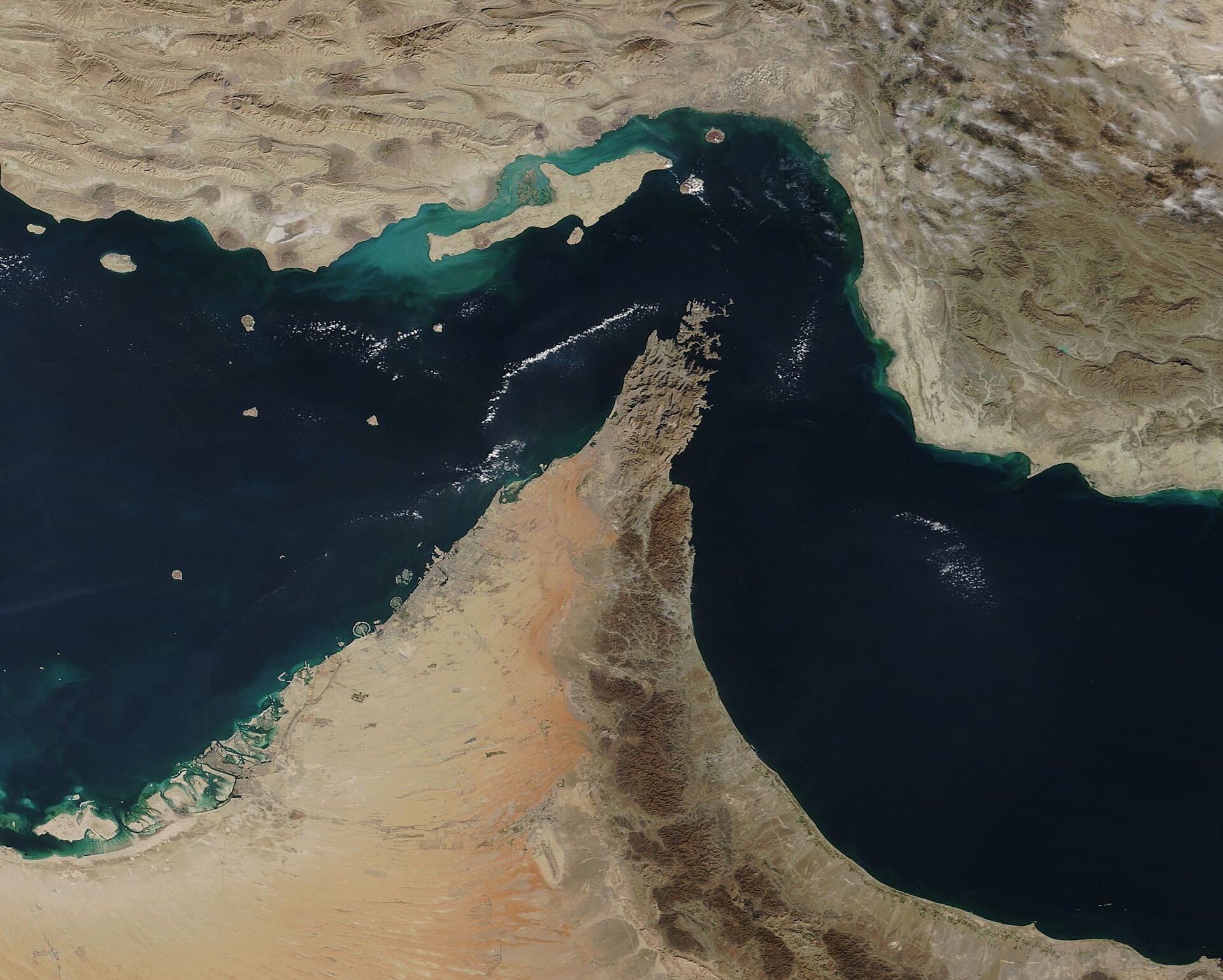
Deterrence substitution is the doctrine that two different instruments — a nuclear program and a geographic chokepoint — can hold the same coercive position in a state’s strategic portfolio, making surrender of one equivalent to surrender of the other. Iran is the first state to deploy the framing publicly. Mokhber’s “atomic bomb equivalent” language is its formal disclosure.
The intellectual scaffolding has been visible in the analytic literature for some months. The National Iranian American Council, in a March 2026 paper, argued that Hormuz had “emerged as Iran’s most decisive instrument of deterrence, potentially even more powerful than its nuclear program or regional proxy network.” If Iran institutionalises the architecture — “managed access, route control, and toll collection” — NIAC concluded, Tehran “may well establish one of the most powerful and sustainable forms of leverage it has ever possessed, surpassing even its nuclear and proxy-based deterrence frameworks.”
The Middle East briefing 3,000+ readers start their day with.
One email. Every weekday morning. Free.
The Carnegie Endowment, in its May 2026 paper “Two Wars Later, Iran’s Nuclear Question Is Still on the Table,” reached the same conclusion through a different route. Iran’s post-war priority order, the analysis found, ran in this sequence: replenish conventional capabilities; maintain Hormuz control; then return, if and when conditions allow, to the nuclear file. Tehran might conclude, Carnegie’s authors wrote, that Hormuz disruption capacity “provides enough deterrence to begin quietly rebuilding its nuclear program.” The coercive portfolio is the point. Hormuz buys nuclear time. Nuclear ambiguity buys Hormuz cover.
Time magazine’s March 25 essay put the operative argument in a single sentence: “The Strait will be Iran’s primary deterrent, the one lever that imposes genuine, immediate, and nearly uncontainable costs on the global economy without requiring a functioning air force or a nuclear warhead.” That sentence is what Mokhber has now elevated, with the imprimatur of Mojtaba Khamenei’s office, from analyst observation to declared state doctrine.
The Council on Foreign Relations, in its May 2026 “Three Lessons From the War for Negotiators,” named the asymmetry that makes the doctrine durable. The United States, CFR’s authors wrote, “achieved tactical damage but could not reach underground infrastructure, eliminate the Strait threat, or produce the political outcome it sought.” The Strait threat is more durable than the nuclear program because it is conventional, reversible on Iran’s terms, and immediately economically catastrophic. CSIS, in its companion paper “Iran’s Strait of Hormuz Gambit and the Limits of U.S. Military Power,” put the asymmetry at the foundation of the deterrence-equivalence claim: the United States can damage Iran but cannot eliminate the Strait threat militarily.
Why Does the 14-Point MOU Trigger the Authorization Ceiling?
The MOU response was due 48 hours after the May 6 delivery; it is now over 72 hours overdue, with Trump’s Riyadh arrival expected within 96. The question commentators keep asking — why is the response late? — has a structural answer rather than a tactical one. The document, as reported by Axios and Foreign Policy on May 6 and confirmed by Al Jazeera and Time on May 7, asks Iran to do two things that Mokhber has just told the country are the same thing.
The Phase 1 provisions, as reported, would have Iran “lift restrictions on transit through the Strait of Hormuz” and would have both sides “lift restrictions around transit” — wording that defers Hormuz’s final legal status to a 30-day Phase 2 negotiation period. The Phase 1 text contains no clause addressing IRGC operational command, no transit-fee prohibition, and no language touching Iran’s parliamentary sovereignty bill.
The Phase 2 nuclear provisions, as reported, would commit Iran to a 12-year enrichment moratorium (one Foreign Policy source extended this to 15 years), a 3.67% post-moratorium cap, a ban on underground nuclear facilities, snap IAEA inspections without notice, and — the line Iran “strongly rejected” — transfer of the existing HEU stockpile out of Iran. Iran’s HEU at Esfahan, per IAEA reporting prior to the access termination in February 2026, stood at roughly 200 kilograms of 60-percent material — though independently verified figures have not been available since.
| Domain | Phase 1 Ask | Phase 2 Ask | Iranian Position (Mokhber Framing) |
|---|---|---|---|
| Hormuz | Lift transit restrictions; mutual de-escalation | Final legal status of strait negotiated within 30 days | “Capability equivalent to an atomic bomb” |
| Nuclear | Confidence-building (no specific cap) | 12-15 year enrichment moratorium; 3.67% cap; HEU transfer out of Iran; no underground sites; snap IAEA | HEU transfer “strongly rejected”; moratorium under review |
| Verification | None binding | IAEA snap, no-notice access | Mokhber: “change the regime of this strait” — codifies opposite |
| Reversibility | 30-day negotiation window | None contemplated | “Not forfeit the gains of this war” |
Read in isolation, each row is contestable. Read together with Mokhber’s framing, they describe a single transaction that asks Iran to dismantle two deterrents whose value the regime now treats as one asset. The reason the response is late is the reason it was always going to be late.
“It may well establish one of the most powerful and sustainable forms of leverage it has ever possessed — surpassing even its nuclear and proxy-based deterrence frameworks.”National Iranian American Council, March 2026
Article 110 and the Limits of Araghchi’s Pen
Why can’t Araghchi simply sign? Article 110 of Iran’s constitution. The Foreign Minister reports to the President; the President has no command authority over the Islamic Revolutionary Guard Corps, no authority to overrule the Supreme National Security Council, and — the operative point during Khamenei’s now-extended absence from public function — no procedural mechanism to ratify a treaty the SNSC has not endorsed. President Masoud Pezeshkian publicly accused IRGC commanders Mohammad-Reza Vahidi and Saeed Abdollahi of wrecking the Islamabad ceasefire in his April 4 remarks (covered in HOS Post 28933); he did not move against either man, because he could not.
The Foundation for Defense of Democracies’ “five men running Iran” assessment, circulating since mid-April, places Mojtaba Khamenei, Vahidi, Mohammad Bagheri, Mohsen Rezaei and an unnamed SNSC operative at the centre of the authorization architecture. Pezeshkian is not on that list. Araghchi reports to a man who is not on that list either. Mokhber, by contrast, is identified by Mehr as an adviser to Mojtaba Khamenei — meaning he is speaking from the apex of the very office that has to ratify whatever the diplomatic track produces.
Mokhber’s statement, in this reading, is not a foreign-policy intervention. It is a domestic one. It tells Vahidi and Abdollahi, both of whom retain operational discretion over IRGC Navy actions in the strait, that the authorization ceiling has been reaffirmed at the level of the Supreme Leader’s son’s office. It tells Araghchi, who does not have IRGC discretion, that whatever he initials in Muscat will be reviewed against a public benchmark already set in Tehran.
The pattern is now visible across three months. IRGC Navy declared “full authority to manage the Strait” on April 5 and again April 10 while Araghchi was in Islamabad. IRGC joint command, via Tasnim, reversed Araghchi’s “completely open” tweet within hours on April 17. The diplomatic track speaks; the authorization architecture answers; the diplomatic track adjusts. The MOU is the third iteration of that loop. Mokhber’s intervention is the answer.
Parliament Is Codifying What the MOU Is Negotiating Away
The Iranian parliament’s National Security and Foreign Policy Committee ratified a 12-article Hormuz sovereignty bill around April 21. The lead sponsor is lawmaker Mohammadreza Rezaei Kouchi. The text, reported across PressTV, the Times of Israel, Al Jazeera and Middle East Monitor, requires that ships transiting the strait coordinate passage with Iranian authorities, that transit fees be collected in Iranian rial, that no cargo or vessel linked to Israel be permitted, and that ships from “hostile” countries — undefined in the draft — receive prior SNSC approval.
The bill is not the IRGC declaration on April 5 reframed in legislative dress. It is the administrative skeleton that converts an episodic naval posture into a permanent state institution. Once the bill becomes law — and committee passage in Iranian practice is the expensive step, with full chamber debate generally a formality on national-security legislation — the legal regime Mokhber promised to “change” will have been changed without negotiation. Iran has already established a Persian Gulf Strait Authority; the parliamentary bill gives it revenue-collection power.
The political mathematics is straightforward. If the bill passes during the MOU negotiations, Iranian parliamentarians will then be asked, in Phase 2, to vote to repeal a law that protects what their own Supreme Leader’s adviser has called an “atomic bomb equivalent.” That vote will not happen. The strait authority creates a sanctions trap no deal can close; the parliamentary bill creates a domestic political trap that no Iranian government can survive trying to dismantle.
Mokhber’s “through international law if possible, unilaterally if not” is the disposal protocol for this exact contingency. If the United States and the GCC pressure Iran to dismantle the legal architecture, Mokhber has already named the alternative. The IRGC has designed its maritime rules to outlast the MOU precisely because the rules are not contingent on the MOU.
The Yongbyon Model, Inverted and Improved
Iran’s doctrine is not without precedent. North Korea has, since the 1994 Agreed Framework, used its Yongbyon nuclear complex as a perennial bargaining chip — offering limited access, partial shutdowns, and freeze commitments in exchange for sanctions relief and oil deliveries, while never surrendering the underlying capability. The 2007 Six-Party Agreement extracted a Yongbyon cooling-tower demolition. The plutonium it had produced remained in North Korean hands. The capability was preserved; the optics were sold.
Iran’s Hormuz architecture replicates the structure with one adjustment that matters. North Korea’s deterrent required massive capital investment, vulnerable above-ground infrastructure, and a fissile inventory whose location could be plausibly targeted. Iran’s deterrent is geography. The strait does not depreciate. It does not require maintenance. It cannot be struck. The cost of preserving the asset, once the IRGC Navy doctrine is in place, approaches zero. The cost of denying the asset to the United States Navy, as the May 2026 CSIS paper on the Strait Gambit makes clear, is the entire forward-deployed Fifth Fleet posture.
The Libya inversion is the other half of the calculus. The 2003 model, advanced by John Bolton and adopted briefly by the Bush administration, demanded complete disarmament before sanctions relief. Libya complied. The Gaddafi regime fell in 2011. Iranian hardliners cite the precedent constantly; Mokhber’s “not forfeit the gains of this war” is the verbal commitment never to repeat it. The structural difference is that what Libya was asked to surrender was a nascent program with no operational deterrent value. What Iran is being asked to surrender is a functioning chokepoint already producing deterrent effects — Brent at $100-$101 per barrel as of the May 7-8 trading sessions, WTI near $94, Hormuz April transit volume at 191 vessels per Kpler against a pre-war baseline of approximately 3,000 monthly.
| Model | Asset | Maintenance Cost | Vulnerability to Strike | Reversibility |
|---|---|---|---|---|
| North Korea (Yongbyon) | Nuclear program | High; specialised personnel | High; above-ground infrastructure targetable | Yes — can be rebuilt but not within bargaining window |
| Libya (2003 model) | Nascent nuclear program | Moderate | High | None — full surrender preceded regime collapse |
| Iran (Hormuz doctrine) | Geographic chokepoint | Near zero | Effectively un-destroyable | Re-imposable within 48 hours of any deal |
The Carnegie Endowment’s March 2026 paper “Iran Rewrites Its War Strategy” identified the doctrinal shift behind the table: Iran has moved from controlled escalation to “unconditional escalation” — regionalising conflicts, closing Hormuz, targeting energy and financial infrastructure as a matter of declared policy rather than reactive choice. Mokhber’s address ratifies the shift in the language of formal state doctrine. The diplomatic track will spend the next 48 hours catching up to a position that has been reorganising itself, in plain sight, for at least six weeks.

Why Can’t Saudi Arabia Host a US Hormuz Operation?
The Kingdom is the structural victim of the doctrine Mokhber just disclosed. Saudi Arabia’s Yanbu loading ceiling sits between 4 and 5.9 million barrels per day; pre-war Hormuz throughput ran 7 to 7.5 million bpd. The structural gap — 1.1 to 1.6 million bpd of unaccommodated export capacity — is the daily price of Hormuz closure. Current Brent sits below the Bloomberg-cited Saudi fiscal break-even of $108-$111 per barrel. The Kingdom is running a deficit every day the strait stays restricted.
And yet, when Trump announced Operation Project Freedom on May 4 — the publicly stated US plan to force Hormuz open through naval pressure — Riyadh said no. Saudi Arabia denied basing access at Prince Sultan Airbase, refused overflight rights, and killed the operation in 36 hours. The Chatham House analysis published this week described MBS’s reaction as “surprised” and “angered” at not being notified before the announcement; NBC and NPR confirmed the same. Riyadh’s veto stopped at the waterline, and CENTCOM noticed. Project Freedom resumed only after a second Trump-MBS call on May 7-8, under undisclosed terms, with Saudi Arabia and Kuwait lifting select restrictions but neither offering forward basing.
Chatham House’s lead Gulf analyst captured the calculus plainly. Riyadh, the May 2026 paper concluded, wants “a permanent end to the war on almost any terms.” Saudi Arabia is “very supportive of diplomatic efforts by Pakistan.” The Kingdom is “beginning to reduce its dependence on Hormuz” and reorient toward the Red Sea — western coastline projects now ranking as “key priorities.” The Saudi position, in other words, is that the war must end on terms Iran will sign, because the alternative (Iran declining to sign) is the daily fiscal arithmetic Riyadh is currently absorbing.
Mokhber’s “atomic bomb equivalent” framing forecloses the easy version of that exit. If Hormuz is the equivalent of a nuclear deterrent, and if Iran has just publicly committed to “not forfeit the gains of this war,” then the deal MBS needs Trump to deliver is a deal whose central provision Iran has just rejected on a rolling basis. Iran has already threatened to close Hormuz forever for Bahrain as a precedent for selective denial. The pattern is bilateralised obstruction, codified obstruction, monetised obstruction. None of it is Phase 1 lift.
What MBS Needs in Riyadh That Mokhber Has Now Foreclosed
Trump’s reported May 13-16 Gulf tour arrives in the most constrained Saudi political environment of the post-2017 period. The agenda, as briefed by the Washington Institute and the Middle East Institute and corroborated by wire-service reporting, contains a $600 billion investment and trade framework, a $142 billion defence sales package weighted toward air and missile defence and maritime security, and an MBS-driven request that meetings include Palestinian Authority President Mahmoud Abbas, Lebanese President Joseph Aoun and Syrian leader Ahmed al-Sharaa.
The Crown Prince’s normalisation precondition — the establishment of a Palestinian state — has not moved. The Crown Prince’s basing precondition, made explicit in the Project Freedom episode, also has not moved: Saudi Arabia will not be the launching pad for actions Iran can retaliate against. Both preconditions are negotiable in theory and immovable in the actual political conditions that produced them.
What MBS needs from the visit is a US commitment to a diplomatic framework that ends the war on terms Iran will accept. What Mokhber has just done is publicly narrow the set of terms Iran can accept to those that preserve Hormuz operational control and deter the nuclear file simultaneously. The summit will produce, almost certainly, the announcements the staff has prepared — investment frameworks, defence commitments, a Palestinian-issue communiqué worded to allow each party to claim the language they need. It will not produce the strait deal because the strait deal does not exist.
The pattern that should concern Riyadh is the temporal one. Trump will be on Saudi soil while Iran’s MOU response remains outstanding. Mokhber’s address has set the public Iranian benchmark against which any Saudi-mediated text will be measured. Iran’s two voices on MOU deadline day made the authorization ceiling visible; the summit week will repeat that pattern at higher amplitude.
“The Strait will be Iran’s primary deterrent, the one lever that imposes genuine, immediate, and nearly uncontainable costs on the global economy without requiring a functioning air force or a nuclear warhead.”Time magazine, March 25, 2026
Through International Law If Possible — and the Other Half
Mokhber’s clause “through international law if possible, unilaterally if not” maps onto a specific legal strategy that Iranian academic lawyers have been advancing since the parliamentary bill emerged. The argument, summarised by EJIL Talk in its May essay “Codifying Coercion” and addressed at length by Chatham House’s April 2026 paper on Hormuz, shipping and law, runs in three steps.
The first step is a non-party argument. UNCLOS transit passage rules — Articles 37 through 44 of Part III — are, in Iran’s reading, not customary international law but a “package deal” binding only on UNCLOS parties. Iran has not ratified UNCLOS. The legal foundation for declaring a “new regime” therefore rests, on Iran’s account, on a defensible doctrinal position rather than a frontal repudiation of customary law.
The second step is a wartime-framework argument. Laws of naval warfare, Iran’s lawyers contend, override peacetime UNCLOS rules during armed conflict. Iran argues it was attacked first, that the conflict has not formally terminated, and that the framework therefore continues to apply. Under wartime rules, Iran would owe transiting vessels only the right of innocent passage, which under Article 19 can be suspended on threat to security.
The third step is the parliamentary bill. EJIL Talk’s reading — “Codifying Coercion” — is that the bill transforms an illegal act of war (closure or selective denial) into a permanent administrative structure. Once it is law, Iran no longer needs to defend a maritime closure as a wartime measure. It defends it as a routine domestic regulatory exercise of sovereignty over coastal waters.
The international-law position, articulated across the Western legal commentary, is that UNCLOS Article 44 — “there shall be no suspension of transit passage” — applies as customary international law to non-parties as well, and that UNCLOS Article 26 prohibits transit charges except for specific services rendered. Iran’s bill mandates fees in rial; Article 26 says the fees are not lawful; the gap between the two will not be closed by negotiation.
Mokhber’s “unilaterally if not” is the disposal protocol. If the multilateral framework rejects the new regime — as it will — Iran imposes it as fait accompli. The May 7 incidents in which the USS Truxtun, USS Rafael Peralta and USS Mason were attacked during the nominal ceasefire, per US Central Command’s reporting, are the operational expression of the unilateral-if-not clause. The legal strategy and the operational posture are the same strategy with different signatures.
The Summit and the Sentence That Was Already There
The MOU response is overdue because the MOU asks Iran to surrender what Mokhber has now publicly declared untradeable. Trump will arrive in Riyadh while that overdue response is still outstanding, and while Mokhber’s “atomic bomb equivalent” framing has set the Iranian benchmark for any deal text that emerges from the summit’s diplomatic shadow. The Saudi position — needing the war to end on terms Iran will sign — meets the Iranian position — not signing terms that surrender the deterrent equivalent of a nuclear weapon — at the place where the diplomatic track has been stalling for three weeks.
What the summit will produce is the announcement architecture: investment frameworks, defence sales, a Palestinian-issue communiqué carefully worded for plausible deniability on either side. What it will not produce is the strait deal, because the strait deal would require Iran to repudiate, in a treaty signed under American duress, a doctrine its Supreme Leader’s adviser has just publicly declared the equivalent of nuclear surrender.
The CFR sentence from the May 2026 negotiator’s brief is the operative one. The United States “achieved tactical damage but could not reach underground infrastructure, eliminate the Strait threat, or produce the political outcome it sought.” Mokhber’s address translated that observation into Iranian state doctrine. The sentence was already there in the Western analytic literature. It is now in the broadcast record of the Supreme Leader’s office.
Frequently Asked Questions
Who is Mohammad Mokhber and why does his statement carry weight beyond Iran’s elected government?
Mokhber, identified in Mehr News Agency’s May 8 broadcast as an adviser to Supreme Leader Seyyed Mojtaba Khamenei, previously served as First Vice President under Ebrahim Raisi (2021-2024) and was acting head of state for 50 days following Raisi’s death in May 2024. His current advisory role places him inside the office that ratifies decisions taken by the Supreme National Security Council. Statements from this position are binding on the diplomatic track in a way that statements from the Foreign Ministry are not — Foreign Minister Araghchi reports to President Pezeshkian, who under Article 110 of the constitution has no authority to overrule the office Mokhber serves.
Has Iran ever previously declared a non-nuclear capability the equivalent of a nuclear weapon?
No public Iranian statement at this level of authorisation has previously made the equivalence explicit. IRGC commanders have for years described Hormuz as a strategic asset and missile programs as deterrent infrastructure, but the “atomic bomb equivalent” framing is novel. The closest analogue is North Korean rhetoric in the late 2000s describing the Yongbyon complex as the regime’s “treasured sword” — but that framing protected a nuclear program rather than substituting for one. Mokhber’s statement is the first known case of a state publicly declaring a geographic asset to be the deterrent equal of a nuclear program.
What does the Iranian parliamentary bill require that the existing IRGC declarations do not?
The 12-article bill creates revenue-collection authority — the right to demand transit fees in Iranian rial — that the April 5 IRGC Navy declarations do not contain. It also creates a categorical bar on Israel-linked vessels, a prior-approval requirement for “hostile country” shipping that runs through the Supreme National Security Council rather than the IRGC chain of command, and an administrative apparatus that converts naval discretion into bureaucratic routine. The IRGC declarations established operational authority; the parliamentary bill establishes legal authority. Combined, they cover both “by international law” and “unilaterally” pathways from Mokhber’s framing.
Why can Saudi Arabia not simply allow basing for a US Hormuz operation despite the daily fiscal cost of closure?
Iran’s targeting doctrine, demonstrated repeatedly during the war, treats hosting infrastructure as legitimate military targets. The February 28 destruction of SATCOM terminals at NSA Bahrain and the April 7 ballistic-missile salvo at the Eastern Province established the precedent. Saudi Arabia’s Project Freedom denial, reported in the Chatham House paper this week, reflected MBS’s calculation that hosting the operation would re-target Saudi domestic infrastructure — Aramco facilities, water treatment, power generation — that Iran has already proved willing and able to strike. The fiscal cost of closure, however damaging, is bounded; the cost of becoming the launching pad for a failed Hormuz operation is not.
If the MOU cannot be signed in its current form, what does a deal Iran would sign actually look like?
The reported Iranian counter-positions, surfaced in the late-April negotiation rounds, point toward a structure that decouples Phase 1 from Phase 2 entirely: a verified de-escalation framework on Hormuz transit (cease active obstruction without formal renunciation of legal regime change) in exchange for limited sanctions relief, with the nuclear file deferred to a separate track that includes the regional security architecture Iran has demanded since 2003 — meaning Saudi enrichment limits, Israeli ambiguity treated as part of the regional package, and US recognition of Iran’s regional role. The MOU as drafted bundles what Iran wants kept separate, which is why it cannot be signed in the form delivered May 6.
The comparison Mokhber drew between Hormuz and an atomic bomb gains additional credibility from a factor he did not name: the US conventional arsenal that would otherwise be deployed to force open the strait has been substantially depleted by Operation Epic Fury. With roughly 80 percent of JASSM-ER stocks and up to 80 percent of THAAD interceptors expended, the military instrument Iran is treating as the equivalent of a nuclear program now faces a restrike capacity that cannot, without 18 to 24 months of replenishment, replicate the first campaign’s weight. That structural constraint is examined in Trump Wants to Resume the Iran War. The Arsenal Says He Cannot.
The comparison Mokhber drew between Hormuz and an atomic bomb gains additional credibility from a factor he did not name: the US conventional arsenal that would otherwise be deployed to force open the strait has been substantially depleted by Operation Epic Fury. With roughly 80 percent of JASSM-ER stocks and up to 80 percent of THAAD interceptors expended, the military instrument Iran is treating as the equivalent of a nuclear program now faces a restrike capacity that cannot, without 18 to 24 months of replenishment, replicate the first campaign’s weight. That structural constraint is examined in Trump Wants to Resume the Iran War. The Arsenal Says He Cannot.
ISW’s May 13, 2026 assessment reinforced the “replacement deterrent” framing: Iran has restored operational access to 30 of 33 Hormuz missile sites during the ceasefire period, and Iranian leaders “may assess that the severe degradation of their traditional forms of deterrence requires Iran to assign greater strategic significance to the strait.” That analysis is examined in full in ISW Says Iran Believes It Holds the Upper Hand. The CIA Data Supports It.