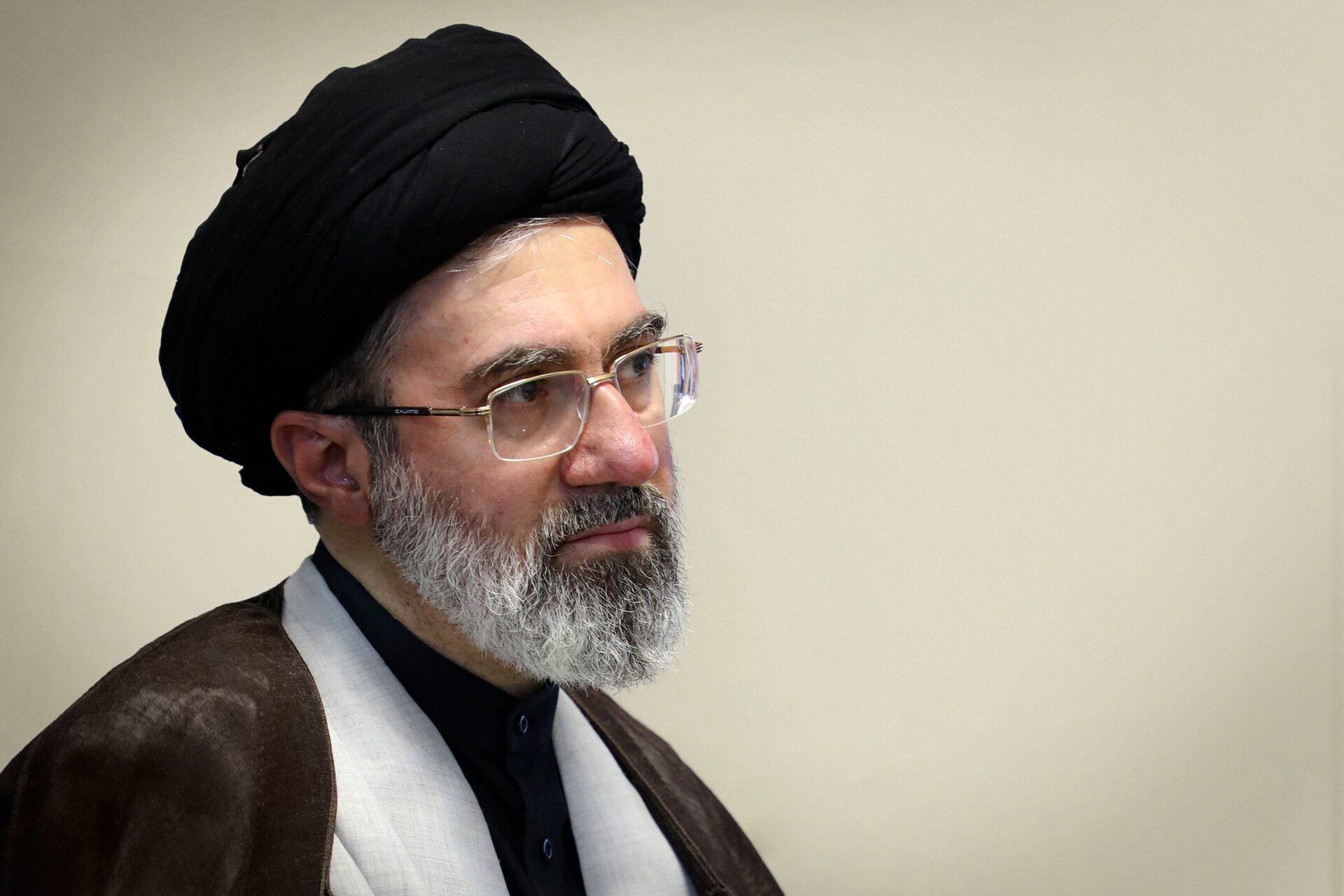

TEHRAN — Mojtaba Khamenei released a written revenge declaration on July 11, pledging to avenge his father’s death — his seventh statement since becoming Supreme Leader on March 9 and his first since Ali Khamenei’s funeral ended six days earlier. He has not appeared on video, released audio, or been confirmed present in any physical setting for 127 consecutive days.
The statement arrived as three separate diplomatic tracks collided on the same day: Pakistan’s Prime Minister Shehbaz Sharif held separate calls with Iranian and Qatari leaders to salvage stalled Islamabad negotiations, Iran’s Foreign Minister Abbas Araghchi traveled to Oman for Hormuz safe-transit talks, and Donald Trump threatened to “decimate and destroy” Iran. The man who three weeks ago told his own government he had “a different view” on the Islamabad MOU — and transferred explicit political liability for it to President Pezeshkian — now issued a revenge vow that simultaneously disclaimed dependence on “my personal existence.”
Table of Contents
The Seventh Written Statement
The statement appeared on Mojtaba’s official Telegram channel and was disseminated through Iranian state media on July 11, following the identical format of all six prior communications: written text, no audio, no video, read on state television over a still photograph. “We pledge to avenge your pure blood and the blood of all the martyrs of these two wars by taking revenge against the criminal, disgraceful murderers,” the statement read, according to Business Standard and France 24. “This vengeance is what our nation is demanding, and this must definitely be done.”
A second passage addressed the absence directly. “This matter depends neither on my personal existence nor on that of other officials,” the statement continued, per India TV News and Radio Free Europe/Radio Liberty. “Whether we are present or not, it will come to pass.”
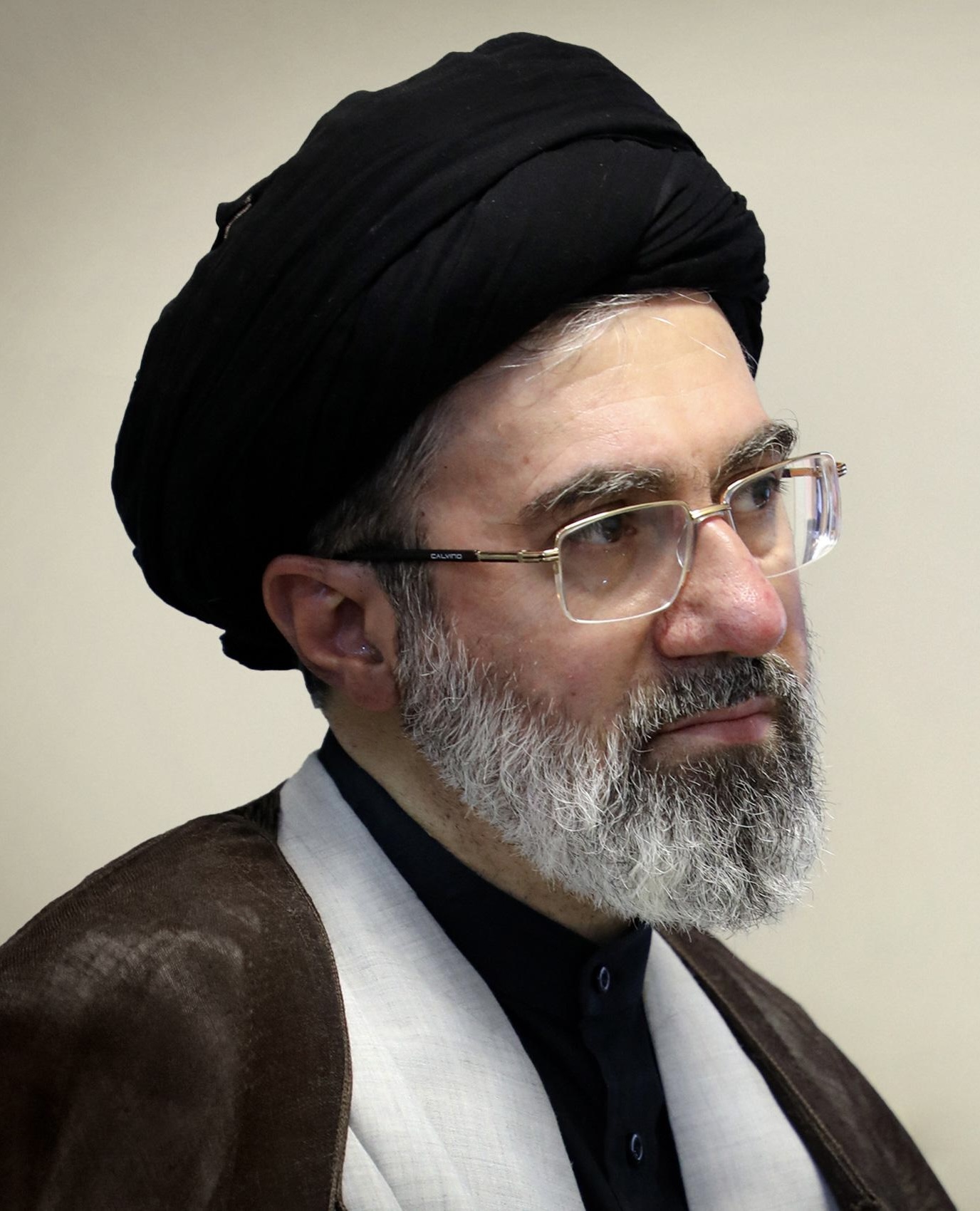
The statement thanked “tens of millions of people across Iran and Iraq” for attending the funeral ceremonies, framing the turnout as “enemy-shattering” and “historic,” according to CNN. Iranian state media — including Tasnim News and Fars News — echoed the language verbatim, describing an “astonishing, enemy-defeating and historic presence,” in phrasing identical to Mojtaba’s own text, suggesting coordinated messaging between the Supreme Leader’s office and the state propaganda apparatus.
The document contained no reference to the Islamabad MOU signed three weeks earlier, no directive on the nuclear file, no named military objectives, and no conditions for the revenge it promised.
The Middle East briefing 3,000+ readers start their day with.
One email. Every weekday morning. Free.
| Date | Day of Absence | Subject | Format |
|---|---|---|---|
| March 12 | 4 | First statement as Supreme Leader | Written / Telegram |
| March 20 | 12 | Nowruz message | Written / Telegram |
| April 9 | 32 | Policy statement | Written / Telegram |
| April 18 | 41 | Policy statement | Written / Telegram |
| May 26 | 79 | Military and strategic messaging | Written / Telegram |
| June 18 | 102 | MOU conditional approval | Written / Telegram |
| July 11 | 127 | Revenge declaration and funeral tribute | Written / Telegram |
Can a Leader Who Transferred the MOU Lift the Veto?
On June 18, Mojtaba issued a written statement — via the same Telegram channel, in the same format — saying he had approved the Islamabad Memorandum of Understanding “despite having a different view,” according to IranWire, Al Jazeera, and The Hill. The language was precise: the Supreme National Security Council and President Pezeshkian “accepted responsibility” for the agreement. Mojtaba granted permission “with conditions,” but the conditions were open-ended, and the SNSC has no mechanism to self-adjudicate whether they have been met.
Only Mojtaba can determine whether his own conditions are satisfied. That structural reality, which House of Saud analyzed when the June 18 statement first appeared, created a veto that functions regardless of whether the man who holds it can physically exercise it. The July 11 revenge declaration did nothing to resolve this problem — it did not reference the MOU, the Islamabad track, or any diplomatic framework.
Pezeshkian later claimed the MOU “had Khamenei’s full approval,” according to IranWire — directly contradicting Mojtaba’s “different view” framing. The gap between these two accounts remains unresolved, and the July 11 statement did not close it. For the negotiating teams assembling for the next round, the question that the revenge vow left unanswered is whether the man issuing it from an undisclosed location actually authorizes the concessions that a final deal would require.
Revenge and Diplomacy on the Same Day
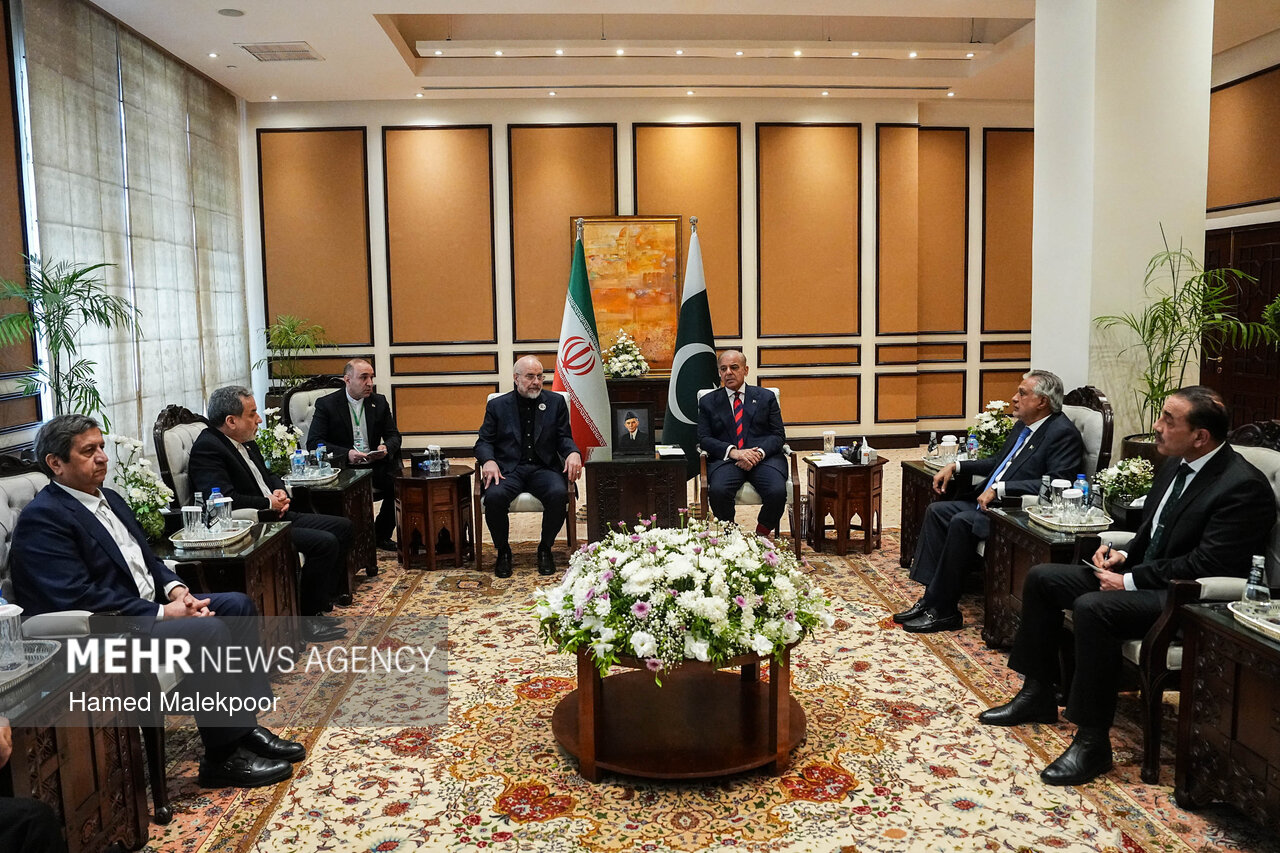
July 11 produced a split screen across three capitals. While Mojtaba’s statement circulated through state media in Tehran, Iran’s Foreign Minister Araghchi traveled to Oman for talks on Hormuz safe-transit mechanisms — a track explicitly designated under the ceasefire framework, according to The National and Khaleej Times. In Islamabad, Pakistan’s PM Sharif held separate calls with Iranian and Qatari leaders to revive stalled negotiations, with the next round confirmed for July 14-15, Geo.tv reported.
The two-track signaling appeared coordinated rather than contradictory. IRGC-affiliated Fars News cited an “informed source” on July 11 disputing CBS News reports that Iran had acknowledged Hormuz attacks were a mistake, insisting Tehran had submitted no request for negotiations, according to the Times of Israel liveblog. Araghchi was, at that moment, in Muscat conducting exactly those negotiations.
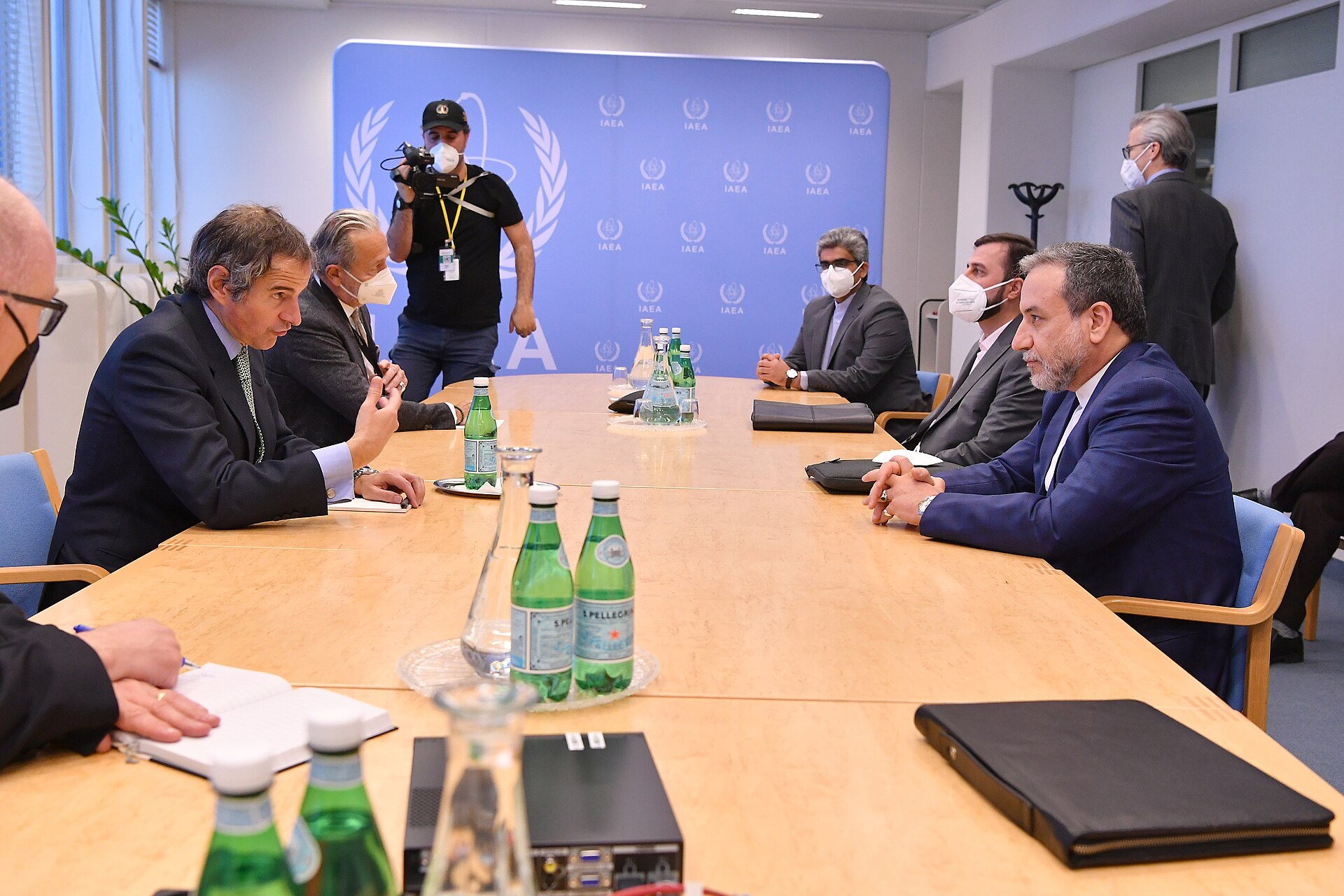
Trump added a third signal. On July 11, he threatened to “decimate and destroy” Iran, according to CNN, CBS News, and Fox News — three days after declaring the ceasefire “over” on July 8 while simultaneously directing his administration to continue talks. Araghchi had warned on July 7 to “honor your signature,” telling Washington that Iran would not begin final-deal negotiations if military threats continued, per the Deccan Herald.
Honor your signature.
— Abbas Araghchi, Iran’s Foreign Minister, warning to the United States, Deccan Herald, July 7, 2026
The escalation preceding the statement included US strikes near Iran’s Bushehr nuclear plant on July 9 and IRGC missile attacks on US bases in four countries within 24 hours, according to multiple news agencies. The Islamabad framework was designed to contain that tempo, but the July 11 revenge declaration made no reference to de-escalation, ceasefires, or any mechanism for restraint — while Araghchi’s Oman trip proceeded on the premise that restraint remained possible.
Who Commands While the Supreme Leader Cannot Appear?
Four senior Iranian officials told The New York Times in April 2026 that Mojtaba had undergone three leg surgeries, awaits a prosthetic limb, and requires further plastic surgery for facial burns suffered in the February 28 strike that killed his father. Iranian security officials refused Mojtaba’s own request to attend Ali Khamenei’s funeral, citing security concerns, Al Jazeera and Time magazine reported. All three of Ali Khamenei’s other sons stood beside the coffin at Tehran’s Imam Khomeini Grand Mosalla on July 5 — Mojtaba was not there.
The absence has consequences beyond symbolism. Jason Brodsky, policy director at United Against Nuclear Iran, assessed that “the balance of power between the office of the supreme leader and the IRGC has shifted” since Mojtaba’s appointment, noting that Mojtaba is “more dependent” on the Revolutionary Guard than his father was, having relied on IRGC support to secure the post, according to the Times of Israel. The Assembly of Experts’ selection on March 9 — which took 8-9 days following Ali Khamenei’s death — occurred under documented IRGC pressure, with commanders making “repeated contacts and psychological and political pressure” on assembly members, Iran International reported.
Alex Vatanka, senior fellow at the Middle East Institute, told the Times of Israel that “Mojtaba will most likely rule through the institutions, rather than over them.” In a separate assessment for Newsweek, Vatanka observed: “The regime can choreograph continuity, but it cannot manufacture personal authority overnight.” The July 11 statement fit that description — an institutional act of choreographed continuity, issued by a leader whose personal authority remains unverifiable four months into his tenure.
The regime can choreograph continuity, but it cannot manufacture personal authority overnight.
— Alex Vatanka, Senior Fellow, Middle East Institute, Newsweek, July 2026
The Islamabad Clock
The Islamabad Memorandum of Understanding, signed June 17, established a 14-point framework with a 60-day negotiation window covering sanctions, frozen assets, and the nuclear file. July 11 marked Day 24 of that window, which closes around August 16 — two days before the Persian Gulf Security Accord’s own August 18 deadline, which carries $253 million in outstanding obligations at $5.5 million per day.
The scheduled July 11 round of talks did not take place. Pakistan’s PM Sharif instead held separate calls with Iranian and Qatari leaders to restart the process, with the next round confirmed for July 14-15. Saudi Arabia remains excluded from the Islamabad track — a dynamic that sharpened on July 11 when Riyadh’s own diplomatic channels operated in parallel while Pakistan consolidated its position as mediator without Saudi participation.
Nasser Arasteh, deputy head of Mojtaba’s military advisory body, declared in May that “in the future, the United States will have no place in the Persian Gulf,” per Euronews. The July 11 revenge statement reinforced that posture, but posture does not constitute a negotiating mandate. With 36 days remaining on the MOU clock, the conditionality Mojtaba placed on the agreement in June — open-ended, self-adjudicated, and tethered to a leader who cannot be physically located — remains the structural obstacle to any deal the Islamabad track might produce.
127 Days Without Verification
Mojtaba Khamenei, born in 1969, was appointed Supreme Leader on March 9, 2026, following the death of his father Ali Khamenei in a joint US-Israeli strike on February 28 that also wounded Mojtaba. He had never held formal government office before his appointment — his influence derived from decades as an informal gatekeeper between his father and the IRGC, with ties to Revolutionary Guard command networks documented from 2016-17, according to the Times of Israel, the Gulf International Forum, and Carnegie Endowment.
His communications record since March 9 consists exclusively of written statements disseminated through a Telegram channel and read on state television over a still photograph: seven statements in 127 days, none accompanied by video, audio, or photographic verification of his physical presence. Under Article 111 of Iran’s constitution, if the Supreme Leader becomes incapacitated, a provisional Leadership Council — composed of the president, the speaker of parliament, and the chief justice — assumes interim duties. The mechanism has never been triggered.
The July 11 statement’s own language — “this matter depends neither on my personal existence” — represents the closest Mojtaba has come to addressing the incapacity question, even as it frames the acknowledgment as theological commitment rather than medical disclosure. House of Saud reported in early July, when Mojtaba’s absence stood at 120 days, that the forced-choice framework facing Iranian officials — confirm, deny, or maintain silence on the Supreme Leader’s condition — offered no resolution without cost. Seven days and one written statement later, that framework remains intact.
Frequently Asked Questions
What did Mojtaba Khamenei’s July 11 statement say?
The statement, released via his official Telegram channel and disseminated through Iranian state media, pledged revenge for his father’s death and the deaths of “all the martyrs of these two wars.” It thanked tens of millions of funeral attendees across Iran and Iraq, described the turnout as “enemy-shattering,” and included the phrase “this matter depends neither on my personal existence nor on that of other officials.” The statement did not address the Islamabad MOU, the nuclear file, or any active diplomatic process, and contained no operational directives.
What does the “personal existence” phrase reveal?
It marked the first time Mojtaba explicitly referenced the possibility of his own absence — however obliquely — in an official statement. By declaring the revenge mandate would survive regardless of whether he or other officials “are present or not,” the phrasing simultaneously addressed speculation about his health and attempted to insulate Iran’s strategic posture from questions about whether its Supreme Leader can physically govern. The phrase does not invoke Article 111’s incapacity mechanism or provide medical disclosure — it constructs a parallel theological justification that bypasses the constitutional question entirely.
How many times has Mojtaba appeared in person since becoming Supreme Leader?
Zero confirmed appearances in 127 days. He has issued seven written-only statements — on March 12, March 20, April 9, April 18, May 26, June 18, and July 11 — all following the same format: text posted to his Telegram channel, read aloud on state television over a still photograph. Four senior Iranian officials told The New York Times in April that he had undergone three leg surgeries and requires further treatment for facial burns from the February 28 strike that killed his father. His own security officials refused his request to attend his father’s funeral on July 5, per Al Jazeera and Time magazine.
What is the current status of the Islamabad negotiations?
The 14-point MOU signed June 17 established a 60-day window that expires around August 16. The scheduled July 11 round did not take place; Pakistan’s PM Sharif instead held calls with Iranian and Qatari leaders, and the next round is confirmed for July 14-15 in Islamabad. FM Araghchi separately traveled to Oman on July 11 for Hormuz safe-transit talks under the ceasefire framework. The 60-day clock stands at Day 24 with 36 days remaining, and the MOU’s open-ended conditionality — imposed by Mojtaba on June 18 — has not been clarified or lifted.
What is the relationship between the revenge declaration and the ongoing talks?
The July 11 statement operated on a separate track from Iran’s active diplomacy. While Mojtaba issued his revenge vow, Araghchi was in Oman negotiating Hormuz mechanisms and Pakistan was scheduling the next Islamabad round. IRGC-affiliated Fars News simultaneously denied Iran had requested any negotiations — while those negotiations were underway. The multi-track pattern — maximalist rhetoric from the Supreme Leader’s office, tactical flexibility from the Foreign Ministry, categorical denial from IRGC media organs — functioned under Ali Khamenei because he could personally arbitrate between tracks when they conflicted, a capacity his successor has not demonstrated from an undisclosed location via written statements.