
RIYADH — King Salman issued a royal order on November 24 authorizing the General Organization for Social Insurance to use the SANED unemployment insurance fund to pay 60 percent of Saudi private-sector employees’ wages at eligible firms for up to three months, Asharq Al-Awsat reported. The order, which followed a formal proposal by Crown Prince and Prime Minister Mohammed bin Salman, comes weeks before electricity tariff increases — described by MEES as the largest since 2018 — take effect on January 1, 2027.
The activation is only the second time the government has deployed SANED for broad wage support since the scheme was established in 2014. Gulf News reported the initiative is part of a broader royal package designed to offset the January 1 utility tariff increases. Non-oil private activity has contracted for the first time in over five and a half years because of the Iran war, Sada News reported, citing purchasing managers’ index data.
The House of Saud Daily Briefing
Saudi Arabia's news in 3 minutes, every morning. Free. See today's issue
A four-member ministerial committee will determine which sectors and establishments qualify for the scheme, but no designations have been made and no payment start date has been set, The Saudi Times reported.
Table of Contents
What Does the SANED Royal Order Cover?
The order directs GOSI to pay 60 percent of each Saudi employee’s average contributory wage — capped at SAR 9,000 per month — for up to three months at firms in sectors the ministerial committee designates as eligible. Workers must have been enrolled in SANED continuously since before July 1, 2026, and must be below the statutory retirement age.
Compensation is calculated from the worker’s registered contributory wage in the GOSI system. A worker with a SAR 6,000 contributory wage would receive SAR 3,600 per month, while one earning SAR 12,000 would receive SAR 7,200, Asharq Al-Awsat reported. Workers with wages at or above SAR 15,000 hit the SAR 9,000 ceiling.
The July 1, 2026, enrollment cutoff means workers hired after that date are ineligible, The Saudi Times reported. The five-month gap between the cutoff and the November 24 order limits coverage to employees on payroll before the most acute phase of war-related economic disruption. The government has not stated that rationale explicitly.
The order temporarily exempts covered workers from Articles 8, 10, and 14 of the Unemployment Insurance Law and Articles 45 and 46 of the Social Insurance Law, The Saudi Times reported. Those articles govern standard eligibility criteria and benefit calculations that would otherwise restrict SANED payments to workers who have already been terminated. The exemptions repurpose an unemployment insurance mechanism into a wage-retention tool, using the same legal architecture as the April 2020 COVID-era scheme.
Workers do not apply individually. Employers register eligible employees through the GOSI Business platform after their sector has received committee approval, according to The Saudi Times. No payment start date has been announced.
Ministerial Committee to Designate Eligible Sectors
The royal order delegates the central policy question — which sectors qualify and which establishments within them are eligible — to a four-member ministerial committee comprising the ministers of finance, economy and planning, and human resources and social development, plus the GOSI governor, The Saudi Times reported.
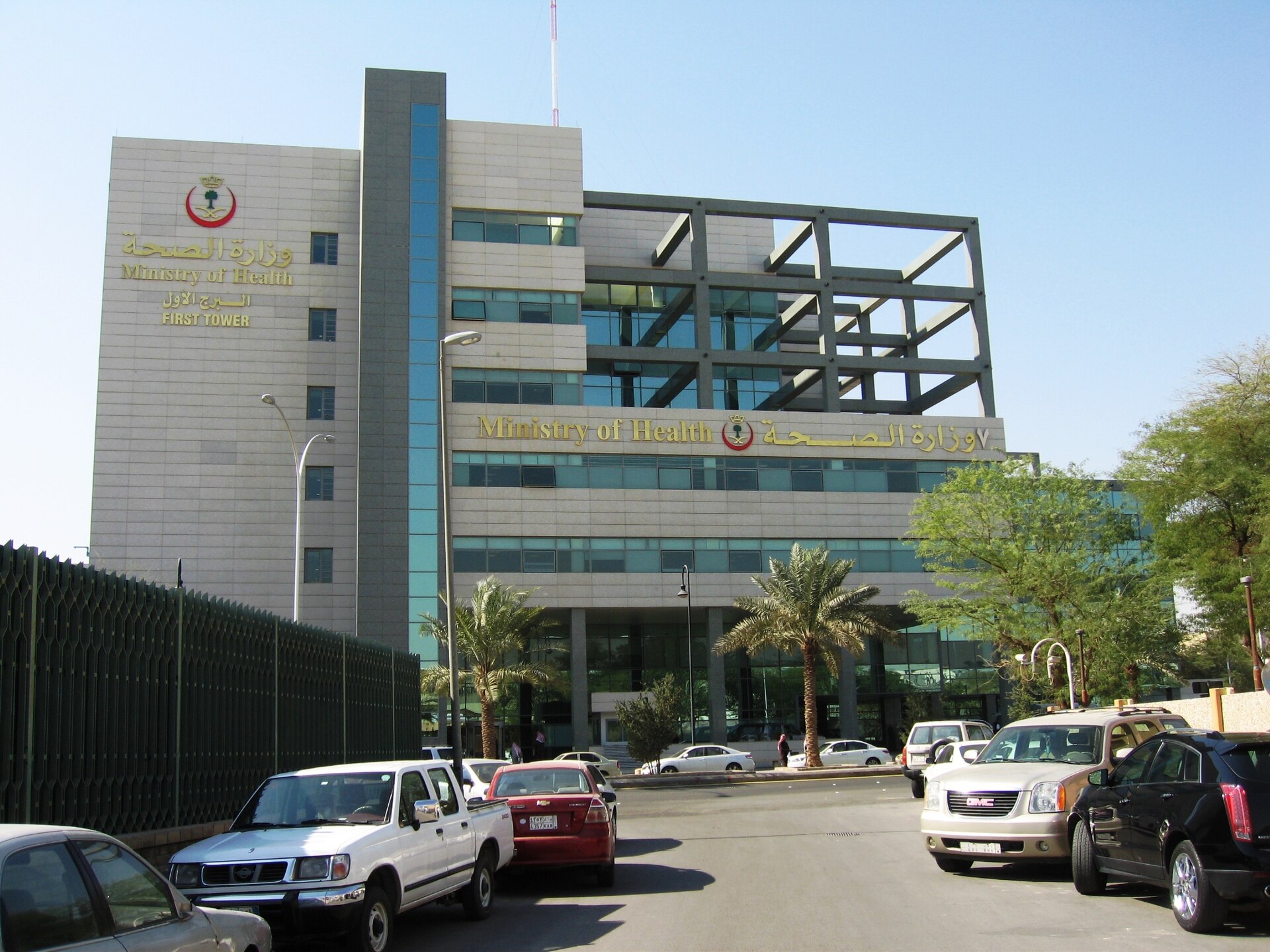
No sectors have been designated. Finance Minister Mohammed Al-Jadaan, who also chairs GOSI’s board, told People Matters Global that job stability and business sustainability are key pillars of a resilient economy. Al-Jadaan’s presence on the committee alongside the economy and human resources ministers suggests eligibility will be determined through cross-referencing of fiscal data, labor-market indicators, and social-insurance records rather than by any single ministry’s assessment.
The design differs from the 2020 COVID-era activation, where certain industries were excluded from the outset, according to Al Tamimi & Co. Whether the 2026 scheme will follow a similar exclusion model or designate qualifying sectors affirmatively has not been disclosed.
Badr Al-Anazi, a board member of the Saudi Human Resources Association, told Asharq Al-Awsat that “In my view, the initiative’s most significant impact extends beyond the three-month support period to the longer-term.” The government has framed the activation as a business-continuity measure rather than a layoff response — a distinction that matters because SANED’s regular function is to pay benefits after workers have already lost their jobs, not to subsidize wages while they remain employed.
The order provides no timeline for the committee’s sector designations. Until those decisions are published, employers cannot determine whether their industry qualifies and cannot begin the registration process through the GOSI Business platform.
Electricity Tariff Increases Take Effect January 1
The SANED activation is part of a broader royal package designed to offset utility tariff increases taking effect January 1, 2027, Gulf News reported. The package also includes a SAR 500 ($133) monthly allowance increase for employees, pensioners, and social security beneficiaries in certain government categories.
The electricity adjustments are substantial. Residential rates for consumption up to 6,000 kilowatt-hours per month rise from 18 to 21 halalas per kWh — an increase of 16.7 percent — according to an ARY News tariff table published in October. Residential rates above that threshold increase from 30 to 33 halalas, or 10 percent. Commercial and private healthcare and education facilities in the lower consumption tier face a 13.6 percent increase, from 22 to 25 halalas per kWh, while industrial rates climb from 20 to 23 halalas — 15 percent, ARY News reported.
MEES described the increases as “the largest electricity price hikes since 2018.” The 2018 round was part of the government’s fiscal balance program, which also raised fuel and water prices as part of subsidy reform.
The Saudi Energy Company told MEES that the tariff adjustment “won’t have a material impact” on its results, because higher rates reduce government payments through the “balancing account” — a mechanism under which the government compensates the state-owned utility for the gap between its regulated rates and actual costs. The mechanism is specific to the government-owned utility and does not extend to private-sector firms, which will bear the full cost of the tariff increases from January 1.
How Does the 2026 Activation Compare to the 2020 COVID Scheme?
The core formula is identical — 60 percent of wages, capped at SAR 9,000, for an initial three months — but the 2020 scheme disclosed a SAR 9 billion budget and covered 1.2 million workers over nine months. The 2026 order has published no budget figure, beneficiary estimate, or sector designation.
King Salman authorized the COVID-era scheme on April 3, 2020, Asharq Al-Awsat reported. The program was initially set for three months but was ultimately extended to nine, according to Al Tamimi & Co. Financial services, banking, insurance, communications, and food manufacturing were excluded from the 2020 scheme.
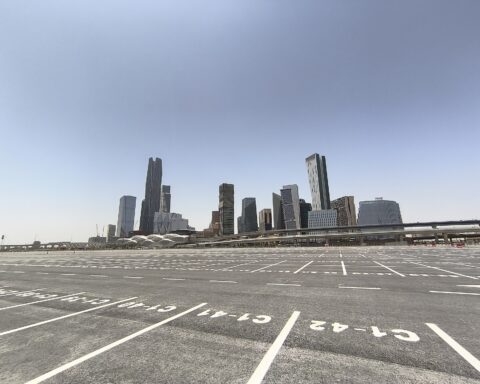
The 2026 economic context bears little resemblance to the pandemic downturn. The PIF has cut funding and curtailed hiring since the Iran war began in late February, forcing layoffs and closures across portfolio companies and deepening an expatriate hiring slump, AGBI reported in September. Saudi Arabia has postponed the 10th FII summit to October 2027, and Houthi strikes have reached the PIF Tower in Riyadh’s KAFD district.

Saudi Arabia’s private sector employed approximately 13.57 million workers as of the first quarter of 2026, according to the government’s Labor Force Snapshot. Saudi national unemployment stood at 6.5 percent in the second quarter, Asharq Al-Awsat reported citing GOSI data.
Fiscal Pressures and the 2027 Budget
The Cabinet approved the 2027 budget on November 24, the same day King Salman issued the SANED order. The budget projects a deficit of SAR 191 billion — 3.6 percent of GDP — and allocates SAR 263 billion for defense, Reuters reported via Zawya. The revised 2026 fiscal deficit stands at SAR 245 billion.
GDP fell an estimated 2.1 percent in 2026, according to the approved budget statement. The government projects 10.9 percent GDP growth in 2027, a forecast that depends on a rebound in oil production and continued non-oil momentum.
The IMF, in its June 2026 Article IV consultation, said fiscal support to affected businesses and households should be “temporary, targeted, and transparent.” The three-month duration and committee-based sector designation of the SANED order address the first two criteria. The IMF’s third — transparency — remains open: no budget figure, beneficiary projection, or sector list has been published.
Private-sector GDP reached 51 percent of the total in 2025, according to the IMF Article IV assessment, still well short of the 65 percent target under Vision 2030. The government has moved to broaden revenue through measures including a 15 percent minimum tax on multinationals from January 2027 and has capped PIF foreign investment at 20 percent.
SANED’s contribution rate was cut from 2 percent to 1.5 percent — split evenly between employer and employee — effective January 1, 2022, according to Asharq Al-Awsat. The fund’s current reserve level has not been publicly disclosed.
What Remains Undecided?
The ministerial committee has not designated eligible sectors, published eligibility criteria, or set a payment start date. No total budget allocation or expected beneficiary count has been disclosed, and whether the initial three-month period will be extended — as it was during COVID — remains unspecified.
Until the committee publishes sector designations, no employer can register workers and no SANED payments can begin. The committee has not provided a timeline for its decisions or disclosed the criteria it will use to determine which industries qualify.
The government has not released a total budget for the 2026 activation. In 2020, the SAR 9 billion figure was disclosed at the scheme’s launch, Asharq Al-Awsat reported, allowing employers and analysts to gauge the program’s intended scale.
No projection of expected layoffs or at-risk positions has been published. The SANED activation implies that the government holds sector-specific assessments of employment vulnerability, but no such data has been released.
Frequently Asked Questions
Are expatriate workers eligible for SANED wage support?
No. SANED enrollment is restricted to Saudi nationals employed in the private sector. Expatriate employees — who operate under separate sponsorship and labor regulations and are not enrolled in the SANED social insurance system — are not covered by the royal order. The scheme’s eligibility requirements, including the July 1, 2026, continuous enrollment cutoff, apply exclusively to Saudi nationals registered through GOSI.
Does the SAR 500 monthly allowance apply to private-sector workers?
The SAR 500 ($133) allowance increase targets employees, pensioners, and social security beneficiaries in certain government categories, Gulf News reported. It is part of the same royal package as the SANED activation but covers a different segment of the workforce. Private-sector employees receiving SANED wage support are not among the announced recipients of the separate monthly allowance.
Can designated sectors lose eligibility before the three months expire?
The royal order does not specify an early-termination mechanism for sector designations. Coverage is authorized for up to three months from activation. Whether the ministerial committee has the authority to revoke or modify designations mid-program has not been addressed in the published order. In 2020, the scheme ran for its full authorized duration — ultimately nine months after extension — without early termination of any sector, according to Al Tamimi & Co.
Is the SANED wage support funded from the government budget or the social insurance fund?
SANED is administered by GOSI, which collects mandatory contributions from employers and Saudi employees at a combined rate of 1.5 percent of each worker’s registered wage. In 2020, King Salman authorized SAR 9 billion specifically for the wage-support program, Asharq Al-Awsat reported, indicating treasury involvement beyond the fund’s normal contribution-based income. No equivalent budget allocation has been disclosed for the 2026 activation, and whether the program will require supplemental government funding depends on the number of sectors designated and workers enrolled.
What is SANED’s regular function outside of wartime activation?
SANED normally functions as an unemployment insurance system for Saudi private-sector workers who have been involuntarily terminated. Workers who qualify can draw benefits while actively seeking new employment. The scheme was established in 2014 and is administered by GOSI through mandatory payroll contributions. The 2026 activation and the 2020 COVID deployment are the only two occasions the system has been repurposed for employed workers, requiring temporary legal exemptions to redirect insurance funds from job seekers to job retention.
The House of Saud Daily Briefing
Saudi Arabia's news in 3 minutes, every morning. Free. See today's issue