
Night 9 Iran: US Strikes 8 Cities as Rubio Drops Deadline
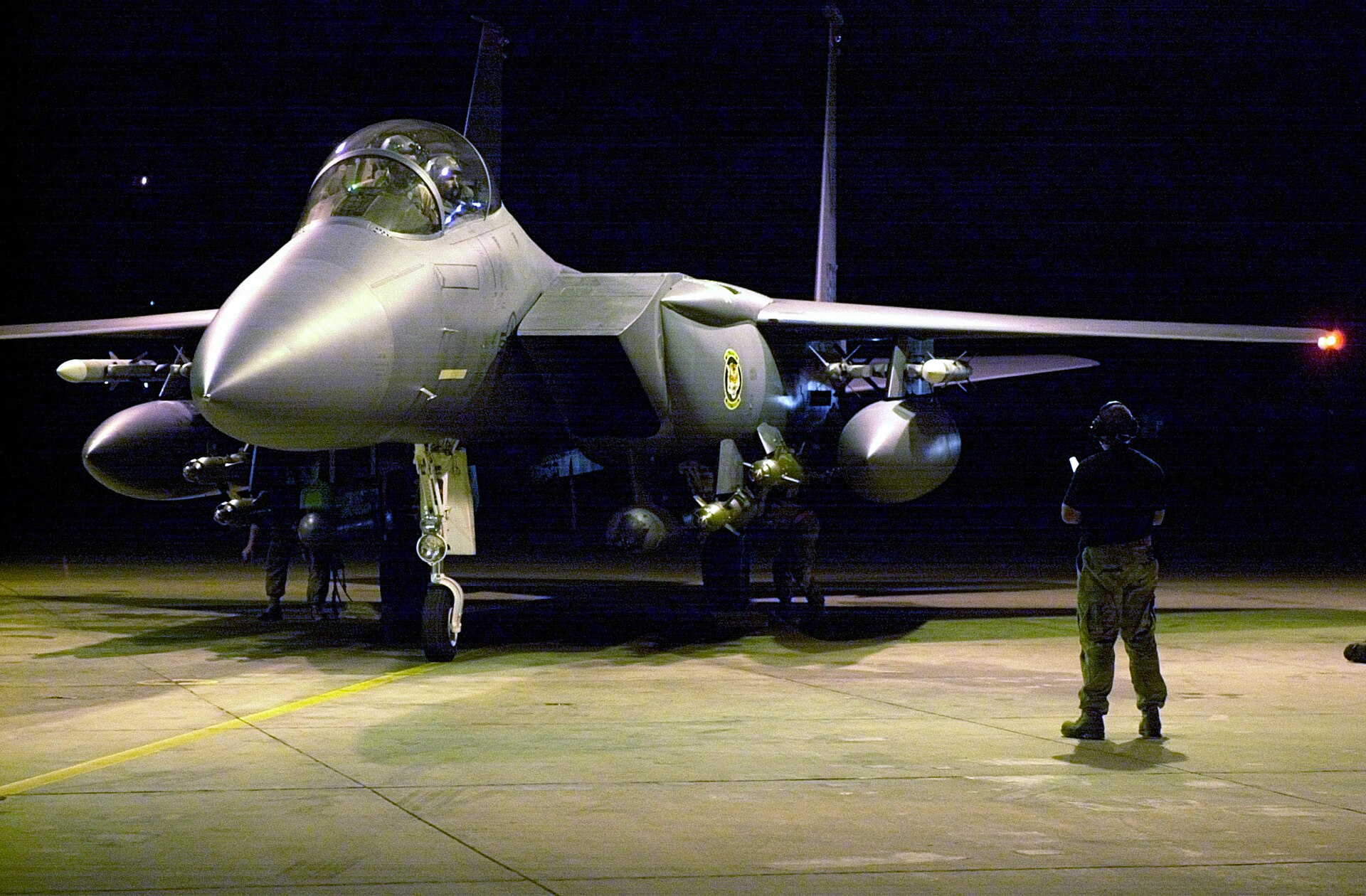
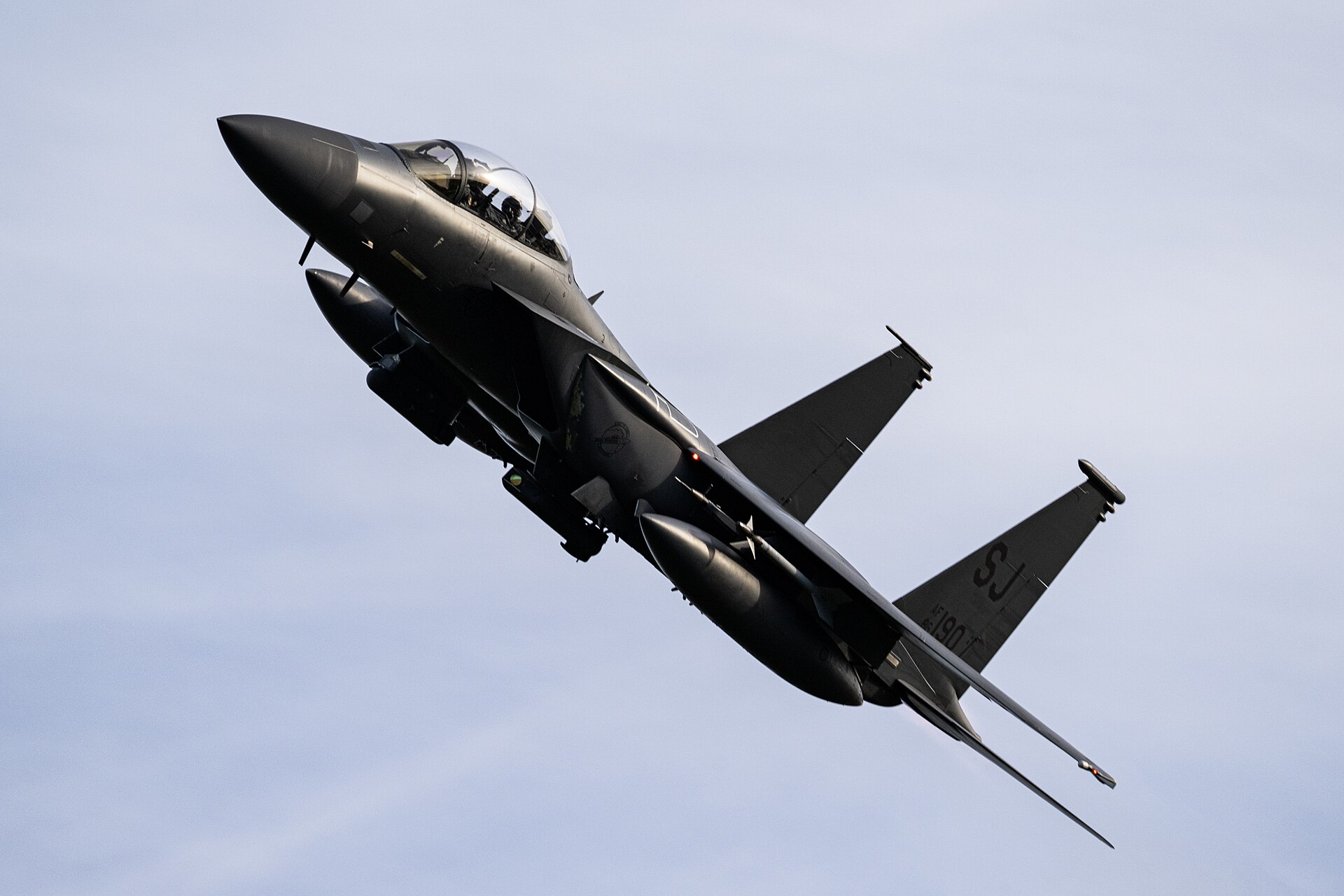
F-15E Strike Eagle armed for strike mission, US Air Force

Night Nine Hit Eight Iranian Cities and Rubio Removed the Deadline

CENTCOM struck eight Iranian cities on Night 9 as Rubio declared indefinite Hormuz enforcement, removing the MOU timeline from US military calculus.

WASHINGTON — The United States completed its ninth consecutive night of airstrikes against Iran on July 20, hitting eight cities across the widest geographic arc of the campaign — including Tabriz, approximately 1,600 kilometres from the Strait of Hormuz — as Secretary of State Marco Rubio declared that Washington “will do and continue to do what it needs to, to protect global shipping.” The strikes, which CENTCOM said began at 7 p.m. ET on July 19 and concluded before dawn, targeted Iranian military command centres, air-defence installations, maritime capabilities, missile and drone launch sites, and communications networks.

Conflict Pulse IRAN–US WAR
Live conflict timeline
Day
143
since Feb 28
Casualties
13,260+
5 nations
Brent Crude ● LIVE
$113
▲ 57% from $72
Hormuz Strait
RESTRICTED
94% traffic drop
Ships Hit
16
since Day 1

The eight confirmed target cities — Tabriz, Chabahar, Konarak, Bandar Mahshahr, Bandar Imam Khomeini, Jask, Sirik, and Bushehr — spanned Iran’s northwest, its Persian Gulf coast, and its Gulf of Oman shoreline, according to Anadolu Agency and CNN. Rubio, speaking to reporters en route to Manila for an ASEAN foreign ministers’ meeting, coupled the open-ended enforcement pledge with a demand that allied nations “begin to step up and provide, whether it’s hardware or finances, to help carry that burden.” The statement arrived on Day 33 of the Islamabad MOU’s 60-day window, two days after Iran’s Deputy Foreign Minister Kazem Gharibabadi formally suspended Tehran’s commitments under the agreement.

Eight Cities Across Three Coastlines

Night 9’s target list differed from previous waves in both scale and direction. Nights 1 through 7 — July 6 to 17 — concentrated on Hormuz-adjacent facilities: IRGC naval bases, missile storage sites, and coastal radar arrays. Night 8, launched after Iranian ballistic missiles killed US service members at Muwaffaq Salti Air Base in Jordan, expanded to include sites CENTCOM said were “believed to have targeted US service members.” Night 9 added the northwest.

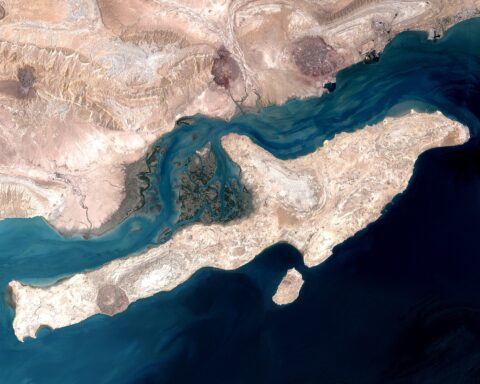
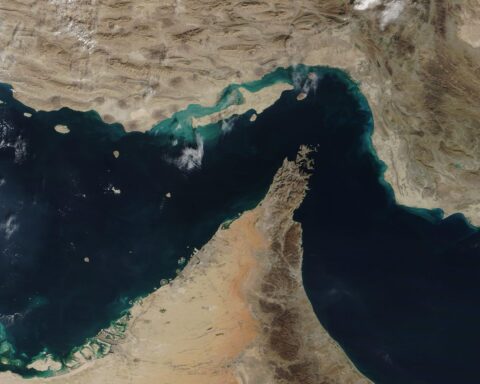
The southern targets remained consistent with CENTCOM’s maritime-enforcement rationale. Jask and Sirik sit directly on the Hormuz chokepoint. Chabahar and Konarak face the Gulf of Oman, where IRGC fast-attack craft have staged interdiction operations. Bandar Mahshahr and Bandar Imam Khomeini lie on Iran’s Khuzestan coast, adjacent to the country’s largest petrochemical complex. Bushehr, struck previously during the campaign, hosts Iran’s only operational nuclear power plant — though CENTCOM’s stated targets there were air-defence systems, not nuclear facilities.

Tabriz is the outlier. Iran’s third-largest city and a manufacturing and logistics centre, it sits in East Azerbaijan Province, near the borders with Turkey, Armenia, and Azerbaijan. It has no direct connection to Hormuz maritime operations. Its inclusion marks the first confirmed strike on Iran’s far northwest since the campaign began — the farthest point from the strait that CENTCOM has hit in nine nights of operations.

F-15E Strike Eagle on the tarmac at Al Udeid Air Base, Qatar, at night after a strike mission
An F-15E Strike Eagle at Al Udeid Air Base, Qatar, after returning from a strike mission — the base used as a regional hub for CENTCOM operations against Iran. Al Udeid itself was struck by an IRGC missile on July 9, destroying a $15 million satellite communications dish; Night 9 launched from the same installation. Photo: US Department of Defense / Public Domain

What Did Rubio’s Statement Change?

Rubio’s July 20 declaration that the United States “will do and continue to do what it needs to” erased any temporal boundary from the campaign. His call for allied burden-sharing — “other countries need to begin to step up” with “hardware or finances” — reframes nine nights of strikes as the opening phase of an indefinite enforcement operation, decoupled from the MOU’s 60-day negotiating window.

The HOS Daily Brief

The Middle East briefing 3,000+ readers start their day with.

One email. Every weekday morning. Free.

Two sentences in Rubio’s remarks define the shift. The first: “It’s clear that Iran, at least some people in Iran, want to control the straits and hold that as leverage against the world.”

“The United States will do and continue to do what it needs to, to protect global shipping, but other countries need to begin to step up and provide, whether it’s hardware or finances, to help carry that burden.”

Marco Rubio, US Secretary of State, speaking to reporters en route to Manila, July 20, 2026

The phrase “will do and continue to do” contains no reference to the Islamabad MOU, its 60-day window, or any condition under which the strikes would stop. Combined with President Trump’s July 13 declaration that the United States would become “THE GUARDIAN OF THE HORMUZ STRAIT” — announced via Truth Social alongside a proposed 20 percent toll on transiting vessels — the language describes a permanent military posture, not a punitive campaign with an exit ramp.

The burden-sharing element is new. No previous CENTCOM statement or administration remark on the campaign has called on allied nations to contribute forces or funding. The closest historical parallel is Operation Earnest Will, the 14-month US Navy convoy-escort mission through the strait from 1987 to 1988, which eventually drew naval contributions from Britain, France, Belgium, Italy, and the Netherlands. Rubio’s framing points toward that extended, coalition-based model rather than the single concentrated blow of Operation Praying Mantis in April 1988.

The demand also sits alongside an unresolved contradiction in the administration’s own position. On June 23, Rubio stated: “No country is allowed to charge tolls or fees on an international waterway.” Three weeks later, Trump announced the 20 percent Hormuz levy. On July 20, Rubio did not address the discrepancy. His burden-sharing request operates through a different mechanism — allied contributions rather than a unilateral toll — but both rest on the premise that the United States has assumed indefinite responsibility for the strait and expects compensation.

For Saudi Arabia, which transits approximately six million barrels per day through Hormuz, Rubio’s statement complicates a central assumption: that the US military posture in the Gulf remains linked to a discrete crisis with a defined resolution. If enforcement is indefinite, Riyadh’s exposure to the financial architecture that accompanies it — PGSA transit fees, Rubio’s burden-sharing demand, and Trump’s proposed toll — has no expiry either.

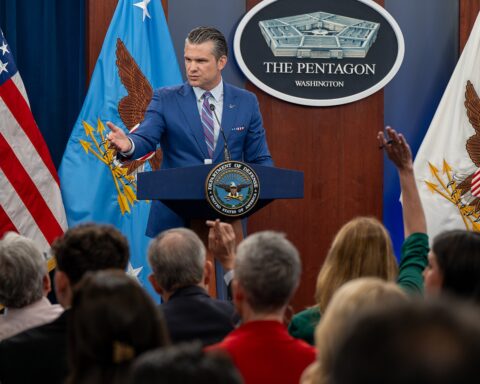
US Secretary of State Marco Rubio speaks at a White House press briefing, 2026
Rubio’s July 20 statement that the US “will do and continue to do what it needs to” carried no expiry date and made no reference to the Islamabad MOU’s August 16 deadline — reframing nine nights of strikes as the opening phase of a permanent enforcement posture. Photo: The White House / Public Domain

How Does Night Nine Affect the MOU Timeline?

The MOU’s 60-day window — expiring approximately August 16, with 27 days remaining — passed July 20 with no military bearing on either side’s actions. Gharibabadi suspended Iran’s commitments on July 18. Rubio’s open-ended enforcement language and Mojtaba Khamenei’s declaration that the MOU is “utterly worthless” leave neither side operating within the agreement’s framework. Prediction markets placed the probability of a final deal by August 13 at approximately 2 percent, though no specific market was identified at time of reporting.

Rubio left a diplomatic door ajar. “The United States always remains open to a diplomatic solution,” he told reporters. “We’ve tried multiple times with Iran, and we’ll continue to try. If that door opens, we’ll be happy to see.” The statement acknowledged that the door is currently closed and placed the onus on Tehran.

The structural problem is that if US maritime enforcement continues regardless of negotiations — as Rubio’s language implies — then Iran’s Hormuz interdiction loses its trade value. Mojtaba Khamenei’s July 18 written statement voiding the MOU may have been calculated to extract concessions in exchange for a return to compliance. But if the strikes continue whether or not Iran complies, there is nothing to trade back.

The MOU window now exists in a doctrinal vacuum. Rubio’s language describes a permanent posture; the MOU describes a temporary framework. Khamenei’s earlier refusal to sign the agreement he authorised Pezeshkian to negotiate left the question of Iran’s negotiating authority unresolved — a question sharpened by the Supreme National Security Council’s 12-1 vote on the MOU, in which Secretary Jalili cast the sole dissent and now stands positioned as lead negotiator for any future talks.

IRGC Claims and Retaliatory Strikes

Iran’s Islamic Revolutionary Guard Corps launched retaliatory strikes concurrent with Night 9, targeting US installations in Kuwait, Syria, and Bahrain. Air-raid sirens sounded in all three countries, as well as Jordan, according to the Jerusalem Post.

The IRGC claimed what it designated “Operation Nasr-2” had destroyed a US early-warning radar at Ali Al Salem Air Base in Kuwait, according to Tasnim News Agency. The IRGC also claimed strikes on an equipment warehouse and an MQ-9 drone hangar at Ali Al Salem, reporting that “several drones” had been set on fire, and said it had destroyed Patriot air-defence systems and fuel tanks at the base. A separate claim cited the destruction of an FPS strategic radar at Ahmed Al-Jaber Air Base, also in Kuwait. None of these claims have been independently verified.

Iran’s IRNA news agency reported a “new wave of missiles” launched from Lorestan Province — in western Iran, approximately 450 kilometres from the Iraqi border — toward unspecified “enemy targets.” Jordan’s Foreign Ministry summoned Iran’s chargé d’affaires in Amman on July 20 to lodge a formal protest over strikes on Jordanian territory, following the earlier IRGC attack that killed three US service members at Muwaffaq Salti Air Base on July 17-18. Total US military fatalities since the campaign began stand at 17, according to CNBC and NBC News.

Iran’s state-controlled PressTV framed the US campaign as targeting “critical civilian infrastructure,” citing the destruction of the Bonji desalination plant — which cut water supply to approximately 10,000 people — and strikes on bridges and tunnels inside Iranian territory. Iran’s Health Ministry reported a cumulative toll of 50 killed and more than 500 wounded from US strikes since July 6, figures compiled before Night 9 and reported by Al Jazeera.

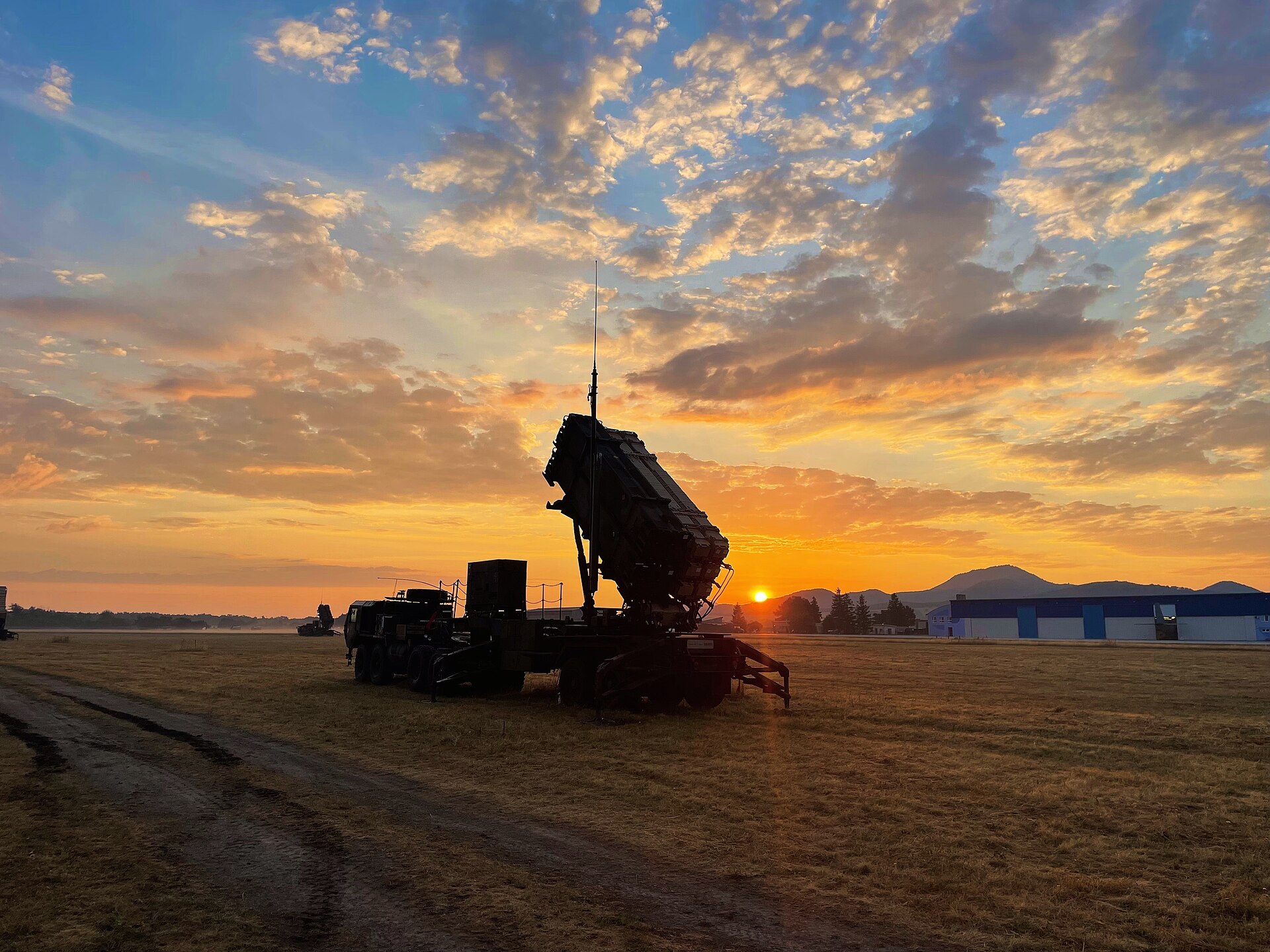
US Army Patriot missile air defence launcher at sunrise
A US Army Patriot air-defence launcher in firing position. The IRGC claimed Operation Nasr-2 destroyed Patriot batteries at Ali Al Salem Air Base in Kuwait on the night of July 19-20 — claims that could not be independently verified. Saudi Arabia’s own PAC-3 stockpile stands at approximately 400 of an original 2,800, with no resupply scheduled before 2028. Photo: US Army / Public Domain

The Oil Price and the Strait

Brent crude rose approximately 2.77 percent on July 20, breaking $90 per barrel for the first time in the current campaign cycle, according to CNBC. The price move came on the combination of Night 9’s expanded geography and Rubio’s open-ended enforcement statement.

Hormuz commercial traffic has fallen to approximately 10 ships per day, down from a pre-crisis AIS baseline of 88 per day, according to UK Maritime Trade Operations. The agency separately reported on July 20 that a vessel was on fire approximately eight nautical miles northwest of Kumzar, Oman — inside the strait — though the cause was not verified at the time of the report.

The Persian Gulf Security Arrangement, the US-brokered transit-fee mechanism, continues to accrue at $5.5 million per day, with $253 million outstanding and a payment deadline of August 18. Vessels currently transiting pay $1 million to $2 million each. Rubio’s separate burden-sharing call creates a second financial demand on Gulf states, layered on top of the PGSA fees.

Saudi Arabia’s PAC-3 interceptor stockpile sits at approximately 400 of an original 2,800 baseline — 86 percent depleted — with no resupply scheduled before 2028. Prince Sultan Air Base, struck by Iran without public Saudi acknowledgment, has been operationally locked since Saudi Arabia’s May 3 Operation Project Freedom grounded 43 US warplanes.

Background

The US campaign against Iran began on July 6 with strikes on IRGC maritime and missile facilities along the Hormuz coast. CENTCOM has framed every night’s operations in identical language: degrading Iran’s ability to threaten commercial shipping and civilian mariners in the strait.

The operational tempo accelerated after Iran struck US bases in four countries within 24 hours on July 8-9 — hitting installations in Bahrain, Kuwait, Qatar, and Jordan. The IRGC destroyed a $15 million AN/GSC-52B(V5) satellite communications dish at Al Udeid Air Base in Qatar and claimed strikes on multiple US radar and drone assets in Kuwait. The deaths of three US service members at Muwaffaq Salti Air Base in Jordan on July 17-18 triggered Night 8’s escalation and, a day later, the geographic expansion of Night 9.

The strikes occur against the backdrop of a collapsing diplomatic architecture. The MOU’s 60-day window was designed to contain both military action and nuclear negotiations within a fixed timeline. Saudi Crown Prince Mohammed bin Salman privately urged Trump to pursue regime change and commit ground forces, according to reporting earlier in the campaign — a request Washington declined. The diplomatic track has now bifurcated: the MOU window expires in 27 days, but Rubio’s statements describe a military posture that will continue regardless of whether those 27 days produce an agreement.

The closest historical precedent remains the 1987-88 “Tanker War” period. The US launched Operation Earnest Will — a convoy-escort mission that ran for 14 months before culminating in Operation Praying Mantis, a single-day punitive strike in April 1988 that destroyed two Iranian oil platforms and sank the frigate Sahand. The combined effect ended Iran’s interdiction of commercial shipping within weeks. Rubio’s burden-sharing language and Trump’s toll declaration track closer to Earnest Will’s extended coalition model than to Praying Mantis’s concentrated force.

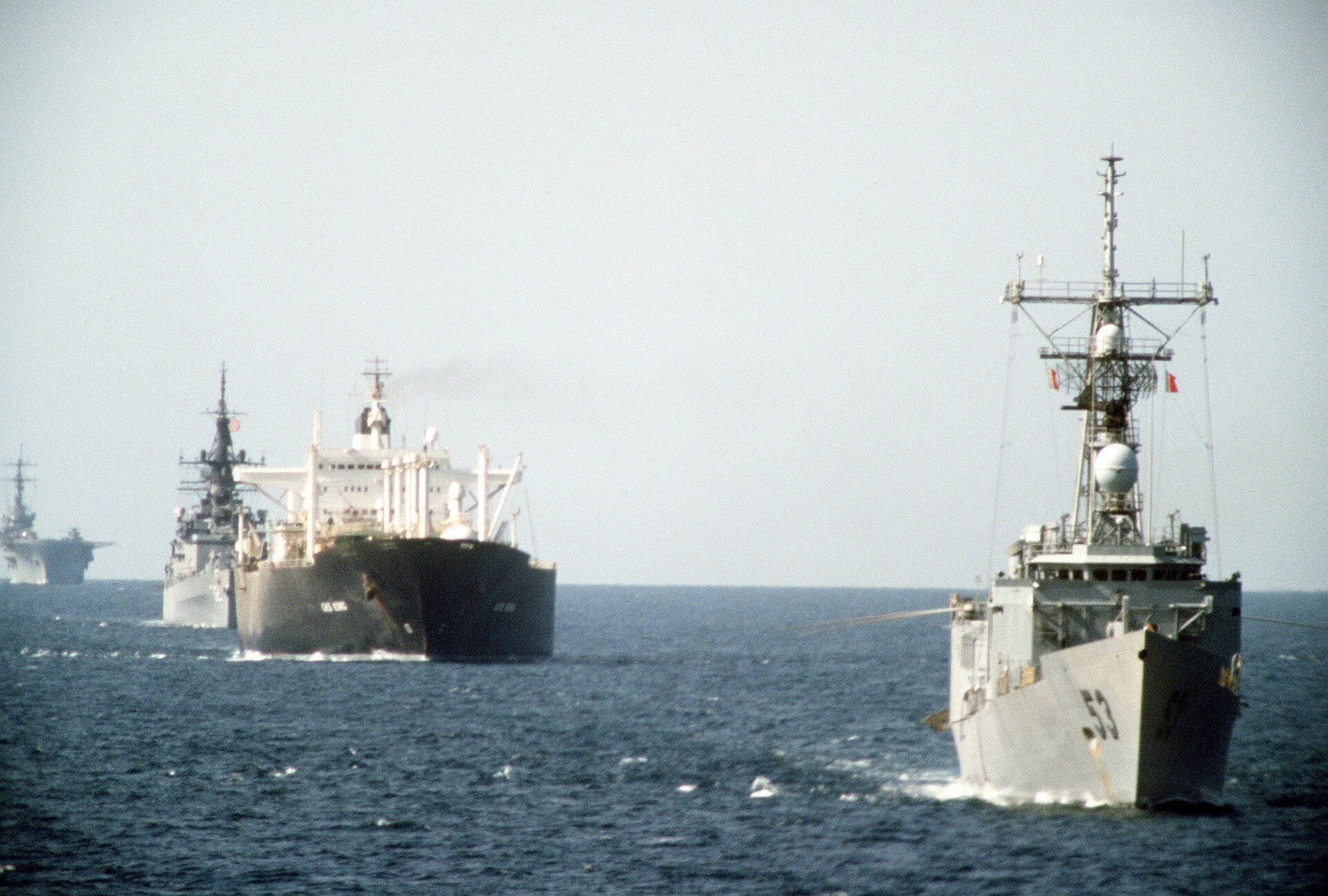
USS Hawes (FFG-53) escorts tanker Gas King during Operation Earnest Will, Persian Gulf, October 1987
USS Hawes (FFG-53), USS William H. Standley (CG-32) and USS Guadalcanal (LPH-7) escort the tanker Gas King in the Persian Gulf on 21 October 1987 during Operation Earnest Will — the 14-month US convoy-escort mission that Rubio’s burden-sharing language most closely resembles. The 2026 campaign has already exceeded Earnest Will’s defining engagement (Operation Praying Mantis, April 1988) in duration by a factor of nine. Photo: PH2 Elliot, US Navy / Public Domain

Frequently Asked Questions

How many US service members have been killed in the Iran campaign?

Seventeen US military personnel have died since operations began on July 6, according to CNBC and NBC News reporting as of July 20. The three most recent deaths occurred at Muwaffaq Salti Air Base near Azraq in eastern Jordan, where an IRGC ballistic missile struck the installation on July 17-18. In an earlier IRGC strike on the same base on July 9, MIM-23 Hawk batteries intercepted eight of ten inbound missiles, according to reporting at the time — a rate of defence that did not hold in the subsequent attack.

Has Iran offered to negotiate since suspending the MOU?

No direct US-Iran diplomatic channel has been publicly confirmed as active since Gharibabadi’s July 18 suspension. Oman, which had maintained the only open back-channel between Tehran and a Gulf state, issued its first-ever public condemnation of Iran on July 19 — closing what had been the last available intermediary. Qatar’s Prime Minister told Iranian Foreign Minister Araghchi to “commit to diplomacy” in an earlier exchange, but that contact predated the suspension.

What is the PGSA and who pays?

The Persian Gulf Security Arrangement is a US-brokered transit-fee mechanism under which vessels passing through the Strait of Hormuz pay $1 million to $2 million per transit in security fees. The arrangement is voluntary — ships that decline participation forgo access to CENTCOM escort coordination. As of July 20, $253 million was outstanding at an accrual rate of $5.5 million per day. The PGSA payment deadline of August 18 falls two days after the MOU’s August 16 expiry, creating overlapping deadlines for Gulf states navigating both tracks.

Why does the strike on Tabriz matter?

Tabriz, the capital of East Azerbaijan Province with more than 1.5 million residents, is the largest urban centre struck in the current campaign. It sits approximately 300 kilometres from the Turkish border and 250 kilometres from Armenia, raising operational questions about US strike trajectories relative to NATO member airspace and Caucasus security arrangements. No previous night in the campaign had targeted a site north of Tehran’s latitude.

What was Operation Praying Mantis?

Operation Praying Mantis was a single-day US Navy action on April 18, 1988, triggered by Iran’s mining of the guided-missile frigate USS Samuel B. Roberts four days earlier during the Iran-Iraq War. The US destroyed the Iranian oil platforms Sassan and Nasr, sank the frigate Sahand, and severely damaged the frigate Sabalan — the largest US Navy surface engagement since World War II. Iranian interdiction of commercial shipping in the strait declined sharply within weeks. The 2026 campaign has already exceeded Praying Mantis in duration by a factor of nine, with no single-day decision point in sight.

Update, July 20: Waves 21 and 22 extended the ISR degradation campaign on July 20, striking the P-8A Poseidon surveillance aircraft at Aqaba that detect low-altitude threats the remaining PAC-3 rounds must engage, and the AR-627 early-warning radar at Ali al-Salem. The full sensor ledger — what was lost, what remains, and when replacements arrive — is in What Watches the Gulf for Saudi Arabia Now? Later the same day, CENTCOM launched a second wave of strikes against Iran — the second time in five days that US forces hit Iran twice within a single calendar day.

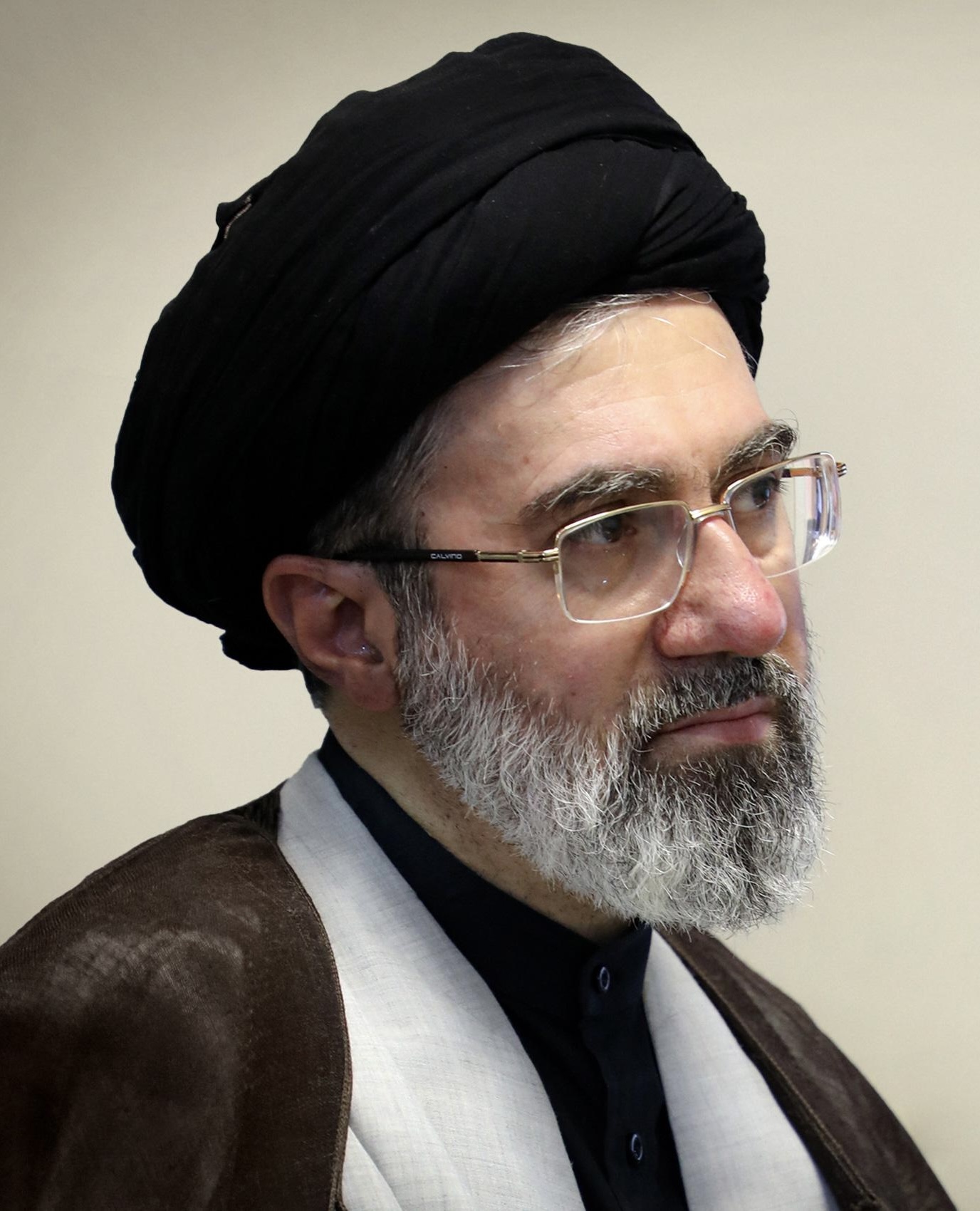
Mojtaba Khamenei, Supreme Leader of Iran, April 10, 2026 — his first confirmed public appearance after assuming leadership on March 8, 2026
Previous Story

Mojtaba Voided the MOU from a Location No Official Can Name

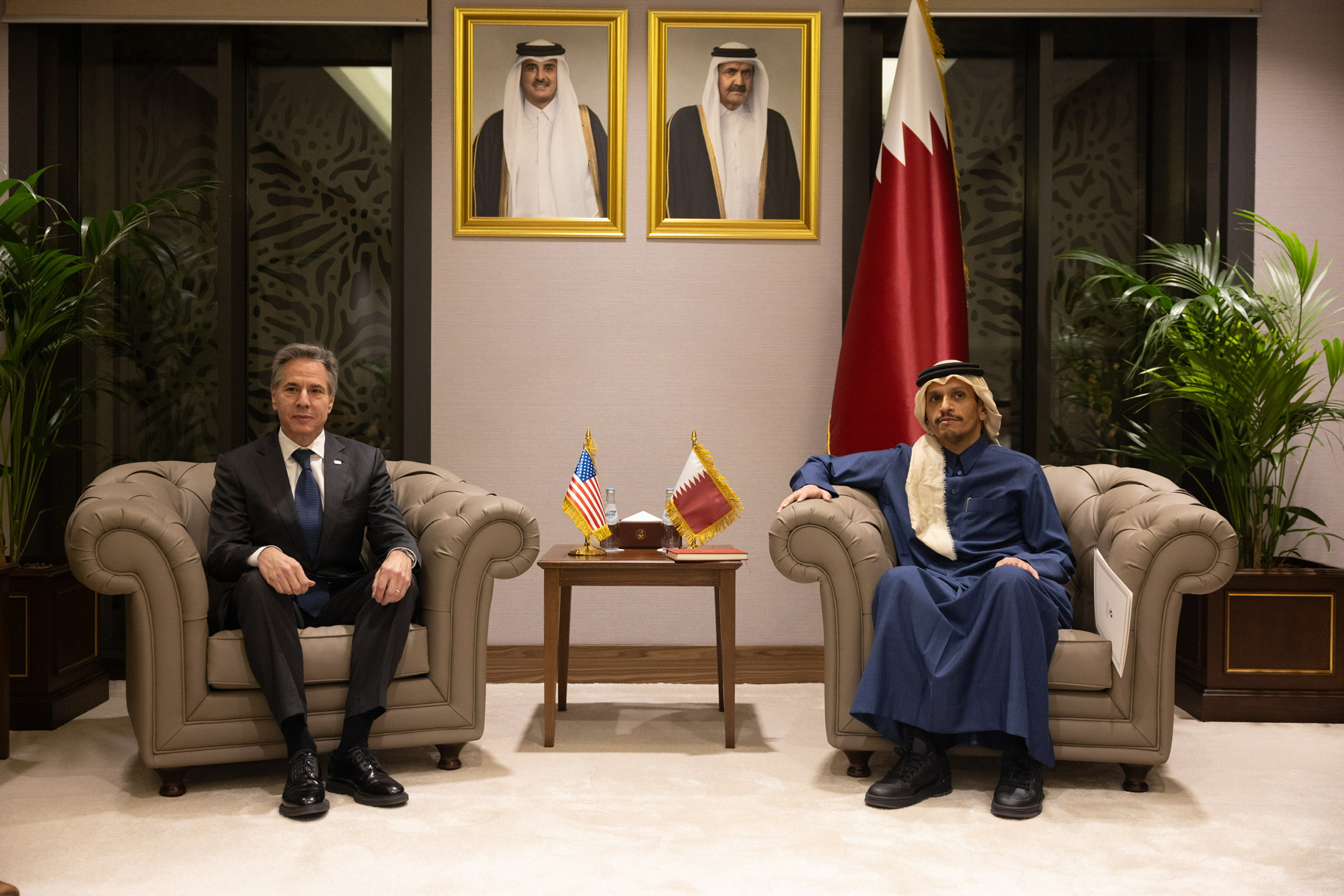
Qatar Prime Minister and Foreign Minister Sheikh Mohammed bin Abdulrahman Al Thani meets with US Secretary of State Blinken in Doha, February 2024
Next Story

Qatar Named the MOU — Riyadh Named the Attacks

Latest from Iran War

The HOS Daily Brief

The Middle East briefing 3,000+ readers start their day with.

One email. Every weekday morning. Free.

Something went wrong. Please try again.