Correction, October 12, 2026: An earlier version of this article said Saudi Arabia made no acknowledgment of a July 13 Houthi attack on Abha involving six ballistic missiles. The Saudi-led coalition did comment, saying its air defences dealt with ballistic missiles fired toward the southern region, and no source gives a count of six. The earlier version also presented the IRGC’s claimed July 20 strikes on US aircraft at Aqaba as confirmed, when they were unconfirmed claims, and described a second IRGC wave against a radar at Ali al-Salem Air Base in Kuwait for which no source could be found. It wrongly said Qatar’s AN/FPS-132 radar is operated by US Space Force and was hit by a suicide drone, listed Al Dhafra as a confirmed AN/TPY-2 strike site, gave radar values and loss totals that could not be sourced, said Jordan denied the attack when it denied only that Aqaba had been evacuated, misquoted the IRGC’s thanks to people in Jordan, and dated CENTCOM’s second same-day strike wave to July 20 instead of July 15. Figures for the 2019 Abqaiq attack and for Hormuz traffic have been corrected, and unsourced figures for Saudi interceptor stocks, a “Persian Gulf Security Agreement”, C-17 flights and several attributed analyses have been removed.
KUWAIT CITY — The IRGC said its twenty-first wave of Operation Nasr-2 on July 20 hit US C-17 and P-8A Poseidon aircraft at Aqaba Airport in Jordan with ballistic missiles. Neither Washington nor Amman confirmed any damage. The claimed targets were not interceptors or ammunition stores. They included a surveillance platform of the kind that generates the targeting data on which interceptors depend — the detection layer that converts an incoming missile from a surprise into something a defender can track and engage.
For Saudi Arabia, the P-8A is the kind of aircraft that can monitor the Gulf approaches from which maritime-origin cruise missiles could reach Abqaiq and the kingdom’s eastern oil infrastructure. PAC-3 interceptors need early warning to engage the low-altitude threats P-8 surveillance is designed to detect. Saudi Arabia has ordered C-27J maritime patrol aircraft from Leonardo, but deliveries are years away. Until then, the kingdom leans on allied aircraft for fixed-wing maritime surveillance over its own coastline — aircraft the IRGC now says it is targeting at the forward bases where they sit.
On July 13, after a strike on Sanaa airport’s runway, the Houthis fired missiles and drones at Abha International Airport. Coalition spokesman Turki al-Malki said air defences had dealt with ballistic missiles launched by the Houthis toward the southern region.
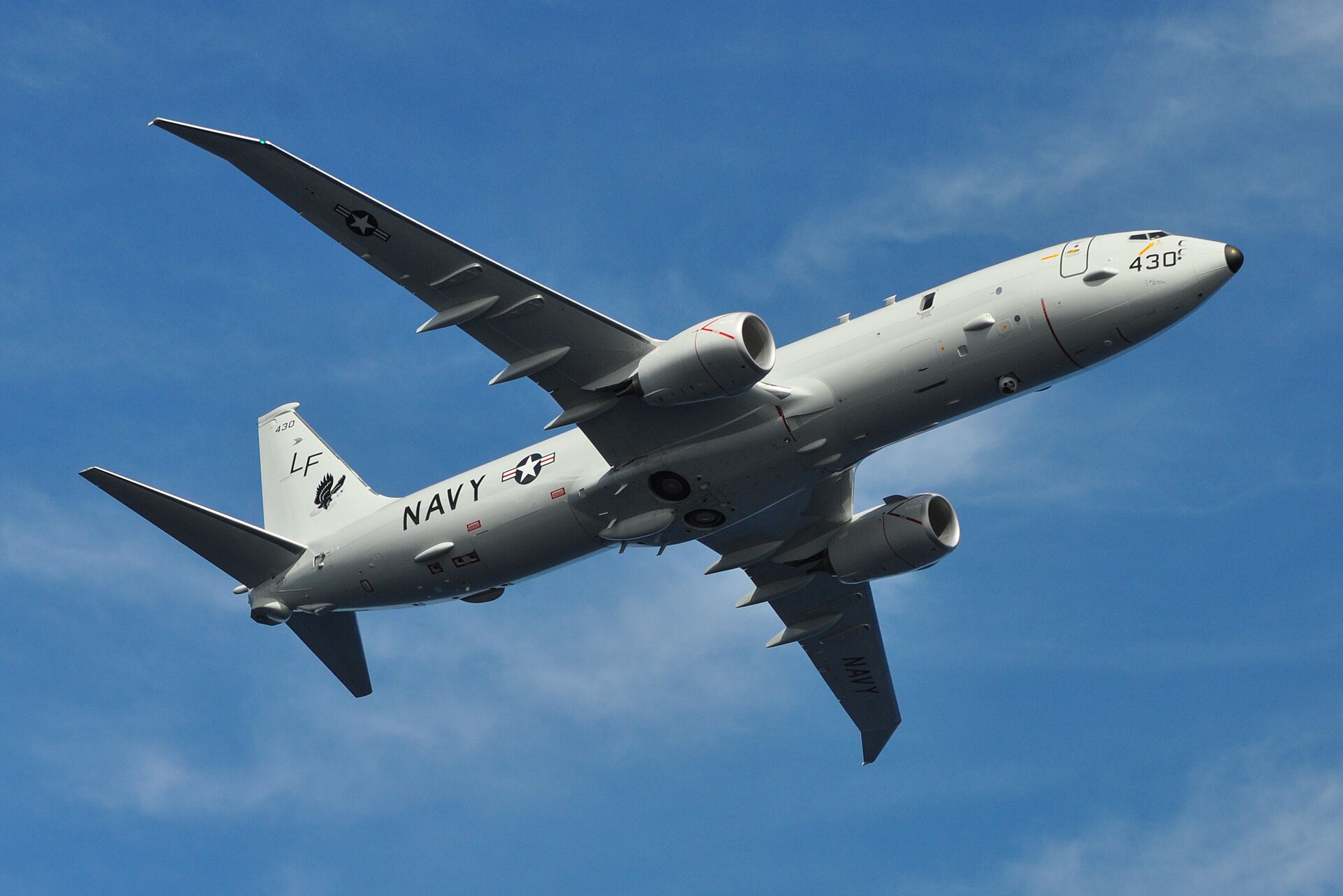
Table of Contents
- From Attrition to Architecture
- What Did Wave 21 Claim to Strike?
- The P-8 as a Network Node
- Why Does the Kill Chain Collapse Without Maritime Surveillance?
- Jordan Denied Disruption at Aqaba
- What Watches Saudi Arabia’s Gulf Coast Now?
- The Sensor Ledger
- Can Riyadh Request What It Cannot Acknowledge?
- Frequently Asked Questions
From Attrition to Architecture
Iran had already gone after the fixed radar network. In the first days of the war, satellite imagery showed that THAAD radar sites in Jordan and the UAE and near Prince Sultan Air Base in Saudi Arabia had been targeted, according to The War Zone, which said one AN/TPY-2 radar at Muwaffaq Salti Air Base in Jordan appears to have been destroyed. Qatar’s AN/FPS-132 Block 5 early-warning radar, sold to Qatar in a 2013 package estimated at $1.1 billion, was also hit, with imagery showing at least one of its three arrays struck. The War Zone said the radar losses “should finally serve as a stark wake-up call.”
Wave 21’s claimed targets represent a different rung: airborne ISR. The IRGC is now claiming strikes on the systems — human-operated, mobile, repositionable — that scan, detect, classify, and cue.
The Middle East briefing 3,000+ readers start their day with.
One email. Every weekday morning. Free.
What Did Wave 21 Claim to Strike?
The IRGC said Wave 21 targeted Aqaba Airport in Jordan with ballistic missiles, claiming damage to US C-17 and P-8A aircraft. The IRGC gave no evidence, and neither the United States nor Jordan has confirmed the damage claims as of reporting.
The IRGC claimed “heavy damage” to US C-17 Globemaster strategic transport aircraft and P-8A Poseidon maritime patrol aircraft at Aqaba. It also said intelligence from Jordan had enabled it to target 20 hangars used by US forces at Muwaffaq Salti Air Base in the al-Azraq area, according to Bloom Pakistan.
The damage discrepancy follows a familiar pattern: the IRGC claims systemic destruction, the US provides no immediate assessment, and the host nation describes interceptions rather than damage.
At Aqaba, Jordan denied reports that the airport had been evacuated and said the airport and seaport continued normal operations, according to Bloom Pakistan.
The P-8 as a Network Node
The IRGC did not describe the P-8A Poseidon simply as a maritime patrol aircraft. Its statement, as reported by A News, called it a “command-and-control aircraft” — a designation that reframes a surveillance platform as a force multiplier and network node. The word choice matters. In Iranian targeting logic, the P-8A is not valuable for what it carries but for what it enables: the cueing data that flows from its sensors into the kill chains of surface-to-air and ship-based missile defense systems across the Gulf.
The aircraft carries the AN/APY-10 multi-mission surface search radar. In this war, US P-8s have also been used to intercept tankers during the US naval blockade of Iran.
The IRGC’s Wave 21 statement thanked what it described as “supporters” in Jordan for providing intelligence, according to Bloom Pakistan. Whether this reflects actual human intelligence or is an information operation designed to fracture the US-Jordan basing relationship is unverifiable from available reporting. The public statement, regardless of its veracity, serves a structural purpose: it introduces doubt about the security of any P-8 forward operating location where host-nation personnel have physical access to the flight line.
The targeting sequence tells its own story. Fixed ground radars such as the AN/FPS-132 cannot relocate. Aircraft can. By claiming strikes on P-8s on the ground at Aqaba, the IRGC signalled that dispersal to alternate airfields does not remove the airframe from the target set. It merely updates the coordinates.
Why Does the Kill Chain Collapse Without Maritime Surveillance?
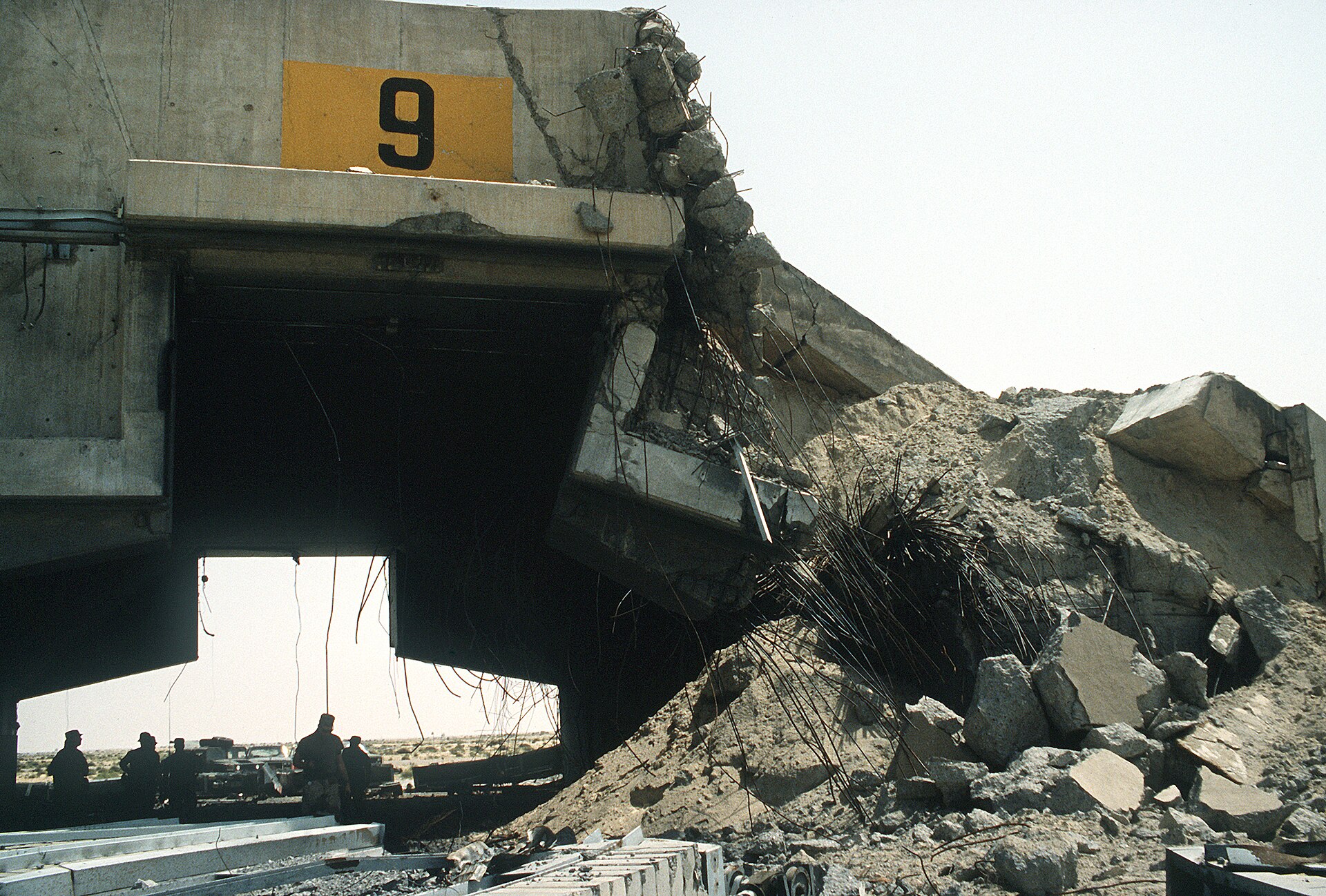
Maritime-origin cruise missiles can fly below the detection floor of ground-based radar. Without airborne sensors like the P-8A to detect and classify threats early, Saudi Arabia’s PAC-3 interceptors may receive targeting data too late to generate a firing solution. The P-8A can provide cueing that helps ground-based systems intercept low-altitude maritime threats.
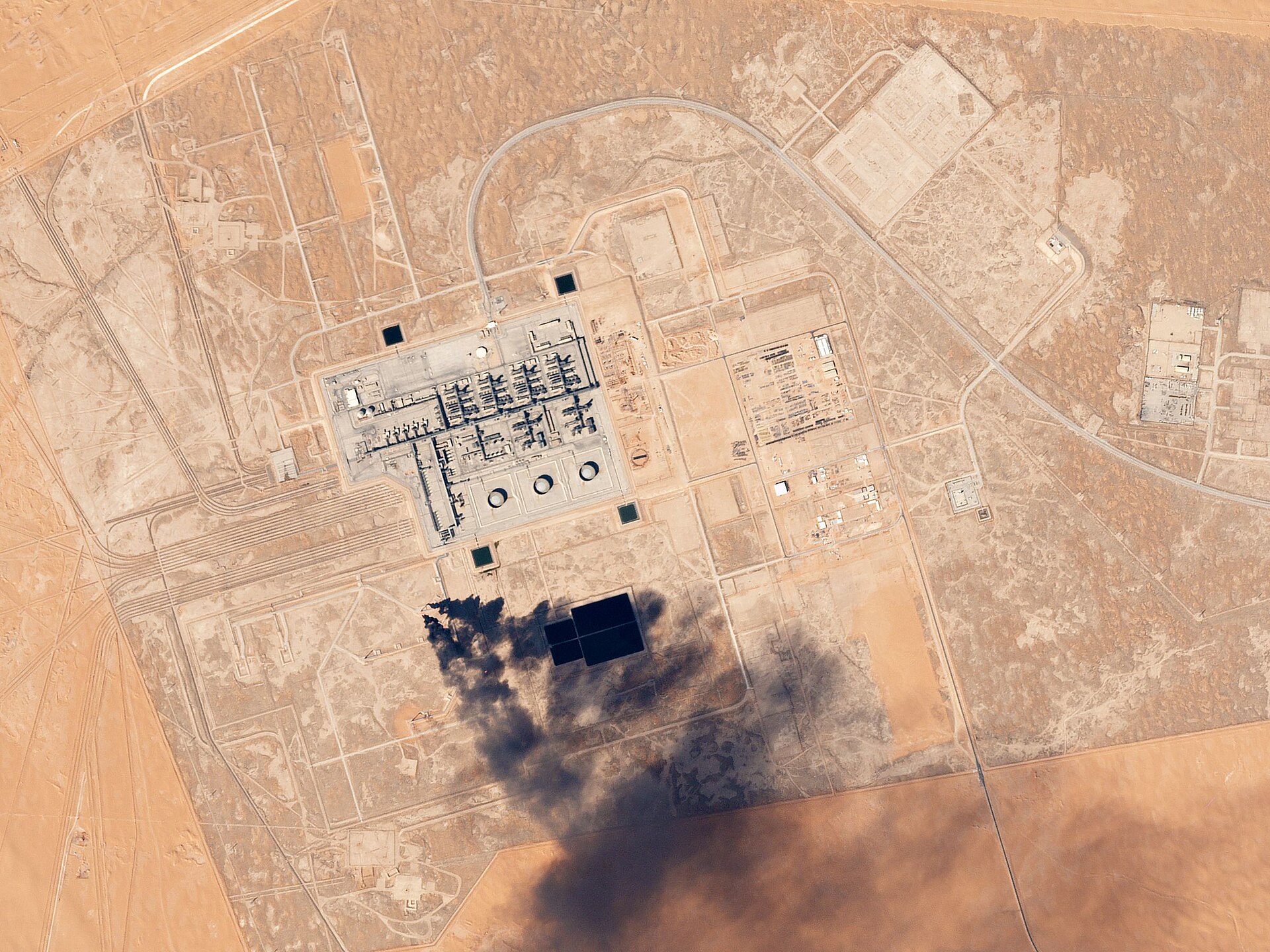
The geometry is specific. Abqaiq — which Aramco describes as the largest crude oil stabilization plant in the world — lies inland from the Gulf coast. A cruise missile launched from a vessel or coastal position in the central Gulf, flying low, might not register on Saudi ground-based radar until late in its flight. The THAAD radar site near Prince Sultan Air Base was targeted in the war’s first days, and satellite imagery showed a tent that sheltered the radar badly charred. The AN/FPS-132 in Qatar was also hit, with at least one of its three arrays struck. Each damaged sensor removes a layer of warning time.
The September 2019 attack on Abqaiq demonstrated the vulnerability in concrete terms. Saudi Arabia said eighteen drones and seven missiles were used in the attack, which temporarily halved Saudi oil output. At least one Patriot battery was in place at Abqaiq at the time.
Against cruise missiles and armed drones flying low over water, an interceptor needs warning time to acquire, track, and engage. Airborne sensors can extend that warning time. Remove the P-8A from the equation, and the engagement window shrinks.
The IRGC does not need to strike Abqaiq to threaten it. It needs to ensure that if a strike were launched from maritime positions, Riyadh would not see it in time to respond.
Jordan Denied Disruption at Aqaba
The gap between the IRGC’s claims and Jordan’s account resembles the information void around Prince Sultan Air Base. The THAAD radar site near PSAB was targeted in the war’s first days, and the full extent of the damage has not been made public. The host nation cannot acknowledge damage to US assets on its territory without acknowledging that its territory was struck — and that the bilateral defense arrangement did not prevent it.
For Jordan, confirming damage carries a specific domestic risk. The IRGC’s public statement thanking “supporters” in Jordan for intelligence places Amman in a position where confirming a successful strike also lends weight, by implication, to the claim that people inside Jordan assisted an adversary’s targeting.
Saudi Arabia’s predicament is more constrained. If Riyadh were to acknowledge that P-8 coverage over the Gulf has been degraded — whether through claimed airframe losses at Aqaba or radar damage across the region — it would be confirming to the market, to Aramco’s investors, and to the IRGC itself that the surveillance layer protecting the kingdom’s oil infrastructure is no longer intact. The February 2026 order for four C-27J aircraft already acknowledged the gap in abstract terms. But acknowledging the gap as a procurement priority in peacetime is different from acknowledging it as an active vulnerability during a war in which the adversary says it is targeting that capability.
Riyadh can neither confirm the P-8 degradation nor request its restoration through public channels. Requesting replacement coverage requires specifying what has been lost. Specifying what has been lost confirms what the IRGC claims.
What Watches Saudi Arabia’s Gulf Coast Now?
Four C-27J aircraft ordered from Leonardo for the Royal Saudi Naval Forces in February 2026 will not begin deliveries until 2029. Until then, airborne surveillance over the kingdom’s own Gulf coastline leans on allied aircraft such as the US Navy’s P-8A, flying from forward bases the IRGC says it is now targeting.
The C-27J is a gap-filler, not an equivalent. A transport derivative adapted for maritime patrol, it does not carry the P-8A’s AN/APY-10 radar.
The Strait of Hormuz adds a complicating layer. Iran said on July 12 that it had again closed the strait, and transit volumes have collapsed from the 130 to 140 ships a day that crossed before the war, according to Reuters. Much of the commercial traffic that once provided passive surveillance through AIS transponder data is gone, which leaves more of the watching to airborne patrol aircraft such as the P-8A. Degrading P-8A coverage degrades a surveillance source that was already substituting for lost passive monitoring.
The kingdom’s naval helicopters — operating from frigates and corvettes — can provide localized maritime awareness but cannot replicate sustained wide-area surveillance. A helicopter covers a sector. A P-8A covers a corridor.
The Sensor Ledger
Iranian strikes since the war began have reached radar sites in Jordan, the UAE, Qatar and near Prince Sultan Air Base in Saudi Arabia. The status of each, as reported by The War Zone from satellite imagery, is below.
| System | Location | Status |
|---|---|---|
| AN/TPY-2 | Near Prince Sultan Air Base, Saudi Arabia | Site targeted, possibly damaged; radar shelter tent badly charred (satellite imagery) |
| AN/TPY-2 | Al Ruwais, UAE | Site targeted, possibly damaged (satellite imagery) |
| AN/TPY-2 | Muwaffaq Salti Air Base, Jordan | Appears destroyed (satellite imagery via CNN / The War Zone) |
| AN/FPS-132 Block 5 | Qatar | At least one of three arrays hit (satellite imagery) |
The AN/TPY-2 is the radar component of the THAAD ballistic missile defense system. Each installation represents a node in the integrated missile defense network that provides early tracking and discrimination for intercept engagements. Strikes on AN/TPY-2 sites in three countries mean the damage is not confined to a single installation.
The AN/FPS-132 Block 5 in Qatar, which Qatar bought in 2013, is a long-range ballistic missile early-warning radar. This was the radar that would have detected an Iranian ballistic missile launch at long range, providing the greatest possible reaction time for intercept. Damage to it compresses every subsequent step in the kill chain.
The IRGC’s progression through the sensor architecture runs from fixed radars, struck in the war’s first days, to the airborne sensors it now claims to be hitting at Aqaba. Each layer removed narrows the window in which a defender can react.
Can Riyadh Request What It Cannot Acknowledge?
Restoring P-8A maritime surveillance over the Gulf requires Riyadh to specify what coverage has been lost — an acknowledgment that would confirm to the IRGC, to energy markets, and to Aramco’s investors that the detection layer protecting Saudi oil infrastructure is degraded. The kingdom cannot make that request without confirming the vulnerability it is asking to have addressed.
Saudi Arabia’s broader military position has been shaped by a reluctance to detail what has been struck. Riyadh tends to treat each loss as a fact to be managed rather than a development to be declared.
ISR coverage is different from a radar installation. A radar can be repaired or replaced in situ. Restoring P-8A maritime patrol requires a policy decision — where to base the aircraft, under what status-of-forces framework, with what host-nation protections. The IRGC now claims its targeting has followed the aircraft to Aqaba.
The coverage gap over the Gulf is not an isolated military problem. It intersects with an insurance market that prices risk on the basis of surveillance capability, a shipping industry that relies on threat assessment to route tankers, and an oil market that has so far treated the Strait disruption as managed rather than structural. That framing became harder to sustain on July 20 when the Houthis declared a maritime blockade of Saudi vessels, threatening the Red Sea route used by tankers loading Saudi crude at Yanbu.
The war is now being fought in a domain the kingdom does not control: the sensor network that makes the Gulf legible to defenders. Saudi Arabia’s position is that of a state dependent on a capability it did not develop, housed at bases it does not operate, provided by a partner whose own forward bases have come under Iranian attack. The C-27J order acknowledged the problem. Deliveries begin in 2029. What fills the gap in the intervening three years does not have a public answer. Meanwhile, the strike tempo has risen: on July 15, CENTCOM announced a second wave of strikes on Iran in a single day. The analysis of what the Gulf partnership can materially provide documents the capability gaps on both sides.
Frequently Asked Questions
How many P-8A Poseidons does the US Navy operate?
The P-8 programme was planned to provide at least 108 airframes for the US Navy, and P-8 squadrons are based at stations including Naval Air Station Jacksonville, Florida. US P-8s routinely rotate through allied bases. Any airframe lost or grounded in theater reduces a deployed squadron’s operational capacity.
Could Saudi Arabia purchase its own P-8A fleet?
Saudi Arabia has looked at the aircraft before: Boeing announced agreements with Saudi Arabia in 2017, and a Saudi order was reported as still pending in 2019. The aircraft incorporates sensitive US intelligence, surveillance, and reconnaissance technology subject to International Traffic in Arms Regulations export restrictions, including the AN/APY-10 radar. Any prospective sale would require Congressional notification, Defense Security Cooperation Agency review, and Arms Export Control Act approval. International P-8 operators and buyers include Australia, India, the United Kingdom, Norway, South Korea, New Zealand, Germany, Canada and Singapore.
Has Iran previously struck US maritime surveillance aircraft?
The closest precedent is the June 2019 shootdown of a US Navy RQ-4A BAMS-D — a Global Hawk variant — over the Strait of Hormuz, which Iran said it carried out with a 3rd Khordad surface-to-air missile. Iran claimed the drone violated its airspace; the US said it was in international airspace. The distinction between the 2019 incident and the 2026 Aqaba strike, if the IRGC’s claims are confirmed, is that the former targeted an unmanned system in flight while the latter targeted manned aircraft on the ground — a step up in risk tolerance and a shift from air defense to offensive ground attack against ISR platforms.
What role does Abqaiq play in global oil supply?
Aramco describes Abqaiq, which it operates, as the largest crude oil stabilization plant in the world. The facility has capacity of more than seven million barrels per day, about seven percent of global supply. The September 2019 attack temporarily removed 5.7 million barrels per day from the market, sending Brent almost 20 percent higher when markets opened and demonstrating that a single facility can function as a single point of failure for global energy markets.