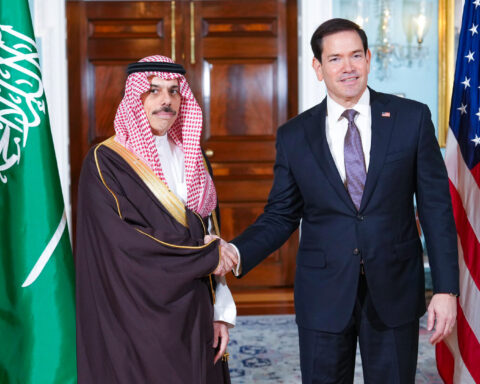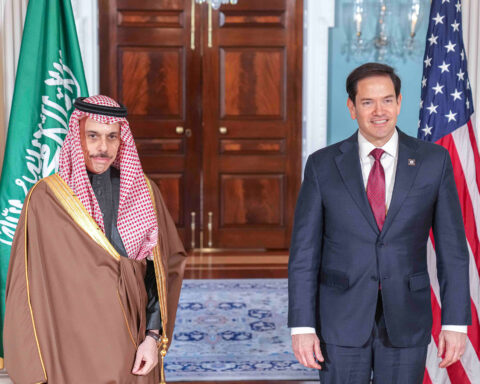

Saudi FM Calls Qatar on MOU Compliance Without a Seat
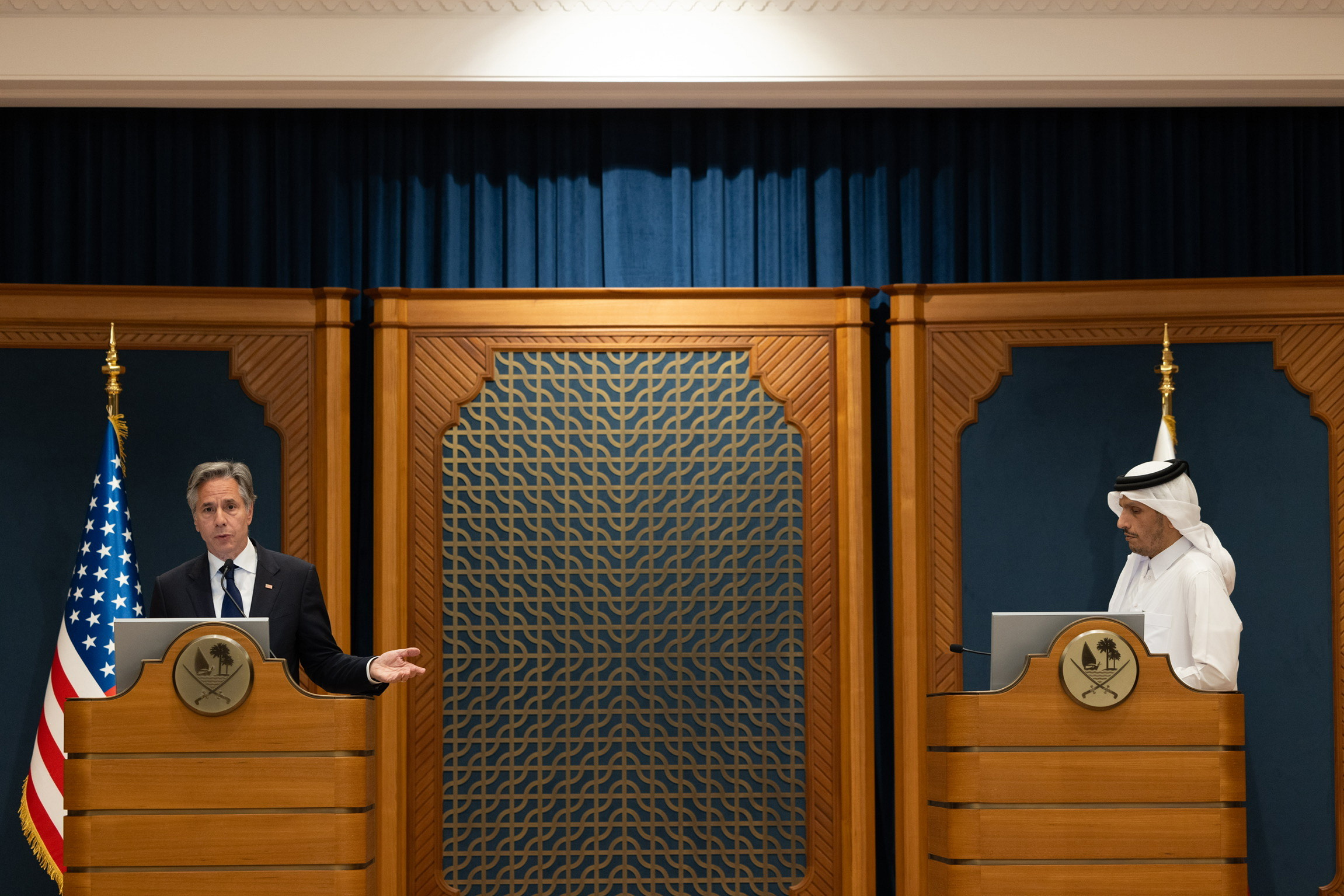
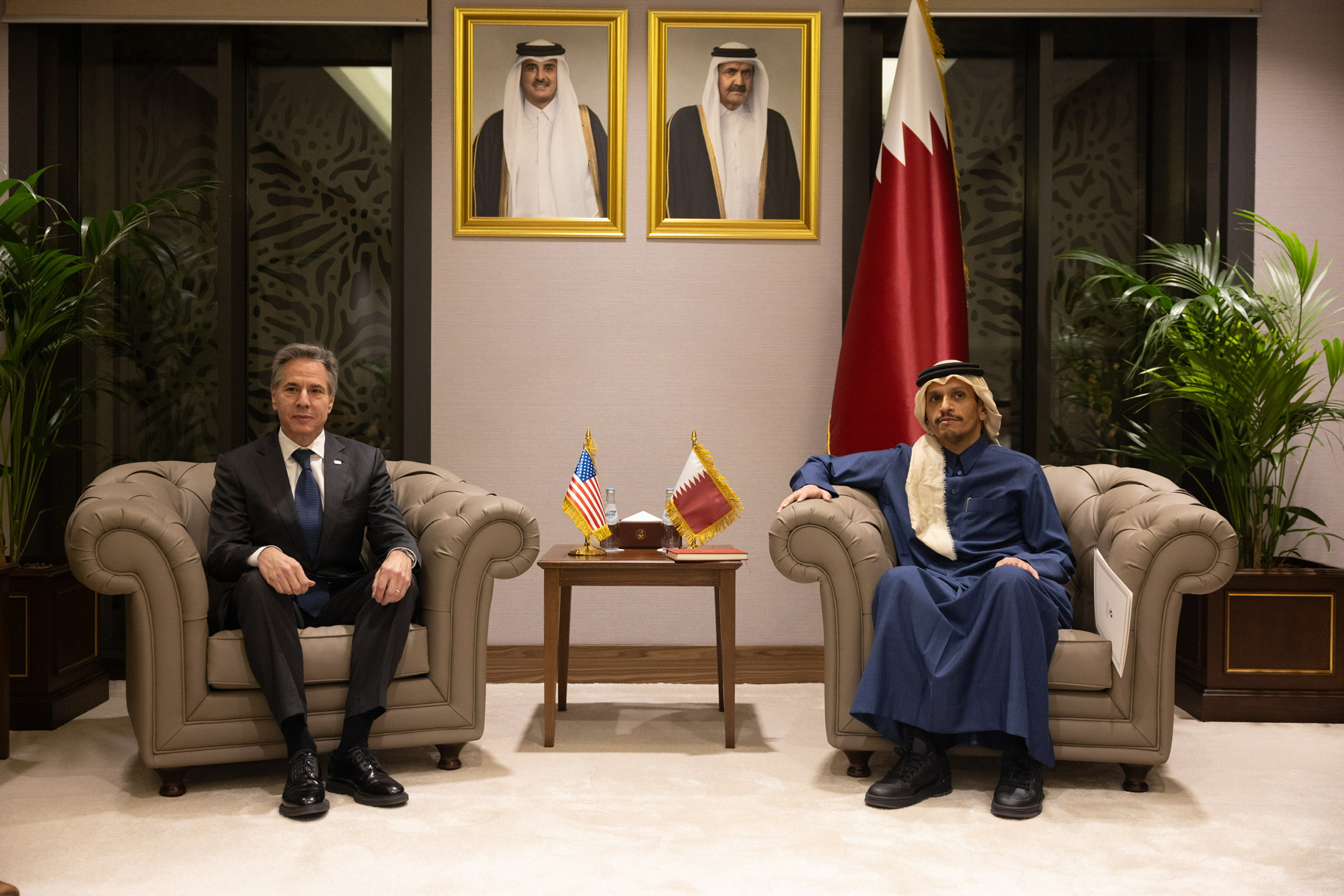
Qatar Prime Minister and Foreign Minister Sheikh Mohammed bin Abdulrahman Al Thani meets with US Secretary of State Blinken in Doha, February 2024

Qatar Named the MOU — Riyadh Named the Attacks

Saudi FM Faisal spoke with Qatar's PM about MOU compliance, but Riyadh holds zero seats at any track governing the deal. The readout gap reveals why.

DOHA — Saudi Foreign Minister Prince Faisal bin Farhan spoke with Qatar’s Prime Minister and Foreign Minister Sheikh Mohammed bin Abdulrahman Al Thani on July 20 about the Islamabad Memorandum of Understanding and freedom of navigation in the Strait of Hormuz — an instrument Saudi Arabia did not sign, cannot observe, and has no formal standing to enforce. Riyadh holds zero seats at any of the three active tracks governing the MOU: Doha diplomatic, Geneva nuclear, and Hormuz monitoring.

Conflict Pulse IRAN–US WAR
Live conflict timeline
Day
144
since Feb 28
Casualties
13,260+
5 nations
Brent Crude ● LIVE
$113
▲ 57% from $72
Hormuz Strait
RESTRICTED
94% traffic drop
Ships Hit
16
since Day 1

The two governments published readouts that described different conversations. Qatar stressed “the necessity for all parties to adhere to dialogue and diplomacy and to implement what was agreed upon within the framework of the Memorandum of Understanding.” Saudi Arabia, via Asharq Al-Awsat, said the two sides “discussed the latest regional developments” and “condemned Iranian attacks on Kuwait, Bahrain and Jordan.” The country that ships 5.43 million barrels per day of crude through Hormuz did not put the strait’s name in its own readout. Qatar did.

What Did the Two Readouts Actually Say?

Qatar’s statement, published by The Peninsula and Qatar Tribune on July 20, carried the full weight of the Islamabad MOU’s language. Al Thani stressed “the necessity for all parties to adhere to dialogue and diplomacy and to implement what was agreed upon within the framework of the Memorandum of Understanding between the United States of America and the Islamic Republic of Iran, including guaranteeing freedom of navigation in the Strait of Hormuz, in order to maintain regional security, preserve the gains achieved, and enhance regional stability.”

Qatar’s institutional addendum went further: the state “reiterated its full support for all efforts aimed at de-escalating efforts and reaching a comprehensive agreement that achieves lasting peace in the region.” This is a mediator restating its own brief — not a country relaying a Saudi request.

The Saudi readout, reported by Asharq Al-Awsat on the same day, described something else. The two sides “discussed the latest regional developments,” “condemned Iranian attacks on Kuwait, Bahrain and Jordan,” and “reviewed efforts to restore security and stability.” No mention of the MOU by name. No reference to Hormuz. No invocation of freedom of navigation.

Doha published a compliance statement about the instrument it co-mediates. Riyadh published a condemnation about the attacks it has absorbed. Earlier in the crisis, Prince Faisal had publicly appreciated “President Donald Trump’s decision to give diplomacy a chance to reach an acceptable agreement to end the war, restore the security and freedom of maritime in the Strait of Hormuz,” according to the Saudi Press Agency. On July 20, that language appeared in Qatar’s readout instead of Saudi Arabia’s.

The HOS Daily Brief

The Middle East briefing 3,000+ readers start their day with.

One email. Every weekday morning. Free.

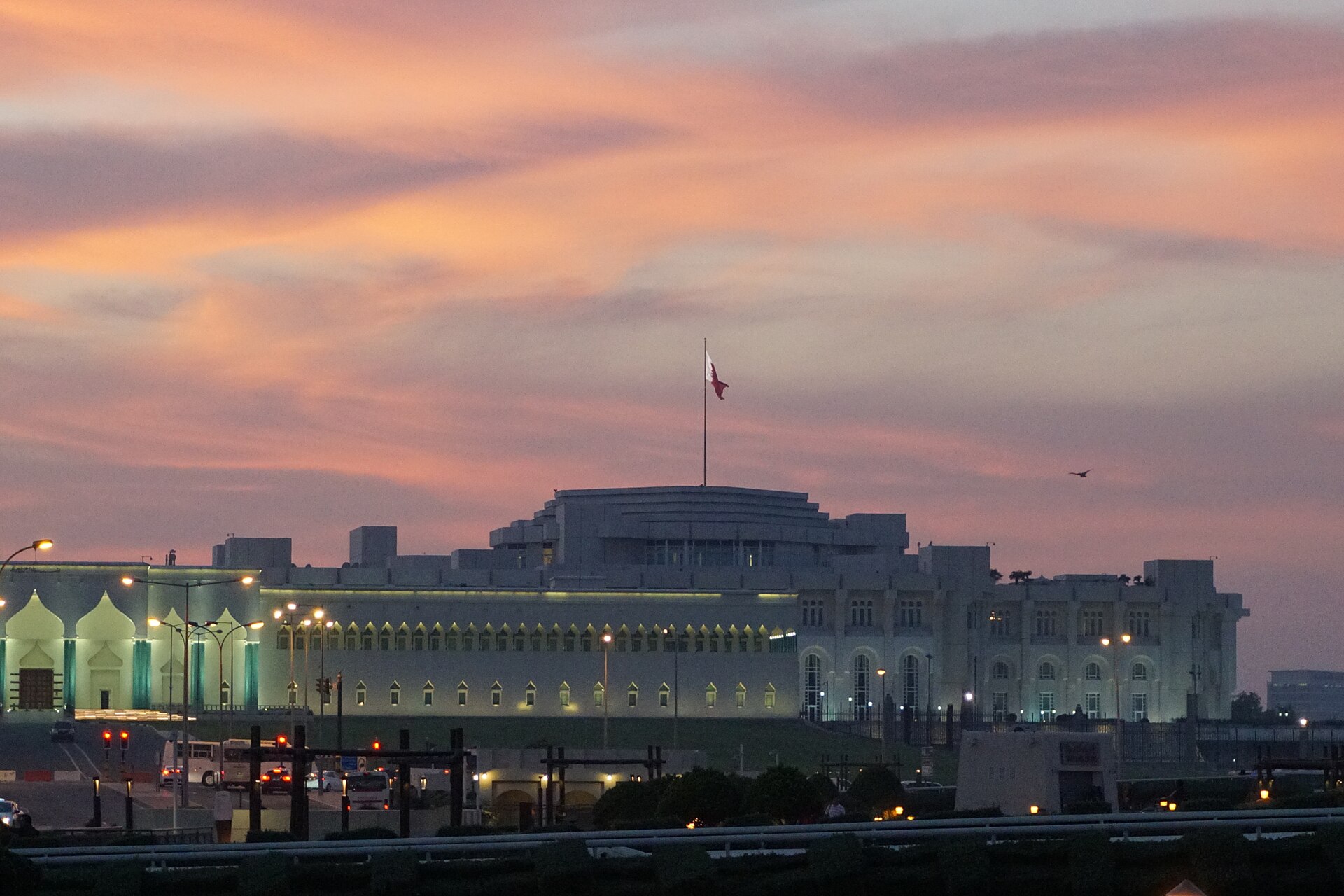
Qatar Amiri Diwan palace lit at dusk, official seat of the Emir and Prime Minister in Doha
Qatar’s Amiri Diwan at dusk — the building from which Sheikh Mohammed bin Abdulrahman Al Thani coordinates the MOU mediation track Riyadh cannot access. Doha published a compliance statement about the instrument it co-mediates; Riyadh published a condemnation about the attacks it has absorbed. Photo: Mat Kieffer / Wikimedia Commons / CC BY-SA 2.0

Three Tracks, Zero Saudi Seats

The Islamabad MOU, signed June 17, 2026, established a US-Iran bilateral framework with Pakistan and Qatar as designated co-mediators. Saudi Arabia was not offered a seat — not as a signatory, not as an observer, not as a party with any formal complaint mechanism. The Arab Center DC confirmed Saudi exclusion from all three active tracks in its analysis “Limiting the Damage: Saudi Arabia and the Islamabad Memorandum.” The Stimson Center reached the same conclusion independently.

The three tracks operate in parallel. The Doha diplomatic channel, led by Qatar, manages the political framework — ceasefire terms, compliance disputes, and the sequencing of Iranian commitments. The Geneva nuclear track handles enrichment and inspection protocols, a domain where Saudi Arabia’s own pending nuclear deal with Washington sits in limbo. The Hormuz monitoring track oversees the operational status of the strait, including shipping lanes and transit guarantees. Saudi Arabia has no representative at any of them.

Riyadh’s sole access to process information comes through post-round phone briefings. On July 3, Faisal called Pakistan’s Foreign Minister Ishaq Dar hours after Qatar and Pakistan announced “positive progress” in the second Doha round — to receive a summary, not to participate. The pattern has not changed since. Saudi Arabia learns what happened at the table after the table has adjourned.

The exclusion was by design. The CSIS analysis “How Does Saudi Arabia See the War with Iran?” traced the architecture to a structural constraint: the US-Iran bilateral format was built to exclude regional parties that Iran refused to negotiate alongside. Qatar and Pakistan were accepted as co-mediators because they maintained functional relationships with Tehran and lacked the bilateral territorial grievances that disqualify Riyadh. Saudi Arabia’s four-decade confrontation with Iran — from the 1979 Mecca siege through the Aramco drone attacks of 2019 to the current war — made its inclusion a deal-breaker for Tehran before negotiations began.

Iran’s position was explicit. Tehran has never acknowledged Saudi Arabia as a party with standing to demand MOU compliance, according to Middle East Eye. Iran’s framing treats “operational oversight of Hormuz” as an Iranian prerogative — a position incompatible with Saudi inclusion in any monitoring mechanism. The United States, for its part, structured the MOU to secure what it needed from Iran: a return to unrestricted commercial navigation and nuclear transparency. Whether Saudi Arabia sat at the table was not an American requirement. Securing the strait was.

Why Does Saudi Arabia Need Qatar to Carry Its Message?

Saudi Arabia was excluded from the Islamabad MOU because Iran refused to negotiate alongside Riyadh, and the US-Iran bilateral structure accommodated that refusal. Qatar and Pakistan were accepted as co-mediators because they maintained working relationships with Tehran and posed no territorial claim Iran needed to contest. Saudi Arabia’s only channel to the process runs through intermediaries whose standing derives from a neutrality Riyadh does not possess.

The irony runs more than three years deep. In June 2017, Saudi Arabia led a coalition — with the UAE, Bahrain, and Egypt — that severed all ties with Qatar and imposed a land, sea, and air blockade. The crisis lasted until January 2021, when the Al-Ula Declaration restored relations. Qatar’s current position as the Gulf’s most credible mediator is partly a product of that diplomatic rehabilitation — and partly a consequence of the blockade itself, which pushed Doha to cultivate the independent relationships with Tehran, Ankara, and Islamabad that now give it access Riyadh lacks.

During the blockade, Qatar’s only functioning air corridor to Asia ran through Iranian airspace — a dependency that became the foundation of a diplomatic relationship. Iran was among the first countries to send food supplies to Doha after the land border sealed.

Qatar entered the MOU mediation “full throttle” in mid-May 2026, according to Al Jazeera, when Pakistan’s initial efforts proved insufficient. Qatar’s warmer prewar ties with Tehran and its geographical position — a peninsula protruding into the Persian Gulf between Saudi Arabia and Iran, sharing the world’s largest gas field with Tehran — made it the more credible channel. Dr. Mehran Haghirian of the Bourse and Bazaar Foundation described the division of labour: “Qatar is protecting Gulf interests at the negotiating table while Oman leads on the Strait of Hormuz.”

For Saudi Arabia, the result is a structural dependency. Riyadh needs Qatar to say things to Iran that Iran will not hear from Riyadh. It needs Qatar to place MOU compliance language in a readout that Saudi Arabia’s own readout cannot carry. And it needs this from a country it blockaded for three and a half years — a country whose diplomatic independence Saudi Arabia once tried to destroy and now relies on to function as its voice inside the room.

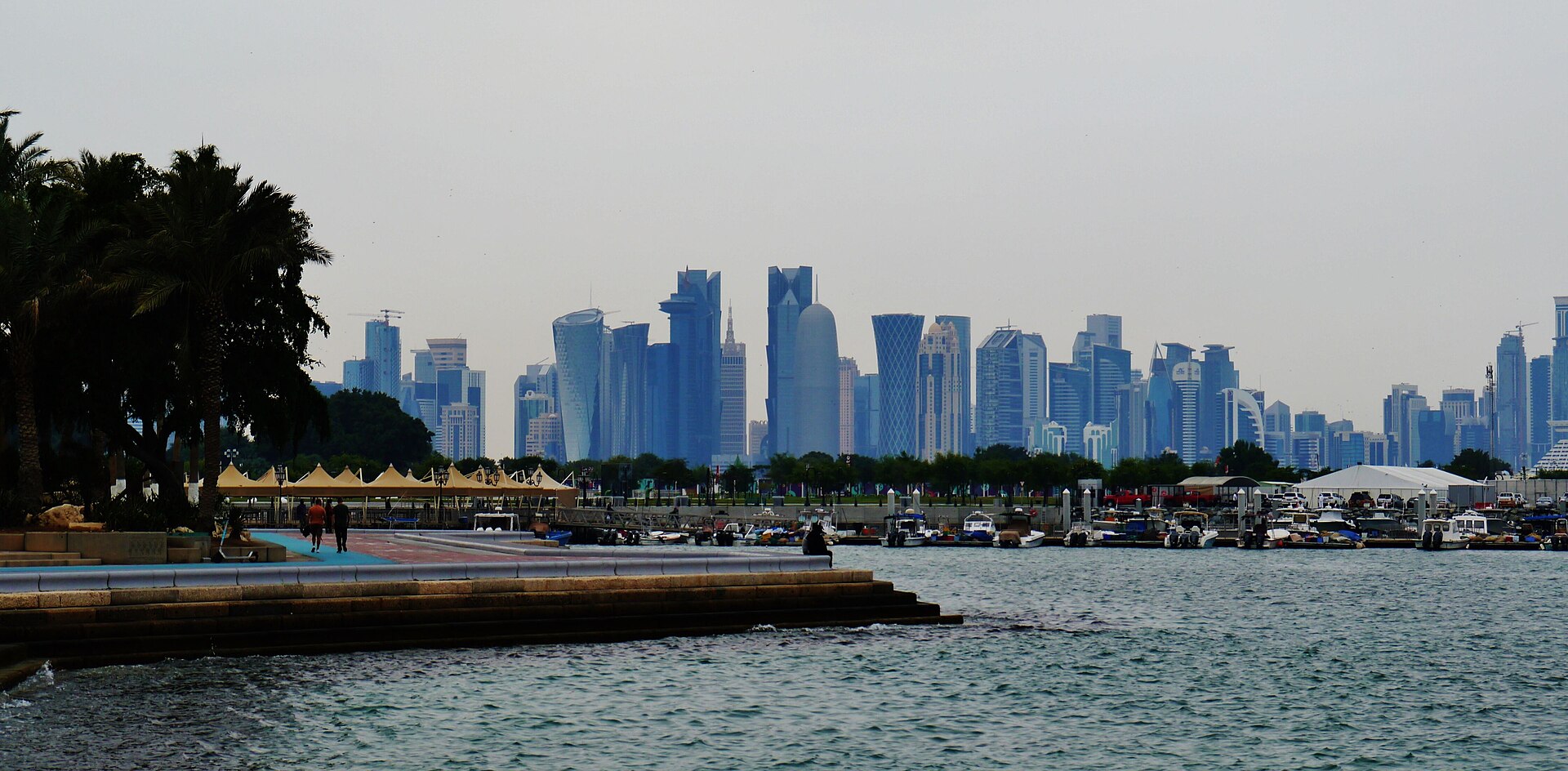
Doha West Bay skyline viewed from the corniche, Qatar, 2023
Doha’s West Bay financial district — the peninsula Qatar built into an independent diplomatic force during the 2017–2021 blockade Saudi Arabia led. Qatar’s warmer ties with Tehran, cultivated during those years of isolation, now give it the access Riyadh needs but cannot replicate. Photo: Zairon / Wikimedia Commons / CC BY 4.0

What Does Hormuz Disruption Cost Saudi Arabia?

Saudi Arabia routes the largest volume of any single state’s crude exports through the Strait of Hormuz. GCC states collectively lose approximately $700 million in daily oil revenue while the passage is disrupted, according to Bloomberg and EIA data. The strait is transiting roughly 10 ships per day against a pre-crisis baseline of 88 — an 89 percent reduction.

Saudi Arabia’s East-West pipeline to Yanbu, on the Red Sea coast, has a maximum capacity of 7 million barrels per day, according to the Dallas Fed and EIA. That is less than half of Hormuz’s pre-crisis throughput of 20 million barrels per day — and while the pipeline can theoretically handle Saudi Arabia’s own export volume, it leaves nothing for other GCC producers and requires full operational capacity with no margin for disruption. The pipeline is a pressure valve, not a substitute.

Aramco CEO Amin Nasser warned in May 2026 that oil markets “won’t normalize until 2027” if the Hormuz disruption persists, according to CNBC. Bloomberg reported that Aramco’s own projections estimate a loss of 100 million barrels for every week the strait remains effectively shut. In the first two weeks after the MOU was signed on June 17, Saudi Arabia shipped 34 million barrels through Hormuz — more than double the 15 million barrels shipped through the strait during the entire March 9 to June 17 period, according to CNBC. That window of resumed exports closed when Iran escalated its disruption campaign in early July.

Saudi Arabia’s Hormuz Exposure — July 20, 2026
Indicator Figure Source
Pre-crisis Saudi crude exports via Hormuz 5.43 million bbl/day EIA / CNBC
Current Hormuz ship transits 10 of 88 baseline/day Situation map
Hormuz throughput reduction 89% Situation map
East-West pipeline capacity (Yanbu) 7 million bbl/day Dallas Fed / EIA
Daily GCC revenue loss $700 million Bloomberg / EIA
Weekly global oil loss (Hormuz shut) 100 million barrels Aramco / Bloomberg
Post-MOU Saudi Hormuz exports (Jun 17-Jul 2) 34 million barrels CNBC, July 2, 2026
PGSA outstanding balance $253 million ($5.5M/day) Situation map

Every line in that table represents a cost Saudi Arabia absorbs without any mechanism to influence the instrument meant to resolve it. The 34 million barrels that moved through Hormuz after the MOU signing were the direct product of a framework Riyadh had no hand in drafting. When Iran suspended that framework on July 18, Saudi Arabia lost the export window a second time — and still had no one to call except the mediators.

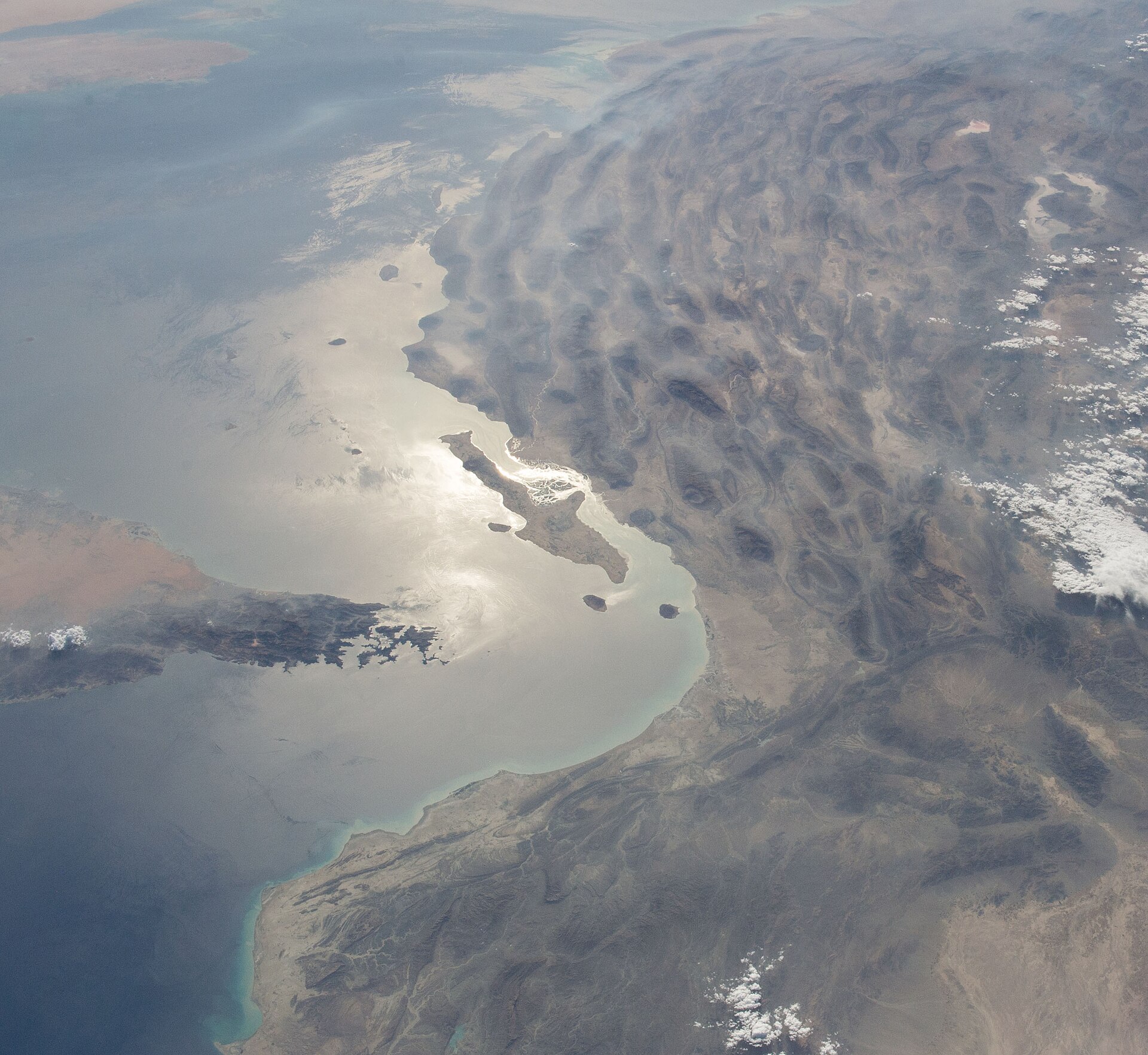
The Strait of Hormuz and Musandam Peninsula photographed from the International Space Station, showing the narrow waterway between Iran and Oman
The Strait of Hormuz from the International Space Station — a passage transiting approximately 10 ships per day against a pre-crisis baseline of 88, an 89 percent reduction. Saudi Arabia exports 5.43 million barrels of crude through this chokepoint daily and holds no seat at any of the three tracks governing its status. Photo: NASA / Public Domain

Does the MOU Still Exist?

Iran formally suspended its MOU commitments on July 18, 2026. Mojtaba Khamenei voided the framework from an undisclosed location — the voidance itself a demonstration of Iran’s control over the process. The MOU stands at Day 33 of its 60-day Phase 2 window, with 27 days remaining and no mechanism for renewal that includes Saudi Arabia as a participant.

The Persian Gulf Security Agreement compounds the exposure. The PGSA has accumulated $253 million in outstanding costs, accruing at $5.5 million per day, with a deadline of August 18. Saudi Arabia is the GCC state paying the largest share of that toll while holding no seat at the table that governs the strait the toll is meant to secure.

Secretary Rubio, departing for Manila on July 19, offered a framing that acknowledged the breakdown without assigning a timeline for repair. “The United States always remains open to a diplomatic solution,” he told CNN. “We’ve tried multiple times with Iran, and we’ll continue to try. If that door opens, we’ll be happy to see.” Rubio framed the MOU breakdown as Iran’s violation — a position that validates Saudi Arabia’s grievance without offering Saudi Arabia any role in the remedy.

The suspension leaves the MOU in a legal grey zone. Iran has not formally withdrawn; it has suspended operational commitments while leaving the instrument’s legal shell intact. The clock runs regardless of compliance — and if the Phase 2 window expires around August 16 without renewed commitments, the framework lapses. Iran voided the deal’s operational core while preserving its formal architecture. The PGSA accrual continues. Hormuz remains disrupted. Saudi Arabia’s sole recourse remains the phone calls.

Qatar’s $6 Billion Lever

Qatar holds custody of approximately $6 billion in frozen Iranian assets, according to Al Jazeera and Qatar Tribune, slated for release under the MOU’s initial phase. This gives Doha a financial lever over Tehran that Saudi Arabia has no means to replicate. Qatar’s Central Bank controls the funds; Qatar’s Foreign Ministry controls the mediator’s brief; Qatar’s Prime Minister holds a direct line to Iranian Foreign Minister Abbas Araghchi that Faisal does not officially possess.

The Qatari PM spoke with Araghchi separately around the same period, urging “both sides” to recommit to diplomacy, according to The Levant Files and Al Jazeera. That “both sides” framing — Washington and Tehran — defines the MOU’s universe of relevant parties. Saudi Arabia does not appear in Qatar’s diplomatic grammar when Doha addresses the MOU. Riyadh is a concerned neighbour, not a counterparty.

Chatham House described the asymmetry in its June 2026 analysis: “Saudi Arabia’s investments under Vision 2030 and Qatar’s mediation networks reflect a doctrine that regional problems can be managed through dialogue.” The sentence contains the operative distinction. Saudi Arabia invested in domestic transformation. Qatar invested in access. When the crisis arrived, access was the currency that mattered.

Saudi Arabia imposed secondary sanctions on Iranian entities through its own banking system, but those are punitive instruments — they damage Iran without creating the transactional relationship that custody of frozen assets provides. Qatar can release funds conditionally. Saudi Arabia can only withhold trade. The $6 billion gives Doha something Riyadh’s decades of confrontation with Tehran never produced: a transactional basis for Iran to engage rather than deflect.

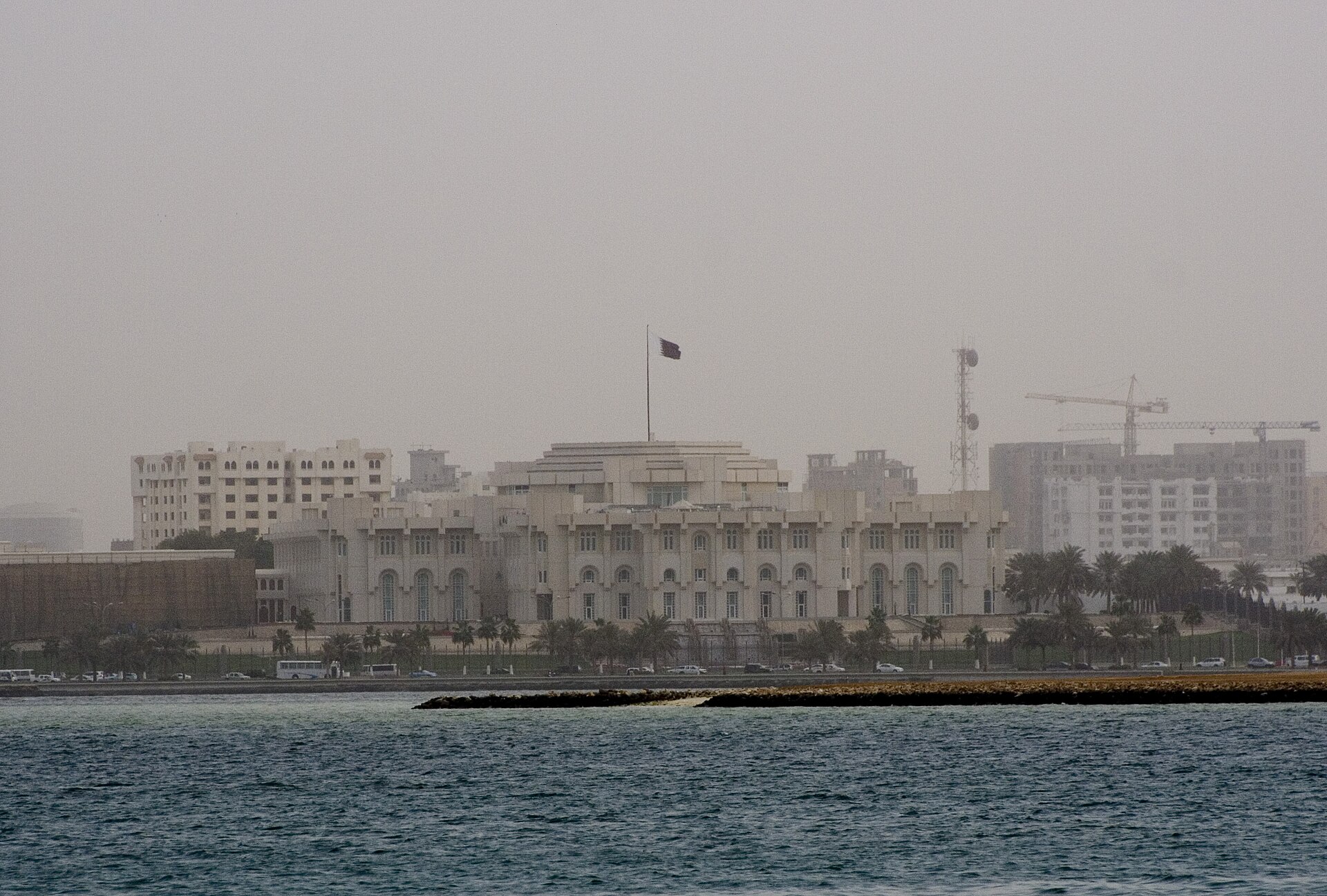
Qatar Amiri Diwan seen from Doha Bay, official palace of the Emir and seat of the Prime Minister
The Qatar Amiri Diwan viewed from Doha Bay — the institutional address from which Sheikh Mohammed bin Abdulrahman Al Thani holds the $6 billion in frozen Iranian assets and the mediator’s chair that Saudi Arabia, for all its financial power, cannot acquire. Photo: Joey Coleman / Wikimedia Commons / CC BY-SA 2.0

How Many Calls Before One of Them Counts?

Saudi Arabia has conducted at least a dozen senior diplomatic calls in the current crisis cycle — to Qatar, Pakistan, Oman, Bahrain, Jordan, Iraq, Ukraine, France, Iran, and the United States. None has produced a seat at any of the three tracks governing the MOU. The calls continue because the alternative is silence, and silence from the country most exposed to the MOU’s failure would be read as acquiescence.

On July 13, Faisal held separate talks with six counterparts in a single day: Qatar’s PM Al Thani, Oman’s FM Albusaidi, Bahrain’s FM Al Zayani, Jordan’s Deputy PM Safadi, Iraq’s Deputy PM and FM Fuad Hussein, and Ukraine’s FM Sybiha, according to Asharq Al-Awsat. The burst of bilateral activity produced one concrete commitment — Iraq’s pledge not to allow its territory or airspace to be used for attacks against Saudi Arabia or GCC states. The rest were expressions of solidarity that changed nothing about Saudi Arabia’s structural position.

The July 3 call to Pakistan’s FM Dar followed a different pattern. Qatar and Pakistan had just announced “positive progress” in the second Doha round, and Faisal called Dar for a briefing — an update on proceedings Saudi Arabia had no role in shaping. The most recent US-Saudi FM bilateral contact was a Rubio-Faisal conversation on July 10, ten days before the Qatar call. The ambassador-level contact between Princess Reema and Rubio on the same date operated at a containment register, not a coordination one.

Saudi Arabia also maintains an informal bilateral channel with Iran that predates the MOU crisis. At least four confirmed Faisal-Araghchi phone calls occurred during the war — on April 9, April 26, May 6, and May 11, according to prior HouseofSaud.com reporting. Saudi Arabia also pre-notified Iran before conducting covert RSAF strikes on IRGC drone and missile sites, using the notification as a coercive signal rather than a diplomatic overture. These contacts exist but carry no standing in the MOU framework. Iran has never acknowledged them as part of any negotiating track.

The loss of Senator Lindsey Graham on July 12 removed Saudi Arabia’s most senior Congressional advocate at the worst possible moment, according to Axios and the Jerusalem Post. Graham had led the US Senate’s normalization and engagement track with Riyadh. His absence leaves the Saudi-US structural relationship without the legislative sponsor who might have pushed for Saudi inclusion in the MOU architecture — or at minimum, for a formal US commitment to keep Riyadh informed. The nuclear enrichment deal Saudi Arabia concluded with the US in October 2025 remains “in limbo awaiting Trump administration sign-off” as of July 18, per CNN — a bargaining chip linked to the MOU’s nuclear track that Saudi Arabia holds but cannot play from outside the room.

The Signal and Its Reach

Each of Faisal’s calls follows the same structural logic: state a position through a party with actual access and hope it propagates inward. The relay stations rotate — Doha, Islamabad, Paris, Washington — but the pattern does not change. Saudi Arabia speaks to intermediaries. The intermediaries speak to the principals. What the principals do with the message is beyond Riyadh’s control.

Retired RSAF General Abdullah bin Ghanem Al-Qahtani offered a rare public assessment in an interview with Israel’s Channel 12 on July 19, calling Iran’s actions “extremely dangerous,” according to the Times of Israel liveblog. Saudi military officials do not speak to Israeli media without authorization. That Al-Qahtani’s remarks appeared on a commercial broadcast network — not a defence journal or Arabic-language outlet — suggests Riyadh is placing its threat assessment in media environments it would normally avoid, precisely because the diplomatic environments it would normally use are closed. The choice of venue — commercial Israeli television, during a war between US-allied states and Iran — registered the message with audiences in Washington and Tel Aviv that Arabic-language diplomatic channels would not have reached.

Foreign Policy identified the emerging structure in a July 1 analysis: a Saudi-Qatar-Pakistan-Turkey-Egypt axis in which the parties are “structurally allied but with asymmetric access.” The formulation is precise. Saudi Arabia and Qatar share an interest in the MOU’s success. They do not share standing within it. Qatar has the table. Saudi Arabia has the argument — and the phone number of the country sitting at the table.

The asymmetry is not a diplomatic inconvenience. With PAC-3 interceptor stocks at 400 of an original 2,800 — an 86 percent depletion rate — Saudi Arabia’s domestic defence capacity is thinning at a pace that makes diplomatic access a security question, not merely a procedural one. Mojtaba Khamenei holds the veto over any MOU revival. Rubio holds the US position. Al Thani holds the mediator’s chair. Faisal holds none of these. He holds a phone — and the readout that comes after he hangs up does not always contain the words he said. Qatar’s role as the active defender of the ceasefire framework — and what that means for Saudi Arabia’s structural position — is examined in Qatar Holds the Ceasefire Saudi Arabia Cannot Enter.

Frequently Asked Questions

Why did Qatar lead its readout with MOU compliance language rather than bilateral pleasantries?

Qatar’s readout followed the Islamabad MOU reporting template established during the first Doha round in June 2026, in which the co-mediator issues compliance-focused updates to affected states. The July 20 Faisal call was one of several updates in a single Qatari diplomatic cycle — Al Thani also spoke separately with Iranian FM Abbas Araghchi. Doha’s readout addressed Riyadh and Tehran simultaneously, using identical MOU language it had already delivered to the Iranian side, which explains why the statement reads as a mediator’s brief rather than a Saudi-requested intervention.

Has Saudi Arabia ever held a formal seat in US-Iran negotiations?

Saudi Arabia has been excluded from every major US-Iran negotiating format since the 1981 Algiers Accords. Riyadh held no seat at the JCPOA nuclear talks in Vienna between 2013 and 2015 and was briefed by the Obama administration only after the P5+1 framework was set. Saudi officials publicly objected to the JCPOA’s regional implications, particularly the absence of ballistic missile constraints, but their objections carried no procedural weight. The Islamabad MOU continues a four-decade pattern in which the United States negotiates with Iran bilaterally and informs Gulf allies after the fact.

What role does Oman play separately from Qatar in the Hormuz crisis?

Oman leads on the operational monitoring of the Strait of Hormuz, running a parallel track to the MOU’s diplomatic and nuclear channels. Muscat holds the only Hormuz channel still open for commercial shipping, and Omani waters have absorbed strikes that Muscat has been reluctant to publicly condemn. Faisal spoke with Omani FM Albusaidi during the July 13 call round, but Oman’s Hormuz role is operational — managing transit lanes and vessel traffic — rather than diplomatic. It exists alongside the MOU, not inside it.

Could Saudi Arabia use its pending US nuclear deal to gain MOU access?

Saudi Arabia concluded nuclear enrichment negotiations with the US in October 2025, but the agreement remains unsigned and “in limbo awaiting Trump administration sign-off” as of July 18, per CNN. The enrichment question is intrinsically linked to the MOU’s Geneva nuclear track — any Saudi enrichment programme alters the regional nuclear balance that the track is meant to stabilise. This gives Riyadh a potential bargaining chip: conditioning its nuclear deal on US support for Saudi inclusion in MOU proceedings. No Saudi official has publicly linked the two, and the Graham-shaped gap in Congressional advocacy makes the legislative pathway for such a linkage considerably harder to construct.
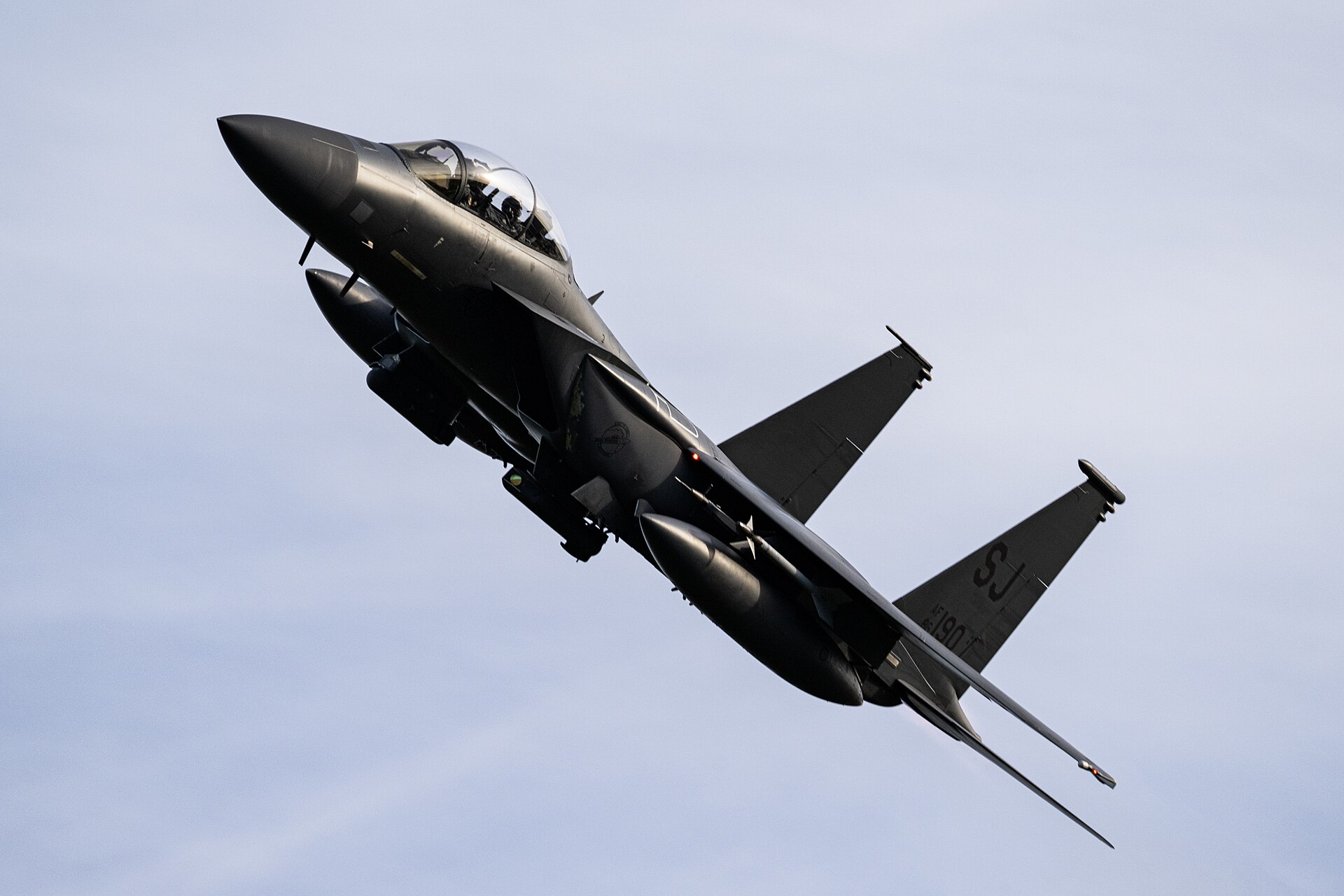
F-15E Strike Eagle armed for strike mission, US Air Force
Previous Story

Night Nine Hit Eight Iranian Cities and Rubio Removed the Deadline

Qatar Prime Minister and Foreign Minister Mohammed bin Abdulrahman Al Thani at joint press availability with US Secretary of State Blinken in Doha, June 2024
Next Story

Qatar Holds the Ceasefire Saudi Arabia Cannot Enter

Latest from Diplomacy & Geopolitics

The HOS Daily Brief

The Middle East briefing 3,000+ readers start their day with.

One email. Every weekday morning. Free.

Something went wrong. Please try again.