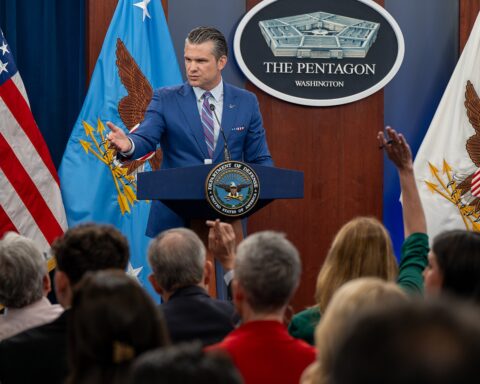
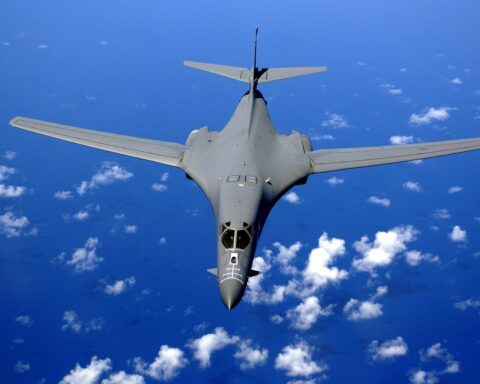
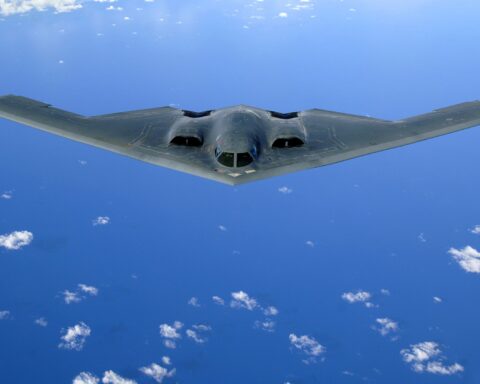
TEHRAN — Mohsen Rezaei’s seventy-two-hour ultimatum expires on July 19 with American bombers still flying, and the man who issued it does not command a single soldier, missile battery, or drone launcher in the Islamic Republic’s operational chain. Rezaei told IRIB and Tasnim on July 17 that if US strikes continued “for another two or three days, we will enter a phase of full-scale offensive operations” and that “no political border will be safe” — language that implies simultaneous escalation against multiple states, delivered by a figure whose March 2026 appointment as Mojtaba Khamenei’s military adviser was met with laughing emojis on Iranian social media. The deadline arrives into a theatre where CENTCOM has destroyed eighty-five percent of Iran’s missile and drone industrial base, where the Strait of Hormuz carries three vessels per day instead of eighty-eight, where two American soldiers died in Jordan on July 18 and politically locked Washington into the very continuation of strikes Rezaei threatened to punish, and where Mojtaba Khamenei — the man whose backing Rezaei would need — spent July 18 not ordering military escalation but repudiating the Islamabad MOU on constitutional grounds, reframing Iran’s war from a military deterrence contest it is losing into a legal grievance it can sustain indefinitely without firing another missile.
The editorial question is not whether Iran will act on July 19. It is how Iran’s fractured leadership manages the internal politics of a public deterrence failure — whether Rezaei spoke for the IRGC triad or performed for the hardliner gallery, whether Mojtaba’s legal reframing constitutes an authorized off-ramp, and what each path forward costs a regime that has now crossed every red line it declared in 2024 and 2025 without once matching its own stated thresholds.
Contents
- What Did Rezaei Actually Say — and Who Authorized It?
- The Command Gap: Adviser vs. Commander-in-Chief
- Can Iran Execute a Multi-Front Offensive With 85 Percent of Its Industrial Base Destroyed?
- Mojtaba’s Off-Ramp: From Military Failure to Legal Grievance
- What Does the Hardliner Gallery Actually Want?
- The Houthi Card: Proxy Escalation Without Direct Attribution
- Does Iran Still Have a Deterrence Model?
- The Nuclear Deliberation Mechanism
- Three Paths Forward — and What Each Costs Tehran
What Did Rezaei Actually Say — and Who Authorized It?
The precise formulation matters because ultimatums live or die by their specificity, and Rezaei’s was unusually specific by Iranian standards. He told state broadcasters on July 17 that if American attacks continued “for another two or three days, we will enter a phase of full-scale offensive operations,” adding that “Iran will no longer limit itself to retaliatory, like-for-like responses” and that “no political border will be safe.” IRIB amplified the statement without caveats, Tasnim ran it as a policy announcement rather than commentary, and IRNA distributed it internationally — the full state-media trifecta that typically signals regime endorsement at or above the level of the speaker’s institutional position. For a military adviser to the Supreme Leader, that means the statement was presented as carrying Mojtaba’s implicit backing.
But implicit backing and operational authorization are separated by an institutional canyon in the Islamic Republic’s command architecture. Rezaei’s formulation broke sharply from Iran’s traditional deterrence-by-opacity model — what the Small Wars Journal described in July 2025 as a system that “depends on deliberate ambiguity, not stated ultimatums.” The late IRGC Aerospace Force Commander Amir Ali Hajizadeh once explained Iran’s deterrence philosophy as a bicycle: “You have to keep pedaling all the time, or else the bicycle will fall.” Rezaei did not pedal. He announced a destination, a timeline, and a consequence — the three things Iran’s deterrence architecture is designed never to specify simultaneously, because specifying them creates exactly the credibility trap he now inhabits.
The critical analytical question is whether Rezaei issued this ultimatum with operational pre-authorization from IRGC Commander-in-Chief Ahmad Vahidi — meaning Iran’s military was genuinely preparing multi-domain escalation within seventy-two hours — or whether he performed for a domestic hardliner audience that had, twenty-four hours earlier, pelted Foreign Minister Araghchi with rocks at Khamenei Senior’s funeral while chanting “death to the compromiser.” The answer determines whether July 19 is a deadline or a humiliation, and the evidence overwhelmingly suggests the latter.
The Command Gap: Adviser vs. Commander-in-Chief
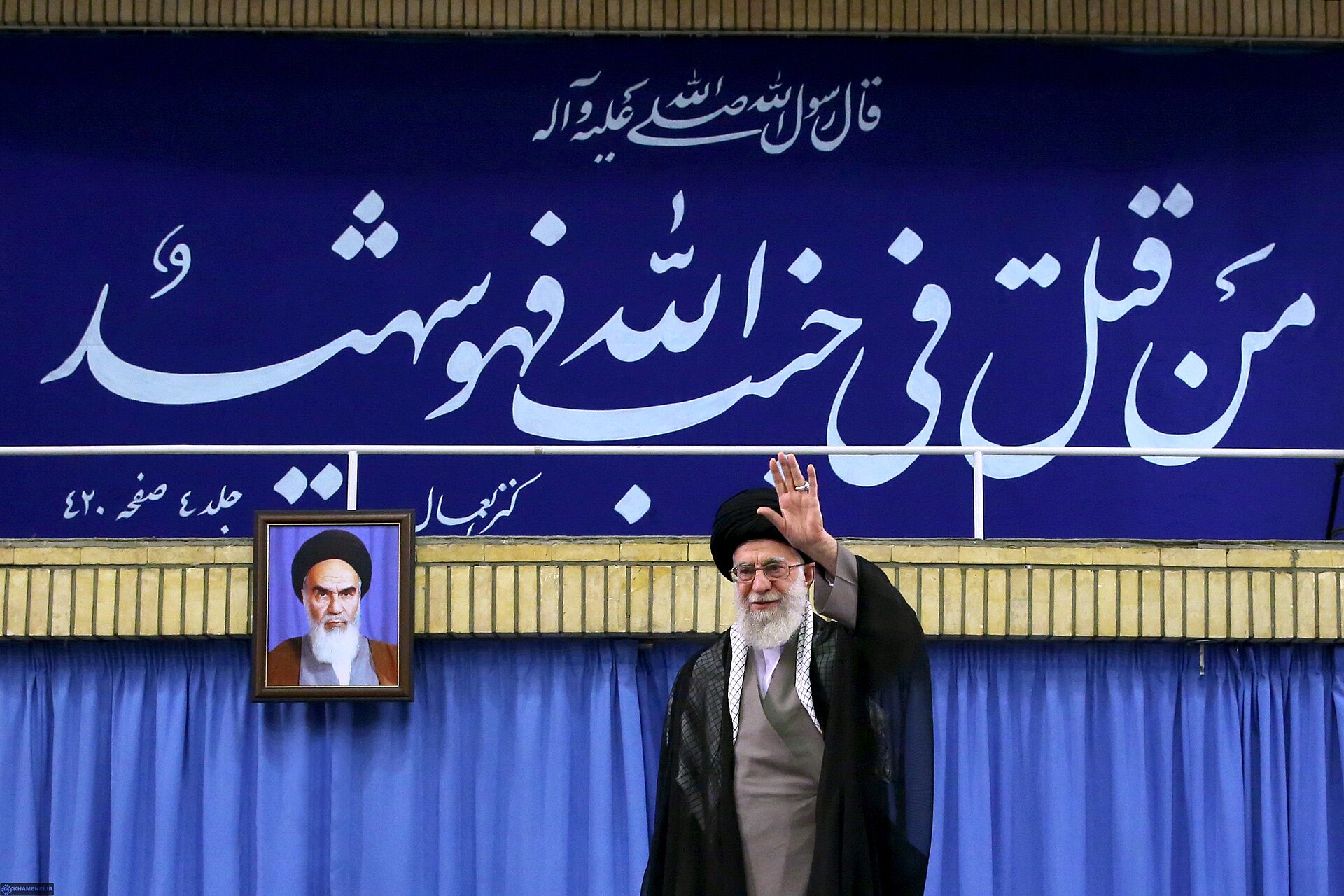
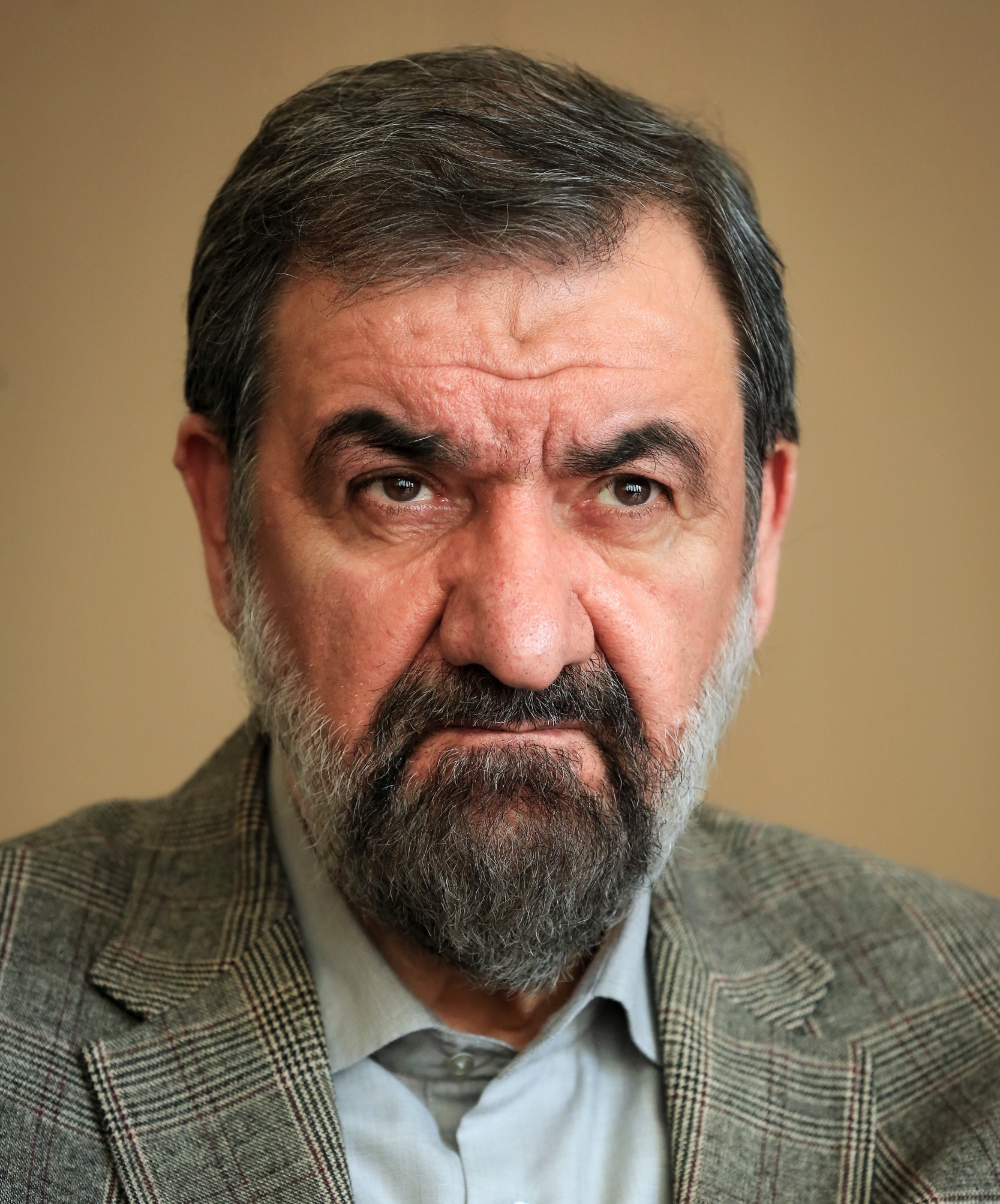
Mohsen Rezaei is seventy years old, was IRGC Commander-in-Chief from 1981 to 1997 — appointed by Khomeini at twenty-seven, during a war that actually required the kind of multi-front coordination he now threatens — and has spent the intervening three decades in roles of diminishing operational relevance: Expediency Discernment Council secretary, three failed presidential campaigns, and now “military adviser” to a Supreme Leader who has been physically absent from public view for one hundred and twenty-seven days. Iran International reported in March 2026 that his appointment “triggered a wave of ridicule on Iranian social media, with users mocking both the decision and the figure chosen for the role, circulating the announcement with laughing emojis and sarcastic commentary.” This is not a man whose word mobilizes divisions.
The Middle East briefing 3,000+ readers start their day with.
One email. Every weekday morning. Free.
Operational command in the current Iranian military structure sits with a triad that replaced a dead command chain: Ahmad Vahidi as IRGC C-in-C (appointed March 1, 2026, only one hundred and forty days in post on the date of Rezaei’s ultimatum), Mohammad Bagher Zolghadr as SNSC Secretary handling strategic coordination, and Rezaei himself occupying the advisory position that connects the triad to Mojtaba’s constitutional authority. All three have publicly rejected renewed negotiations with Washington. All three favour continuing the war rather than seeking a diplomatic exit. But shared hawkish posture and shared operational planning are not the same thing, and only Vahidi can convert rhetoric into military orders — a distinction that matters enormously when the rhetoric promises action across “every political border” simultaneously.
Vahidi has been in command for less than five months, inheriting a force structure that lost Hossein Salami (killed June 2025), Mohammad Pakpour (killed February 2026), and Hajizadeh himself — institutional memory measured in decades, replaced by a commander whose first task was managing defensive operations against the most sustained American air campaign since Iraq 2003, not planning multi-front offensives against the very states hosting the aircraft killing his infrastructure. The IRGC that fought the Iran-Iraq War under Rezaei’s actual command had eight years of institutional cohesion, ground forces numbering hundreds of thousands, and an enemy whose air force could not operate with impunity over Iranian territory. The IRGC that would need to execute Rezaei’s July 2026 ultimatum has none of these conditions.
Can Iran Execute a Multi-Front Offensive With 85 Percent of Its Industrial Base Destroyed?
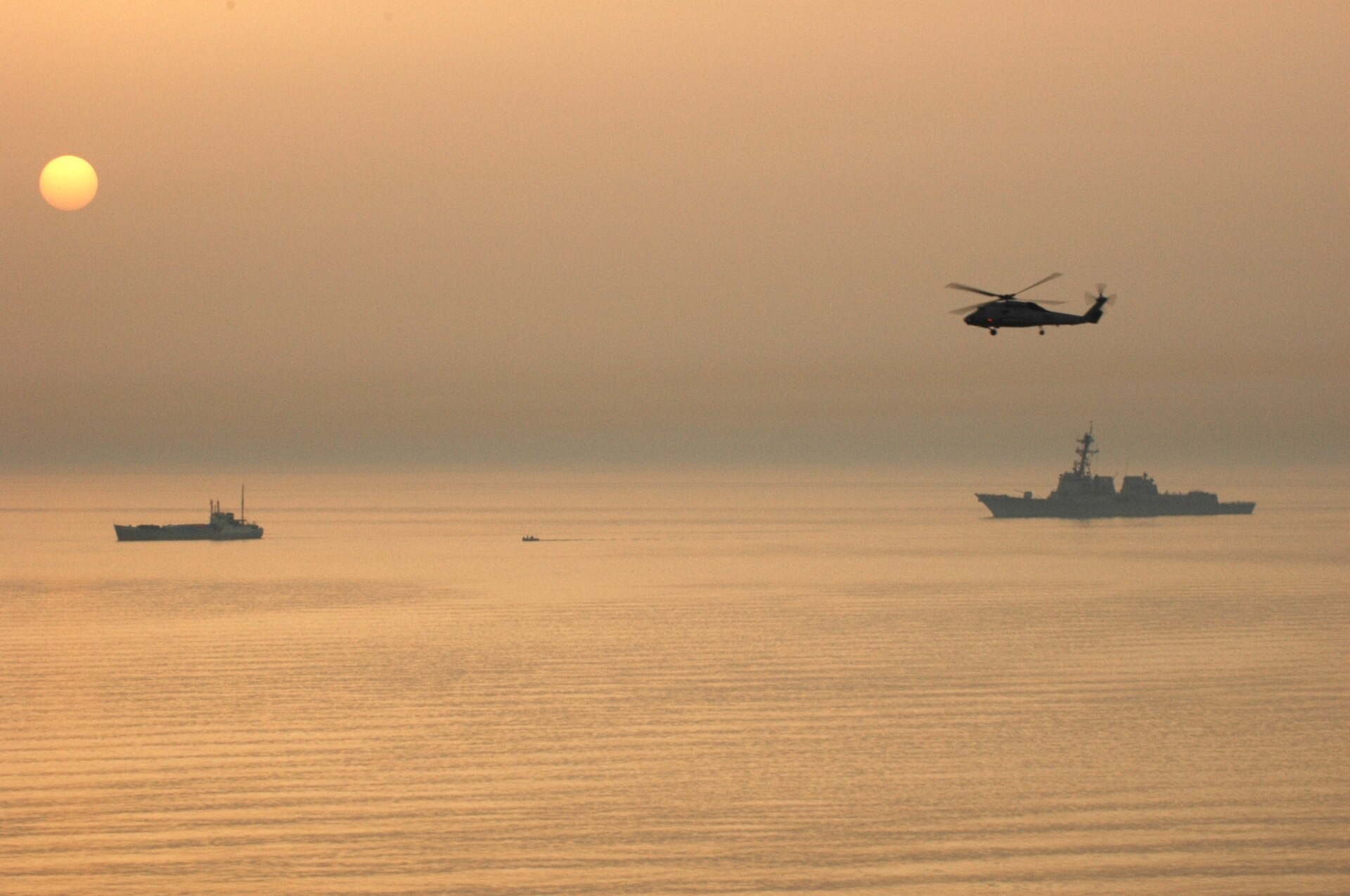
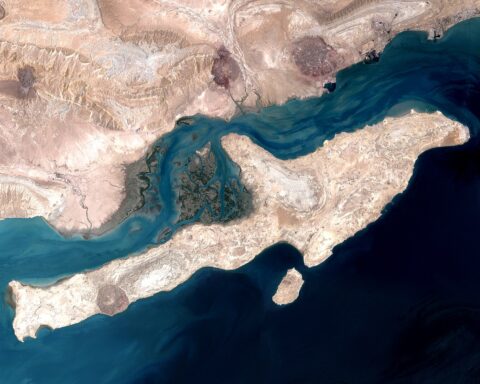
The operational answer is straightforward and devastating. CENTCOM Commander Brad Cooper told the House Armed Services Committee in May 2026 that more than eighty-five percent of Iran’s ballistic missile, drone, and naval defence-industrial base has been damaged or destroyed — not eighty-five percent of the weapons themselves, but eighty-five percent of the capacity to make more. Iran still possesses an estimated three thousand missiles in remaining stockpile after partial reconstitution, and US sources acknowledged in late May that drone production had restarted “faster than anticipated,” but three thousand missiles distributed across a country absorbing nightly strikes on its bridges, tunnels, surveillance sites, and underground storage facilities (CENTCOM hit targets across Jask, Sirik, Bushehr, Bandar Abbas, Qeshm Island, Ahvaz, Yazd, and Lar on the seventh consecutive night of strikes July 17-18) is not the same force that Iran possessed before February.
“No political border will be safe” implies Iran opening simultaneous operations against Gulf states, Jordan, and potentially Israel — the operational definition of “full-scale offensive” that Rezaei’s language demands. But Iran’s proxy network, which was supposed to provide that multi-front capability without requiring direct IRGC action, has structurally degraded in ways that pre-date the current war. Nicole Grajewski and Ankit Panda wrote in Foreign Affairs in March 2026 that “Iran wasted its conventional and proxy forces by treating them not as guardians of its nuclear program but as tools of offensive regional competition,” and that the “missile arsenal that was supposed to threaten devastating retaliation had been prematurely spent.” The Stimson Center’s 2026 GCC scenarios paper reinforced this assessment: “Even under the best-case scenario, rebuilding this network is going to be quite challenging given the structural shifts that have eroded the foundations on which it was built — chief among them the loss of Syria as a land corridor with Lebanon.”
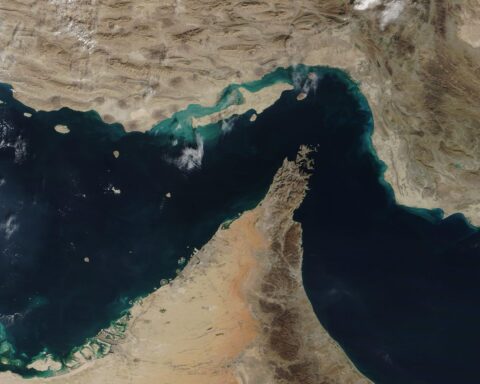
The Houthis remain Iran’s most capable operational proxy, but as Lina Khatib of the Belfer Center noted in April 2026, their “operational relationship with Hezbollah was more central than their institutional relationship with Iran, limiting Tehran’s ability to compensate for the loss of key liaison figures through direct IRGC substitution.” Iran can instruct. Whether Iran can command — on the seventy-two-hour timeline Rezaei specified, against targets across multiple sovereign borders, while managing active US air operations over its own territory — is a question the answer to which is legible in the three vessels transiting Hormuz daily, the desalination plant west of Jask that CENTCOM destroyed on July 17 leaving ten thousand people in twenty villages without drinking water, and the two American soldiers who died in Jordan on July 18 ensuring that Washington’s political incentive to continue strikes just hardened into something personal and bipartisan.
Mojtaba’s Off-Ramp: From Military Failure to Legal Grievance
The most analytically consequential event of July 18 was not Rezaei’s ultimatum approaching expiry but Mojtaba Khamenei’s declaration that American violations had proven the “worthlessness and invalidity” of Trump’s signature on the Islamabad MOU. This was not improvisation. Mojtaba had approved the MOU only conditionally in the first place — “I, as a matter of principle, held a different view,” he stated at the time, accepting only after Pezeshkian accepted personal responsibility for its failure. The July 18 repudiation completes a pre-designed legal architecture: Pezeshkian signed, Pezeshkian bears failure, Mojtaba’s hands remain constitutionally clean, and Iran’s declared casus belli shifts from “we will punish you militarily” to “you broke your own agreement” — a framing that preserves dignity without requiring a single additional missile launch.
This reframing is the institutional equivalent of an off-ramp dressed as an escalation. By voiding the MOU on constitutional grounds, Mojtaba accomplishes three things simultaneously: he absorbs the domestic political cost of the war’s continuation (the strikes were America’s violation, not Iran’s failure to deter them), he removes the diplomatic framework that constrained Iran’s next moves (no MOU means no obligation to negotiate within its terms), and he provides Rezaei’s ultimatum with an alternative interpretation — Iran is not failing to escalate militarily because it cannot, but because it has shifted the conflict to a legal-constitutional plane where military escalation is unnecessary. Whether anyone outside the IRGC hardliner faction believes this reframing is irrelevant to its domestic function.
The Quincy Institute described the MOU as primarily “a means of moving beyond the current strategic impasse” — buying time rather than resolving anything. Mojtaba’s repudiation kills the time-buying mechanism, but it also kills the expectation that Iran must respond militarily to every provocation within the MOU’s framework. If the agreement never had value — if Trump’s signature was always “worthless” — then Iran was never in a deterrence contest it could lose, because the contest was rigged from the start. This is the face-saving logic, and it is available to every IRGC commander who needs to explain why July 19 passed without “full-scale offensive operations”: the Supreme Leader declared the war is constitutional, not military, and constitutional wars are won in decades, not in seventy-two-hour windows.
What Does the Hardliner Gallery Actually Want?
On July 18, ultra-hardliners accused Speaker Ghalibaf and President Pezeshkian of plotting a “coup” — attempting to consolidate power by suspending parliament and defying Mojtaba’s negotiation orders. On the same day, Araghchi was pelted with rocks at Khamenei Senior’s funeral and forced to flee. On July 17, the day Rezaei issued his ultimatum, chants of “death to the compromiser” rang through funeral crowds that have, since Khamenei Senior’s death, become the Islamic Republic’s primary venue for factional signalling. The hardliner constituency that Rezaei is performing for does not want a seventy-two-hour timeline followed by tactical missile launches against Bahrain or Jordan. It wants confirmation that the regime has not abandoned the revolutionary posture that justifies its existence, that the war means something beyond absorbing American ordnance night after night while Hormuz chokes and the desalination plants burn.
CNN’s July 18 reporting on the “coup” accusation reveals the factional dynamics driving Rezaei’s rhetoric more clearly than any operational analysis can. The accusation is absurd on its face — Ghalibaf commands zero military assets and Pezeshkian’s authority derives entirely from Mojtaba’s conditional delegation — but its function is to establish that any leader who seeks negotiation is a traitor, any diplomat who engages with Washington (hence rocks thrown at Araghchi) is compromised, and any outcome short of American withdrawal constitutes surrender. Rezaei’s ultimatum serves this constituency not by being executable but by being quotable: state media ran it as policy, the hardliner base consumed it as proof of regime resolve, and its expiry can be blamed on enemies both external (American continuation of strikes) and internal (the “compromisers” who allegedly prevented execution).
The gallery wants the bicycle to keep pedaling — Hajizadeh’s formulation of Iran’s deterrence requirement — but the bicycle’s wheels are gone, its chain is broken, and the rider is a seventy-year-old adviser whose institutional authority peaked during the Carter administration. What the gallery will accept as substitute for actual escalation is the question that determines whether Rezaei’s failure triggers internal crisis or is absorbed into the regime’s ongoing narrative of resistance-as-identity rather than resistance-as-operational-doctrine.
The Houthi Card: Proxy Escalation Without Direct Attribution
Reuters reported that Iran instructed the Houthis to close Bab al-Mandeb if US strikes hit Iran’s power grid — a contingency order that offers Tehran precisely the kind of proxy-executed “full-scale offensive” action that satisfies Rezaei’s rhetoric without requiring the IRGC to open new direct fronts with its degraded force structure. Houthi activation of the Bab al-Mandeb closure would constitute an expansion of the war’s geographic scope, would threaten maritime chokepoints beyond Hormuz, and would allow Iran to claim its ultimatum was honoured through the “resistance axis” rather than through direct action — a formulation consistent with decades of Iranian strategic practice. The Houthis have already demonstrated sustained anti-shipping capability: two ships sunk in early July with zero coalition airstrikes in response, the Eternity C going down with four crew killed and eleven hostages taken.
But the Houthi card has structural limitations that the pre-2024 proxy architecture did not. As detailed in the operational analysis above, Khatib’s Belfer Center assessment of the Houthis’ degraded institutional relationship with Tehran means the IRGC cannot simply order Bab al-Mandeb closure the way it might once have ordered Hezbollah rocket barrages from southern Lebanon. The Houthis operate on their own timeline, with their own territorial interests — the coalition’s bombing campaign and control of Hodeidah port are existential questions for Sanaa that do not map cleanly onto Iran’s deterrence needs — and their own leadership dynamics that survived multiple liaison disruptions. Iran can suggest, fund, and provide targeting intelligence. Whether it can demand action within any stated window against targets of Iran’s choosing rather than the Houthis’ is the gap between theory and operations.
Iran declared the Strait of Hormuz itself a “red line” on July 16 — two days before the ultimatum expiry — which means Iran is now managing two separate deterrence threats (Hormuz as red line, Rezaei’s “no political border” pledge) against an adversary that has been crossing declared red lines since February without once encountering the consequences Iran promised. The multiplication of red-line signals, as the Small Wars Journal analysis noted, is characteristic of uncertainty management within the regime rather than coordinated escalation planning: different factions issue different threats through different channels, creating a deterrence fog that once worked when Iran’s capabilities were intact but now reads as institutional confusion when capabilities are visibly degraded.
Does Iran Still Have a Deterrence Model?
The Soleimani precedent established in January 2020 that Iran’s responses to maximum provocation would be calibrated far below public rhetoric — the Ayn al-Assad missile strikes produced over one hundred American concussions but zero fatalities, and the regime declared honour satisfied. The 2026 conflict has now crossed every red line Iran declared in 2024 and 2025: nuclear sites (Bushehr perimeter struck), Supreme Leader targeted (Khamenei Senior killed), IRGC command structure decapitated (Salami, Pakpour, Hajizadeh all dead), and sovereign territory under sustained bombardment for one hundred and forty-one consecutive days according to GlobalSecurity’s tracking. Each crossing produced an Iranian response — the shift from proxy warfare to direct attributed attacks after February 28 was itself a threshold cross — but no response has matched the declared escalation trigger that preceded it.
Grajewski and Panda’s Foreign Affairs analysis provides the structural explanation: Iran’s deterrence failed because “its network of partners that was supposed to make Iran too costly to strike had, by 2026, made it conspicuously vulnerable.” The proxy network was not a shield; it was an offensive tool whose deployment advertised hostile intentions without building the defensive depth that would have made American strikes prohibitively costly. When the existential moment arrived — American bombers over Iranian sovereign territory, nightly, for months — the remaining stockpile of roughly three thousand missiles is depleted enough, and the industrial base behind it damaged enough, that the cost-benefit calculus inverts: spending reserves on Gulf targets means fewer missiles available for homeland defence against the strikes that will intensify in response.
Iran’s deterrence model, as of July 19, is functionally dead in its conventional dimension. What remains is nuclear ambiguity (the NPT withdrawal bill, the parliamentary rhetoric about “reconsidering doctrine”), proxy friction (Houthi operations that Iran can claim credit for but cannot operationally direct on demand), and the constitutional reframing that Mojtaba initiated on July 18 — which is not deterrence at all but rather a face-saving exit from a deterrence framework that stopped functioning when American air power proved sustainable beyond Iran’s capacity to absorb it.
The Nuclear Deliberation Mechanism
Parliamentary National Security Commission Spokesperson Ebrahim Rezaei (no relation to Mohsen Rezaei) stated on July 8 that Iran may “reconsider nuclear doctrine” if the United States launches an “all-out attack,” and an NPT withdrawal bill is ready for parliamentary consideration. Parliamentary Economic Commission member Hossein Samsami went further: Iran “must” change its nuclear doctrine because it is in an “existential war.” These statements function not as execution orders but as deliberation signals — the parliamentary process itself is the face-saving mechanism, because as long as Iran is “reconsidering” its nuclear doctrine, it occupies a strategic posture between conventional collapse and nuclear breakout without having to inhabit either one fully.
The NPT withdrawal bill sits in the same institutional space as Rezaei’s ultimatum: it threatens a future action whose execution would transform the conflict’s character, buys time by virtue of being “under consideration,” and can be indefinitely delayed by the same factional dynamics that prevent its execution (Mojtaba has not authorized it, Pezeshkian cannot authorize it alone, and parliamentary deliberation in the Islamic Republic moves at whatever speed the Supreme Leader’s office requires). The bill is a deterrence signal aimed at Washington and at Iran’s own domestic audience simultaneously — telling Americans “this is where escalation leads” while telling hardliners “we are prepared to cross this threshold if necessary” — without actually requiring anyone to cross anything on a specific timeline.
The IAEA reported a one-hundred-and-twenty-one-day blackout on inspections as of mid-July, with Iran’s declared highly enriched uranium stockpile at 440.9 kilograms — technically sufficient for multiple weapons if further enriched to weapons-grade, but the conversion from enriched uranium to deliverable weapon is an engineering challenge that Iranian rhetoric consistently elides. The Gulf states watching this deliberation must calculate whether Iran’s nuclear rhetoric is a genuine escalation pathway or another entry in the same pattern of declared thresholds that are never matched with action — a pattern that, as of July 19, has accumulated one hundred and forty-one days of evidence in the “rhetoric exceeds action” column.
Three Paths Forward — and What Each Costs Tehran
Path one: execution. Iran launches coordinated strikes against US bases in multiple Gulf states, closes Bab al-Mandeb through Houthi action, and activates whatever remaining missile stockpile can be brought to bear against Gulf infrastructure within the “no political border” framework. This path requires Vahidi’s operational authorization (which Rezaei cannot compel), depletes reserves that are irreplaceable given eighty-five percent industrial destruction, opens Iran to massively escalated American response — American deaths from an Iranian offensive would unlock strike capabilities currently withheld, on top of the political lock-in already created by the two soldiers killed in Jordan — and produces a Hormuz crisis that costs Iran itself over a billion dollars daily in lost oil revenue alongside the Gulf states it targets. The Soufan Center’s July 13 assessment of “no end to the US-Iran war in sight” would become “a rapid end to the US-Iran war visible to everyone” — and not on Iranian terms.
Path two: delay. Iran issues additional statements extending the ultimatum’s logic (“the response will come at a time and place of our choosing”), activates partial escalatory measures (expanded Houthi operations, additional missile strikes against US assets in one country rather than across all borders simultaneously), and treats Rezaei’s statement as the opening bid in a longer escalation sequence rather than a deadline that passed unfulfilled. This path preserves some deterrence credibility (action occurred, just not at the scale or timeline promised), manages stockpile depletion by rationing rather than expending, and allows Mojtaba’s constitutional reframing to settle into domestic discourse as the regime’s primary narrative before the hardliner gallery demands further escalation. The cost is cumulative credibility erosion: Iran’s declared deadlines become progressively less credible with each extension, and the Rezaei warning that ran as HOS’s initial coverage becomes a case study in performative deterrence.
Path three: absorption. The ultimatum passes without comment, Mojtaba’s July 18 constitutional reframing becomes the operative narrative, state media pivots from “we will escalate” to “we have delegitimized the enemy’s legal framework,” and Iran’s war posture shifts from deterrence-by-threat to attrition-by-endurance — absorbing strikes while maintaining that constitutional legitimacy (the MOU’s “worthlessness”) makes military escalation unnecessary rather than impossible. This path costs Iran its deterrence credibility entirely in the conventional dimension, surrenders the hardliner constituency to permanent dissatisfaction (or channels that dissatisfaction toward internal targets — the “coup” accusation against Ghalibaf and Pezeshkian), and accepts that Iran’s war is now a survival exercise rather than a strategic competition. Tasnim’s July 1 claim that Iran’s “missile and drone capabilities will continue to expand” — the infinite-arsenal narrative — becomes the long-term reconstruction promise that replaces the short-term escalation promise Rezaei just made and cannot keep.
The evidence as of July 19 overwhelmingly favours path three with elements of path two as face-saving decoration — some expanded Houthi operations, perhaps an additional direct strike on a single US asset, framed not as Rezaei’s ultimatum being honoured but as Iran’s “right to self-defence” under the post-MOU legal framework Mojtaba established on July 18. The ultimatum was structurally uncashable from the moment it was issued: simultaneous operations across “every political border” require capabilities Iran demonstrably lacks, command authority Rezaei demonstrably does not hold, and a strategic logic that contradicts the survival-mode resource management a one-hundred-and-forty-one-day bombing campaign demands.
Iran’s Deterrence Deficit: Key Indicators
| Indicator | Pre-War Baseline | July 19, 2026 | Source |
|---|---|---|---|
| Missile/drone industrial base | Intact | 85%+ damaged/destroyed | CENTCOM (Brad Cooper, May 2026) |
| Estimated missile stockpile | ~10,000+ | ~3,000 (partially reconstituted) | GlobalAngle / GlobalSecurity |
| Hormuz daily transits | 88 vessels/day | ~3 vessels/day | HOS situation map / PortWatch |
| IRGC senior command deaths | 0 | 3 (Salami, Pakpour, Hajizadeh) | Multiple sources |
| Days under sustained US air operations | 0 | 141 | GlobalSecurity day count |
| Global GDP losses (Hormuz disruption) | $0 | ~$20 billion/day | Al Jazeera cost model / SolAbility |
| Gulf states + Iraq daily oil revenue loss | $0 | ~$1.1 billion/day | Al Jazeera / SolAbility |
| IRGC C-in-C tenure (Vahidi) | N/A | 140 days | Iran International / Al-Arabiya |
Frequently Asked Questions
What is Mohsen Rezaei’s actual rank in the IRGC command structure?
Rezaei holds no operational command rank. He serves as military adviser to Supreme Leader Mojtaba Khamenei and sits on the Expediency Discernment Council — a deliberative body with no command authority over IRGC units, strike packages, or force deployment. His last operational role ended in 1997, nearly thirty years before the current conflict. The advisory channel he occupies is structurally separate from the SNSC structure through which operational decisions flow: Vahidi as IRGC C-in-C issues orders, Zolghadr as SNSC secretary coordinates strategy, and Rezaei advises without veto or trigger authority. He cannot compel Vahidi to act.
Has Iran previously followed through on public ultimatums or red-line declarations?
Iran’s track record on declared thresholds is consistently one of rhetorical escalation followed by calibrated response below the stated trigger. After Soleimani’s assassination in January 2020, Iran struck Ayn al-Assad airbase with ballistic missiles but produced zero American fatalities despite rhetoric promising devastating retaliation. In the current conflict, every red line declared in 2024-2025 — nuclear facilities, Supreme Leader’s person, IRGC command structure, sovereign territory — has been crossed, and each produced a response, but none matched the declared threshold. The Armed Conflicts journal has tracked this pattern from February 2026 forward, noting Iran moved to direct attributed attacks (a genuine escalation) but maintained “escalation management, not threshold defence” as its operational posture throughout.
Could Iran activate Bab al-Mandeb closure as a substitute for direct escalation?
Reuters reported that Iran issued a contingency instruction to the Houthis to close Bab al-Mandeb if US strikes target Iran’s power grid — which CENTCOM has not yet done, focusing instead on military-industrial targets. This creates a specific trigger that has not yet been pulled. Even if activated, the Houthis’ operational autonomy means closure would occur on Houthi timelines with Houthi tactical decisions. The Long War Journal and Stimson Center both assess that Iran’s ability to direct Houthi operations on-demand has degraded since the loss of key Hezbollah liaison figures who previously served as the operational bridge between Tehran’s strategic direction and Houthi tactical execution. Bab al-Mandeb closure is available as a theory; its execution as an on-command, timeline-specific Iranian strategic tool is not demonstrated.
What are the economic costs to Iran itself of its current Hormuz posture?
The Long War Journal estimates Iran’s oil revenue has declined to approximately fifteen percent of its pre-crisis level — a figure Tehran classifies but that emerges from the combination of near-total Hormuz disruption, GL X1 sanctions reimposed by Executive Order on July 7, and maritime insurance rates at two percent of hull value (eight times pre-crisis). The self-imposed Hormuz constraint is therefore costing Iran more per day in lost export revenue than it costs most of the Gulf states it is trying to pressure. The acting defence minister’s July 1 claim that capabilities “will continue to expand” runs directly into this revenue collapse: reconstituting an eighty-five percent-destroyed industrial base requires hard currency that the same Hormuz posture prevents from flowing in.
What is the NPT withdrawal bill’s actual status?
The bill is “ready for parliamentary consideration” according to National Security Commission spokesperson Ebrahim Rezaei (no relation to Mohsen Rezaei) — meaning it has been drafted and could be introduced, not that it has been debated, voted on, or signed into law. Parliamentary legislation in the Islamic Republic requires Guardian Council approval and Supreme Leader endorsement to become operative policy. Mojtaba Khamenei has not signalled support for withdrawal, and the bill’s current function is as a deliberation signal — its mere existence in the parliamentary pipeline serves as both deterrent threat toward Washington and domestic reassurance toward hardliners, without requiring anyone to actually execute the withdrawal that would transform the conflict’s character and potentially invite Israeli military action.
Mohsen Rezaei was twenty-seven when Khomeini handed him an actual war to fight, and he fought it for eight years across a defined border against a defined enemy with a defined army behind him. He is seventy now, advising a Supreme Leader no one has seen in public for four months, threatening every border simultaneously with forces he does not command, against an enemy whose two dead soldiers in Jordan ensure it will not stop bombing. His authority to issue ultimatums was always performative, always borrowed, always aimed at a domestic audience that will accept the bicycle’s continued pedaling in place of the bicycle’s actual arrival — and it will be remembered as the last gasp of a deterrence model that died somewhere between the eighty-fifth percentile of Brad Cooper’s industrial destruction claim and the third vessel crawling through a strait that once carried a world’s worth of oil. The constraint it created in Hormuz did not, however, go unexploited: how Saudi Arabia priced its oil during the closure shows Riyadh converting the same chokepoint into an eleven-dollar market-share lever.
CENTCOM’s strikes on Bandar Abbas continued into Day 142 of the war: on July 19, six bridges in Bandar Abbas were struck in a second intra-day wave as the IRGC simultaneously claimed the destruction of two HIMARS launchers at Camp Arifjan in Kuwait — the parallel ground-force and air-campaign pressures Rezaei’s ultimatum framework had explicitly threatened but whose timing his command structure did not control.