
Correction, October 12, 2026: An earlier version of this article attributed to Secretary of State Marco Rubio a September 23 statement about a “very strong defense agreement” that we could not source, and its headline said Riyadh, rather than Washington, had cited the agreement. It also described Operation Project Freedom as a Saudi operation that grounded US warplanes, when it was a US naval escort operation that Trump paused; gave an incorrect count of Major Non-NATO Allies; dated the East-West pipeline attack to September 10 and said it lasted twelve days, when the pipeline was shut on September 11 and restarted on September 22; described a Petroleum Guaranty and Services Agreement, an eighty-country maritime statement, US troop figures and Patriot interceptor stock figures for which we found no source; attributed quotes to Bloomberg, Al Arabiya, CSIS and an IISS analyst that we could not find; and said the Mecca pact was activated six weeks after publication, when it was one week. These have been corrected or removed and the headline has been changed.
Table of Contents
- From the Ambassador Channel to the Foreign Minister
- What Does Faisal Need That Two Appeals Could Not Deliver?
- The Interceptor Arithmetic
- Does the Strategic Defence Agreement Compel What Riyadh Asks?
- The Pipeline, the Port, and Days of Zero
- What Does Riyadh Offer in Return?
- The Mecca Pact and the Other Partners
- Can Normalization Survive What the War Has Done to Its Premise?
- Frequently Asked Questions
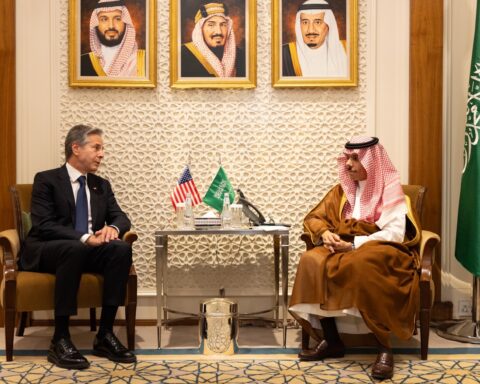
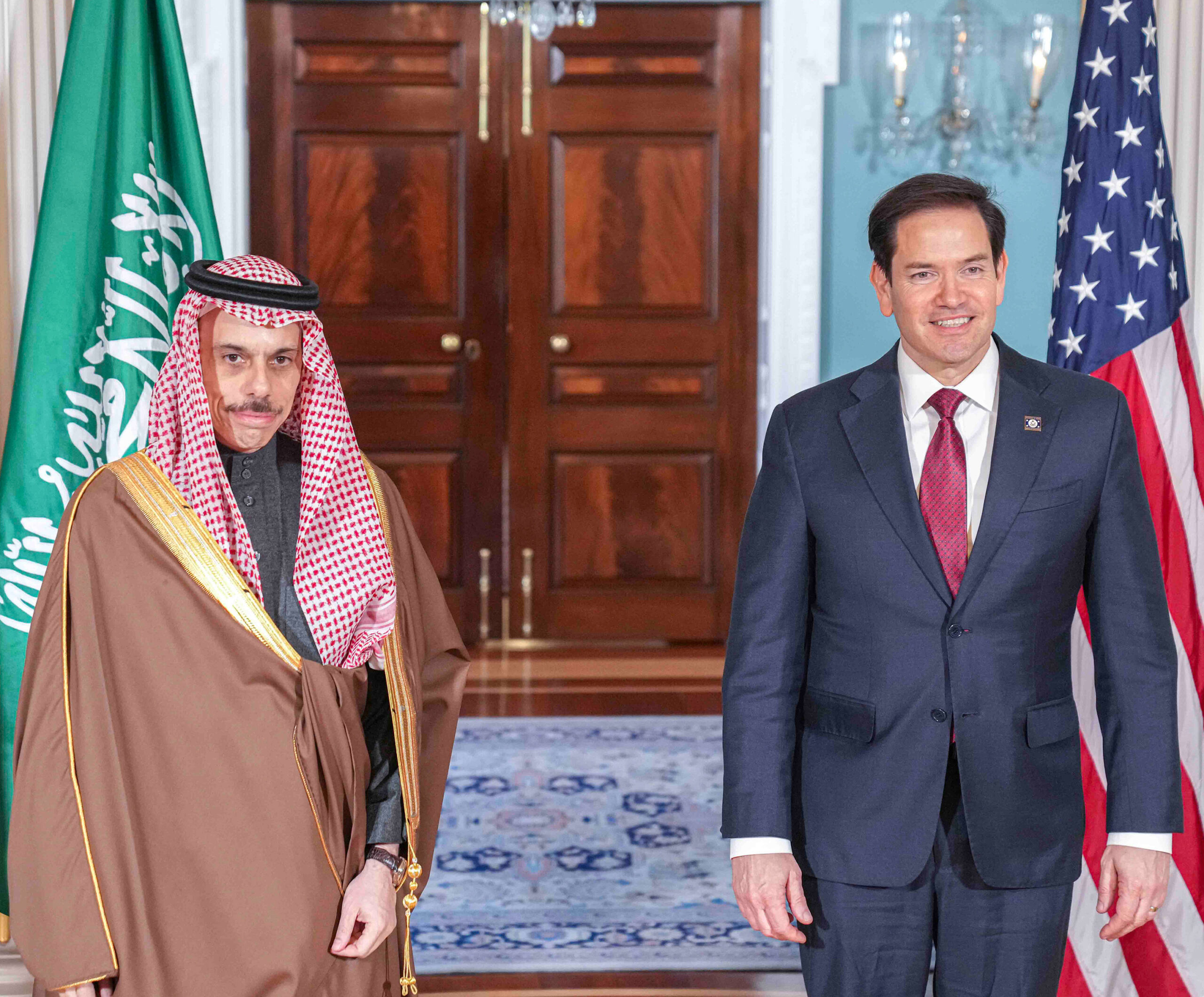
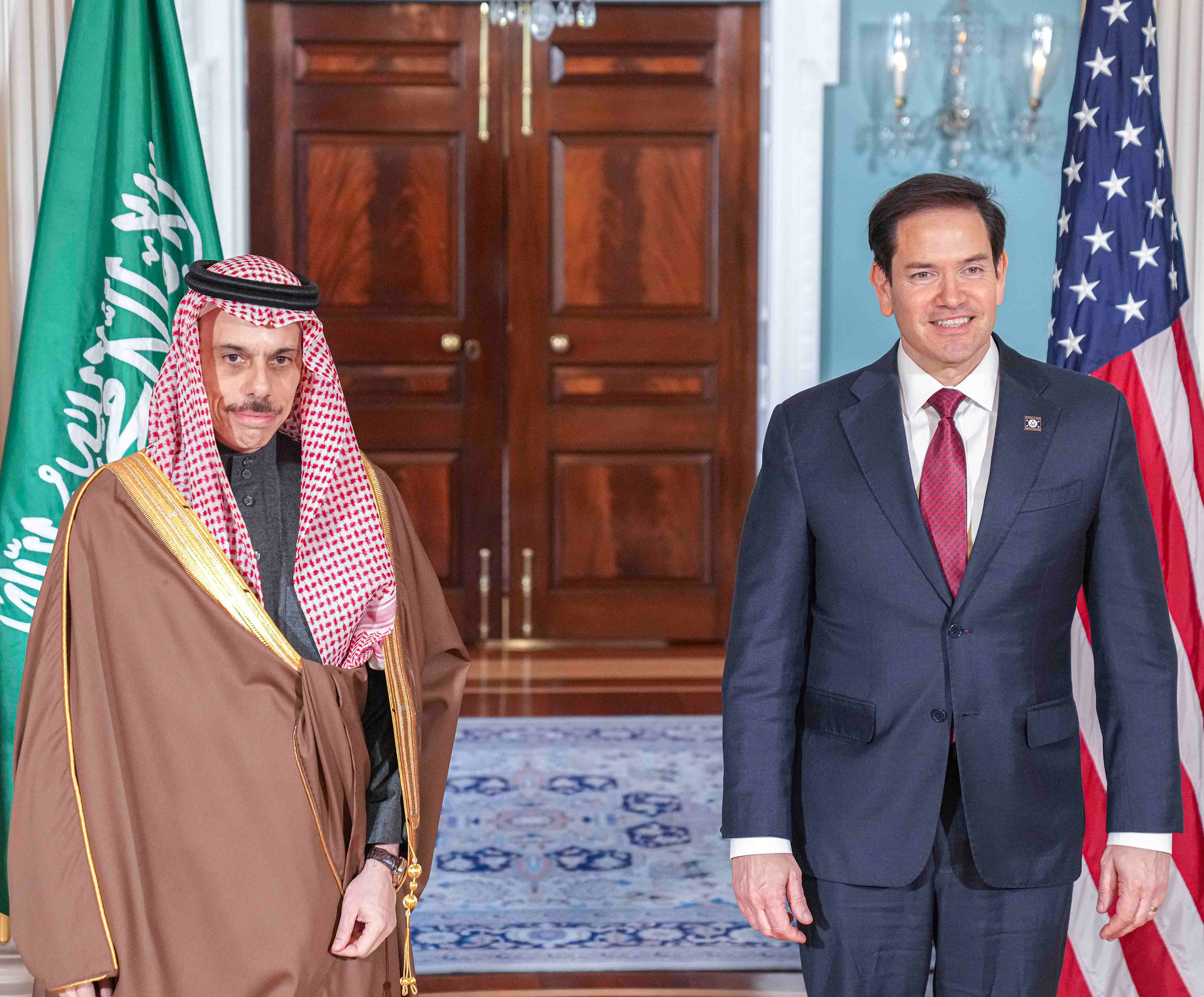
WASHINGTON — Prince Faisal bin Farhan arrived at the State Department on September 28 for talks with Secretary of State Marco Rubio, carrying an ask list that Crown Prince Mohammed bin Salman had already taken directly to President Trump, twice, without result.
The trip is itself a measure of urgency. So is the fact that the crown prince’s two September appeals to Trump — each for US airstrikes against Houthi positions in Yemen — produced the same answer: no, according to CNN. In one case, troops were loading bombs onto US warplanes before the president called the strikes off, according to the New York Times. Washington agreed instead to provide intelligence and targeting support, according to Reuters.
The meeting’s official framing was expansive: bilateral ties and “key regional and international developments,” according to the Saudi state news agency. Washington’s answer to the airstrike requests had leaned on the existing relationship: “the U.S. has a defense agreement with Saudi Arabia and we will always defend our allies,” a senior administration official told the New York Times. That answer, by late September, had not produced an American combat sortie over Yemen.
The foundational document governing the bilateral security relationship — the Strategic Defence Agreement signed in November 2025 during MBS’s Washington visit — came with Saudi Arabia’s designation as a Major Non-NATO Ally, alongside F-35 approvals, an AI memorandum and a critical minerals framework. Reporting on the signing described access for US defence firms and Saudi “burden-sharing” funds, not a mutual-defence guarantee. When Rubio later said that “the United States has a defence and security agreement with Saudi Arabia and we intend to live by it,” he did not say what that agreement obliges Washington to do.
From the Ambassador Channel to the Foreign Minister
This site has previously reported on Princess Reema bint Bandar, Riyadh’s ambassador to Washington, handling the channel with Rubio earlier in the crisis. Ambassador-level contact is a tier of engagement typically reserved for routine coordination rather than crisis management.
The Middle East briefing 3,000+ readers start their day with.
One email. Every weekday morning. Free.
Faisal’s arrival in Washington represents something more deliberate: a foreign-minister-level meeting at the State Department while the kingdom was under attack.
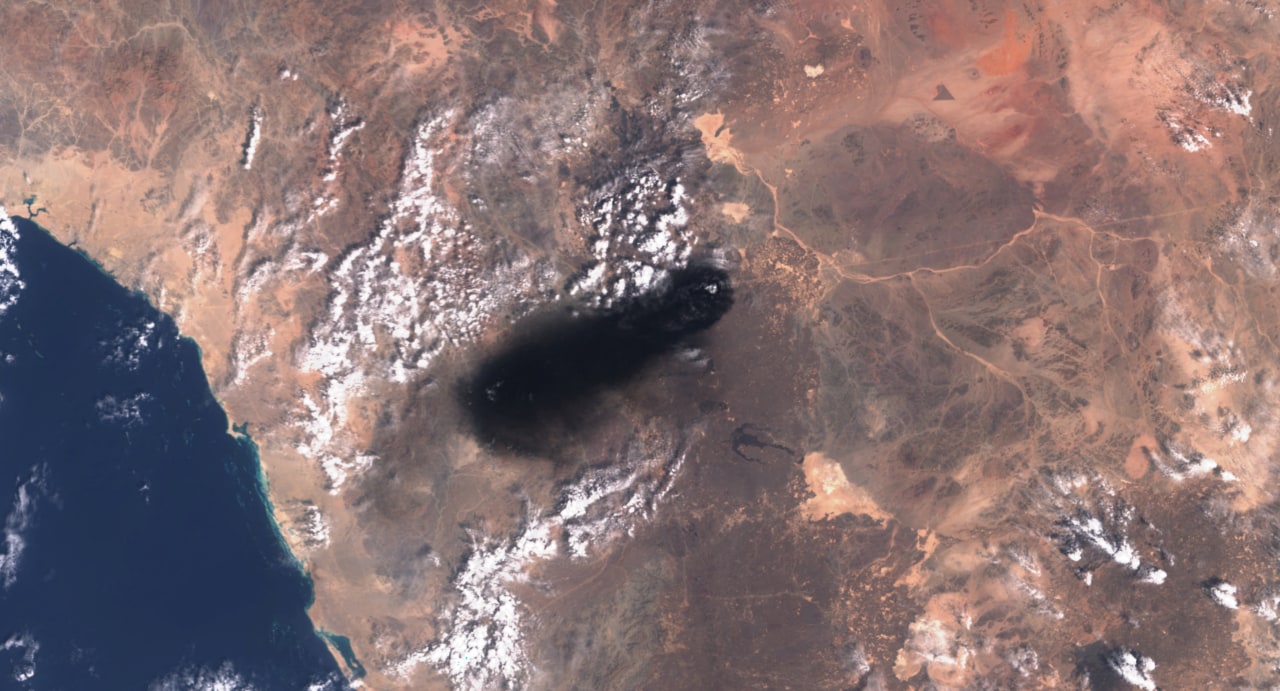
The intervening months reshaped the ask. In July, Saudi Arabia was facing renewed Iranian missile fire. By late September, smoke had risen from the fuel storage depot at King Khalid International Airport in Riyadh as the Houthis claimed attacks on the capital, drone attacks that Saudi Arabia blamed on Iraqi militia had shut the East-West Pipeline for eleven days, and the Houthi seizure of the Yemeni port of Mocha had extended adversary control toward the Bab al-Mandeb strait — one of the world’s most important shipping corridors.
At the UN General Assembly two days before the Washington visit, Faisal put the framing on the record: the international community, he said, “has been absent from assuming its responsibilities in confronting all that threatens international peace and security.”
What Does Faisal Need That Two Appeals Could Not Deliver?
Saudi Arabia wants the United States to conduct airstrikes against Houthi positions in Yemen. Crown Prince Mohammed bin Salman appealed to President Trump twice in September for exactly this, according to CNN. Trump declined both times. One set of strikes was prepared — bombs reportedly loaded onto aircraft — before the president called it off. Faisal is now pursuing through diplomatic channels what direct head-of-state contact could not produce.
The details of the declined requests come from press reports. The New York Times reported that Trump told the Pentagon to prepare airstrikes after a call from the crown prince, then reversed himself; CNN later reported that the crown prince had made two such appeals in September, both declined. Reuters reported that Washington agreed instead to provide intelligence and targeting support.
Rubio had already framed the threat. Earlier in September he described the Houthis as “agents and proxies of the Iranians” and said “behind some of this is clearly the Iranian hand,” according to the Times of Oman and The National Desk. Whether Trump would take further action against the Houthis was a separate question.
Rubio’s framing and Trump’s refusal are not contradictory. They are operating at different altitudes. Rubio’s framing — proxy threat, Iranian hand — sets a policy floor: Washington will sell, train, share intelligence, and describe the Houthis as an Iranian threat. It does not set an operational ceiling. The difference between those two is the distance Faisal has flown to close.
The September attacks give the foreign minister a briefcase full of operational specifics. On September 9, Houthi missiles and drones targeted Khamis Mushait, Abha and Jazan, injuring at least 73 civilians, according to the coalition. On September 19, smoke rose from the fuel storage depot at King Khalid International Airport in Riyadh — the capital’s primary civilian airfield — as the Houthis claimed attacks on the city. In mid-September, drone attacks that Saudi Arabia blamed on Iraqi militia targeted the East-West Pipeline, shutting down a conduit carrying approximately 4 million barrels per day of crude rerouted from the Strait of Hormuz, according to Reuters. The pipeline remained offline for eleven days.
The Iranian Foreign Ministry spokesperson, Esmaeil Baghaei, responded to Rubio’s characterisation by asserting that “Ansarallah is an independent Yemeni actor that makes its own decisions; it takes orders from no one,” according to the Times of Oman. The denials are procedurally useful to Tehran. At King Khalid International Airport, the fuel depot was burning regardless of who had given the order.
The Interceptor Arithmetic
The hardware dimension of Faisal’s visit is less visible than the diplomatic one but more constrained by physics. Estimates of how many PAC-3 MSE interceptors — the most advanced variant of the Patriot system — Saudi Arabia has left vary widely and could not be confirmed.
The numbers on the production side are clearer. In early 2026 the US approved a potential $9 billion sale of up to 730 PAC-3 MSE interceptors to Saudi Arabia, according to The Defense Post. Lockheed Martin and the Pentagon had also signed a framework agreement to more than triple PAC-3 MSE production over seven years, raising annual output from around 600 missiles to approximately 2,000. Saudi Arabia’s order alone exceeds a year of output at the earlier rate.
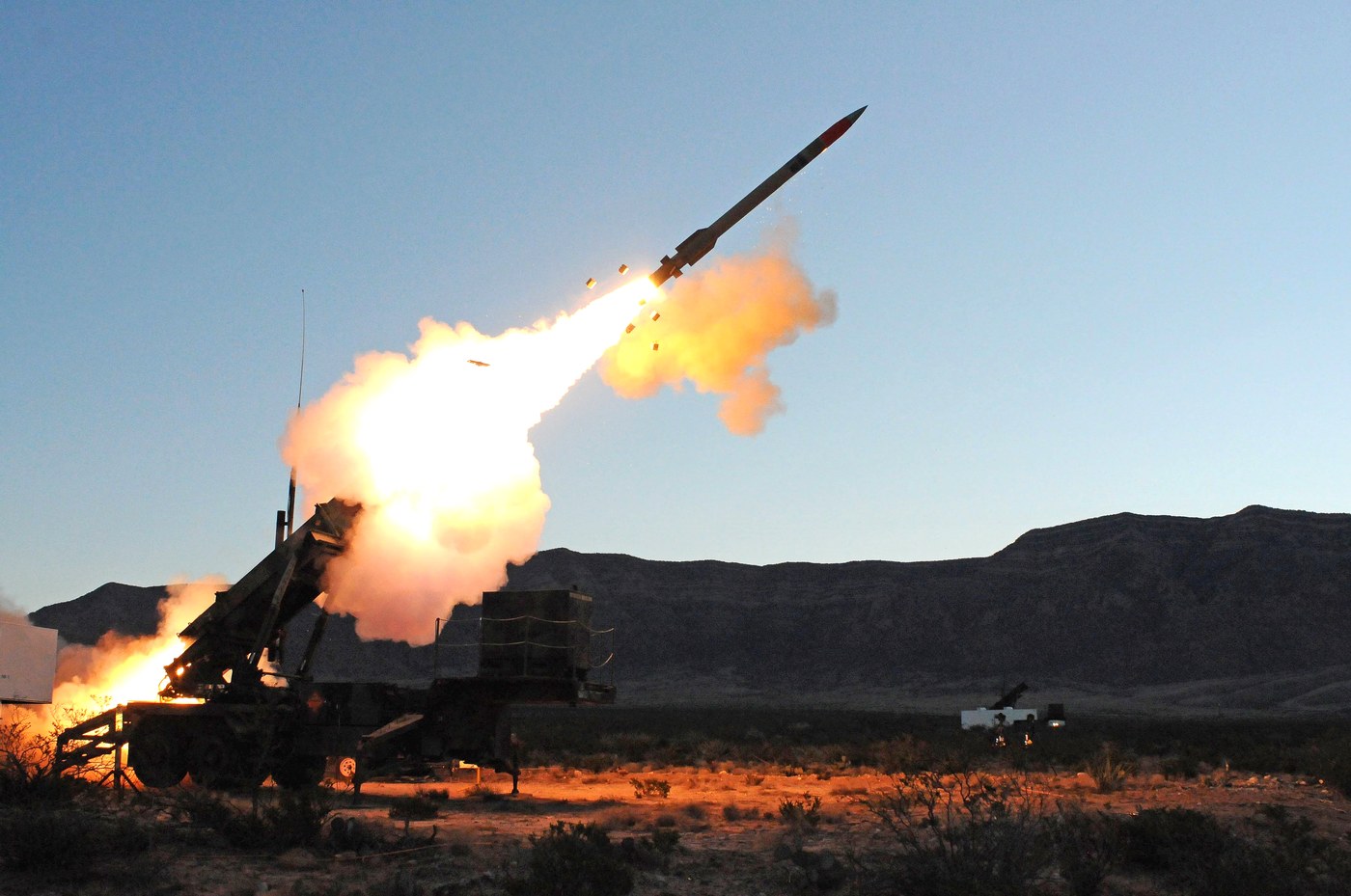
The Pentagon is aware of the bottleneck, but the tripled output is spread over seven years. Between now and then, Saudi Arabia is drawing down a stockpile that may not be replenished quickly.
This is not a procurement problem Faisal can solve in a single meeting.
Pakistan’s contingent in the kingdom includes a Chinese-origin HQ-9 air-defence system, according to Reuters. Turkey has offered to help with Saudi military needs, as covered in our report on Ankara and the F-35 programme. France pledged soldiers, radars and defence systems for Yanbu in September, without naming the system, to protect a single site rather than provide national coverage.
What Faisal needs from Rubio on interceptors is not a new contract — that exists — but a timeline. Specifically: when will the first tranche of the 730 approved rounds ship, and can any rounds from the current production run be redirected from other customers. The answers depend on decisions made in the Pentagon and on Capitol Hill, not at the State Department.
Does the Strategic Defence Agreement Compel What Riyadh Asks?
Not on the public record. The published accounts of the Strategic Defence Agreement signed in November 2025 describe no mutual-defence guarantee — the clause that would legally obligate US military action in response to an attack on Saudi territory. The agreement came with Major Non-NATO Ally status for Saudi Arabia; F-35 approvals, an AI memorandum and a critical minerals framework were signed alongside it. Washington’s statement that it intends to “live by” the agreement does not say whether that includes intervention.
The distinction matters because it is the entire structural problem of the September 28 meeting. Washington’s public assurances are accurate on their own terms. Reporting on the signing described access for US defence firms in Saudi Arabia and Saudi “burden-sharing” funds. None of the published accounts describes an obligation to fight.
Major Non-NATO Ally status is frequently misunderstood. It is a procurement designation, not a security guarantee. About twenty other countries hold it, including Egypt, Japan, and Australia. The status brings benefits such as priority delivery of military surplus and shared-cost defence research. It does not create an Article 5-style commitment — the mutual-defence clause that defines NATO membership.
Normalization with Israel is the step that would most plausibly unlock a binding US defence treaty. In November 2025 the crown prince said Saudi Arabia wanted to be part of the Abraham Accords but needed “a clear path to a two-state solution.” In July 2026 Trump made the US-Saudi civil nuclear deal “totally subject to Saudi Arabia joining” the Accords. Without normalization, a mutual-defence treaty has no political vehicle in Washington. Without the treaty, the November 2025 SDA is the ceiling.
Is Washington abandoning Saudi Arabia? The structural answer is less dramatic than the question implies. Washington is not abandoning Saudi Arabia. It is honouring the agreement it signed — the one built around arms access and defence-industry cooperation. Riyadh’s problem is not that Washington is breaking a promise. It is that the agreement Riyadh signed — the agreement it could get, rather than the agreement it needed — does not contain the clause that would compel what Faisal came to ask for.
The $9 billion PAC-3 sale and the F-35 pathway sit within the arms relationship the November 2025 agreement covers. The airstrikes Faisal is requesting do not.
The Pipeline, the Port, and Days of Zero
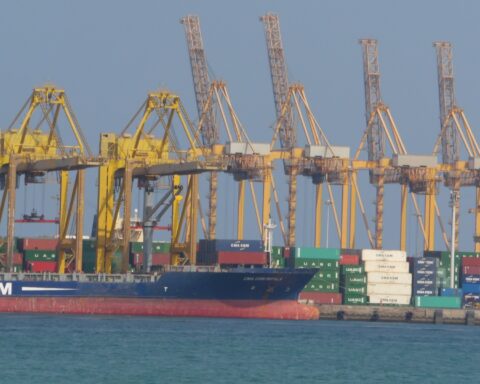
The physical infrastructure that Faisal’s ask is designed to protect has already been struck. The East-West Pipeline — a conduit linking Saudi Arabia’s eastern oil fields to the Red Sea export terminal at Yanbu — was carrying approximately 4 million barrels per day when drone attacks that Saudi Arabia blamed on Iraqi militia forced its shutdown on September 11, according to Reuters. The pipeline represented Saudi Arabia’s primary workaround for the Strait of Hormuz closure: crude that could no longer transit the Gulf was being pumped west across the peninsula and loaded onto tankers at Yanbu.
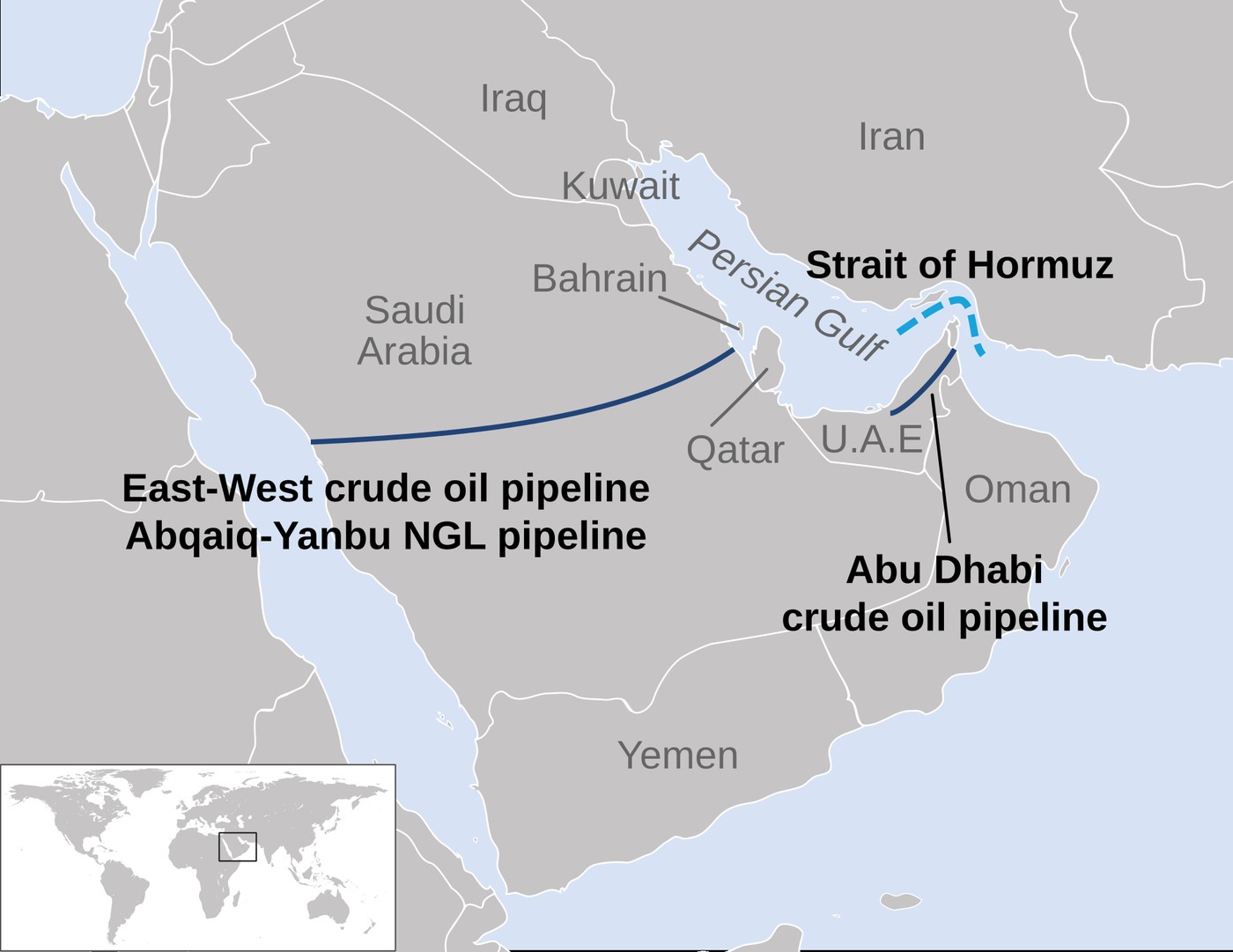
The attacks shut the line entirely. Crude loadings at Yanbu dropped to zero from September 11 and had not resumed by September 24 — a window during which Saudi Arabia’s Hormuz alternative shipped nothing, according to Reuters. On September 22 the pipeline restarted, according to Reuters, though a return to full capacity may take six weeks or more. The 4 million barrels per day that had been flowing before the shutdown represented roughly 4 percent of global supply. Its removal was immediate. Its restoration remains partial.
The Houthi campaign compounded the pipeline disruption from the opposite direction. The September 9 attack struck civilian targets in the south. On September 19, smoke rose from the fuel storage depot at King Khalid International Airport in Riyadh as the Houthis claimed attacks on the capital — not the southern border zone, not an isolated industrial target, but the fuel infrastructure serving the capital’s busiest airport. The Houthis had already seized the Yemeni Red Sea port of Mocha on September 10, extending adversary control toward the Bab al-Mandeb strait, according to The National.
The Houthis had accused Saudi Arabia of launching twenty-six attacks against them within twenty-four hours on September 18, according to Al Jazeera — an adversary counter-framing that positioned Riyadh as the aggressor. The framing matters less to the State Department than the operational fact that the infrastructure Saudi Arabia built to survive a Hormuz closure was offline for eleven days, and the Houthi force attacking the kingdom remains unstruck by the one military that Riyadh is asking to intervene.
Faisal carries this damage inventory to Washington. The pipeline was offline for eleven days. Smoke rose from the airport fuel depot. The port of Mocha is in Houthi hands. Yanbu loadings had not resumed by September 24.
What Does Riyadh Offer in Return?
Less than Faisal would like. The November 2025 Strategic Defence Agreement already delivered the technology concessions, investment frameworks, and arms access that Washington valued. The remaining concession — Saudi-Israeli normalization, which could unlock a mutual-defence treaty — now carries escalation risks the war has made too costly to absorb. Riyadh’s leverage has been front-loaded. The account is not empty, but it is far lower than it was.
Riyadh’s principal leverage in Washington has historically combined energy-market stabilisation, arms purchases, and strategic investment. In November 2025 the crown prince pledged to raise Saudi investment commitments in the US to $1 trillion. But the November 2025 SDA already locked in the major technology and arms concessions Riyadh was offering in exchange for its security upgrade. What remains is the normalization card — and the war has made it harder to play.
The November 2025 visit also produced a critical minerals framework and an AI memorandum, and the crown prince said the kingdom wanted to acquire US-made chips.
That front-loading created a problem Faisal now inherits. The technology concessions were designed as inducements for a bilateral relationship upgrade. The upgrade — Major Non-NATO Ally status, the F-35 pathway — has been delivered. The investment pledges have been made. The arms sales pipeline is open. The question is what additional concession Riyadh can offer to extract the one thing the existing framework does not provide.
That arms pipeline now includes a $24.3 billion F-35A package notified to Congress on September 17. Eleven days into the congressional review, the sale remains before Congress.
The war reframes the negotiating table Faisal faces at the State Department. Normalization with Israel was the concession that could unlock a mutual-defence treaty — the document that would legally compel what the SDA does not. But pursuing normalization during a war in which Iran has fired on Saudi territory elevates the risk of association with the Israeli campaign — a perception that would invite further Iranian and Houthi escalation, not deter it. The November 2025 SDA already delivered the technology and procurement access that Washington sought. The remaining concession — normalization — carries escalation risks that did not exist before the war.
The Mecca Pact and the Other Partners
The alternative security architecture Riyadh has assembled since the war began is real but untested. The Mecca Joint Defence Agreement, signed on August 7 by Saudi Arabia, Turkey, and Pakistan, contains a mutual-defence clause — “an attack on one is an attack on all” — that echoes NATO’s Article 5. In practice, the agreement lacks two features that make Article 5 operational: a joint command structure and a specified trigger mechanism, according to an August analysis by the Arab Center in Washington.
The Arab Center analysis judged that if the Mecca Pact has real value, “its importance is not military but political and industrial,” and titled its assessment “diversification without substitution.”
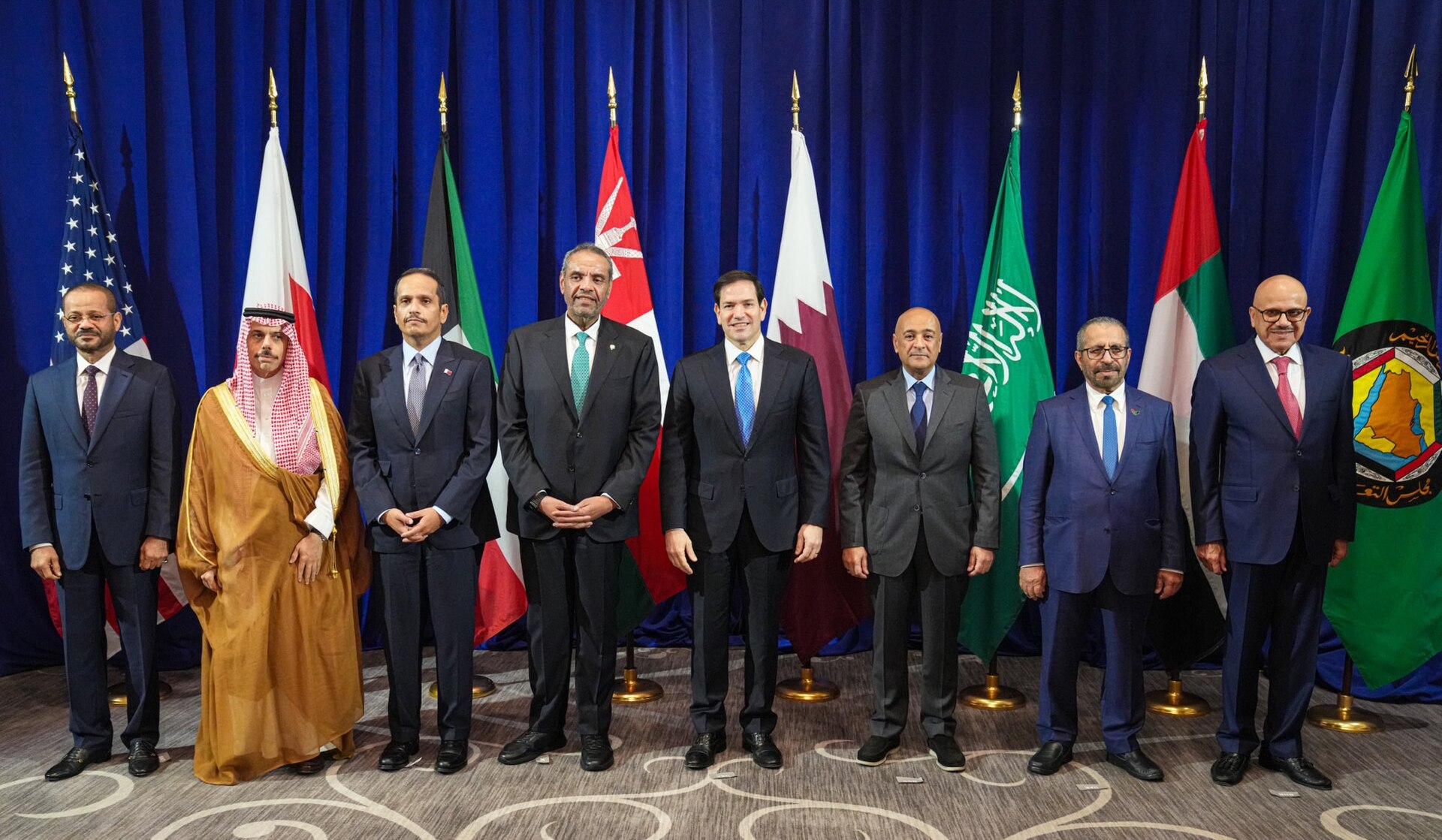
The member states’ actual military contributions have arrived through bilateral channels that predate the pact. Pakistan deployed approximately 8,000 troops to Saudi Arabia under a bilateral defence pact signed in September 2025; its jets arrived in April 2026 — four months before the Mecca signing. France, which is not a Mecca Pact member, pledged troops, radars and defence systems for Yanbu in September. Britain announced on September 22 that it would send an RAF Voyager tanker, to be based in Cyprus, in a strictly defensive role. Turkey has not deployed forces to Saudi territory.
The pattern is consistent across all of these frameworks. The Mecca Pact provides a political declaration. Bilateral agreements provide actual deployments. None provides the capability that Faisal is in Washington to request — American combat aircraft flying missions over Yemen. That capability exists within a single government’s authority, and that government’s president has declined to authorise it twice in September.
Can Normalization Survive What the War Has Done to Its Premise?
Not in its current form. The incentive structure has inverted: the closer Saudi Arabia appeared to Israeli strategic objectives, the greater its exposure to the Iranian strikes it was seeking an American treaty to deter. Normalization has shifted from a price Riyadh could pay to a risk it cannot afford.
The logic is straightforward. Saudi Arabia would normalise relations with Israel. In exchange, the United States would sign a binding mutual-defence treaty — the legal instrument the November 2025 SDA, as publicly described, does not contain. The treaty would create an Article 5-equivalent obligation, requiring a US military response to an armed attack on Saudi territory. For Riyadh, normalization was never the objective. It was the price. The treaty was the objective.
Saudi Arabia was not a party to the US-Iran memorandum that Tehran and Washington signed in June after Pakistani and Qatari mediation, which reinforced the dynamic. Riyadh was not at the table where the war’s terms were being discussed, and it was not in a position to shape any post-war settlement that might affect the normalization timeline.
On September 25, three days before Faisal’s Washington meeting, Iran said it was awaiting Washington’s response to its Hormuz proposal, according to Al Jazeera. The war’s diplomatic resolution — if one comes — looks set to be negotiated between Washington and Tehran, with Doha and Islamabad as intermediaries. The mutual-defence treaty that normalization could unlock remains unsigned.
Frequently Asked Questions
Has Saudi Arabia previously requested US military action against the Houthis?
Yes. In September 2026 the crown prince appealed to President Trump twice for US strikes on the Houthis, and both requests were declined, according to CNN. The New York Times reported that Trump ordered the Pentagon to prepare strikes after one call and then reversed himself.
What is the legal difference between Major Non-NATO Ally status and a mutual-defence treaty?
Major Non-NATO Ally is a designation under 22 U.S.C. § 2321k that unlocks procurement benefits, including priority delivery of military surplus, shared-cost cooperative research and development, and the stockpiling of US war reserve stocks on allied soil. It does not automatically constitute a mutual defence pact with the United States. A mutual-defence treaty, by contrast, would create a binding legal commitment to treat an armed attack on Saudi Arabia as an attack on the United States — the same structure that underpins NATO’s Article 5. The November 2025 SDA confers the former. Saudi Arabia is seeking the latter.
How many US military personnel were in Saudi Arabia before and during the current conflict?
Published figures are limited. The US has kept fighter aircraft, refuelling tankers and air defence systems at Prince Sultan Air Base, according to The New Arab. In May 2026 Saudi Arabia reportedly warned it could deny US aircraft its airspace and Prince Sultan Air Base, shortly before Trump paused the US Project Freedom escort operation. CNN later reported that more than 100 US military advisers were sent to provide intelligence support.
The gap between what the SDA promised and what Riyadh needed became acute when Iran tabled a seven-day Hormuz reopening proposal the same week. Saudi Arabia’s triple bind on that proposal — unable to endorse Washington’s rejection, oppose Tehran’s terms, or broker an independent track — exposed the same structural vacancy the SDA left in place.
The institutional gap in Saudi Arabia’s security architecture also explains the turn to the Makkah Joint Defence Agreement — a pact that has no joint command and no standing forces.
One week after this article was published, the pact’s committee agreed on October 5 to deploy Pakistani and Turkish forces to the kingdom.