
Correction, October 12, 2026: This article has been corrected. An earlier version said the Houthis closed four Saudi airports by NOTAM on July 16; Saudi authorities closed them after the July 13 Houthi attack on Abha. It dated the sinkings of the Magic Seas and Eternity C to 2026, when they took place in July 2025. It said the Saudi-led coalition had flown no air operations over Yemen since 2022, which the July 13 Sanaa airport strike contradicts, and that Riyadh did not acknowledge the Abha attack, when the coalition spokesman said air defences dealt with it. It also said the blockade declaration closed Bab al-Mandeb to Saudi-flagged and Saudi-bound ships, when the statement did not specify its scope; gave the wrong date for Ajit Doval’s Riyadh visit; described the July 21 tanker U-turns as happening on the blockade’s first day and as stranding their cargo; misdescribed the history of Operation Prosperity Guardian; and called a US Air Force AWACS aircraft a coalition platform. Unsourced figures on Hormuz traffic, pipeline and port capacity, oil prices, interceptor stocks, shipping attacks, insurance premiums, grain routes and food reserves, and several unsourced quotes and claims, have been removed or replaced with sourced figures.
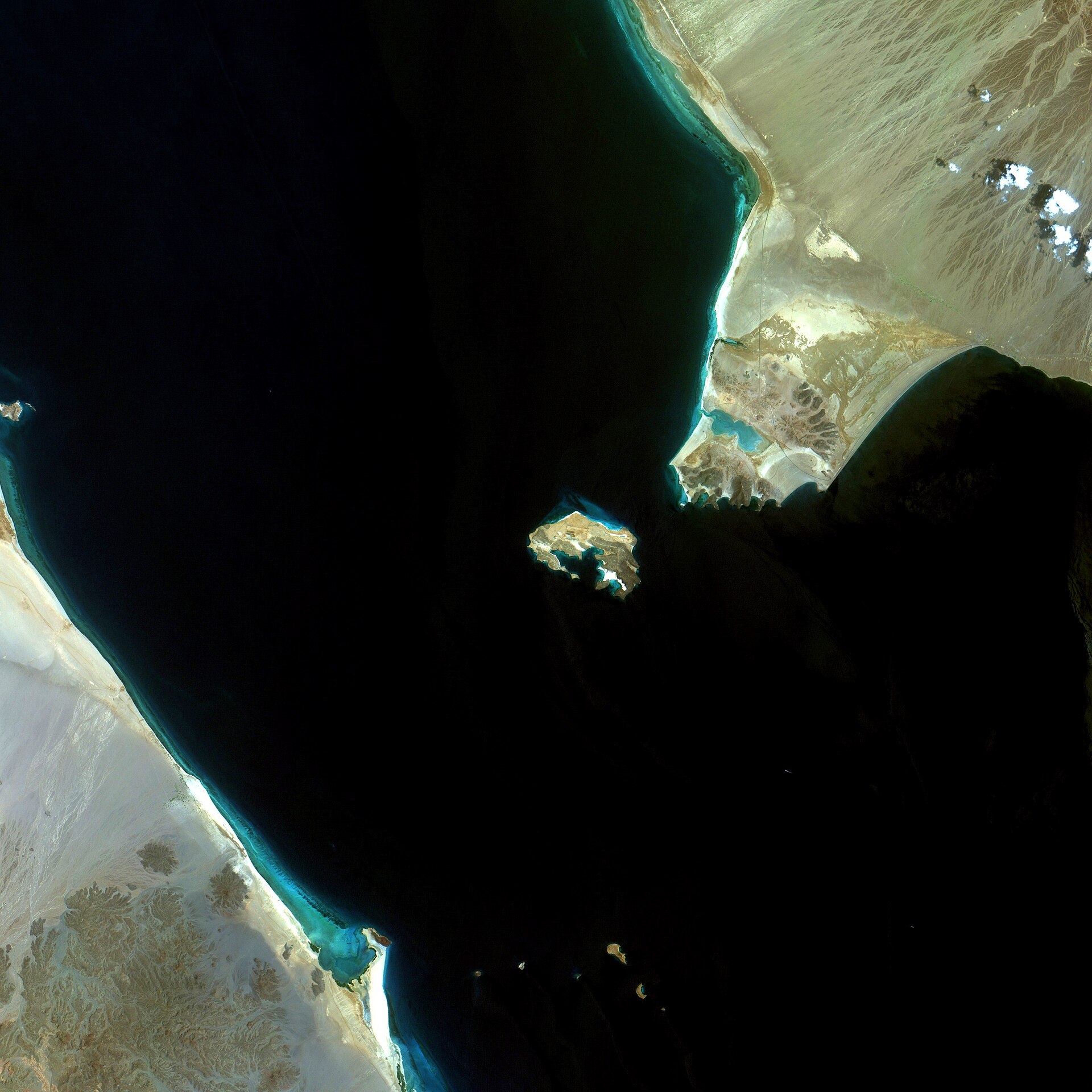
JEDDAH — Yemen’s Houthi armed forces declared a maritime blockade of Saudi Arabia on Monday, in what military spokesperson Yahya Saree called “an eye for an eye” in a video statement carried by the Associated Press. The declaration, effective immediately, came with a warning from a Houthi official that the Bab al-Mandeb strait would be closed — the 32-kilometre choke point through which around 12 percent of world trade usually passes and a quarter of global container trade moves to and from the Suez Canal, according to the AP.
The timing converts a provocation into a trap. With the Strait of Hormuz already declared closed by Iran, Saudi Arabia had spent months rerouting crude exports westward through the East-West Pipeline to its Red Sea terminal at Yanbu — the main bypass route when Asia-bound tankers cannot exit the Persian Gulf. That bypass now sits inside the declared blockade zone, and the kingdom faces declared maritime interdiction on both flanks, with no third corridor and no pipeline to a port that is not under threat.
Table of Contents
What the Houthis Declared
Saree’s video statement framed the blockade in explicitly retaliatory terms, drawing a direct line between Saudi Arabia’s eleven-year air and sea blockade of Yemen and the Houthi response. “We affirm the right of our great people to respond to the blockade with a blockade,” he said, according to the AP, before warning of “comprehensive and decisive escalation” against “any foolish act committed by the reckless Saudi enemy.” Nasruddin Amer, deputy head of the Houthi media office, reinforced the framing on X, writing that the Bab al-Mandeb strait would be closed in response to Saudi Arabia’s “unjust blockade on Yemenis for over 10 years,” according to Euronews.
The declaration followed a Saudi airstrike on Sanaa International Airport’s runway on July 13 — a strike designed to prevent a Houthi delegation from returning to Yemen after attending the funeral of Iranian Supreme Leader Ayatollah Ali Khamenei in Tehran, according to the AP. The Houthis fired missiles and drones at Abha airport the same day, and coalition spokesman Turki al-Malki said air defences dealt with ballistic missiles launched toward the southern region. Three days after the runway strike, on July 16, Reuters reported that Tehran had asked the Houthis to be prepared to block the Red Sea oil route.
What the declaration did not specify is as operationally telling as what it did. As Maritime Executive noted, the Houthis defined neither the geographic boundary of the enforcement zone nor the precise criteria for which vessels would be stopped, leaving open whether humanitarian cargo, third-party-flagged ships, or tankers merely transiting the strait without Saudi cargo aboard would be permitted passage. The ambiguity is itself a commercial weapon: shipping insurers and tanker operators do not wait for legal precision before repricing risk or rerouting vessels around the Cape of Good Hope, and the declaration alone is sufficient to trigger those decisions.
The Middle East briefing 3,000+ readers start their day with.
One email. Every weekday morning. Free.
Both Corridors, Both Declared Closed
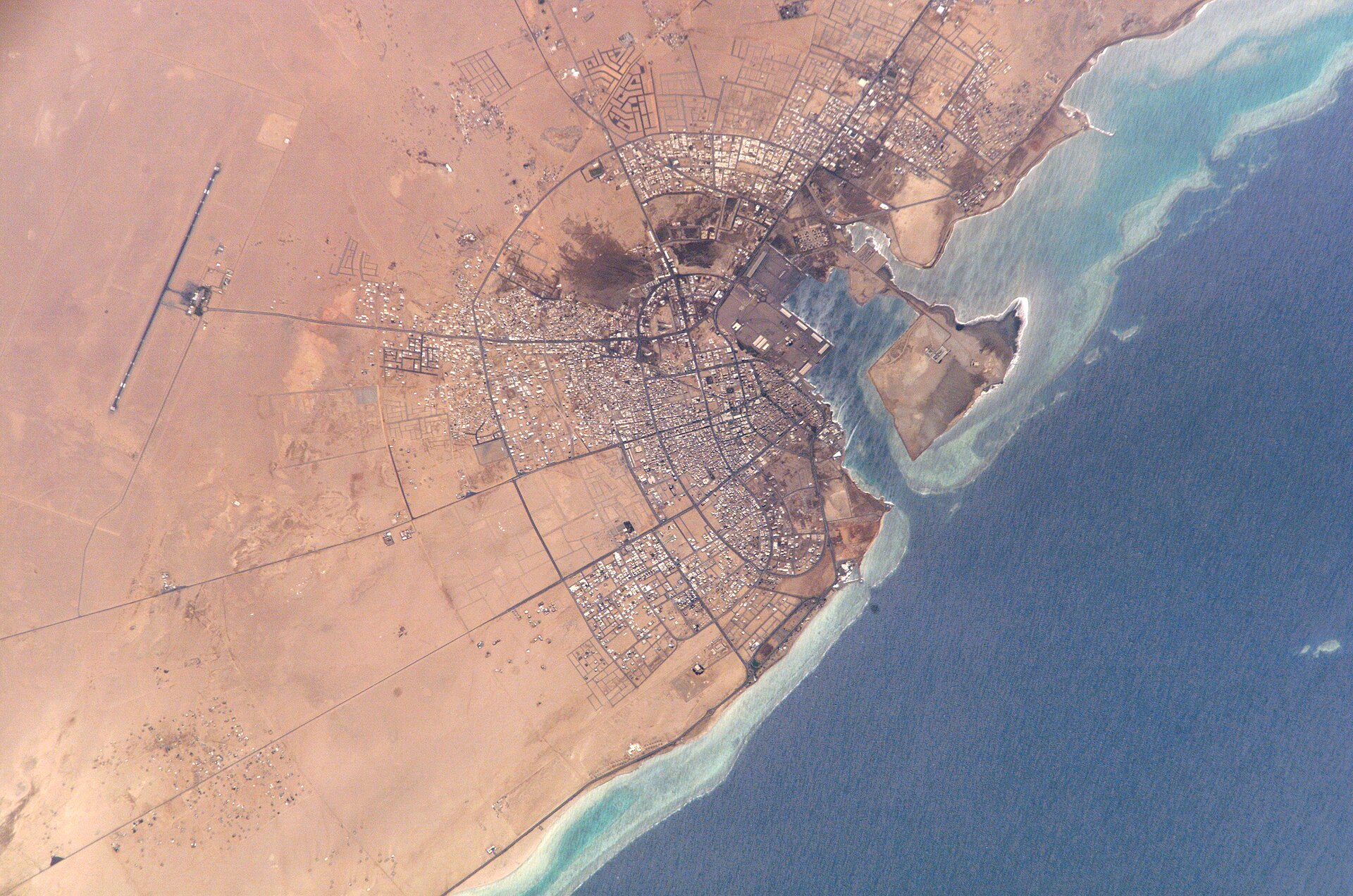
Saudi Arabia exports crude oil through two maritime corridors and has no third. The eastern route runs tankers from Ras Tanura and Ju’aymah through the Strait of Hormuz into the Arabian Sea and onward to refineries across Asia — a corridor that has carried the bulk of the kingdom’s crude exports for decades. The western route pushes crude through the East-West Pipeline, known as the Petroline, to loading terminals at Yanbu on the Red Sea coast, where tankers turn south through Bab al-Mandeb toward European and African buyers or north toward the Suez Canal.
The eastern route has been largely shut since Iran said on July 12 that it had again closed the Strait of Hormuz, as prior reporting has documented in detail. Riyadh’s response was to run the Petroline at its full capacity of 7 million barrels per day and redirect as much crude as possible to Yanbu — a strategy that worked until Monday, when the receiving end of the pipeline was placed under declared blockade by the same axis that closed the eastern end.
| Corridor | Route | Current Status | Saudi Export Capacity |
|---|---|---|---|
| Strait of Hormuz (East) | Ras Tanura / Ju’aymah → Arabian Sea → Asia | Declared closed by Iran (July 12) | Main historical export route; largely shut |
| Bab al-Mandeb (West) | Yanbu → Red Sea → Suez / Africa / Europe | Declared blockade (Houthi, July 20) | About 5M bpd crude exports from Yanbu |
| East-West Pipeline | Eastern Province → Yanbu (overland) | Operational at full capacity | 7M bpd capacity |
Two forces — Iran’s navy in the east, Yemen’s Houthis in the west — now hold declared interdiction positions on both ends of the Arabian Peninsula, operating under what amounts to a shared campaign even if the precise operational coordination between Tehran and Sanaa remains difficult to confirm from open sources. India’s energy exposure to the simultaneous closure of both corridors is documented in India’s dual-corridor trap, where Ajit Doval’s Riyadh visit on July 20 underscored the depth of New Delhi’s structural dependence on passages neither side could secure.
Can Saudi Arabia Export Its Way Out?
The Petroline was pumping at its full capacity of 7 million barrels per day by late March, Bloomberg News reported, and crude exports from Yanbu reached 5 million barrels per day. Of the pipeline’s 7 million barrels, roughly 2 million supply west coast refineries and about 5 million go to export, according to figures from Aramco’s chief executive reported by Reuters.
That capacity assumed tankers could clear Bab al-Mandeb after loading. If they cannot — or if insurers and operators decide the risk premium makes the transit commercially irrational — the crude that Riyadh rerouted away from Hormuz has nowhere left to go.
Brent crude futures rose $1.89 to $91.11 a barrel early on Tuesday, according to Reuters, as fresh US and Iranian attacks added to the Houthi threat to Saudi shipping. The market had already watched Saudi Arabia close four southern airports after the July 13 Houthi attack on Abha, and had read on July 16 that Iran asked the Houthis to be prepared to block the Red Sea oil route.
Who Enforces a Blockade From Shore?
The distinction between a declared blockade and an enforced one matters in international law, but the Houthis’ track record has already settled the commercial question. During the Israel-Hamas war in Gaza, the group targeted ships for months, with more than 100 vessels attacked, according to the AP. Shipping companies did not wait for every missile to find a target; they rerouted around the Cape of Good Hope.
The capability has only matured since that campaign. In July 2025, Houthi forces sank two bulk carriers in rapid succession — the Magic Seas on July 6 and the Eternity C between July 7 and 9, with four crew killed and eleven taken hostage.
At a strait width of 32 kilometres, where laden tankers must slow and pass within line of sight of Yemen’s coastline, shore-based launchers could engage targets across the full width of the southern Red Sea without requiring a single Houthi naval vessel to leave port.
“We affirm the right of our great people to respond to the blockade with a blockade.”
— Yahya Saree, Houthi Armed Forces Military Spokesperson, July 20, 2026
Most of the Kingdom’s Food Is Imported
Saudi Arabia imports approximately 80 percent of its food requirements, according to a 2014 World Bank report cited by Arab News. Much of it arrives by ship, and the ships arrive through corridors that are both now under declared interdiction by forces that have demonstrated the will and the weaponry to enforce their declarations.
Saudi Arabia maintains strategic grain reserves. But the declared interdiction of both maritime approaches converts a manageable supply-chain disruption into a structural vulnerability for which no logistics workaround exists at current infrastructure capacity. The question for Riyadh is not whether Saudi Arabia can feed itself — it cannot, and has not been able to for decades — but how long existing stocks hold while both sea lanes remain contested and neither shows any sign of reopening.
Why Riyadh Cannot Force Bab al-Mandeb Open
Until the July 13 strike on Sanaa airport, the Saudi-led coalition had not targeted Houthi-held areas since the 2022 truce. A US Air Force E-3G Sentry AWACS at Prince Sultan Air Base was reported all but destroyed in the Iranian strike of March 27, 2026. Suppressing Houthi coastal missile batteries would require sustained airborne surveillance and multi-sortie strike packages.
Air defence adds a further constraint. Opening a second front against Houthi positions in Yemen while Iran continues to target Saudi territory would force Riyadh to allocate interceptors across two simultaneous air-defence campaigns.
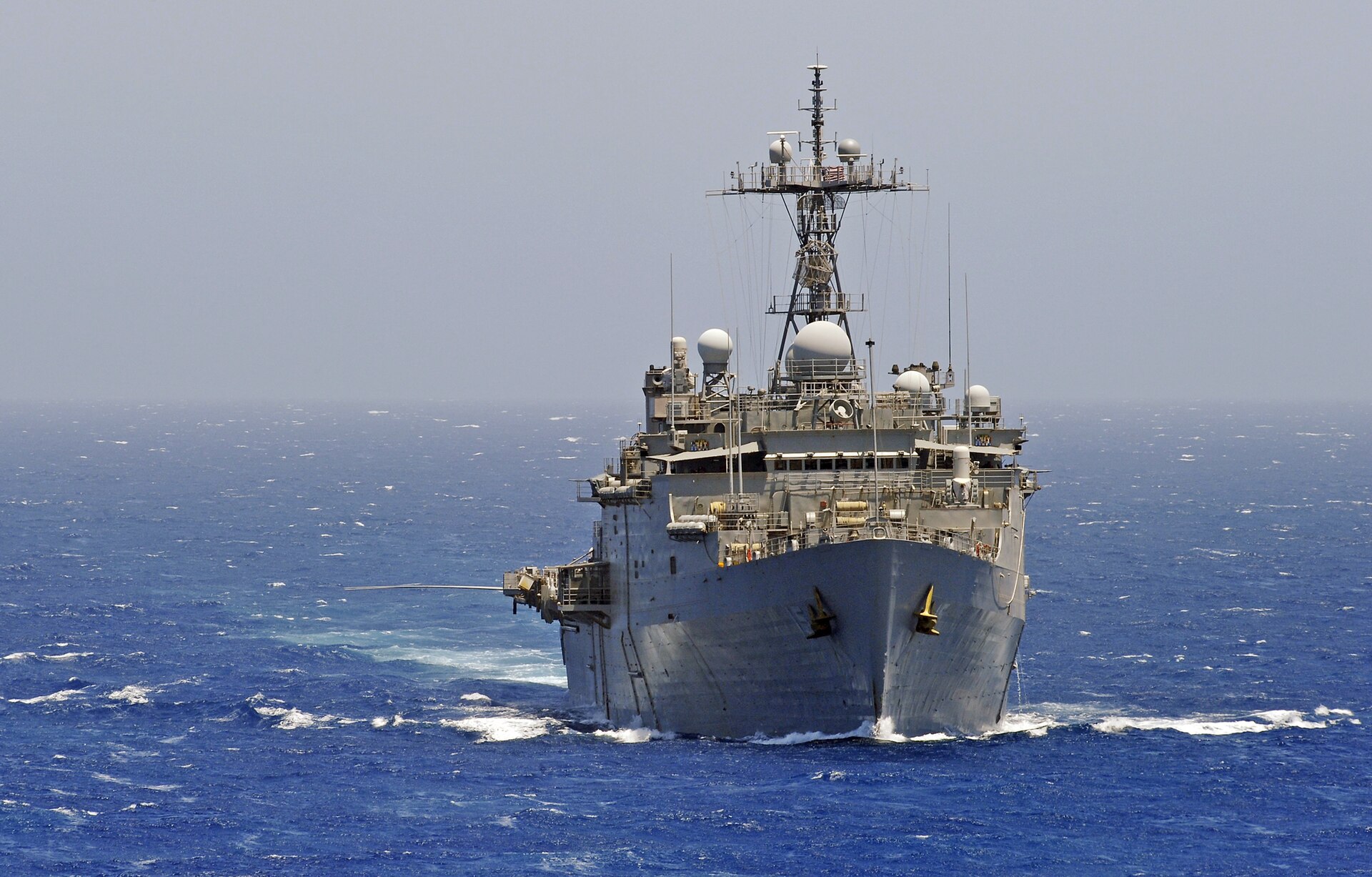
The international backstop that was supposed to keep the Red Sea open is equally absent. Operation Prosperity Guardian, the US-led maritime coalition launched in December 2023 to protect Red Sea shipping, never had France, Italy or Spain on board and was wound down in May 2025. The United States retains naval assets in the region, but those forces are absorbing operational tempo in the Hormuz theatre and the broader Iran campaign, including nightly strikes on Iran since July 12 — not patrolling Bab al-Mandeb for Saudi-bound tankers. On Monday, the Red Sea constraint arrived in the form of a formal blockade declaration from a force that has already sunk ships in the waters it claims to control.
Background
Houthi attacks on Red Sea shipping began during the Gaza war, initially targeting vessels linked to Israel, and escalated into a campaign against commercial traffic. A bilateral US-Houthi ceasefire took effect in May 2025, but the Houthis returned to the fight in 2026 after the US and Israel struck Iran on February 28, firing their first missiles of the war at Israel on March 28.
The Houthi blockade of Saudi Arabia draws on a grievance older than the current war. The Houthis accuse Saudi Arabia of imposing “an unjust and oppressive siege” on Yemen for nearly 12 years, according to Al Jazeera — a reference to the air and sea restrictions imposed by the Saudi-led coalition during the war. Nasruddin Amer’s invocation of a decade of blockade on X is a deliberate framing of Monday’s declaration as reciprocal justice: a blockade returned to its sender.
The fiscal stakes behind both blockades are examined in the fiscal arithmetic of Saudi Arabia’s position in the ceasefire talks. On July 21, Reuters reported a 10-day ceasefire proposal, citing a senior Iranian official.
Frequently Asked Questions
Is the blockade already being enforced or just declared?
As of Monday evening, the Houthis had declared the blockade but no interdiction of a Saudi-bound vessel under the new declaration had been confirmed.
What types of ships does the blockade target?
Saree’s declaration did not specify what the embargo would cover, and Maritime Executive reported that it was not clear where or to what the blockade would apply. The Houthis did not define whether third-party-flagged ships carrying Saudi cargo, vessels transiting without Saudi goods aboard, or humanitarian shipments would be exempted. The group did warn shipping firms “not to load or discharge cargo at Saudi Arabian ports,” saying such activity could be targeted “in any location,” according to Hydrocarbon Processing.
Can the US Navy break the blockade?
US naval assets are concentrated on the Hormuz theatre and direct operations against Iran, and Operation Prosperity Guardian — the coalition assembled specifically to protect Red Sea shipping — was wound down in May 2025. It did not end the 2023-2024 Houthi campaign, because the threat model is fundamentally asymmetric: shore-based missiles, explosive drone boats, and anti-ship ballistic missiles fired from dispersed and concealed positions along Yemen’s coastline cannot be neutralised by ship patrols alone. Suppressing that capability requires a sustained ground or air campaign against the launch sites themselves.
How long can Saudi strategic food reserves last?
No official figure for the size of Saudi Arabia’s strategic grain stockpile has been published in the reporting on the blockade. Disruption of both maritime import corridors at once would draw those reserves down faster than in normal times.
What happens to oil prices if the blockade holds?
The blockade’s immediate structural consequence extends beyond Bab al-Mandeb. Reuters reported on July 7 that Saudi Arabia was in preliminary talks with some of its neighbours about adding up to 2 million bpd of capacity to the East-West Pipeline to bypass Hormuz — but any expanded pipeline would still end at Yanbu, inside the declared blockade zone, leaving the bypass route unable to absorb the combined loss of both sea lanes.
A confirmed physical blockade of Yanbu crude loadings, rather than a declared one, would represent a further shock to a market already absorbing the Iran campaign. India, whose refineries depend on both corridors, sent Ajit Doval to Riyadh on July 20, his second reported visit this year after April — a visit that reflects how India’s dual chokepoint dependency shapes its Gulf diplomacy without giving New Delhi any mechanism to reopen either strait. On July 21 the IRGC also claimed a cruise missile strike on Amazon infrastructure in Bahrain, on which Bahrain, the US and Amazon made no immediate comment.
On the blockade’s second day, two tankers carrying 2.7 million barrels of Saudi crude made U-turns in the Red Sea; the larger, the Xin Long Yang, was reported nearing Bab al-Mandeb again on July 23, according to Gulf News. By October 12, the tanker threat had shifted back to Hormuz, where the IRGC struck at least three vessels in 48 hours and accused CENTCOM of running an oil-smuggling corridor through the strait.
The diplomatic response to the maritime blockade is examined in Athens Got the Call the Red Sea Could Not.