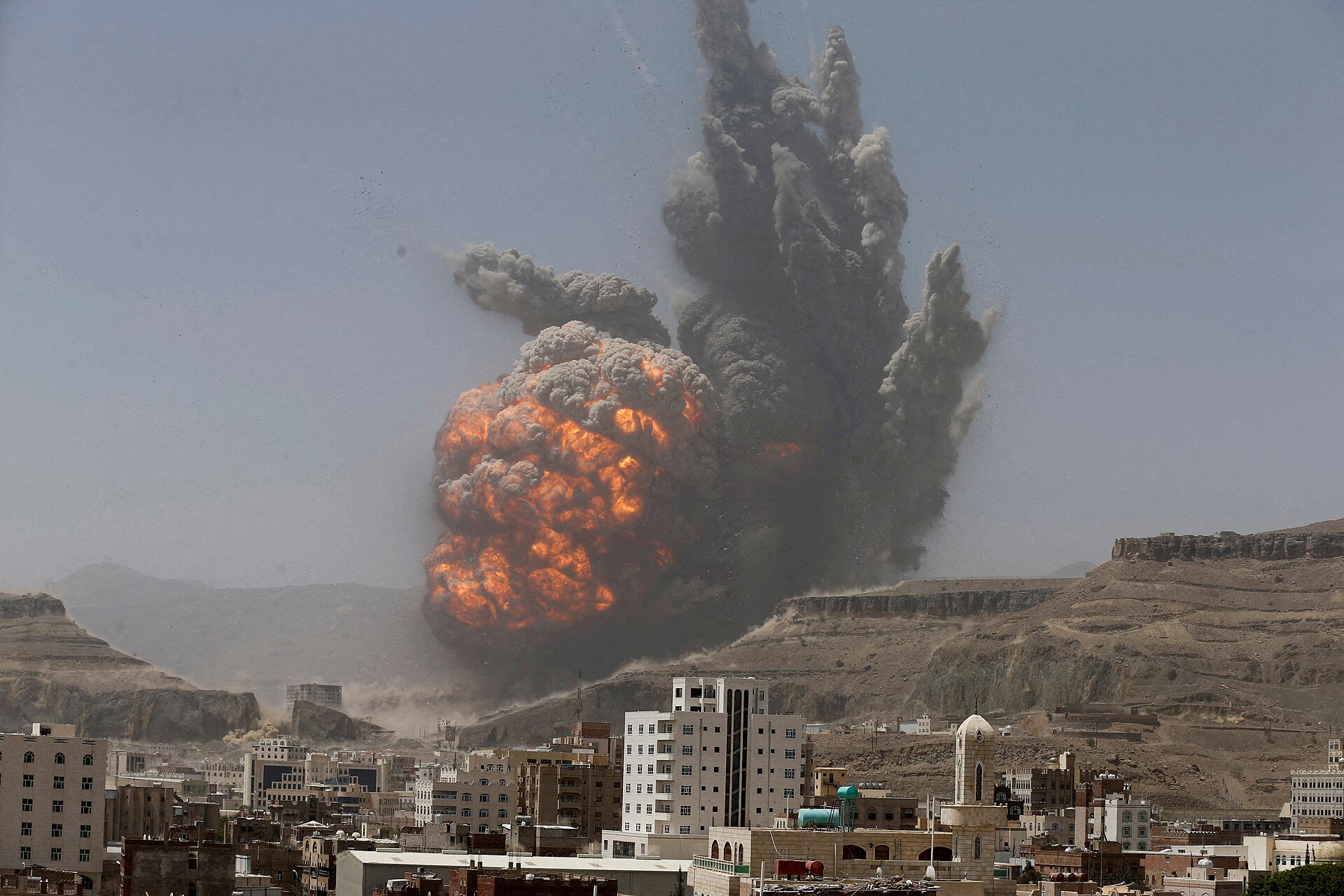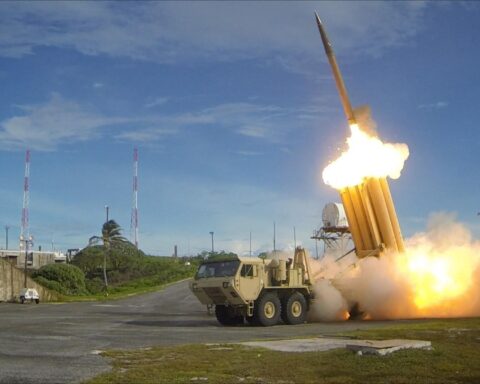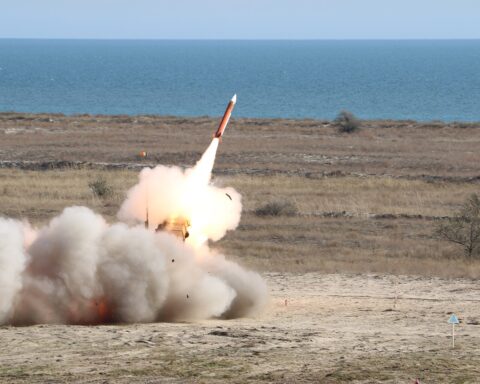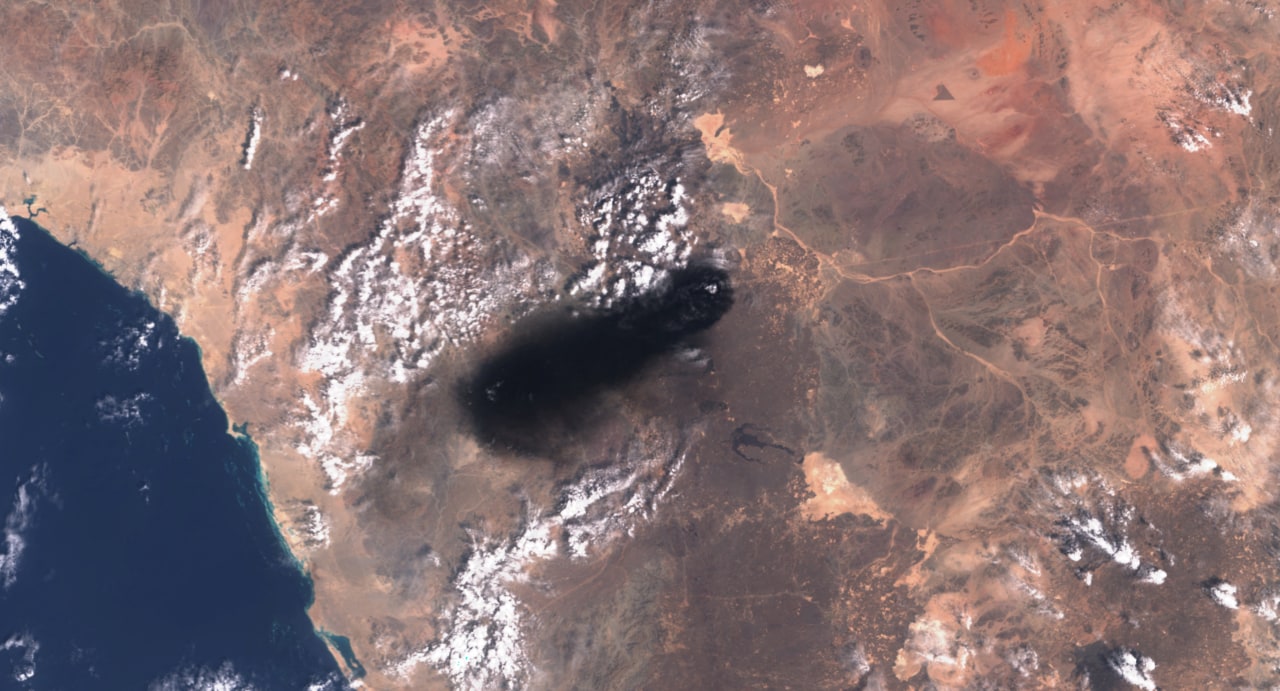

DHAHRAN — Houthi forces launched seven military operations against Saudi airports and oil infrastructure on October 24, firing ballistic missiles and drones at an Aramco facility in Yanbu, the Rabigh oil refinery, and four airports including Riyadh’s King Khalid International, according to Houthi military spokesman Yahya Saree. The wave came hours after Saudi airstrikes killed at least 3 people in Sanaa and launched about 20 strikes on Mocha, and it named 8 targets in a single announcement — the broadest declaration of simultaneous economic-infrastructure targeting since hostilities resumed in July 2026.
The coalition confirmed intercepting missiles near Yanbu and Taif but did not confirm physical damage at any of the named facilities. What matters beyond any single interception is the doctrine now visible in the pattern: each Saudi airstrike on Yemeni cities produces a Houthi reprisal aimed at the revenue infrastructure the Kingdom needs to sustain its air campaign, a dynamic that Saree framed, according to AP, as enforcing the equation of blockade for blockade and escalation for escalation. The question the October 24 wave puts to the Saudi war cabinet is what happens to an air campaign when each sortie accelerates the economic damage to the base that funds it.
Table of Contents
- What Did the Houthis Target on October 24?
- What Triggered the October 24 Wave?
- The Retaliation Loop: Each Saudi Sortie Accelerates the Damage
- Why Is Yanbu Central to Saudi Arabia’s Wartime Exports?
- The Fiscal Trap: Oil at $114 and Nowhere to Ship It
- How Are the Houthis Framing Their Conditions for a Ceasefire?
- From Abqaiq to Yanbu: Dispersed Targets, Stretched Defenses
- Airport Disruption: Casualties, Cancellations, and Connectivity
- Frequently Asked Questions
What Did the Houthis Target on October 24?
Yahya Saree announced on Telegram that Ansar Allah had “carried out seven military operations using ballistic missiles and drones” against Saudi oil facilities and airports, according to Apa.az and France 24. The claimed targets spanned Saudi Arabia’s energy infrastructure and aviation network simultaneously, with four oil-related and four aviation-related sites named in a single declaration.
The House of Saud Daily Briefing
Saudi Arabia's news in 3 minutes, every morning. Free. See today's issue
| Claimed Target | Type | Source |
|---|---|---|
| Aramco facility, Yanbu | Oil terminal | Apa.az; Yahoo News/AP |
| Rabigh oil refinery | Oil refinery | Apa.az; Yahoo News/AP |
| Crude pumping stations | Oil infrastructure | Apa.az; Yahoo News/AP |
| East-West pipeline | Pipeline | Apa.az; Yahoo News/AP |
| King Khalid Intl Airport, Riyadh | Airport | Apa.az; ABC News Australia |
| King Fahd Intl Airport, Dammam | Airport | Apa.az; ABC News Australia |
| Najran Airport | Airport | Apa.az; ABC News Australia |
| Khamis Mushait airbase | Military base | Apa.az; ABC News Australia |
The Saudi-led coalition confirmed intercepting 2 ballistic missiles fired toward Yanbu and Taif, according to France 24 and ABC News Australia. Saudi Civil Defence issued alerts for Taif, Yanbu, Mecca, and Jeddah, but Saudi authorities did not confirm physical damage at any of the named facilities. The gap between Houthi declarations and verified outcomes has recurred throughout the escalation, though the confirmed interceptions establish that missiles were launched toward at least those two areas.
What distinguishes the October 24 wave is the scope of the single declaration: oil and airport targets named together, binding what had previously been treated as separate campaigns into a unified retaliatory statement. For travellers monitoring the situation, current flight suspensions and Saudi airport status are updated as conditions change.
What Triggered the October 24 Wave?
Saudi airstrikes killed at least 3 people in Sanaa on October 24, according to Xinhua. About 20 airstrikes hit the port city of Mocha, Xinhua reported citing the Houthi-run al-Masirah television. Saree’s seven-operation declaration followed within hours, framing the wave as explicit retaliation, according to AP, with stated conditions linking the attacks to Saudi military and blockade policy in Yemen.
The timing follows a pattern now visible across three cycles in eleven days. On October 13, the coalition struck Sanaa’s al-Sabah central station, a fuel facility in the capital; within hours Saree warned that further strikes on Sanaa would bring a “harsh and painful” reprisal and declared Aramco facilities “a legitimate target,” according to Al Jazeera. Houthis then struck an administrative building at Aramco’s Dhahran headquarters, causing a limited fire, according to Reuters — with the full evacuation of the complex ordered nine days later on October 22. On that same day Saree told employees near Saudi oil facilities to evacuate, according to Al Jazeera — a pre-notification that functions as an economic weapon by forcing costly shutdowns at sites no missile may ever reach.
On October 21, Houthis struck the Shaybah oilfield and Dammam’s King Fahd International Airport. Saudi authorities confirmed 2 workers killed at Shaybah and 2 killed at Dammam airport, according to Al Jazeera and the Saudi Press Agency via Asharq Al-Awsat. The Saudi airstrikes on Sanaa and Mocha two days later produced the broadest retaliatory declaration yet, completing three cycles of the same sequence: Saudi strikes on Yemen followed by Houthi attacks on Saudi revenue infrastructure.
| Date | Event | Source |
|---|---|---|
| Oct 4 | Saudi Arabia launches Operation Dawn of Yemen with 100 aircraft | Oman Observer |
| Oct 8 | Houthis issue first evacuation warning for Saudi oil-site workers | AP |
| Oct 10 | Houthi strike on KKIA; 13 killed. Saree proposes mutual airport/seaport restraint | Al Jazeera; BBC; ACLED |
| Oct 13 | Coalition strikes Sanaa al-Sabah station; Houthis declare Aramco “legitimate target,” strike Dhahran HQ | Al Jazeera |
| Oct 21 | Houthis strike Shaybah (2 killed) and Dammam airport (2 killed) | Al Jazeera; SPA/Asharq Al-Awsat |
| Oct 24 | Saudi strikes on Sanaa (3+ killed) and Mocha (~20 airstrikes) | Anadolu; Xinhua |
| Oct 24 | Houthi 7-operation wave targeting 4 oil sites and 4 airports | Apa.az; France 24; ABC News Australia |
The 2022 UN-brokered truce had formally collapsed in July 2026 with the resumption of the Iran-US conflict, according to the BBC and France 24, but the shift from military targeting to systematic economic-infrastructure retaliation came later. The coalition launched Operation Dawn of Yemen on October 4 with 100 aircraft, according to the Oman Observer, and the first Houthi evacuation warning for Saudi oil sites followed on October 8, according to AP. Every escalation since has linked a specific Saudi action to a specific Houthi retaliatory package, creating a chain of cause and response that both sides now treat as the operating logic of the war.
The Retaliation Loop: Each Saudi Sortie Accelerates the Damage
The escalation since October 13 has traced a closed loop that tightens with every iteration. Saudi aircraft strike a target in Yemen; within hours the Houthis launch missiles and drones at Saudi oil infrastructure or airports; the attacks — intercepted or not — generate economic disruption that compounds the fiscal pressure on the Kingdom. The air campaign designed to degrade Houthi military capacity instead produces the retaliatory strikes that undermine Saudi Arabia’s ability to fund it.
Three cycles have played out in eleven days, each broader than the last. The October 13 reprisal hit a single corporate target — Aramco’s Dhahran headquarters. The October 21 wave struck two distinct sites separated by hundreds of kilometres — Shaybah oilfield and Dammam airport. The October 24 wave named eight targets spanning the peninsula from the Red Sea coast to the Eastern Province, compressing oil terminals, refineries, pipelines, airports, and a military airbase into one declaration. The progression reflects a deliberate expansion of the retaliatory target set that makes each successive defence harder to mount than the last, and it invites a question that no interception statistic can answer: how many more targets will the next wave add?
ACLED regional expert Ameneh Mehvar observed that “economic consequences can exceed the physical damage, through unpredictable flights, higher security costs, and weaker business confidence” (ACLED, 2026-10-23). The observation captures the loop’s central mechanism: even fully intercepted missiles impose costs that accumulate in insurance repricing, flight cancellations, evacuation expenses, and reputational erosion. Every sortie the coalition flies over Yemen increases the probability of another retaliatory wave, and every wave deepens the fiscal strain that constrains the coalition’s freedom of action.
The constraint on Saudi decision-making is asymmetric in a way that favours the Houthis. Launching an airstrike carries a military cost measured in ordnance and operational risk; triggering a retaliatory wave against Yanbu or Riyadh’s airport carries a financial cost in oil revenue, disrupted shipping, and investor confidence that dwarfs the price of the sortie. The Kingdom does not need to lose aircraft for the campaign to become unsustainable — it needs only to keep generating retaliatory declarations that put its export and aviation infrastructure under persistent threat.
The loop is structural, not merely tactical. Saudi Arabia needs oil revenue to sustain the air campaign, and the air campaign generates the very attacks that erode oil revenue. Saree’s October 13 declaration that Aramco facilities were legitimate targets has been followed by eleven days of operations demonstrating it was not rhetoric but a standing classification now being executed across the peninsula.
Why Is Yanbu Central to Saudi Arabia’s Wartime Exports?
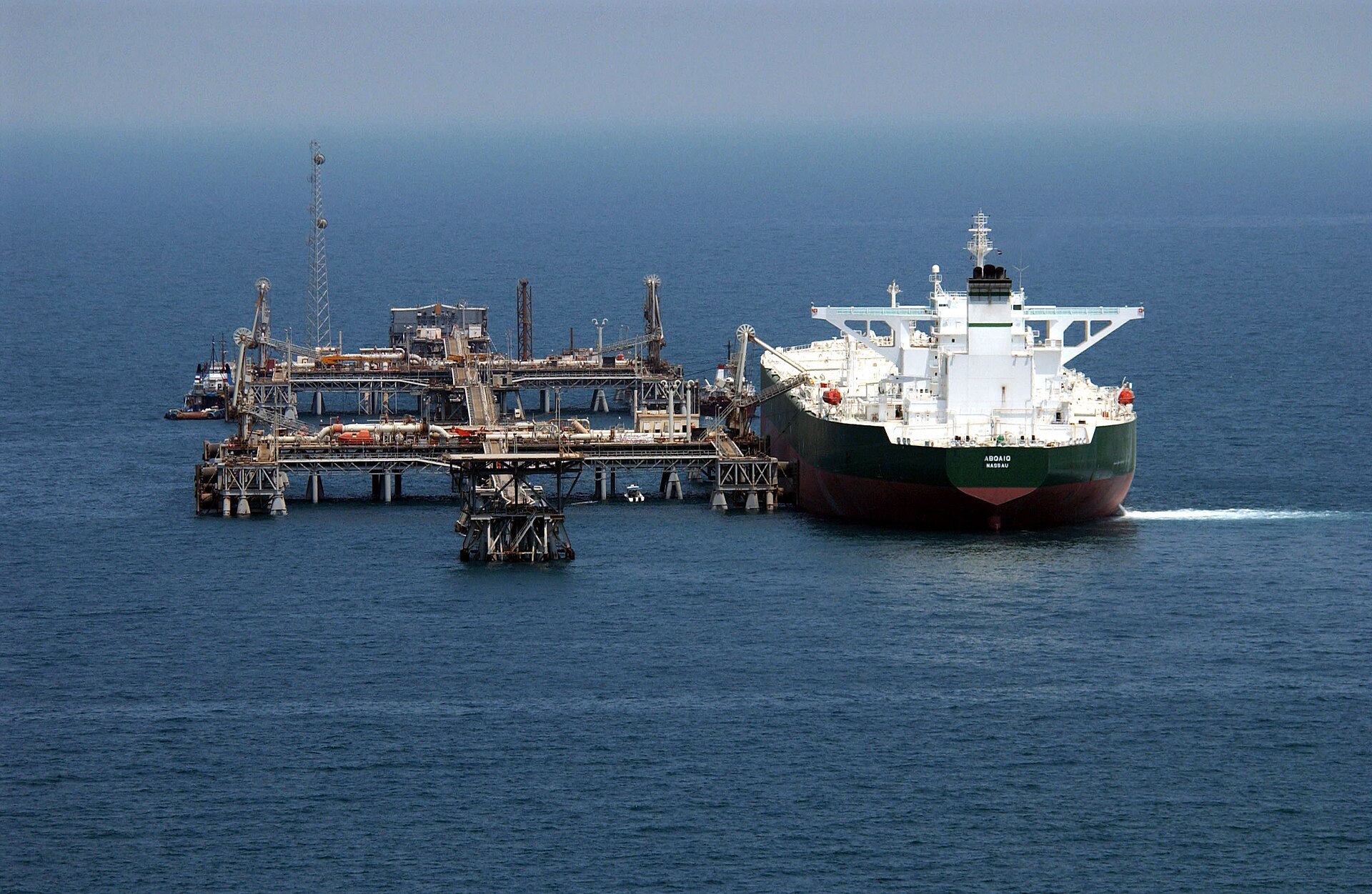
Yanbu is Saudi Arabia’s primary Red Sea oil export terminal and has taken on outsized strategic importance as Persian Gulf export routes face disruption from the Hormuz conflict. The YASREF refinery at Yanbu was still operational as of mid-September 2026, according to Industrial Info Resources, making it a critical node in Saudi Arabia’s effort to maintain crude shipments while the Strait of Hormuz remains contested. The East-West pipeline feeding Yanbu crude from the Eastern Province was suspended on September 12 and restarted on September 22, but reaching full capacity could take six or more weeks, according to Baird Maritime citing Reuters.
That constrained pipeline capacity limits Yanbu’s ability to compensate for Gulf disruptions even before the October 24 wave added the terminal to the Houthi target list. The IRGC mine blockade that slashed Hormuz tanker transits forced Saudi Arabia to lean on Yanbu as its primary release valve, but that valve is now under direct fire from the same Houthi forces the coalition’s air campaign was supposed to suppress.
Saree named the Yanbu Aramco facility, the Rabigh refinery to its south, and the East-West pipeline connecting the Eastern Province to the terminal in the same October 24 declaration, according to Apa.az and Yahoo News via AP. By targeting both the terminal and its feeder pipeline, the Houthis declared the entire Red Sea export corridor a war zone. The coalition’s interception of a missile near Yanbu on October 24 confirms the threat is concrete enough to trigger defensive engagements, even though physical damage remains unconfirmed.
The Houthi presence on Mayyun Island at the Bab el-Mandeb strait adds a further squeeze: tankers loading at Yanbu must still transit the southern chokepoint to reach Asian markets. Saudi crude faces pressure from both ends of the Red Sea route — Iran constraining the Gulf entrance, the Houthis threatening the western terminal, and the Bab el-Mandeb narrowing the only exit.
The Fiscal Trap: Oil at $114 and Nowhere to Ship It
Saudi Arabia’s 2026 deficit has risen to SAR 245 billion, up from a budgeted SAR 165 billion, according to Zawya citing Reuters. Oil output has fallen 2.6 million barrels per day from August levels, with crude shipments standing at 6 million bpd, according to the IEA via Trend. Aramco told European customers there would be no October oil deliveries, according to Zawya citing Reuters — a statement that captures the fiscal erosion in a single corporate communication.
Brent crude hit $114 on October 23 following the Shaybah and Dammam strikes, according to Reuters and CNA — a level that should be generating windfall revenue for the world’s largest oil exporter. Saudi Arabia cannot capture that premium because its export routes are constrained and production facilities are under recurring attack. The price measures what the Kingdom stands to lose, not what it is earning.
Aramco CEO Amin Nasser said at the Energy Intelligence Forum in London on October 5 that almost 3 billion barrels of oil supply had been lost since the start of the conflict, according to Reuters. Nasser estimated replenishing inventories would take up to two years at an average of about 2 million bpd of extra demand — a timeline that assumes no further disruption to the very infrastructure the Houthis are actively targeting.
The Soufan Center noted in an October 15 IntelBrief that the Houthis “hope that these attacks scare off tourists and frighten investors, making the economic pain for Riyadh more palpable.” The fiscal trap is self-reinforcing: as the deficit widens, the Kingdom’s capacity to maintain air-campaign tempo, absorb the insurance and shipping costs of each Houthi declaration, and invest in infrastructure repair comes under growing pressure — a cycle in which today’s fiscal damage constrains tomorrow’s military options.
How Are the Houthis Framing Their Conditions for a Ceasefire?
Saree stated on October 24 that Houthi operations would continue until attacks on Yemen stopped and the blockade was lifted, according to AP. The conditions have been consistent since mid-October, and the language positions the Houthi campaign as responsive rather than initiatory: Saree framed the attacks as enforcing a policy of blockade for blockade, escalation for escalation, according to AP. The framing transforms what the coalition calls an offensive into what the Houthis present as a mirror of Saudi actions, with defined conditions for cessation.
The October 10 proposal adds a dimension that the October 24 wave makes visible in retrospect. After the King Khalid International Airport strike that killed 13, Saree proposed a mutual agreement to spare airports, seaports, and humanitarian facilities on both sides, according to ACLED’s Ameneh Mehvar. The coalition did not accept the framework, and what followed was a sequence of intensifying airport attacks — the October 21 strike on King Fahd International, and now the October 24 declaration naming four airports — that the Houthis can present as the direct consequence of rejected restraint.
The reference to a “blockade” in Saree’s conditions points to the Saudi-led restrictions on Yemeni ports and airports that have been a central grievance throughout the conflict. By mirroring the term — blockade for blockade — the Houthis position their attacks on Saudi export terminals as symmetrical rather than escalatory, and place the initiative for de-escalation squarely on the Saudi side by defining two conditions the Kingdom would need to meet for attacks to stop.
Mehvar observed that “Saudi leaders are likely willing to tolerate considerable short-term economic disruption for longer-term security gains” (ACLED, 2026-10-23). Whether that tolerance survives the systematic targeting of Yanbu — the terminal Saudi Arabia needs if it is to export any Red Sea oil at all — is the question the October 24 wave is designed to force into the open, and eleven days of accelerating retaliatory cycles have not produced an answer.
From Abqaiq to Yanbu: Dispersed Targets, Stretched Defenses
The September 14, 2019 attack on Saudi Arabia’s Abqaiq processing plant knocked out approximately 5.7 million barrels per day of processing capacity, according to the Atlantic Council. The council described Abqaiq as a single point of failure with custom-built stabilisation equipment difficult to replace — a vulnerability rooted in the concentration of Saudi oil-processing capacity at one site. The lesson was supposed to be about hardening critical nodes and diversifying export infrastructure, and Saudi Arabia invested accordingly in the years that followed.
The 2026 targeting pattern turns that diversification against the Kingdom. Saree’s October 24 declaration named facilities in Yanbu on the Red Sea coast, Rabigh to its south, crude pumping stations in the Eastern Province, and the East-West pipeline spanning the width of the peninsula — targets separated by hundreds of kilometres of desert. Mehvar of ACLED noted that “protecting widely dispersed infrastructure further stretches defensive resources” (ACLED, 2026-10-23), a formulation that captures the dilemma: the Houthis have traded the single devastating blow for a campaign of distributed pressure across a target set that cannot be covered by air defences concentrated in any one region.
ACLED data gives the campaign a quantitative shape. Nearly a quarter of all Houthi attacks or attempted attacks between July 13 and October 14 targeted Saudi oil facilities, and about 12 of those incidents caused fires or physical damage to Saudi energy assets, according to Mehvar. The allocation of roughly one in four operations against energy infrastructure suggests a deliberate strategic programme, not opportunistic strikes of convenience.
The 2019 attack was a single operation against a single site; the 2026 campaign is a sustained programme across a wide geography, sustained by a force that has publicly committed to continuation. Air-defence assets protecting Riyadh and Jeddah cannot simultaneously cover Yanbu, Rabigh, and the pipeline corridors running east-west, and each new target the Houthis add to their declarations imposes an incremental defensive cost on an architecture designed for a different threat. The October 24 wave named more targets in a single statement than any previous wave in the month-long escalation, suggesting the pressure on Saudi defences is designed to increase, not stabilise.
Airport Disruption: Casualties, Cancellations, and Connectivity
The toll at Saudi airports has mounted rapidly since early October. Between October 7 and 12, at least 18 people were killed and more than 300 wounded at Saudi airports, according to ACLED’s Mehvar. By October 12, more than 46 percent of Saudi airport flights had been cancelled, Mehvar reported — a figure that captures not just the physical damage of strikes but the cascading disruption as airlines ground schedules, passengers reroute, and underwriters reassess coverage.
The October 10 strike on King Khalid International Airport in Riyadh killed 12 people and wounded between 308 and 309 — Al Jazeera reported 309, the BBC reported 308. One Indian national later raised the death toll to 13, the BBC reported. On October 21, an attack on King Fahd International Airport in Dammam killed 2 and injured 8, according to GACA as confirmed by Al Jazeera and Arab News. The October 24 declaration then named four airports in a single statement — KKIA, KFIA, Najran, and Khamis Mushait — binding the airport campaign to the oil-infrastructure campaign under the same retaliatory framework.
Farea Al-Muslimi of Chatham House told the Financial Times that the attacks on Saudi airports were “intended to inflict maximum damage on the kingdom’s economic infrastructure and international connectivity.” The airports are targets not because aircraft are uniquely vulnerable on the ground but because connectivity is the commercial lifeblood of the Kingdom’s economic ambitions — the conferences, tourism, and foreign investment that require safe, functioning air links. For those assessing Saudi aviation operations, a guide to Saudi Arabia’s airports provides additional context.
The ACLED cancellation data illustrates the multiplier effect: a single attack that kills two people and injures eight — as the October 21 King Fahd strike did — produces flight cancellations affecting tens of thousands of passengers, rippling outward through hotel bookings, conference attendance, and the commercial transactions that depend on reliable air links into the Kingdom. The Houthis’ October 24 declaration binds aviation and energy disruption into a single retaliatory doctrine, treating the airports where tourists land and the terminals where oil tankers load as interchangeable pressure points in the same economic war. For a kingdom that built its post-oil ambitions on international connectivity — the conferences postponed, the tourism seasons cancelled, the investors who now route through Dubai — that equivalence may prove more consequential than any individual missile.
Frequently Asked Questions
How long do Saudi oil disruptions typically last?
Aramco CEO Amin Nasser said in September 2026 that disruptions typically resolve in “days, not weeks or months,” according to the Saudi Gazette via Zawya. That assessment, however, was made before the October escalation transformed individual disruptions into a sustained campaign of recurring attacks across multiple sites. The 2026 pattern — with new targeting declarations arriving every few days — means each disruption compounds the last before recovery can take hold, making Nasser’s optimistic framing increasingly disconnected from operational reality.
Has Saudi Arabia confirmed damage from the October 24 attacks?
Saudi authorities confirmed intercepting missiles near Yanbu and Taif on October 24 but did not confirm physical damage at any of the eight named targets, according to France 24 and ABC News Australia. This pattern has recurred throughout the escalation: the coalition announces interceptions without addressing Houthi damage claims. No independent body had published a verified damage assessment for the specific October 24 targets at the time of writing, leaving an information gap that the Houthi declarations themselves fill by default.
What is Saudi Arabia’s OPEC+ production target for November 2026?
The target is 10.5 million barrels per day, according to Enerdata. Saudi Arabia is producing well below that ceiling — not as a deliberate market strategy but because infrastructure damage, export route disruptions, and Houthi targeting of oil facilities have constrained output involuntarily. The gap between the OPEC+ target and actual production represents foregone revenue that compounds the Kingdom’s widening deficit, a fiscal cost separate from the direct physical damage of any individual strike.
Why do Houthi evacuation warnings impose economic costs even when no strike lands?
Evacuation warnings trigger facility shutdowns and worker relocations regardless of any physical impact — the disruption mirrors a strike’s effect on operations. When Saree declared on October 13 that employees near Saudi oil facilities should leave after the coalition struck Sanaa’s al-Sabah station, according to Al Jazeera, facilities closed in response to a Telegram post rather than any confirmed inbound missile. That gap — between a warning and a warhead — is the economic mechanism the Houthis are deliberately exploiting alongside kinetic operations, using declaration alone to impose the operational costs of an attack.
The House of Saud Daily Briefing
Saudi Arabia's news in 3 minutes, every morning. Free. See today's issue