
France and Saudi Arabia share a deeper connection than most travellers realise. From the French-led archaeological restoration of AlUla’s ancient Nabatean sites to the Michelin Guide’s 2026 debut in the Kingdom, the cultural bridge between the two countries is well established — even if life on the ground feels radically different. This guide is written specifically for French travellers planning their first or second visit to Saudi Arabia, covering everything from visa logistics and flight options to the cultural adjustments that catch francophones off guard. Whether you are heading to Riyadh for business, Jeddah for the Grand Prix, or AlUla for the heritage season, think of this as your companion to the complete Saudi Arabia travel guide.
Best Time to Visit: October to March (pleasant temperatures, peak events season)
Getting There: Direct flights from Paris CDG to Riyadh (5h55m) and Jeddah (5h45m) via Saudia and Air France
Visa Required: Yes — tourist e-visa online, valid 1 year, 90 days per stay
Budget: $80–$200/day mid-range; $40–$70/day budget
Must-See: Diriyah (Riyadh), Al-Balad old town (Jeddah), Hegra (AlUla)
Avoid: Arriving without cash — many small shops and taxis still prefer riyals
Why Saudi Arabia Appeals to French Travellers
France has been involved in Saudi Arabia’s cultural transformation since 2018, when a landmark bilateral agreement gave the French agency Agence française pour le développement d’AlUla (AFALULA) a central role in developing the AlUla region and its UNESCO World Heritage Site at Hegra. Around 1,400 Saudi students study in France under the King Abdullah scholarship programme, and French luxury brands — from Louis Vuitton to Dior — have opened flagship stores in Riyadh and Jeddah. The cultural exchange runs both ways: the inaugural Michelin Guide Saudi Arabia 2026 features 52 restaurants across Riyadh, Jeddah and AlUla, with French-influenced names like Benoit, Café Boulud, Julien by Daniel Boulud and MLLE on the Riyadh list.
Yet the Kingdom remains a genuinely different world from metropolitan France. The adjustments are real — no wine with dinner, no mixed sunbathing, prayer-time rhythms that pause commerce — and understanding them before you land is the difference between a frustrating trip and a revelatory one.
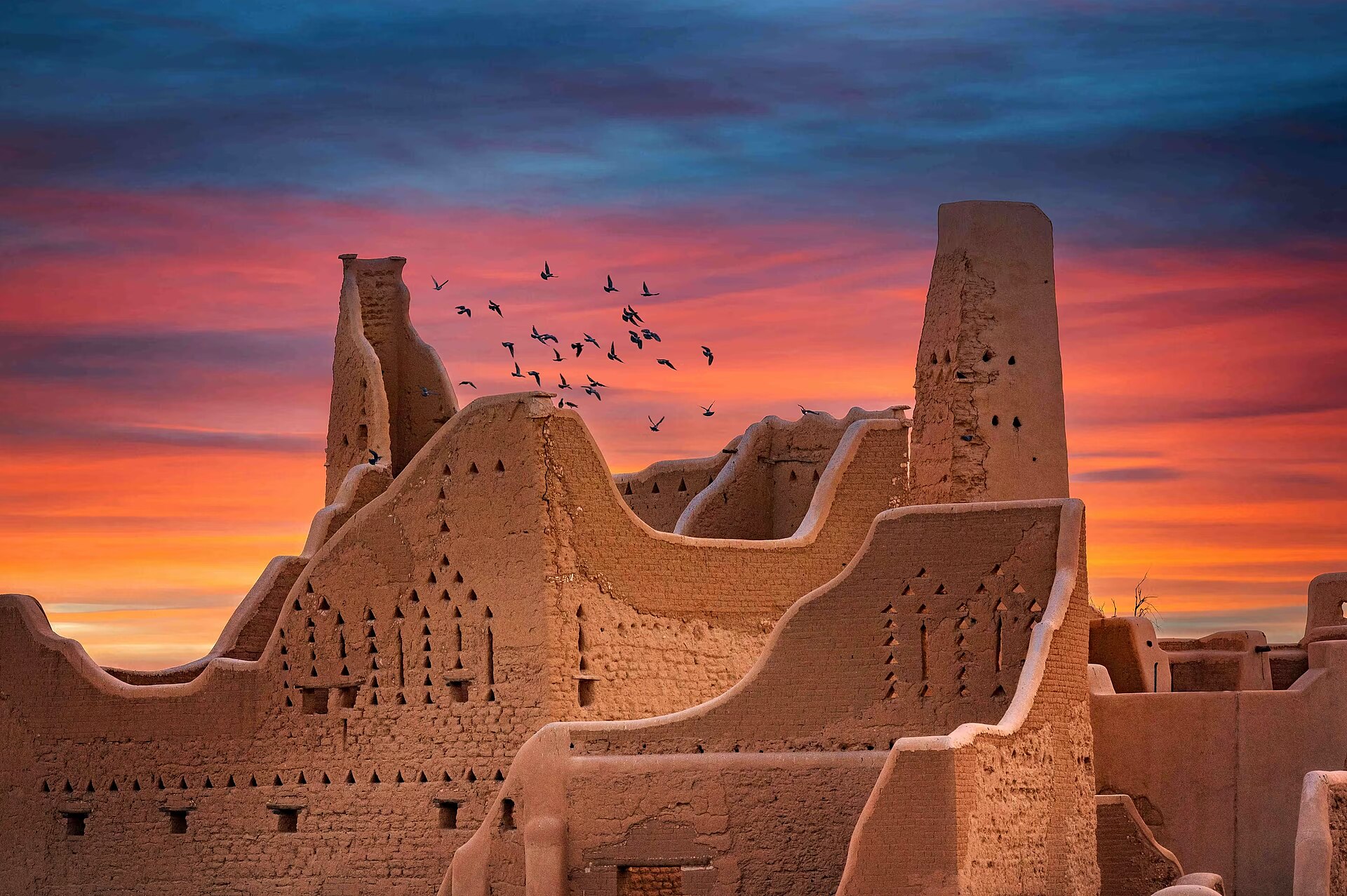
Visa and Entry for French Citizens
French passport holders are eligible for the Saudi tourist e-visa, which can be obtained entirely online through the official visa.visitsaudi.com portal. There is no need to visit the Saudi embassy in Paris or arrange a local sponsor. For full details on every visa type, processing times and fees, see the Saudi Arabia visa guide.
Key Visa Details
| Detail | Requirement |
|---|---|
| Visa type | Tourist e-visa (multiple entry) |
| Validity | 365 days from issue |
| Maximum stay per entry | 90 days |
| Passport validity | At least 6 months beyond entry date |
| Processing time | Standard 1–2 business days; rush 1 hour |
| Sponsor required | No |
| Israeli stamps | No longer an issue — entry is permitted |
Tip for French travellers: The e-visa application is available in French. Keep a PDF copy on your phone — immigration at Riyadh and Jeddah airports will scan the QR code, but a backup never hurts.
Getting There: Direct Flights from France
Direct flights connect Paris Charles de Gaulle (CDG) with both of Saudi Arabia’s major airports. The flight time is comparable to flying to West Africa or the Canary Islands — under six hours, no connection required.
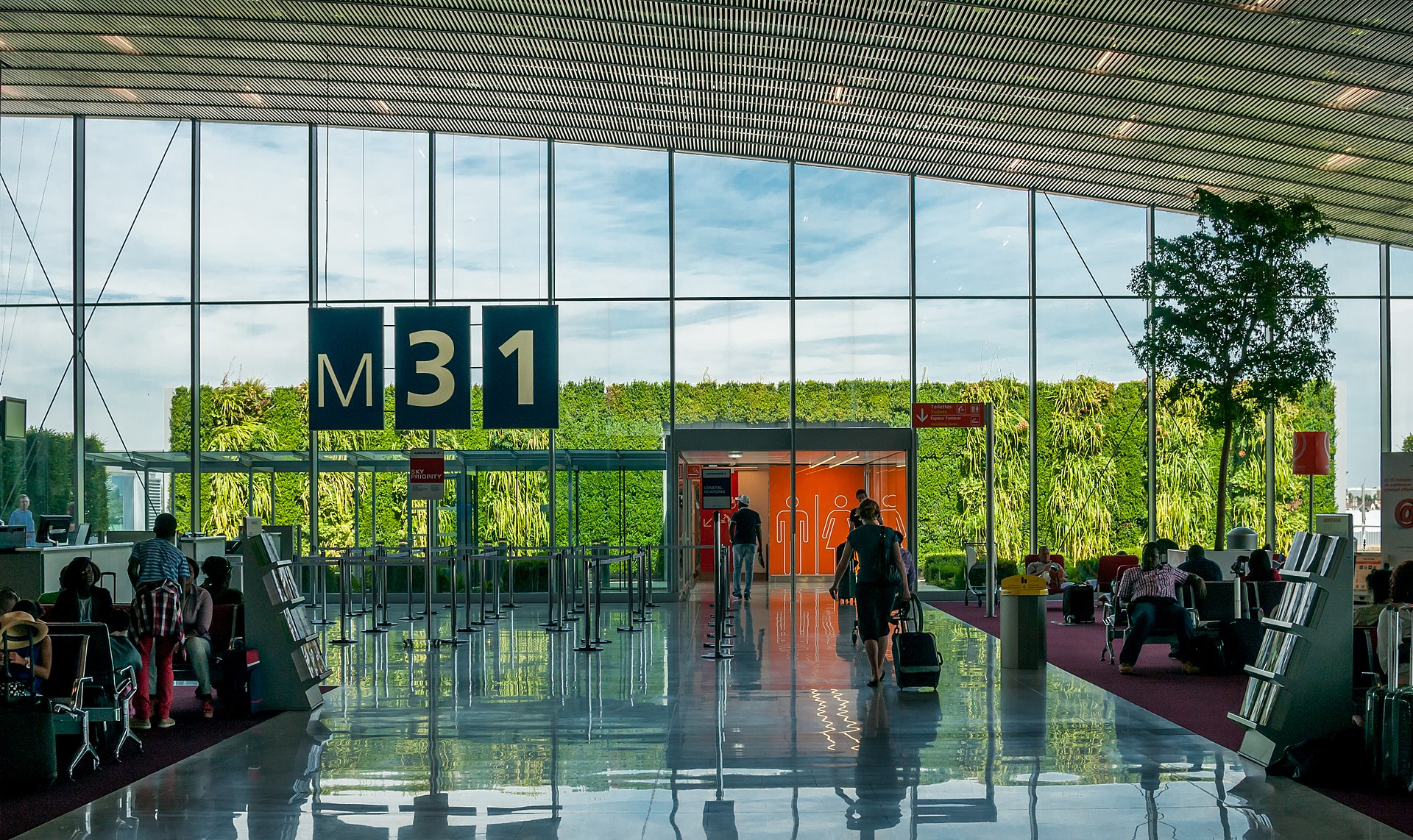
Paris to Riyadh
- Airlines: Saudia (7 flights/week), Air France (3 flights/week)
- Flight time: Approximately 5 hours 55 minutes
- Airport: King Khalid International Airport (RUH)
- Onward transport: See the Riyadh airport-to-city guide for metro, taxi and shuttle options
- Airlines: Saudia (up to 13 flights/week)
- Flight time: Approximately 5 hours 45 minutes
- Airport: King Abdulaziz International Airport (JED)
- Onward transport: See the Jeddah airport-to-city guide
- Women: Cover shoulders, upper arms and knees. Loose-fitting, opaque fabrics. No swimwear outside pools/beaches. Bring a scarf for mosques and conservative areas.
- Men: No shorts above the knee in public. No sleeveless tops. Long trousers and a collared shirt will serve you everywhere.
- Religious sites: Women must wear a headscarf and full-coverage clothing. An abaya is recommended for mosque visits.
- Physical contact: Do not shake hands with a Saudi person of the opposite gender unless they initiate. A nod and a hand over the heart is the standard greeting.
- Mixed socialising: Restaurants no longer have separate “family” and “singles” sections (that rule ended in 2019), but conservative social spaces may still feel gender-separated in practice.
- Public affection: Avoid any public displays of affection, including between married couples. This is a legal matter, not just etiquette.
- Currency: Saudi Riyal (SAR). As of early 2026, approximately 1 EUR = 4.0 SAR.
- Cards: Visa and Mastercard are widely accepted in hotels, malls and chain restaurants. American Express is less common. Carry cash for taxis, small shops and markets.
- ATMs: Widely available. French bank cards (Carte Bleue/Visa) work at most ATMs. Notify your bank before travelling.
- Tipping: Not mandatory but appreciated. Tip 10–15% at sit-down restaurants if no service charge is included. Round up for taxis. Always tip in Saudi Riyals, not euros.
- Eating and drinking in public during daylight hours is prohibited — including for non-Muslim tourists. Hotel restaurants may serve food behind screens, but street-side dining stops entirely.
- Working hours are shortened. Many shops open late (after 1pm) and close in the afternoon before reopening after iftar (the sunset meal).
- Nightlife — such as it is — shifts entirely to the evening hours. After iftar, cities come alive and restaurants are packed until 2–3am.
- Breakfast: Forget croissants — Saudi breakfast is flatbread (tamees), ful medames (fava beans), halloumi, olives, labneh and dates. It is hearty, savoury and designed for sustained energy.
- Coffee: Arabic coffee (qahwa) is served in tiny cups, is lightly roasted with cardamom, and is offered as a gesture of hospitality — always accept the first cup. Specialty cafés in Riyadh rival anything in the Marais.
- Cheese: Saudi Arabia imports European cheeses extensively. You will find brie, camembert and goat cheese at supermarkets and upscale restaurants. What you will not find is any product containing pork-derived rennet or gelatin.
- Bread: Excellent flatbreads but no baguettes. Some hotel bakeries produce European-style bread, but do not expect a boulangerie on every corner.
- Meal timing: Lunch is the main meal (1–3pm). Dinner is late — 9pm or later. This aligns well with French dining habits.
- Heat-related illness: Carry water constantly. Sunscreen, hats and sunglasses are essential October through April and mandatory May through September.
- Road safety: Traffic accidents are the leading cause of tourist injuries. Drive defensively and use seatbelts at all times.
- Healthcare: Standards are high in major cities. Carry your Carte Européenne d’Assurance Maladie (CEAM) — it does not cover Saudi Arabia. Purchase comprehensive travel insurance before departure. The French consulates in Riyadh and Jeddah can assist in emergencies.
- Embassy of France, Riyadh: Diplomatic Quarter, Riyadh
- Consulate General of France, Jeddah: Al-Hamra district, Jeddah
- Saudi Arabia Travel Guide 2026 — The complete guide to visiting the Kingdom
- Saudi Arabia for Europeans — Broader European perspective on visiting Saudi Arabia
- Saudi Arabia for British Travellers — Visa, currency and tips for UK visitors
- First Time in Saudi Arabia — Everything you need to know before your first visit
- Saudi Arabia Business Travel Guide — Etiquette, hotels and getting around for professionals
- Saudi Arabia Visa Guide — Every visa type explained
Paris to Jeddah
No direct flights from other French cities. Travellers from Lyon, Marseille, Nice or Toulouse will need to connect through Paris CDG or a Gulf hub (Dubai, Doha, Abu Dhabi). Book the Paris leg on Air France to combine tickets on a single itinerary.
Time Zone
Saudi Arabia is on Arabia Standard Time (AST), UTC+3. There is no daylight saving. The time difference from France is +2 hours in summer (when France is on CEST, UTC+2) and +2 hours in winter (when France is on CET, UTC+1). In practice, you lose one or two hours flying east — minimal jet lag.
The Biggest Culture Shocks for French Travellers
France and Saudi Arabia sit at opposite ends of almost every cultural spectrum that matters to daily life. This section covers the adjustments that French visitors find most jarring — and how to handle them gracefully.
1. No Alcohol — At All
This is the adjustment that hits hardest for a culture built around wine, apéritif and digestif. Saudi Arabia prohibits the sale, possession, consumption and importation of alcohol throughout the Kingdom. There are no exceptions for tourists, no hotel minibars with wine, no duty-free allowance on arrival. Do not attempt to bring alcohol into the country — customs checks are thorough and penalties are severe.
What you will find instead is a surprisingly sophisticated non-alcoholic drinks scene. Saudi Arabia’s coffee culture — both traditional Arabic qahwa (cardamom-spiced, served from a dallah) and specialty third-wave cafés — is world-class. Mocktail menus at upscale restaurants are inventive and well-crafted. Fresh-pressed juices, Saudi champagne (a sparkling apple-based drink), and imported non-alcoholic beers from European brands are widely available.
Practical tip: If you are a wine enthusiast, seek out Saudi Arabia’s pomegranate and grape juices — the Kingdom grows excellent table grapes in Taif and Al-Madinah, and the fresh juice is genuinely outstanding.
2. Dress Code: Modest but Not Restrictive
French fashion tends toward fitted silhouettes and bare shoulders — neither works well in Saudi Arabia. The Kingdom enforces a Public Decorum Code that applies to all visitors. Foreign women are not required to wear an abaya or headscarf in public (that rule was dropped in 2019), but the following standards apply:
For the full dress code breakdown and packing advice, see the Saudi Arabia dress code guide.
French-specific tip: Linen trousers and loose cotton blouses work perfectly — think Provence summer style rather than Parisian chic. Leave short skirts, low-cut tops and tight dresses at home.
3. Prayer Times Shape the Day
Five times a day, the adhan (call to prayer) sounds from every mosque. In France, the daily rhythm is structured around meal times; in Saudi Arabia, it is structured around prayer times. The five prayers — Fajr (dawn), Dhuhr (midday), Asr (afternoon), Maghrib (sunset) and Isha (evening) — shift with the season.
Historically, all shops and restaurants closed during each prayer, typically for 20–30 minutes. This practice has been relaxed in recent years, particularly in malls and hotel restaurants, but many independent shops and smaller restaurants still close briefly. If you arrive at a shop and find the shutters down, simply wait — they will reopen shortly.
Tip: Use the prayer break as the Saudis do — order a coffee, sit down, and observe. It is a rhythm that, once accepted, actually gives the day a pleasant structure.
4. Dining Without Wine or Pork
French cuisine’s two pillars — wine pairing and charcuterie — are absent in Saudi Arabia. Pork products are prohibited under Islamic dietary law, and no restaurant serves them. This means no jambon, no saucisson, no lardons in your salad.
But the food scene is exceptional. Saudi cuisine centres on kabsa (spiced rice with lamb or chicken), mandi (slow-cooked meat), mutabbaq (stuffed pastry) and an extraordinary array of Middle Eastern mezze. The Michelin Guide’s 2026 debut confirms that Riyadh and Jeddah are serious dining cities.
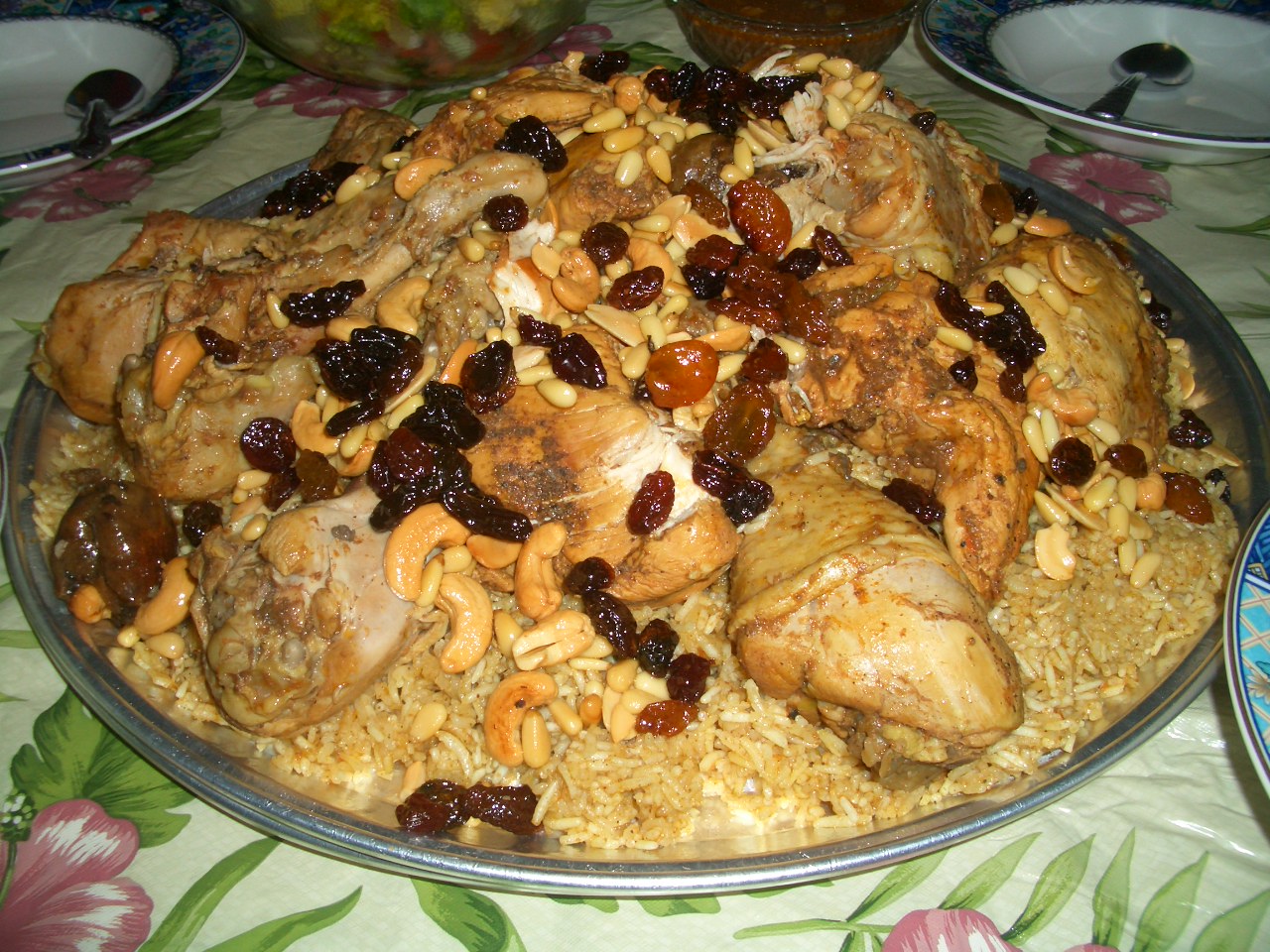
French restaurants exist in Saudi Arabia and adapt well. Café de L’Esplanade at Diriyah’s Bujairi Terrace offers Parisian brasserie dining without alcohol. Café Boulud, Julien by Daniel Boulud and Benoit all feature in the inaugural Michelin Guide Saudi Arabia. Menus substitute grape juice pairings, house-made sodas and Saudi coffee for wine.
5. Gender Norms Are Different
Saudi Arabia has undergone dramatic social change since 2018 — women now drive, attend concerts and sporting events, and work across nearly every sector. However, some traditional norms persist:
6. The Heat
French travellers used to temperate Atlantic or Mediterranean climates will find Saudi summers punishing. Riyadh regularly exceeds 45°C (113°F) from June to August. Even Jeddah, which is humid rather than arid, sits above 38°C (100°F) for most of summer. The smart season for French visitors is October through March, when daytime temperatures range from 18–28°C — cooler than a Côte d’Azur summer.
For options to escape the heat if you visit in warmer months, see the mountain retreats and cool destinations guide.
7. Weekend and Working Week
Saudi Arabia’s weekend is Friday and Saturday — not Saturday and Sunday as in France. Sunday is a regular working day. Government offices and many businesses close on Friday, which is the Islamic day of congregational prayer. Plan museum visits and official errands for Sunday through Thursday.
Practical Tips for French Visitors
Money and Payments
Language
Arabic is the official language, and while English is widely spoken in hotels, airports and tourist areas, French is not commonly understood outside of French restaurants and the AlUla AFALULA project offices. Download Google Translate’s Arabic offline pack before you go. Learning a few Arabic phrases — Assalamu alaikum (peace be upon you), shukran (thank you), kam (how much?) — goes a long way.
French advantage: In AlUla, thanks to the AFALULA partnership, you may encounter French-speaking staff at heritage sites and select hotels. Signage at Hegra includes French translations.
Internet and Connectivity
Saudi Arabia blocks certain websites and VoIP services. WhatsApp messaging works, but WhatsApp calls and FaceTime may be unreliable without a VPN. See the internet and VPN guide for details on what is blocked and how to stay connected. Buy a local SIM card at the airport (STC, Mobily or Zain) for reliable 5G data.
Driving
French driving licences are valid in Saudi Arabia for tourist stays. Driving standards differ significantly from France — speed limits are higher, lane discipline is looser, and roundabout behaviour can be unpredictable. If you plan to drive, read the Saudi road rules guide and the car rental guide first. Speed cameras are everywhere — see the speed camera guide for details on fines.
Electricity
Saudi Arabia uses Type G plugs (British three-pin, 220V/60Hz). French travellers will need an adapter — the two-pin European plug does not fit. See the power plugs guide.
Ramadan: What French Travellers Should Know
Ramadan in 2026 ran from approximately 18 February to 19 March. During this holy month, Muslims fast from dawn to sunset, and Saudi Arabia enforces public fasting restrictions more strictly than most Muslim-majority countries.
For French travellers accustomed to a long déjeuner on a café terrace, Ramadan requires significant adjustment. If you visit during Ramadan, embrace the experience: the evening iftar meals are communal, generous and deeply social — closer to a French réveillon dinner than an ordinary meal.
What to See: French-Connected Highlights
AlUla and Hegra
The jewel of the France-Saudi cultural partnership. The AlUla region is home to Hegra, Saudi Arabia’s first UNESCO World Heritage Site — a Nabatean city contemporaneous with Petra in Jordan. France’s AFALULA agency has been instrumental in the archaeological survey, conservation planning and tourism infrastructure. The AlUla Winter Season (October–March) offers concerts, art installations and heritage experiences in a landscape that rivals the American Southwest.
Diriyah and Bujairi Terrace
The At-Turaif district in Diriyah, a UNESCO World Heritage Site on the outskirts of Riyadh, is the birthplace of the Saudi state. The adjacent Bujairi Terrace dining and leisure precinct includes Café de L’Esplanade — a genuine Parisian brasserie transplanted to the desert. For the full Riyadh itinerary, see the Riyadh travel guide.
Jeddah’s Al-Balad
Jeddah’s historic quarter, Al-Balad, is a UNESCO World Heritage Site with coral-stone merchant houses, carved wooden balconies (rawashin) and narrow alleyways that feel closer to a Mediterranean casbah than a Gulf city. French architects have been consulted on its preservation. The Jeddah travel guide covers the full city.
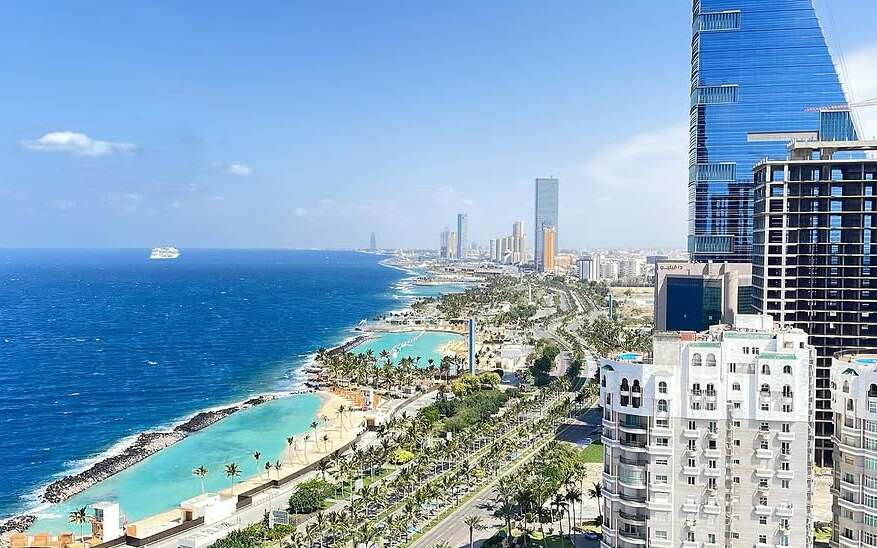
The Red Sea Coast
French travellers with an interest in diving and snorkelling will find the Saudi Red Sea coast largely undeveloped compared to Egypt’s resort strip. Coral reefs, clear warm water and minimal crowds make it an emerging destination for European divers.
Food and Dining: A French Perspective
Saudi Arabia’s dining scene has expanded dramatically. Beyond the traditional dishes already mentioned, here is what French visitors should know:
Getting Around Saudi Arabia
Saudi Arabia is large — the distance from Riyadh to AlUla is roughly the same as Paris to Madrid. The domestic flights guide covers the main routes. The Haramain High-Speed Railway connects Jeddah, Mecca and Medina and runs at TGV-comparable speeds. For intercity buses, see the SAPTCO bus network guide.
Etiquette Essentials
| Situation | French Habit | Saudi Expectation |
|---|---|---|
| Greeting | Handshake, la bise (cheek kiss) | Same-gender handshake. Right hand over heart for opposite gender. Say Assalamu alaikum. |
| Meal invitation | Bring a bottle of wine | Bring chocolates, dates, pastries or flowers. Never alcohol. |
| Shoes | Kept on indoors | Remove shoes when entering a Saudi home (follow the host’s lead) |
| Eating | Cutlery, left hand acceptable | Use the right hand. If eating communally from a shared dish, use your right hand or provided utensils. |
| Photography | Photograph freely | Never photograph Saudi women without explicit permission. Avoid military/government installations. |
| Criticism of government | Common in conversation | Avoid criticising the Saudi government, royal family or Islam. This is not a free-speech jurisdiction. |
| Punctuality | Approximate (le quart d’heure) | Business meetings start on time. Social events may start late. Patience is valued. |
Safety and Health
Saudi Arabia is a very safe country for tourists. Violent crime against visitors is extremely rare. The main risks for French travellers are:
Budget Comparison: France vs Saudi Arabia
| Item | France (typical) | Saudi Arabia (typical) |
|---|---|---|
| Hotel (mid-range double) | €100–180/night | €70–150/night (SAR 280–600) |
| Restaurant meal (main course) | €15–25 | €10–20 (SAR 40–80) |
| Coffee (café) | €3–5 | €3–6 (SAR 12–24) |
| Taxi (10km ride) | €15–25 | €4–8 (SAR 15–30) |
| Petrol (per litre) | €1.80–2.10 | €0.55–0.65 (SAR 2.18–2.33) |
| Domestic flight (1-way) | €60–150 | €40–90 (SAR 160–360) |
Saudi Arabia is generally cheaper than France for transport, fuel and mid-range dining. Hotels in Riyadh and Jeddah during peak season (November–February) can match Parisian prices. For budget strategies, see the budget travel guide.
French Consular Presence
France maintains consulates in both Riyadh (embassy) and Jeddah (consulate general). Register your trip on the Ariane portal (diplomatie.gouv.fr) before departure — this allows the French Ministry of Foreign Affairs to contact you in case of an emergency.