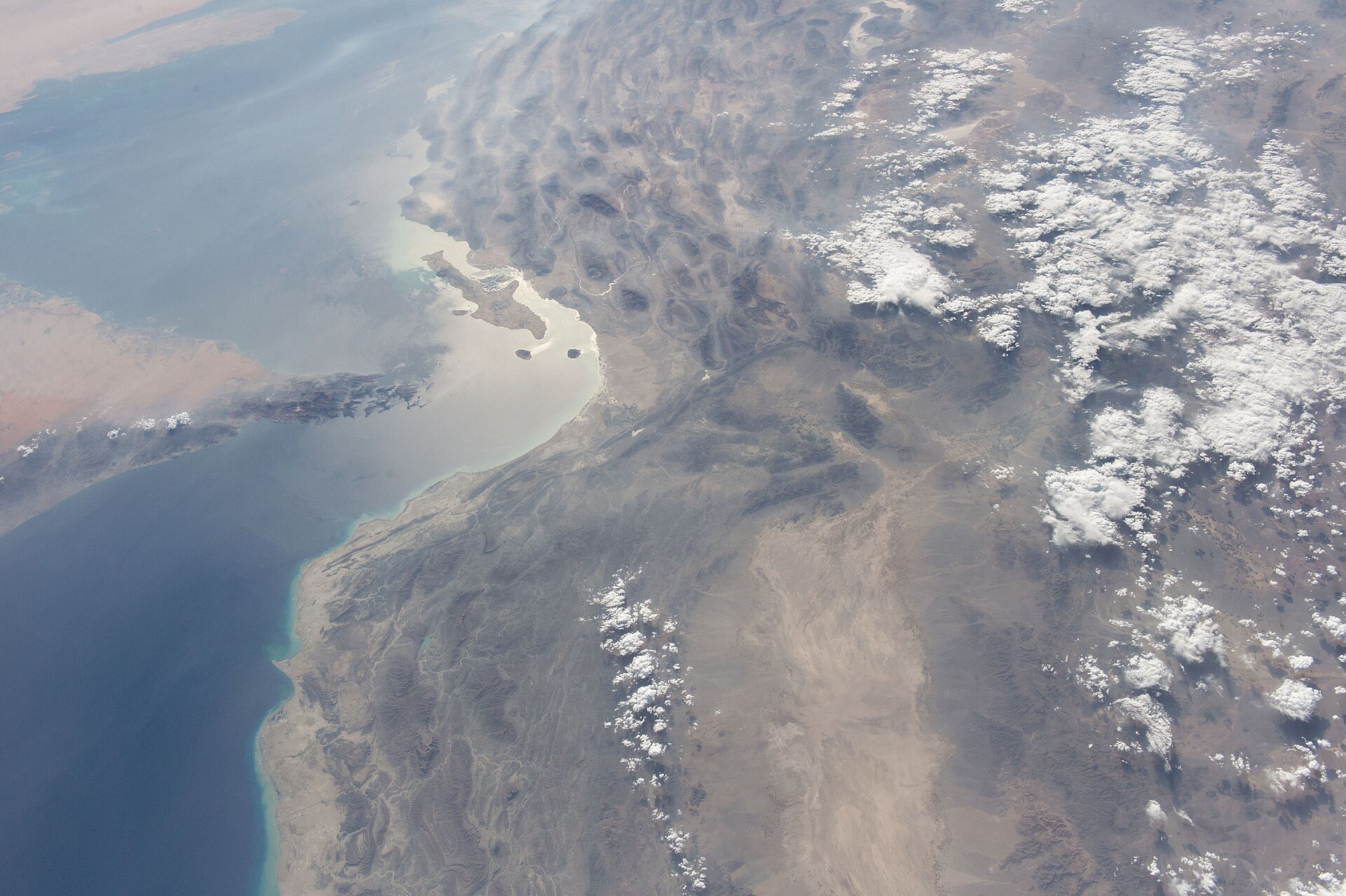

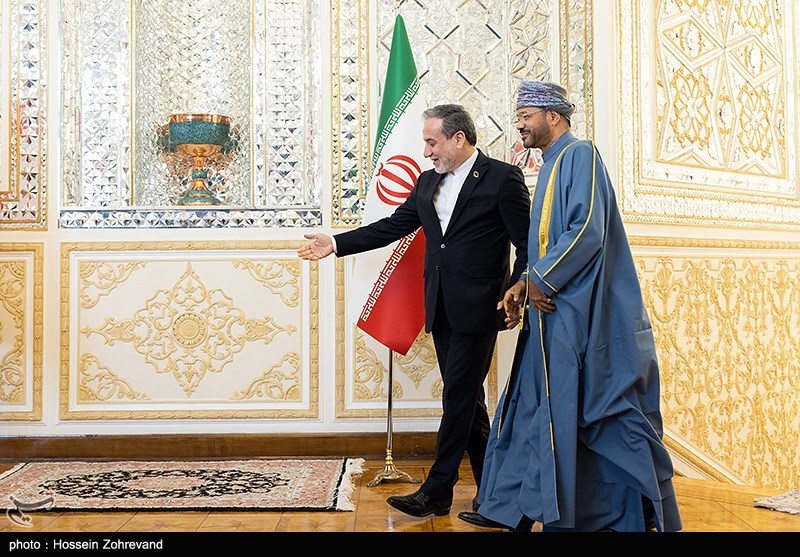
MUSCAT — Iranian Foreign Minister Abbas Araghchi arrived in Muscat on Friday leading a diplomatic delegation for direct talks with Omani Foreign Minister Sayyid Badr bin Hamad Al Busaidi on transit security through the Strait of Hormuz, making Oman the sole active diplomatic venue on Day 24 of the 60-day memorandum of understanding signed June 17.
The Islamabad round — originally scheduled for the same day — has been rescheduled to July 14-15, according to Geo.tv and Bol News. With 38 days remaining before the $253 million Saudi exposure under the Persian Gulf Security Arrangement auto-activates on August 18, the only capital where the MOU’s Hormuz provisions are being actively negotiated is one where Saudi Arabia has no representative, no observer status, and no formal channel of communication.
Table of Contents
What Authority Does Araghchi Carry?
Iranian Foreign Ministry spokesman Esmaeil Baghaei said the visit is aimed at “establishing appropriate mechanisms to ensure the safe passage of ships through the Strait of Hormuz,” following “a series of consultations launched over the past two months,” PressTV and IRNA reported on July 11. The language tracks Article 13 of the MOU, which designates the Iran-Oman bilateral track as the primary mechanism for Hormuz governance.
CBS News reported on July 11 that the MOU “explicitly designates Iran and Oman to negotiate the strategic waterway’s future management,” giving Araghchi’s visit formal treaty-level authority. The Iran-Oman Joint Hormuz Committee, formed in June 2026, has completed multiple technical rounds in Tehran and Muscat. The July 11 session is the ministerial-level capstone of that process — the point at which technical recommendations become political commitments.
The meeting format is bilateral, not a formal US-Iran indirect session, though The National reported on July 11 that the outcome feeds directly into American demands on Hormuz transit. The United States is not physically present in Muscat for this round.
Oman has hosted US-Iran indirect talks since at least 2009. Face-to-face meetings in Muscat in July 2012 preceded the JCPOA negotiations that produced the 2015 nuclear deal. In February 2026, Busaidi held separate consultations with Araghchi and with a US delegation that included Steve Witkoff, Jared Kushner, and CENTCOM Admiral Brad Cooper, establishing the shuttle-mediation format now operating on July 11. Busaidi described those earlier talks as “very serious” and “useful to clarify both Iranian and American thinking and identify areas for possible progress.”
The Middle East briefing 3,000+ readers start their day with.
One email. Every weekday morning. Free.
Islamabad Slips to July 14-15
Pakistan’s Geo.tv and Bol News confirmed on July 11 that the Islamabad round has been rescheduled from July 11 to July 14-15. Iranian and American technical experts are expected to attend, with Pakistan maintaining its mediating role in the US-Iran indirect track. No official reason for the delay has been provided.
Pakistan Prime Minister Shehbaz Sharif called Iranian President Masoud Pezeshkian on July 11, describing the MOU as “a long-term framework for strengthening mutual trust” and urging Iran to “avoid actions that could reverse the diplomatic gains achieved in recent months,” Xinhua reported. The call served two purposes: reaffirming Islamabad’s mediating function and registering concern over the July 7-8 ship attacks in the strait.
The three-to-four-day delay compresses an already narrow MOU timeline. The 60-day window expires August 16; the PGSA fee structure activates two days later on August 18. With the Islamabad round now set for Day 27-28 of the MOU, any technical agreement reached there must still be ratified, implemented, and verified before the $5.5 million per day fee structure activates — a sequence that took the JCPOA’s implementation phase four months. MBS called Trump as the original Islamabad date approached, but the delay was confirmed regardless.
Xinhua framed the Pezeshkian-Shehbaz call as evidence that the Islamabad track remains active — Beijing’s preferred optic of a functional diplomatic process, even as the substantive negotiations have shifted to Muscat. The practical effect of the delay is that Araghchi’s meeting with Busaidi operates without a parallel US-Iran session to absorb or redirect any commitment made in Oman.
The US Precondition
Bloomberg reported on July 10 that Washington has set a single precondition for the continuation of talks: Iran must issue a public statement acknowledging all Hormuz channels are open and commit to stop attacking commercial vessels.
What we’re demanding is that the Iranians issue a public statement that acknowledges all channels of the Strait of Hormuz are open and they’re not shooting at ships anymore. They’re either going to give us that statement or we’re not having a good outcome for them.
US official, Bloomberg, July 10
The demand is binary: a public statement or escalation. The framing leaves no room for the private assurances Iran has preferred throughout the MOU process. Three commercial ships were attacked in Hormuz between July 7 and 8. Zero transponder-broadcasting large vessels have transited since July 7, according to tracking data reviewed by multiple outlets.
A separate US official told CBS News on July 10 that Iran was “caught off guard by how rapidly traffic was moving — and how much of the oil and gas traffic was moving through the southern lane — and that is why they reneged.” The explanation suggests Iran’s enforcement of its northern-route preference broke down when vessels shifted to the Omani corridor faster than Tehran anticipated.
Araghchi’s presence in Muscat on the same day this ultimatum circulates creates a practical test. Any commitment he makes to Busaidi on transit safety will be measured against the Bloomberg precondition — even though the Muscat meeting is formally bilateral, not a US-Iran channel. The gap between what Araghchi can offer Oman and what Washington demands from Iran is the gap the next 38 days must close.
Can Oman’s Malacca Model Bridge the Gap?
Oman has submitted a Malacca-model proposal to the Joint Hormuz Committee: transit fees would be voluntary, not mandatory, and Oman and Iran would jointly oversee navigation, NBC News and AGBI reported. The model draws on the Straits of Malacca framework, where Singapore, Malaysia, and Indonesia coordinate with user-states on safety and environmental contributions without conditioning passage on payment.
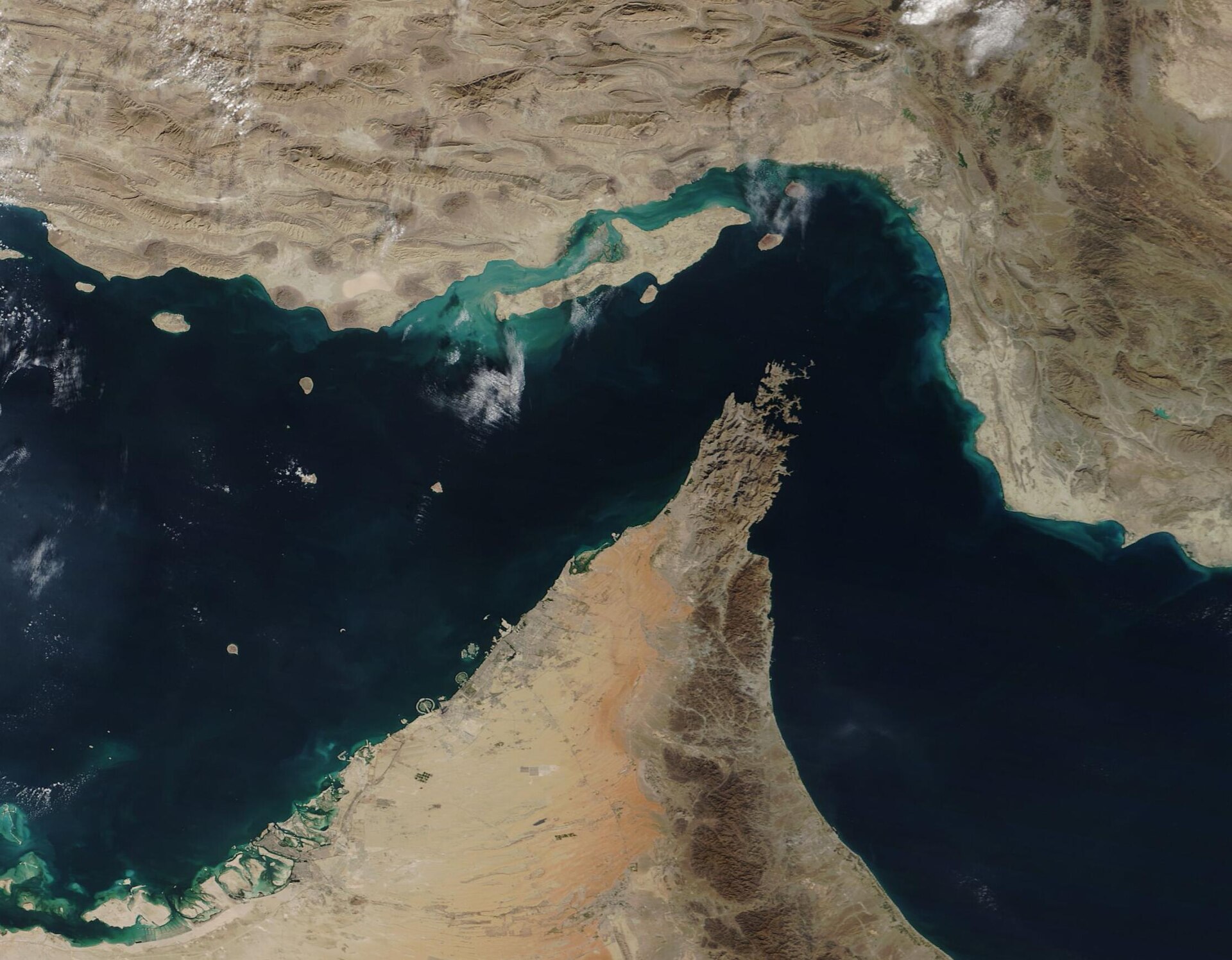
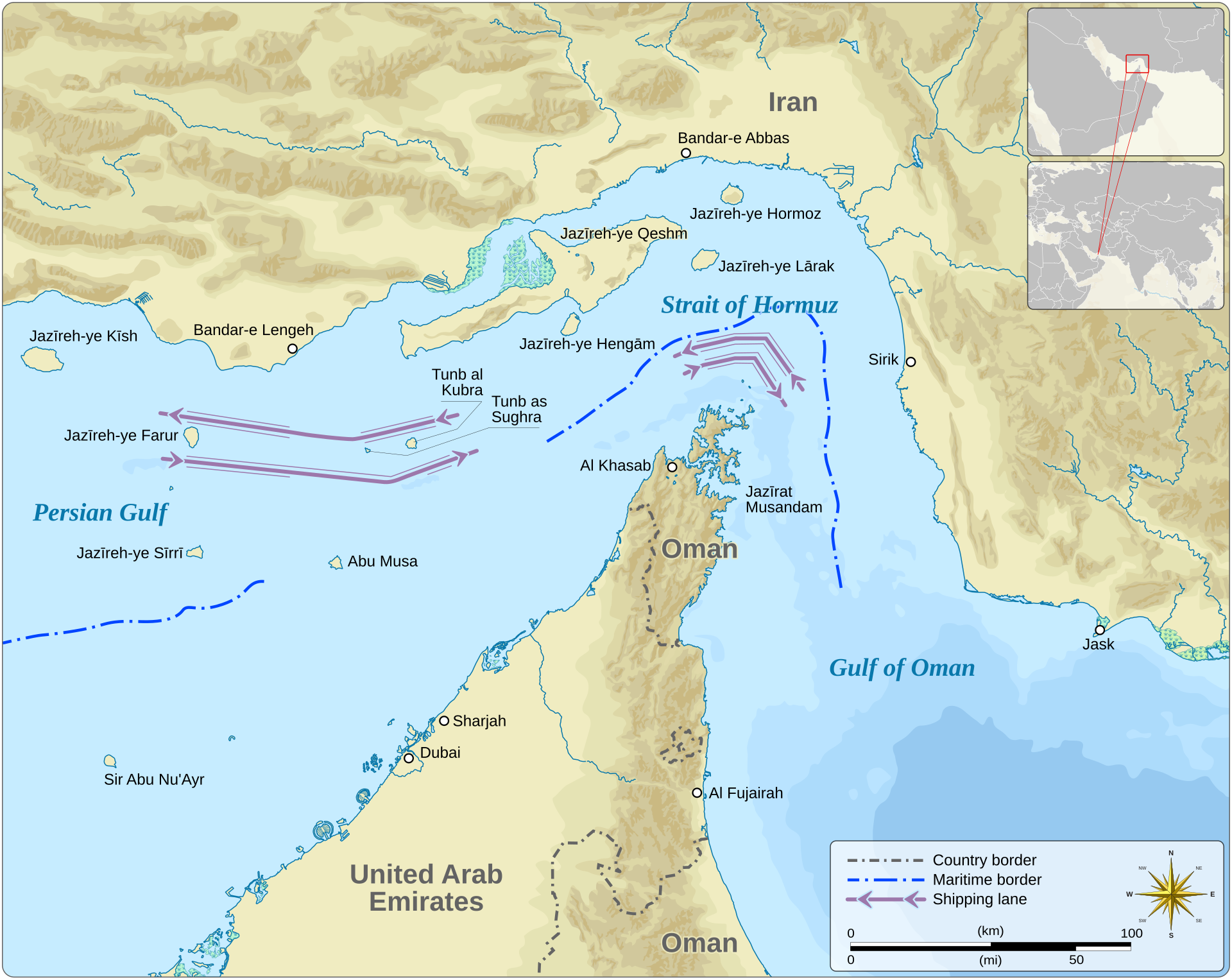
Iran has rejected voluntary fees. Tehran insists fees must be mandatory — the single substantive sticking point that Iran has not conceded in the Muscat talks, according to NBC News and Marine Insight. The difference between voluntary and mandatory is the difference between transit passage under the 1982 UN Convention on the Law of the Sea and a toll regime that would give Iran revenue and regulatory authority over roughly 20 percent of global seaborne oil trade.
Oman’s position contains a structural contradiction it has managed rather than resolved. At the 137th session of the International Maritime Organization Council in London from July 6 to 10, Oman’s undersecretary of transport reaffirmed transit passage under international law, Xinhua reported on July 9. That position directly undercuts Iran’s mandatory-fee demand — while Oman simultaneously serves as Iran’s co-architect inside the PGSA framework that would collect those fees.
Between July 5 and 6, roughly 45 percent of recorded Hormuz transits used the Iranian-approved northern route, compared with 22 percent through the Omani corridor, AGBI reported. The traffic pattern reflects the operational reality that preceded the July 7-8 attacks: vessels were already sorting themselves into Iranian and Omani lanes before the shooting started. Whether the Malacca model or mandatory fees prevail determines which lane becomes the default — and who collects at the gate.
Iran’s Split Signal
CBS News reported on July 10 that Iran privately told Trump advisers the July 7-8 ship attacks were a mistake by an “errant” faction of hardliners trying to undermine negotiations, and that Tehran wants to continue talking. The private message contradicts Iran’s public posture: Tehran has accused Washington of violating the MOU through its own military strikes, framing the ship attacks as a response rather than a provocation.
Iran privately told Trump advisers they made a mistake in shooting at ships in the Strait of Hormuz, that the attacks stemmed from an “errant” sect of hardliners trying to undermine negotiations.
CBS News, citing US officials, July 10
The dual signal — public defiance and private conciliation — runs through PressTV and IRNA’s coverage of Araghchi’s Muscat visit. Iranian state media framed the trip as Iran’s initiative in “bilateral consultations” on maritime cooperation under the MOU, not as a response to American ultimatums. The narrative treats Muscat as cooperative rather than coercive, presenting the visit as part of a standing diplomatic process rather than crisis management.
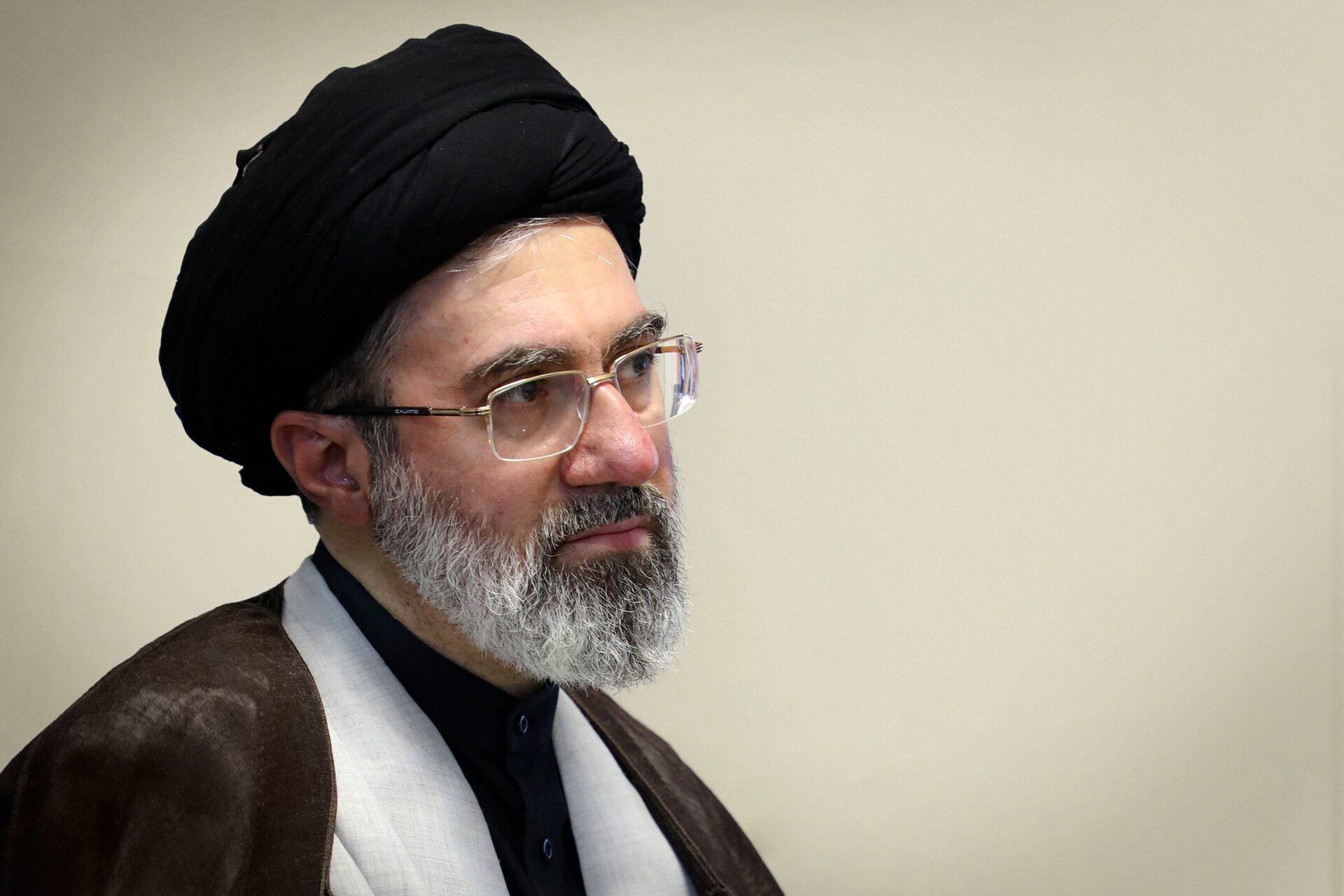
On the same day Araghchi sat with Busaidi, the question of who speaks for Iran acquired a parallel answer from a separate quarter. Mojtaba Khamenei, Iran’s supreme leader, issued his seventh written statement in 127 days without a public appearance: “We pledge to avenge your pure blood and the blood of all the martyrs of these two wars against the criminal and disgraced killers,” CNN reported from the live broadcast.
Araghchi’s diplomatic authority and Mojtaba’s rhetorical authority operated on the same calendar day without visible coordination — one man negotiating ship safety in Muscat while the other pledged vengeance from an undisclosed location.
Iran’s ability to manage both signals simultaneously is not new. The “errant faction” explanation, offered privately, gives Tehran an exit from the July 7-8 attacks without a public admission. It also gives Washington a narrative to accept if the administration wants to resume talks without requiring the public statement Bloomberg reported as a precondition. Whether Araghchi carried a version of this explanation to Busaidi is unknown.
Saudi Arabia Has No Seat in Either Venue
Saudi Foreign Minister Prince Faisal bin Farhan met Busaidi in Muscat on July 8 — three days before Araghchi arrived. The sequencing placed Riyadh’s consultation before the substantive round, not during it. Faisal got the call but not the seat at the table where Hormuz governance is being decided.
Iran split the negotiating architecture into two tracks — Muscat for Hormuz governance, Islamabad for the broader US-Iran framework — and Saudi Arabia holds no position in either. The $253 million PGSA exposure at $5.5 million per day from August 18 is determined by outcomes in rooms Riyadh cannot enter. With 38 days to the PGSA activation date, the financial obligation accrues whether or not Riyadh participates in shaping the terms.
The structural exclusion runs deeper than the current round. The MOU designates Iran and Oman — not Saudi Arabia — as Hormuz co-managers. The Joint Hormuz Committee has no Saudi member. The Islamabad track has no Saudi observer. Princess Reema met Rubio at the ambassador level, but the ambassador channel has not translated into a seat at either negotiating venue.
Whether Araghchi accepts Oman’s voluntary-fee model or holds to mandatory fees, the outcome reshapes Saudi Arabia’s cost structure without Saudi input. A voluntary model preserves transit passage and limits the PGSA’s regulatory authority to safety coordination. A mandatory model locks in a fee regime that applies to Saudi-flagged vessels and Saudi oil exports — at rates set by a committee on which Saudi Arabia has no vote. Araghchi and Busaidi are in the room. Riyadh is reading the communiqué. Oman has since moved beyond the Malacca voluntary-fee model to a more structured dual-corridor framework — a proposal that creates a sovereignty trap Saudi Arabia cannot navigate by endorsing, opposing, or ignoring it.
Frequently Asked Questions
What is the Iran-Oman Joint Hormuz Committee?
The committee was formed in June 2026 under the MOU framework. It consists of Iranian and Omani officials tasked with developing operational rules for Hormuz navigation, safety standards, and fee collection mechanisms. Multiple technical rounds have been completed in Tehran and Muscat. Araghchi’s July 11 visit represents the ministerial-level capstone of that technical process. No other country — including Saudi Arabia, the UAE, or the United States — has membership or observer status on the committee.
How does the Malacca Strait model differ from Iran’s preferred framework?
The Straits of Malacca model, proposed by Oman, treats transit fees as voluntary contributions from user-states toward navigation safety and environmental protection. Singapore, Malaysia, and Indonesia administer the Malacca framework without conditioning passage on payment. Japan, as the largest user-state, contributes voluntarily. Iran’s preferred model makes fees mandatory — a condition of transit rather than a voluntary contribution. The distinction determines whether Hormuz operates under the international law of transit passage, codified in Article 38 of the 1982 UN Convention on the Law of the Sea, or under a bilateral toll regime administered by Iran and Oman with enforcement authority.
What happens if the MOU expires without agreement on Hormuz governance?
The PGSA fee structure — $5.5 million per day, totaling $253 million in outstanding obligations attributed to Saudi Arabia — auto-activates on August 18. The fee applies regardless of whether a permanent governance arrangement has been agreed. Without an extension or a completed agreement, the MOU’s interim provisions default to the PGSA’s original terms, which were drafted by Iran and Oman. Any country seeking to contest the fees would need to do so outside the MOU framework, likely through the IMO or bilateral negotiation — processes measured in months or years, not the 38 days remaining.
Why was the Islamabad round delayed from July 11 to July 14-15?
Pakistani media reported the rescheduling without citing a specific cause. The delay followed the July 7-8 ship attacks in Hormuz and Iran’s private admission to US officials that the attacks were carried out by an “errant faction.” PM Shehbaz Sharif’s same-day call to Pezeshkian — urging Iran to “avoid actions that could reverse the diplomatic gains” — suggests the delay is connected to the need for Iranian assurances before technical talks resume. The rescheduling moves the Islamabad round to Day 27-28 of the 60-day MOU window.
Is the United States present at the Muscat talks?
No. The July 11 Muscat meeting is a bilateral Iran-Oman session under the Joint Hormuz Committee framework. The United States is not physically present. In February 2026, Busaidi held separate shuttle consultations with Araghchi and a US delegation including Witkoff, Kushner, and Admiral Cooper; that shuttle format was not replicated for the July 11 round. The US precondition, delivered through Bloomberg on July 10, functions as an external constraint on the talks rather than a negotiating position delivered at the table.
On July 12, the UAE Ministry of Foreign Affairs issued a formal condemnation of Iran for missile and drone attacks on five Gulf states, including Oman — naming Tehran as responsible in the same twenty-four-hour window that the Muscat bilateral was operating. That statement and its implications for the Iran-Oman channel are examined in UAE Condemned Iran for Attacks on Five Gulf States.
The de-escalation framework that Oman had spent two years building collapsed the following day: on July 13, Saudi-backed forces struck the runway at Sanaa International Airport, ending the aviation truce and prompting Houthi spokesman Saree to declare that the two-year de-escalation phase was over.